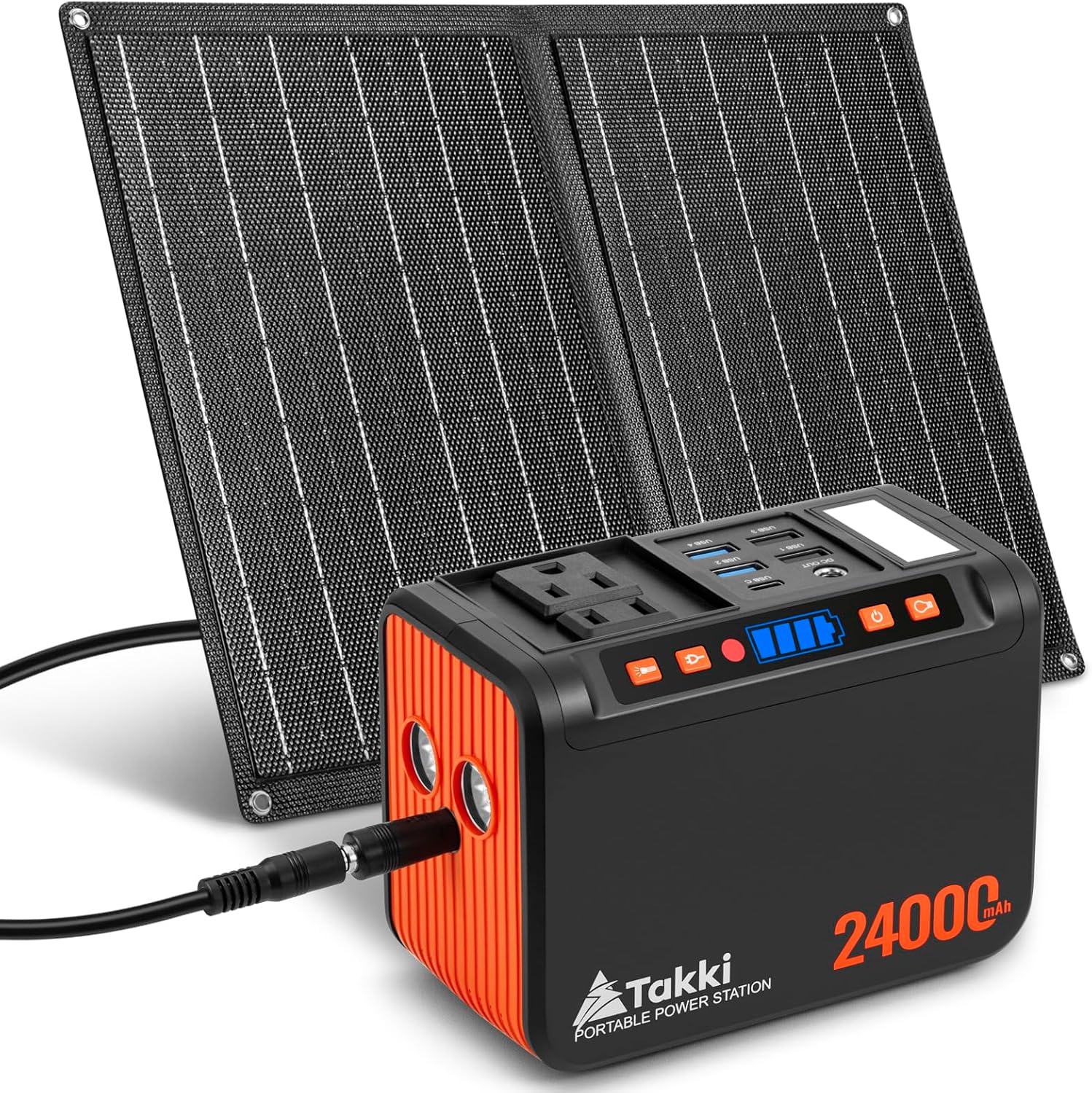
The first trip with the Takki 120W kit, I packed like the box was bigger than it was. Laptop, camera batteries, a portable fan, the phone, a lantern — the whole digital camp. By Saturday afternoon the box was empty and I was doing the walk of shame to the car charger. The kit hadn't failed. My packing had.
That's the review, really: the Takki 120W portable solar kit is a small, honest, cheap box, and it will serve you exactly as well as your expectations deserve.
Three numbers, one headline
Let me lay out the numbers, because "120W" is doing three jobs in this listing and only one of them is honest. The 120W refers to peak solar input — the panel side. The battery inside is roughly 280Wh of NCM chemistry (the listing's energy number, converted). The AC inverter delivers something like 150 to 200W continuous. Three different numbers, one headline, and beginners reliably fixate on the wrong one. The number that governs your trip is the battery: ~280Wh, minus conversion losses, call it 230Wh usable. That's eighteen phone charges. Or a laptop twice. Or a fan all night and phones in the morning. Pick your combination, but the total is the total.
NCM chemistry — not LiFePO4 — is the compromise that makes the price work. Five hundred to eight hundred cycles before noticeable fade, versus two thousand plus for iron phosphate. For a box that gets used ten weekends a year, that's five-plus years of service. Fine. For a box that lives in a van full-time, cycled daily, it's tired in two years. Know which user you are. I am the ten-weekends user, and the chemistry is correctly matched to my life. Actually, no — let me correct that. What I mean is the chemistry is correctly matched to my wallet, and my usage happens to fit inside the compromise. If I lived in the van, I'd buy LiFePO4 and eat the price difference. The honesty matters: buy NCM for the price, not because it's "just as good."
The 120W panel in the kit is the part I actually like most. In real sun it delivers 80 to 100W of input — small panels run hot and the angle is always a compromise — and over a full sunny day that's 400 to 500Wh harvested. More than the battery holds. Which means on a sunny trip, the kit is self-sustaining for phone-and-light loads: drain it in the evening, refill by afternoon. That equilibrium — use less than the sun replaces — is the whole game with small solar, and this kit plays it well. On a cloudy day, the panel makes 20 to 30W, and the equilibrium breaks. Two cloudy days in a row and you're rationing. The sky is the other half of the system. It always is.
The equilibrium game
What it won't run, stated plainly: anything with a heating element, anything with a motor bigger than a fan, and — the one that gets people — a full-size cooler with a compressor. The compressor's startup surge is 3 to 5 times its rated draw, and a 150W-rated cooler spikes to 600W-plus for a second. The Takki's inverter will trip, beep, and shut down, and you'll think it's broken. It's not broken. You're asking a rowboat to tow a barge. Phones, tablets, cameras, lights, laptops, small fans: yes. Everything else: no.
The category rant, at moderate intensity: the entry-level solar kit market is where "peak" numbers do the most damage. "120W!" shouts the listing, and the buyer hears "120 watts of power for my stuff," when the reality is 120W of best-case solar input feeding a 280Wh battery through a 150W inverter. Three numbers, one headline, maximum confusion. I don't think it's malicious — I think the marketing teams genuinely don't know which number matters, because they've never camped with one. But the effect is the same: beginners buy for the headline and learn the battery number the hard way, at dusk, with a dead phone.
Off-topic, but it's the trip I remember: a lakeside site in late September, the water flat as glass, and a loon calling somewhere out in the dark. I had the lantern on, the phone charging, and absolutely nothing else drawing power. The box sat there at 60%, the panel had refilled it by three that afternoon, and the whole system was just… quietly sufficient. There's a specific contentment in having exactly enough. Not abundance — enough. The Takki is an "enough" machine. The loon didn't care about my watt-hours, but I noticed, in the way you notice when something just works.
Self-criticism: the walk of shame to the car charger was avoidable. I'd packed for the fantasy trip — the one where I edit video at the picnic table — instead of the real trip, which was swimming and reading. The box was sized for the real trip. I was the one who brought the fantasy. Size your packing to the battery, not the battery to the fantasy.
The Takki 120W kit, after the car-charger incident: a cheap, genuinely portable entry point to solar camping, honestly sized for phones, lights, and light laptop use, self-sustaining in sun and rationed in clouds. Expect 230 usable watt-hours and a trickle that keeps up on sunny days. Pack for the real trip.
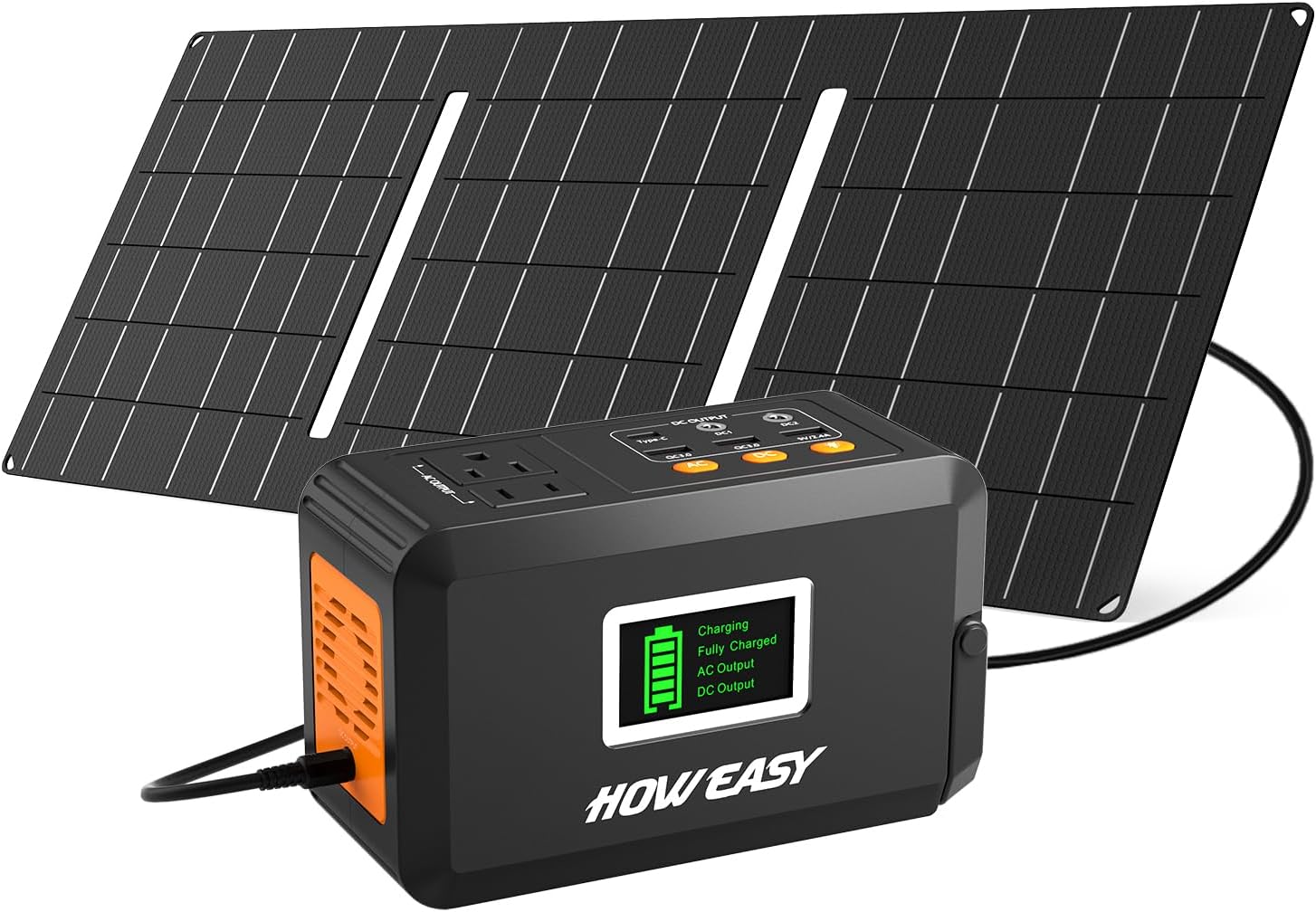
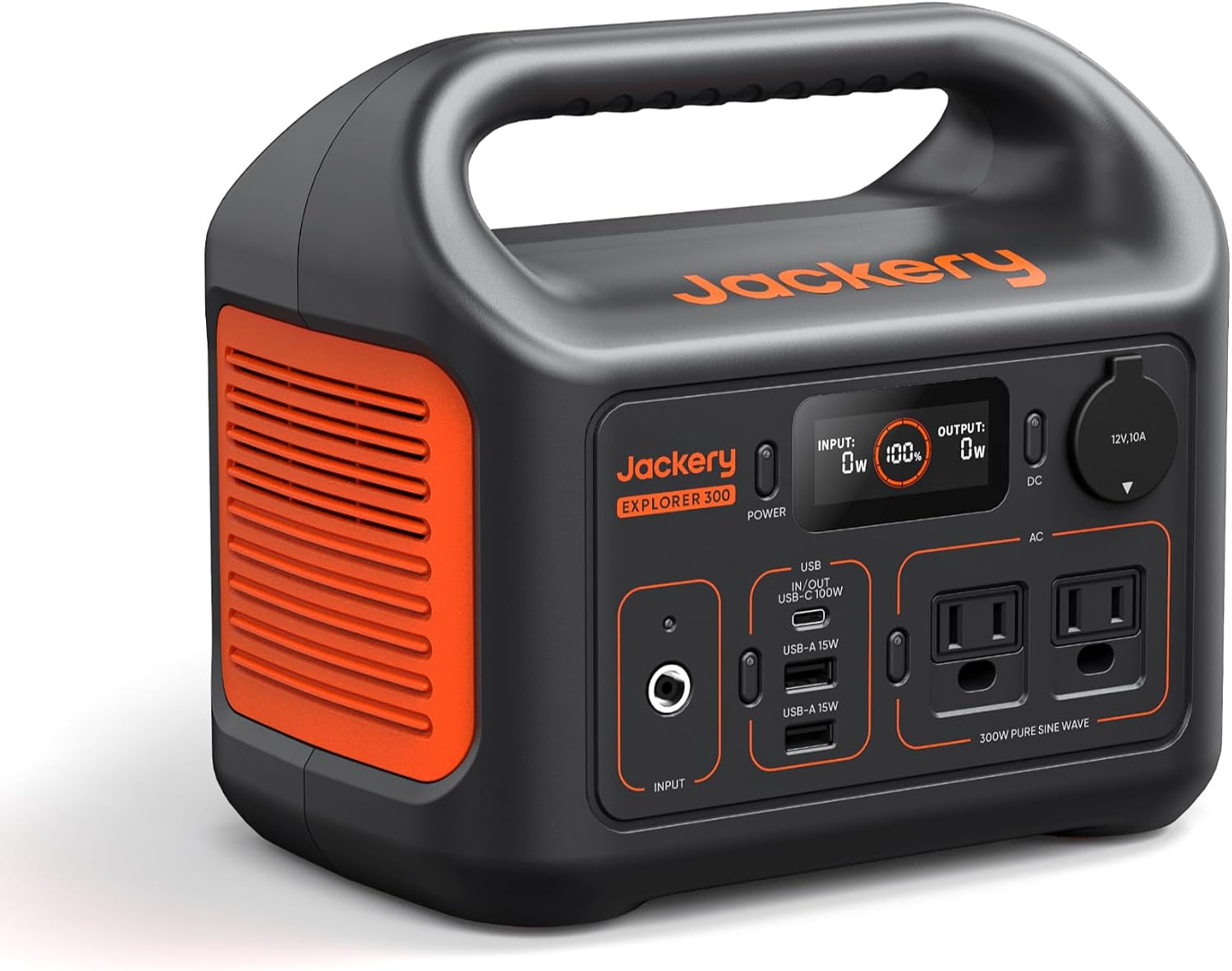
Related reading: a 100W generator for hurricane outages the HOWEASY 120W generator a 100W foldable panel for stations
The loon came back the next morning. The box was full by ten. I left the laptop in the car.
Three worth comparing