Refoss Smart Energy Monitor Review: 16-Channel 60A Sensors for Home Energy Storage.

Optimizing Your Home Energy Storage System: An Expert Review of the Refoss Smart Home Energy Monitor (2026)

As a consultant who has spent over two decades navigating the complexities of residential power, I’ve seen countless innovations promise revolution in home energy management. While the primary focus of many homeowners today is on acquiring a robust home energy storage system—whether for whole home battery backup, solar battery storage, or comprehensive off-grid battery systems—the true intelligence behind these setups often lies in their ability to monitor and manage energy flow. Today, we’re examining a crucial tool in that arsenal: the Refoss Smart Home Energy Monitor with 16 60A Circuit Sensor.

It’s imperative to clarify from the outset: the Refoss Smart Home Energy Monitor is not a backup battery for house or a residential battery backup system itself. Instead, it is a highly sophisticated data acquisition and monitoring device designed to provide unparalleled insights into your home’s electrical consumption at a circuit level. In 2026, where every kilowatt-hour counts, understanding your energy footprint with such precision is fundamental to designing, optimizing, and maximizing the return on investment of any home energy storage system. This review will evaluate how this monitor serves as an indispensable component in achieving true energy independence and resilience.

The Indispensable Role of Monitoring in a Home Energy Storage System

In my experience, the single biggest differentiator between a well-performing home energy storage system and one that under-delivers is the homeowner’s understanding of their energy usage. Without detailed insights into where and when power is consumed, selecting the right battery capacity, inverter size, and system configuration becomes an educated guess at best.

Accurate energy management and load balancing are not theoretical concepts; they are the bedrock of efficient whole home battery backup. The Refoss monitor directly addresses this by offering granular data. It tells you exactly how much power your refrigerator draws, what the peak demand is when your HVAC kicks on, and how much energy your entertainment system consumes. This information is vital for sizing a whole-house battery appropriately, implementing effective load shedding strategies during outages, and optimizing solar self-consumption. It shifts energy decisions from reactive to proactive, ensuring your backup power system is not just installed, but intelligently managed.

Refoss Smart Home Energy Monitor: Core Capabilities for Your Backup Power System

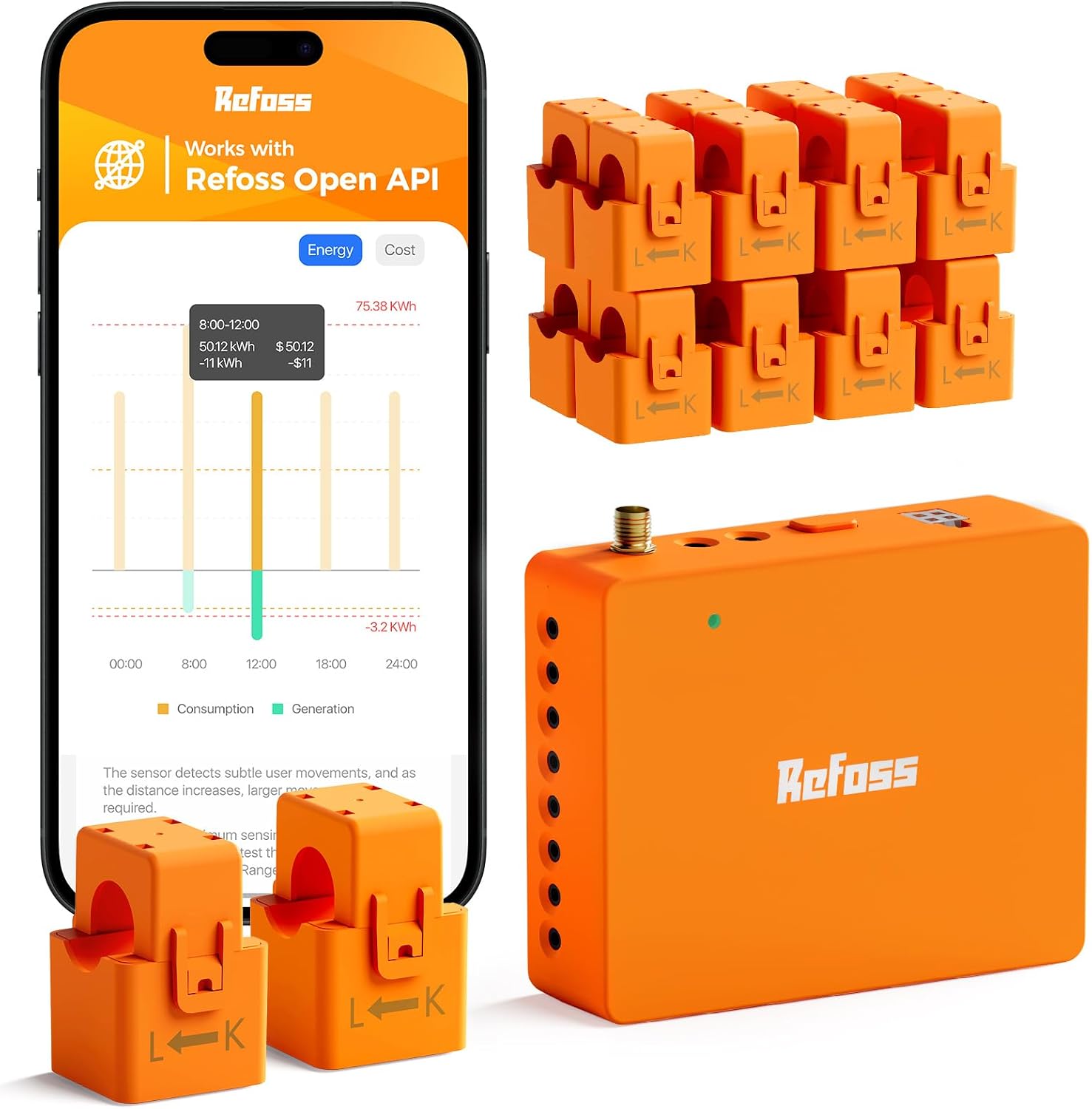
The Refoss Smart Home Energy Monitor differentiates itself through its multi-circuit monitoring capability. With 16 individual 60A circuit sensors, it moves beyond whole-home consumption data to provide insights at a granular level. In real-world applications, this means homeowners can:

  • Identify Energy Hogs: Pinpoint appliances or circuits consuming excessive power, allowing for informed decisions on upgrades or usage patterns.
  • Optimize Load Prioritization: For residential energy storage, understanding which circuits are critical (medical devices, refrigerator) versus non-essential (pool pump, secondary entertainment) allows for strategic load management during an outage.
  • Verify System Performance: When integrating with a solar home battery, the monitor can track power flows from solar panels, to the battery, and into specific circuits, validating the efficiency of your hybrid inverter system.
  • Aid in Sizing Decisions: Before investing in a substantial battery storage system, the Refoss monitor provides the actual peak and average loads for various periods, leading to more accurate and cost-effective system sizing.

This level of detail is a game-changer for anyone serious about managing their energy effectively, whether aiming for full energy independence with an off-grid battery system or simply reducing grid dependency with a grid-tied battery.

Evaluating the Refoss Monitor’s Contribution to Home Energy Storage Systems

While the Refoss monitor doesn’t possess these features itself, its data directly impacts how effectively a home energy storage system can leverage them.

  • Battery Chemistry (LiFePO4 vs NCM): Understanding your peak and sustained loads through the monitor helps inform the selection of battery chemistry. For homes with frequent high-surge demands, insights from the monitor might lean towards LiFePO4 for its robustness and cycle life, or NCM for its higher energy density if space is at a premium and demands are more consistent.
  • Usable Battery Capacity (kWh): This is where the Refoss monitor shines. By accurately tracking your household’s actual energy consumption patterns—not just averages, but real-time peaks and valleys—it provides the precise data needed to size the usable capacity of your energy storage battery. Over-sizing is costly; under-sizing leads to insufficient backup. The monitor helps hit the sweet spot.
  • Continuous Output Power & Peak Surge Output: The monitor’s ability to track circuit-level current draws allows you to identify your home’s true continuous load and its instantaneous peak surge demands. This data is critical for specifying the appropriate hybrid inverter system that can handle everything from your well pump kicking on to multiple kitchen appliances running simultaneously, ensuring your backup power system never falters.
  • Whole-Home Backup Capability: Knowing precisely which circuits draw how much power is fundamental to implementing effective load management for whole-home battery backup. The monitor allows you to strategize essential circuits for backup, extending run-time and optimizing available energy during grid failures.
  • Automatic Transfer Switch (ATS) & UPS Switching Speed: While the Refoss monitor isn’t part of the ATS, its real-time data can be used to monitor the seamlessness of grid-to-battery transitions. By observing power flows, you can ensure your residential energy storage system’s ATS and UPS functions are operating as expected, maintaining continuity for sensitive electronics.
  • Solar Compatibility: For solar battery storage solutions, the monitor provides crucial insights into when solar generation peaks and when household consumption is highest. This data is invaluable for optimizing charge/discharge cycles, maximizing solar self-consumption, and making smart decisions about when to store excess solar energy.
  • Hybrid Inverter Performance: Monitoring inputs from solar and grid, and outputs to loads, allows homeowners to indirectly gauge the efficiency and performance of their hybrid inverter system. Deviations or unexpected consumption patterns can point to inverter issues or opportunities for optimization.
  • Expandable Battery Capacity: As energy needs evolve (e.g., adding an EV, new appliances), the Refoss monitor continuously provides data to justify and accurately size future expansions of your home battery backup. This prevents premature or unnecessary additions to your battery storage system.
  • Battery Management System (BMS): While distinct from a BMS, the monitor’s detailed consumption data can act as an external validation tool. If the BMS reports healthy battery state but the system struggles under certain loads, the Refoss monitor can help diagnose if the issue is with the load profile exceeding system capabilities rather than a battery fault.
  • Grid-tied vs Off-grid Operation: For grid-tied battery systems, the monitor helps optimize peak shaving and time-of-use (TOU) arbitrage. For an off-grid battery system, it is absolutely critical for understanding your daily energy budget and ensuring you have adequate reserves, especially when pairing with a backup generator.
  • Scalability: The monitor itself allows for expanding monitoring points within its capacity. More importantly, the data it provides allows for intelligent, phased scalability of your actual energy storage solution.
  • Installation Requirements: Installing the Refoss monitor requires a professional electrician due to its integration within your electrical panel. This ensures safe and accurate measurement.
  • Safety Certifications: The Refoss monitor should carry standard electrical safety certifications (e.g., UL, CE) appropriate for a device installed in an electrical panel. This ensures its own operational safety within your home’s infrastructure.
  • Warranty: The monitor typically comes with a standard manufacturer’s warranty, which is important for the long-term reliability of your energy data.
  • Long-term Reliability: The accuracy and consistency of the data provided by the Refoss monitor over time are crucial for sustained energy management and optimization of any home energy storage system.
  • Cost per kWh: While the monitor doesn’t store energy, its contribution to reducing your effective “cost per kWh” from your energy storage battery is significant. By allowing for accurate sizing, optimizing discharge cycles, and identifying consumption inefficiencies, it helps you get more value from every stored kWh and extend the lifespan of your expensive battery asset.

Real-World Scenario: Combating High Electricity Bills with a Home Energy Storage System

In my two decades, one of the most common drivers for investing in a home energy storage system has been the desire to mitigate escalating electricity costs, particularly in regions with complex Time-of-Use (TOU) rates and high peak demand charges. This is where a device like the Refoss Smart Home Energy Monitor becomes invaluable, transforming your home backup battery from a mere emergency solution into a powerful financial tool.

Consider a homeowner in a region where electricity prices triple during evening peak hours (4 PM to 9 PM). Without granular monitoring, they might be guessing which appliances contribute most to that peak consumption. They might also be under-utilizing their solar home battery by not discharging it optimally.

Enter the Refoss monitor. Installed in the main electrical panel, its 16 sensors meticulously track the energy draw of critical circuits. The homeowner sees, in real-time, that their electric dryer running at 5 PM costs significantly more than at 10 PM. They observe that their air conditioning unit, while necessary, causes a substantial spike during the peak window.

With this data, the homeowner can program their hybrid energy storage system to automatically discharge stored solar energy or cheap off-peak grid power during these expensive peak hours. The Refoss monitor provides the intelligence for this automation: it confirms when demand is highest on specific circuits, allowing the energy storage solution to release power to shave off those costly peaks. Furthermore, the monitor identifies phantom loads—devices that silently draw power 24/7. Eliminating just a few of these can add up to significant electricity bill savings over the year.

The ability to perform “peak shaving” using a home energy storage system is directly proportional to the accuracy of your consumption data. The Refoss monitor provides this surgical precision. It empowers the homeowner to make data-driven adjustments, shifting energy-intensive tasks, and ensuring their renewable home energy investment is working overtime to reduce their monthly expenditure, effectively lowering their net cost for electricity. This intelligent energy management turns the monitor into a critical enabler for substantial savings and a faster ROI on their entire home energy storage system.

Who Is It Best For? High Electricity Cost Areas

The Refoss Smart Home Energy Monitor is particularly beneficial for homeowners in High Electricity Cost Areas. In these regions, every kilowatt-hour saved or optimally managed directly translates into tangible financial benefits. When combined with a home backup battery, the monitor allows for precise arbitrage against fluctuating TOU rates, maximizing electricity bill savings and making the most of renewable home energy generation. It ensures that the significant investment in a home energy storage system is truly optimized for financial return and energy independence.

Factory Insider Note

Many home battery systems use the same battery cells, but inverter quality often determines overall reliability. While the Refoss monitor doesn’t include an inverter, its role in providing data to stress-test and understand the performance of your system’s inverter under real-world loads is invaluable. A high-quality monitor can help you detect suboptimal inverter performance, which might otherwise go unnoticed.

Potential Drawbacks of Relying Solely on Monitoring for a Home Energy Storage System

It’s crucial to reiterate: the Refoss Smart Home Energy Monitor, while incredibly powerful for data acquisition, is not a home energy storage system itself. Its primary function is observation and analysis, not power generation or storage.

  • Not a Power Source: It cannot provide backup power system during an outage. Its value is realized when paired with an actual whole-house battery or solar battery bank.
  • Professional Installation Required: Like any device installed within your electrical panel, professional installation by a licensed electrician is mandatory. This adds to the overall initial cost, though it’s typically much less than installing a full ESS.
  • Data Interpretation Needed: While the monitor collects data, homeowners need to invest time in understanding its implications or consult with professionals to fully leverage the insights for their energy storage solution.
  • Limited Expansion (Monitoring Points): While 16 circuits are substantial, very large or complex homes might require multiple units or a more industrial-grade solution to monitor every single circuit.
  • Software Limitations: The accompanying app provides robust functionality, but like all software, it may have specific interface limitations or integration quirks with certain third-party platforms.
  • Dependent on External Systems: Its utility for whole home battery backup and off-grid battery system is entirely dependent on the presence and capabilities of an actual home energy storage system.

Value for Money: Enhancing Your Home Energy Storage System Investment

The direct cost of the Refoss Smart Home Energy Monitor is relatively low compared to the tens of thousands of dollars required for a full home energy storage system. Its value for money is not in its standalone capabilities but in how it amplifies the efficiency and return on investment of your entire residential battery backup.

By enabling precise sizing of your energy storage battery, preventing over-provisioning (which directly impacts cost per kWh of the battery itself), and optimizing discharge cycles for electricity bill savings, the Refoss monitor can significantly improve the ROI of your ESS. It helps extend battery lifespan by ensuring it operates within optimal parameters based on real load data, reducing long-term ownership costs. While it doesn’t have a direct cost per kWh or warranty like a battery, its contribution to the overall system’s efficiency makes it a wise investment for maximizing the value of your larger home energy storage system.

Comparing Energy Management Approaches: Refoss Monitor vs. Integrated Home Battery Systems

To underscore the Refoss monitor’s unique role, let’s compare its function against leading home energy storage system solutions. It’s not a competitor in terms of energy storage, but a powerful complement.

Feature Refoss Smart Home Energy Monitor Tesla Powerwall EcoFlow PowerOcean Generac PWRcell
Primary Function Circuit-Level Energy Monitoring Whole-Home Battery Backup Modular ESS Whole-Home Battery Backup
Battery Chemistry N/A LiFePO4 LFP LFP
Battery Capacity N/A 13.5 kWh Usable 5-45 kWh (Modular) 9-36 kWh (Modular)
Continuous Output N/A 5 kW 5-15 kW 3.8-7.6 kW
Whole-Home Backup No (Monitors usage for backup) Yes (Integrated ATS) Yes (Integrated ATS) Yes (Integrated ATS)
Solar Integration Data for Optimization Yes (Integrated Hybrid Inverter) Yes (Hybrid Inverter) Yes (Integrated Hybrid Inverter)
Expandability Yes (Monitoring circuits) Limited (Multiple Units) Yes (Battery & Inverter) Yes (Battery & Inverter)
Warranty ~1 Year (Monitor) 10 Years 10-15 Years 10 Years
Estimated Installed Cost ~$500-1,000 ~$12,000-18,000 ~$8,000-50,000+ ~$10,000-40,000+

Who Should Buy:

  • Refoss Smart Home Energy Monitor: Homeowners seeking detailed energy insights to optimize an existing or planned home energy storage system, especially those in high electricity cost areas wanting to maximize efficiency and electricity bill savings. It’s the ideal tool for data-driven energy management and validating hybrid inverter system performance.
  • Tesla Powerwall: For integrated solar home battery solutions, high design aesthetic, and robust whole home battery backup for a standard modern home. Users benefit from a seamless ecosystem and a proven track record in residential energy storage.
  • EcoFlow PowerOcean: For homeowners who prioritize modularity, expandable battery capacity, and need flexibility in sizing their residential energy storage and potentially future-proofing. It offers a versatile hybrid energy storage approach.
  • Generac PWRcell: For those prioritizing a reliable backup power system with robust whole-house battery backup capabilities, often integrated with existing generator solutions or seeking a comprehensive, installer-friendly system. Known for strong performance during grid failures and blackouts.

Frequently Asked Questions about Home Energy Storage Systems

Why does detailed energy monitoring matter for a home energy storage system?

Detailed energy monitoring, as provided by devices like the Refoss Smart Home Energy Monitor, is critical because it moves beyond guesswork. It provides the precise data—peak loads, continuous draws, specific circuit consumption—needed to accurately size your home energy storage system, optimize its operation for efficiency and cost savings, and extend the lifespan of your expensive battery storage system. Without it, you might over-spend on capacity you don’t need or under-provision, leading to insufficient backup during crucial times. It ensures your backup battery for house is a wise, informed investment.

How does the Refoss Smart Home Energy Monitor help reduce electricity bills when paired with a solar battery storage system?

The Refoss monitor helps reduce electricity bills by providing the intelligence for “peak shaving” and time-of-use (TOU) arbitrage. It pinpoints exactly when your energy consumption is highest and, crucially, when it falls into expensive peak-rate periods. When paired with a solar battery storage system, this data allows you to program your hybrid inverter system to automatically discharge stored solar energy during these high-cost windows, reducing reliance on expensive grid power. It also helps identify and eliminate energy waste, further maximizing electricity bill savings from your renewable home energy setup.

What should homeowners consider about their energy consumption before investing in a whole-home battery backup?

Before investing in a whole-home battery backup, homeowners must thoroughly understand their energy consumption patterns. This includes identifying critical loads (medical devices, refrigerator, internet), understanding their peak daily energy demands (when HVAC or multiple appliances run), and their average daily consumption. A tool like the Refoss Smart Home Energy Monitor can provide this data accurately. Without this insight, you risk purchasing a system that’s either too small to meet your needs during an outage or unnecessarily large and expensive. Knowing your loads dictates the appropriate battery capacity (kWh) and continuous output power required for your residential battery backup to perform reliably.

Final Verdict: The Refoss Monitor as a Strategic Component of Your Home Energy Storage System

In 2026, the discussion around home energy storage system solutions has matured. It’s no longer just about owning a backup battery for house; it’s about intelligent energy management. The Refoss Smart Home Energy Monitor, while not a power source itself, emerges as an indispensable tool for any homeowner serious about optimizing their residential energy storage. It provides the granular data that transforms a simple battery installation into a sophisticated, efficient, and cost-effective energy storage solution. For anyone investing in a whole-house battery or solar battery storage, the insights provided by this monitor are priceless, enabling informed decisions that lead to greater resilience, significant electricity bill savings, and ultimately, a faster ROI on your entire home energy storage system. Its value lies in empowering you to truly understand and control your energy destiny.

Pros & Cons (Refoss Monitor in ESS Context)

Pros:

  • Detailed Insights: Provides circuit-level energy consumption data, far beyond whole-home averages.
  • Optimization Potential: Enables precise sizing of home energy storage system components (battery, inverter) and intelligent energy management.
  • Bill Reduction Potential: Facilitates effective peak shaving and time-of-use (TOU) arbitrage when paired with a solar home battery.
  • Informs Sizing Decisions: Prevents over or under-sizing of your backup battery for house, saving costs and ensuring adequate backup.
  • Relatively Affordable: Low cost compared to a full energy storage solution, offering high value for data intelligence.
  • Validates Performance: Helps monitor the efficiency of your hybrid inverter system and overall backup power system.

Cons:

  • Not a Power Source: Does not provide whole home battery backup or power during outages itself.
  • Professional Installation Required: Requires a licensed electrician for safe and accurate installation in the electrical panel.
  • Data Interpretation Needed: Homeowners must engage with the data or consult experts to fully leverage its benefits.
  • Works Best WITH an ESS: Its full value is realized only when integrated into a larger home energy storage system.
  • Software Dependent: Relies on a mobile application for data visualization and interaction, which may have its own learning curve or limitations.

#Refoss #Smart #Home #Energy #Monitor #60A #Circuit #Sensor