I bought my first charge controller the way most people do: backwards. I had two 200W panels on the garage roof, a pair of tired 12V batteries, and a controller I’d picked because the listing said 40A and the price was right. It worked for about six months. Then one cold clear morning in February, the voltage from the panels climbed higher than it ever had, the controller gave up with a smell I can only describe as hot plastic and regret, and I spent the weekend rewiring everything I thought I’d already finished.
Cold mornings are the part nobody warns you about. Panel voltage rises as temperature drops, and my panels’ open-circuit voltage on a normal day sat around 44V each. In series, that was 88V against a controller rated for 100V max. Fine on paper. On a 28-degree morning it crept past 100, maybe 105, and the controller’s protection — if it had any worth mentioning — folded. I ran that math three times before I believed it. The number was right there in the panel spec sheet the whole time, next to a temperature coefficient I had skimmed past like everyone else does.
Here’s the thing about charge controllers: they are the least exciting box in your whole solar setup and the one most likely to destroy everything else. People obsess over panel wattage and battery chemistry and then buy whatever controller has the most five-star reviews. I know because I was that person. Twice, actually, because my first replacement was another budget unit and I only got lucky that the winter was mild that year.
The PWM versus MPPT argument gets settled fast once you actually watch numbers move. A PWM controller just pulls the panel down to battery voltage and throws the difference away. MPPT — maximum power point tracking — converts it. On a 12V system with panels running at 36V, that conversion is worth roughly 20 to 30 percent more energy into the battery on the same panels. I measured, or tried to. My clamp meter, my panels, my batteries: same roof, swapped controllers a week apart, the MPPT put about a quarter more watt-hours into the bank on comparable days. Not a lab test. Comparable enough that I stopped arguing with myself about the price difference.
And the price difference is the part that makes people buy PWM. An MPPT controller at 40A costs two or three times what a PWM of the same rating does. I get the hesitation. But think about what you’re actually buying: the controller is the bouncer at the door between your panels and your batteries. A cheap bouncer lets the wrong voltage through and your thousand dollars of batteries take the hit. Actually, no — that’s not right. What I mean is the cheap controller fails quietly for months, undercharging or overcharging, and you blame the batteries when they die early (though batteries do die on their own schedule too). The batteries were fine. The bouncer was drunk.
Amps are where the second round of mistakes happens. A 40A controller on a 12V system handles about 480W of panels. On a 24V system it handles roughly double that, around 960W, because watts are volts times amps and the higher system voltage stretches the same current further — the same arithmetic that governs sizing an inverter, just applied to a different box. This is basic math and I still see people bolting 800W of panels onto a 12V setup through a 40A controller and wondering why it clips on sunny days. Clipping — the controller just caps what it passes through — isn’t dangerous. It’s just money you spent on panels that goes nowhere. I did that for a summer before I admitted the numbers to myself.
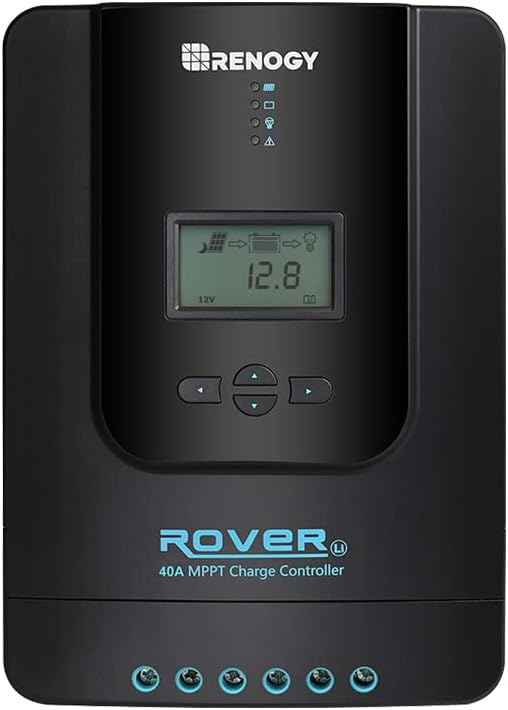
I haven’t tested every controller on the market, obviously. My experience is one roof, one battery bank, three controllers over four years. The Renogy Rover 40A MPPT is what I ended up with after the two budget units, and the reason I kept it has nothing to do with the brand name. It has an LCD that shows actual voltage and current instead of blinking LEDs I have to decode, it lets you set battery type — gel, sealed, flooded, lithium — and it hasn’t died on a cold morning. The lithium setting matters more than people think. Lithium batteries want different absorption and float voltages than lead-acid, and a controller stuck on the wrong profile will slowly murder a lithium bank by treating it like it’s 2012.
The Victron SmartSolar 100/30 is the one the serious off-grid people keep pointing at, and I understand why even though I’ve never owned one. Bluetooth built in, so you can watch the actual charging curve on your phone instead of guessing from a tiny screen. Thirty amps instead of forty, so it fits smaller arrays — the 100 in the name is the max panel voltage, the 30 is the charge current. For a 400W setup on 12V it’s sized about right. That combination — a 400W array paired with a 40A controller — is basically what Renogy ships in its 400W RV kit, which tells you the sizing math isn’t controversial. It’s also roughly double the price of the budget MPPTs, which is either worth it or absurd depending on whether you’ve ever smelled a dead controller. I have. My math changed.
Then there’s the EPEver Tracer4210AN, which sits in that uncomfortable middle ground where the specs look excellent and the brand doesn’t have the forum presence to back it up. 40A MPPT, handles lithium, has the display. On paper it does everything the bigger names do. The thing is, a charge controller is the one component where I refuse to gamble on “on paper,” because the failure mode isn’t a dead gadget, it’s a dead battery bank. That said, plenty of people run EPEvers for years without drama. This scene I haven’t tested, so I’ll leave it there.
Three 40A MPPT controllers worth your shortlist
40A MPPT is the sweet spot for mid-size 12V/24V arrays. These three cover the value pick, the premium pick, and the middle ground.
Renogy Rover 40A MPPT Solar Charge Controller
40A MPPT with an LCD that shows real numbers and battery-type settings for gel, sealed, flooded, and lithium.
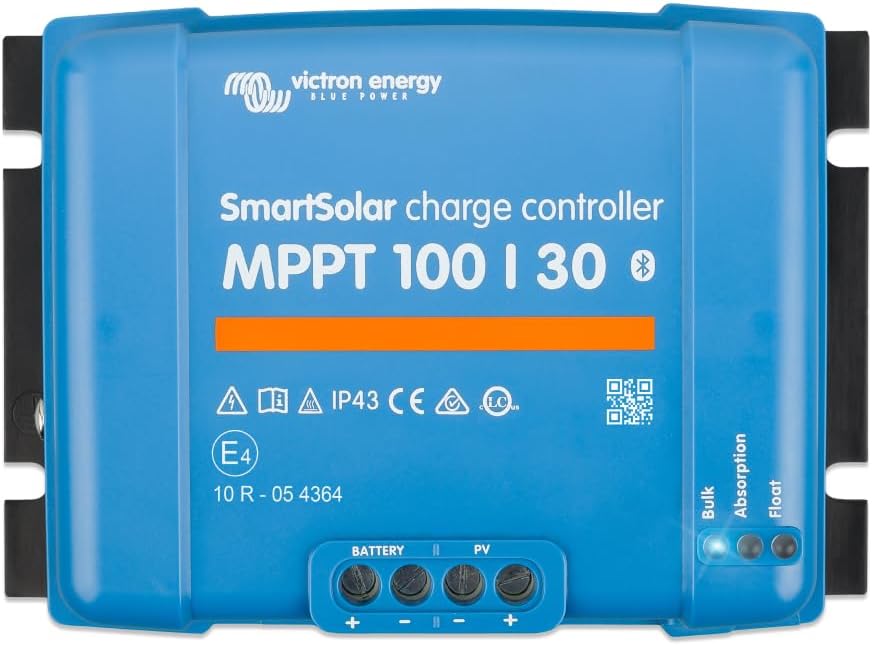
Victron Energy SmartSolar MPPT 100/30 (Bluetooth)
The premium pick: 30A MPPT with built-in Bluetooth so you can watch the charging curve on your phone.
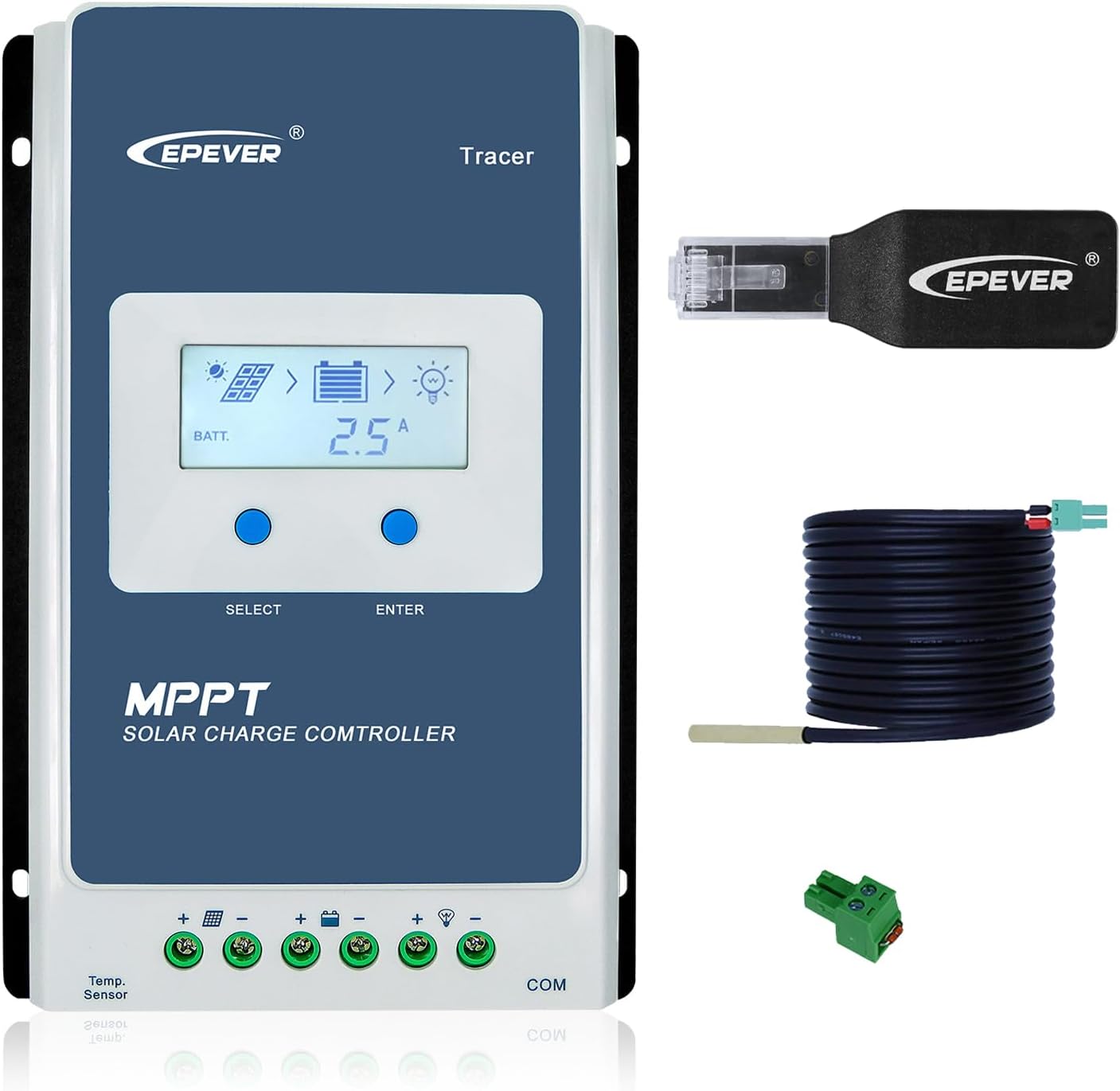
EPEVER Tracer4210AN 40A MPPT Solar Charge Controller
The middle ground: 40A MPPT, lithium-compatible, strong specs for the money.
The whole category has this weird marketing habit of selling controllers by their amp rating alone, like that’s the whole story. A “40A solar charge controller” tells you almost nothing — 40A of what, at what voltage, from how much panel voltage, into what chemistry? The number that actually matters is the max PV input voltage, and it’s the one buried three lines deep in the spec sheet. Every dead controller story I’ve heard starts with someone who knew their amp rating and not their voltage limit. Mine did.
My garage setup now runs a 24V battery bank, panels in series-parallel, and a controller with headroom on every number. Overkill costs a little more up front. Underkill cost me a controller, a weekend, and the particular shame of explaining to my wife why the garage smelled like an electronics fire. I still check the panel voltage on the first cold morning of every winter. Old habits.
The Rover’s display showed 103.4V from the array last January and I just stood there staring at it, coffee going cold in my hand, waiting to see if anything would pop. Nothing popped. That’s the whole review, really. Nothing popped, and the batteries were full by noon.