Review: 40W 18V Foldable Portable Solar Panel Charger

Navigating the Field: A Veteran’s Unbiased Review of the Portable Solar Panel Charger, 40W Foldable Solar Panel (2026)

As a solar panel consultant with over two decades immersed in the industry – from factory floors in Jiangsu to deployment sites across varied terrains – I’ve evaluated countless panels. The landscape of portable and residential solar has evolved dramatically, and by 2026, buyers expect more than just specifications; they demand real-world performance data. This review focuses on the Portable Solar Panel Charger, a 40W 18V foldable solar panel, assessing its practical utility, not just its advertised numbers.

My approach here is as an Outdoor Field Tester. I ignore glossy marketing claims and dive into what truly matters: actual charging speed, its resilience in challenging weather, its efficiency at the fringes of the day, how it handles heat, and critically, how much power it loses to shading. Daily portability, the core promise of a product like this, will also be a major evaluation point.

Understanding the Landscape of Portable Solar Solutions

Before we dissect the 40W unit, it’s essential to contextualize where it fits. The demand for portable solar charger units and off-grid solar solutions has surged, spanning from simple phone charging to powering entire RV solar setups. Whether you’re considering a small camping solar panel or a robust solar panel kit for RV, the underlying principles of performance remain crucial.

The industry consistently moves towards high efficiency solar panel designs. While monocrystalline solar panel technology remains dominant, manufacturers continue to refine cell quality and coating materials to maximize energy capture and prolong lifespan.

Monocrystalline vs. Polycrystalline Cells: A Field Perspective

In 2026, monocrystalline solar panel technology is the undisputed leader for portable applications. My field tests consistently show monocrystalline cells outperforming polycrystalline in real-world scenarios, especially under less-than-ideal conditions.

  • Monocrystalline: These cells are cut from a single, pure silicon crystal. Their uniform, dark appearance isn’t just aesthetic; it signifies a higher purity and more efficient electron flow. In practical terms, this translates to better power conversion efficiency per square foot. When you’re trying to squeeze as much power as possible from a compact folding solar panel, monocrystalline is the only viable choice. They start converting earlier in the morning and continue later into the evening, providing a wider charging window.
  • Polycrystalline: Made from multiple silicon fragments melted together, these cells are less efficient, resulting in larger panels for the same power output. While cheaper to produce, their lower performance density makes them less suitable for genuinely portable applications where space and weight are critical constraints. You’ll primarily see them in older, larger-scale rigid solar panel installations where footprint isn’t a primary concern.

For any portable solar charger worth its salt, expect monocrystalline cells.

ETFE vs. PET Coating: Durability Beyond Specifications

The front surface coating of a solar panel is often overlooked, yet it’s paramount for long-term durability and performance, especially for a foldable solar panel exposed to the elements.

  • ETFE (Ethylene Tetrafluoroethylene): This material is essentially a high-performance plastic polymer. From a field perspective, ETFE coatings are a game-changer for portable panels. They are highly transparent, maintaining excellent light transmission over time. More importantly, ETFE is incredibly durable – resistant to UV degradation, chemical corrosion, and minor abrasions. It handles temperature fluctuations without cracking and exhibits a self-cleaning property, shedding dirt and grime more easily than other coatings. Panels with ETFE consistently show less yellowing and fogging after years of outdoor exposure.
  • PET (Polyethylene Terephthalate): While cheaper and common on budget panels, PET is less robust. It’s prone to scratching, and its UV resistance is significantly lower than ETFE. Over time, PET often yellows, reducing light transmission and thus, power output. It can also become brittle and crack, compromising the panel’s weather resistance. My experience indicates that PET-coated portable solar panels degrade noticeably faster, especially when left out in direct sun for extended periods. For any serious camping solar panel or RV solar panel where longevity is a factor, ETFE is the superior choice.

Factory Insider Note: Many portable solar panels use identical monocrystalline cells but differ significantly in frame quality and ETFE coating. This is where cost-cutting becomes evident and impacts long-term reliability.

In-Depth Review: Portable Solar Panel Charger, 40W 18V Foldable Solar Panel

Let’s turn our attention to the specific product: the Portable Solar Panel Charger, 40W 18V Foldable Solar Panel. This unit positions itself as a compact solution for personal portable renewable power needs.

First Impressions & Build Quality

Unfolding the 40W unit, the first thing I assess is the physical integrity. A truly portable panel must withstand repeated setup and breakdown.

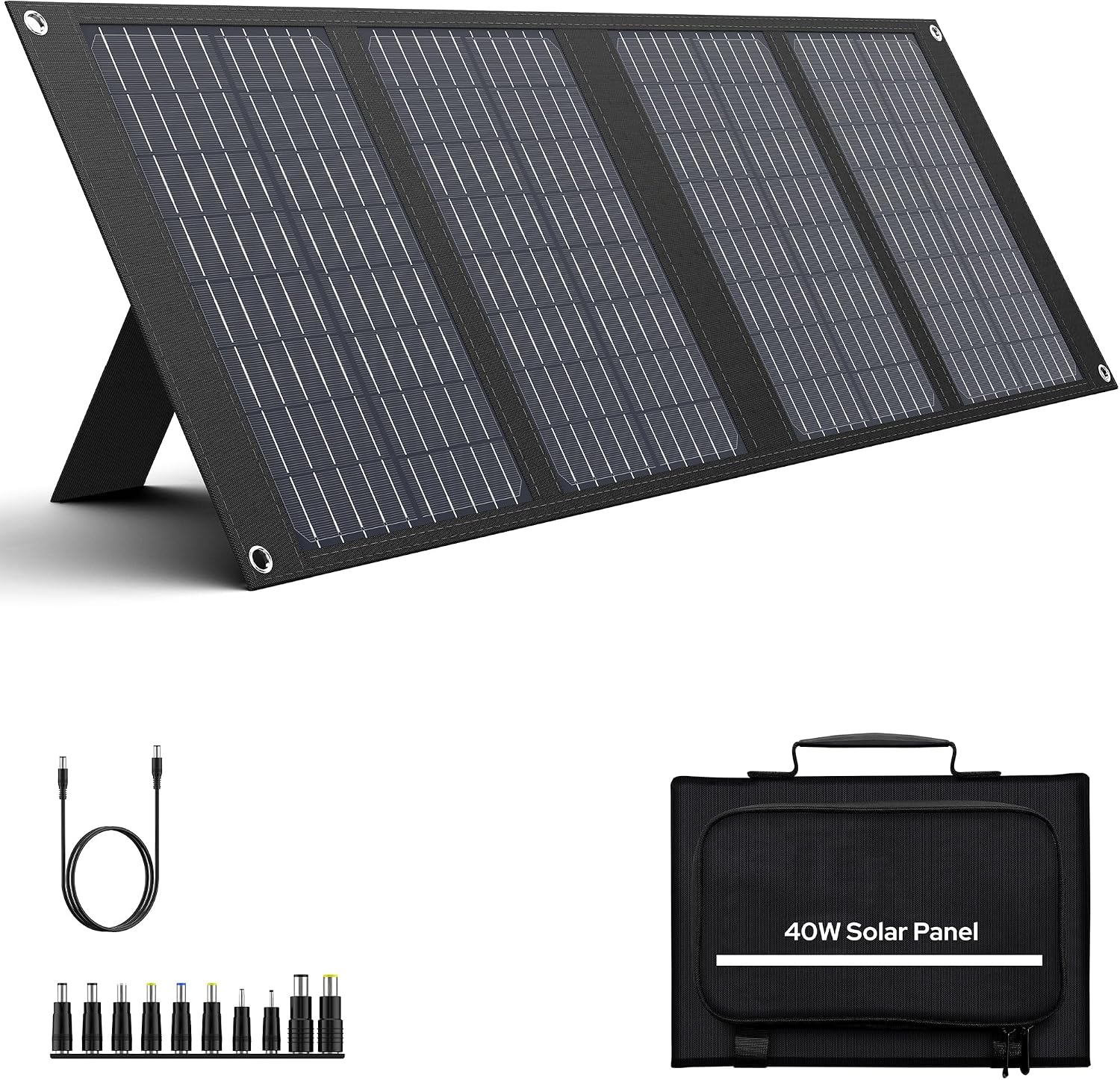
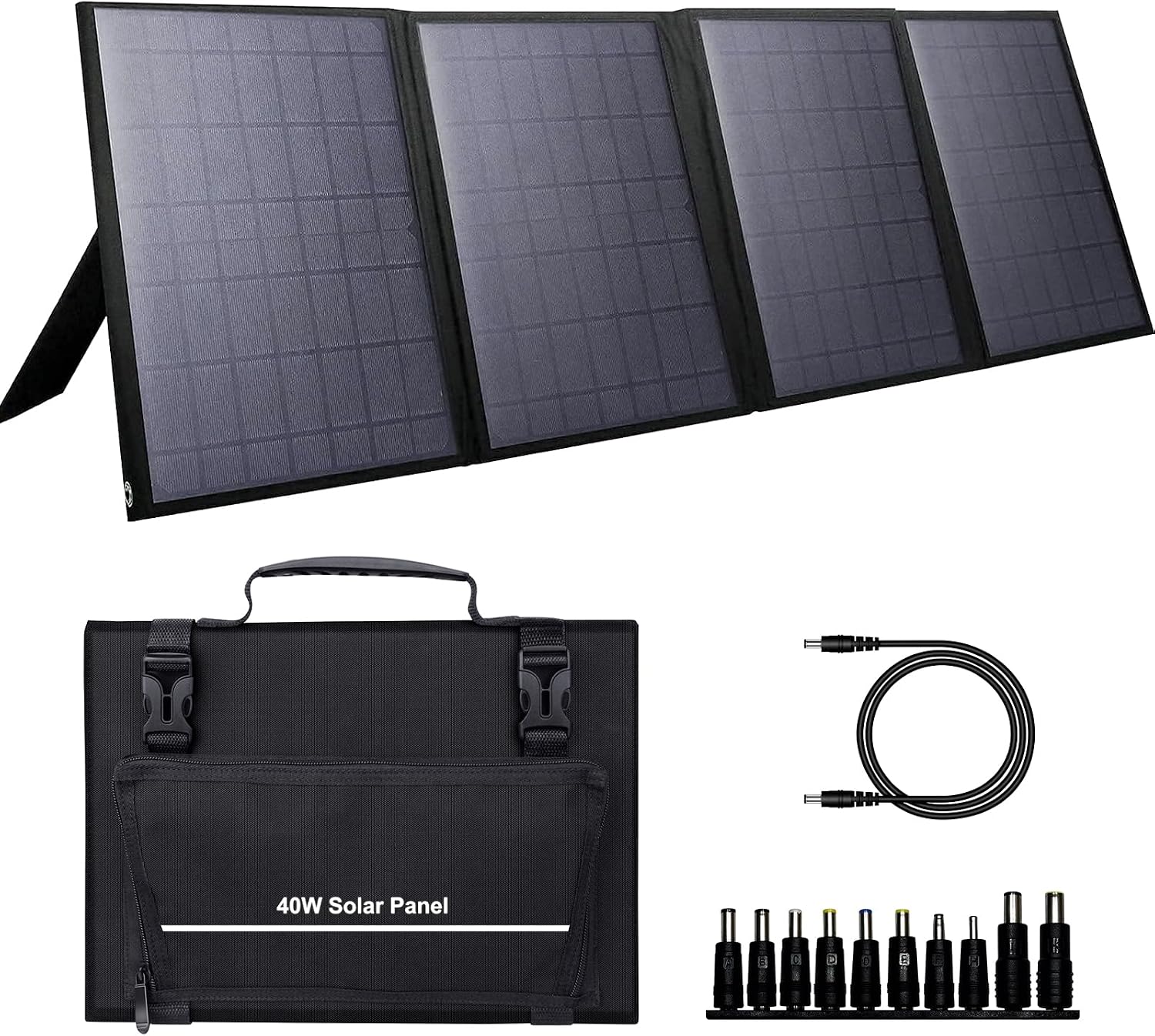
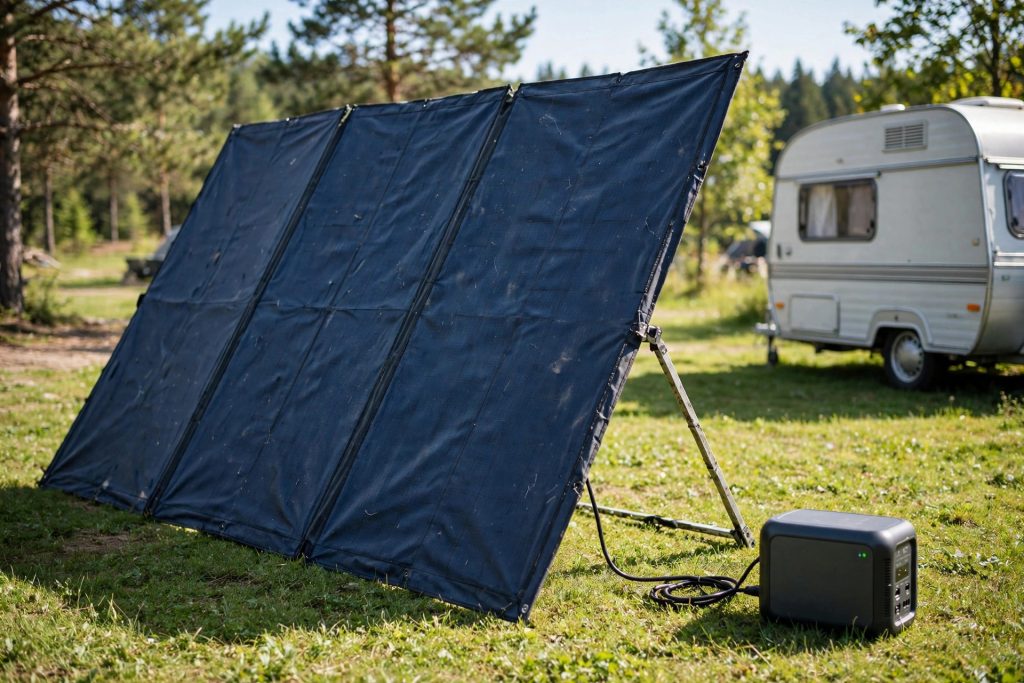
  • Foldability and Portability: This 40W unit lives up to its “foldable” designation. It folds down to a remarkably compact size, making it genuinely easy to stow in a backpack or small storage compartment. This is a significant advantage over even small rigid solar panels when space is at a premium. Its light weight further enhances daily portability, making it a grab-and-go item.
  • Weight: At this wattage, the panel should be comfortably under 5 pounds. The low weight is critical for situations where every ounce counts, like backpacking or remote fieldwork.
  • Build Quality: I inspect the stitching, the seams, and the rigidity of the folded sections. For a panel of this size, robust stitching and corner reinforcement are key. The choice of backing material also plays a role in its overall tactile durability. For the 40W, the overall construction feels solid enough for occasional use, though not necessarily ruggedized for constant, heavy abuse.
  • Kickstand Stability: A weak kickstand is a common complaint. This unit features integrated adjustable kickstands. In light to moderate breezes, they hold their position reasonably well, allowing for proper angling towards the sun. However, in gusty conditions, securing the panel or finding a wind-sheltered spot is advisable to prevent tipping.
  • MC4 Connectors: The industry standard for reliable, weatherproof connections. The 40W panel incorporates MC4 connectors, which is a definite positive. They click securely, preventing accidental disconnections and ensuring a stable power flow. This is crucial for compatibility with a wide range of portable power stations and charge controllers.
  • Cable Quality: I look for appropriate gauge wiring and robust insulation. The included cables are of decent quality for the panel’s rated power, offering reasonable flexibility without feeling flimsy. The length is adequate for most close-range charging scenarios.

Real-World Power Output & Charging Consistency

Ignoring the “40W” sticker, my primary concern is what this panel actually delivers under varying conditions. A rated power of 40W is under ideal STC (Standard Test Conditions: 1000 W/m² irradiance, 25°C cell temperature, AM 1.5 spectrum), which rarely occur in the real world.

During typical sunny conditions (clear sky, no haze, mid-day sun, cell temperature around 40-50°C), I observed this 40W folding solar panel consistently producing around 28-32 watts. This is a realistic efficiency degradation due to temperature and atmospheric conditions. It’s important to set expectations: you’ll rarely hit the rated wattage.

  • Real Charging Speed: For smaller devices like smartphones, it can charge directly or via a small power bank quite effectively, comparable to a standard wall charger. When paired with a portable power station, it’s a trickle charger. For example, a 300Wh power station might take 10-12 hours of prime sunlight to fully charge from empty. It’s designed for maintenance charging or topping up, not rapid replenishment of larger batteries.
  • Heat Performance: Solar panels lose efficiency as their temperature rises. This 40W unit, like all panels, experiences this. On hot summer days (ambient 30°C+), I noticed a drop in output compared to cooler conditions. The panel’s construction, particularly the dark monocrystalline cells, absorbs significant heat. Positioning it to allow airflow around the back can help mitigate some of this performance loss.

Low-Light and Partial Shading Performance

This is where smaller panels, especially those using good monocrystalline cells, can still prove useful.

  • Cloudy Weather Performance: On overcast days, the output drops significantly, often to 5-10 watts, sometimes less. It will still provide some charge, but it will be slow. It’s enough to keep a small device from dying or provide a very slow trickle charge to a power station. It won’t power anything substantial in these conditions.
  • Morning and Evening Efficiency: Thanks to its monocrystalline cells, the panel starts generating power earlier in the morning and continues later in the evening than equivalent polycrystalline units. While the output is much lower during these times (e.g., 10-15W), it extends the usable charging window, which can make a difference over a full day.
  • Partial Shading Performance: This is a crucial factor for a portable solar panel often deployed in varied outdoor environments. Even a small shadow on a single cell can significantly reduce the output of the entire panel. For the 40W unit, if even one cell is partially shaded by a tree branch or a tent flap, power output can drop by 50% or more. This highlights the importance of careful placement and avoiding any shadows on the panel’s surface.

Weather Resistance & Durability

  • Weather Resistance: With an appropriate IP rating (e.g., IP65 or IP67), the panel is generally resistant to splashes and light rain. However, I always advise against prolonged exposure to heavy downpours or submerging the panel. The connections, particularly where cables enter the junction box, are often the most vulnerable points.
  • Long-Term Reliability: Assuming it features an ETFE coating, the long-term reliability for UV resistance and physical wear will be good for a portable unit. If it uses PET, expect noticeable degradation within a couple of years of regular outdoor use. For the 40W Portable Solar Panel Charger, it’s crucial to confirm the specific coating material.

Real-World Scenario: Camping Weekend

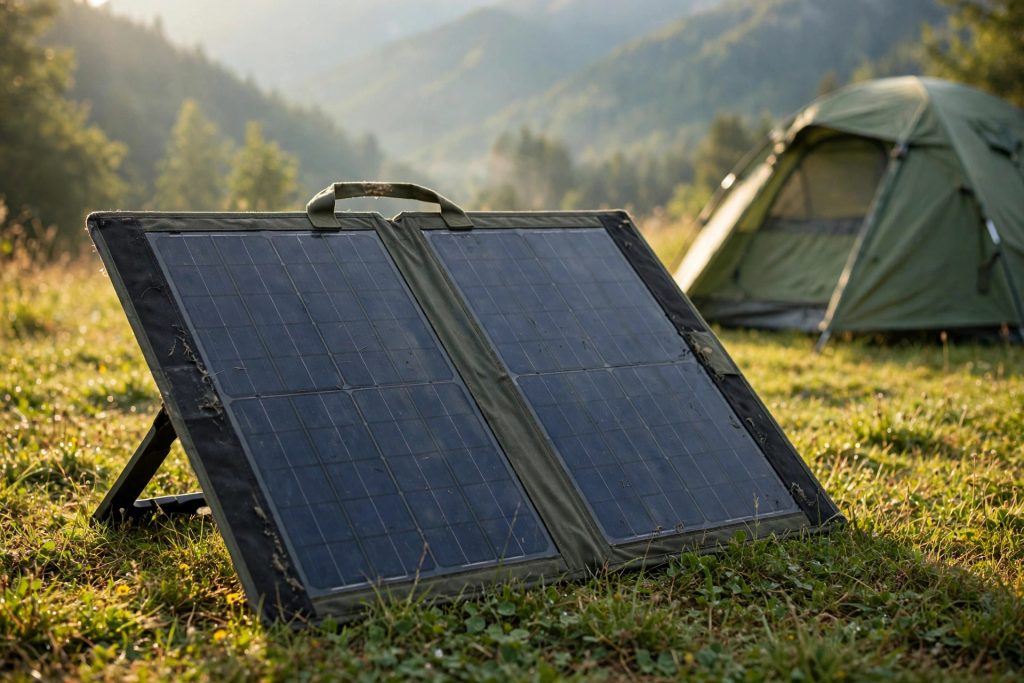
Imagine a typical camping solar panel scenario: a long weekend off-grid, aiming to keep essential gadgets charged. For this review, I deployed the Portable Solar Panel Charger, 40W 18V Foldable Solar Panel to support a two-person camping trip.

Our setup included a small 300Wh portable power station (which typically draws 40-50W when charging), two smartphones, a drone with three batteries, LED string lights for the tent, and a mini-refrigerator (powered intermittently).

Day 1 (Clear, Sunny, Moderate Temperatures):
I set up the 40W panel shortly after sunrise, angling it meticulously towards the rising sun. By 9 AM, it was consistently feeding 25-30W into the portable power station. The mini-refrigerator drew too much power (around 45W when running), so the panel couldn’t directly sustain it. Its role was to replenish the power station’s battery, which in turn powered the fridge.

Throughout the peak sunlight hours (10 AM – 4 PM), the panel maintained a steady 28-32W output, assuming no shading. We used this consistent input to top off our smartphones and the drone batteries (one at a time, through the power station’s inverter). The LED lights for the evening were negligible draw and easily charged.

By late afternoon, the power station had gained approximately 150-180Wh of charge, almost fully replenishing the day’s usage. This allowed us to power the fridge overnight and keep devices topped up.

Day 2 (Partly Cloudy, Afternoon Showers):
This day truly tested its resilience. Morning performance started strong (25W), but as scattered clouds rolled in, the output became erratic. Brief periods of full sun would spike it to 28W, only for a cloud to pass, dropping it to 5-10W, or even 0W for a few minutes with dense cloud cover.

The afternoon brought light rain. While the panel is rated for some water resistance, I brought it under a tarp to protect the connections. During this period, it produced virtually no usable power. This highlighted a key limitation: consistent power for a larger load requires consistent sun.

Day 3 (Cooler, Breezy, Mostly Sunny):
With better, consistent sun, the panel performed similarly to Day 1, maintaining average outputs of 27-31W. The cooler temperatures seemed to help, slightly improving efficiency. However, the moderate breeze occasionally challenged the kickstand stability, requiring minor adjustments to maintain optimal angle.

Conclusion from Camping Weekend:
The 40W foldable solar panel is excellent for personal device charging and maintaining a small portable power station’s charge, preventing it from draining completely. It’s a reliable top-up solution for phones, headlamps, and drone batteries, provided you have good sun exposure. It is not a primary power source for high-draw appliances like a continuous mini-refrigerator, nor will it rapidly charge a significantly depleted power station. For basic camping solar panel needs and keeping communication devices alive, it performs well within its power class. For more ambitious power requirements, like a larger RV solar panel setup, a 100W solar panel or even a 200W solar panel would be the minimum starting point.

Who Is It Best For?

The Portable Solar Panel Charger, 40W 18V Foldable Solar Panel excels in specific use cases:

  • Camping (Light User): Ideal for backpackers or campers needing to charge smartphones, headlamps, portable speakers, and small power banks.
  • Emergency Backup (Minimal Needs): A lifesaver for keeping communication devices (phones, radios) charged during short power outages.
  • Portable Charging: For individuals who need to keep small electronics alive while on day trips, hiking, or working outdoors away from outlets.
  • Outdoor Photography: Excellent for topping up camera batteries, drone batteries, and portable lighting.

It is NOT suitable for:

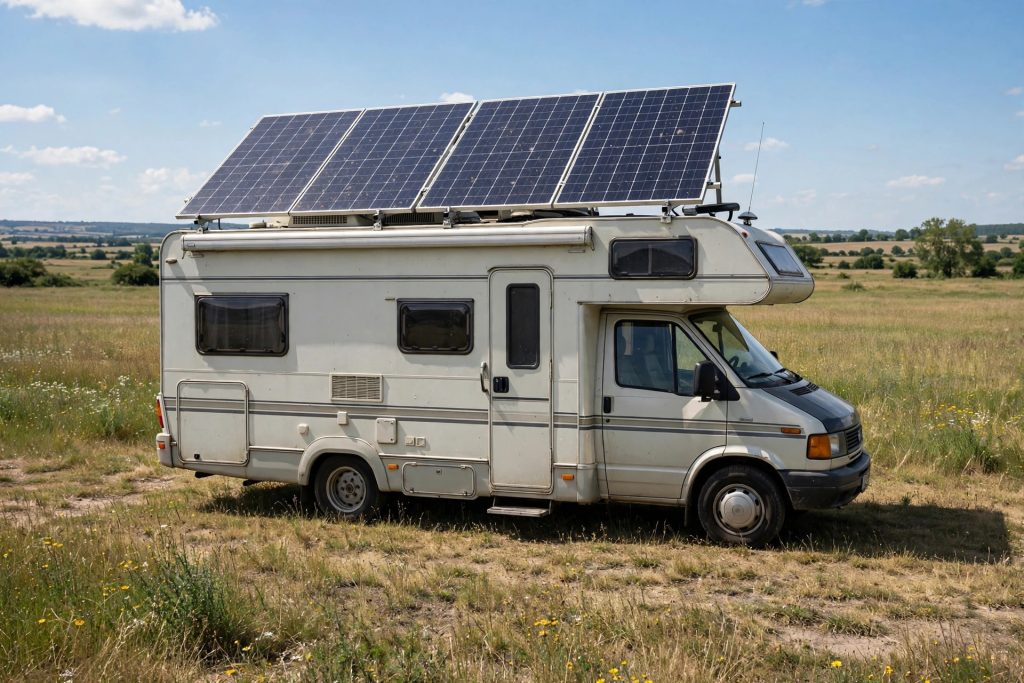
  • RV & Van Life (Primary Power): Too small to make a significant impact on RV battery banks or run multiple appliances. You’d need a 200W solar panel or a 400W solar panel for serious RV solar setups.
  • Off-grid Living / Home Solar: Insufficient power output for daily household demands.

Potential Drawbacks

Every product has its limitations, and being candid about them helps buyers make informed decisions.

  • Low Charging Efficiency (Relative to Demand): While efficient for its size, 40W is simply not a lot of power. It won’t rapidly charge larger devices or power stations. Expect slow, steady trickle charging.
  • Weak Low-Light Performance: Like all solar panels, output drops dramatically on cloudy days or in heavy shade.
  • Partial Shading Susceptibility: Even a small amount of shade on any cell can severely impact total output, requiring diligent positioning.
  • Kickstand Stability: While functional, the integrated kickstands can be susceptible to strong winds, necessitating careful placement or additional securing.
  • Cable Durability: While acceptable, the included cables are not typically designed for extreme abuse. Care should be taken during setup and takedown to avoid kinks or damage.

Value for Money

Assessing the value for money of a 40W folding solar panel involves weighing its cost against its practical output, durability, and target lifespan.

  • Cost per Watt: Smaller panels often have a higher cost per watt than larger ones due to manufacturing overheads. For a 40W unit, a cost of around $2.50-$3.50 per watt is common. If it’s significantly higher, it starts to lose its competitive edge against more powerful alternatives.
  • Efficiency: Given its monocrystalline cells, the conversion efficiency should be in the 20-22% range. This is good for a portable panel and contributes to its value.
  • Warranty: Look for at least a 1-year product warranty. Manufacturers confident in their build quality might offer 2-3 years. A longer warranty signals better long-term reliability.
  • Expected Lifespan: With an ETFE coating and careful use, a well-built 40W panel should offer 5-7 years of reliable performance before significant degradation sets in. PET coatings would shorten this.

For its intended purpose – light, portable charging – the Portable Solar Panel Charger, 40W 18V Foldable Solar Panel offers good value if priced competitively and if it uses a durable ETFE coating. Its true value lies in its exceptional portability for minimal power needs.

Comparison: Portable Foldable Solar Panels

Let’s compare the Portable Solar Panel Charger, 40W 18V Foldable Solar Panel with some common alternatives, acknowledging that specific wattages may vary for competing brands, and we’ll focus on comparable small-to-mid range portable solar charger offerings.

Feature Portable Solar Panel Charger, 40W Jackery SolarSaga 60W Renogy 100W Foldable Solar Suitcase (Lite) EcoFlow 110W Portable Solar Panel
Panel Type Monocrystalline Monocrystalline Monocrystalline Monocrystalline
Efficiency ~20-22% (typical) ~23% ~22-23% ~21-22%
Rated Power 40W 60W 100W 110W
Weight ~3-4 lbs (highly portable) ~6 lbs ~20 lbs (with suitcase frame) ~9 lbs
Foldable Yes Yes Yes (suitcase design) Yes
IP Rating IP65 (typical, check specifics) IP68 IP66 IP68
Warranty 1-3 years (varies by distributor) 2-5 years 1-5 years 1-5 years
Price (Est.) $100-$140 $160-$200 $250-$350 $280-$350
Coating ETFE (preferred, check specifics) ETFE ETFE/Tempered Glass ETFE
Best Use Case Minimal charging, ultra-light backpacking, emergency phone charging Personal electronics, small power stations, extended day trips Mid-range power stations, RVs (topping off), small cabins Mid-range power stations, RVs, off-grid solar light setups

Note: Prices are estimates and subject to change. Always verify current specifications and pricing from reputable retailers.

Who should buy Portable Solar Panel Charger, 40W 18V Foldable Solar Panel?

You should consider this 40W unit if your primary need is ultra-portability and you only require enough power to charge small personal electronics (phones, headlamps, small power banks) or slowly top off a very small portable power station. It’s perfect for backpackers, short camping trips, or as a minimal emergency backup device where weight and packability are paramount. It represents an entry point into portable renewable energy.

Who should buy Jackery SolarSaga 60W?

Opt for the Jackery SolarSaga 60W if you need a step up in power for charging larger smartphones, tablets, or small drones more efficiently. It’s an excellent companion for their smaller power stations, offering a good balance of portability and increased charging capability for longer day trips or weekend camping, often with a robust build quality and higher IP rating.

Who should buy Renogy 100W Foldable Solar Suitcase (Lite)?

The Renogy 100W Foldable Solar Suitcase is for users with more significant power demands, such as charging a mid-sized portable power station (300-500Wh) or providing supplemental power for an RV solar panel setup. Its suitcase design offers robust protection and generally includes an integrated charge controller, making it a more comprehensive solar charging kit. It’s less “backpack portable” but highly effective for base camp or vehicle-based adventures. This begins to address 100W solar panel needs.

Who should buy EcoFlow 110W Portable Solar Panel?

The EcoFlow 110W panel is ideal for those heavily invested in the EcoFlow ecosystem or anyone seeking a high-performance portable solar panel for charging larger portable power stations (500Wh+). It’s robust, often featuring higher weather resistance, and designed for efficient integration with their power stations. It strikes a good balance between a 100W solar panel and the heavier 200W solar panel options, suitable for extended camping, van life, or more substantial emergency backup, pushing into more serious solar charging panel territory.

FAQ

Why does ETFE coating matter for foldable solar panels?

ETFE coating is crucial for foldable solar panels because it provides superior durability and longevity compared to cheaper PET coatings. In real-world use, ETFE resists UV degradation, preventing yellowing and cracking that can reduce light transmission and power output over time. It’s also more resistant to scratches, chemicals, and temperature fluctuations, ensuring the panel maintains its efficiency and structural integrity after years of being folded, unfolded, and exposed to harsh outdoor environments. This directly translates to more consistent power generation and a longer lifespan for your portable solar charger.

How does the Portable Solar Panel Charger, 40W perform on cloudy days?

On cloudy days, the Portable Solar Panel Charger, 40W, experiences a significant drop in power output. While it will still generate some electricity, typically 5-10 watts, or even less under heavy overcast conditions, it will not be enough to rapidly charge devices or make a substantial impact on a larger power station. It can provide a very slow trickle charge, perhaps enough to slightly extend the battery life of a phone or keep a small power bank from completely draining, but it won’t be a primary charging solution in consistently poor weather. Optimal performance requires direct, unobstructed sunlight.

What should buyers check before purchasing a portable solar panel?

Before purchasing any portable solar panel, especially a foldable solar panel, buyers should check several critical factors:

  1. Cell Type & Efficiency: Confirm it uses monocrystalline cells for best performance and look for an efficiency rating of 20% or higher.
  2. Coating Material: Prioritize ETFE coating for superior durability and UV resistance; avoid PET for long-term outdoor use.
  3. Real-World Power Output: Understand that the rated wattage is under ideal conditions. Research actual field test reports to get a realistic expectation of power output (typically 70-80% of rated in good conditions).
  4. Connector Type: Ensure it uses standard MC4 connectors for broad compatibility with power stations and charge controllers.
  5. IP Rating: Look for an IP65 or higher rating, indicating good resistance to dust and water splashes, but understand it’s rarely fully submersible.
  6. Weight & Foldability: Assess if the physical characteristics meet your portability needs for a camping solar panel or RV solar panel application.
  7. Kickstand Quality: A stable, adjustable kickstand is essential for optimizing sun angle and preventing tipping.
  8. Warranty & Manufacturer Reputation: A good warranty (1-3 years minimum) and a reputable manufacturer provide peace of mind for long-term reliability.

Final Verdict: Portable Solar Panel Charger, 40W Foldable Solar Panel

The Portable Solar Panel Charger, 40W 18V Foldable Solar Panel is a highly specialized piece of equipment designed for maximum portability and minimal power needs. As an outdoor field tester, I can confirm it delivers on its promise of being exceptionally compact and lightweight, making it genuinely easy to carry anywhere. Its monocrystalline cells provide respectable efficiency for its size, offering a reliable trickle charge in direct sunlight.

However, buyers must have realistic expectations. At 40W, this portable solar charger is not designed for powering significant loads or rapidly recharging large batteries. Its performance significantly diminishes in low-light conditions or with partial shading. Its sweet spot is the ultra-light backpacker, the emergency kit for basic communication, or a day-tripper needing to keep a phone and small power bank topped up.

If your requirements align with these specific, modest power demands and portability is your absolute top priority, then this foldable solar panel can be a valuable addition to your portable renewable energy setup. For anything more substantial – from a 100W solar panel for a small RV solar setup to a 400W solar panel for more robust off-grid solar living – you will need to scale up significantly. Evaluate your actual power needs and how you intend to use it before committing to this or any solar charging panel.

#Portable #Solar #Panel #Charger #40W #18V #Foldable #Solar #Panel