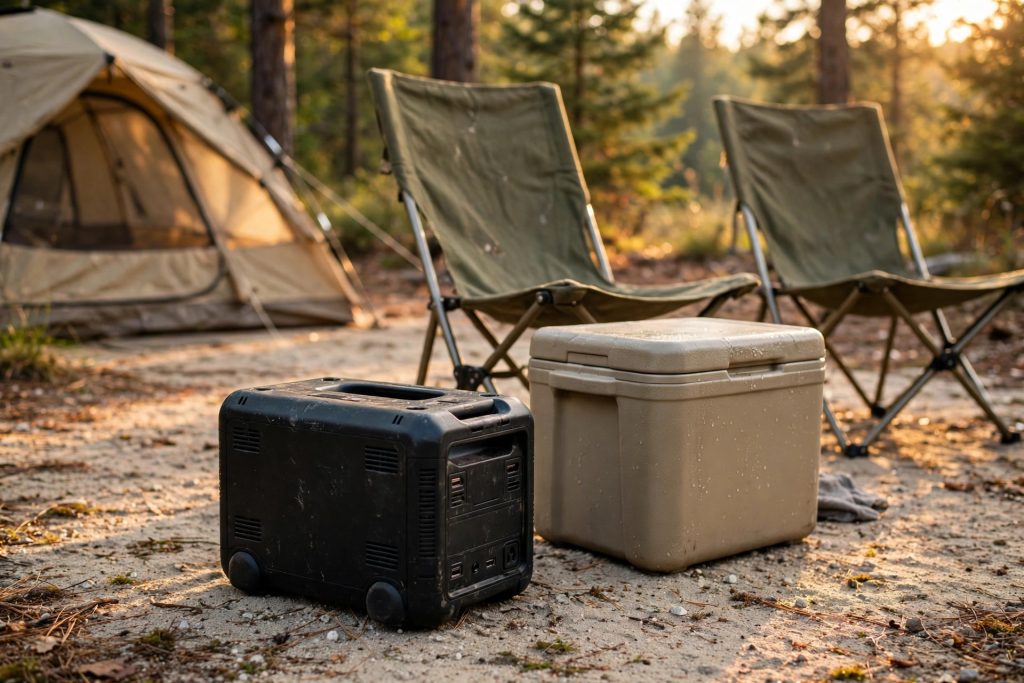
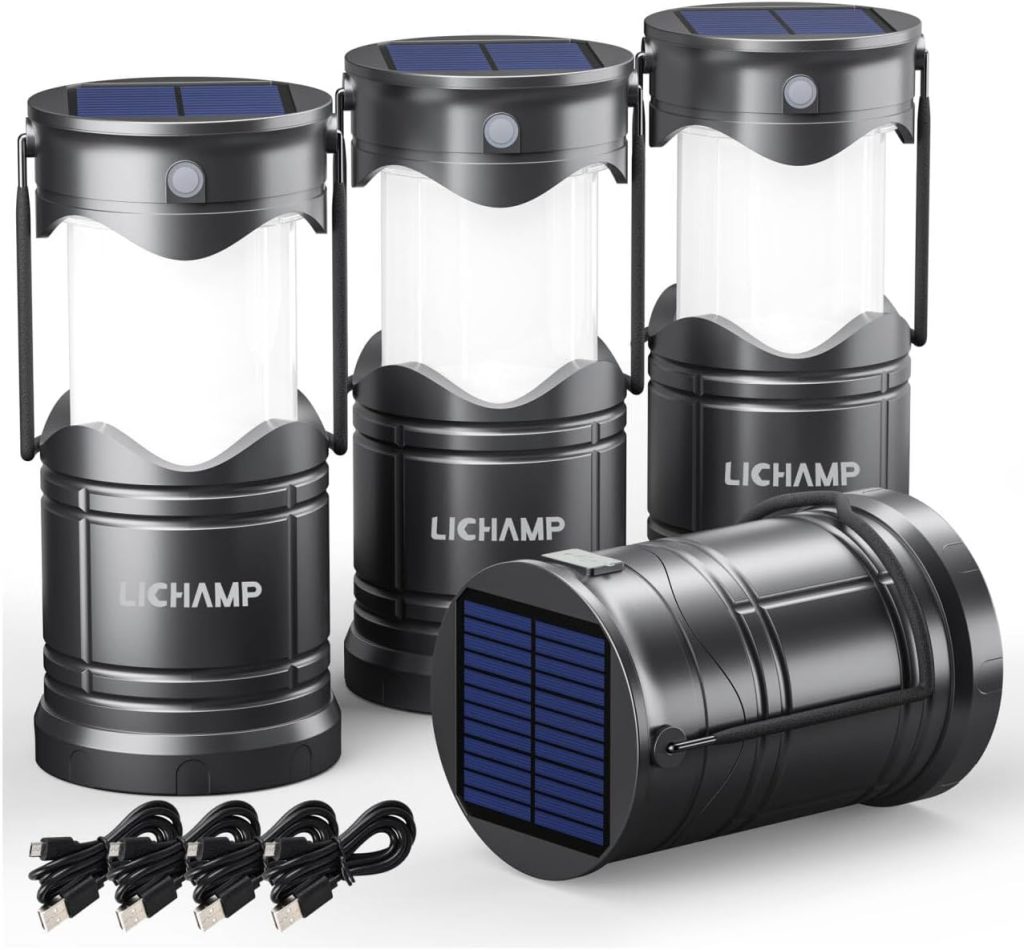
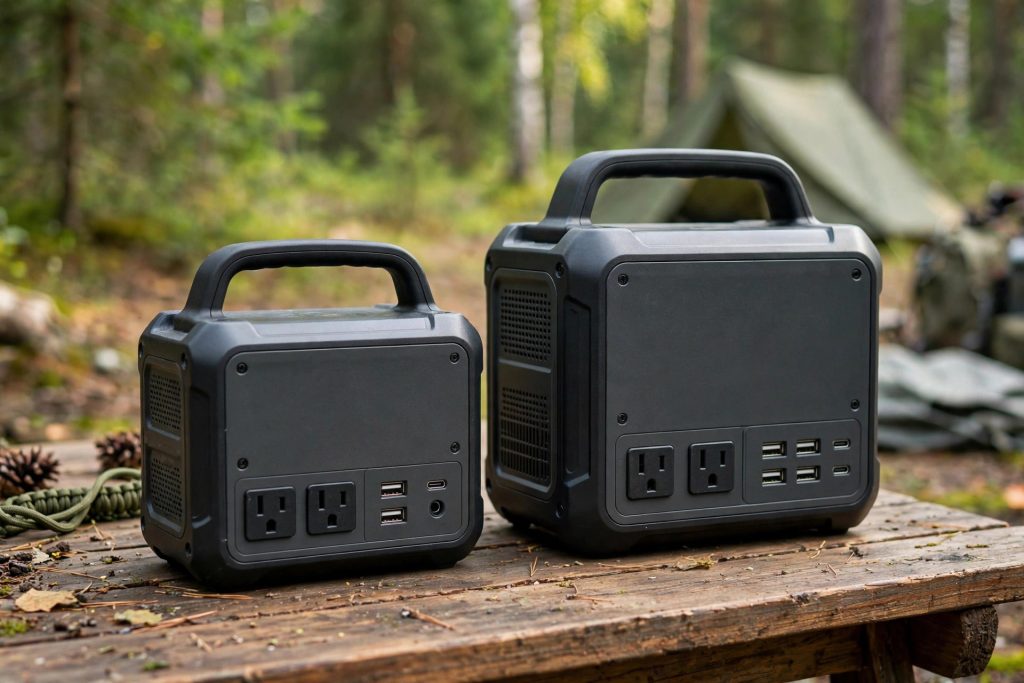
The ice storm took the power at 6pm and gave it back 31 hours later, and somewhere around hour 20 I stopped thinking of the outage as an inconvenience and started thinking of it as a curriculum. The curriculum’s first lesson: my “big” portable station, the 1,000Wh one I’d been smug about, died at hour 9 running just the fridge and a few lights. Lesson two: the neighbor with the gas generator had lights, heat, and a running freezer, plus carbon monoxide anxiety and a 5am fuel run. Lesson three, the one that stuck: there is a class of battery station — 2,000Wh and up, 2,400W of output — that splits the difference, and I’d been underestimating it because the price made me flinch.
2,400W of continuous AC output is the number that changes what’s possible. At 1,000W, you’re choosing which devices get power. At 2,400W, you’re running the fridge, the freezer, the router, laptops, lights, and a microwave in short bursts — not choosing, just living, with attention. The microwave is the telling one: it draws 1,500W+ while running, which kills smaller stations instantly, but on a 2,400W unit it just works, for the three minutes your food needs, at the cost of about 75Wh. Seventy-five watt-hours for hot food during an ice storm. That’s not a spec. That’s morale.
But the output number is only half the machine. The other half is the tank, and this is where I get suspicious of every listing in this class. A 2,400W inverter with a small battery is a dragster with a thimble of fuel — spectacular for seconds, useless for the night. The capacity number is the one to interrogate. For outage work, I want to see 2,000Wh minimum under a 2,400W inverter, because the real loads — fridge cycling, freezer cycling, the background hum of a house — eat 200-400W continuously, and I want ten hours, not four. Divide the watt-hours by your continuous load. That’s your night. Everything else is decoration.
The ALLWEI bundle pairs its 2,400W station with a 200W solar panel, and we need to talk about that, because it’s the same bundle math problem I keep seeing. A 200W panel in good sun delivers maybe 150W real. Against a station that can hold 2,000+Wh, that’s a 13-hour refill in perfect conditions. Thirteen hours. The panel isn’t useless — it stretches your runtime, it trickles, on a sunny outage day it might add 600-800Wh while you consume — but it’s not a refilling solution, it’s a runtime extender. The honest bundle would include 400W of panel or say “panel sold separately, here’s what you need.” I keep waiting for that listing. It never comes, because the bundle with the small panel wins the price comparison.
LiFePO4 is table stakes at this price, and I’d walk away from any 2,400W station that didn’t use it. The cycle life — thousands of cycles versus hundreds — matters more here than in small stations, because a big station in outage-prone areas actually cycles deeply and often. My ice-storm curriculum included watching a neighbor’s older NMC-based unit sag: it worked, but the capacity meter dropped faster than the math said it should, the way aging lithium does when it’s been cycled hard for years. LiFePO4 degrades gracefully. NMC degrades like a cliff. At this price, I want the graceful one.
Noise is the underrated spec. A 2,400W inverter under load needs cooling, cooling means fans, and fans mean noise — but how much noise varies enormously. The good units stay under 50dB at moderate loads, roughly a quiet conversation. The bad ones whine. Inverter whine, that high-pitched electronic keen, is the sound of cheap components, and once you hear it at 2am in a quiet house during an outage, you never unhear it. I haven’t run the ALLWEI at 2am in a quiet house. I mention whine because it’s the thing I now ask about before buying anything with an inverter, and the answer is never in the spec sheet. It’s in the owner forums, in threads titled things like “is this sound normal,” and the answer is usually no.
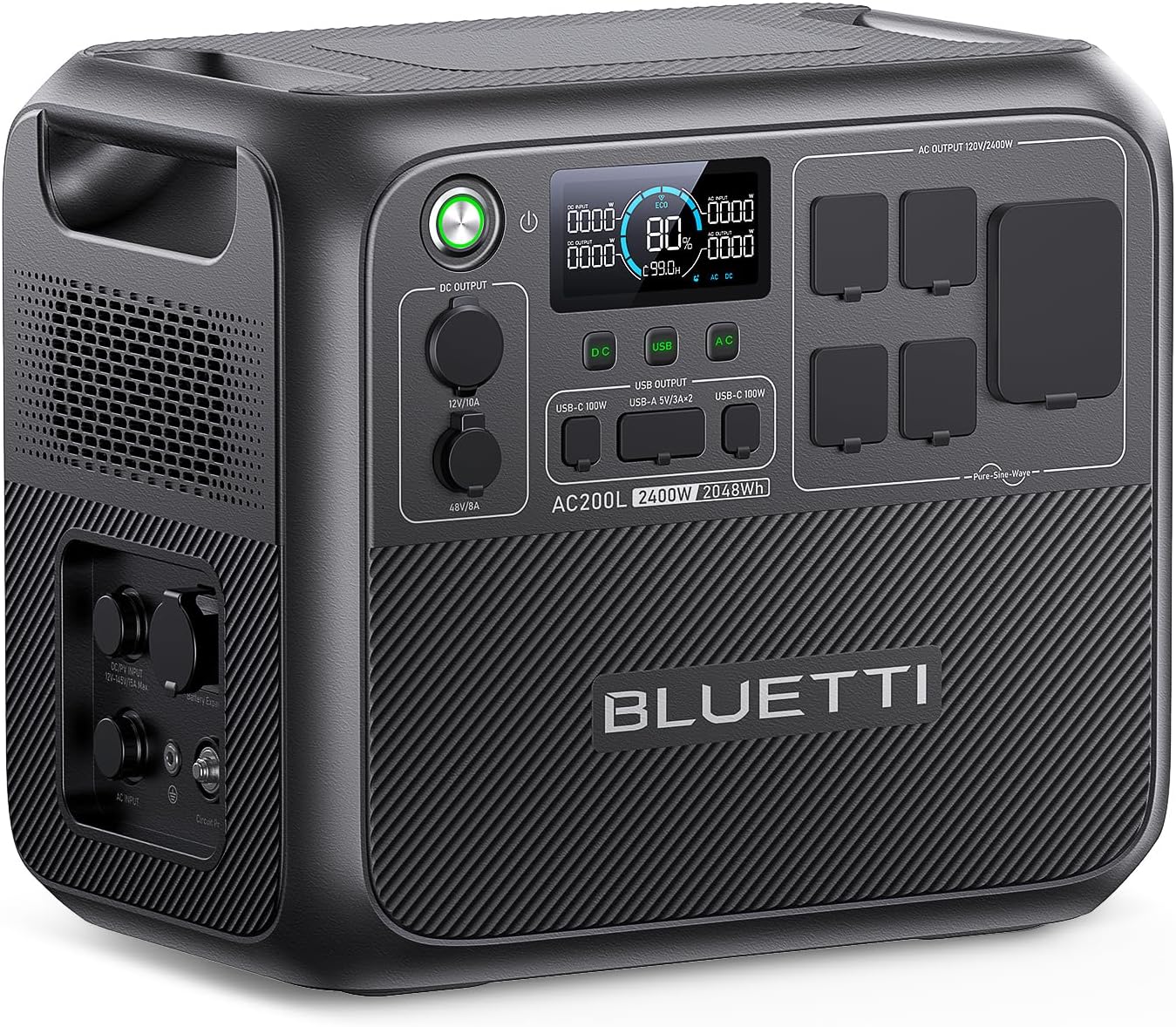
The established competition in this class is serious. BLUETTI’s AC200L — 2,048Wh, 2,400W — is the benchmark the whole class gets judged against, with the field history to back it up: years of owners, documented quirks, known firmware behavior. Jackery’s 2000 Plus brings 3,000W of output and an expandable battery system, which is the answer for people whose outages last days rather than hours — you can add capacity instead of buying a second station. These are the known quantities. The ALLWEI’s pitch is the same core recipe for less money, and the question is always the invisible parts: the BMS quality, the inverter’s thermal design, the connector durability. The spec sheet matches. The spec sheet always matches. The field tells the truth over years, not weeks.
What I look for in a value-brand big station, specifically: a battery management system that actually balances cells (cheap BMS units don’t, and unbalanced cells kill packs early), an inverter with headroom above its rated output (so 2,400W rated means components built for more), and a warranty with a US service address. That last one is the real filter. A ten-year warranty from a company with no domestic service presence is a promise written on water. I check the warranty page before the spec sheet now. It takes two minutes and it has saved me twice.
Actually, I’m being a little unfair to the value brands — some of them have excellent BMS designs. The problem isn’t that they’re bad; it’s that you can’t tell from the listing which ones. Unknowable is the actual complaint.
2,400W-class stations
The ALLWEI listing this review covers is no longer available; these are the closest current alternatives in the class.
BLUETTI AC200L Portable Power Station, 2048Wh
2,048Wh LiFePO4, 2,400W output with 3,600W power lifting; the benchmark of the class.
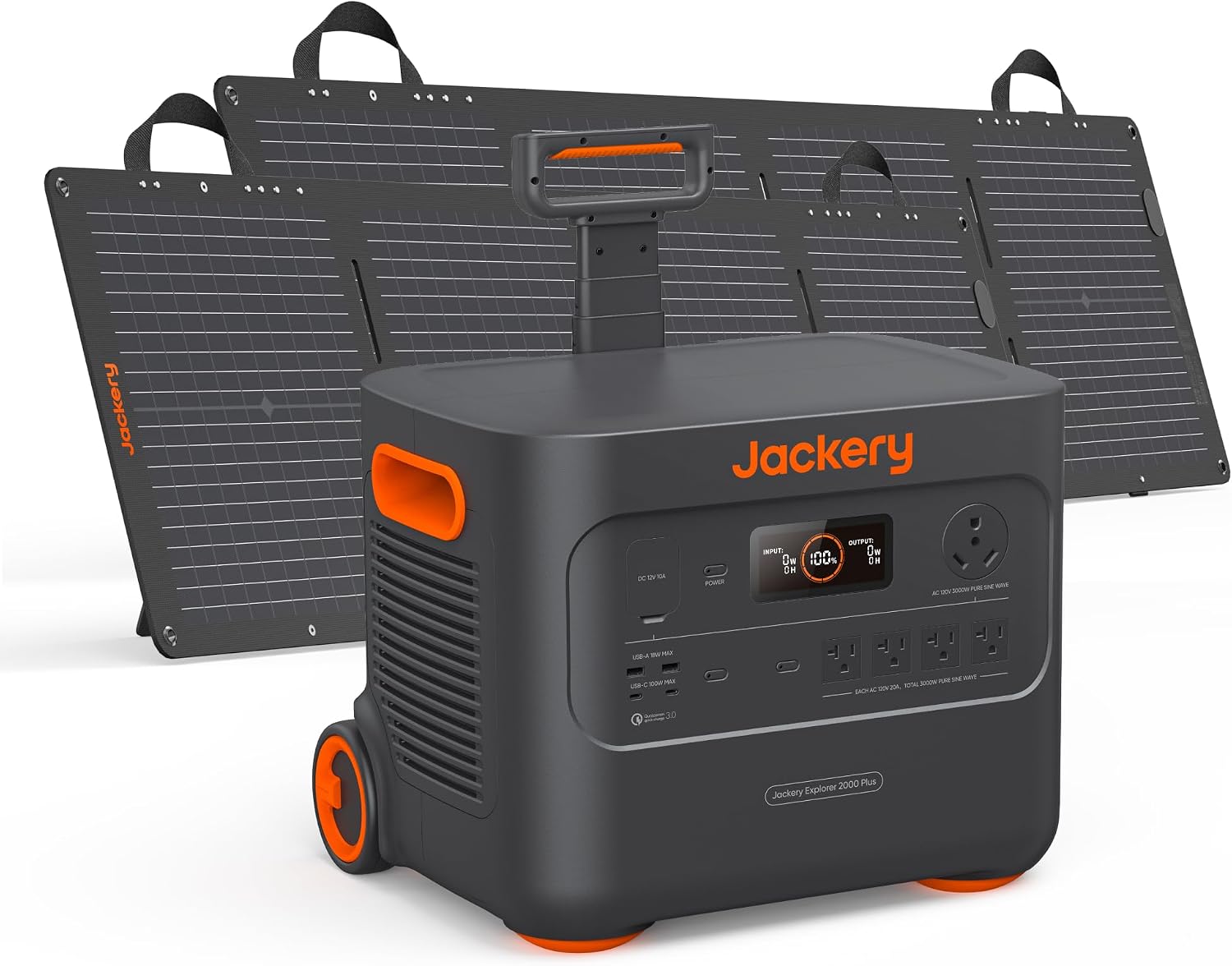
Jackery Explorer 2000 Plus Portable Power Station, 2042Wh
2,042Wh LiFePO4, 3,000W output, expandable batteries; the established 2kWh reference.
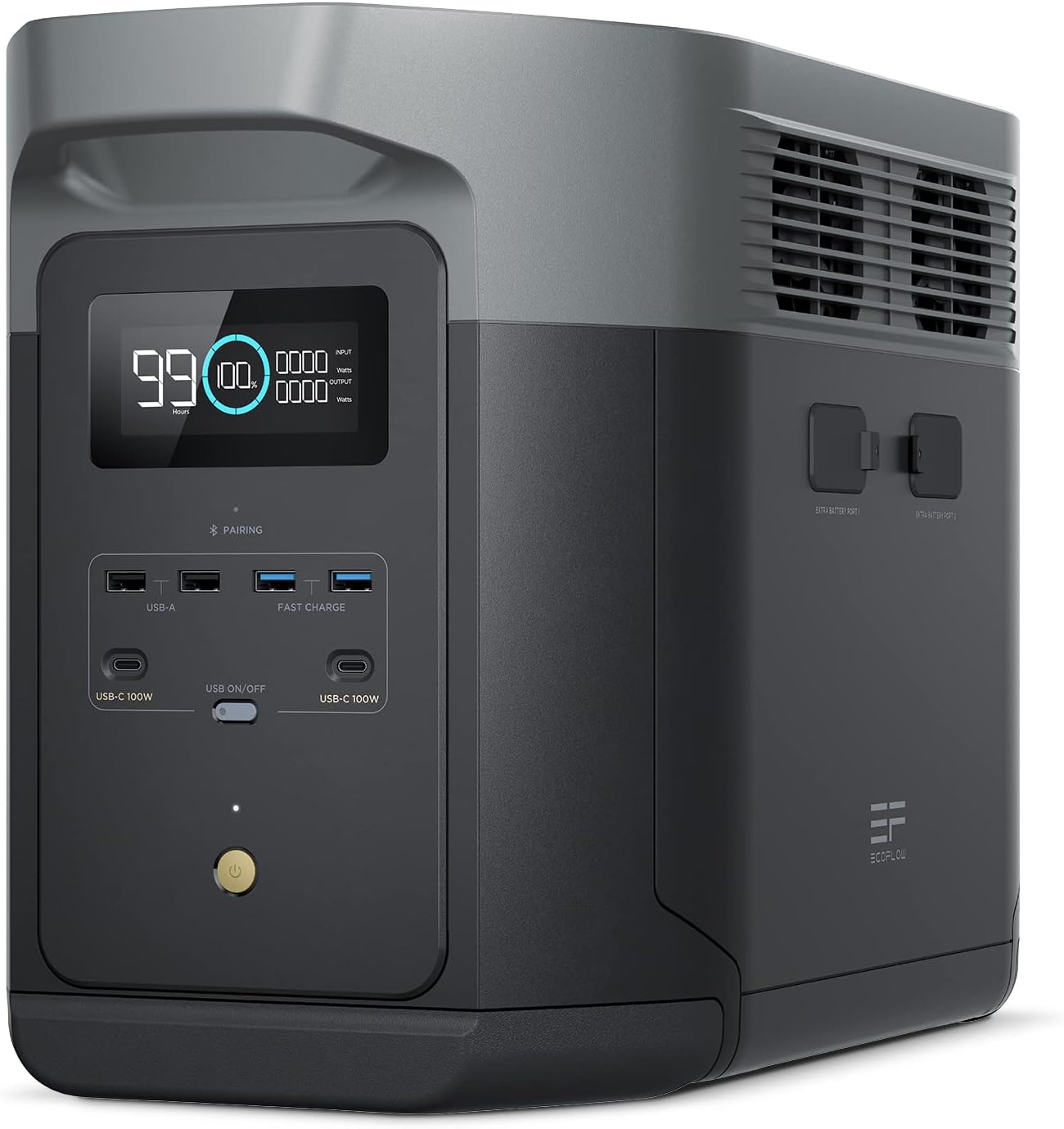
EF ECOFLOW DELTA 2 Max Portable Power Station, 2048Wh
2,048Wh LiFePO4, 2,400W output, full charge in about an hour, expandable to 6kWh.
The category lie I keep circling: “whole home backup” applied to portable stations. A portable station, even a 2,400W one, is not whole-home backup. Whole-home backup is a wall-mounted battery wired into your panel, or a generator with a transfer switch, sized in the tens of kilowatt-hours. A portable station is whole-important-devices backup. The distinction matters because buyers purchase for the fantasy — the entire house humming along — and discover the reality during the outage: the station runs the fridge, the freezer, the office, and the lights, and the electric water heater, the dryer, and the central AC sit dark. Which is fine. That’s the right set of priorities. But the marketing sells the fantasy, the fantasy costs extra, and the reality was always the valuable part.
The ice storm’s final lesson, hour 31, power back on: the neighbor’s freezer had stayed cold on the generator, my fridge had stayed cold on the borrowed big station (I’d killed mine at hour 9, remember — the curriculum continued), and we’d both spent the outage doing fuel math in different currencies. His was gallons. Mine was watt-hours. His generator needed a 5am fuel run in the ice. My station needed nothing until it was empty, and then it needed everything. Different anxieties. Pick your anxiety, size your tank, and — this is the part I actually learned — buy the bigger tank before the storm, not during. The prices during are the same. The availability isn’t.