
I bought a 40W folding panel thinking it would charge my power station. That was the X. The Y, discovered on the first trip, was that a 40W panel is a phone charger that folds, not a power station charger that happens to be small. The math I should have done beforehand: 40W rated, maybe 30W real in good sun, and my station wanted 200Wh to fill. Thirty watts into 200 watt-hours is the better part of a day. A whole day of perfect sun, which doesn’t exist. I spent that trip charging phones and feeling foolish, which — to be fair — the panel did fine.
Here’s what a 40W folding panel actually is: the largest solar charger you can still reasonably call portable, and the smallest panel worth unfolding. Below this size, you’re in phone-charger territory — 20W, 28W, the roll-up-and-toss-in-a-daypack class. At 40W, with 18V of panel voltage and USB outputs, you’ve got enough to charge two phones simultaneously at full speed, top up a camera battery, keep a tablet alive, or trickle a small power bank through the afternoon. It’s the sweet spot for “I want solar but I’m not hauling a suitcase panel.” I wish someone had framed it that way before I bought mine. Instead the listing showed it charging a power station, and I believed the photo.
Real output: in direct midday sun, properly angled, expect 28 to 33W from a panel rated 40W. That’s 70-80%, the standard portable-panel haircut — heat, angle, the usual. Under light cloud, 10-15W. Under heavy cloud, 3-5W, which is enough to make your phone’s charging icon appear and not much else. I tracked this obsessively for one weekend with a USB power meter, because I’m that person now, and the numbers were depressingly consistent. The panel never surprised me. It just never matched the box, either. The box says 40W. Physics says 30. Marketing says “up to.” That “up to” is doing a lot of work.
Foldable means compromises, and the honest ones are in the hinges and the fabric. A folding panel is solar cells laminated onto fabric sections joined by hinges, and the failure points are exactly where you’d expect: the hinge wiring, after hundreds of folds, and the fabric, after summers of UV. The good ones use ETFE lamination and reinforced hinge points. The cheap ones use PET film that hazes over in a year and hinges that crack. You can’t tell from the listing photos. You can tell from the price, roughly, and from reviews that mention the panel after a year of use — which is the only review worth reading for folding gear. Launch reviews tell you it worked on day one. Everything works on day one.
Weight and pack size are the reason this category exists. A 40W folder packs down to roughly the size of a magazine and weighs two to three pounds. It fits in a backpack’s laptop sleeve. That’s the whole pitch: solar you actually bring, because the best panel is the one that’s with you. My 400W suitcase stays home on day hikes. The 40W folder goes everywhere. I’ve charged my phone from a rock at 11,000 feet with it, which is a stupid sentence to type but a great feeling to have. The panel doesn’t care about the altitude. It cares about the sun, and there was plenty.
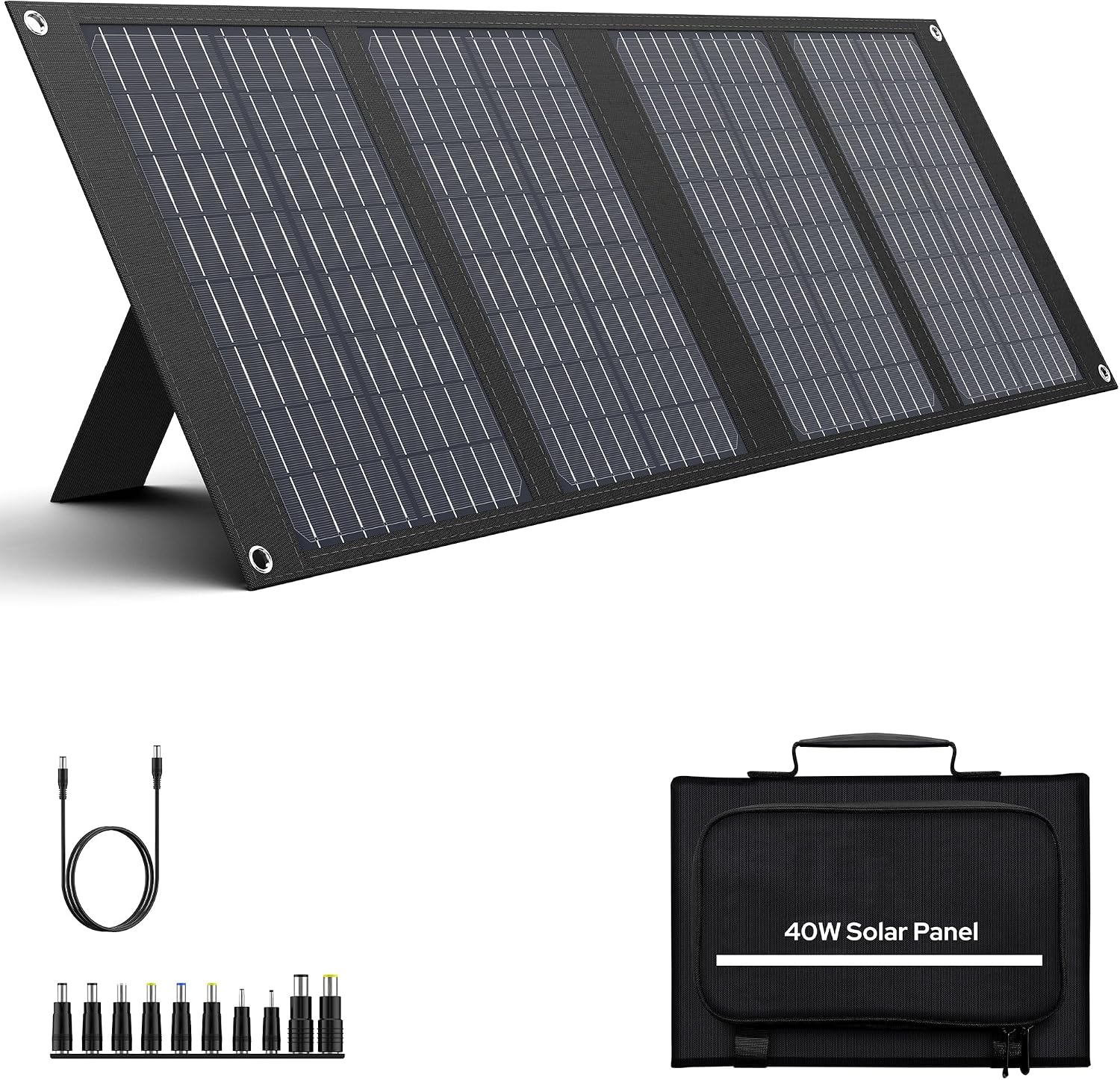
The three contenders in this size class all look similar in photos and differ in the details. The Apowking 40W is the value play — 18V folding panel, USB outputs, the standard feature set at a price that makes you suspicious. And suspicion is warranted in this category; the 40W class is crowded with white-label panels wearing different brand stickers. What separates them isn’t the cells — the cells mostly come from the same factories — it’s the lamination, the hinge quality, and whether the USB circuitry actually delivers its rated current or sags under load. A USB port that claims 2.4A but delivers 1.5A when the panel is warm is the kind of lie you only catch with a meter.
LUMOPAL’s 40W takes the slightly-premium position, and the premium in folding panels usually buys you better fabric and more honest USB specs. ZeroKor’s 40W sits in the same bracket. Between the three, I’d look at the things the photos don’t show: the weight (lighter usually means thinner lamination, which is a trade-off, not a win), the number of USB ports and their actual rated output, and whether there’s a USB-C port or just USB-A. USB-C matters now in a way it didn’t three years ago — half my gear charges over USB-C, and a panel with only USB-A means carrying an extra cable and losing efficiency to an adapter. Small thing. Annoying every single time.
Actually, I’m being too harsh on USB-A — half the gear at any campsite still charges over USB-A, and it’ll be true for years. The future is USB-C. The present is both.
I haven’t meter-tested all three side by side. My experience is one 40W panel, two summers, and a USB meter. What I can say generally: in this class, buy on build quality signals, not wattage claims, because the wattage claims are all 40W and they’re all equally optimistic. Look for ETFE instead of PET. Look for real reviews mentioning a year of use. Look for a brand that answers support emails — I emailed two panel makers with a warranty question once, and the one that replied in a day got my money. The one that never replied is still selling panels. The market doesn’t punish silence enough.
40W folding panels
Same class, same honest ~30W real output. Buy on build quality, not wattage claims.
Apowking 40W Foldable Solar Panel Charger
18V folding 40W panel with USB outputs; the value play in the 40W class.
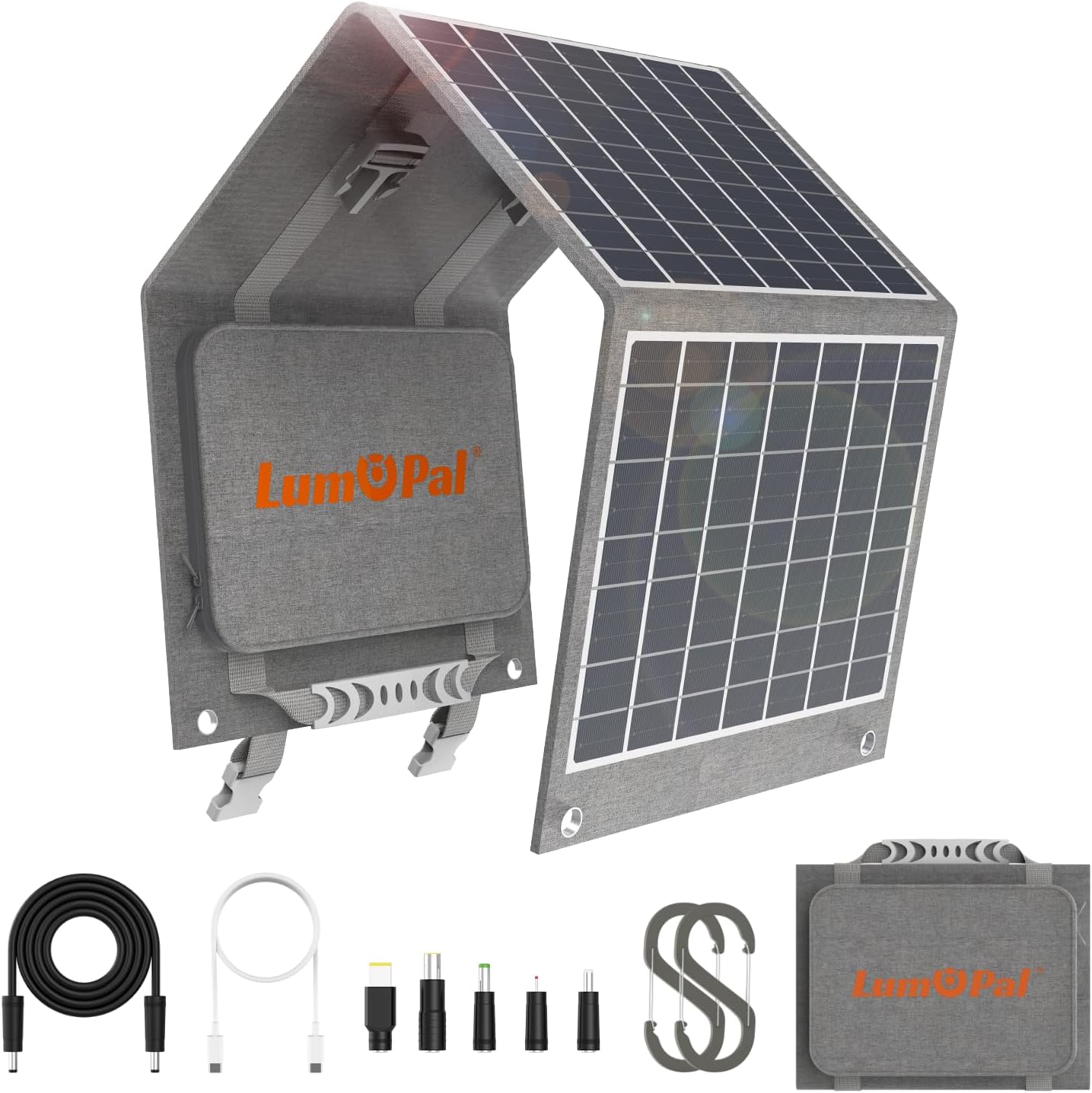
LUMOPAL 40W Foldable Solar Charger
40W folder with USB-C PD and QC3.0 USB-A; the slightly-premium pick with modern ports.
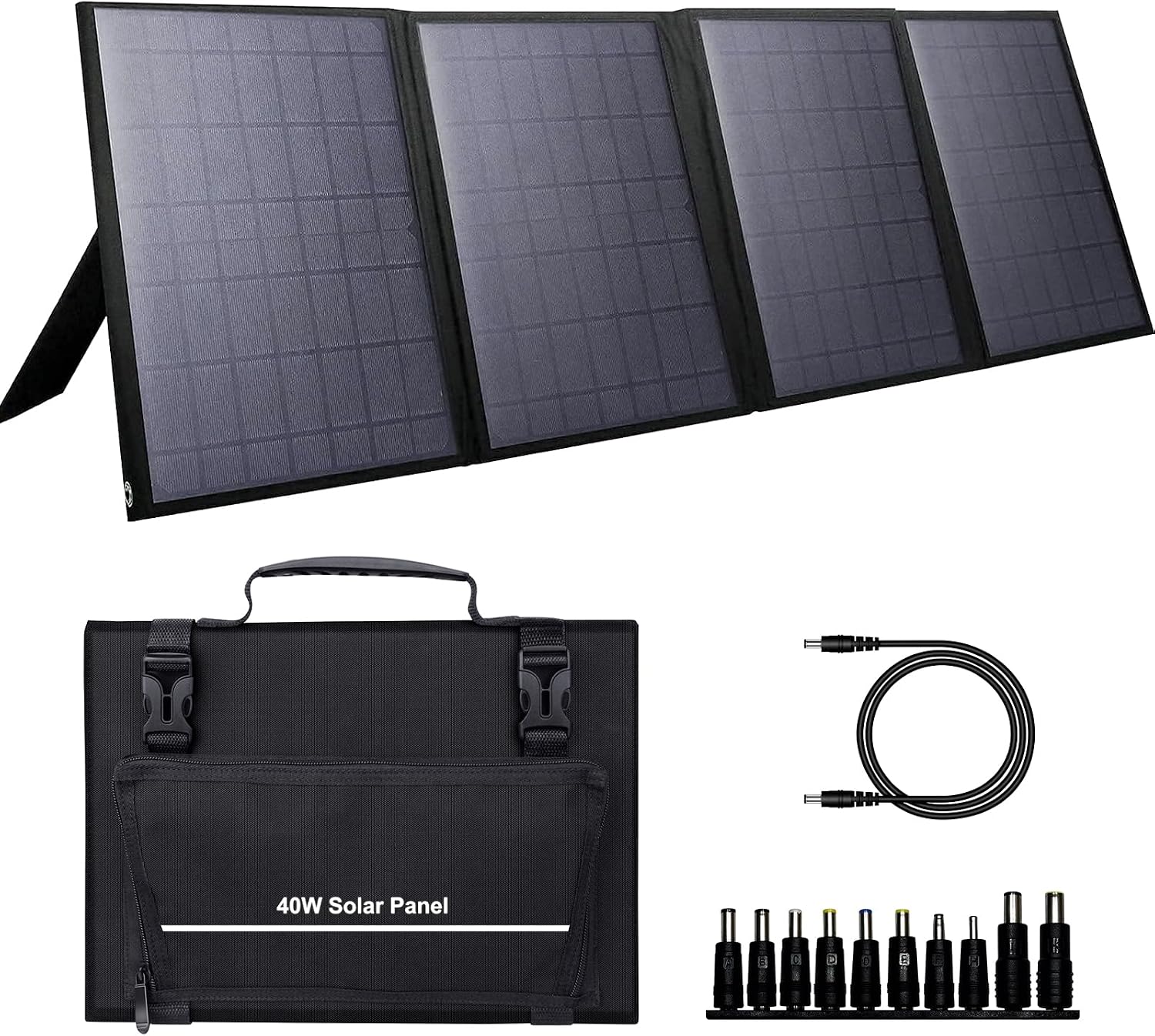
ZeroKor 40W Foldable Solar Panel Charger
40W folding panel with adjustable kickstand; same class, same honest 30W-real output.
The category criticism that won’t leave me alone: folding panels are sold as power solutions and they’re really power snacks. Nothing wrong with a snack. But the listings show phones at 100%, tablets charging, power banks filling — a whole ecosystem powered by 40W — and the reality is sequential, not simultaneous. You charge the phone, then the camera, then the power bank, one at a time, through the afternoon. It’s a trickle economy. Anyone who needs real power — a fridge, a laptop all day, a power station refill — needs to jump to the 100W class, where Jackery’s 100W SolarSaga or Renogy’s 100W suitcase start doing actual work. The 40W is for gadgets. Gadgets only. The day I accepted that, I stopped being disappointed and started being delighted — because as a gadget charger, it’s genuinely great.
My folder lives in my daypack now, permanently. Not for emergencies — for the ordinary Tuesdays when I’m out all day and the phone would otherwise die by four. It’s charged my phone from park benches, from café tables, from the hood of the car while I ate lunch. None of those moments were in the product photos. The photos showed mountain summits and dramatic light. The reality is a bench and a sandwich, phone ticking upward at 12W, and that’s fine. That’s the job. The panel does the job. I just had to stop asking it to do a different one.


