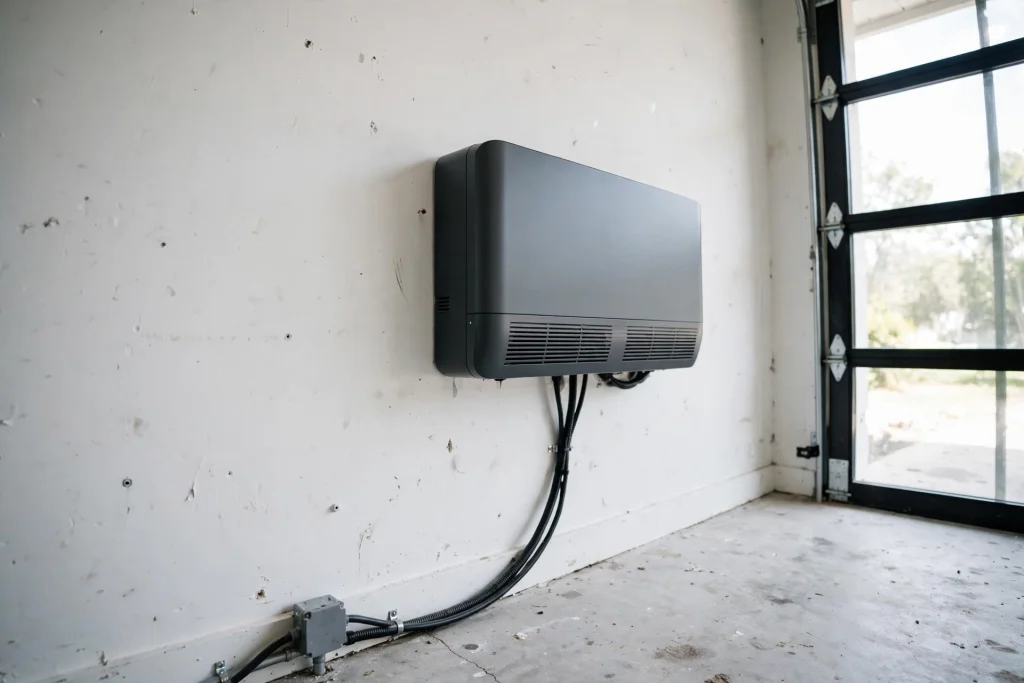
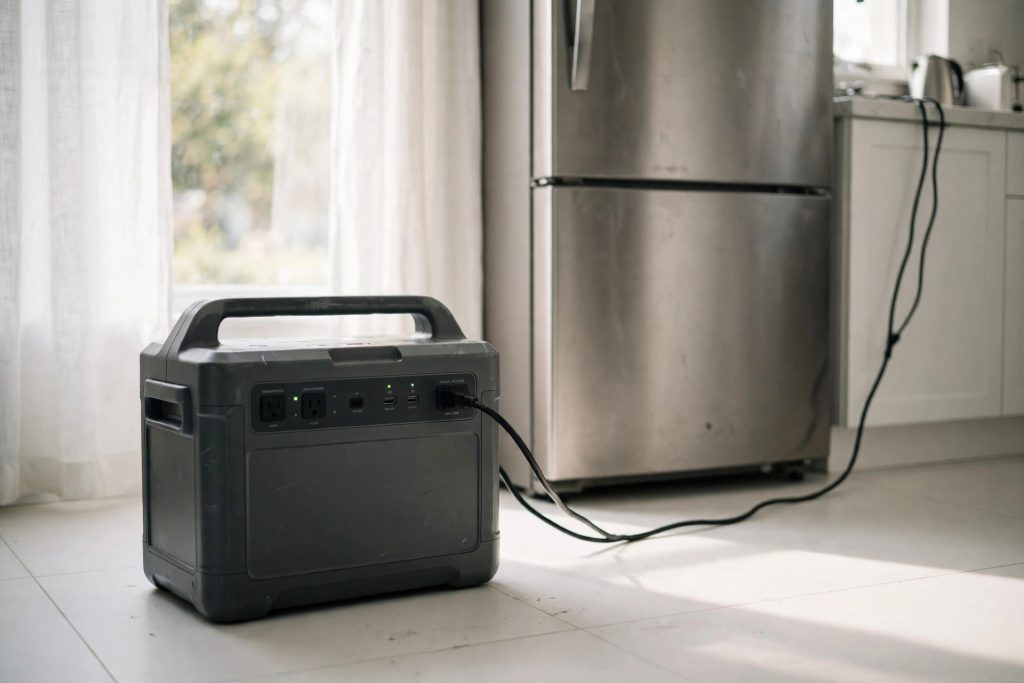
The transfer switch is the part nobody photographs and everybody should understand first. Here’s what happened at my house during the last long outage: I had a big portable station — not this one, an earlier big one — and I spent the outage running extension cords. Fridge cord across the kitchen. Router cord down the hall. A lamp cord, a phone charger cord, a power strip for the office. The house looked like a spiderweb designed by someone having a panic attack. It worked. It was also ridiculous. A smart transfer switch deletes the spiderweb: the station wires into your breaker panel, and when the grid drops, the switch moves your chosen circuits to battery automatically. No cords. No panic. The fridge just stays cold.
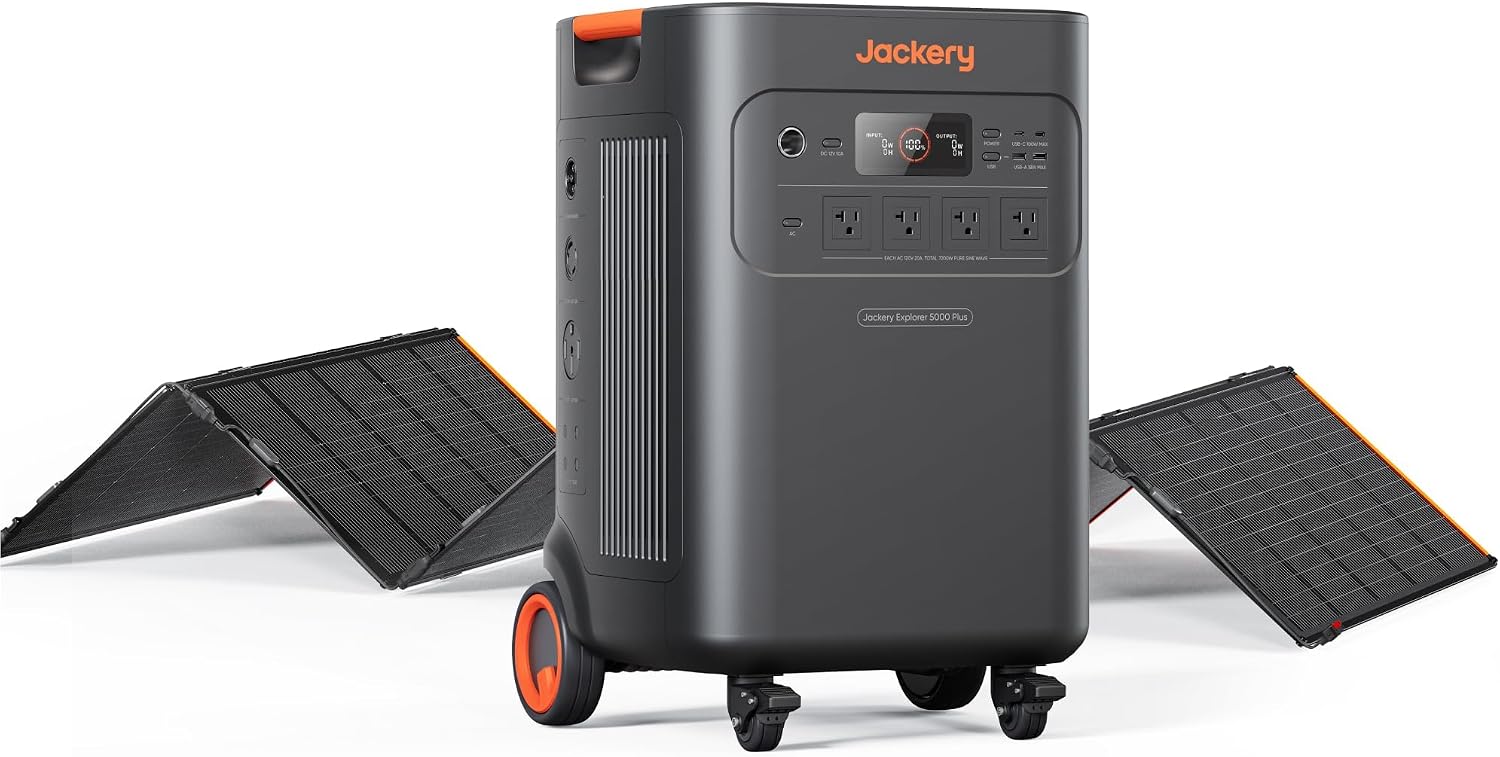
That’s the real product here — not the battery, the integration. The Jackery Explorer 5000 Plus is a 5,000Wh-class station with around 7kW of output, which is serious whole-home-adjacent power. But the Smart Transfer Switch is what turns it from “a big battery” into “a home backup system.” The distinction matters because it changes the outage experience completely. Without the switch, you’re a power manager, triaging devices, running cords. With it, you’re just… home. The lights work. The fridge works. You find out about the outage from your neighbor’s text, not from the silence.
Five kilowatt-hours. Let’s size that honestly, because this is the number that determines whether the system fits your house. A typical American home idles at 300-800W with the fridge cycling, the router on, standby loads humming, a few lights. Call it 500W average for a careful household in outage mode. 5,000Wh divided by 500W is ten hours — minus inverter losses, so call it eight or nine. That’s a night. One night of normal-ish living. Add solar panels refilling during the day — and at this class you’d want 1,000W+ of panel to make daytime refilling meaningful — and you stretch into multi-day territory. Without solar, it’s one very comfortable night plus a morning. That’s the honest sizing. It’s also, for most outages, enough. Most outages are hours, not days. The system is sized for the common case, not the apocalypse.
The 7kW output is what makes the transfer-switch story work. Smaller stations can’t do this job — a 2,000W unit trips the moment the well pump or the fridge compressor kicks on alongside everything else. At 7kW, you’ve got headroom for motor startups: the fridge compressor’s surge, the sump pump kicking on, the microwave running while the fridge cycles. Headroom is the whole game in whole-home backup. An undersized inverter doesn’t politely decline — it shuts down everything at the worst moment, and you’re back to the spiderweb. I sized my own setup with a 25% margin over my measured peak load, then added more, because the cost of headroom is money and the cost of tripping is everything.
Actually, ten hours is optimistic — that’s careful loads and a full battery. Real households with kids and no discipline see six. Ask me how I know.
Split-phase 240V is the technical detail that separates real home backup from pretenders, and I need to explain it because buyers get burned here. American homes run on split-phase 240V — two 120V legs. Big appliances (well pumps, electric dryers, some HVAC) need 240V across both legs. A backup system that only outputs 120V can’t run those, period. The 5000 Plus with the transfer switch handles this properly — it’s designed as a home system, not a big portable with delusions. If you’re comparing backup options, “does it do 240V split-phase” is the first question. Everything else is second. I learned this watching a neighbor’s expensive portable station fail to run his well pump during an outage — 120V only, pump needed 240, water stopped. The station was fine. The house needed something the station couldn’t be.
The alternative universe is the gas generator with a manual transfer switch — a 14kW Generac, say, professionally installed. More power, unlimited runtime (as long as the fuel holds), and a mature service ecosystem. Also: noise, exhaust, maintenance, fuel storage, and a machine that needs to run monthly to stay healthy. The battery system’s pitch is silence, zero maintenance, instant switchover, and no fuel. The generator’s pitch is raw power and endurance. They’re different religions. I’m in the battery church for the outages I actually get — short, frequent, annoying — and I’d want the generator church for a week-long ice storm. Geography picks your religion. Pick honestly.
EcoFlow’s answer in this space is the DELTA Pro Ultra — the direct competitor, whole-home battery with transfer-switch integration, expandable to absurd capacities. EcoFlow’s DELTA Pro line has the field history; the Ultra is the scaled-up evolution. Anker’s F3800 Plus plays here too. The three-way comparison comes down to ecosystem: which transfer switch, which expansion batteries, which app, which service network. The batteries themselves are commodities — LiFePO4 cells in a box, all of them. The differentiation is everything around the cells: the switchgear, the software, the support. Buy the ecosystem, not the cells. The cells are all fine.
I haven’t installed the F3800 Plus or the DELTA Pro Ultra — my transfer-switch experience is with my own setup, so brand comparisons I’ll leave to the installer forums.
Whole-home battery systems
5kWh-class stations with transfer-switch integration. Buy the ecosystem, not the cells.
Jackery Explorer 5000 Plus, 5040Wh/7200W
5,040Wh LiFePO4 with 7,200W output and 120V/240V; built for transfer-switch home backup.
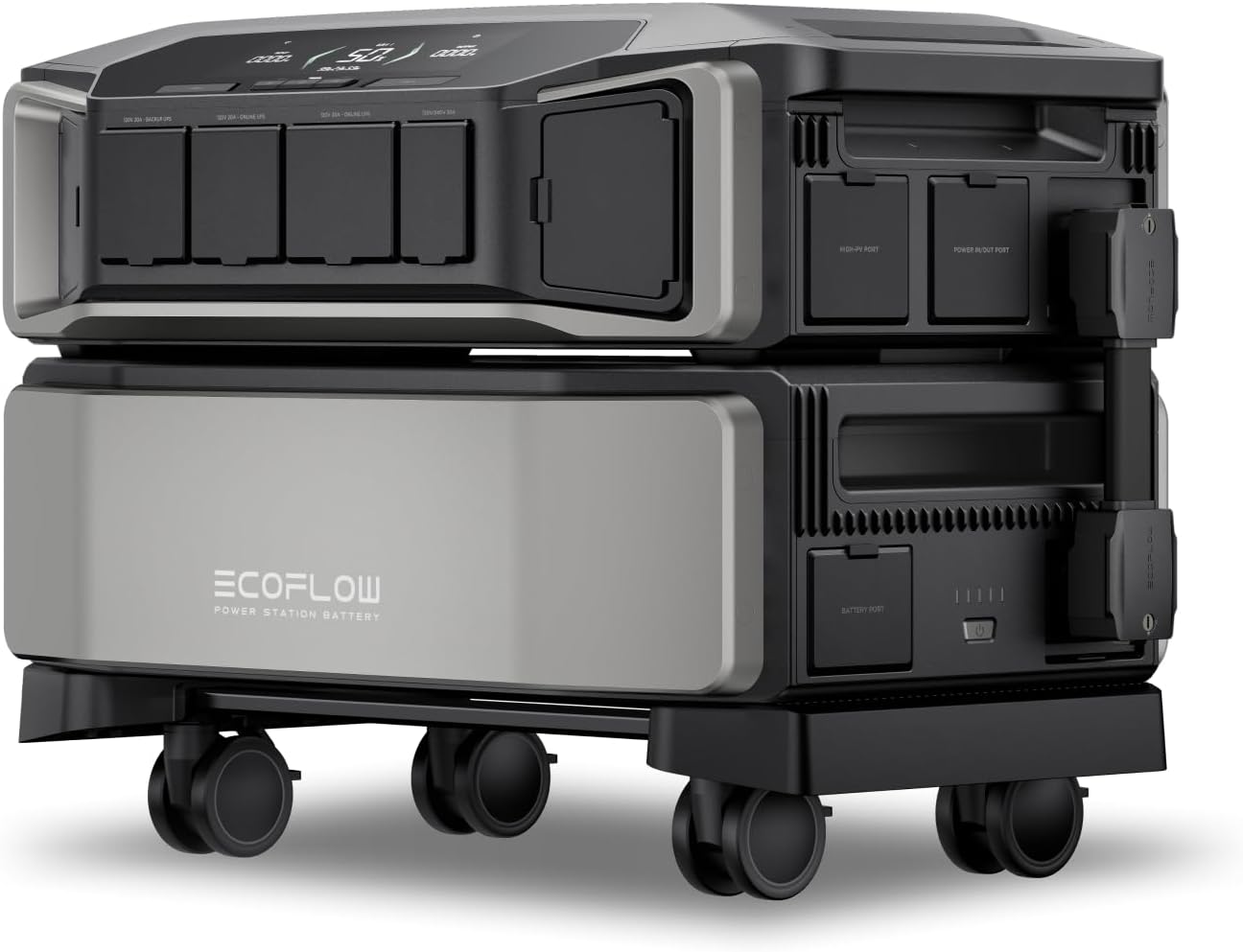
EF ECOFLOW DELTA Pro Ultra, 6144Wh
6,144Wh LiFePO4, 7,200W 120/240V output; EcoFlow’s whole-home answer, expandable.
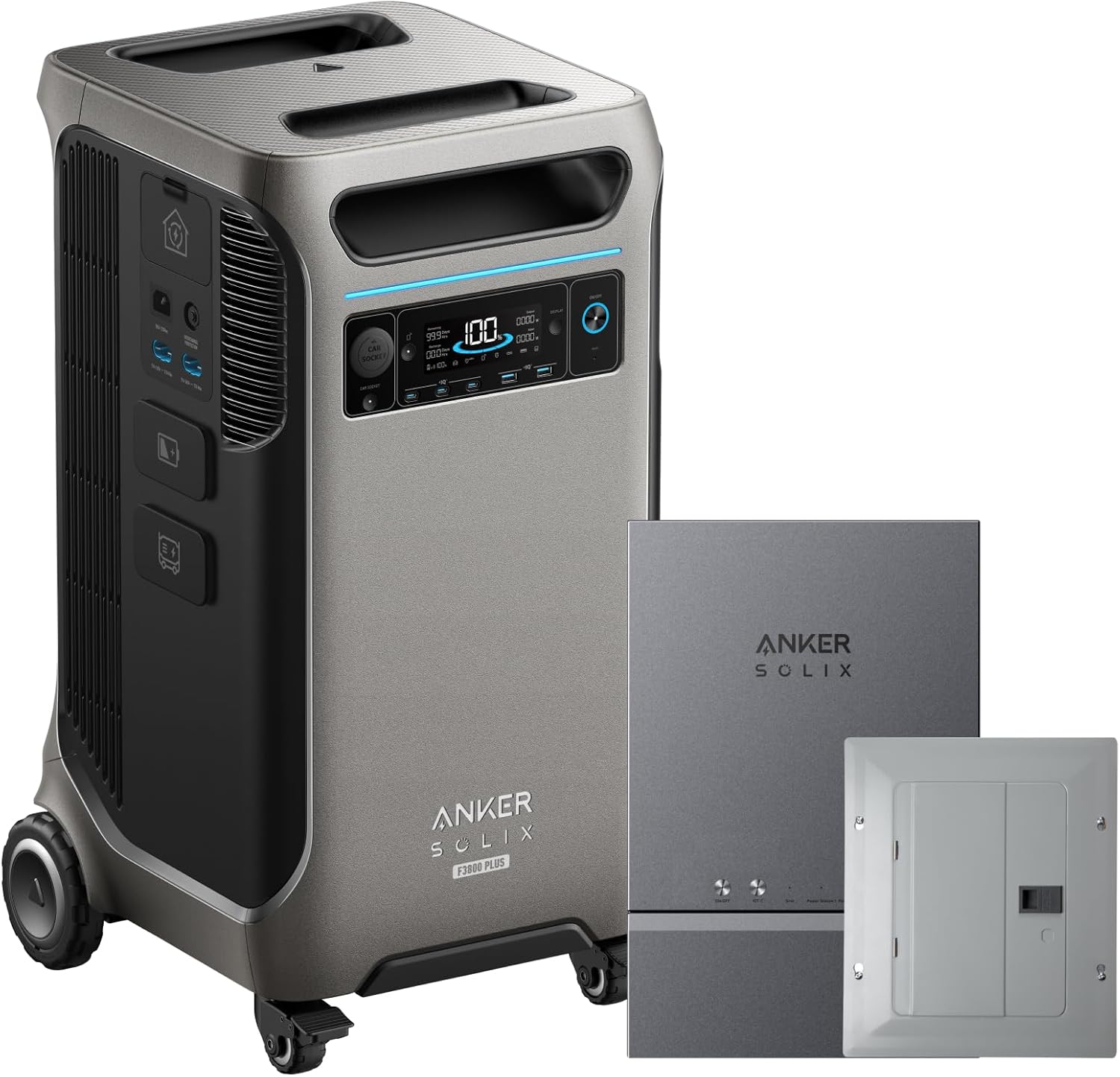
Anker SOLIX F3800 Plus Portable Power Station, 3840Wh
3,840Wh with home power panel integration; Anker’s entry in the whole-home class.
The category’s favorite sleight of hand: “whole home backup” without defining “whole.” The 5000 Plus can back up your whole home’s essential circuits — the ones wired through the transfer switch. It cannot back up your electric furnace, your central AC, and your dryer simultaneously, because those three alone can pull 15kW. “Whole home” means “the whole home you chose to wire up,” which is a smaller home than the phrase implies. The transfer switch installation decides which circuits go on backup — that decision, made with an electrician on a calm Tuesday, matters more than battery size. Sizing backup for a whole house starts at the breaker panel, not the product page.
Installation is the hidden half of this product. The station is portable — it has wheels, handles, the whole “take it camping” pitch. But the transfer switch is wired into your panel by an electrician, which makes the system semi-permanent in practice. You can unplug the station and take it, sure, but the switch stays, and the value proposition is the installed system. Buyers who skip the switch and just run the station portable are paying for integration they’re not using. It’s like buying a dishwasher and washing by hand. The machine is good. The installation is the point.
My spiderweb days are over — not because I own this exact system, but because I finally wired a transfer switch for my own big station, and the first outage after that, I just sat on the couch while the house switched itself over. No cords. No triage. The fridge hummed, the router blinked, and I read a book. Somewhere in the garage, a battery was doing arithmetic I didn’t have to do. That’s the product. Not the watt-hours, not the kilowatts — the absence of the spiderweb. The most valuable thing a backup system can give you is an outage you barely notice. Everything else is just numbers on a box.