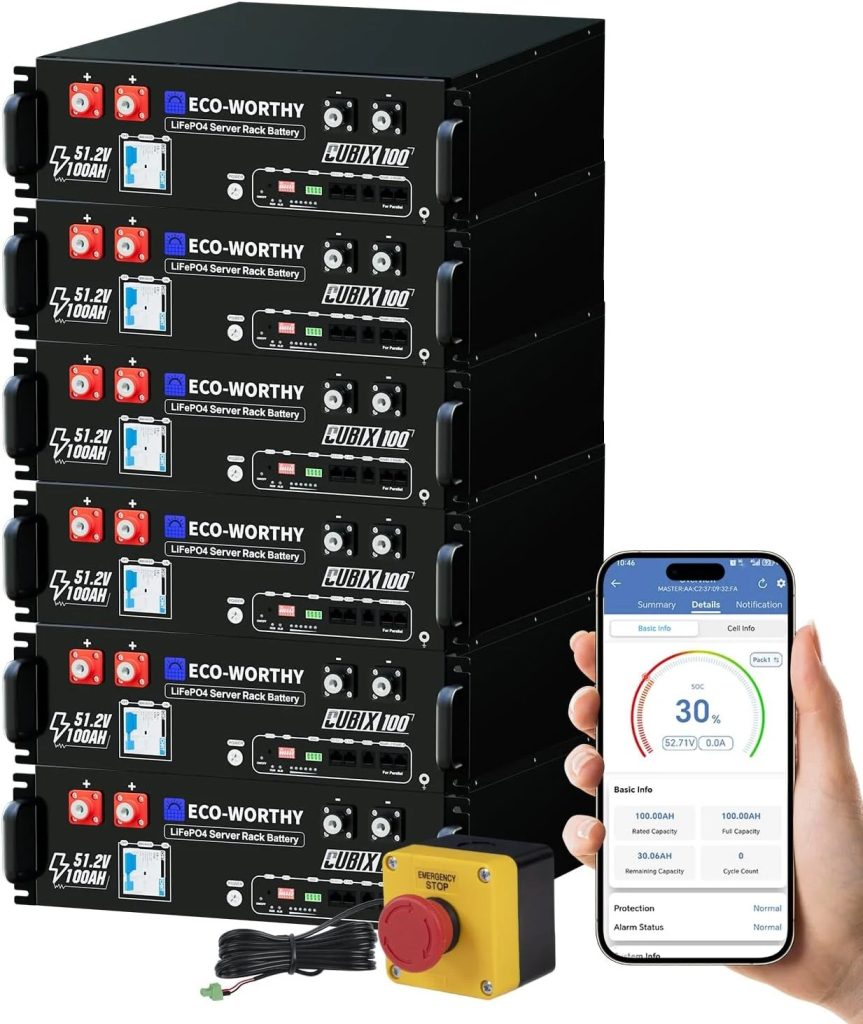
A 100Ah battery holds 1,200 watt-hours. That’s the number on the box, the number in the listing title, the number everyone quotes. It’s also, for an AGM deep-cycle battery, roughly double what you can actually use. Because lead-acid chemistry — including AGM, which is just lead-acid in a better suit — shouldn’t be discharged below 50% if you want it to live. So your 1,200Wh battery is a 600Wh battery with a 1,200Wh label. I knew this when I bought my first AGM bank. I still felt cheated the first time I did the division during an outage, because knowing a thing and feeling it at 11pm with the lights dimming are different experiences.
The Weize 12V 100Ah is the marketplace-famous AGM — thousands of reviews, the default choice for RV house batteries, trolling motors, solar sheds, and backup sump pumps. And it’s fine. That’s the review, really: it’s fine. It’s a commodity lead-acid battery that does what commodity lead-acid batteries do. The interesting question isn’t whether the Weize is good — it’s whether AGM itself still makes sense in 2026, when lithium has eaten everything else.
Let’s do the honest comparison, because the price tags lie by omission. A 100Ah AGM costs roughly half what a 100Ah LiFePO4 costs. Half! Looks like a steal. But the AGM gives you 50 usable amp-hours (600Wh) versus the lithium’s ~100 usable (1,200Wh, since LiFePO4 discharges to near zero without damage). So per usable watt-hour, the prices are nearly even. Then add cycle life: AGM manages 300-500 deep cycles if you’re kind to it; LiFePO4 does 3,000-4,000. Then add weight: sixty-odd pounds for the AGM, half that for lithium. Then add the maintenance — AGM is sealed and maintenance-free, which is genuinely nice, but lithium is also sealed and maintenance-free, so that’s a tie. I ran these numbers for my shed system last year. The AGM won on one metric: I could buy it today, locally, and carry it home. Everything else lost.
So why does anyone still buy AGM? Three honest reasons. One: upfront cost, full stop. Half the price today beats twice the value over ten years when the budget is this month. Two: cold weather. Lithium batteries can’t charge below freezing without damage — the BMS will refuse, correctly — while AGM just gets sluggish. An unheated shed in Minnesota is AGM territory, or lithium-with-heater territory, and a 100Ah lithium equivalent with built-in heating costs more than the Weize. Three: drop-in replacement. If your RV or boat or existing solar setup was built for lead-acid, with a charger profiled for lead-acid, swapping in lithium means reprogramming or replacing the charger. AGM drops in and works. Inertia is a legitimate engineering constraint.
The Weize specifically: it’s a deep-cycle AGM, which matters. “Deep-cycle” versus “starting” is the distinction that kills more batteries than anything else. A starting battery — your car’s battery — is built to dump huge current for seconds and then recharge immediately. Deep-cycle it a few times and it’s ruined. A deep-cycle battery has thicker plates, built to discharge slowly and deeply, hundreds of times. The Weize is the right type for solar, RV house loads, and trolling motors. Using a starting battery for these jobs is the classic beginner mistake, and the battery always loses. I watched a friend kill two car batteries running his camper’s lights before someone explained plates to him. Thick plates. Thin plates. It’s all in the plates.
What AGM does well, genuinely: it tolerates abuse that kills lithium. Overcharge it a bit — the AGM vents and survives, the lithium’s BMS disconnects and sulks. Leave it at partial charge for months — AGM sulfates slowly and can often be recovered, lithium just sits there (fine, actually, lithium handles storage better). Wire it backwards for a second — both die, don’t do that. The point is AGM is the forgiving chemistry, the one that survives owner error. And owner error is the most common failure mode in off-grid systems. I say this as someone who has committed most of the errors. The AGM forgave me. I don’t know if lithium would have.
Actually, that’s not the full story — lithium handles storage better than AGM in most cases. The forgiveness I described is about charging mistakes, not storage. Different virtue, and I conflated them.
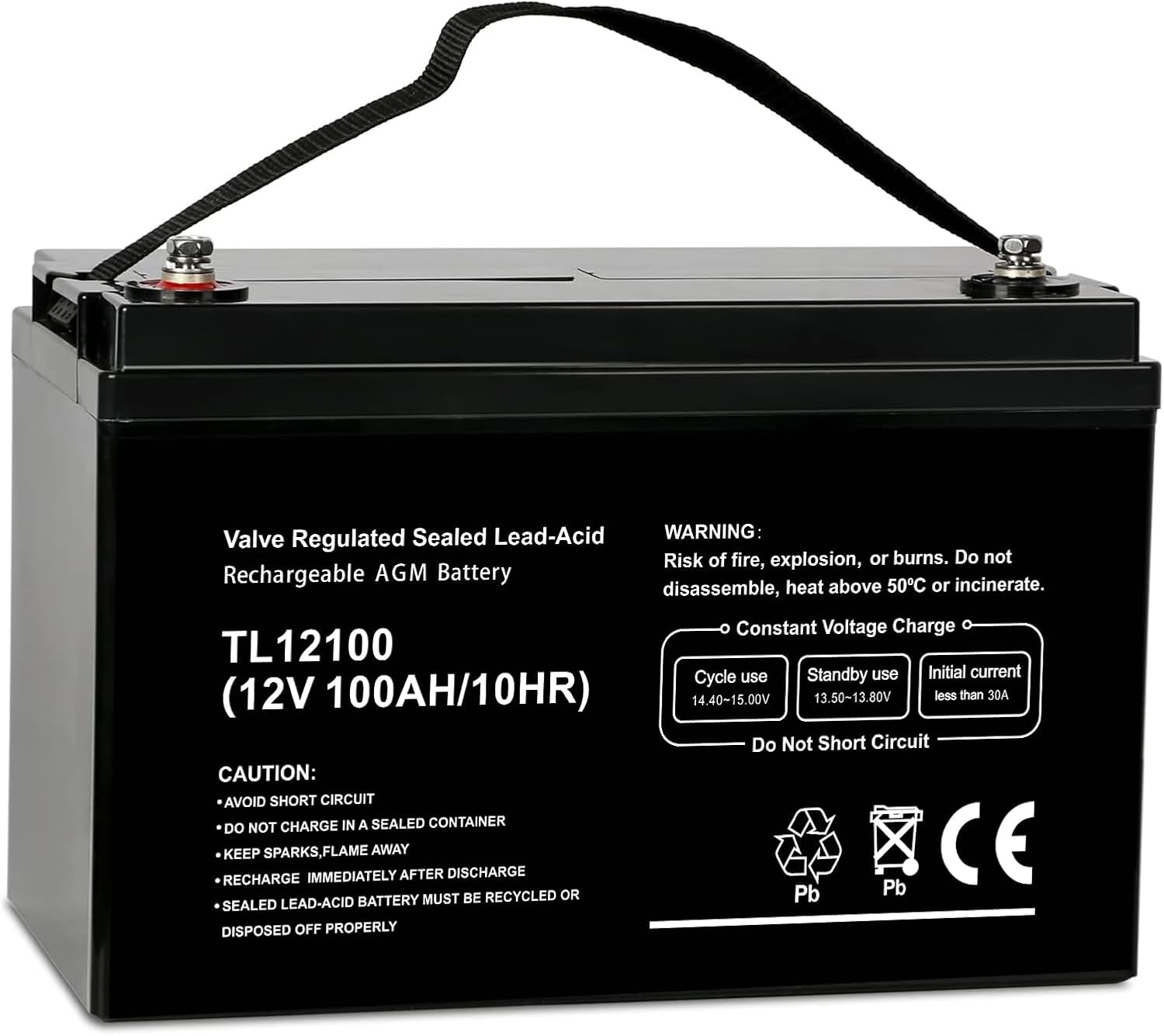
The competition is straightforward: Renogy’s 100Ah AGM is the brand-name alternative, usually priced a bit above the Weize, with Renogy’s solar-ecosystem support behind it. UPG’s UB121000 is the old guard — a standby-power staple, the battery in a million UPS units and alarm panels. Between the three, the differences are marginal: same chemistry, same capacity, same weight class. Buy on price, warranty terms, and shipping — because shipping a 65-pound battery is where the real cost hides. Free shipping on a battery is never free; it’s just hidden. Check the delivered price, not the list price. I learned this ordering batteries to a rural address, where “free shipping” met its match.
100Ah AGM, three ways
Same chemistry, same capacity, same weight class. Buy on delivered price and warranty terms.
Weize 12V 100Ah Deep Cycle AGM Battery
The marketplace-famous 100Ah AGM: maintenance-free deep cycle for RV, solar sheds, and trolling motors.
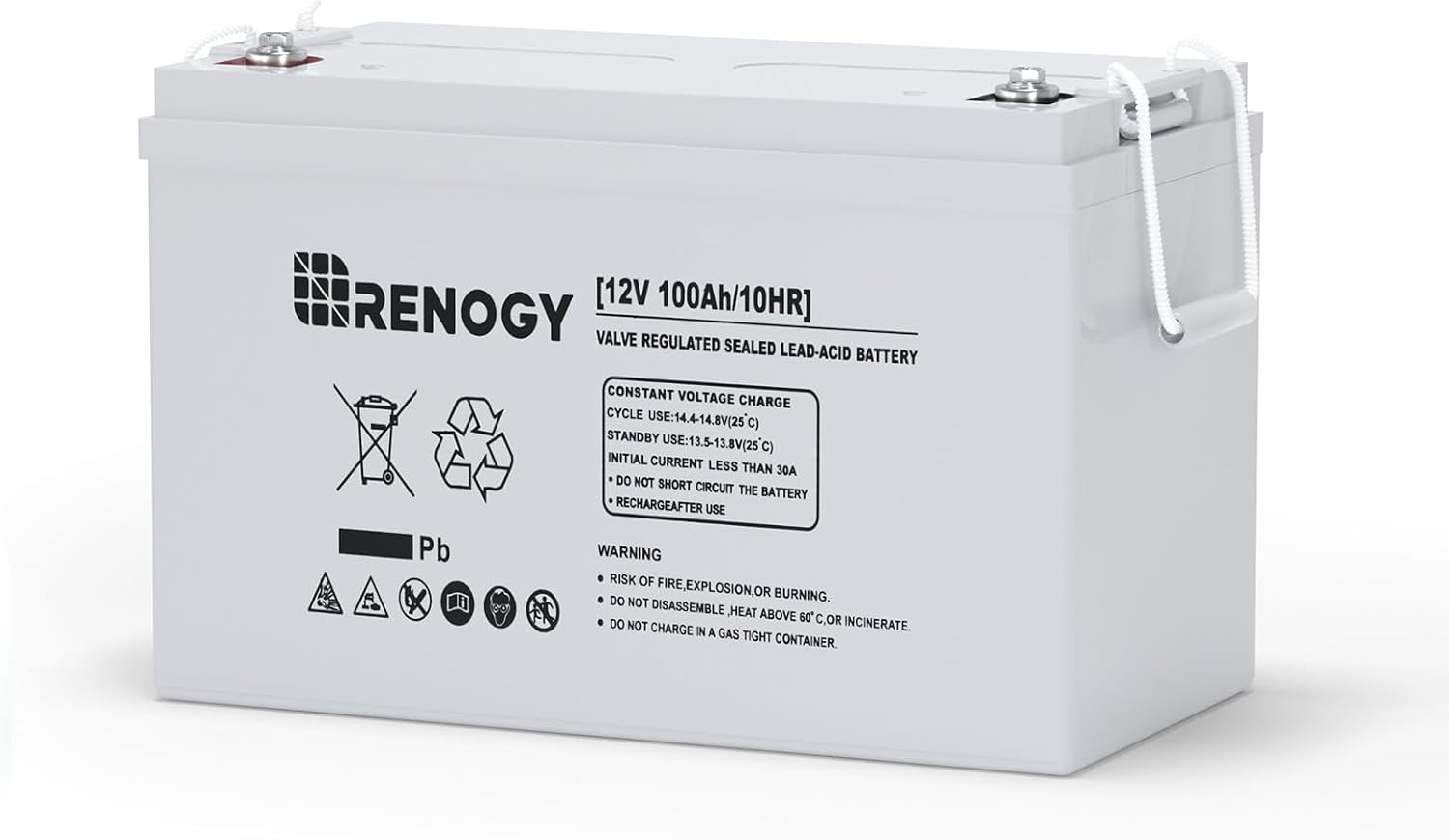
Renogy 12V 100Ah Deep Cycle AGM Battery
Renogy’s 100Ah AGM with 3% self-discharge; the brand-name alternative in the same chemistry.
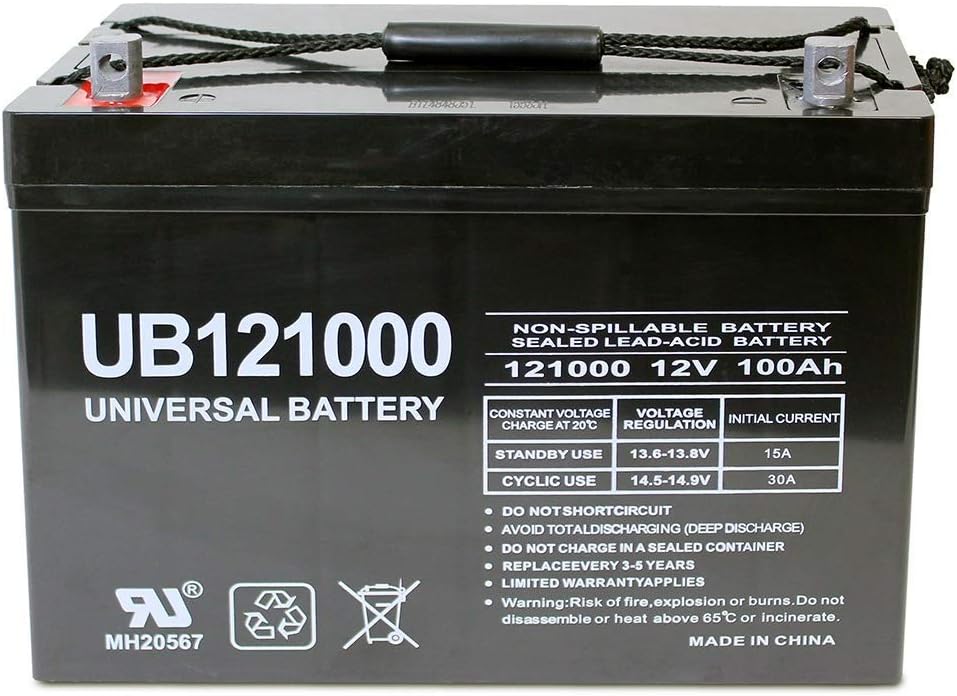
UPG UB121000 12V 100Ah AGM Battery
The old guard: 100Ah AGM deep-cycle workhorse from the standby-power world.
The category’s slow-motion tragedy: AGM is a mature, honest technology being outcompeted on every metric except upfront price, and the market keeps buying it because the price tag is the first thing you see and the total cost is the last thing you calculate. I’m not immune — I bought AGM for my shed last year, knowing the lithium math, because the shed needed power that weekend and the AGM was in stock locally. The lithium would have taken a week to ship. A week of no power versus a decade of slightly worse economics. I chose the weekend. I’d probably choose it again. Economics isn’t the only variable; timing is real.
But here’s the thing I keep coming back to: every AGM I buy now feels like the last of its kind, like buying a film camera in 2008. It works. It’s fine. The future is clearly elsewhere. Lithium prices keep falling, heated lithium keeps improving, and the cold-weather argument — AGM’s last fortress — gets weaker every year. In five years, the 100Ah AGM will be a specialty product for people with legacy systems. In ten, it’ll be nostalgia. The Weize is a good battery in a shrinking category, and “good in a shrinking category” is a perfectly fine thing to buy, as long as you know the category is shrinking.
My shed AGM is two years old now. It holds charge, runs the lights, starts the little inverter without complaint. I check the terminals every spring, keep it on the maintainer through winter, and it does its job — the unglamorous, essential job of being a battery. How long batteries last is mostly a function of how you treat them, and I treat this one well, because I did the division once at 11pm and never forgot the answer. Twelve hundred watt-hours on the box. Six hundred in the real world. Know the real number. Size for the real number. The box is just the beginning of the conversation.