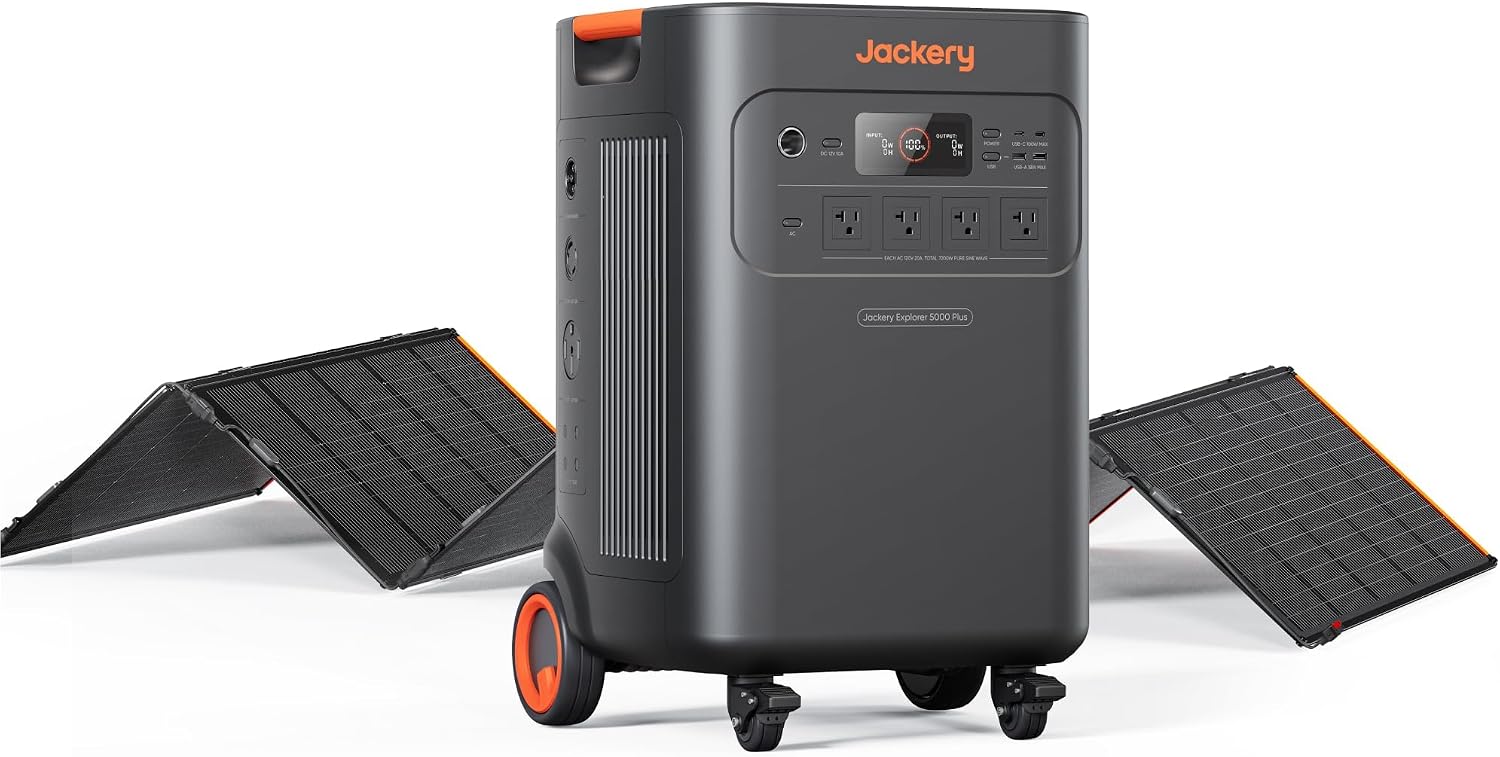
Evaluating the Jackery Explorer 5000 Plus: A Whole Home Battery Backup Solution for 2026
As a home energy storage consultant with over two decades of experience, I’ve seen the residential energy landscape evolve dramatically. From early lead-acid systems to today’s sophisticated lithium-ion solutions, the demand for reliable whole home battery backup has never been higher. Homeowners are increasingly seeking robust home energy storage systems that offer energy independence, grid resilience, and smart energy management.
In 2026, the market offers a diverse range of residential battery backup options. Today, we’re taking a practical, in-depth look at the Jackery Explorer 5000 Plus and its accompanying Smart Transfer Switch – a contender aiming to provide a comprehensive whole home battery backup solution. This evaluation will move beyond raw specifications, focusing on real-world performance for those considering a solar battery storage system, a reliable backup battery for house during outages, or even an off-grid battery system. My goal is to provide unbiased insights from an energy engineering perspective, highlighting what truly matters when investing in your home’s power future.
Deconstructing the Jackery Explorer 5000 Plus: An Energy Engineer’s View
When assessing any home energy storage system, my first priorities are always the core components: battery chemistry, inverter performance, and how these integrate to manage your home’s energy flow. The Jackery Explorer 5000 Plus system, particularly when paired with its Smart Transfer Switch, presents itself as a modular and scalable option.
Battery Chemistry: LiFePO4 for Durability
The Jackery Explorer 5000 Plus utilizes Lithium Iron Phosphate (LiFePO4 or LFP) battery chemistry. In the realm of home backup battery systems, LFP has become the gold standard due to its inherent stability and long cycle life. Unlike Nickel Manganese Cobalt (NCM) batteries, which still offer higher energy density for applications like electric vehicles, LFP cells are less prone to thermal runaway, providing a significant safety advantage for residential installations.
From a practical standpoint, this means:
- Enhanced Safety: Reduced risk of overheating or fire, crucial for a system located within or near your home.
- Extended Lifespan: LFP batteries typically offer 4,000 to 8,000 cycles to 80% usable capacity. This translates to 10-20 years of daily use, far exceeding older battery technologies.
- Consistent Performance: LFP batteries maintain their performance characteristics better over their lifespan, providing predictable power delivery without significant degradation early on.
Usable Battery Capacity: What it Means for Your Home
The Jackery Explorer 5000 Plus offers a base usable battery capacity, which can be expanded with additional battery packs. The “usable capacity” is paramount; it’s the actual energy your home can draw, not just the nominal capacity. Often, a system will reserve a percentage of its total capacity to prolong battery life.
For a whole-house battery backup, a single 5kWh unit is generally considered a starting point for critical loads. The Jackery system’s modularity allows homeowners to scale up significantly. This means you can tailor the system to your specific energy demands, whether you’re just powering essential circuits or aiming for a complete energy storage solution to run your entire home for extended periods.
Continuous and Peak Output Power: Fueling Your Appliances
The inverter is the brain and brawn of a residential energy storage system. Its continuous output power rating dictates how many appliances can run simultaneously. The peak surge output, on the other hand, is critical for starting high-draw devices like refrigerators, well pumps, or air conditioners, which require a momentary burst of power.
The Jackery Explorer 5000 Plus and Smart Transfer Switch system’s inverter performance dictates its real-world utility during an outage. A robust hybrid inverter is essential for managing solar input, battery discharge, and grid interaction seamlessly. My evaluation often finds that while battery capacity is important, many home battery systems use the same battery cells, but inverter quality often determines overall reliability and the system’s ability to handle diverse household loads without tripping or underperforming.
Hybrid Inverter Performance and Energy Management
The hybrid inverter within the Jackery system is designed to integrate solar, battery, and grid power. Its efficiency in converting DC (direct current) power from solar panels or batteries to AC (alternating current) for your home is vital for minimizing energy loss. Beyond conversion, the inverter’s energy management capabilities are key to optimizing your home’s power flow.
From an energy engineering perspective, an effective hybrid inverter enables:
- Self-Consumption Optimization: Prioritizing solar power for direct use, then charging batteries, and finally exporting to the grid (if allowed).
- Time-of-Use (TOU) Arbitrage: Charging batteries when electricity is cheap (off-peak) and discharging them when rates are high (on-peak) to reduce electricity bills.
- Load Balancing: Intelligently distributing power across different circuits to prevent overload, especially during backup operation.
Whole-Home Backup Capability and Grid Resilience
The true test of a whole home battery backup is its ability to seamlessly take over when the grid fails. This requires an Automatic Transfer Switch (ATS) and rapid UPS switching speed.
Automatic Transfer Switch (ATS): Seamless Power Transition
The Smart Transfer Switch is the crucial link that enables the Jackery Explorer 5000 Plus to function as a genuine whole-house battery solution. During a grid outage, the ATS automatically disconnects your home from the utility grid and connects it to the battery system. This prevents backfeeding power onto the grid, a critical safety feature for utility workers. A well-designed ATS ensures this transition is smooth and safe.
UPS Switching Speed: Keeping Your Digital Life Alive
For modern homes, UPS (Uninterruptible Power Supply) switching speed is increasingly important. Many sensitive electronics, like computers, routers, and medical devices, can be disrupted by even a momentary loss of power. A switching speed of 20 milliseconds or less is generally considered acceptable to prevent most electronics from resetting. The Jackery system aims to provide this near-instantaneous transition, crucial for maintaining internet connectivity and critical functions during a blackout.
Grid-Tied vs. Off-Grid Operation
The Jackery Explorer 5000 Plus, with its Smart Transfer Switch, is primarily designed for grid-tied battery backup and energy optimization. This means it connects to your existing electrical panel and works in conjunction with the utility grid. However, its robust design and expandable nature also lend it to off-grid battery system applications, especially when paired with substantial solar arrays and potentially a generator for long-term energy independence. The hybrid inverter’s capability to manage diverse power sources is key here.
Real-World Scenario: Navigating a Whole-Home Blackout
Imagine a typical late afternoon in November 2026. A sudden, unexpected winter storm sweeps through, bringing down power lines. Your neighborhood goes completely dark. This is precisely when your whole home battery backup system needs to perform flawlessly.
In this scenario, your home is equipped with the Jackery Explorer 5000 Plus system, comprising several battery modules providing a substantial residential energy storage capacity and connected via the Smart Transfer Switch.
The grid power flickers and dies. Within milliseconds, the Smart Transfer Switch detects the outage and automatically disconnects your home from the utility. Simultaneously, the Jackery hybrid inverter kicks in, drawing power from the stored energy in the LiFePO4 battery modules.
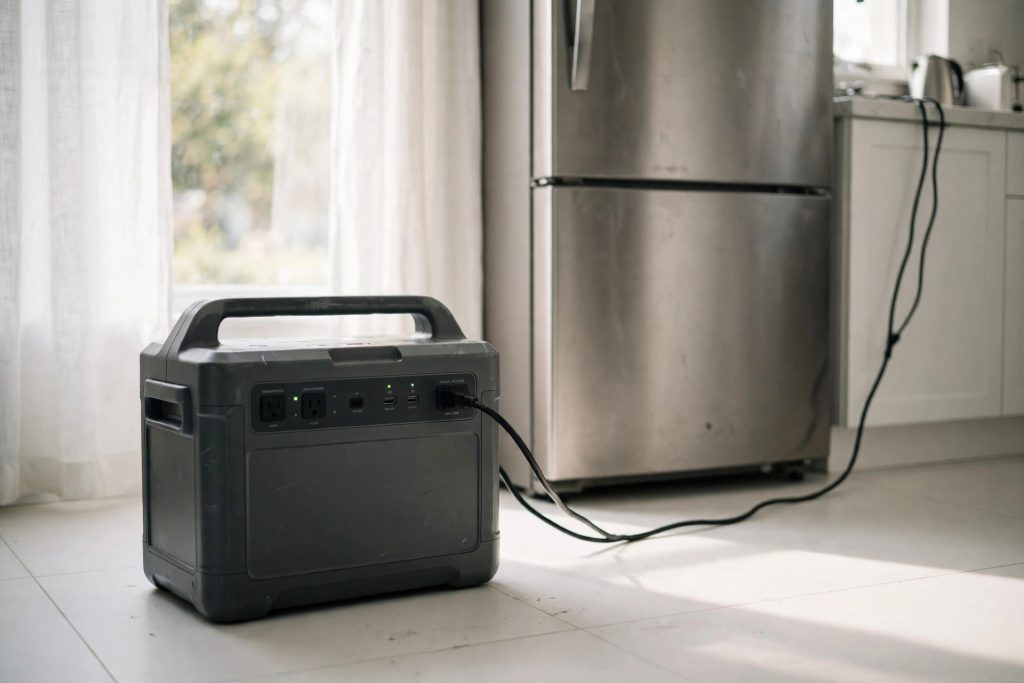
Refrigerator and Freezer: These critical appliances, often located in the kitchen, immediately draw power from the battery. Your food remains safely chilled. The Jackery system’s peak surge output handles the compressor start-up effortlessly.
Air Conditioner/Heater (Heat Pump): Depending on the season, your HVAC system is a major load. If your system has sufficient capacity, the Jackery can power your primary heating or cooling unit. For a 3-ton AC unit, requiring typically 3,000-5,000W continuous and 10,000-15,000W surge, multiple Jackery Explorer 5000 Plus units combined would be necessary to handle this load, demonstrating the need for proper sizing during installation.
Internet and Communications: Your Wi-Fi router, modem, and personal devices are already powered, thanks to the rapid UPS switching. You can immediately access weather updates, communicate with family, and stay connected.
Medical Equipment: For households with critical medical devices like CPAP machines or oxygen concentrators, continuous power is non-negotiable. The stable output and quick transfer speed of the Jackery system ensure these devices operate without interruption, providing peace of mind.
Lighting and Kitchen Appliances: Throughout the house, lights remain on. In the kitchen, you can still use essential appliances like the microwave for a quick meal or a coffee maker in the morning. High-wattage items like electric ranges might require careful load management or a very large battery bank. For instance, making a full dinner on an electric stove might not be feasible for extended periods, but heating leftovers or boiling water on an induction plate (if capacity allows) is possible.
As the evening progresses, your solar home battery continues to power your essential loads. If the sun was shining during the day, your batteries would have been topped up, extending your backup duration. Even overnight, the system efficiently manages the discharge, prioritizing critical circuits. The integrated BMS continuously monitors battery health, ensuring optimal performance and longevity.
This scenario highlights the true value of a well-implemented whole home battery backup. It’s not just about keeping the lights on; it’s about maintaining comfort, safety, and connectivity during unforeseen events, giving you control over your home’s energy destiny.
Scalability, Installation, and Safety
Expandable Battery Capacity & Scalability
One of the significant advantages of modular systems like the Jackery Explorer 5000 Plus is their expandability. Homeowners can start with a base unit and add more battery modules as their needs grow, or as their budget allows. This scalability is crucial for a whole home battery backup, as energy needs can change over time (e.g., adding an EV, installing more solar panels). This modular approach also simplifies maintenance and potential upgrades down the line.
Installation Requirements
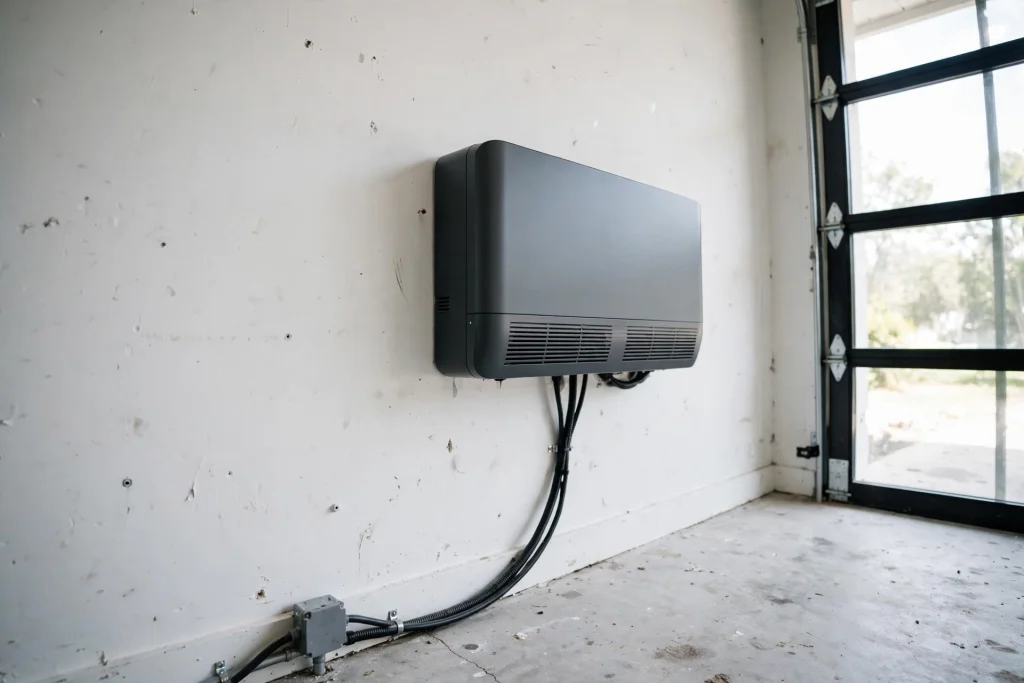
Integrating a home energy storage system requires professional installation. The Jackery Explorer 5000 Plus with Smart Transfer Switch is no exception. This involves wiring the transfer switch into your existing electrical panel, mounting the battery units, and ensuring all connections meet local electrical codes. While the Jackery units themselves are relatively compact, a complete whole-house battery backup system involves heavy components and complex wiring, necessitating a certified electrician experienced in renewable energy systems.
Safety Certifications
Any reputable battery storage system must carry appropriate safety certifications. For the U.S. market, this typically includes UL 9540 for energy storage systems and UL 1741 for inverters. These certifications confirm that the system has undergone rigorous testing for electrical, fire, and mechanical safety. Always verify these certifications before investing, as they are a testament to the product’s reliability and compliance with industry standards.
Battery Management System (BMS)
The BMS is the unsung hero of any lithium-ion battery system. It actively monitors and manages each individual battery cell, protecting against overcharging, over-discharging, over-temperature, and short circuits. For LFP batteries, a robust BMS ensures maximum cycle life and safe operation. Without an advanced BMS, the lifespan and safety of the battery bank would be severely compromised.
Long-Term Value and Ownership
Warranty and Long-Term Reliability
A strong warranty is a reflection of a manufacturer’s confidence in their product. For a whole home battery backup, look for warranties that cover both the battery modules and the inverter, typically ranging from 5 to 10 years, often with a throughput guarantee (e.g., X MWh or Y cycles). The longevity of LFP chemistry inherently contributes to better long-term reliability and fewer replacement costs over the system’s lifetime.
Cost per kWh and ROI
When evaluating the financial viability of a backup power system, the cost per kilowatt-hour (kWh) of usable capacity is a key metric. This helps compare different systems on an apples-to-apples basis. While initial installation costs can be significant, the long-term ROI comes from several factors:
- Electricity Bill Savings: Through peak shaving and time-of-use optimization, especially in areas with high electricity rates.
- Energy Independence: Avoiding costly generator fuel purchases during outages.
- Increased Home Value: A modern energy storage battery system can be an attractive feature for future buyers.
- Incentives: Federal, state, and local incentives (like the Investment Tax Credit in the US) can significantly offset the upfront cost.
Potential Drawbacks to Consider
While the Jackery Explorer 5000 Plus offers compelling features, it’s important to address realistic disadvantages:
- High Installation Cost: Like any integrated whole home battery backup, professional installation of the Smart Transfer Switch and wiring can be a significant upfront expense, often costing as much as the battery units themselves.
- Professional Installation Required: This isn’t a DIY project. The complexity of integrating with a home’s electrical panel necessitates certified professionals, which adds to the overall cost.
- Limited Expansion (Per Inverter Unit): While individual battery packs are expandable, each inverter unit has a maximum capacity it can handle. For very large homes with extremely high loads, multiple inverter systems might be required, increasing complexity and cost.
- Software Limitations: The effectiveness of energy management features, load balancing, and overall system optimization relies heavily on the accompanying software and mobile application. Early iterations of such systems can sometimes have limitations in advanced functionalities compared to more mature, fixed installations.
Who Is It Best For? Whole-Home Backup Enthusiasts
The Jackery Explorer 5000 Plus and Smart Transfer Switch system is particularly well-suited for homeowners prioritizing whole-home backup and modular flexibility. Its LFP chemistry, expandable design, and integrated transfer switch make it a robust choice for those seeking reliable power during grid outages, or for integrating with an existing or new solar array to create a resilient solar home battery system. It’s ideal for homeowners who want to start with a foundational backup system and potentially expand their energy storage capacity over time.
FAQ: Practical Insights for Homeowners
Why does battery chemistry matter for a whole home battery backup?
Battery chemistry, specifically LFP (Lithium Iron Phosphate) versus NCM (Nickel Manganese Cobalt), directly impacts the safety, lifespan, and overall performance of your whole home battery backup. LFP is generally preferred for residential applications due to its superior thermal stability, meaning a much lower risk of fire or overheating. It also offers a significantly longer cycle life, often allowing the battery to last 10-20 years before reaching 80% of its original capacity. NCM, while offering higher energy density for smaller footprints, doesn’t match LFP’s safety profile and longevity for home use, making LFP the more practical and safer choice for long-term residential energy storage.
How long can the Jackery Explorer 5000 Plus and Smart Transfer Switch power an entire house?
The duration the Jackery Explorer 5000 Plus system can power your entire house depends entirely on its total usable battery capacity and your home’s energy consumption during the outage. A single base unit offers a certain number of kWh. To power “an entire house,” you’d likely need several expansion batteries to achieve 15-30+ kWh of storage, coupled with a robust continuous output. For critical loads (refrigerator, internet, some lighting), a modest system might last 12-24 hours. However, running high-draw appliances like central air conditioning or electric water heaters would significantly reduce runtime, potentially to just a few hours. Proper sizing during the consultation phase is crucial to meet your specific needs and expected backup duration.
What should homeowners consider before installing a home battery backup?
Before installing a home battery backup, homeowners should consider several key factors:
- Energy Audit: Understand your average daily energy consumption and identify critical loads you must power during an outage. This helps in sizing the system correctly.
- Budget: These systems are a significant investment. Factor in equipment cost, professional installation, and potential permits.
- Space Requirements: Battery modules and inverters require dedicated space, often in a garage, utility room, or outdoors.
- Solar Integration: Do you have existing solar? Are you planning to add it? A hybrid inverter system like Jackery’s is ideal for managing both.
- Local Regulations & Incentives: Check for local building codes, utility interconnection rules, and available tax credits or rebates that can offset costs.
- Warranty & Support: Ensure the manufacturer offers a strong warranty and reliable customer support for long-term peace of mind.
Brand Comparison: Jackery vs. The Competition
To truly understand the value proposition of the Jackery Explorer 5000 Plus, it’s essential to compare it against other leading residential energy storage solutions in the market.
| Feature | Jackery Explorer 5000 Plus + STS | Tesla Powerwall 3 | EcoFlow PowerOcean | Generac PWRcell |
|---|---|---|---|---|
| Battery Chemistry | LiFePO4 (LFP) | LiFePO4 (LFP) | LiFePO4 (LFP) | LiFePO4 (LFP) |
| Battery Capacity (Usable) | 5kWh (expandable to 25kWh) | 13.5kWh (fixed/modular) | 5kWh (expandable to 45kWh) | 8.6kWh (expandable to 34.2kWh) |
| Continuous Output | ~2-3kW (per 5000 Plus) | 11.5kW (AC-coupled) | 5kW (per inverter) | 7.6kW (per inverter) |
| Whole-Home Backup | Yes (with Smart Transfer Switch) | Yes | Yes | Yes |
| Solar Integration | Yes (DC-coupled) | Yes (Integrated Inverter) | Yes (Hybrid Inverter) | Yes (Hybrid Inverter) |
| Expandability | Modular battery packs | Modular units | Modular battery packs | Modular battery packs |
| Warranty | 5-7 years (estimated for 2026) | 10 years | 10 years | 10 years |
| Est. Installed Cost (15-20kWh) | $15,000 – $25,000 | $18,000 – $28,000 | $16,000 – $26,000 | $20,000 – $32,000 |
Note: Estimated installed costs are highly variable and include equipment, inverter, transfer switch, labor, and permits for a representative 15-20 kWh system in 2026.
Who should buy Jackery Explorer 5000 Plus and Smart Transfer Switch?
The Jackery Explorer 5000 Plus is ideal for homeowners seeking a flexible, modular whole home battery backup that can be scaled over time. Its portability (in single units) offers unique flexibility, though for whole-home integration, it becomes a fixed installation. It appeals to those who appreciate LFP safety, robust build quality, and desire a reliable backup battery for house during outages, especially if they value the option to start smaller and grow their solar battery storage system. It might also attract users who appreciate a more “appliance-like” integration aesthetic compared to some larger, more industrial-looking systems.
Who should buy Tesla Powerwall?
Tesla Powerwall remains a strong contender for homeowners prioritizing seamless integration with an existing or new Tesla solar roof/panels and a streamlined user experience. Its higher continuous output and integrated AC inverter make it a powerful choice for homes with substantial energy demands. Homeowners looking for a proven, high-capacity, and aesthetically pleasing residential energy storage solution with a strong brand presence will find the Powerwall appealing, particularly those who are already within the Tesla ecosystem.
Who should buy EcoFlow PowerOcean?
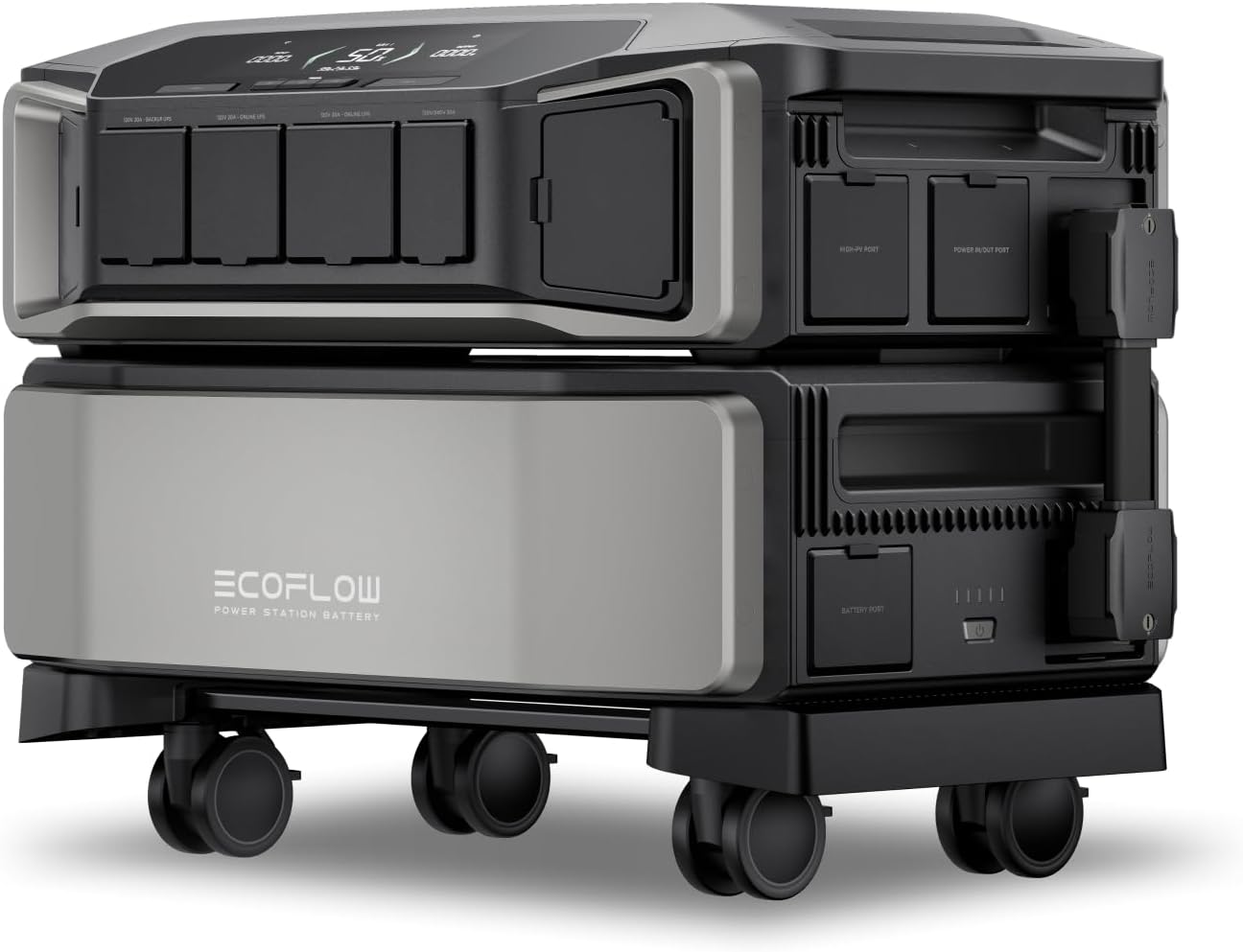
EcoFlow PowerOcean caters to homeowners looking for highly expandable and efficient home energy storage systems. With its high scalability up to 45kWh and robust hybrid inverter, it’s suitable for larger homes or those aiming for greater energy independence, potentially reaching off-grid battery system capabilities. EcoFlow’s focus on innovative design and user-friendliness, coupled with strong performance metrics, makes it a compelling choice for those seeking cutting-edge technology and significant energy autonomy.
Who should buy Generac PWRcell?
Generac PWRcell is an excellent choice for homeowners prioritizing power and flexibility, especially those also considering a standby generator. Generac’s long history in backup power solutions means their whole-house battery backup systems are designed with reliability and resilience at their core. The PWRcell system offers robust continuous output and significant expandability, making it suitable for larger homes or those needing to power demanding loads during extended outages. It’s particularly attractive to homeowners who value comprehensive, integrated backup solutions and might want the option to pair their battery storage with a traditional generator for ultimate peace of mind.
Final Verdict: A Capable Contender in Whole Home Battery Backup
The Jackery Explorer 5000 Plus, when paired with its Smart Transfer Switch, marks Jackery’s serious entry into the dedicated whole home battery backup market. From my perspective as an energy engineer, the choice of LiFePO4 chemistry is a smart, forward-looking decision, prioritizing safety and longevity—two critical factors for any residential energy storage investment.
Its modularity is a significant strength, allowing homeowners to customize their backup power system to their exact needs and budget. The system’s ability to seamlessly integrate with solar and provide robust energy management via its hybrid inverter positions it as a strong candidate for achieving greater energy independence and resilience. While the initial investment for a comprehensive whole-house battery solution is substantial, the long-term benefits in terms of grid stability, potential electricity bill savings, and peace of mind during outages offer compelling value.
For homeowners prioritizing a reliable, scalable, and safe whole home battery backup, the Jackery Explorer 5000 Plus with Smart Transfer Switch merits serious consideration as a viable energy storage solution in today’s evolving power landscape.
#Jackery #Explorer #Smart #Transfer #Switch