
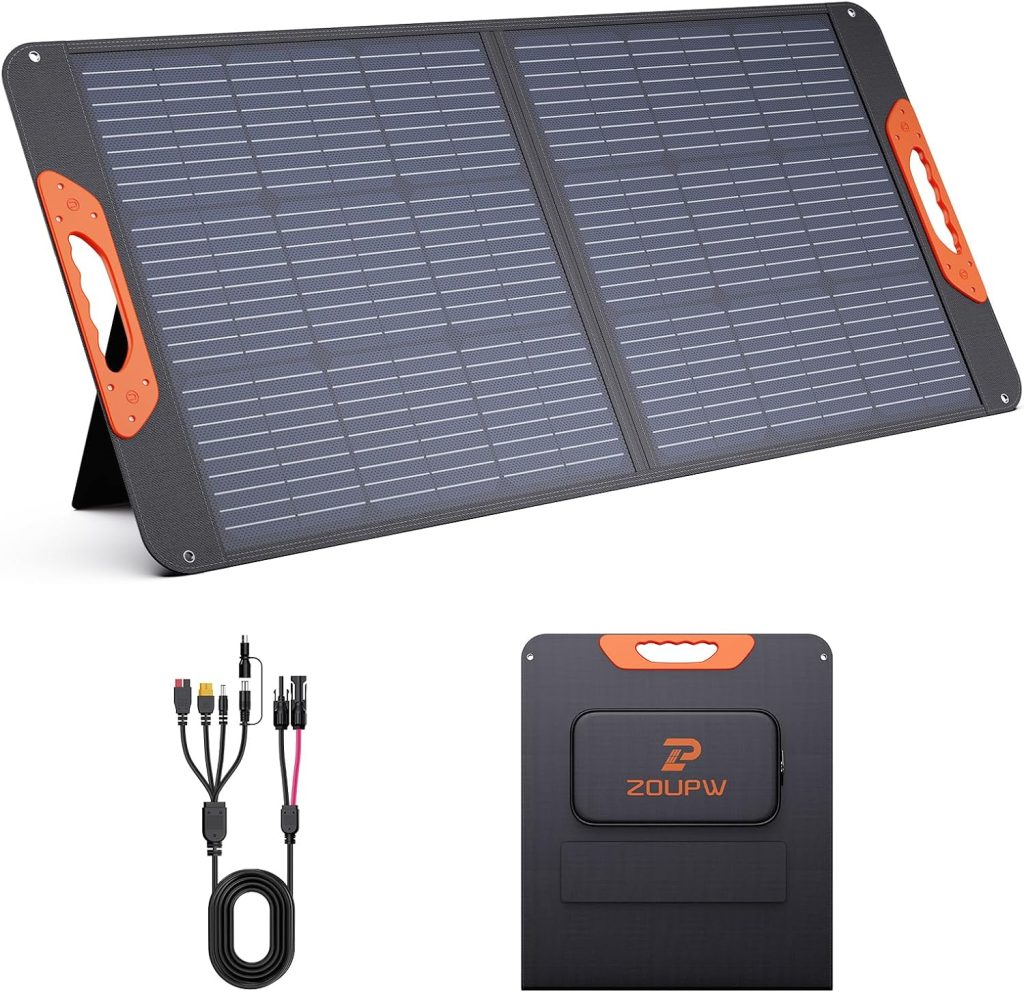
Day three of the camping trip. Clouds like a gray ceiling, the kind that doesn’t rain but doesn’t leave either. My 100W portable panel — unfolded, angled, positioned with the care of a sundial enthusiast — was producing 18 watts. Eighteen. My power station needed 800 to fill up. I did the division, didn’t like the answer, and went fishing instead.
Portable panels are a fair-weather friend. Literally. And you should know that before you buy one, because the listings all show desert sun.
Very literally.
Quick Answer
The ZOUPW 100W is a foldable 100W panel (23.5% mono cells, IP67) for topping up power stations at camp. Expect 400-500Wh on a good solar day, a fraction of that under clouds. It’s a solid mid-price portable — lighter than glass, less efficient per dollar than rigid roof panels. Buy it for the portability, not the watts-per-dollar.
Compare Top 100W Portable Solar Panels
Three proven picks side by side — choose the one that fits your needs.
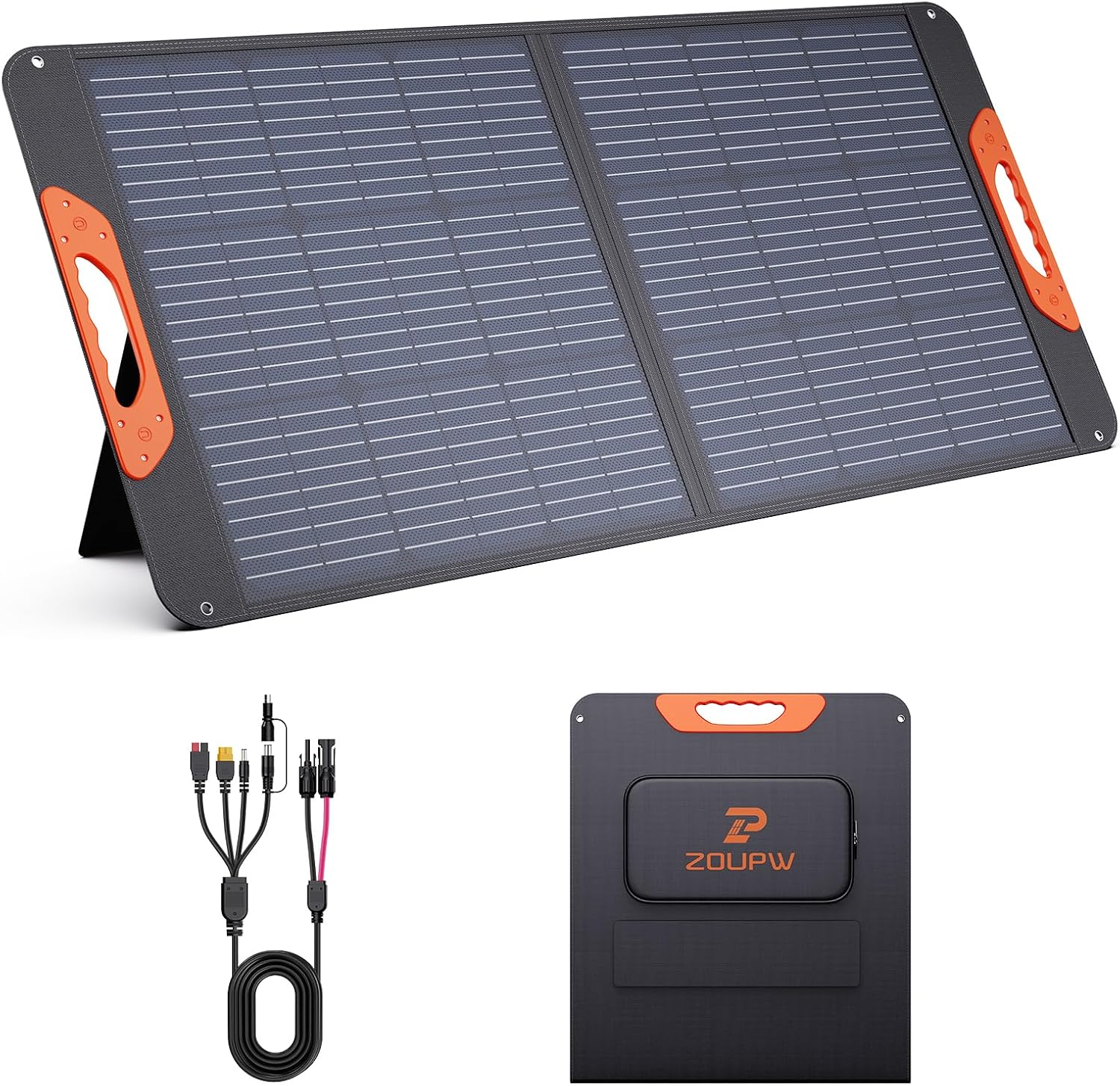
Prices and availability may vary — tap any product to check the current listing.
A hundred watts of portable panel, in honest numbers: 5 peak sun hours × 100W × 0.8 reality factor = 400Wh a day. That’s the good day. It charges a 500Wh power station most of the way. It charges a 1kWh station halfway. It does not — and this is where expectations go to die — “keep up with” a fridge and a station simultaneously. The math only works if the station is the battery and the panel is the trickle.
I keep a running tally in my head now: panel watts ÷ 4 ≈ daily Wh in decent conditions. 100W ÷ 4 = 25… no wait, that’s not right. It’s panel watts × 4 = daily Wh. 100 × 4 = 400Wh. There. The rule of four. Rough, memorable, usually close. On cloudy days divide by four again. On perfect desert days add 25%. It’s not science. It’s camping.
Foldable vs. rigid: the real trade
A 100W rigid panel costs $80-100 and makes the same electricity. A 100W foldable costs $130-180. You’re paying 50% more for the same watts — for what? Portability. The foldable weighs 8-10 pounds and fits behind a seat. The rigid weighs 15+ and needs roof mounting or an awkward lean against the car. I’ve owned both. The rigid lives on my shed. The foldable goes camping. Different tools.
The efficiency gap is smaller than it used to be. ZOUPW claims 23.5% mono; Renogy’s portable N-type claims 25%. In the field, the difference between 23.5 and 25 on a 100W panel is 1.5 watts. One and a half watts. The marketing departments are fighting a war over a phone charger’s worth of power. Buy on build quality and price, not the efficiency decimal.
Although — the Renogy’s included controller does change the value math. Fine. Buy on build quality, price, and what’s in the box.
What the IP67 rating actually means at camp
IP67: dust-tight, survives 30 minutes under a meter of water. In practice: rain is fine, morning dew is fine, dropping it in the lake is briefly fine. What’s not fine: the junction box on cheap panels, where “waterproof” means “we put a sticker over the seam.” ZOUPW’s box looks properly sealed in owner photos. The ETFE coating — the plastic laminate over the cells — is the wear item. Two, three years of UV and it starts to haze. Glass doesn’t haze. Glass also shatters when your kid drops a rock on it. Pick your failure mode.
I left mine out in a surprise thunderstorm last summer. Horizontally, which was dumb — flat panels collect water at the seams. It survived. I felt lucky rather than smart, which is the correct feeling.
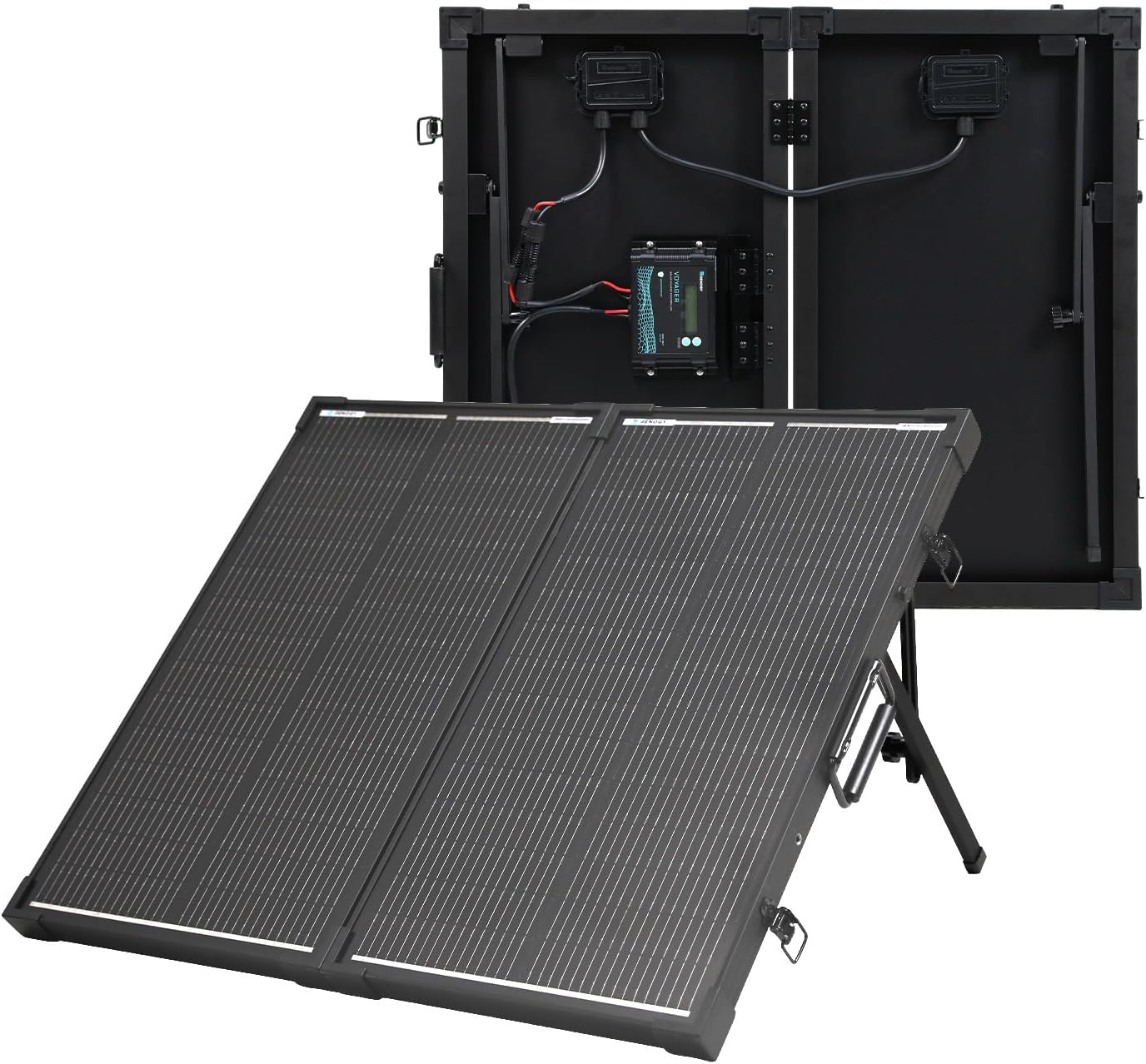
Renogy 100W portable — N-type cells plus included 20A controller
The controller situation
Most portable panels are meant to plug straight into a power station, which has its own MPPT controller built in. That’s the clean setup — panel to station, done. If you’re charging a bare 12V battery, you need a separate controller, and now you’re carrying a panel plus a controller plus wires, and the “portable” part is doing heavy lifting.
Renogy’s 100W portable kit includes a 20A controller in the package, which is genuinely convenient for battery-direct charging. ZOUPW assumes you have a station. Know which customer you are before you buy. I bought the wrong one first — panel with no controller, battery with no station, a very educational afternoon.
Positioning: the free 30%
Here’s the thing nobody puts in the specs: a portable panel you reposition beats a bigger panel you don’t. Angling toward the sun, moving it at noon, chasing the light as the afternoon shadows creep — that’s worth 20-30% over a panel left flat. The foldable’s kickstand legs are flimsy on every brand, including this one. I use a rock. A rock is free, never breaks, and adjusts to any angle. The rock is the best accessory in solar.
Free, too.
Shade is the enemy in a way the specs don’t convey. A portable panel half-shaded by a tree branch doesn’t make half power — the shaded cells drag the string, and you can lose 70-80% from a little shade. Full sun or nothing. I move mine three times a day when I’m serious about charging. When I’m not serious, it sits there making 18 watts and I go fishing.
The category, briefly
Portable panels all come from the same handful of factories with different logos. ZOUPW, ROCKPALS, the alphabet-soup brands — the cells are similar, the differences are the bag, the kickstand, the connectors, and whether customer service answers. Jackery’s SolarSaga 100W costs more and the premium buys you brand certainty. EcoFlow’s 160W is the step-up if you want more watts in a similar footprint. Generic 110W foldables are the budget play. They all make electricity from sunlight. The miracle is the same; only the packaging differs.
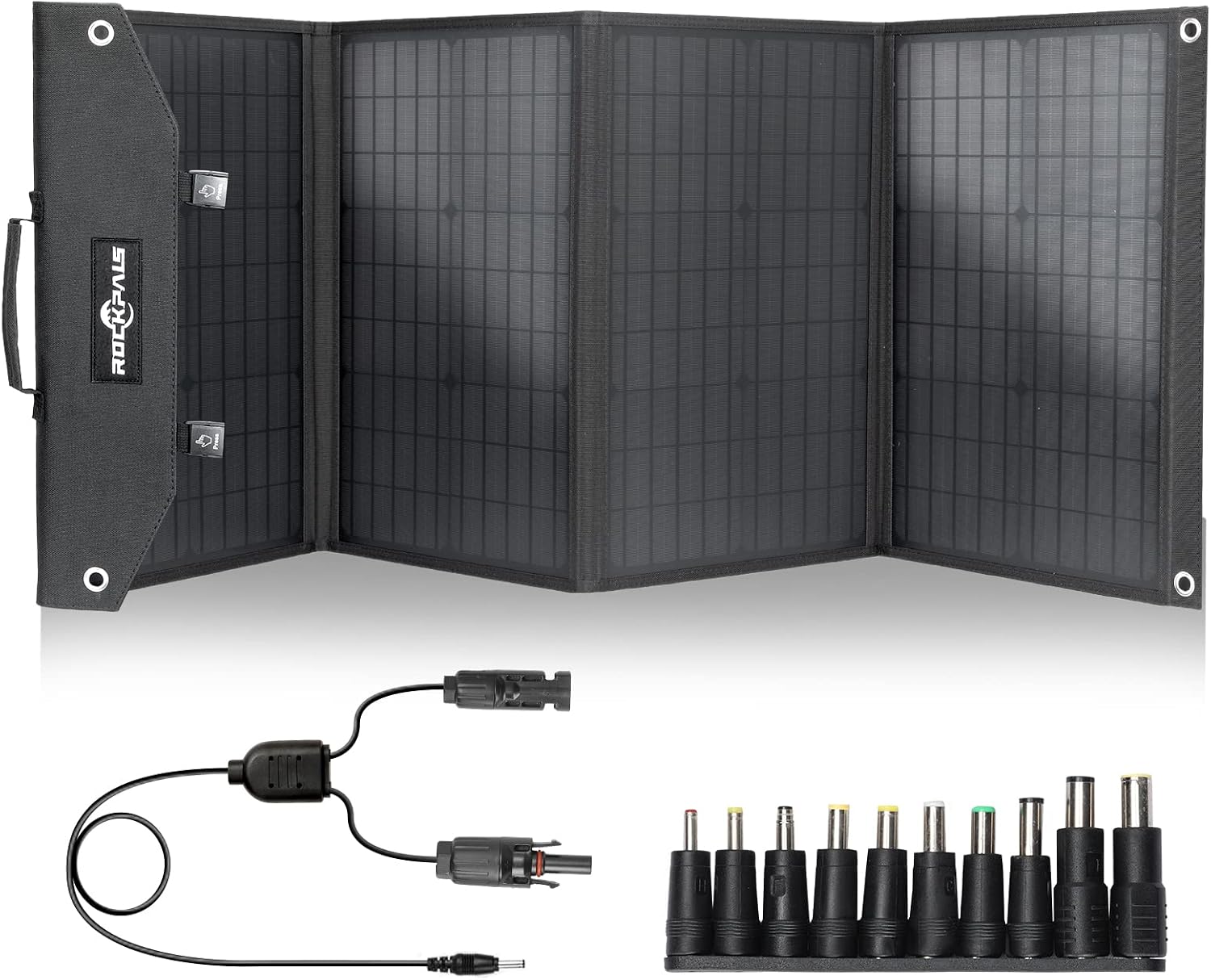
ROCKPALS 100W — the other solid mid-price foldable
Mine’s got pine sap on one corner that I can’t get off, a small scuff from the rock (the rock!), and it still pushes 90+ watts in good sun. Three seasons in. The bag’s zipper is dying — they always die — but the panel doesn’t care about the bag. Last weekend I set it up in the backyard just to keep the station exercised, angled it at the October sun, and watched 64W roll in. Not 100. Never 100. But 64 honest watts, and the station ticked upward, and the dog slept in the sun next to it. Good enough. I haven’t tested the ZOUPW in salt air — inland camping only. Coastal users should check the corrosion reports. Solar’s like that — you stop chasing the label and start appreciating the afternoons it just works.
Frequently Asked Questions
How much power does a 100W portable panel actually make?
400-500Wh on a good solar day (about 4-5 peak sun hours). Under clouds, 10-25% of that. Enough to substantially recharge a 500Wh power station, or halfway fill a 1kWh unit.
Can I leave it out in the rain?
Yes — IP67 means rain and dew are fine. Don’t let water pool on it for days, and bring it in for hail. The ETFE coating degrades with UV over 2-3 years; that’s normal wear.
Do I need a charge controller?
Not if you’re plugging into a power station (they have MPPT built in). Yes if you’re charging a bare 12V battery directly. The Renogy kit includes one; the ZOUPW assumes a station.
ZOUPW vs. Renogy vs. ROCKPALS — which 100W portable?
Similar cells, similar output. Renogy’s kit includes a 20A controller and has the best support network. ZOUPW and ROCKPALS are solid mid-price options. Buy on price and included accessories, not efficiency decimals.
Why is my panel only making 60W in full sun?
Probably angle, heat, or both. Panels lose output when hot and when not perpendicular to the sun. Reposition toward the sun, ensure full shade-free exposure, and expect 70-85W real-world from a “100W” panel in good conditions.


