
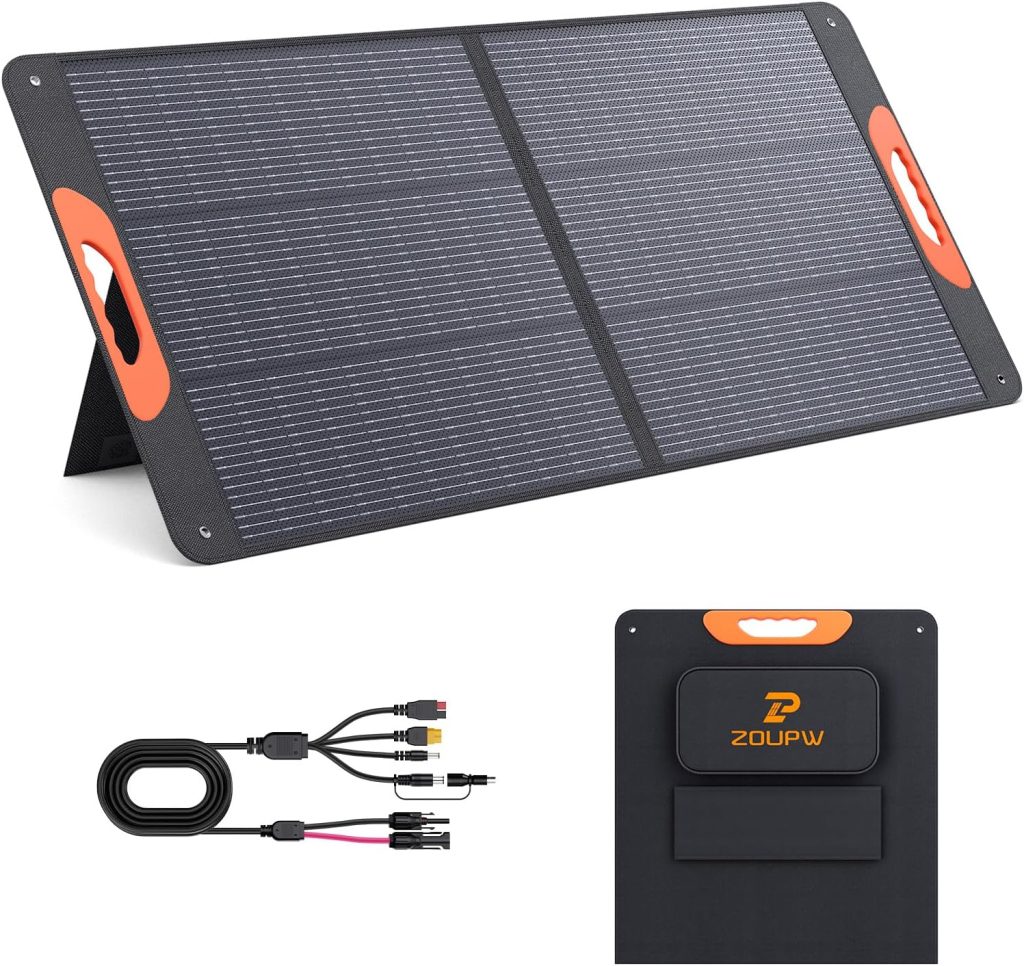
Before I bought my first folding panel, I did this math: 110W panel, 300Wh power station, three hours of sun equals full. Clean. Simple. Wrong.
After I actually owned both, the math became: 110W panel, 75W real on a good day, charging losses, the station’s input overhead — five to six hours for a full refill, on a good day, if I re-angled the panel twice. The full version of this timing reality is in how long it takes to charge a solar generator, and it’s less cheerful than the brochure.
The ZOUPW 110W — folding, monocrystalline, 23.5 percent efficiency, IP67 — is a good panel. This isn’t a complaint about the panel. It’s about the arithmetic I brought to it.
What 110W Puts in the Tank Per Day
Realistic daily harvest: 110W times five sun hours times 0.7 real-world factor equals roughly 385Wh. That’s the honest day’s work for this panel — enough to refill a 300Wh station from empty with change, or to offset a 12V fridge through the daylight hours.
The 0.7 factor is doing a lot of work in that equation: angle imperfections, heat, the occasional cloud, dust you haven’t washed off yet. On a perfect day you beat it. On a normal day you don’t. I plan with 0.7 and I’m pleasantly surprised more often than I’m disappointed, which is the right direction for surprises.
Against a 500Wh-plus station, one 110W panel is a slow feed — two days for a full refill. Pair it with 200 to 300Wh of storage and the rhythm works: drain by night, refill by afternoon. The panel and the battery should be sized as a pair. I bought mine separately, months apart, and got lucky that they matched.
The USB Ports: Gimmick or Genuine?
This panel has built-in USB outputs — USB-C PD and USB-A — alongside the main solar output. My first reaction was gimmick. My second reaction, after a trip where the power station stayed home, was that direct phone charging off the panel is genuinely useful.
The use case: day hike, beach day, any outing where hauling the power station is silly but your phone is dying. Unfold the panel, plug the phone into the USB port, done. No station, no inverter losses, just sun to phone. It’s the lightest possible solar setup, and for single-device top-ups it’s actually the most efficient one — every conversion step you skip is energy saved.
The catch is clouds. Direct solar charging with no battery buffer means your phone charges in fits as clouds pass. Fine for topping up. Annoying for a full charge. I use it for the top-up case and stopped expecting more.
Folding Panels and the Durability Question
A folding panel lives a harder life than a rigid one. It gets folded, unfolded, stuffed in bags, leaned against things, rained on, dropped. The ZOUPW’s IP67 rating — dust-tight, survives brief submersion — is reassuring on paper.
In practice, the weak points are the hinges and the fabric between sub-panels, not the cells. Two seasons of regular use and mine shows wear at the fold lines — not failure, just the fabric softening and the creases becoming permanent. The ETFE surface has fine scratches from sand, because sand is everywhere and ETFE is softer than glass.
Output hasn’t fallen off a cliff. But I treat the sunny-day numbers as a slow decline from new, a percent or two a year, and I wash the thing when I think of it. Which is not often enough. I’m honest about my maintenance habits the way I’m honest about my math: aspirationally.
23.5% Efficiency in Plain Terms
The efficiency number tells you the panel’s size for its watts, nothing more. At 23.5 percent, this 110W panel is smaller and lighter than a 20-percent 110W panel would be — same energy, less luggage. That’s the whole story.
It does not mean you get 23.5 percent more energy than a cheaper panel. A 110W panel is a 110W panel; efficiency changes the dimensions, not the harvest. The premium for high efficiency buys portability, not power. Worth it when every pound matters. Less worth it when the panel lives on a shed roof.
I paid the premium because my panel travels. If yours doesn’t, save the money and buy the bigger cheaper panel. Watts are watts.
The Beach Day That Justified Everything
Sideways story. Last summer, beach day, no power station — just the folding panel, two phones, a Bluetooth speaker, and a cooler. I unfolded the panel on the sand, plugged in the speaker via USB, and we had music all afternoon while the phones topped up.
A guy on the next blanket asked what it was. I showed him the USB port, the folding thing, the whole deal. He asked the price. I told him. He did the visible math of “that’s more than I expected for a phone charger” and I watched him decide it wasn’t for him.
He was right, for his use case. A $30 power bank charges two phones at the beach. The panel earns its price on multi-day trips where the power bank would die on day two. Single-day outings don’t need solar. I keep forgetting this and recommending panels to day-trippers. The beach guy’s skepticism was the correct analysis.
Portable Panel Shopping, Without the Hype
Hype one: “charges your power station in X hours” where X assumes lab sun. Multiply X by 1.5 for your life. If the result still works for your trips, buy it.
Hype two: the efficiency arms race as a reason to upgrade. Going from 21 to 23.5 percent on a 110W panel saves you a few square inches and a few ounces. It does not change your energy budget. Upgrade for a bigger panel, not a more efficient one.
Hype three — my own, again: I bought the folding panel partly because folding things are satisfying. The origami pleasure of unfolding it at camp is real and has nothing to do with electricity. I’m not saying buy for the fidget factor. I’m saying I did, and at least I admit it.
What About the Competition?
Three portable panels in the 100 to 200W range, for the fold-and-go job.
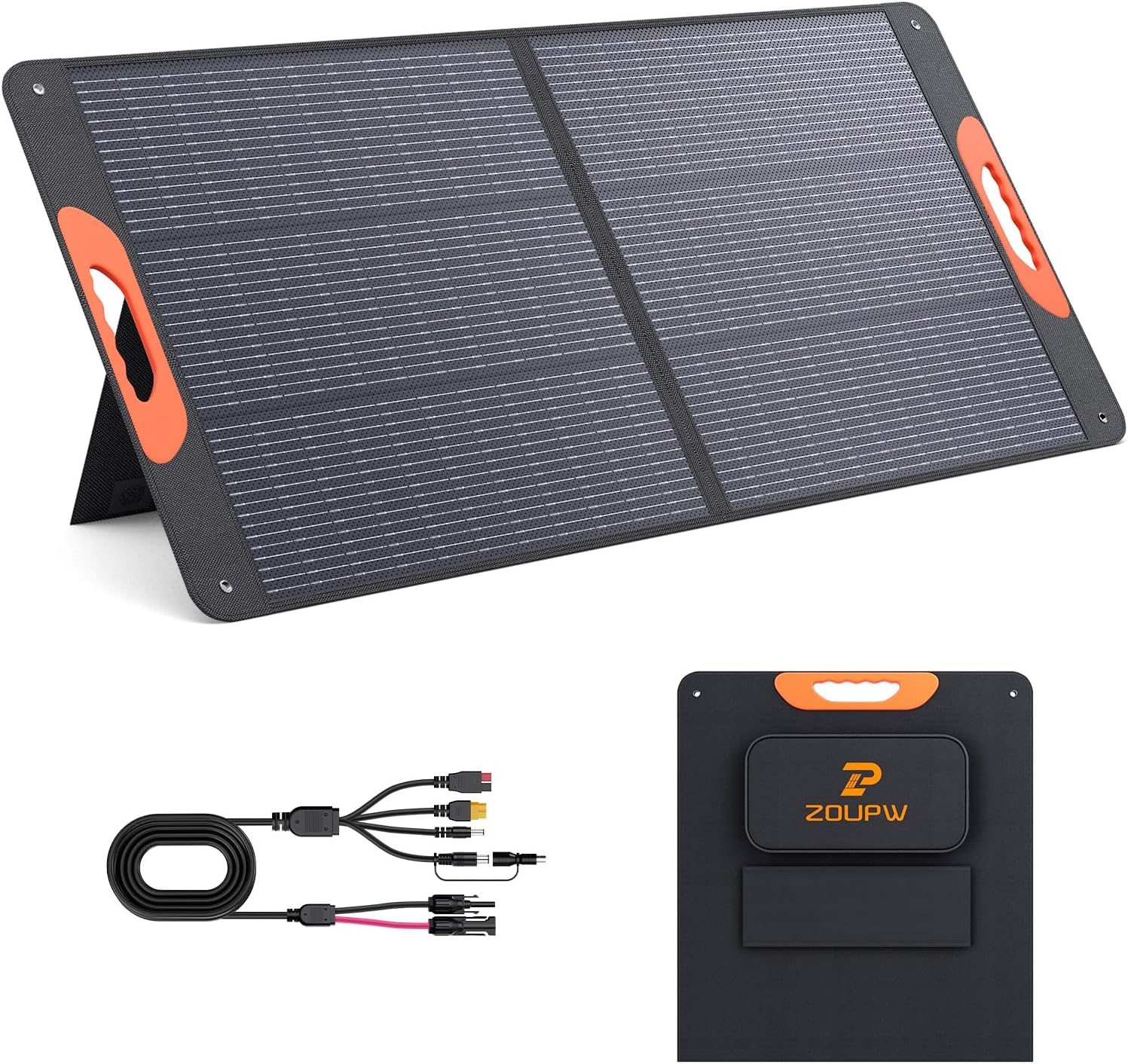
ZOUPW 110W Foldable Solar Panel
110W folding with direct USB charging. The beach-day panel that needs no station.
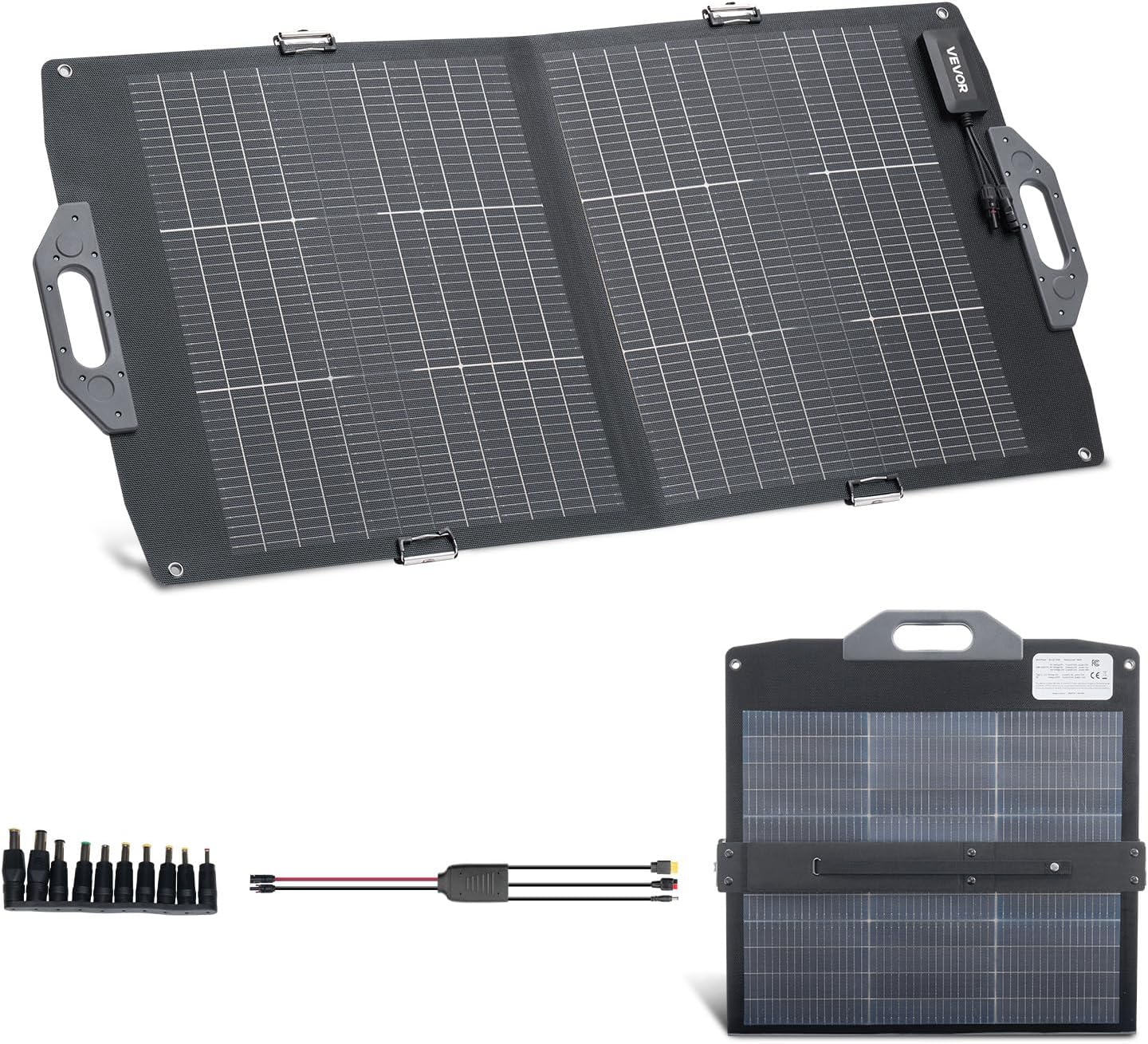
VEVOR 100W Foldable Solar Panel
100W folding, 24% N-type cells. Efficiency leader in the budget portable bracket.
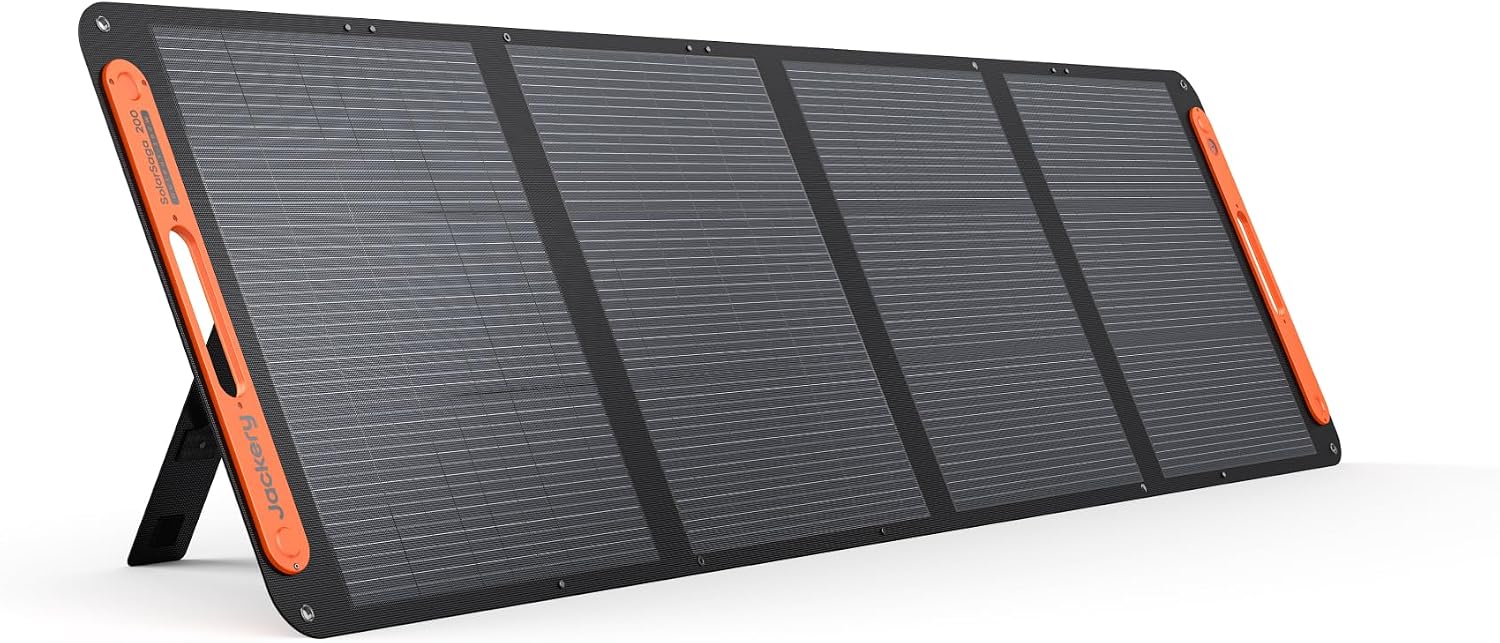
Jackery SolarSaga 200W
200W bifacial folding panel. Double the harvest for bigger stations.
Buy the ZOUPW 110W if you want the light folding panel with direct USB charging — the beach-day and day-hike use case, no power station required. Buy the VEVOR 100W if efficiency-per-dollar is the metric; its N-type cells lead the budget bracket. Buy the Jackery SolarSaga 200W if your power station is bigger and one 110W panel won’t keep up — the smaller SolarSaga 100W review covers the Jackery panel family if you want the brand-matched route.
Skip the folding class if your panel never moves. A rigid panel gives you more watts per dollar and won’t develop hinge wear.
The panel’s in the truck right now, folded, sandy from the last trip. I keep meaning to wash it. The math says the sand is costing me a few percent. The calendar says I’ll get to it this weekend. The panel doesn’t care — it’ll be there, unfolding, making its honest 75 watts, whenever I finally point it at the sun.
This site contains affiliate links. We may earn a commission on qualifying purchases.


