
Day three of the outage, my neighbor knocked. His freezer was dying and his kid’s nebulizer needed power. I had a big portable station — not this AFERIY, an older one — and we ran an extension cord across the driveway. The nebulizer, the freezer, his phones. It held.
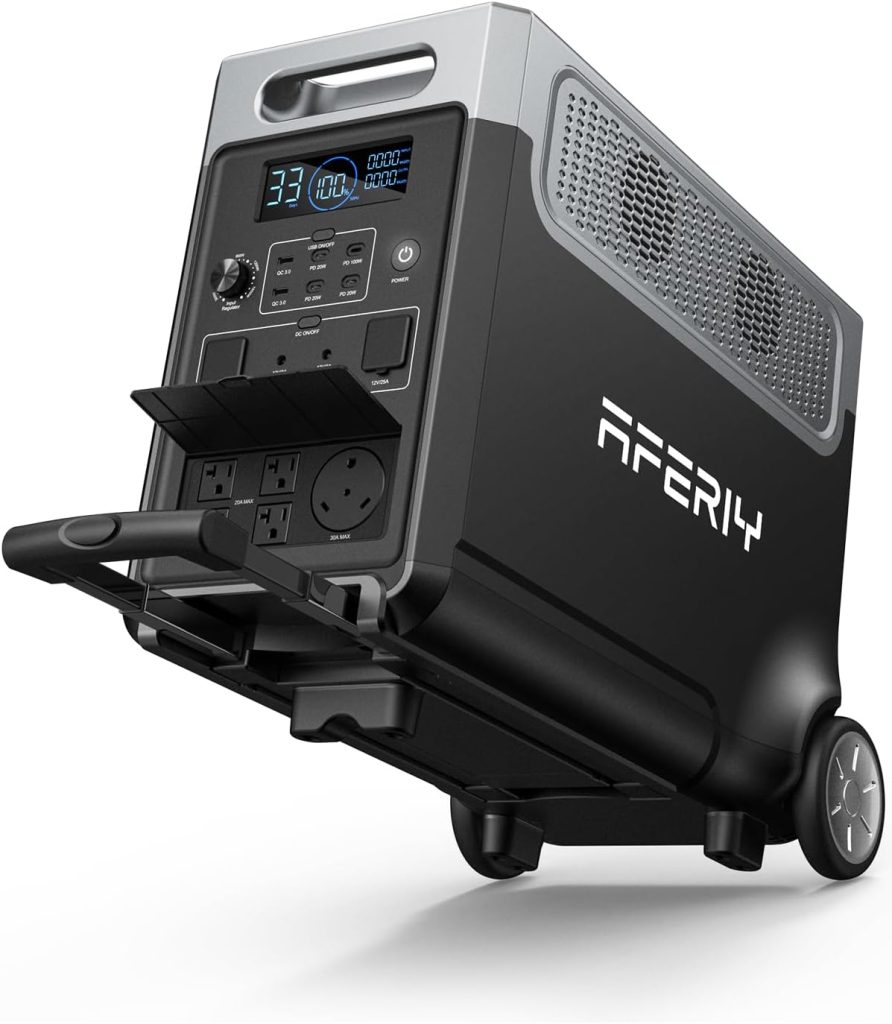
That’s the moment I started thinking in bigger numbers. Not “will it run the router” but “will it run the block.” The AFERIY P310 — 3840Wh, 3600W output, expandable to 11.5kWh — is the answer to the bigger question. Whether it’s the right answer depends on math most buyers skip.
What 3840Wh Covers in a Real House
Start with the usable number. 3840Wh on the label, minus the inverter tax — call it 3,070Wh at the outlets. A critical-loads setup (fridge, freezer, furnace blower, lights, router, some outlets) draws roughly 5 to 8kWh per day depending on the house and the season.
So the base unit covers half a day to a full day of critical loads. Not three days. Not “whole home backup” unqualified. The extended fridge arithmetic — how long each battery class actually keeps food cold — is at can a solar generator power a refrigerator, and it’s the calculation I rerun for every unit in this size range.
The expansion batteries change the story. Two extra packs take it to 11,520Wh — call it 9,200Wh usable — which is two to three days of critical loads, or one comfortable day of nearly-normal living. That’s genuine multi-day backup. It’s also, with the expansion packs, the price of a permanently installed wall battery. The math deserves a spreadsheet, not a feeling.
3600W: the Appliance Threshold
This is where the big units separate from the toys. 3600W continuous runs a microwave and a fridge at the same time. It runs a well pump’s startup surge without flinching. It runs power tools — table saw, circular saw, the whole jobsite. A 15-amp table saw draws about 1800W; this doesn’t notice it.
The 10-millisecond UPS switchover matters here too. Under 10ms means computers don’t reboot, routers don’t drop, the CPAP doesn’t hiccup. For anyone working from home through flickery grid conditions, that number is worth more than an extra kilowatt-hour of capacity. A UPS that actually behaves like a UPS.
I estimated my own peak simultaneous load during an outage at around 2,800W — well pump kicking while the fridge cycled, plus the usual small stuff. A 2000W unit would have tripped. 3600W shrugs. Headroom isn’t waste when motors are involved; it’s the difference between running and resetting.
The Weight Conversation
Ninety-plus pounds. Let that number sit for a second. The AFERIY has wheels and a pull handle, and it needs them — this is luggage, not a lunchbox.
Portability at this size is a fiction the category maintains politely. You can move it from the garage to the patio. You cannot throw it in the trunk for a camping weekend without planning around it. Every unit in the 3kWh-plus class has the same issue; the wheels just make the fiction more comfortable.
Buy it as furniture that happens to roll, not as a portable anything. Put it where it’ll live — utility room, garage wall — and run your critical loads to it. The day you need to carry it somewhere in a hurry is the day you’ll wish you’d planned the placement in advance. I speak from the experience of carrying a 70-pound unit down stairs during an outage. Once was enough.
Charging a 3.8kWh Box: the Other Half of the Math
Here’s what the capacity headlines skip: refilling 3,840Wh takes real input. AC charging at 2,200W fills it in about two hours — genuinely fast, and the reason big units need a 20-amp circuit to charge at full speed. A standard 15-amp outlet throttles you.
Solar: the unit accepts up to 2,000W of panels. Two thousand watts of panels is eight 250W panels, or five 400W panels — a real array, not a folding suitcase. With 1,500W of actual panels in good sun, you’re refilling in about three hours. With a single 400W panel, you’re looking at two days. The panel math scales with the battery, and buyers who pair a 3.8kWh station with a 200W panel are bringing a garden hose to a house fire.
Size the charging with the storage. The fastest way to be disappointed by a big battery is to charge it with a small everything.
The Extension Cord Across the Driveway
Back to that day-three knock. We ran the cord, and for six hours my station powered the essentials in two households. The nebulizer treatments happened on schedule. The freezer held. His kid fell asleep to a nightlight instead of darkness.
What I remember most isn’t the heroics — it was logistics. The cord was barely long enough. We had to decide whose fridge got priority when both compressors cycled at once. Somebody had to watch the battery level and play load manager. Backup power at that scale is a social project, not just a technical one.
A 3840Wh unit would have made that day easier — more headroom, less load-management anxiety. But the lesson wasn’t “buy bigger.” It was that the plan matters as much as the box: which loads, which cords, who’s watching the meter. The box is the easy part. The plan is the work.
Big-Station Marketing, Translated
“Expandable to 11.5kWh!” — at the cost of two expansion batteries that each weigh 80-plus pounds and cost nearly as much as the base unit. Expansion is real and useful, but price it as a system, not a feature. The three-box total competes with installed wall batteries that don’t need floor space in your garage.
“Replaces a gas generator!” — for most outage scenarios, yes, honestly. Quieter, no fuel, no fumes, instant-on. But not for the contractor running tools all day every day, and not for the week-long outage without serious solar to refill it. A battery is a tank, not a well. Generators make power; batteries store it. The distinction matters exactly when it matters most.
“10-year lifespan!” — maybe, with gentle cycling and moderate temperatures. Heat is the enemy; a garage in Phoenix is not a garage in Portland. The warranty’s fine print has temperature clauses. Read them. I didn’t, once, and the lesson cost me a capacity bar I couldn’t get back. My fault. The fine print was right there.
What About the Competition?
Three big units for the multi-day backup job.
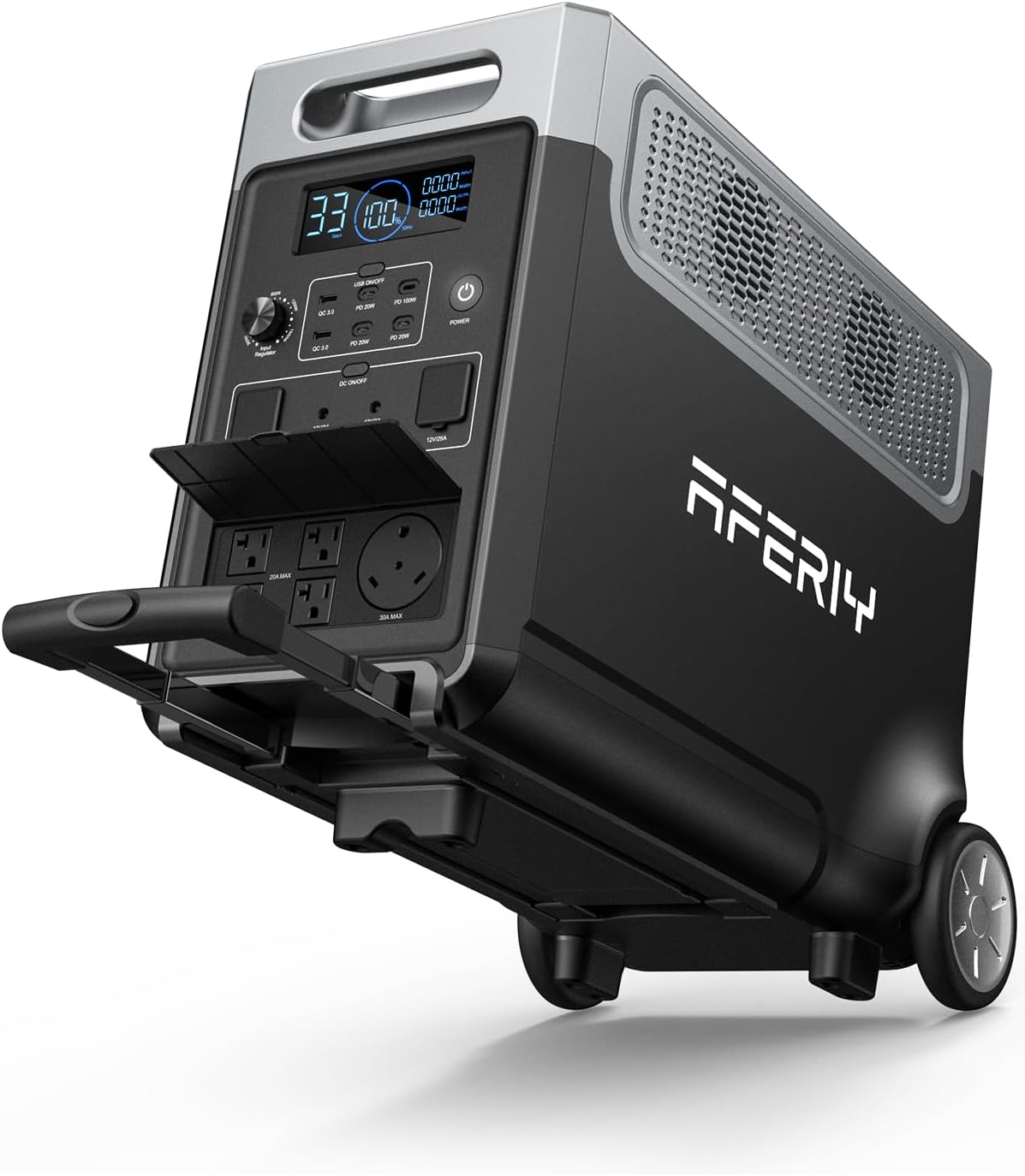
AFERIY 3840Wh Power Station
3840Wh expandable to 11.5kWh, 3600W out. Multi-day backup with sub-10ms UPS.
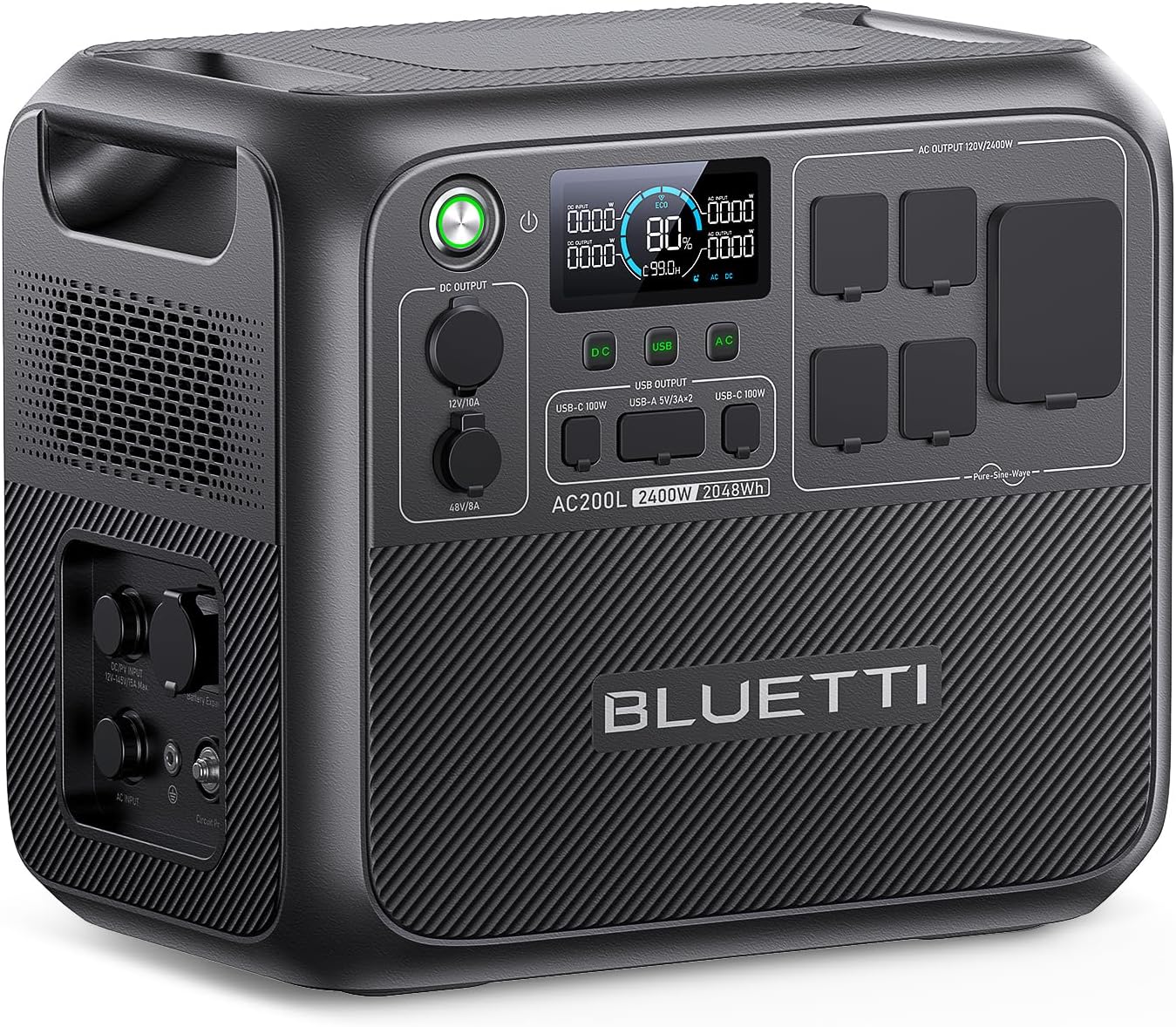
BLUETTI AC200L
2048Wh LiFePO4, expandable. The closest thing to a wall battery in portable form.
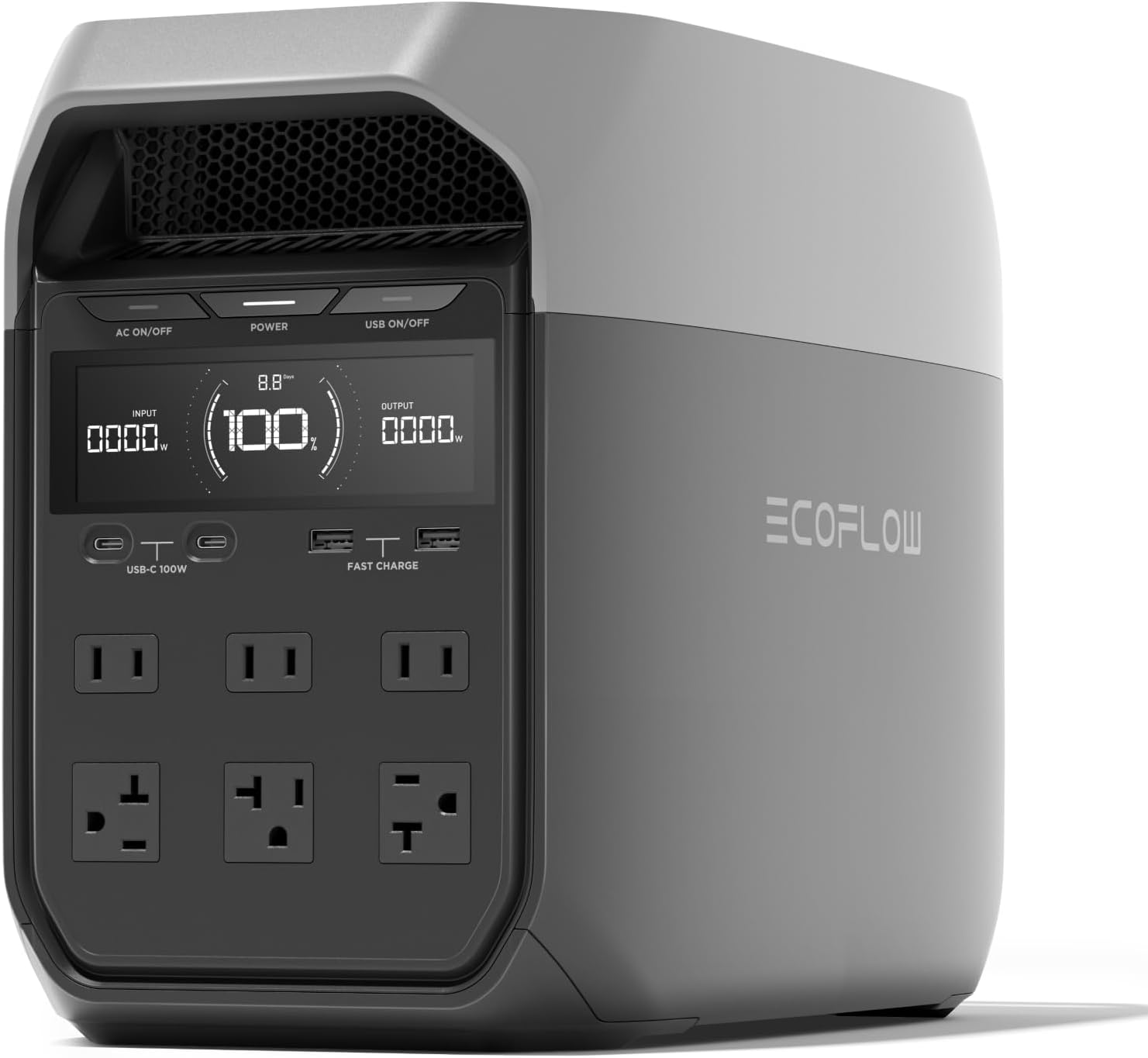
Buy the AFERIY 3840Wh if the expansion path and the price-per-kWh work for your outage plan — 3600W output with sub-10ms UPS is a serious combination. Buy the BLUETTI AC200L if you want the established ecosystem and can live with less base capacity. Buy the EcoFlow Delta 3 if faster recharging and the app experience matter more than raw kilowatt-hours.
Skip the class if your outages are measured in hours, not days. A 1kWh unit covers hours for a third of the money and a tenth of the weight — the sizing walkthrough will talk you down from overspending if you let it.
The neighbor’s power came back on day four. We coiled the extension cord, and he tried to pay me for the electricity — I don’t even know how you’d price that, a few dollars of stored sunshine. He brings it up every time the wind picks up now. “We’ve got the cord.” We do. The bigger question — the one I’m still working through — is whether the next outage gets the bigger box, or whether the plan we built that day was the real upgrade all along.
This site contains affiliate links. We may earn a commission on qualifying purchases.


