The outage hit during a work call. Screen went black, router died, and I sat there in the sudden quiet listening to my laptop fan spin down. My phone had 12%. The big power station was in the garage — of course it was — behind the bikes, under the camping gear, exactly where it couldn’t help me.
That’s when I learned the most important spec of any backup battery: where it is when you need it. The best power station is the one within arm’s reach. Which is why there’s now a small one living under my desk.
Best purchase in years.
Quick Answer
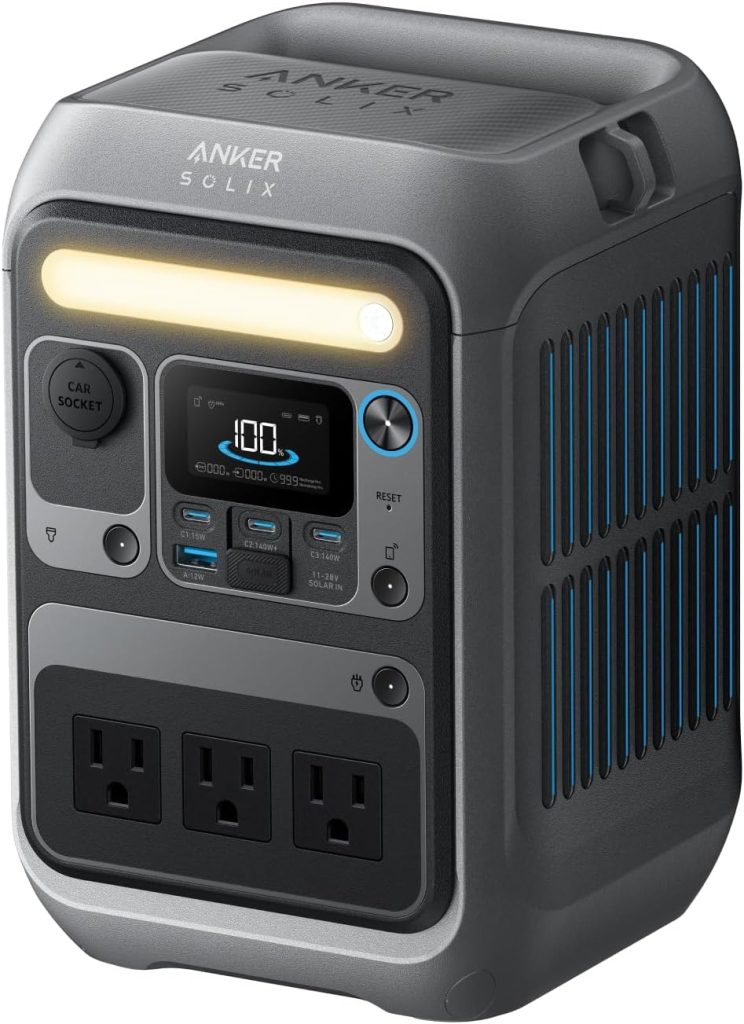
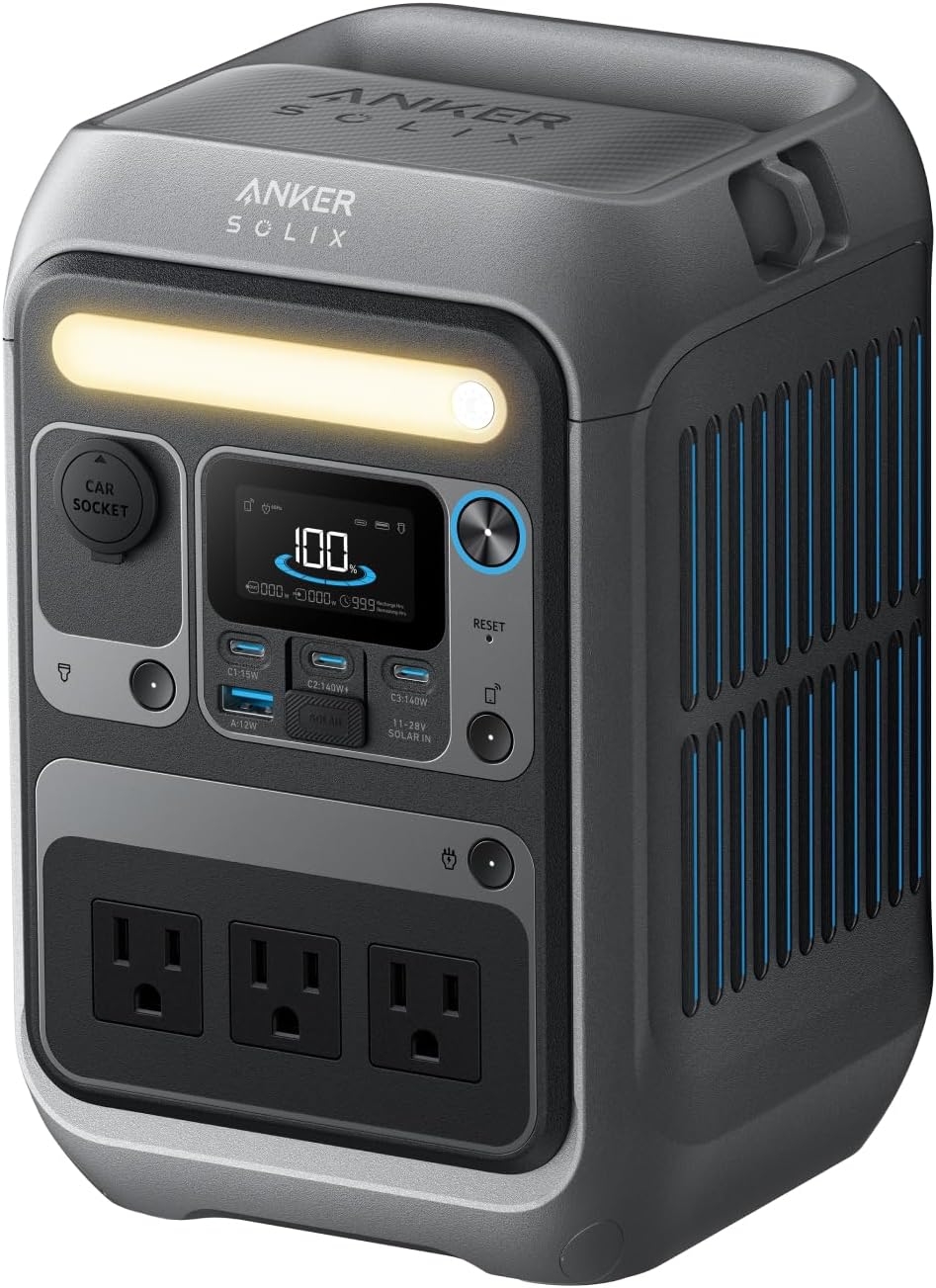
The Anker SOLIX C300 is a 288Wh LiFePO4 station with 300W output and 140W two-way USB-C — small enough to live on a desk, strong enough to run a laptop all day. It’s the “right there when you need it” size. Don’t buy it expecting to run a fridge; buy it expecting to never hunt for an outlet again.
Compare Top Small Power Stations
Three proven picks side by side — choose the one that fits your needs.
Prices and availability may vary — tap any product to check the current listing.
288Wh. In the era of 2kWh behemoths, that sounds quaint. But here’s the thing I didn’t appreciate until I owned one: most of my actual power needs are small. Laptop: 60W. Monitor: 25W. Router: 10W. Phone: nothing, basically. Add it up and my “keep working through an outage” load is under 100W. The C300 runs that for nearly three hours. The outage that inspired this purchase lasted two.
The size is the feature. Eight pounds. It sits under my desk next to the PC, plugged into the wall, passing through power and keeping itself topped off. When the grid blinks, nothing happens — the UPS-like switchover is fast enough that my monitor never flickers. I found this out by accident during a brownout, and the feeling of your computer not dying is weirdly emotional. Like the station and I share a secret.
140W USB-C: the spec that matters most
Forget the AC outlets for a second. The C300’s party trick is 140W two-way USB-C — it charges your laptop at full speed, and it recharges itself at 140W from a USB-C charger. That means one cable does everything. I travel with a 140W GaN charger anyway; now it’s also my station charger. The whole setup — station plus charger plus laptop — fits in a backpack. Try that with a 2kWh unit.
Well, you could try. Your chiropractor would like that.
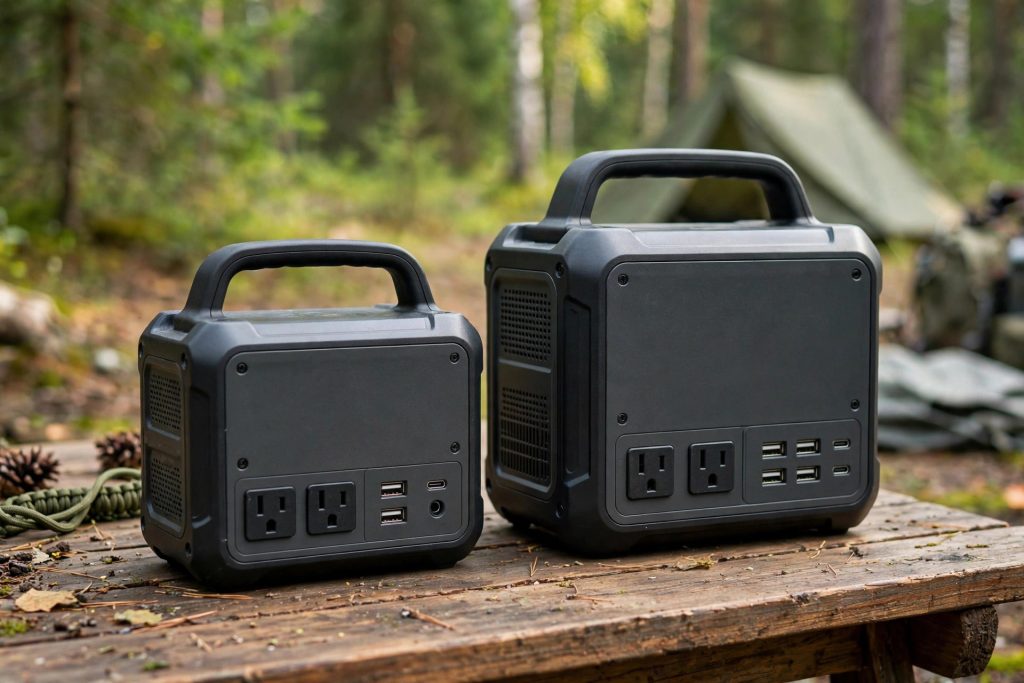
This is the use case the big stations can’t touch: the coffee shop with no outlets, the airport terminal, the back seat on a road trip. For camping, 288Wh runs LED lights all weekend, charges every device you brought twice over, and powers a small 12V fridge for most of a day — a 12V fridge sips power compared to its household cousin. It’s the tent-trip sweet spot.
What it won’t do (read this part)
Run a full-size fridge. No. 288Wh is a fifth of a fridge-day. Run a space heater. Absolutely not — 300W output, and heaters want 1500. Run a microwave. No. Run a CPAP all night? Actually yes — 30-40W for 8 hours is 320Wh, which is right at the edge, and with the humidifier off it squeaks by. But that’s the ceiling, not the comfort zone.
The marketing says “powers 90% of devices.” The plug fits 90% of devices. There’s that trick again. What it actually powers, for useful durations: electronics, lights, small fans, camera gear, drones, a 12V cooler. That’s a great list! It’s just not the list in the ad.
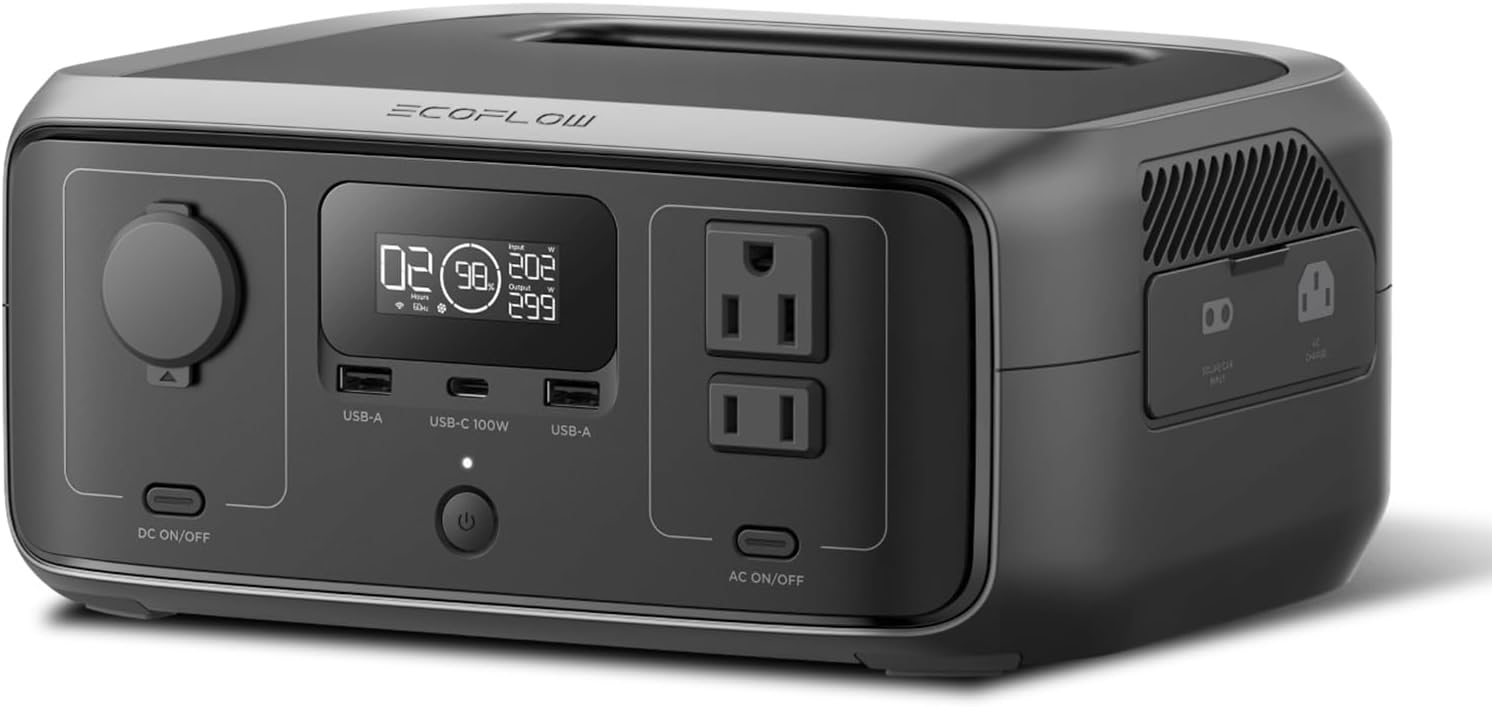
EF ECOFLOW RIVER 3 — faster charging, higher surge
The small-station shootout
This class — 250-300Wh — is quietly the most competitive in portable power. The C300’s rivals: EcoFlow’s RIVER 3 (245Wh, 550W output with X-Boost, charges insanely fast) and Jackery’s Explorer 300D (288Wh LiFePO4, the established name). I’ve handled all three at various points. Honest take: the RIVER 3 charges faster and pushes more watts; the Jackery has the brand trust; the Anker splits the difference with the best USB-C implementation.
The RIVER 3 is the one I’d pick for raw speed — 1-hour charging is real and matters when you’re topping up between stops. The C300 is the one I’d pick for desk life, because the 140W USB-C ecosystem just fits how I already travel. There’s no wrong answer here. There’s only “which compromise matches your outlets.”
LiFePO4 at this size: quiet luxury
The C300 uses LiFePO4 cells — 3000 cycles. At this size, with shallow daily cycling, that’s effectively forever. My usage pattern: it sits at 100% for weeks, drops to 60% during an outage or a trip, recharges. That gentle life means the battery will outlast the USB ports. The older lithium-ion small stations degraded noticeably after two years of the same treatment. Chemistry matters more at small sizes, because small stations get cycled more often. Counterintuitive, but true.
Anker’s app is fine. It shows the watts, it does firmware updates, it doesn’t nag. I’ve stopped reviewing apps in detail because they’re all the same now — a circle showing percentage, a graph nobody looks at, and a firmware update that fixes something unspecified. The circle is accurate. Good enough.
A brief, unrelated observation
My kid uses it to charge her tablet during car trips, and she calls it “the brick.” Not the power station, not the Anker — the brick. There’s something perfect about that. All this engineering, all these watt-hours and charge curves, and to a nine-year-old it’s a brick that makes the iPad work. She’s not wrong. Strip away the marketing and every power station is a brick that makes things work. Some bricks are just better at it.
Fair enough.
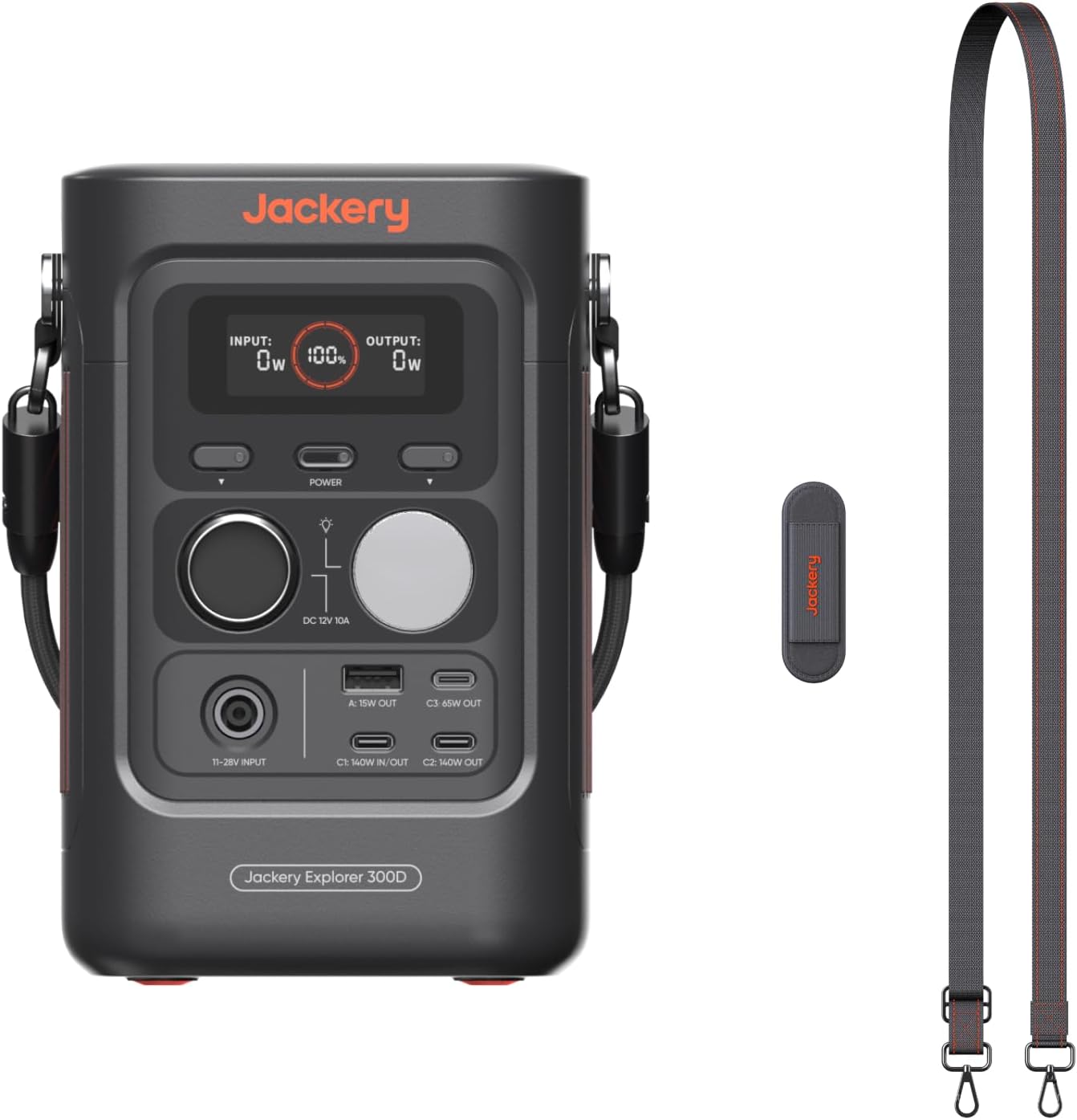
Jackery Explorer 300D — the established 288Wh name
It’s under my desk right now, at 100%, the little display dark. The big station is still in the garage behind the bikes. I should move it somewhere sensible. I won’t. The small one is the one that gets used — for the outage, for the camping trip, for the kid’s brick. There’s a lesson in there about buying for your actual life instead of your imagined emergencies. I keep relearning it, one power station at a time.
I haven’t flown with it — airline watt-hour limits are a whole separate headache I haven’t dealt with.
Frequently Asked Questions
Can the C300 run a laptop?
Yes, easily — the 140W USB-C port charges most laptops at full speed, and 288Wh runs a typical laptop for 3-4 hours. It’s one of the best small stations for mobile work.
How long does it take to recharge?
About an hour from the wall via AC, or via 140W USB-C PD. Solar takes longer — pair it with a 100W panel for roughly 3 hours in good sun.
Can it run a mini fridge?
A 12V car fridge (35-45W), yes — for 6-8 hours. A full-size household fridge, no — 288Wh is about a fifth of what a fridge needs per day.
C300 vs. EcoFlow RIVER 3 — which is better?
The RIVER 3 charges faster and has higher surge output (600W X-Boost); the C300 has better USB-C (140W two-way) and slightly more capacity. For laptop/desk use, the Anker. For maximum watts per dollar, the EcoFlow.
Is 288Wh enough for camping?
For a weekend of phones, lights, cameras, and a laptop — yes, comfortably. For a 12V fridge plus everything else, it’s tight; consider 500Wh+ or bring a solar panel to top up during the day.