The power went out at 8:40 on a Tuesday. Not a storm, not a headline, just a transformer down the street giving up. My phone was at 31 percent. The fridge started its slow warm-up. And I stood in the kitchen doing the math I’d been putting off for a year: what in this house actually needs power, and what can I keep alive with a small box?
That night is why I ended up looking at 300W-class stations — the little 220Wh ones, not the big camping bricks. I didn’t need to run the house. I needed the router, a lamp, and two phones to survive until morning.
What Can 220Wh Actually Keep Alive Overnight?
Let me do the ledger the way I did it that night, flashlight in mouth. A wifi router draws about 10W. An LED table lamp, 8W. Two phones charging, call it 20W together while they charge, then nearly nothing. Say 35 to 40W continuous while everything’s plugged in.
220Wh on the label. Knock off the inverter loss — I use 20 percent because round numbers keep me honest — and you’ve got roughly 175Wh to spend. 175 divided by 40 is about four and a half hours. Hmm, that felt short when I first ran it. Then I remembered the phones finish charging in two hours and the lamp can go off when I sleep, so the real overnight draw drops to just the router at 10W. Ten watts times eight hours is 80Wh. Fine. With room to spare.
That’s the thing about small stations. They’re not for running things. They’re for keeping a few small things from dying. Once I framed it that way, the whole category made sense.
The 300W Ceiling Is Real, Respect It
300W continuous, 600W surge. That runs laptops, routers, lamps, fans, camera chargers, a CPAP for the night — the CPAP math actually works out nicely at 40 to 60W, which is why these little boxes show up in so many CPAP backup discussions.
What it does not run: a kettle, a hair dryer, a microwave, a space heater, a coffee maker. Anything that makes heat from electricity draws a kilowatt or more, and a 300W station will just click off and blink at you. I looked into whether a solar generator can run a space heater after wondering about winter outages. Short answer: not this size. Not even close.
This is the part where being new to this stuff actually helped me. I hadn’t bought into any brand story yet, so I just read the wattage labels on my appliances like a grocery list. Anything under 300W: candidate. Anything over: no.
The Test I Wish Someone Had Told Me About Sooner
Here’s a trick I picked up after the fact. The 100W bulb test. Charge the station full, plug in a known 100W load — an old incandescent bulb, a 100W work light, anything with a fixed draw — and time how long it runs until the station shuts off. If a “220Wh” box runs a 100W bulb for 1 hour and 45 minutes, that’s 175Wh real. If it dies at 70 minutes, something’s off with the label.
Do this inside the return window. It tells you more about honest engineering than every bullet point on the listing combined. I didn’t do it on my first purchase and I regret the laziness, not the money exactly, just the not-knowing.
Solar on a 220Wh Box: Nice Idea, Slow Reality
Most of these small stations accept 60 to 100W of solar input. On a perfect day with a 100W panel angled right, you’re putting maybe 70 to 80W into the battery after losses. That’s roughly three hours of good sun to refill from empty.
On a normal day with passing clouds? I estimated half that rate, because every small-panel setup I’ve watched bounces between 30 and 80W as clouds move. So: a full day of casual sun to refill. Which is fine, because a 220Wh box isn’t meant to cycle daily like a big home unit. It’s a top-up-when-you-can device.
Don’t buy the panel bundle expecting energy independence. Buy it so the box isn’t dead the second time you need it. Whether the whole setup is worth the money depends on how often your power actually goes out — I ran through are solar generators worth the money after that Tuesday night and the answer was annoyingly personal.
The Drawer Full of Dead Power Banks
Off topic for a second. I cleaned out my junk drawer last month and found four portable phone chargers, all dead, all swollen slightly, all bought in a panic before trips. Years of buying the cheapest battery with the biggest number on it.
The 300W station is the first battery thing I bought where I did the arithmetic first. Router 10W, lamp 8W, phones 20W. It felt absurdly careful for a two-hundred-dollar purchase. But it’s also the first one I haven’t resented, because it does exactly the small job I hired it for and nothing else.
There’s probably a life lesson in there about matching the tool to the job. I bought my way through four power banks to learn it.
What This Category Gets Wrong
The listings love the phrase “emergency power” next to photos of entire living rooms lit up like nothing happened. A 220Wh box does not power a living room. It powers a corner of one. The honest photo would be a router with one glowing LED and a phone at 80 percent, in a dark house. That photo doesn’t sell, so we get the living room.
And the “600W surge” line. Surge ratings on small stations are nearly decorative — the battery behind them can’t sustain anything near surge for more than a second or two. Fine for a fridge kick on a big unit. On a 220Wh box, the surge number exists so the spec table has another row.
I also want to say something about my own buying logic, since I’m criticizing everyone else’s. I almost bought a bigger 500Wh unit “for headroom” that I didn’t need. Headroom is just paying for capacity you’ll never cycle, and lithium batteries age whether you use them or not. Buy the size for the job. I say this as someone who nearly didn’t.
What About the Competition?
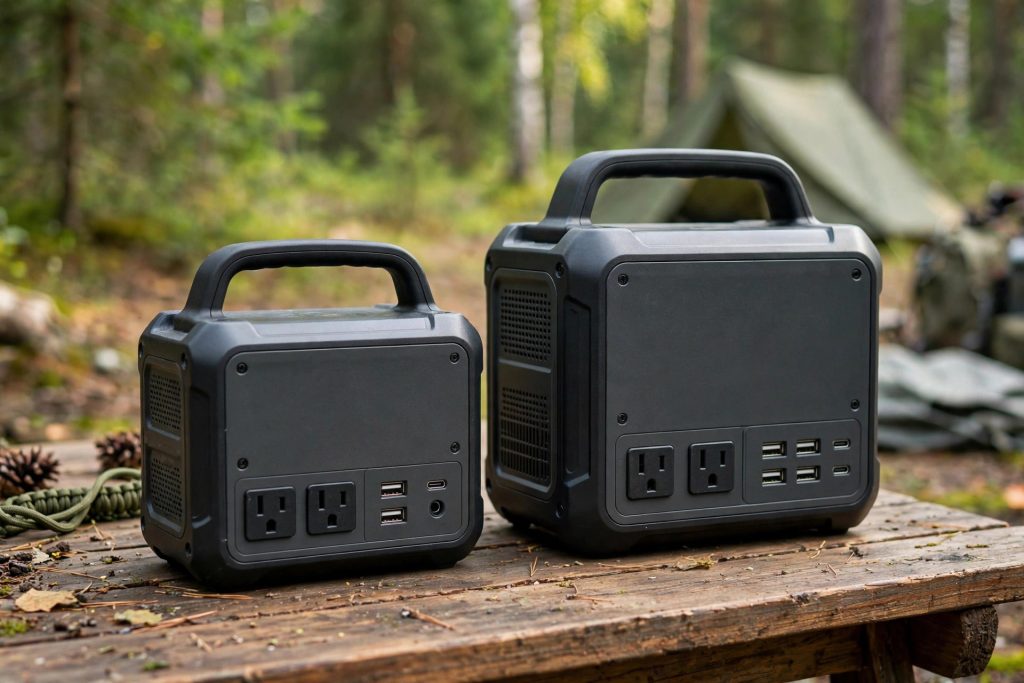
Three small stations in this class worth comparing. Same job — keep the little things alive — different flavors of it.
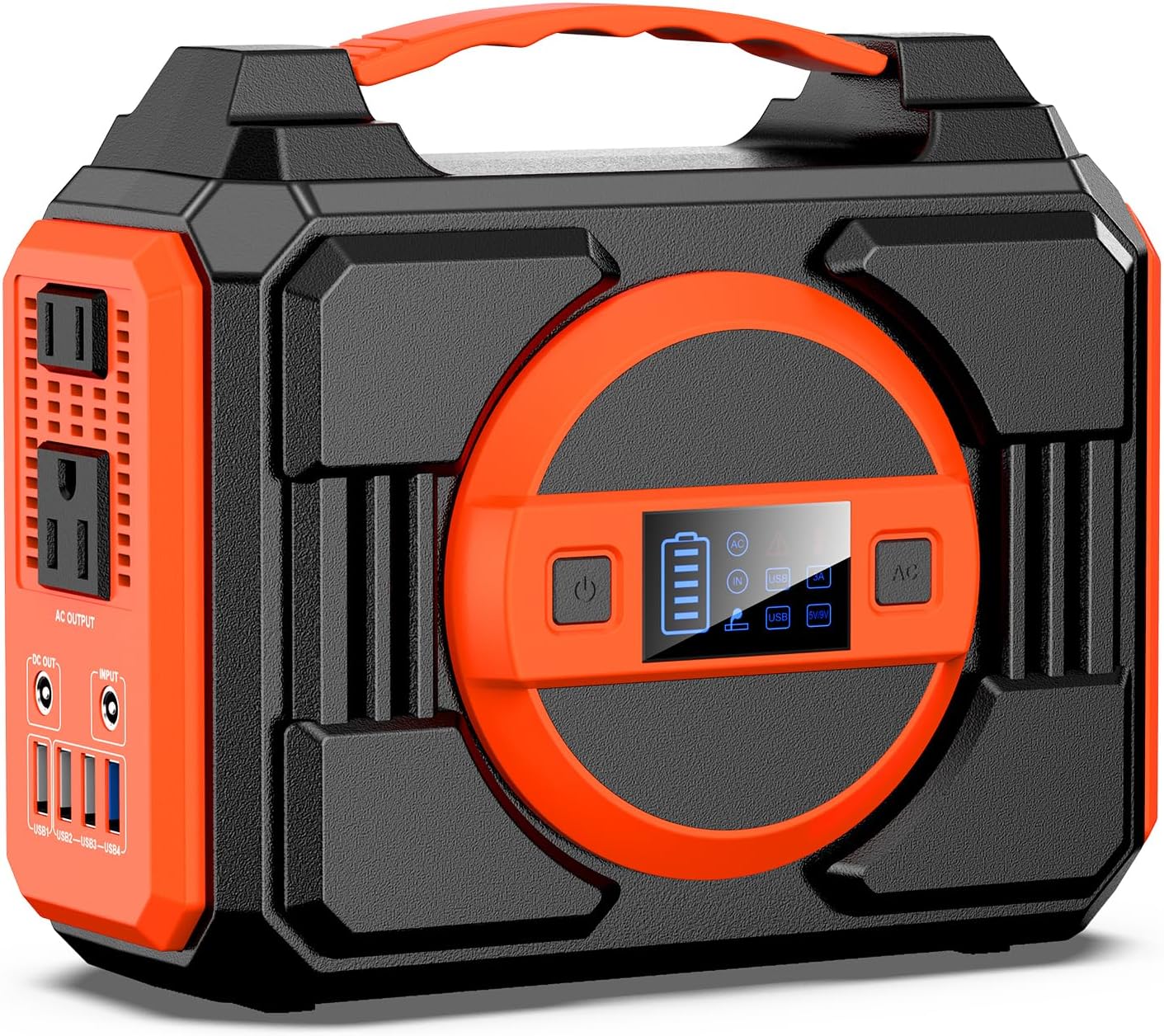
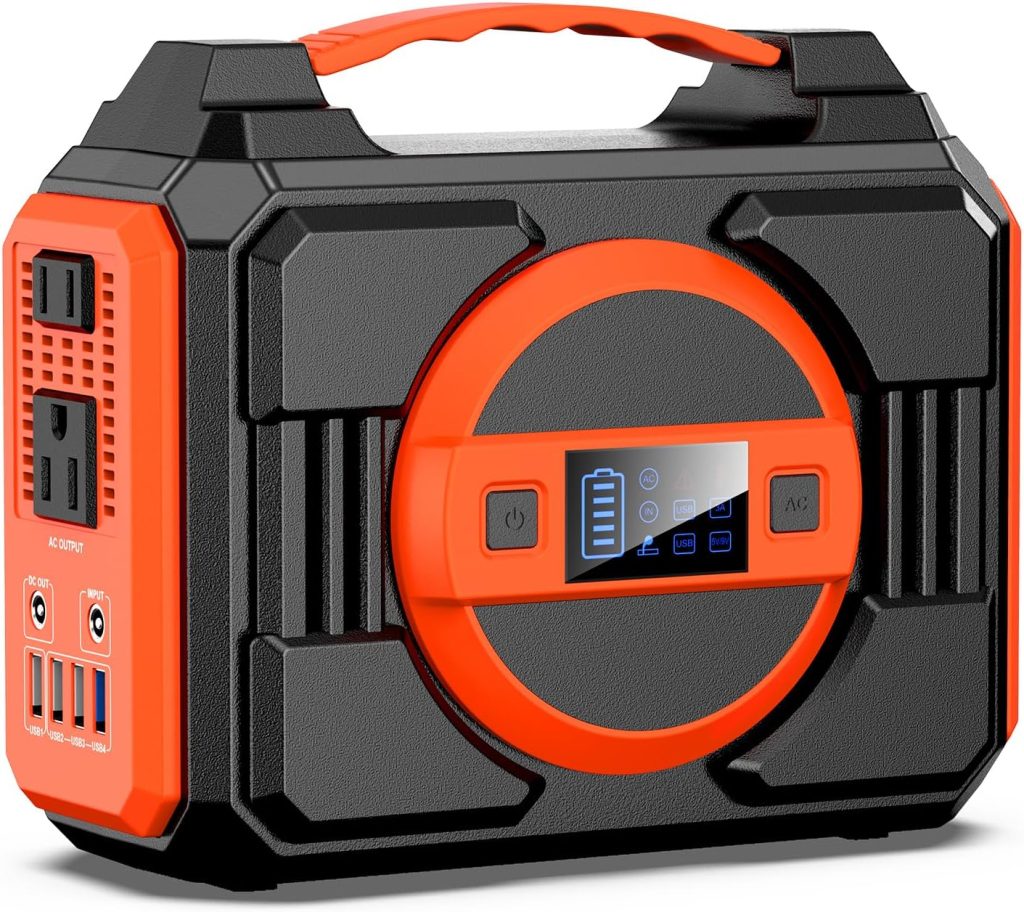
300W 220Wh Portable Power Station
300W/220Wh generic. Covers router, lamp, and phones overnight at a budget price.
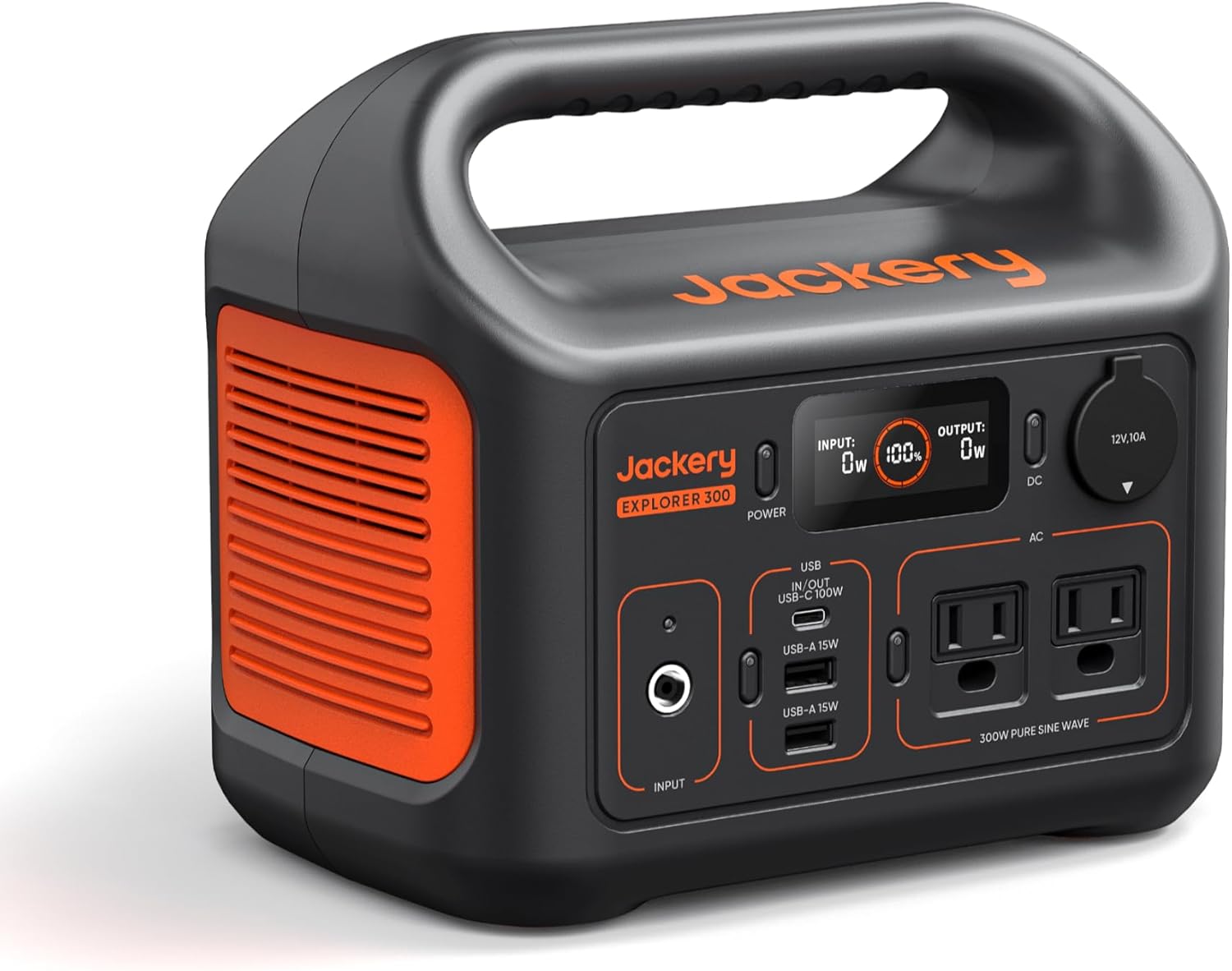
Jackery Explorer 300
293Wh, the benchmark 300W unit. The one every other small station gets compared to.
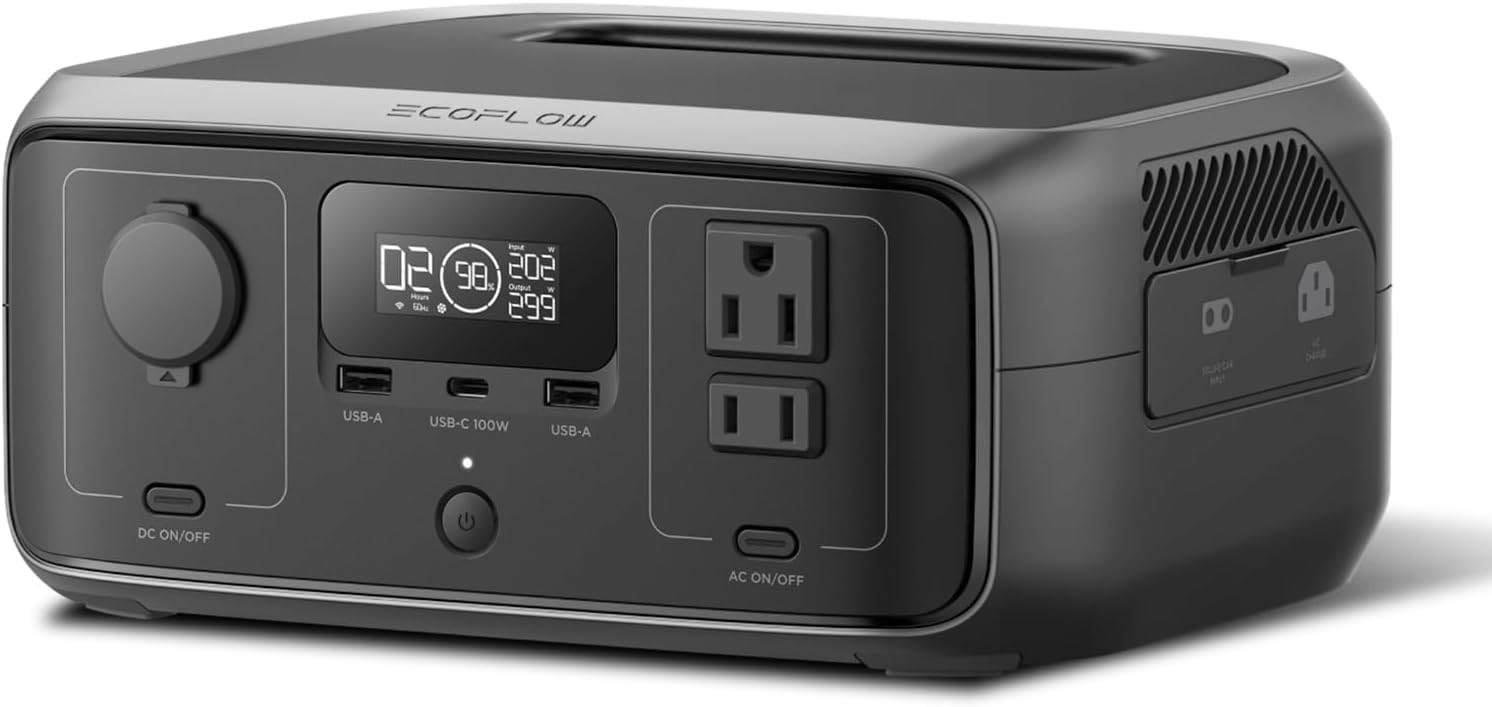
Get the generic 300W/220Wh unit if the price is right and your list is short: router, lamp, phones. Get the Jackery Explorer 300 if you want the brand with the longest track record in this size — it’s the one everyone else gets compared to. Get the EcoFlow River 3 if faster recharging matters to you; waiting half the time for a refill is genuinely useful when the sun’s only out for a few hours.
Skip all three if your list includes anything with a heating element. That’s not a battery problem, that’s a physics problem, and no 300W box solves it.
The transformer got fixed by 2am that Tuesday. My phones were at 100, the router never dropped, and I sat in the kitchen reading by LED light feeling weirdly smug about $200. Then I did the bulb test the next weekend and found out my box held 168Wh, not 220. I’m still a little annoyed about the 52 missing watt-hours. The smugness didn’t survive the arithmetic, but the router stayed up all night, and that’s the part that actually counted.
This site contains affiliate links. We may earn a commission on qualifying purchases.