
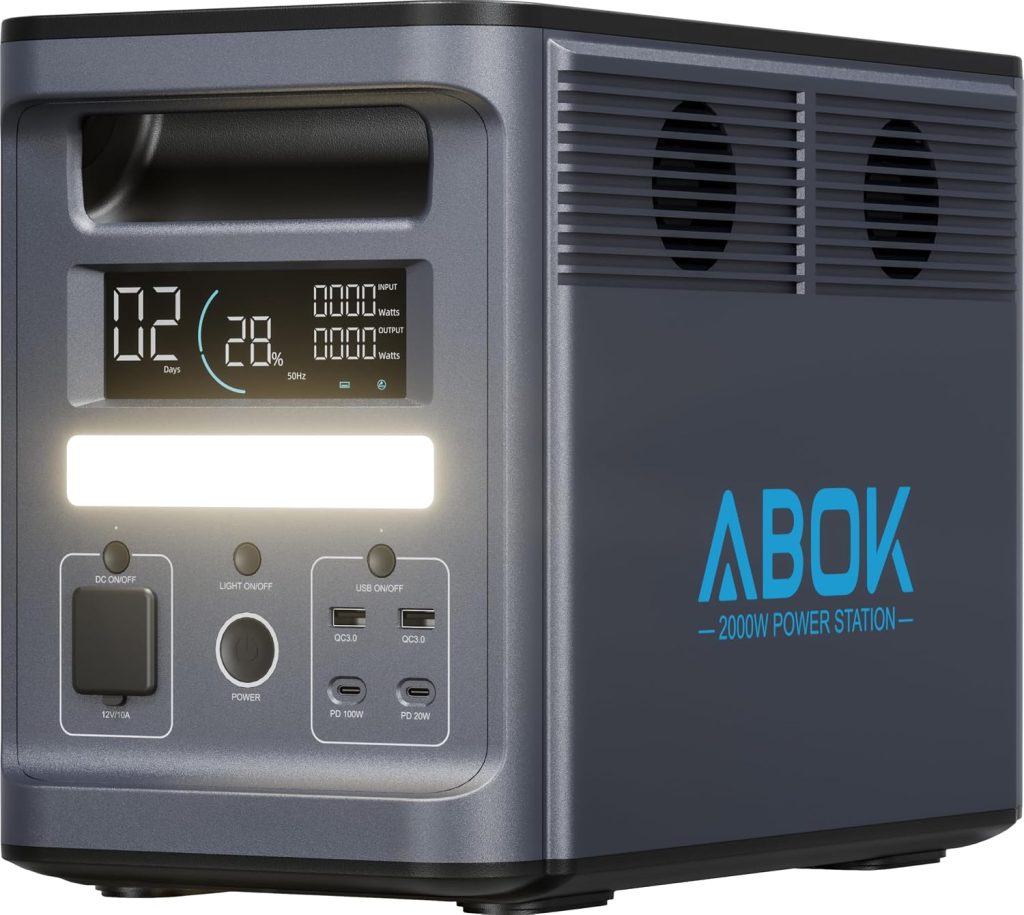
“Powers your fridge for hours!” That’s the line that got me. Hours. Plural. Technically true, the way “contains water” is true of the ocean.
The ABOK Ark2000 — 1536Wh, 2000W output, LiFePO4, and the kit version with a 200W panel — is a serious box. But “hours” for a fridge needs a closer look, because that closer look is where the buying decision lives.
The Fridge Math, Done Honestly
1536Wh on the label. Shave the inverter tax — I use 20 percent, same as always — and you’re at roughly 1,230Wh of usable AC energy. A modern full-size fridge draws about 1.2 to 1.5 kWh per day. So: most of a day. Ten to twenty hours depending on the fridge, the room temperature, and how many times someone stands in front of the open door making decisions.
That’s genuinely useful. One full day of fridge through an outage is the difference between keeping groceries and throwing them out. I’ve written the extended version of this arithmetic at can a solar generator power a refrigerator because the fridge question comes up in every single buying conversation I have.
I ran these numbers before buying my current big station, and the fridge-day became my unit of measurement. How many fridge-days is this box? The Ark2000 is a one-fridge-day box. Respectable. Just say it plainly.
2000W Changes What’s Possible
The output rating is where this class earns its money. 2000W continuous runs things the 1000W boxes can’t: a microwave (briefly), a well pump, a circular saw, a full-size coffee maker, a hair dryer on medium. The startup surge headroom — 4000W peak — covers motor kicks that would flatline a smaller inverter.
This is the practical dividing line I wish someone had drawn for me years ago. Below 1000W, you’re running electronics. At 2000W, you’re running appliances. Different jobs, different boxes, and the price jump between them is the most honest price jump in the category because the capability jump is real.
My load list crossed that line when I added the well pump. 800W running, surge past 2,500W on startup. The 1000W station I owned just clicked off and blinked. The math had been warning me for months. I finally listened.
What the 200W Panel Actually Contributes
The kit pairs the station with a 200W panel. On a good solar day — clear, tilted, clean — expect 140 to 170W of real input after losses. Over six good hours, that’s roughly 900Wh to 1kWh back into the box. The full timing breakdown for sun, wall, and car charging is in how long it takes to charge a solar generator — worth reading before you size the panel side of any kit.
On a grey day, halve it. On a grey week, the panel is a trickle charger with nice branding. I keep saying this about every kit and I’ll keep saying it: the panel extends your outage, it doesn’t erase it. One 200W panel against a 1,230Wh daily appetite is a supplement, not a solution.
Two panels change the picture meaningfully — the Ark2000 accepts up to 1,200W of solar, which is generous for this class. But two panels also need somewhere to live, and “somewhere” for rigid 200W panels means a real mounting plan, not leaning them against the garage.
The Expansion Question
ABOK sells an extra battery that parallels with the Ark2000, taking total capacity to 4,608Wh. Three fridge-days. Real multi-day backup. The expansion math is the most interesting number on the whole spec sheet, because it moves the box from “outage accessory” to “outage strategy.”
The catch is the price curve. The expansion battery costs nearly as much as the base unit did, and at that total you’re in competition with bigger single units and even small permanently-installed battery systems. I priced it both ways — expand versus buy bigger — and the answer depended entirely on whether I needed the portability. A 40-pound base unit plus a 30-pound expansion battery is not a camping setup. It’s furniture that happens to have handles.
Buy the expansion path if your outages are multi-day and your loads are fixed. Buy a bigger single unit if you’re starting from zero. I say this having expanded one system and regretted the cable spaghetti.
The Freezer Alarm at 3am
Sideways story. The outage that converted me to big stations happened in August. At 3am the freezer alarm went off — that rising beep that means the temperature is climbing and the ice cream is becoming soup. I stood in the kitchen in my underwear, flashlight in my teeth, moving frozen food into coolers with ice packs, doing triage like a battlefield medic for peas.
What I remember isn’t the food. It’s the feeling of the house being a slowly warming box I couldn’t do anything about. Every appliance I owned was a sculpture. The grid was a rumor.
A 1536Wh station wouldn’t have run the whole house that night. But it would have run the fridge and the freezer through to morning, and the 3am triage wouldn’t have happened. That’s the product’s real job: deleting the worst six hours of an outage. Everything else is bonus.
The Kit-Bundle Pricing Game
Category gripe time. Solar generator kits — station plus panel in one box — are priced to look like a deal and often aren’t. The bundle discount is real maybe half the time; the other half, the panel is marked up to absorb it. Price the components separately. It takes four minutes and it has saved me real money twice.
Second gripe: “expandable” as a headline feature on units where the expansion battery costs 80 percent of the base unit. Expandability at that price isn’t a feature, it’s a second purchase with a cable. Fine — just don’t let the word do marketing work the price doesn’t support.
Third, aimed at myself: I bought my first big station for the wattage and ignored the weight. Forty pounds doesn’t sound bad until you’re carrying it down basement stairs in the dark. Put the station where you’ll actually use it before the outage, not where the unboxing photo looked good.
What About the Competition?
Three 1500Wh-plus units for the one-fridge-day job, kit or no kit.
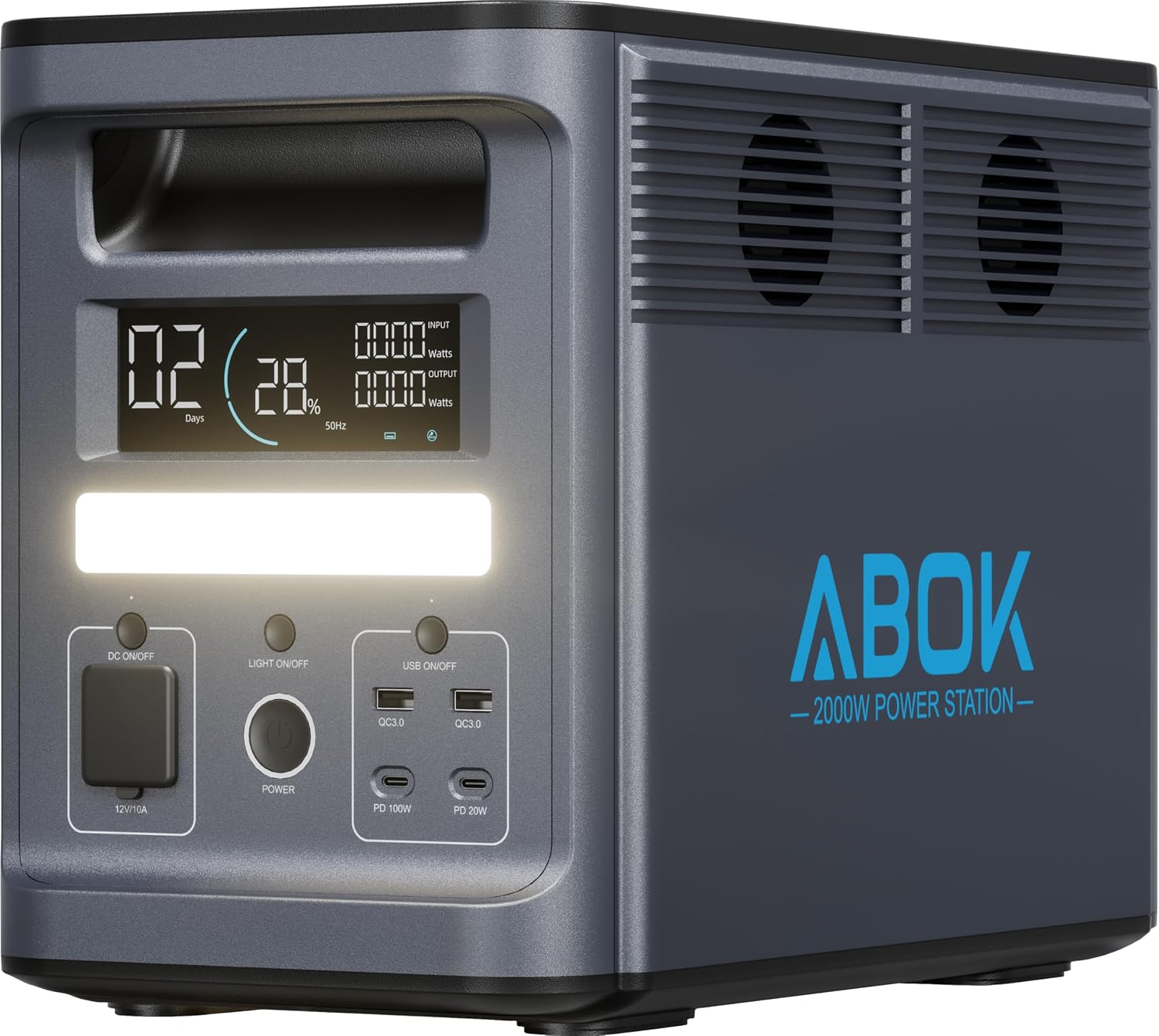
ABOK Ark2000 + 200W Solar Kit
1536Wh/2000W with 200W panel. LiFePO4 kit with expansion headroom to 4.6kWh.
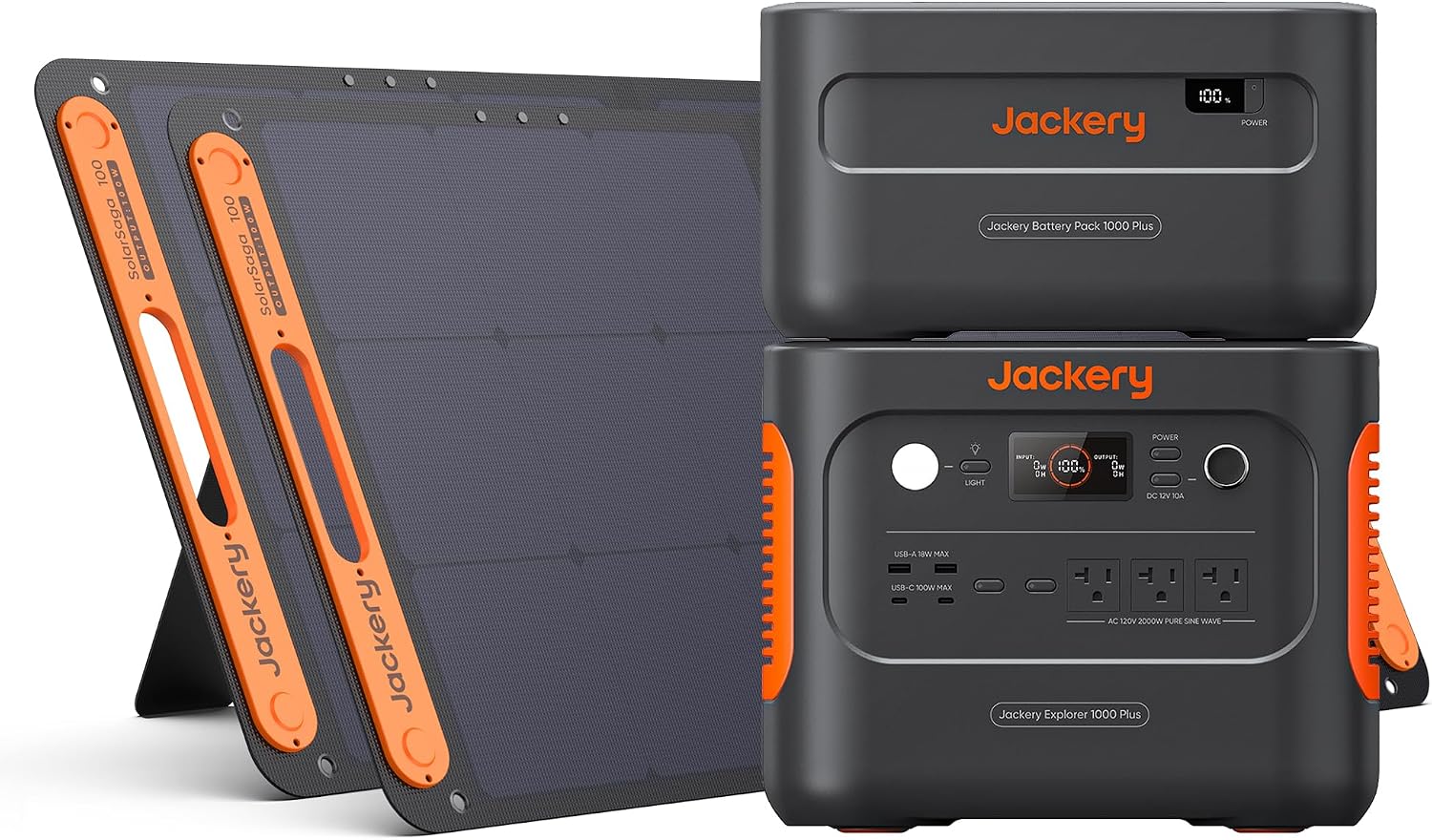
Jackery Explorer 1000 Plus
1000Wh-class benchmark. Proven reliability, strongest resale in the class.
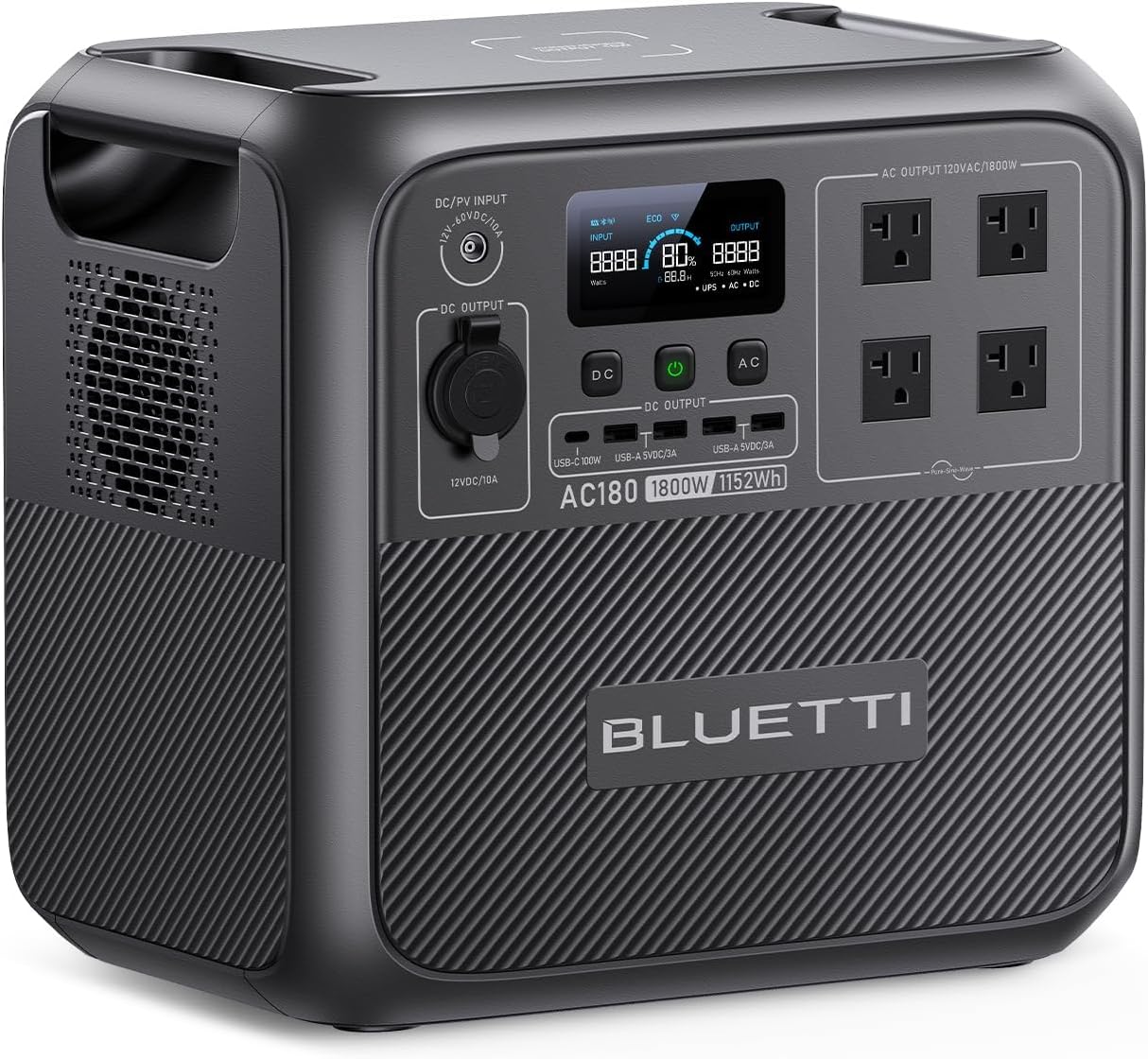
Buy the ABOK Ark2000 kit if the bundle price beats the big brands and you want the panel included from day one — 1536Wh of LiFePO4 with expansion headroom is a solid foundation. Buy the Jackery Explorer 1000 Plus if you want the proven track record and can live with less capacity. Buy the Bluetti AC180 if cycle longevity is the priority; its LiFePO4 chemistry is built for the long haul.
Skip this class if your well pump plus fridge plus freezer all need to run at once. Add up the surge watts first — that’s the number that actually decides.
The freezer alarm hasn’t gone off since. The big station sits in the utility room, topped up, the panel leaning in the garage for now. Every few months I check the charge level and feel slightly ridiculous about the whole setup. Then I remember 3am, the flashlight, the peas. The ridiculous feeling passes. The peas stayed frozen. That’s the review.
This site contains affiliate links. We may earn a commission on qualifying purchases.


