
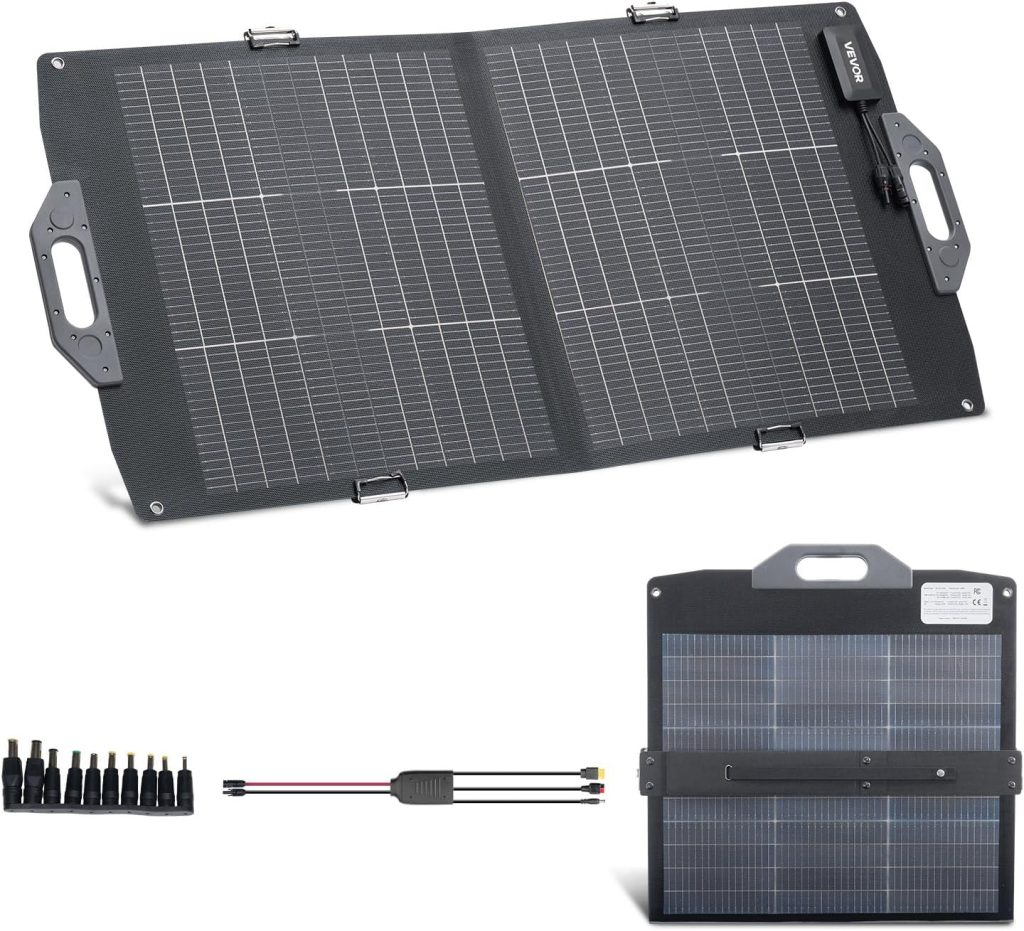
Overcast morning at the campsite. My VEVOR 100W panel — unfolded, angled at the grey sky like it could coax something out of it — was feeding my power station 18 watts.
Eighteen. The panel says 100 on the back.
I sat there with coffee and watched the number flicker between 15 and 22 for an hour. This is the review, really. Everything below is just explaining why 18 watts is normal and what to do about it.
What 24% Efficiency Actually Means
The headline spec on this panel is 24 percent conversion efficiency, from its 16BB N-type monocrystalline cells. That number sounds like a grade — 24 out of 100, must try harder — but it’s actually excellent. Most panels live in the 20 to 23 percent range. The percentage measures how much of the sunlight hitting the panel becomes electricity, not how much of the “100W” you’ll see.
The 100W rating is a lab number: full sun, 25 degrees, perfect angle. Efficiency tells you how big the panel is for its watts — higher efficiency, smaller panel for the same 100W. It does not promise you 100W at your campsite. Nothing promises that except the sun, and the sun doesn’t do contracts.
On a clear cool day, angled right, expect 70 to 85W real. On a normal partly-cloudy day, 40 to 60W with dips. On the grey morning I described: 15 to 25W. All normal. All physics. The extended cloudy-day version is at do solar generators work on cloudy days if you want the full gloom forecast.
The Foldable Compromise
A folding 100W panel is a miracle of packaging and a compromise everywhere else. Folded, it’s roughly the size of a laptop bag. Unfolded, it’s four sub-panels hinged together with fabric between them, ETFE coating on top instead of glass.
ETFE is light and tough against hail, but it scratches. Sand, grit, the zipper of the bag it lives in — micro-scratches accumulate and each one steals a little light. My panel has two seasons on it and the surface has a haze that wasn’t there new. Output is down a few percent from it, maybe. This number I’m not sure about — I didn’t measure new-versus-now with instruments, just watched the sunny-day numbers drift down slightly.
Glass panels don’t haze. They also weigh twice as much and shatter. For car camping, folding wins. For a permanent install, glass wins. Different tools.
Angle Matters More Than Brand
Here’s the free upgrade nobody buys: tilting the panel. Flat on the ground at noon in summer, fine. Flat on the ground at 9am or 4pm, you’re losing 20 to 30 percent versus tilted toward the sun. A 30-degree misalignment costs roughly 15 percent. These are bigger effects than any brand difference between 100W panels.
The VEVOR has kickstands. Use them. I spent my first season laying the panel flat because setup was faster, and I was donating a quarter of my harvest to laziness. The stands take ninety seconds. I timed it, because I needed the shame to be precise.
Re-angle every couple of hours if you’re around. The sun moves; the panel doesn’t, unless you move it. Every hour off-angle is watts you paid for and didn’t collect.
What 100W Puts Back in a Day
The arithmetic buyers skip: 100W of panel, five decent sun hours, 75 percent real-world factor — that’s about 375Wh per day into your station. Enough to refill a 300Wh-class power station from half empty, or to run a 12V fridge (40W) for nine hours while the sun’s up.
Against a 1000Wh station, one 100W panel is a slow trickle — three to four good days for a full refill. That’s the mismatch I see constantly: big station, small panel, confused owner. Panels and stations should be sized together. A 100W panel pairs naturally with 200 to 500Wh of storage. Beyond that, you’re bringing a second panel or a lot of patience.
My setup: this 100W panel feeding a 300Wh station on weekend trips. The station runs the fridge overnight, the panel refills it by mid-afternoon. It’s a closed loop that works, on sunny weekends, which is all I asked of it.
The Cooler That Changed My Packing
Sideways story. I bought a 12V compressor cooler two years ago — the kind that runs off the power station — and it reorganized my entire camping setup around electricity. Before the cooler, the panel charged phones and lights, nice-to-have stuff. After the cooler, the panel became load-bearing: no sun, no cold food.
That changed how I camp. I pick sites with southern exposure now. I check the forecast for cloud cover the way I used to check for rain. I angle the panel before I pitch the tent. The cooler made me a solar person the way a mortgage makes you a person who checks interest rates.
The VEVOR’s USB ports — USB-A QC3.0, Type-C, DC — got used exactly once, to charge a phone directly on a day the station was full. Nice to have. Not the job. The job is the MC4 output to the station, all day, every trip.
The Portable Panel Category’s Habits
Habit one: wattage optimism in the product photos. Panels photographed in desert sun at high noon, numbers implying that’s Tuesday. Your Tuesday has trees. Fine — just know the photos are the best case, not the average case.
Habit two: burying the weight. “Portable” covers everything from 6 pounds to 20. This one’s around 8 pounds, genuinely portable. Some “portable” 100W panels weigh as much as the power station. Check the spec table, not the adjective.
Habit three — mine this time: I bought the panel before the station, then bought a station whose solar input connector didn’t match, then bought adapters. The 10-in-1 adapter kits exist because the industry can’t agree on a plug. Check your station’s input port before ordering the panel. I own three adapters I use and two I don’t, and the two I don’t are a monument to not checking.
What About the Competition?
Three 100W-class portable panels, depending on what you’re pairing them with.
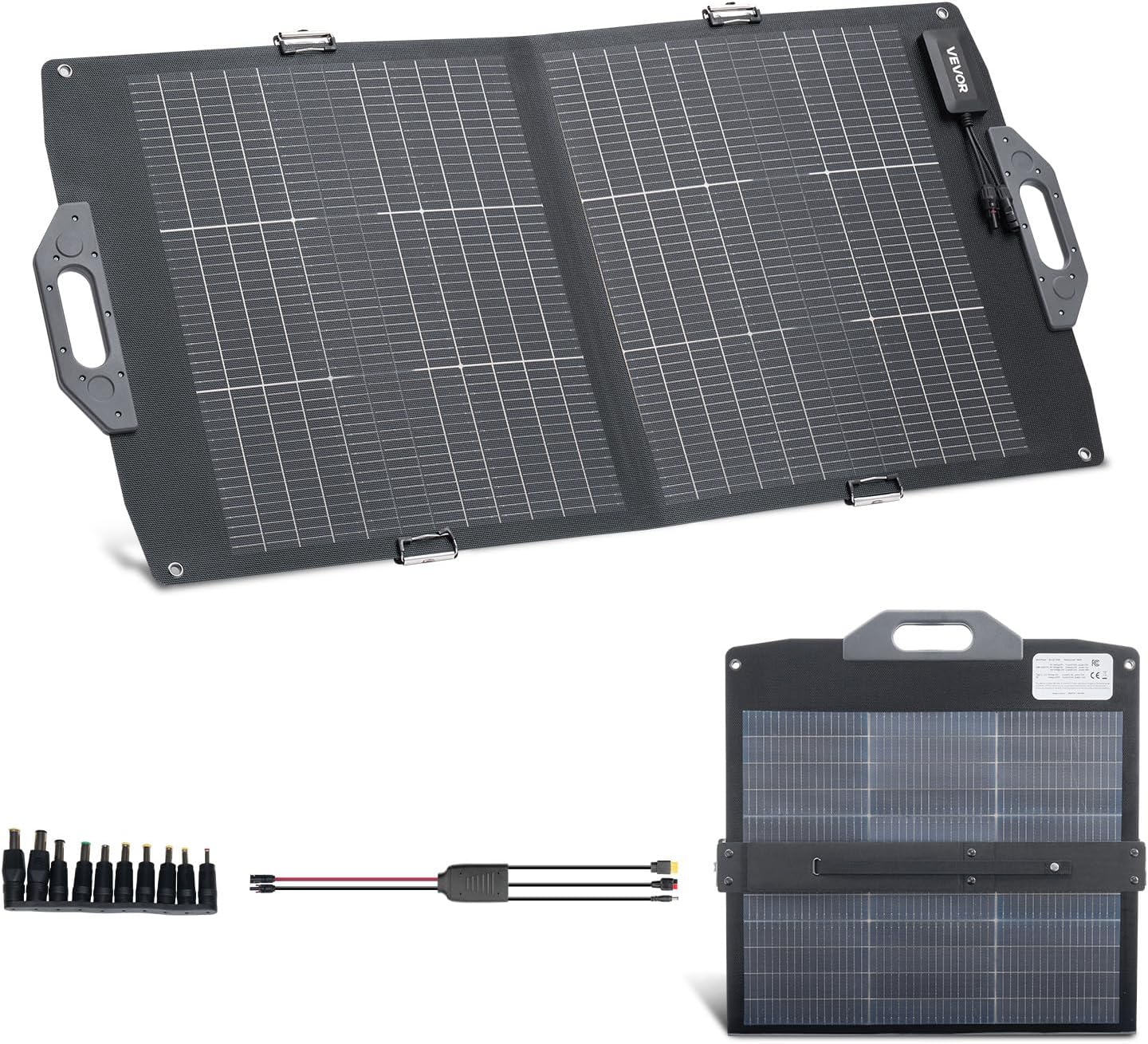
VEVOR 100W Foldable Solar Panel
100W folding, 24% N-type cells. Efficiency leader in the budget portable bracket.
Renogy 100W N-Type Solar Panel Kit
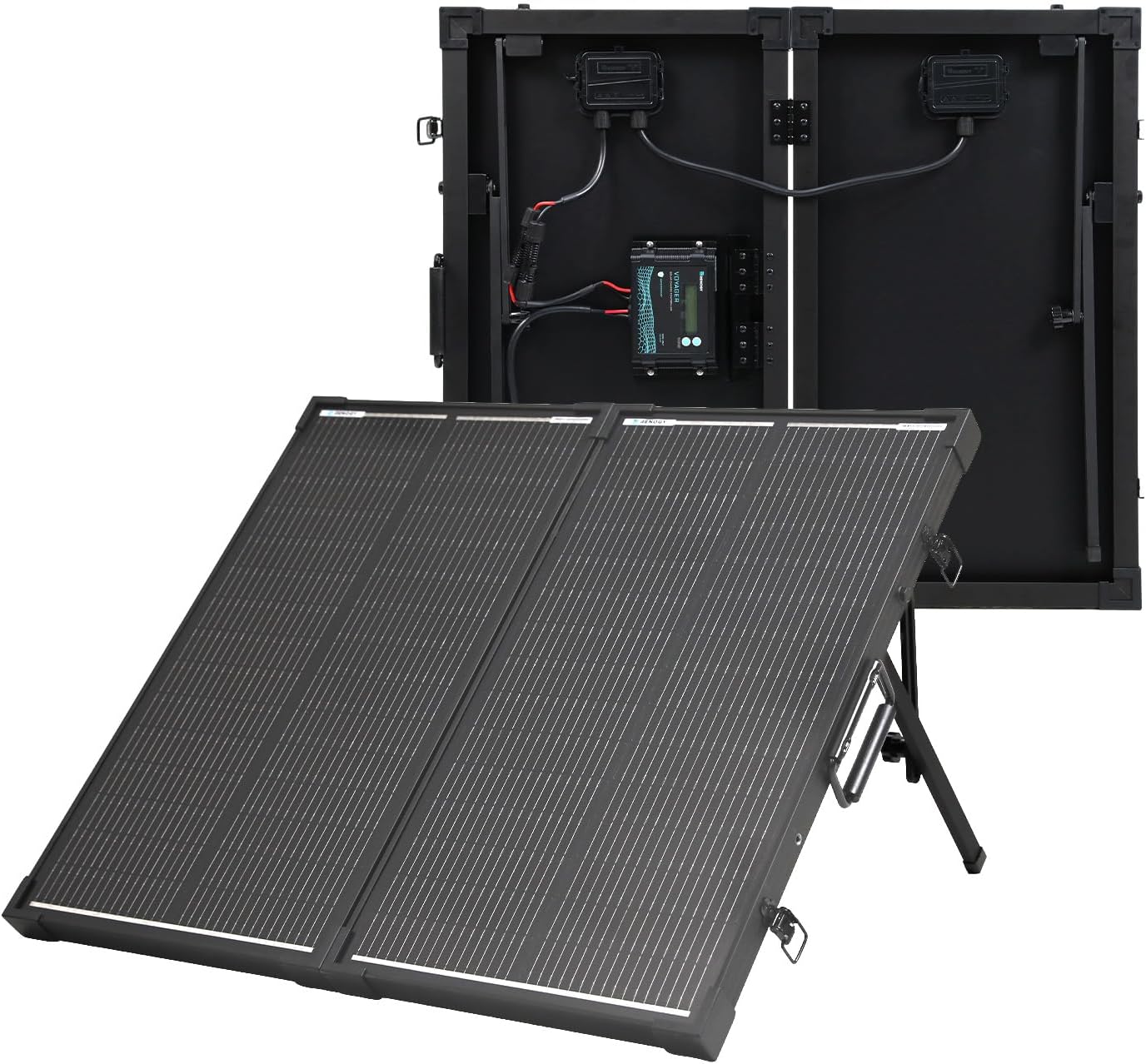
100W N-type kit with 20A controller. A complete 12V charging system in a suitcase.
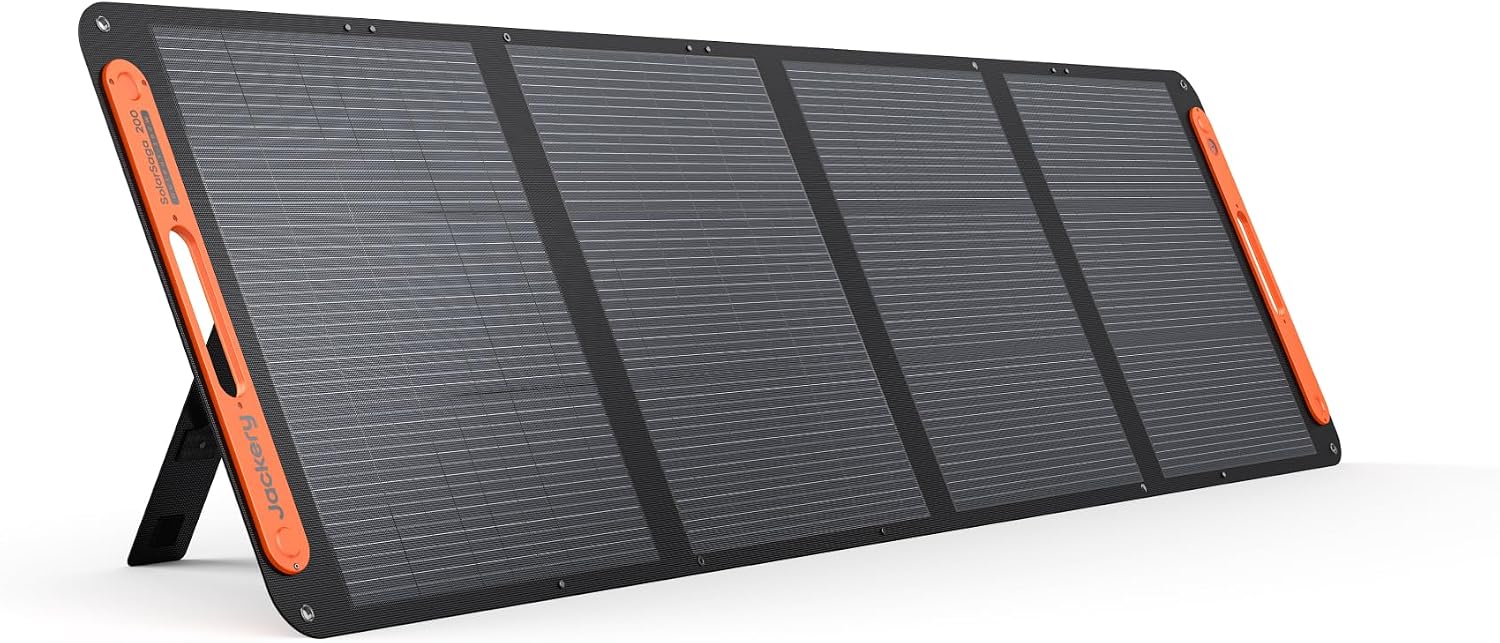
Jackery SolarSaga 200W
200W bifacial folding panel. Double the harvest for bigger stations.
Buy the VEVOR 100W if you want the efficiency leader in the budget bracket — 24 percent from N-type cells, folding, with direct USB charging as a bonus. Buy the Renogy 100W N-type kit if your setup includes a 12V battery bank; the included charge controller makes it a complete system. Buy the Jackery SolarSaga 200W if your power station is bigger and you want double the harvest in one fold — covered in my Jackery SolarSaga 200W review, where the bifacial gain on bright ground turned out to be real.
Skip the 100W class if your station is 1000Wh or more. You’ll want 200W minimum, and the panel-to-station sizing will thank you.
The grey morning ended with the sky clearing at eleven. By one, the panel was pushing 78W, the station was climbing, and the cooler hummed along like the morning never happened. Eighteen watts felt like a broken promise at nine. By afternoon it was just weather — the thing you plan around, not the thing you argue with.
This site contains affiliate links. We may earn a commission on qualifying purchases.


