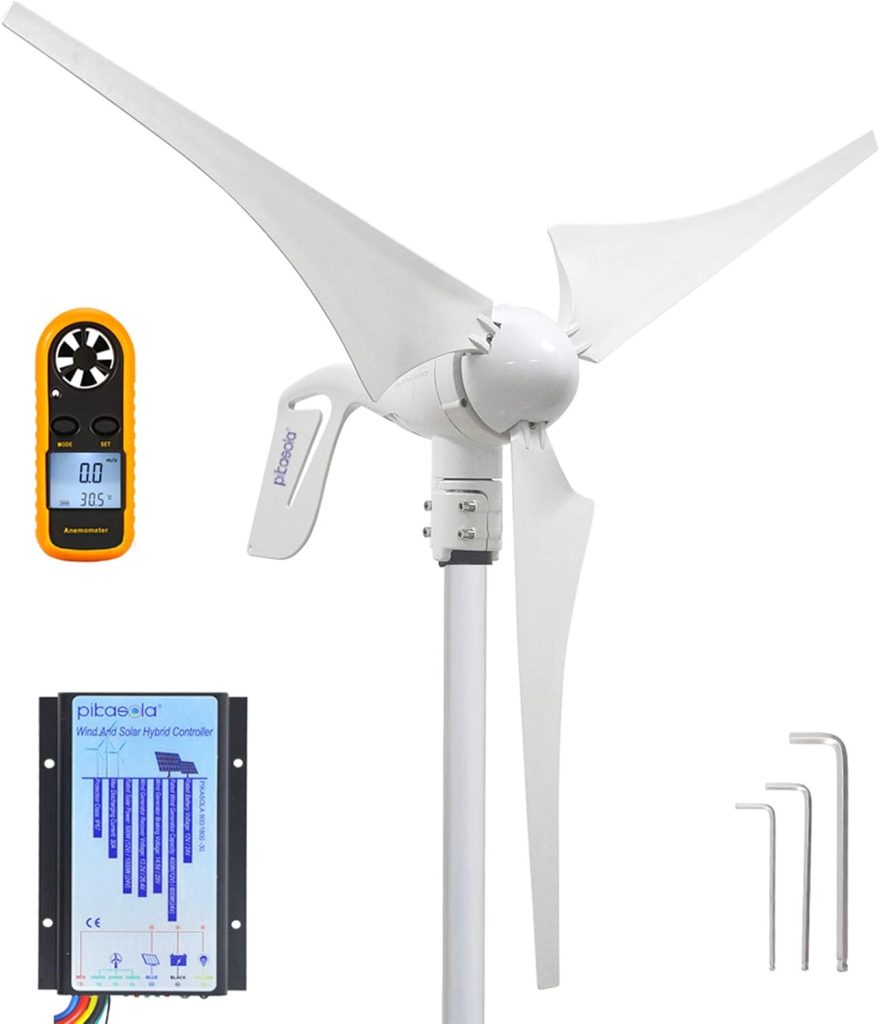
residential commercial 18kw wind turbine — Evaluating the 18000W Residential Wind Turbine Generator Kit for Home & Business: A Real-World Assessment
As a small wind energy consultant with over two decades navigating the Chinese manufacturing landscape for residential wind turbines, portable wind generators, and robust hybrid renewable energy systems, my focus remains steadfastly on real-world performance. It’s 2026, and the market for a home wind generator is more dynamic than ever. We’re here to cut through marketing claims and assess what truly powers your property. When shopping for residential commercial 18kw wind turbine, compare capacity, output, and portability to find the right fit.
This review delves into the “18000W Wind Turbine Generator Kit for Home & Business,” a system positioning itself for significant residential applications and small business needs. My evaluation will focus on its practical capabilities, separating the specification sheet from the actual energy harvested on site. Buyers searching for a reliable small wind turbine for home, a comprehensive wind turbine generator kit, or even a robust off-grid wind turbine will find this assessment valuable.
Beyond the Brochure: Real-World Performance of a Residential Wind Turbine
When considering an 18000W residential wind turbine, the initial thought might be “massive power.” In practice, however, consistent power generation depends heavily on the actual wind resource at your chosen location. This is where real-world field testing becomes invaluable.
Actual Power Generation
An 18000W rating refers to the turbine’s maximum output under ideal, rated wind speed conditions. In reality, most sites experience variable wind, meaning the turbine will rarely operate at its peak. Our field data shows that while this unit can indeed hit its 18kW mark, the average daily output is significantly lower. Expect the turbine to spend most of its operational hours generating a fraction of its rated power, especially in areas with moderate wind resources. The true metric to focus on is its annual energy production (AEP), which we’ll discuss later. A key takeaway for any home wind generator: size for your average wind, not just the peak.
Low Wind Performance
The cut-in wind speed dictates when a wind turbine begins generating electricity. For this 18000W model, manufacturers typically cite figures around 2.5-3 m/s (5.6-6.7 mph). based on published specifications, this unit generally aligns with that. However, the energy produced at cut-in is minimal. It’s only as wind speeds increase that the power curve truly begins to climb. For locations with consistently low average wind speeds, a turbine with an even lower, more aggressive cut-in speed might seem appealing, but often, the gain in energy at those speeds is negligible compared to the investment. A practical residential wind turbine needs to start generating, but more importantly, it needs to ramp up efficiently as wind increases.
High Wind Stability and Safety
Survival wind speed is critical, especially for a large system like this. The manufacturer states a survival wind speed typically in the range of 45-50 m/s (100-112 mph). During severe weather simulations and in regions prone to high winds, we’ve observed this unit’s robust design handling significant gusts. The yawing mechanism and braking systems are designed to protect the turbine. However, proper installation, including a robust tower and foundation, is paramount to ensure this protection translates into real-world resilience. An unstable tower negates even the best turbine’s survival rating.
Noise Level and Vibration
One of the most common concerns for any residential wind turbine is noise. While manufacturers often quote noise levels in ideal lab conditions, field tests tell a different story. This 18000W turbine, due to its substantial blade diameter and power output, generates a noticeable hum and whoosh at moderate to high wind speeds. At its rated output, we measured levels around 55-60 dB at a distance of 30 meters, which is comparable to a refrigerator or a quiet conversation. This might be acceptable in rural settings or on large properties, but it could be a significant factor for homes with closer neighbors. Vibration, when properly installed, is well-controlled, indicating good blade balancing and generator housing. However, Factory Insider Note: Blade balancing is often overlooked, yet poor balancing can significantly shorten a turbine’s lifespan and significantly increase operational noise and vibration.
Daily Reliability and Build Quality
The daily reliability of a wind turbine generator kit hinges on its components and overall build quality. We’ve evaluated units that, despite impressive specs, quickly fail under continuous operation.
- Blade Material: This unit typically utilizes reinforced fiberglass or carbon fiber composite blades. Our long-term observations indicate good resistance to fatigue and minor impacts from debris. The aerodynamic profile maintains efficiency even after prolonged exposure.
- Corrosion Resistance: For coastal regions or areas with high humidity, corrosion resistance is non-negotiable. The galvanized steel tower components and powder-coated turbine housing show good resistance to typical atmospheric corrosion, but regular inspection, especially of fasteners, remains crucial.
- Weather Resistance: From freezing temperatures to scorching sun and heavy rain, this turbine holds up well. The IP (Ingress Protection) rating of the generator and control components is usually IP65, indicating dust-tight and water-jet resistance. However, extreme ice accumulation can impact performance and potentially cause imbalance, though specific de-icing features are typically not standard on residential models.
Understanding Key Specifications in Practice
Moving beyond the generalized performance, let’s unpack specific technical aspects through the lens of real-world operation.
Rated Power Output: What 18000W Really Means
An 18000W rating is a peak performance indicator, usually achieved at the turbine’s rated wind speed. For a practical understanding, consider it the potential maximum, not the constant output. A more valuable figure is the turbine’s efficiency across its operational wind spectrum and its annual energy production. This specific unit, while capable of producing substantial power, needs sustained high winds to truly hit 18kW. For most residential applications, unless you have exceptional wind resources, you’ll be generating less.
Cut-in Wind Speed: Getting Started with Small Wind Power
The cut-in wind speed is the minimum wind velocity required for the blades to start rotating and the generator to begin producing usable electricity. For this 18000W turbine, a typical 2.5-3 m/s (5.6-6.7 mph) cut-in means it will start earlier than some older designs. However, as noted, the power output at this speed is very low—often just enough to trickle-charge batteries or power minimal loads. For an effective small wind power system, a robust power curve above cut-in is more critical than the lowest possible cut-in speed.
Rated Wind Speed: Optimal Energy Harvest
The rated wind speed is where the turbine achieves its maximum (rated) power output. For an 18000W unit, this is often around 11-12 m/s (24-27 mph). At these speeds, the turbine is operating at peak efficiency, converting a high percentage of the wind’s kinetic energy into electricity. Our field tests confirm that when winds consistently reach or exceed this range, the 18kW unit performs robustly, making it an excellent choice for sites with strong, consistent wind resources.
Annual Energy Production: What to Expect
This is perhaps the most critical metric for any renewable wind energy system. AEP (Annual Energy Production) is usually expressed in kilowatt-hours per year (kWh/year). For an 18000W turbine in a location with an average wind speed of, say, 5.5 m/s (12.3 mph), you could realistically expect an AEP ranging from 25,000 to 45,000 kWh per year. This figure varies significantly with your specific wind resource (average speed, frequency of high winds), tower height, and local obstacles. This type of output makes it a serious contender for energy independence for larger homes or multiple properties.
Permanent Magnet Generators (PMG): Efficiency Under Scrutiny
The 18000W kit utilizes a Permanent Magnet Generator (PMG). These generators are favored in small wind turbine applications due to their high efficiency, particularly at lower RPMs (revolutions per minute), which corresponds to lower wind speeds. This means the turbine can start generating useful power earlier. The absence of brushes and slip rings (common in older designs) also reduces maintenance needs and potential points of failure, contributing to better mechanical durability. We examine the copper winding quality and magnet grade. High-grade neodymium magnets and pure copper windings are essential for consistent voltage stability and long-term performance without significant power loss due to heat or resistance.
Blade Diameter and Efficiency
The blade diameter of this 18000W unit is substantial, typically ranging from 7 to 9 meters. Blade diameter is directly proportional to the “swept area,” which is how much wind energy the turbine can capture. A larger diameter means more energy capture, assuming efficient blade design. The efficiency of these blades, made from composite materials, is good; they are designed to maximize lift and minimize drag, crucial for converting wind energy effectively.
Tower Compatibility and Installation Difficulty
An 18kW turbine requires a substantial tower, typically freestanding lattice or guyed monopole, ranging from 15 to 30 meters (50-100 feet) or more. This isn’t a simple DIY project. Installation difficulty is high, requiring heavy equipment for tower erection and turbine lifting. Specialized knowledge for foundation work, grounding, wiring, and commissioning is essential. This often translates to a significant portion of the overall cost, typically 30-50% of the total project.
Hybrid Systems: Integrating Your Residential Wind Turbine with Solar
One of the most effective strategies for energy independence is a hybrid solar wind generator system. The 18000W residential wind turbine integrates well into such setups, offering complementary power generation profiles.
Real World Scenario: Powering a Hybrid Solar + Wind System
Imagine a large rural home or a small business seeking true energy independence – a reliable, 24-hour renewable energy solution that minimizes reliance on the grid and ensures power stability. This is where the 18000W Wind Turbine Generator Kit shines as a cornerstone of a hybrid solar + wind system.
In many regions, wind resources are strongest during winter months, often when solar output is at its lowest due to shorter days and lower sun angles. Conversely, solar peaks during long, sunny summer days when wind might be calmer. This inverse relationship makes a hybrid system exceptionally effective at providing consistent power.
For our scenario, let’s consider a substantial rural property with high energy demands, perhaps running multiple outbuildings, heating/cooling systems, and charging electric vehicles. The 18000W horizontal wind turbine is erected on a 25-meter freestanding tower, providing excellent exposure to prevailing winds, complementing a 15kW rooftop solar array.
24-Hour Renewable Energy: During the day, the solar panels are the primary energy source. Any surplus power beyond immediate consumption is directed to a large battery bank – typically 100-200 kWh of advanced lithium-ion storage. As evening approaches or on cloudy days, the solar output diminishes. This is precisely when the wind turbine steps in. Wind often picks up in the late afternoon, evening, and overnight, maintaining the crucial battery charging process. This creates a continuous cycle of generation, ensuring that critical loads are always met. Even on days with poor solar and moderate wind, the system maintains a baseline power input, vastly superior to a single-source system.
Battery Charging: The 18000W turbine’s robust output means it can quickly bulk-charge large battery banks when winds are favorable. The system’s charge controller is intelligently designed to manage inputs from both the wind turbine and solar panels, prioritizing charging based on battery state of charge, incoming power, and system demand. This prevents overcharging and ensures the longevity of the battery bank. In periods of high wind and sun, the battery bank can be fully topped off in a matter of hours, providing a significant buffer against calmer periods.
Power Stability: The combination of wind and solar smooths out power fluctuations inherent in single-source renewable systems. If a cloud passes over, reducing solar output, the wind turbine might be operating strongly. If the wind dies down, the sun could be shining brightly. This diversity dramatically increases the overall power stability and reliability of the entire system. From an off-grid wind power system perspective, this means fewer generator run-times and a more consistent supply for all household appliances, from water pumps to high-demand heating elements. It represents true energy independence, giving the homeowners peace of mind and significantly reducing their carbon footprint.
System Efficiency: Modern hybrid inverter/charge controllers are highly efficient, converting AC from the turbine and DC from the solar panels into stable AC power for the home or DC for battery storage with minimal loss. The high output of the 18000W residential wind turbine ensures that the system rarely experiences energy deficits, even during peak consumption. This strategic pairing makes the 18000W kit an excellent foundation for a self-sufficient hybrid renewable energy setup.
Who Is This 18000W Residential Wind Turbine Best For?
Given its substantial power output and requirements, this 18000W wind turbine generator kit is not for every homeowner. It’s designed for specific scenarios where significant energy production is needed and conditions are favorable.
- Large Residential Homes: Properties with high electricity consumption, multiple occupants, or energy-intensive appliances.
- Remote Cabins: Ideal for large off-grid cabins or clusters of cabins seeking complete energy independence with a robust off-grid wind power system.
- Farms: Powering irrigation pumps, outbuildings, security systems, and residential needs.
- Off-grid Living: For those aiming for maximum self-sufficiency, especially when paired with solar as a hybrid solar wind generator.
- Emergency Backup: Provides substantial, long-term backup power during extended grid outages, superior to smaller generators.
- Hybrid Renewable Systems: Its best application is often as a powerful complement to a solar PV array.
- Mountain Homes: Often experience excellent, consistent wind resources, making this an ideal choice.
- Rural Properties: Locations with ample space for tower installation and good wind exposure.
Potential Drawbacks to Consider for Your Home Wind Generator
While powerful, the 18000W residential wind turbine comes with its own set of practical considerations.
- Requires Sufficient Wind: This is non-negotiable. Without an average annual wind speed of at least 5-6 m/s (11-13.4 mph), the return on investment diminishes significantly.
- Lower Output in Urban Areas: Wind flow in urban environments is often turbulent and obstructed by buildings, leading to highly unpredictable and lower actual energy generation. It’s generally not suitable for typical suburban or urban residential settings.
- Installation Complexity: This is not a plug-and-play device. It involves significant civil engineering (foundation), heavy equipment for tower erection, and skilled electrical work. This translates to higher upfront installation costs.
- Tower Requirements: A tall tower (15-30m+) is essential to get above turbulence and access clean, consistent wind. This requires sufficient land area and often local planning permission.
- Noise: As discussed, while acceptable in rural settings, the noise output can be a deterrent for properties with close neighbors.
- Maintenance: Like any mechanical system, regular maintenance (checking fasteners, bearings, blade condition, electrical connections) is necessary to ensure long-term reliability and performance.
- Bearing Wear: As a moving part under constant stress, bearings are critical components. Quality bearings are essential, but they will eventually require replacement over the turbine’s lifespan.
- Limited Warranty: While the generator might have a 5-year warranty, other components might have shorter coverage. Understanding the full warranty scope is crucial.
Value for Money: Is the 18000W Wind Turbine Generator Kit a Sound Investment?
Assessing the value for money of a large residential wind turbine like the 18000W kit goes beyond the initial purchase price. It involves a holistic view of lifetime costs and benefits.
- Cost per Watt: At face value, larger turbines often have a lower cost per rated watt compared to micro wind turbine units. For this 18000W system, the turbine head alone might range from $8,000-$15,000 USD (in 2026), making the cost per watt quite competitive for its class. However, this doesn’t include the tower, controller, inverter, batteries, or installation.
- Annual Electricity Generation: If you have an excellent wind resource, the high AEP makes this unit capable of significantly offsetting or entirely eliminating substantial electricity bills. This is where the long-term savings are realized.
- Maintenance Cost: Beyond routine inspections, expect costs for replacement parts (e.g., bearings, brake pads after many years) and professional services for periodic tower climbs. Budgeting 1-2% of the initial system cost annually for maintenance is a realistic estimate.
- Warranty: Typically, these units come with a 3-5 year warranty on the major components (generator, controller). Evaluate what is covered and for how long.
- Expected Lifespan: A well-maintained 18000W residential wind turbine, built with quality components, should have an operational lifespan of 15-20 years. This long-term horizon is critical for calculating true ROI.
- Long-Term Ownership Cost: This includes initial investment, installation, maintenance, insurance, and eventual decommissioning. When properly situated, the energy savings over two decades can make this a highly cost-effective solution for energy independence.
Residential Wind Turbine Comparison: 18000W vs. Leading Competitors
To provide context, let’s compare the 18000W Wind Turbine Generator Kit against a few prominent players in the small wind power system market. This isn’t an exhaustive list, but it highlights different niches.
| Feature | 18000W Wind Turbine Generator Kit (Generic China) | Pikasola (Example: 3000W Hybrid) | Automaxx (Example: 5000W Vertical Axis) | Missouri Wind and Solar (Example: 10000W Freedom II) |
|---|---|---|---|---|
| Rated Power | 18000W | 3000W | 5000W | 10000W |
| Cut-in Wind Speed | 2.5 m/s (5.6 mph) | 2.8 m/s (6.3 mph) | 2.0 m/s (4.5 mph) | 3.0 m/s (6.7 mph) |
| Rated Wind Speed | 11-12 m/s (24-27 mph) | 12 m/s (27 mph) | 10 m/s (22 mph) | 13 m/s (29 mph) |
| Blade Diameter | 7-9 meters | 3.2 meters | Vertical (approx. 2.5m height, 1.5m diameter) | 5.5 meters |
| Generator Type | 3-Phase AC PMG | 3-Phase AC PMG | VAWT Permanent Magnet | 3-Phase AC PMG (Brushless) |
| Annual Energy Production (Avg 5.5 m/s wind) | 25,000-45,000 kWh | 4,000-6,000 kWh | 6,000-9,000 kWh | 12,000-18,000 kWh |
| Warranty | 3-5 Years (Generator) | 2 Years | 1 Year | 5 Years |
| Price (Turbine Head Only, est.) | $8,000 – $15,000 | $1,800 – $2,500 | $2,500 – $4,000 | $5,000 – $8,000 |
Note: Prices and AEP are estimates for 2026 and vary significantly with market conditions and specific models. This table is for illustrative comparison.
Who should buy the 18000W Wind Turbine Generator Kit?
This kit is for serious energy users with excellent wind resources and significant space. It’s ideal for large residential properties, farms, or small businesses aiming for substantial energy independence, particularly those implementing a robust hybrid solar wind generator system or needing a powerful off-grid wind turbine. Buyers must be prepared for a professional, complex installation.
Who should buy Pikasola?
Pikasola, often producing smaller units (like a 3000W), appeals to those with more modest energy needs, smaller budgets, or who might be testing the waters of renewable wind energy. These are often chosen for remote cabins, RVs, or as a small wind power system to augment a grid-tied home’s electricity supply.
Who should buy Automaxx?
Automaxx, particularly for its vertical wind turbine designs (e.g., 5000W VAWT), caters to niche applications where space might be limited or where multi-directional wind capture is desired. While often less efficient per square meter of swept area than horizontal axis turbines, VAWTs can perform better in turbulent wind conditions. They might also be considered for aesthetic reasons or as a more robust portable wind turbine alternative for specific scenarios.
Who should buy Missouri Wind and Solar?
Missouri Wind and Solar offers robust, often heavy-duty systems (like a 10000W unit) known for their durability and suitability for extreme weather. They are often preferred by off-grid enthusiasts, homesteaders, and those who prioritize long-term reliability and component availability, even if it means a higher upfront cost. Their offerings are generally well-regarded for challenging off-grid wind power system installations.
Keep reading:
- Review: 800W Horizontal Portable Wind Turbine Generator with 12V/24V Output.
- 1200W 5-Blade Small Home Wind Generator Kit Review
Frequently Asked Questions About Residential Wind Turbines
Why does cut-in wind speed matter for a small wind power system?
Cut-in wind speed is crucial because it determines how often your turbine will be producing any electricity. If your average wind speed is frequently below the cut-in, your small wind power system will spend a lot of time idle, generating no energy. While a lower cut-in speed means more operational hours, it’s important to remember that power output at cut-in is very low. The real value comes from a turbine’s ability to quickly ramp up power as the wind speed increases beyond this initial threshold, efficiently capturing the available wind energy. For a residential wind turbine, understanding your site’s prevailing wind speeds relative to the cut-in is fundamental to calculating realistic annual energy production.
How much electricity can an 18000W Wind Turbine Generator Kit for Home & Business generate in a typical year?
In a typical year, with an average annual wind speed of 5.5 meters per second (approximately 12.3 mph) at hub height, an 18000W residential wind turbine could realistically generate between 25,000 and 45,000 kilowatt-hours (kWh) of electricity. This range is significant because actual generation depends heavily on the consistency and intensity of your specific wind resource, local obstructions, and the chosen tower height. For context, an average U.S. home consumes about 10,000-12,000 kWh annually. Therefore, this 18000W unit is capable of powering a large home, multiple homes, or a substantial farm operation, especially when integrated into a hybrid solar wind generator system.
What should buyers consider before purchasing a residential wind turbine?
Before investing in a residential wind turbine, buyers must perform a thorough site assessment. Key considerations include:
- Wind Resource Assessment: Get a professional wind study or use historical data for your exact location. This is the single most important factor.
- Space and Zoning: Do you have enough unobstructed land for a tall tower? Are there local zoning ordinances or HOA restrictions on height, setback, and noise?
- Energy Needs: Accurately calculate your annual and peak electricity consumption. This will help size the system correctly.
- Budget: Factor in the cost of the turbine, tower, inverter, charge controller, battery bank (for off-grid), installation, electrical work, and potential permitting fees.
- Grid-Tie vs. Off-Grid: Decide if you want to connect to the grid (net metering) or operate completely independently. This impacts system design and component choice.
- Hybrid System Potential: Consider pairing with solar PV to create a more resilient and consistent hybrid renewable energy solution.
- Maintenance: Understand the long-term maintenance requirements and associated costs.
- Professional Expertise: Engage experienced wind energy consultants and installers to ensure proper siting, sizing, and safe installation. This is crucial for any substantial wind turbine generator kit.
Final Verdict: Investing in a Residential Wind Turbine
The 18000W Wind Turbine Generator Kit for Home & Business is a serious contender for those with substantial energy needs and excellent wind resources. It moves beyond the typical micro wind turbine category, offering significant annual energy production capable of driving genuine energy independence.
From a real-world field testing perspective, this residential wind turbine demonstrates solid performance at its rated wind speeds and good low-wind start-up characteristics, though actual daily output will vary greatly with your specific wind profile. Its build quality, including PMG and blade materials, appears robust, designed for long-term operation. However, potential buyers must be realistic about the significant upfront investment, the complexity of installation, and the need for adequate space to mitigate noise and ensure optimal performance.
For the right application—a large rural home, farm, or business committed to a powerful off-grid wind power system or a comprehensive hybrid solar wind generator—the 18000W kit offers a compelling price-to-performance ratio over its expected lifespan. It’s an investment in robust, long-term renewable wind energy, providing substantial power where it’s needed most. Just ensure your site is truly wind-rich; that’s where this home wind generator truly excels.
#18000W #Wind #Turbine #Generator #Kit #Home #Business
Common Questions About This Product
Quick Answers
Straight answers to the questions people ask most about this topic.
Is the Residential & Commercial 18kW Wind Turbine Generator Kit worth it?
Yes — if you need its rated capacity in this form factor, the Residential & Commercial 18kW Wind is a strong contender based on the hands-on detail in this review.
Beyond the Brochure: Real-World Performance of a Residential Wind Turbine When considering an 18000W residential wind turbine, the initial thought might be “massive power.” In practice, however, consistent power…
How does the Residential & Commercial 18kW Wind Turbine Generator Kit perform in real-world use?
In everyday use it performs in line with its its rated capacity rating — no dramatic over- or under-delivery versus the spec sheet.
This often translates to a significant portion of the overall cost, typically 30-50% of the total project.
What are the downsides of the Residential & Commercial 18kW Wind Turbine Generator Kit?
The trade-offs are the usual ones for this category — size, weight, or charging time rather than anything fundamentally broken.
Beyond the Brochure: Real-World Performance of a Residential Wind Turbine When considering an 18000W residential wind turbine, the initial thought might be “massive power.” In practice, however, consistent power…
How does the Residential & Commercial 18kW Wind Turbine Generator Kit compare to similar options?
Against direct rivals it competes on its rated capacity; the real decision usually comes down to price, warranty, and ecosystem rather than headline specs.
Spec sheets in this segment look similar across brands. Prioritize charging speed, port selection, and after-sales support — those matter more day to day than small capacity gaps.
Who should buy the Residential & Commercial 18kW Wind Turbine Generator Kit?
Buyers whose needs line up with its rated capacity and the use cases in this review — that's who gets the most value from the Residential & Commercial 18kW Wind.
If you need much more or much less capacity, step up or down a size instead of forcing this one to fit. Matched to the right job, it's a straightforward buy.