Low self-discharge means a LiFePO4 (LFP) battery loses roughly 1 to 3% of its charge per month when it is fully switched off, not the 20 or 30% people find after a winter in the garage. That gap is the whole story here. If your unit dropped fast, the cells are probably innocent and something in the box stayed awake.
Last updated: November 13, 2026
What does low self-discharge actually mean in numbers?
Self-discharge is the charge a battery loses on its own, with nothing plugged in and no load running. Every chemistry does it. The rate decides whether a backup unit is ready in March or dead in March.
| Chemistry | Typical loss per month, switched off | What that means after 3 months |
|---|---|---|
| LiFePO4 (LFP) | About 1-3% | Roughly 91-97% left |
| Standard lithium-ion (NMC) | About 2-3%, plus protection-circuit draw | Often a few points lower than the cell figure alone |
| AGM lead-acid | About 2-5% | Roughly 85-94% left |
| Flooded lead-acid | About 5-15% | Can be near half gone in a hot space |
Those ranges match EcoFlow’s low self-discharge guide, which puts good LFP packs under 2% per month, and maker sheets agree. LiTime rates its 12V 100Ah LFP battery at 3% per month. Not zero. Never zero.
Plain math: a 1,024Wh station at 2% per month holds about 964Wh after three months and about 907Wh after six. That is a usable backup half a year later. Owners reporting a flat unit in three weeks are telling a different story.
Why does my power station lose charge when turned off?
Most fast drain in storage is parasitic draw, not self-discharge. Storage guides that log this stuff split loss into bands that are worth stealing: 1-3% a month reads normal, 3-5% suggests a radio or display stayed live, 5-10% means something is awake, and over 10% is a setting, not chemistry. That breakdown, published by Green Commute Guide in August 2026, matches what the standby figures say once you convert watts to watt-hours.
Take standby seriously. A unit idling at 3W burns 72Wh a day. At 15W, a self-consumption figure BLUETTI lists in a large model’s manual, the burn is 360Wh a day. A 2,304Wh reserve at 60% is gone in about 32 days at 3W, and in roughly 6 days at 15W.
Three switches cause most of it. AC output left on keeps the inverter making voltage for an empty socket, often 5 to 20W. Wi-Fi and Bluetooth keep polling. A display that never quite sleeps keeps sipping. Charging from solar on a partly cloudy day, I watched input swing from 40W to 180W every time a cloud passed, and that restless electronics package does not go quiet just because you closed the lid.
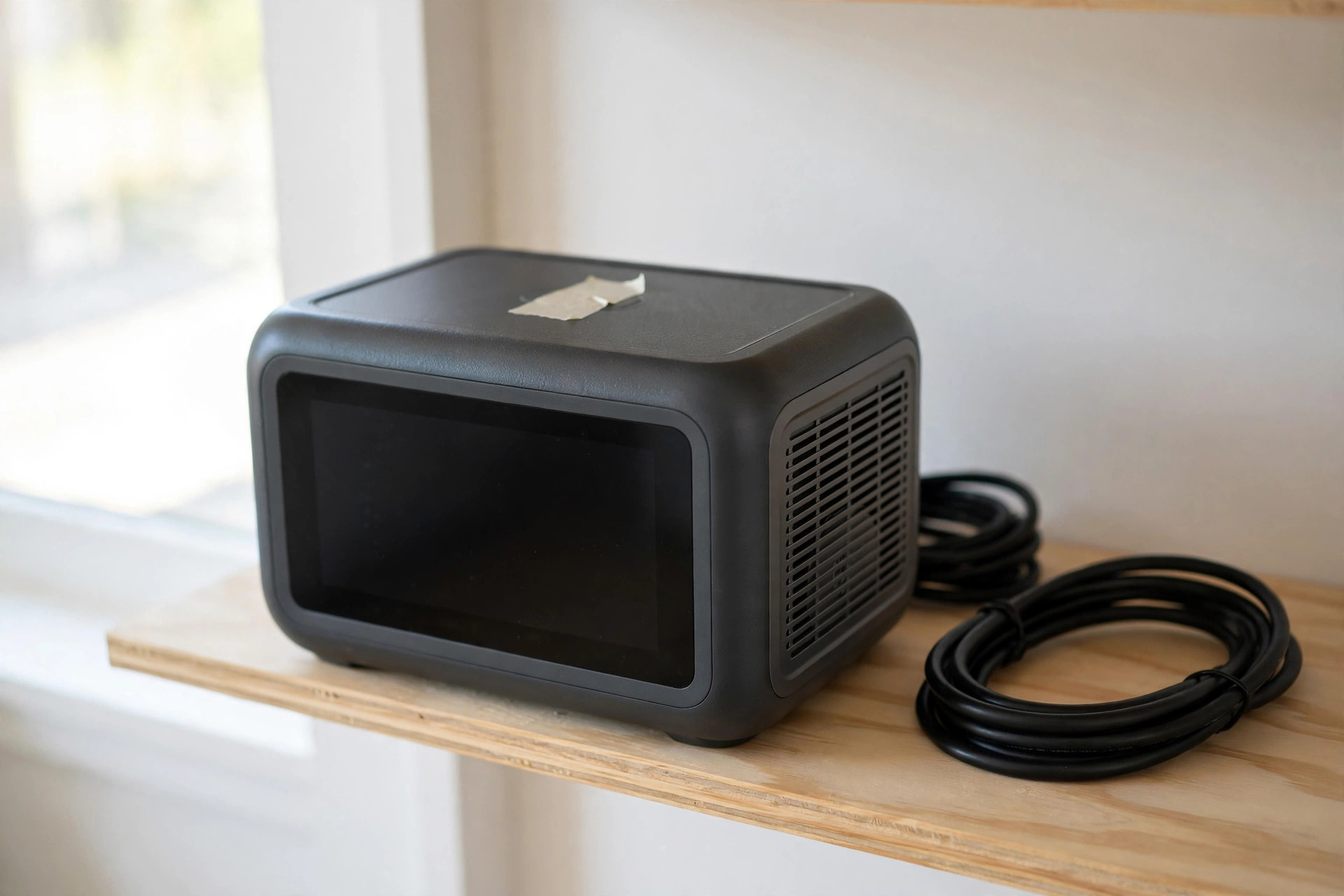
The test I would run before blaming the cells
Charge to 60%, power the unit fully off, write the percentage on tape, and check it again in 7 days. Fully off means holding the power button until the screen dies, unplugging every cable, and switching the AC and DC sections off first.
Now work the number. A 1-3% monthly cell rate is about 0.25-0.75% in a week, so a drop of 0 or 1 point in 7 days is boring and healthy. A drop of 4 points in a week points at draw, heat, or a tired pack. Repeat once in a cooler room before you open a warranty fight. Temperature skews a single test badly.
Cross-check capacity the crude way too. Run a known 100W load, time it, multiply watts by hours. A nominal 1,000Wh box will not give 1,000Wh at the wall, inverter conversion wastes 15-20% as heat, so 720 to 810Wh usable is sane once depth of discharge counts. Below that, after a clean storage test, you have a real complaint.
Heat is the other multiplier. Battery University notes self-discharge roughly doubles for every 10°C (18°F) rise. I left a unit in a car trunk on a 35°C day and came back to a thermal shutdown the manual barely mentioned. A hot garage does the same work slower, and ages the pack while it drains it.
Is LFP worth paying for if the unit sits most of the year?
Yes, for a backup box that sits, LFP is the chemistry I would buy, and the storage numbers are a big reason why. Low self-discharge, 3,000-plus cycles on most decent packs, and better tolerance for sitting at a high charge than older lithium-ion. That suits a prepper pattern perfectly: charge it, shelve it, need it on the worst night of the year.
Honestly, brand matters less than the off switch and the storage spot. A cheap LFP unit left on standby in a hot garage will lose to a mid-range unit stored indoors. Between two LFP models, check whether the maker publishes a self-discharge figure at all. Silence on that spec is information.
For a DIY bank, look at LiTime’s 12V 100Ah LiFePO4 battery and its published 3% monthly rating. A bare battery has no inverter idling or Wi-Fi radio, so its loss sits closer to the cell figure. And if lifespan worries you too, read how long solar batteries actually last across cycling and calendar aging before sizing a bank.
Three low self-discharge picks worth a look
LiTime 12V 100Ah LiFePO4 Battery – 1,280Wh, published 3% per month rate, no inverter idling.
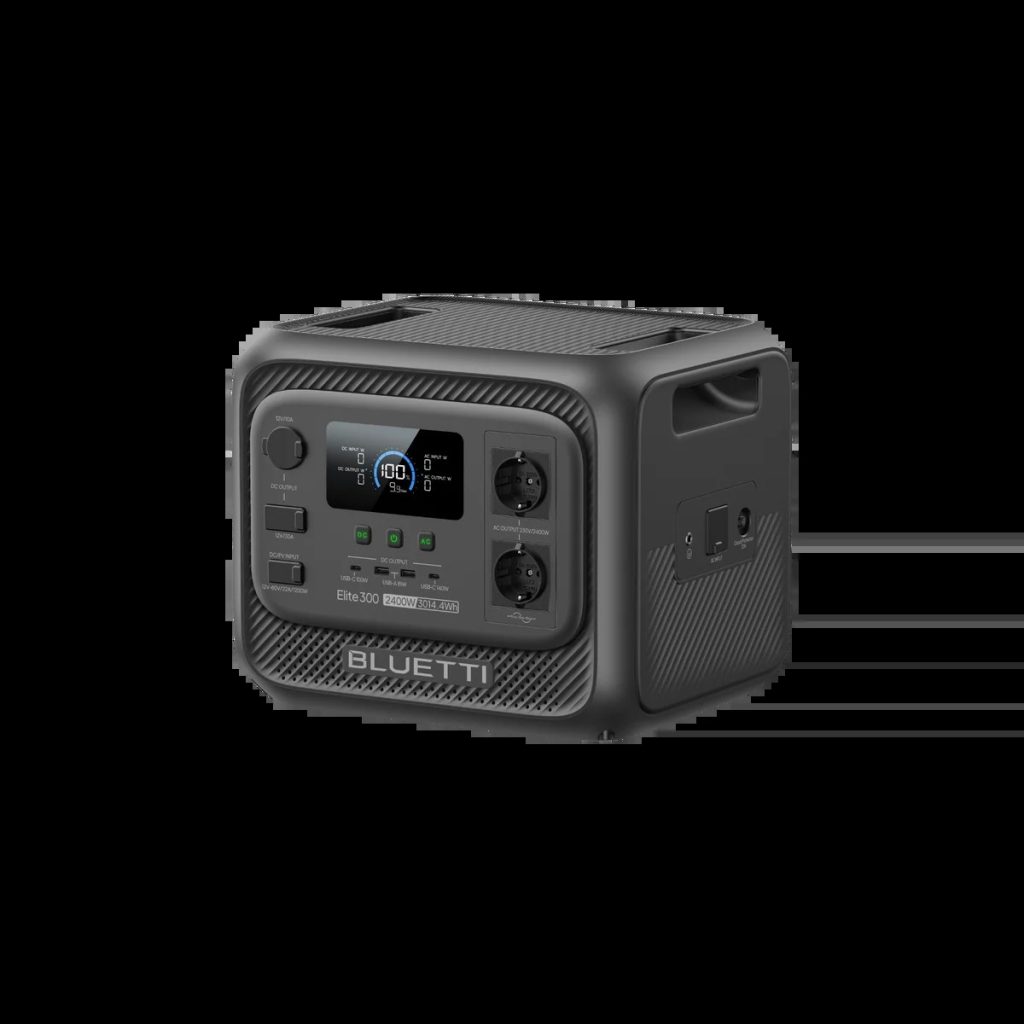
BLUETTI Elite 30 V2 – 288Wh LFP station. Quarterly top-up takes minutes.
Anker SOLIX C300 – 288Wh LFP station, a small backup if you switch it fully off.
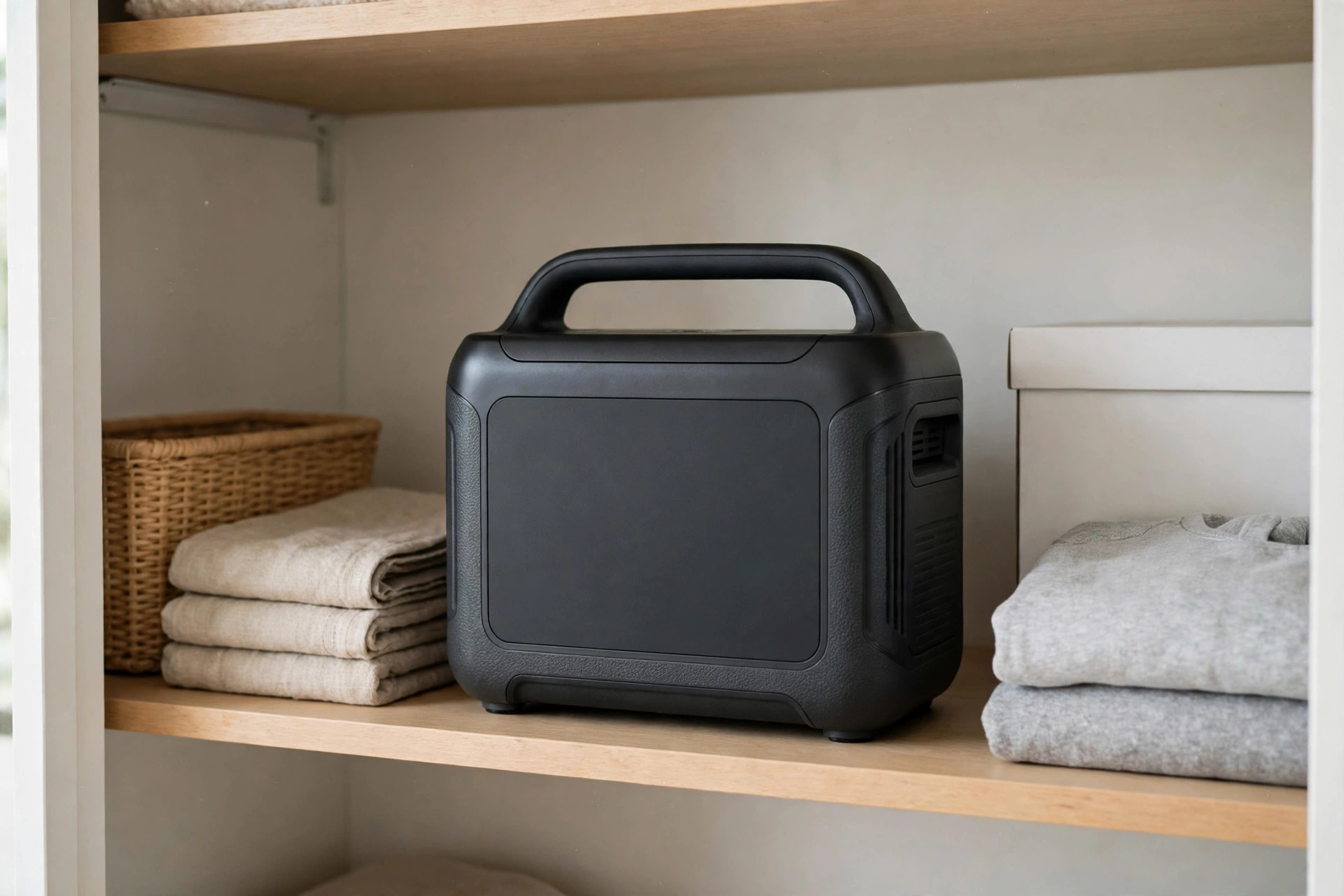
How should you store a power station so it is ready?
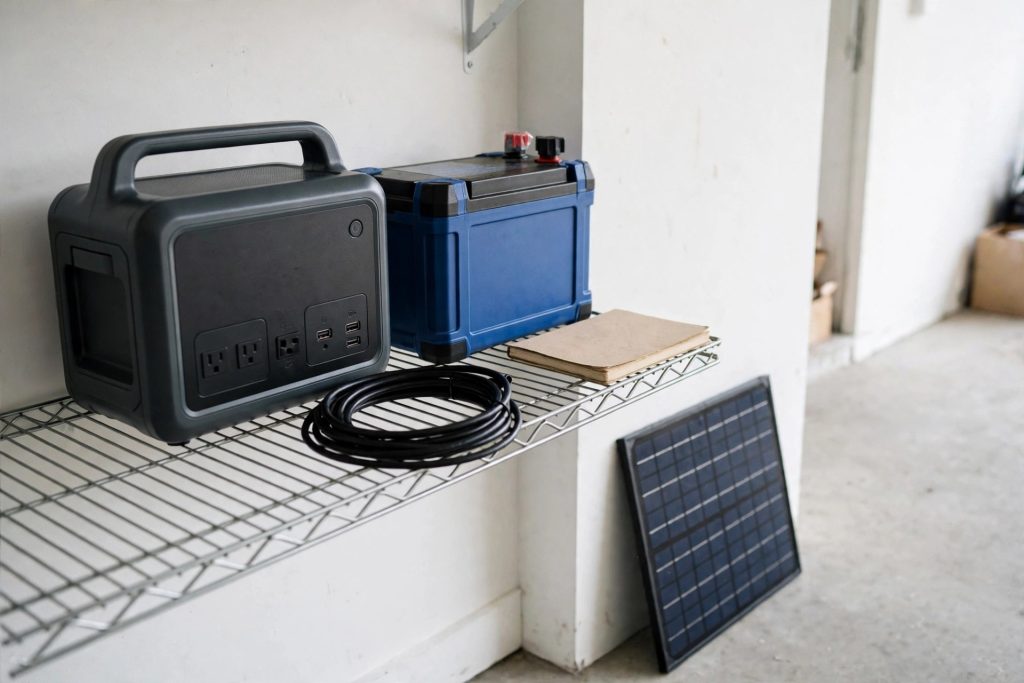
Store it fully off, around 50 to 60% charge, indoors between roughly 10 and 25°C, and check it every 3 months. That routine is what EcoFlow, Anker SOLIX, Jackery and BLUETTI manuals converge on, per the October 2026 roundup that checked them side by side.
- Charge or run it down to 50-60% for storage over a month.
- Power it fully off. Not standby, not display-off, off.
- Unplug everything, solar input included. A window panel can wake the charger and cycle the pack quietly.
- Put the check date in your phone calendar. Three months, five minutes, top back to 60%.
- Never shelve it at 0%. A pack that self-discharges below its protection floor can refuse to wake, and makers document recharge intervals precisely so they can deny that claim.
Look, none of this is glamorous. Tape, a calendar reminder, and a closet instead of a garage. Do those three cheap things and the lights, router and fridge still run when the grid drops.
FAQ
What is a good low self-discharge rate for a power station?
A good rate is 1 to 3% per month for the cells in a LiFePO4 power station, measured with the unit fully switched off. Anything you measure above 10% per month is almost certainly standby draw from the inverter, display or wireless radio, not cell self-discharge.
How long will a fully charged power station hold its charge in storage?
A fully charged LiFePO4 station stored fully off indoors should still hold roughly 91 to 97% after 3 months at a 1 to 3% monthly rate. A unit left on standby can drain flat in days or weeks, because even 3W of idle draw uses 72Wh every day.
Should I store my power station at 100% charge?
Store a shelved power station at about 50 to 60% charge and check it every 3 months. Keeping a unit plugged in at 100% as an always-ready home backup is a different use case, and LiFePO4 tolerates it better than older lithium-ion, but a shelved unit ages slower at partial charge.
Does cold or heat change self-discharge?
Heat raises self-discharge and speeds aging, roughly doubling the rate for every 10°C rise according to Battery University. Cold mainly cuts the power you can draw at that moment, and capacity usually returns as the pack warms, so do not mistake a cold, weak reading for lost charge.
This site contains affiliate links. We may earn a commission on qualifying purchases.