Most portable power stations do one job, and they sit in the trunk doing it quietly until the lights go out. The VTOMAN Jump 1500X tries to do two jobs at once — camp power and a rescue for a dead car battery — and that second job changes who should buy it and who really shouldn’t. This guide is for drivers who camp, tour, or haul a fridge in the back and want an honest answer on whether that jump-start port is a genuine advantage or just extra weight.
Quick Answer
The VTOMAN Jump 1500X is the portable power station to buy if you drive to camp — it is an 828Wh, 1500W station with a car jump-start port and a 110W solar panel in the box, so one kit covers a normal weekend and can rescue your own car battery. Read the catch before you pay: the jumper cables are sold separately, the panel is a slow starter rather than a fast refill, and 828Wh is one night of fridge duty, not two days. If you need 2000W-class output or a true UPS for home backup, the OUPES Mega 1 and BLUETTI Elite 100 V2 below do those jobs better.
Compare Camping Portable Power Stations
Three picks side by side — one rescues your car, one brings the most watts, one is built for outages.
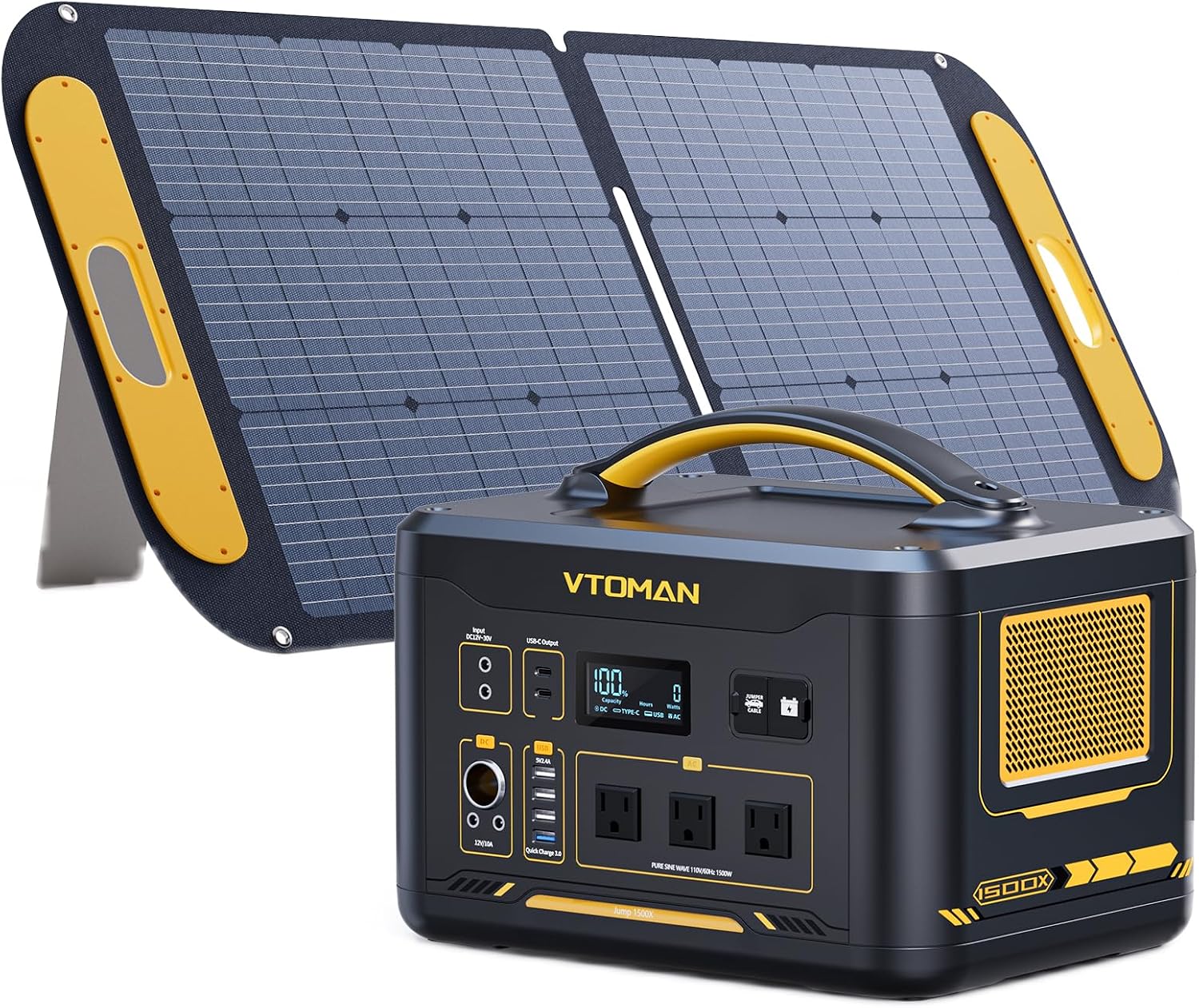
VTOMAN Jump 1500X
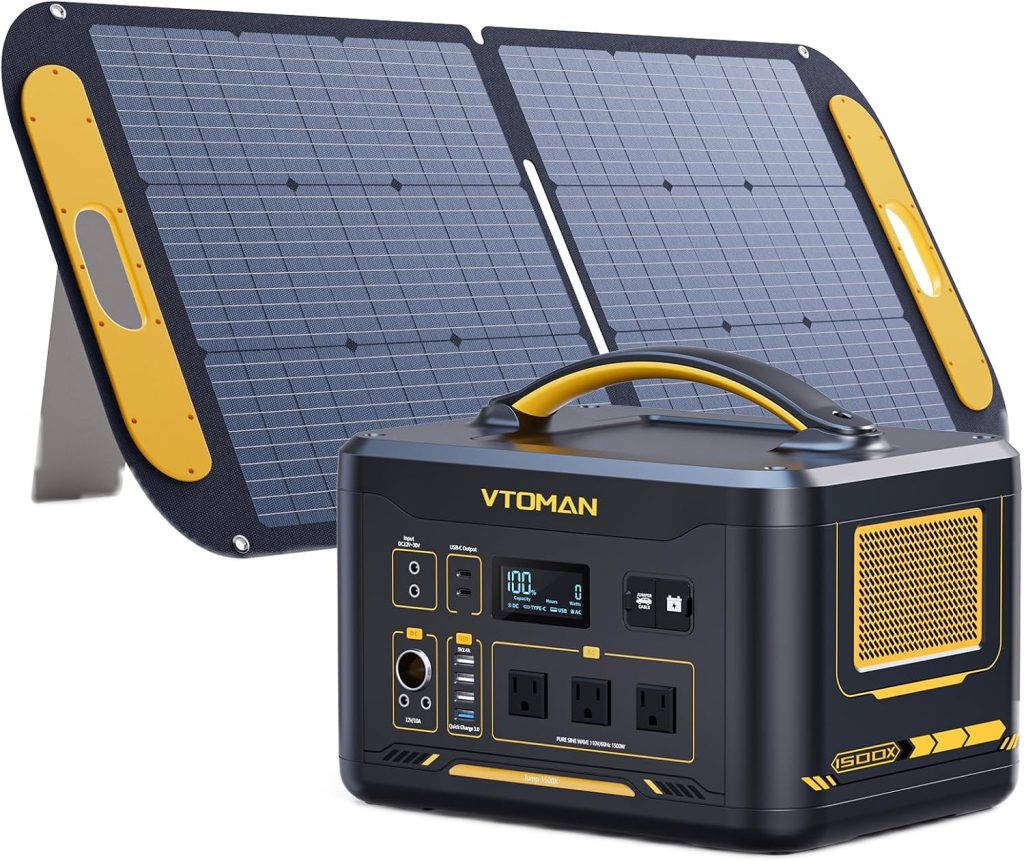
828Wh and 1500W with a jump-start port and a 110W panel included — jumper cables are sold separately
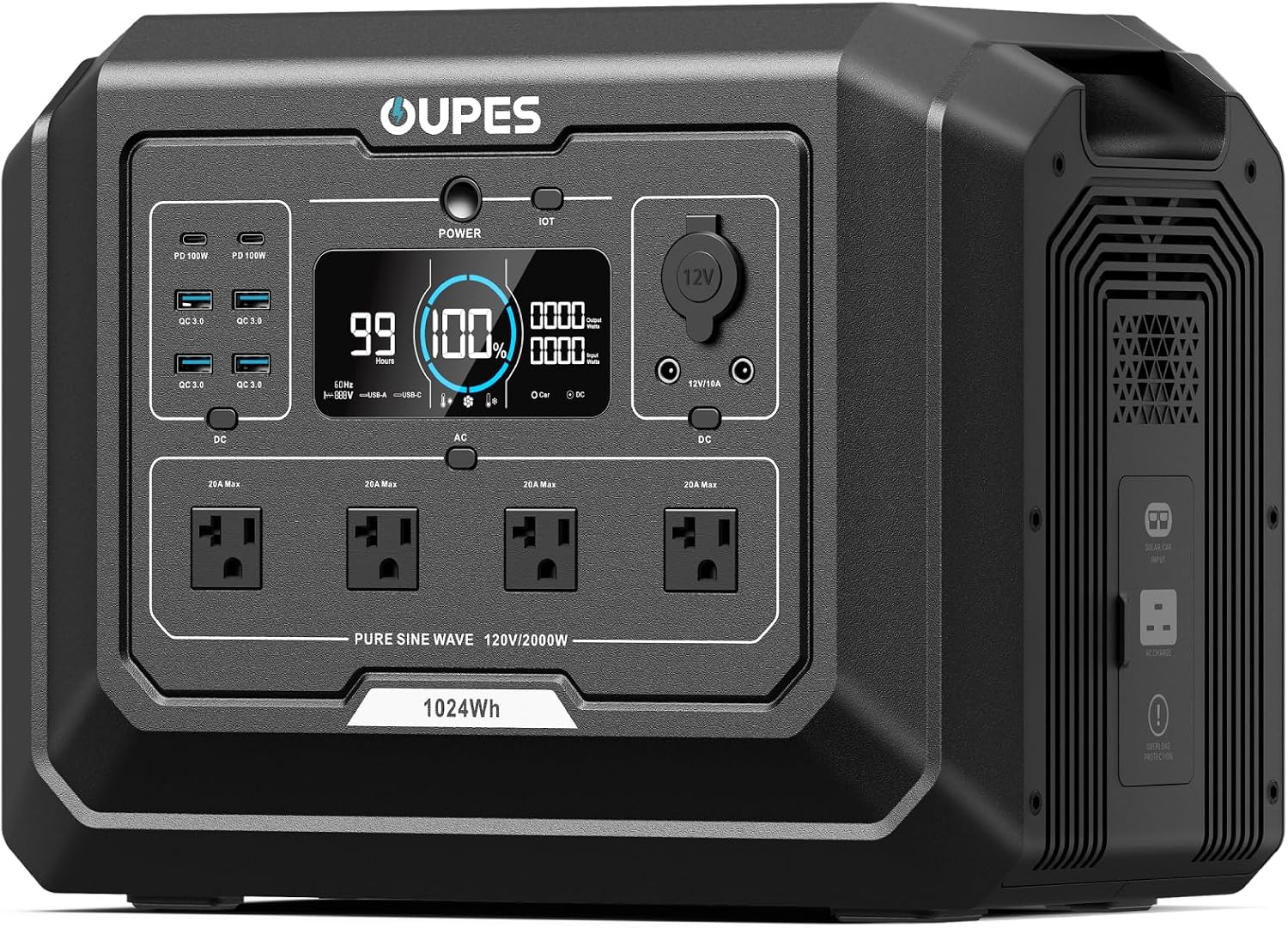
OUPES Mega 1
1024Wh with a full 2000W of AC output and very fast wall charging — no jump port and no panel included
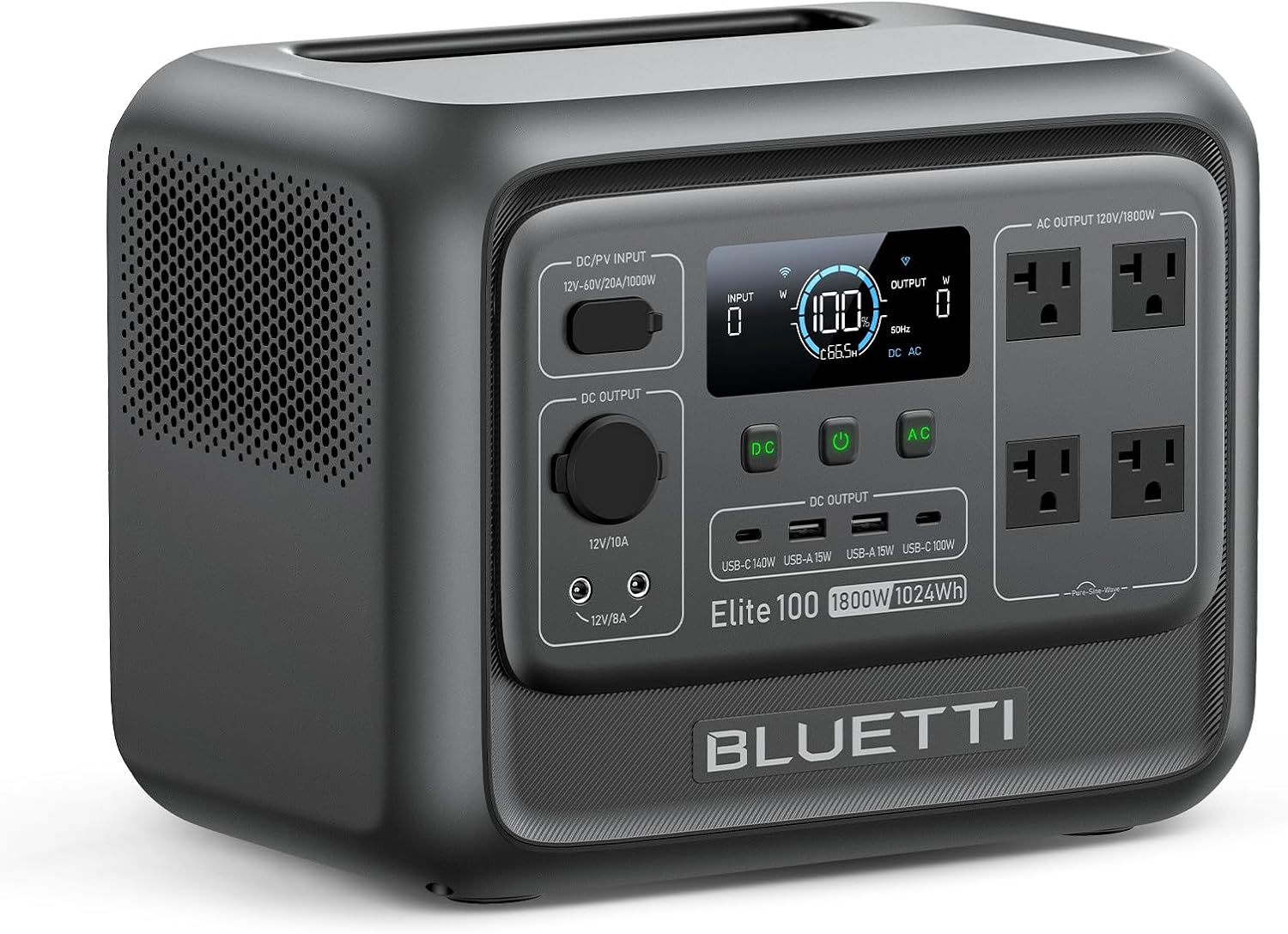
BLUETTI Elite 100 V2
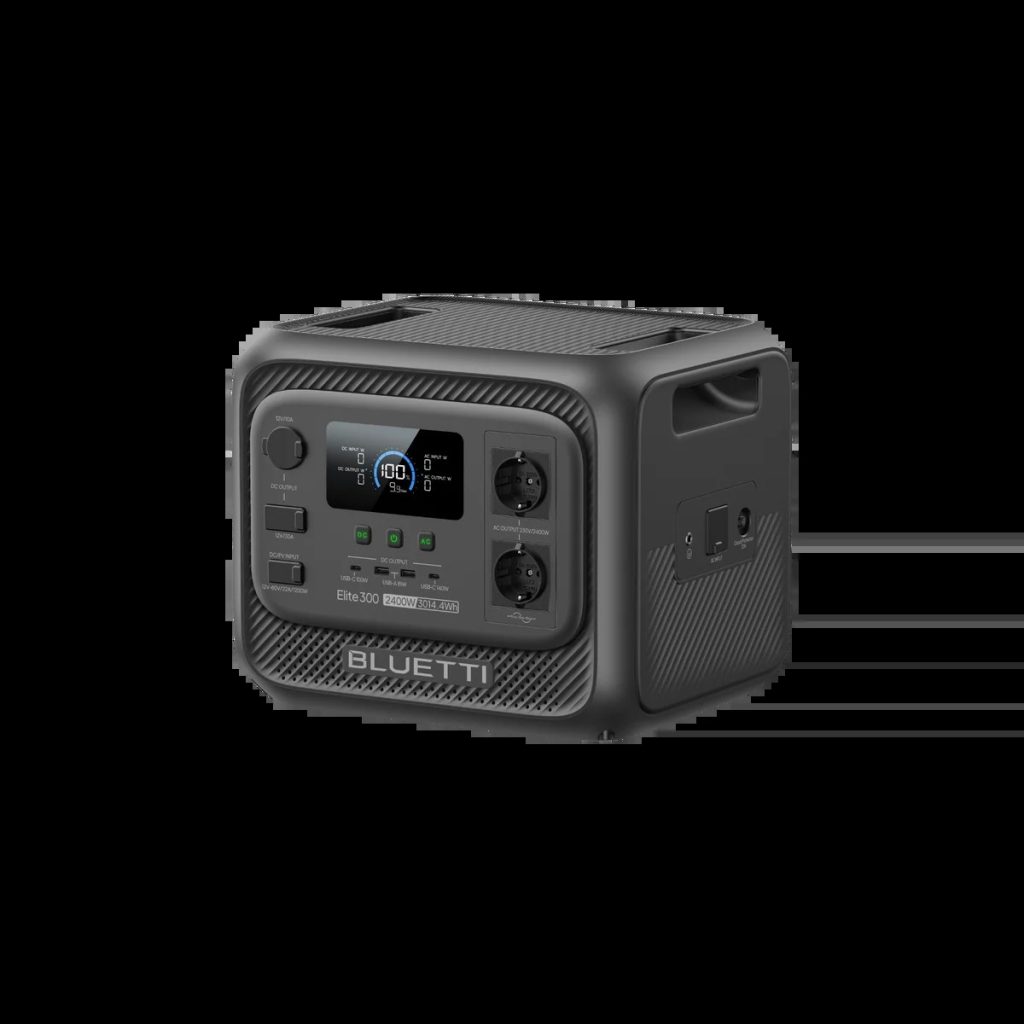
1024Wh and 1800W with a true 10ms UPS and quiet running — built for outages, not trailhead rescues
Prices and availability may vary — tap any product to check the current listing.
[[COMPARE]]
What to Look For in a Portable Power Station
Most buyers start with the biggest number on the box. Wrong place.
Capacity and output do different work. Capacity, in watt-hours, is how long things run. Output, in watts, is what you can run at all. The Jump 1500X sits mid-class on both — listed at 828Wh of LiFePO4 capacity with 1500W continuous AC output and a higher peak figure for brief surges. That output handles one hungry appliance at a time. A kettle works. A small microwave works. Both together doesn’t. Capacity is the tighter limit: 828Wh covers a relaxed overnight — lights, phones, a laptop, a fan — but a 12V fridge eats a big share of it in one day and night. The two rivals here use a larger battery in the 1024Wh class. That headroom isn’t dramatic on paper. At 11 p.m., with the fridge still humming, it feels like a lot.
The jump-start port is the whole reason this model exists, so judge it hard. A 12V car socket for a fridge or an air pump is not the same thing. The Jump 1500X has a dedicated port on the front panel meant for jumper cables, turning the station itself into the thing that rescues your vehicle at a trailhead or a cold campsite with nobody around. For a solo driver, that has real value — a dead battery far from help ends the trip. But there’s a catch. According to the listing’s own package contents, jumper cables aren’t in the box. You get the station, the included panel, charging cables, adapters, and a manual. The cables that make the headline feature work are a separate purchase. Budget for them, pack them, test-fit them at home — a jump port without cables is just a socket. Dead weight, literally.
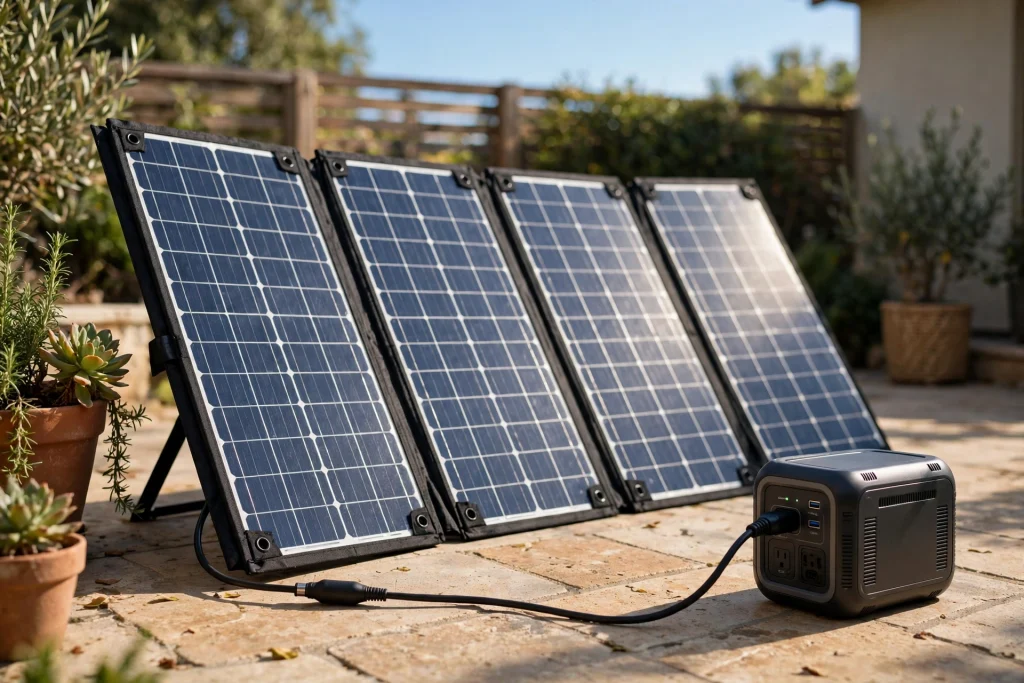
Solar input size is where marketing gets slippery. This bundle includes a 110W panel, and getting one in the box is handy — you can charge from sunlight the day it arrives, no compatibility guessing. But 110W is a rating under ideal conditions, not what you’ll see on a campsite table at 3 p.m. under a partly cloudy sky. Real input sits well below that most of the day, so refilling an 828Wh battery from solar alone is slow, patient work. Think a long day of good sun to recover one night of fridge and lights, not a top-up over lunch. The station uses MPPT charging and accepts a modest solar input range, so a larger panel later is worth checking against the listed limits. It’s a starter panel. A useful one. But a starter.
Expansion sounds simple — buy the extra battery, get more capacity — and the cost deserves more attention than it usually gets. The Jump 1500X can grow from 828Wh to a listed 2376Wh with the maker’s matching extra battery, sold separately. That transforms its usefulness for fridge duty and longer stays. The trade-off is a two-box system that costs more, weighs more, and takes up more room in a vehicle that wasn’t spacious to begin with. Ask whether you’d have been better off starting with a larger single station. Sometimes expanding wins, especially if your trips get longer next year. Sometimes it’s paying twice for the same outcome. And expansion doesn’t raise the output limit — loads run longer, not bigger. Buy expansion for time, not for power.
Charging speed from a wall outlet is the unglamorous spec that shapes daily life. A station that refills in about an hour gets used constantly, because you can top it off the morning of a trip. A slower one gets left at 40% in the garage. The Jump 1500X doesn’t lead its class here — rivals like the OUPES Mega 1 we reviewed make a point of very fast AC charging, refilling most of the battery in well under an hour, and the BLUETTI Elite 100 V2 also charges quickly. The VTOMAN gives you wall, car, and solar charging, which helps on the road, where driving can replace what last night used. Still, if your routine is dashing home and leaving for the lake an hour later, charge speed will annoy you. Plan around it, or pick the faster rival.
Weight finishes the picture, because a station you resent carrying is one you’ll stop bringing. This bundle’s station is a two-hand carry for most people — manageable from house to car, less fun across a rutted campsite or down apartment stairs. The panel travels separately, too (the listing notes they ship as separate packages), so picture two items to store and load, not one neat box. Handles help, barely. I’ve seen people buy capacity they needed, then leave the station home on short trips because hauling it felt like a chore. If it lives in the vehicle full-time, weight matters less. If it moves house-to-car twice a week, it matters a lot.
How to Match the Jump 1500X to Your Situation
Specs don’t camp. People do — and this portable power station fits some habits neatly while missing others by a mile.
The weekend car camper is who this product was designed for. You drive to a site Friday evening, run lights and phones and maybe a small fan, cook simply, and drive home Sunday. For that pattern, 828Wh works if you’re not running everything at once, a sunny Saturday with the panel claws back a useful chunk, and the jump port is insurance for the one machine everything depends on — your car. A sedan with a tired battery, parked for two cold nights? That port stops being a gimmick real fast. Just remember the cables — buy them, store them with the station.
The RV or van road-tripper is a trickier fit. If your rig already has house batteries, this box works best as a supplement — power away from the vehicle, backup for a 12V fridge during stops, a laptop at a picnic table. Expansion helps, since longer trips expose the base capacity quickly, and car charging while driving suits the rhythm. As the main source for a fridge over several days, though, it strains. You’ll be managing charge constantly, counting hours. Most people, honestly, start shopping for a bigger battery by the second trip.
The home-backup buyer should mostly look elsewhere. If you want a home fridge, a router, and work equipment kept alive through an outage, with an uninterruptible power supply that switches fast enough to keep a computer running, the Jump 1500X isn’t built for that job. It has no true UPS function like the BLUETTI Elite 100 V2, and its output and base capacity leave less margin for household loads. The jump port does nothing at home. Buy the home-focused rival — and if you’re still sizing your loads, start with how to size a portable power station for your actual loads.
| Type/Tier | Best For | Price Tier | Key Feature | Watch-Out |
|---|---|---|---|---|
| VTOMAN Jump 1500X bundle | Car campers and road-trippers who want camp power plus vehicle rescue in one kit | Mid-range | Dedicated jump-start port, panel included, expandable with an extra battery | Jumper cables sold separately; base capacity is the smallest here |
| OUPES Mega 1 | More output and very fast wall charging for mixed home and camp use | Mid-range | Higher continuous output, larger battery, expands much further | No jump-start port and no panel in the station-only listing |
| BLUETTI Elite 100 V2 | Home backup and light camp use where quiet, fast UPS switchover matters | Mid-range to premium | True UPS behaviour, quick AC charging, notably quiet running | No jump-start port; built for outages more than trailheads |
The Jump 1500X row is the only one selling a rescue feature, and its value rises or falls on whether you’ll use it.
The OUPES Mega 1 row is the power-and-speed play — more output, more capacity, faster refills — for buyers who don’t care about jump-starting.
The BLUETTI Elite 100 V2 row is the home-leaning option, quieter and quicker during an outage, for people whose worst case is a blackout, not a dead battery in the woods.
Weekend Car Camping, Friday to Sunday
Picture the ordinary version of this trip, not the brochure version. You arrive near dusk, string up lights, charge two phones, inflate a mattress, run a fan until you fall asleep. Saturday is lazy — a kettle in the morning (one appliance at a time, remember), phones again, maybe a laptop for a film after dark. Sunday you pack up and drive home. That load profile suits this portable power station well: modest, brief, staggered, with a sunny Saturday giving some charge back. Add a fridge without expansion, though, and it gets tight — the fridge pulls steadily while everything else draws too. Doable for one night. Risky for two. The jump port never gets used on a good weekend, and that’s fine. Insurance you don’t claim on isn’t wasted money.
A Dead Car Battery at a Remote Trailhead
This is the scenario the whole product is built around. You finish a hike, turn the key, and get that slow, grinding click everyone over thirty recognises in their bones. No signal worth trusting. Nobody else in the lot. With the Jump 1500X in the trunk and the separately bought cables packed with it, you’re driving again in minutes instead of hiking toward a road hoping for a stranger. That’s a strong argument for solo drivers, older vehicles, and cold-weather trips. But notice the conditions inside that happy ending. The station needs charge left — running it flat at the campsite, then expecting a jump, asks one battery to do two rescues. The cables need to actually be in the car. And you need to have read the instructions before the stressful moment, not during it. Keep a charge reserve on driving days.
Running a 12V Fridge for Two Days
Fridge duty is where 828Wh stops sounding like a lot. A typical 12V camping fridge cycles on and off, but across a full day and night it still consumes a large slice of this capacity. One overnight run is comfortable. A full weekend is a stretch. Two full days without recharging is where people get caught out, usually on the second afternoon, with warm drinks as the evidence. The ways through it are unglamorous: pre-chill everything at home, keep the lid shut and the fridge out of sun, add the panel during the day, let driving help via car charging. Or accept the expansion battery as part of this use case’s real cost — with it fitted, two days becomes a calm plan instead of a gamble. Without it? You’re managing, not relaxing.
Common Mistakes When Buying a Solar Generator Kit
The first mistake is assuming the jump-start feature works out of the box. It doesn’t, because the jumper cables aren’t included, according to the listing’s package contents. Buyers discover this in the worst possible places. Order the cables with the station and store them together — a five-minute check that decides whether the headline feature exists at all.
The second mistake is treating a 110W panel like a fast charger. Panel wattage is a peak rating under strong sun, and real output runs lower most of the day, so expecting an 828Wh battery to refill over a long lunch sets you up for a flat station by dinner. Solar here is a slow offset, best planned across a full sunny day.
The third mistake is confusing peak watts with continuous watts. The surge figure covers brief moments, like a motor kicking on. The continuous figure is the ceiling your appliances live under — on this model, the 1500W class, meaning one heavy appliance at a time. Run a kettle and a microwave together because the peak number looked generous, and the station will shut the conversation down for you.
The fourth mistake is buying a jump-start model for home UPS duty. It sounds efficient — one box for car and house — but a jump port adds nothing during a blackout, and this station lacks the fast switchover that keeps computers running through an outage. Home backup points at a different product, the BLUETTI-style rival above.
Questions People Ask Before Buying
Real buyer questions, straight answers
Is the VTOMAN Jump 1500X worth it?
Yes, it’s worth it if you drive to camp and want one box that powers the site and can rescue your own car — and it’s not worth it if you don’t. The value lives in that double duty. Buyers who never need a jump start pay for a port they’ll never open, and they’d get more capacity and faster charging elsewhere. Buyers who travel solo in an older vehicle get something rivals don’t offer: a way home.
Can the Jump 1500X jump-start a truck?
It can jump-start vehicles with a typical 12V battery, including many trucks, as long as you have the jumper cables — which are sold separately. That 12V class covers most cars, SUVs, and pickups. Very large diesel engines and deeply dead batteries are harder cases for any compact jump source, so treat it as strong roadside insurance, not a replacement for a heavy-duty jump pack. Test it at home once, in daylight.
How long does the Jump 1500X take to charge from its solar panel?
Charging the Jump 1500X from the included 110W panel alone takes most of a long, sunny day — plan on solar as slow, steady recovery, not a quick refill. The panel’s rating is a peak figure, and real output drops with cloud, shade, and angle. That pace can offset a night of lights and phones across a bright day. It won’t rescue a nearly flat battery before a morning departure, which is why wall or car charging is the practical way to leave camp full.
VTOMAN Jump 1500X vs OUPES Mega 1: which should I buy?
Buy the Jump 1500X for the jump-start port and included panel, and buy the OUPES Mega 1 for more power, more capacity, and much faster charging. The Mega 1 handles heavier loads and longer runs, and its AC charging is strikingly quick. It can’t jump-start your car, and its standard listing is station alone, so a panel costs extra. The choice is about your worst day: a dead battery at a trailhead, or a flat station at home.
Can the Jump 1500X run a fridge overnight?
Yes, it can run a typical 12V camping fridge through one night comfortably on its base capacity. A fridge cycles rather than drawing full power constantly, so overnight use leaves charge for lights and phones if you started reasonably full. Stretch to a second night without recharging or the expansion battery and it gets tight. Add daytime solar, car charging, or the extra battery, and multi-day fridge duty stops being a daily calculation.
Frequently Asked Questions
How can I charge the Jump 1500X?
From a wall outlet at home, from your vehicle while driving, or from solar using the included panel or another compatible panel within the listed input range. Wall charging is fastest. Car charging suits road trips, where hours behind the wheel replace what the night before used. Solar is slowest, best as a daytime top-up at camp, not your main plan.
Can I expand the Jump 1500X battery later?
Yes. The station connects with the maker’s matching extra battery, taking total capacity up to a listed 2376Wh — roughly tripling runtime for fridges and longer stays. The extra battery is sold separately and adds weight and bulk, so treat expansion as a planned second stage. It extends how long loads run. It doesn’t raise the output ceiling.
What is the V-Beyond feature on the Jump 1500X?
V-Beyond is the maker’s mode for running certain resistive appliances — kettles, heating elements — rated above the station’s normal continuous output, up into a higher listed range. It isn’t a general upgrade for every load, and it won’t help motor-driven or sensitive electronics. Treat it as a narrow, occasional tool for simple heating appliances. If your routine loads sit above the continuous rating daily, the honest fix is a higher-output station.
Can I use the Jump 1500X while it’s charging?
Yes, pass-through charging is supported, so lights, a fridge, or device charging can keep running while the station takes in power from a wall outlet, a vehicle, or a panel. That’s useful at camp, where solar arrives slowly while the fridge keeps drawing. Just remember the maths: if everything plugged in draws more than the incoming charge, the battery still drains, only slower.
How long will the Jump 1500X battery last over the years?
The station uses a LiFePO4 battery, a chemistry known for holding up far longer than older lithium types, and the listing rates it in the thousands of charge cycles before capacity drops to around 80% of new. In real terms, that’s years of regular camping use before you’d notice meaningful shrinkage — one of this model’s stronger points. Expect gradual fade, not a sudden cliff.
What warranty and support does the Jump 1500X have?
The maker sells this model through major retailers with standard manufacturer warranty coverage and support channels, with the specific term set out on the product listing and in the box. Read those terms before buying rather than relying on anyone’s summary, including this one — coverage for bundles and extra batteries can differ. Keep your purchase record findable. Warranty claims are no fun either way, but much less fun when you’re also hunting for proof of purchase.
Decision Tree: Which One Fits Your Trips?
If you drive to camp, travel solo, or your vehicle’s battery is getting old → the Jump 1500X bundle, plus the separately sold jumper cables.
If you need heavier appliances or a refill in a hurry → the OUPES Mega 1, for its higher output and fast AC charging.
If the station’s real job is keeping a home office or fridge alive through outages → the BLUETTI Elite 100 V2, for its true UPS switchover.
If a 12V fridge must run two full days between charges → the Jump 1500X only with the expansion battery budgeted in, or a larger-capacity station.
If you backpack, bikepack, or fly to where you camp → skip jump models and buy the smallest, lightest station that covers your loads.
Key Takeaways
The jump-start port is the entire point of this model — valuable for drivers, dead weight for everyone else.
Jumper cables are not in the box. Budget for them and store them with the station, or the headline feature doesn’t exist.
828Wh covers a modest weekend and one night of fridge use; two days of fridge duty wants expansion or daily recharging.
The included 110W panel is a starter that offsets daily use in good sun, not a fast refill.
Its 1500W-class output means one heavy appliance at a time, whatever the peak figure suggests.
Final Recommendation
Buy the VTOMAN Jump 1500X bundle if your camping starts with a car journey and sometimes ends in the middle of nowhere. For that reader, it’s a sensible portable power station that covers a normal weekend’s lights, phones, and small appliances, throws in a panel so solar starts on day one, and — once you’ve added the cables that should arguably have been in the box — can get your own vehicle started when nobody else is around. That combination is rare in this category.
Skip it if your priorities live elsewhere. Home-backup buyers get a better-suited machine from BLUETTI, power-hungry buyers get more output and faster charging from OUPES, and anyone who never drives to camp is paying for a port that will sit unused. That doesn’t make the Jump 1500X a bad product. It makes it a specific one.
Compare Camping Portable Power Stations
Three picks side by side — one rescues your car, one brings the most watts, one is built for outages.
VTOMAN Jump 1500X
828Wh and 1500W with a jump-start port and a 110W panel included — jumper cables are sold separately
OUPES Mega 1
1024Wh with a full 2000W of AC output and very fast wall charging — no jump port and no panel included
BLUETTI Elite 100 V2
1024Wh and 1800W with a true 10ms UPS and quiet running — built for outages, not trailhead rescues
Prices and availability may vary — tap any product to check the current listing.
Affiliate Disclosure: This article contains affiliate links. If you buy through one of these links, we may earn a commission at no extra cost to you.