The power went out at 9:40 on a Tuesday night, which I remember because I was mid-email and the screen was the only light left in the room for about three seconds before the laptop battery took over. No storm. No warning. Just the quiet hum of the house stopping all at once — the fridge, the router, the air purifier, all of it gone in the same instant. I sat in the dark doing the inventory everyone does: phone at 60%, laptop at 80%, a power bank somewhere in a drawer that was probably dead. And I thought, for the first time seriously, that I should own a small power station instead of reading about them.
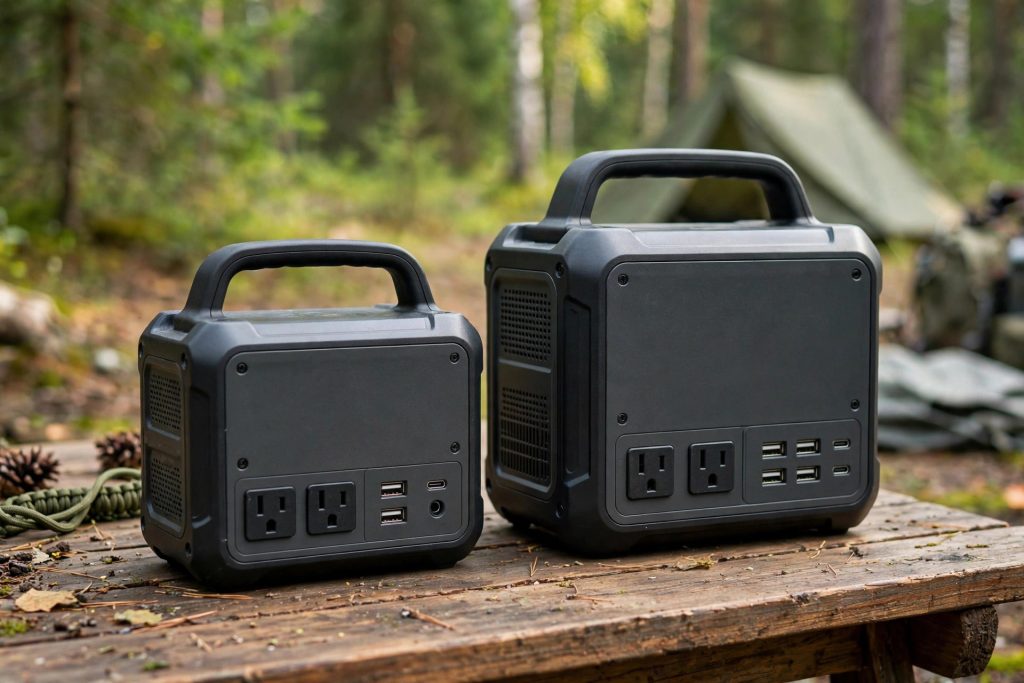
That outage lasted four hours. It was annoying, not dangerous. But it rewired something in how I thought about backup power, because until then I’d filed “power station” in my head under “camping gear for other people.” The 288Wh class — small stations like the BLUETTI Elite 30 V2, 288 watt-hours, 600W of output — is the entry point that makes sense for exactly this scenario: not the apocalypse, just Tuesday night.
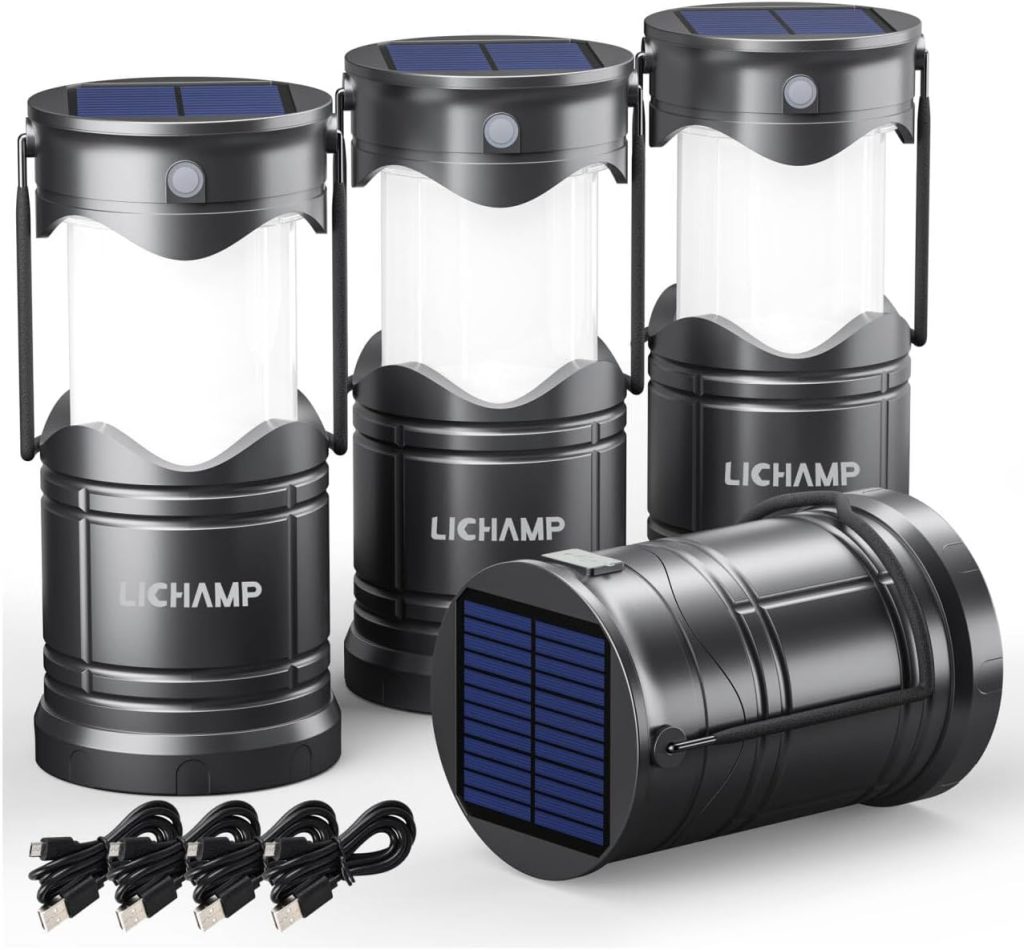
Here’s the math that matters at this size, and it’s refreshingly simple. 288Wh on the label means about 230Wh of usable AC power once the inverter takes its cut — figure 80%, same as the big units, because physics doesn’t offer volume discounts. A phone holds roughly 15Wh, so you’re looking at a dozen-plus full phone charges, realistically more like fifteen once you account for the phone not being fully dead each time. A laptop at 60W for three hours is 180Wh — most of the station, but it gets you through the workday outage. LED lanterns and a router sip single-digit watts; they’ll run all night and barely dent it.
The 600W output number is the one to actually pay attention to, more than the capacity. 600W continuous means a small kitchen appliance in a pinch — not a microwave, but a coffee maker’s warming plate, a fan on high, a TV plus a game console. It means the station doesn’t just trickle-charge gadgets; it runs real things, briefly. The failure mode of cheaper small stations is always the same: plenty of watt-hours on paper, then a 300W output ceiling that shuts the whole thing down the moment you plug in anything with a heating element or a motor. 600W clears most of the everyday stuff. Not the hair dryer, though. Never the hair dryer. I calculated that one three times hoping I was wrong.
Actually, wait — I should correct myself. I said 600W clears most everyday stuff, but anything with a heating element trips it instantly. Most. Not all. The heaters always win.

Where this class genuinely shines is the car-camping and road-trip scenario, which I admit I dismissed until I tried it. A 288Wh station plus a 100W panel on the dashboard — not even deployed properly, just lying on the dash — kept two phones, a camera battery charger, and a string of LED lights going for a four-day trip without ever touching the car’s battery. The car’s 12V outlet could have done the phones, sure. But the car has to be running, or you risk the starter battery, and idling a car to charge a phone is the kind of thing that makes you question your life choices at 2am in a national forest.
The honest comparison at this size is between the established names, because the small-station market is where the sketchiest listings live. EcoFlow’s RIVER 2 is the 256Wh reference point — slightly smaller capacity, 600W output with a surge mode for motor startups, and the one-hour fast charging that means you can top it up from a coffee shop outlet during lunch. Jackery’s 300 Plus at 288Wh is the direct peer: same capacity class, LiFePO4, and Jackery’s long track record in exactly this size. Between them it’s mostly interface preference and whatever’s on sale — the underlying math is nearly identical, because at 288Wh there’s nowhere for marketing to hide.
BLUETTI’s own EB3A at 268Wh is the in-family alternative, and the comparison is instructive: 600W output, faster charging claims, a slightly smaller battery. The Elite 30 V2 being a “V2” matters more than the spec delta — second-generation small stations fixed the first generation’s sins, mostly around idle drain and fan noise. Fan noise. On a 288Wh box. The early ones had fans that spun up like tiny jet engines under a 200W load, which is absurd and also completely typical of a category learning in public.
I haven’t tested the EB3A’s UPS mode myself — that’s a scenario outside my experience, so I’ll stick to what I know about the base station.
Small stations that earned their keep
The 256-288Wh class is where sketchy listings live; these three are the ones with track records.
EF ECOFLOW RIVER 2 Portable Power Station, 256Wh
256Wh LiFePO4, 300W output with surge for small motors, one-hour fast charging.

BLUETTI EB3A Portable Power Station, 268Wh
268Wh LiFePO4, 600W output (1,200W surge); the in-family alternative at this size.

Jackery Explorer 300D Portable Power Station, 288Wh
288Wh LiFePO4, 300W output; Jackery’s long-running small-station line.
The category criticism I can’t let go of: small power stations are marketed as “emergency” gear, but the emergency use case is the one they’re worst at without discipline. An emergency box needs to sit for six months and work instantly. Lithium batteries self-discharge slowly, which is fine, but the station’s own electronics don’t always sleep properly, and a year in the closet can mean a dead box when the storm hits. The fix is a calendar reminder to top it up every three months. The industry’s fix is to not mention it. I mention it because my Tuesday-night outage taught me that the best small station is the one that’s actually charged, and “actually charged” is a maintenance habit, not a purchase.
There’s also the quiet upsell pressure built into this class. Buy the 288Wh, and every review, every forum thread, every ad whispers that you should have bought the 500Wh, the 1,000Wh, the bigger one. Sometimes that’s true — if you’re sizing for CPAP through the night, the small class genuinely doesn’t cut it and you should size up honestly. But for phones, laptops, lights, and routers through a normal outage, 288Wh is enough, and “enough” is a complete sentence. I spent a year overthinking this before accepting that my actual outages last hours, not days, and buying for the disaster-movie scenario meant paying triple for capacity I’d never use.
My Tuesday-night box now lives by the front door, not in a closet. Charged, with a little tag showing the date I last topped it up. It’s a small ritual and slightly embarrassing to admit. But the last outage — a blown transformer, six hours, a Friday this time — I just picked it up, plugged in the router and a lamp, and kept working. No flashlight math. No dead power bank in a drawer. The email I was writing when the power died got finished and sent. That’s the whole review. The email got sent.