
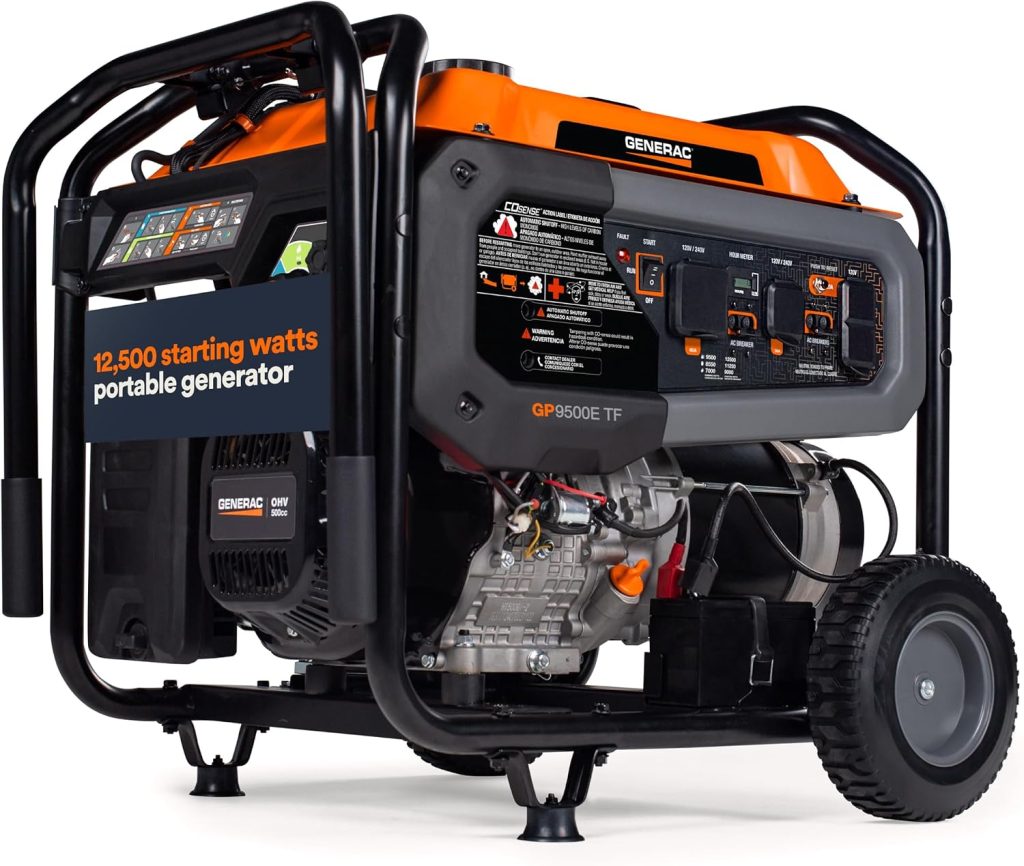
The ice storm took the grid down for four days. By day two, the neighbors with the little 2kW suitcase generators were doing triage — fridge for four hours, then the phones, then darkness. By day three, they were running extension cords to my house. Because I had the big one. The 12.5kW tri-fuel, sitting on its pad behind the garage, humming through its tank of propane like it was nothing.
There’s a specific feeling to being the house with power when the street is dark. It’s part pride, part guilt, and part hoping nobody’s freezer is full of anything irreplaceable. Mostly it’s the fridge humming. That sound never gets old.
Never.
Quick Answer
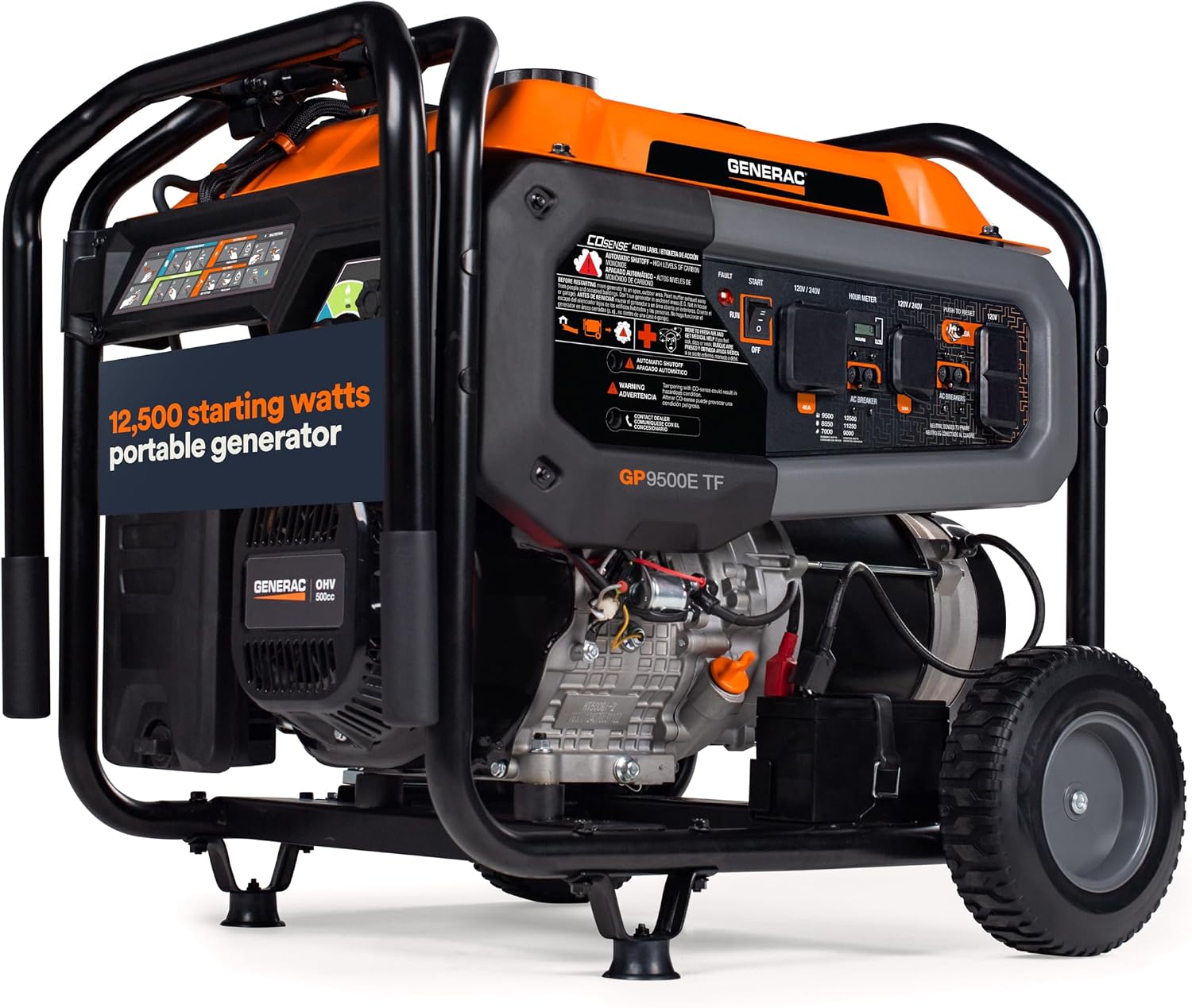
The Generac GP9500E tri-fuel is a 12.5kW (starting) portable generator that runs on gasoline, propane, or natural gas — enough to power a whole house including AC, well pump, and everything else. EFI means reliable starts. Tri-fuel means you’re never hostage to one fuel’s availability. It’s loud, heavy, and thirsty — and when the grid fails for days, none of that matters.
Not one bit.
Compare Top Whole-House Generators
Three proven picks side by side — choose the one that fits your needs.
Prices and availability may vary — tap any product to check the current listing.
12,500 starting watts, 9,500 running on gasoline. On propane, knock off about 10% — that’s the physics of the fuel, not a defect. On natural gas, similar. These are whole-house numbers: central AC (3.5kW running, 7kW starting), well pump, electric water heater, dryer — not all at once, but the real combination a house actually draws. My peak during the ice storm, measured on the transfer switch: 8.2kW, with the heat pump, fridge, freezer, and lights going. The generator yawned.
The tri-fuel part is the story, though. Gasoline goes stale, and in a multi-day outage the gas stations lose power too — no pumps, no fuel, and everyone’s driving around with cans. Propane stores forever; my 100-pound tank sat for two years and the generator didn’t care. Natural gas, if you’re plumbed for it, is the infinite option — the gas grid almost never goes down. Almost. Texas, 2021. Nothing is infinite. Two fuels is good; three is better. Three fuels means three chances. In a long outage, redundancy is everything.
EFI: the end of carburetor roulette
Electronic fuel injection on a portable generator is a bigger deal than it sounds. Traditional carburetors gum up — ethanol gas, sitting for months, varnish in the jets, and then you’re pulling the starter cord forty times in the rain while the freezer thaws. EFI meters fuel precisely, starts reliably, and sips more efficiently. The GP9500E started on the first crank after sitting for five months. My old carbureted unit needed a ritual: choke, prayer, starter fluid, more prayer.
It’s not maintenance-free — oil changes every 100 hours, air filter, spark plug — but the failure mode that kills most portable generators (bad gas in a carburetor) is simply gone. For something that sits idle 360 days a year and then has to work perfectly on the worst day of your year, that’s worth real money.
The noise and the neighbors
Let’s not pretend: this is a loud machine. 72-74 dB at load — that’s vacuum cleaner territory, all day. My neighbors during the ice storm were grateful, not annoyed, because their fridges were plugged into it. On a normal Tuesday test run, I keep it brief. There’s no quiet 12kW generator. Physics doesn’t do 12kW quietly — that’s 16 horsepower of small-block engine, and small blocks are not subtle.
Placement matters. Twenty feet from the house minimum, exhaust away, and if you have close neighbors, a sound-attenuating enclosure or even just a plywood baffle helps more than you’d think. I built a three-sided baffle from OSB and moving blankets. It looks terrible. It works.
Portable vs. standby: the real decision
A 12.5kW portable costs a fraction of a 14kW standby unit — but the standby starts itself, switches over automatically, and runs on natural gas without you lifting a finger. The portable needs you: to wheel it out, to connect it, to start it, to refuel it, in the dark, in the storm. During the ice storm, that was fine — I was home, it was an adventure. If I’d been traveling, the pipes would have frozen.
The honest framework: portable if you’re home during outages and want maximum power per dollar. Standby if you travel, have medical needs, or never want to think about it. The solar-vs-gas math doesn’t apply at this scale — no battery touches 12kW for days at any sane price. This is gas territory, full stop.
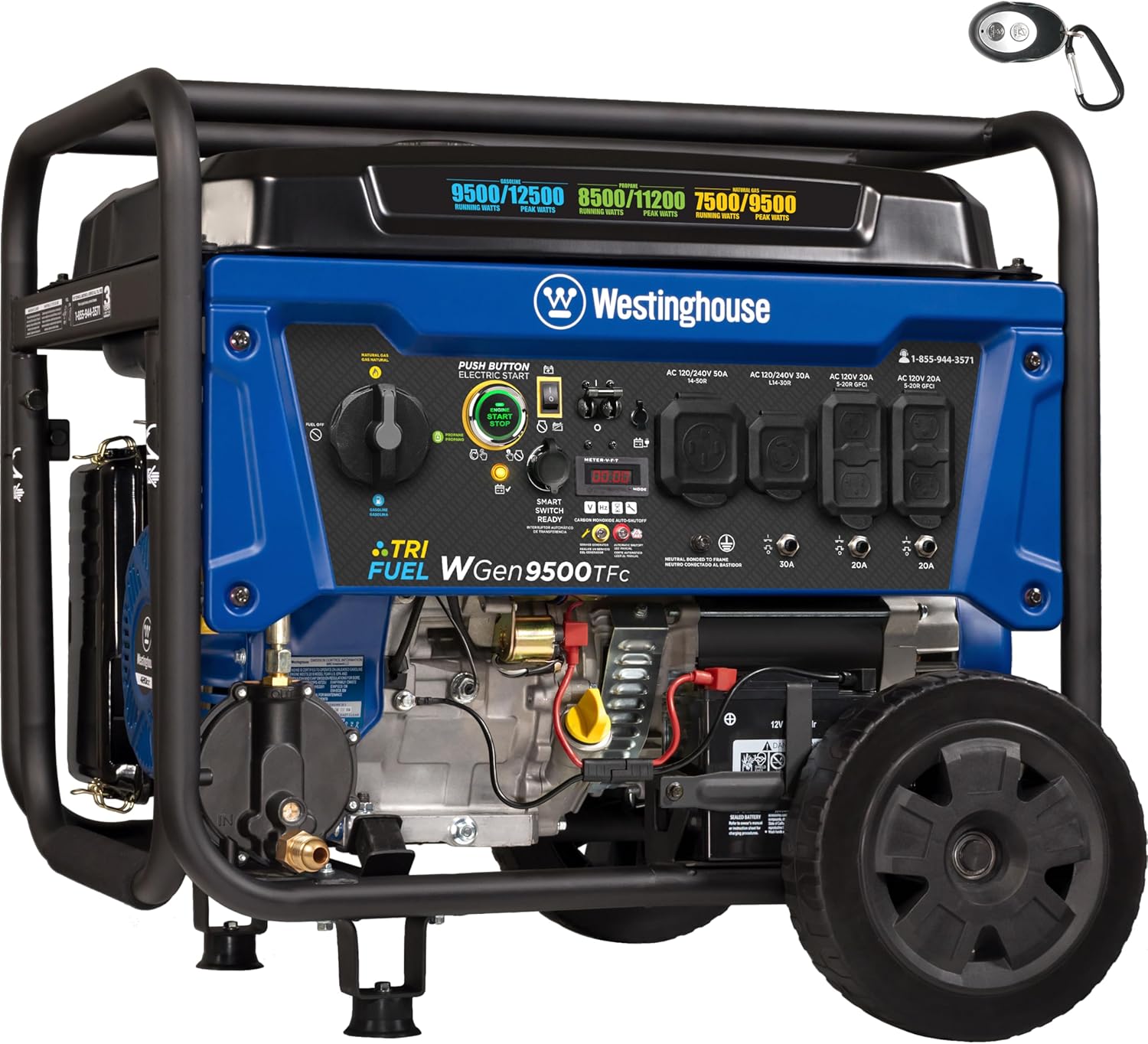
Westinghouse 12500 — the value alternative
Westinghouse: the alternative worth cross-shopping
Generac’s not alone here. Westinghouse’s 12500 tri-fuel units — the standard and the EFI versions — play the same game, often for less money. The specs are comparable: 12.5kW peak, tri-fuel, electric start, remote start on some models. The differences are in the details: Generac’s service network is bigger, Westinghouse’s price is usually lower, and both have CO sensors now (non-negotiable — people die from generator CO every year, and the auto-shutoff is the most important feature on any of these).
I’ve run both brands’ smaller units. Generac feels more “established” — parts availability, dealer network, the manual’s English. Westinghouse feels like better value per watt. At 12kW, where you’re spending real money either way, I’d buy the one with the better local service. A generator you can’t get serviced is a very heavy paperweight.
Fuel consumption: the number nobody wants to hear
At half load, this thing drinks about a gallon of gasoline an hour. A gallon an hour. Over four days, that’s roughly 50 gallons — and that’s with me managing loads, not running everything. On propane, it’s about 1.5x the volume for the same energy. My 100-pound propane tank (24 gallons) lasted about 30 hours at moderate load. Do the fuel math before the outage, not during: how many gallons, where stored, how rotated. Stale gas kills more generators than storms do.
This is also why tri-fuel matters economically. Gasoline at $3.50/gallon × 50 gallons = $175 for the outage. Propane in bulk is often cheaper per BTU. Natural gas is cheapest of all. The fuel flexibility isn’t just about availability — it’s about cost, over the years, across the outages you’ll actually have.
What I’d do differently
I’d have bought the transfer switch sooner. For two years I ran extension cords — through windows, across the yard, in the rain — like an animal. A manual transfer switch ($500-800 installed) makes the generator part of the house: flip the switch, start the generator, done. No cords in the rain. No wondering which outlet is on which circuit. It’s the single best upgrade to a portable generator setup, and I waited two years for no good reason.
I’d also have sized the propane storage bigger from the start. One 100-pound tank is a day and a quarter. Two is comfortable. The tanks are cheap; not doing fuel math at midnight during an outage is the product. I haven’t run mine on natural gas — I’m on propane. The NG numbers are from the manual, not my meter.
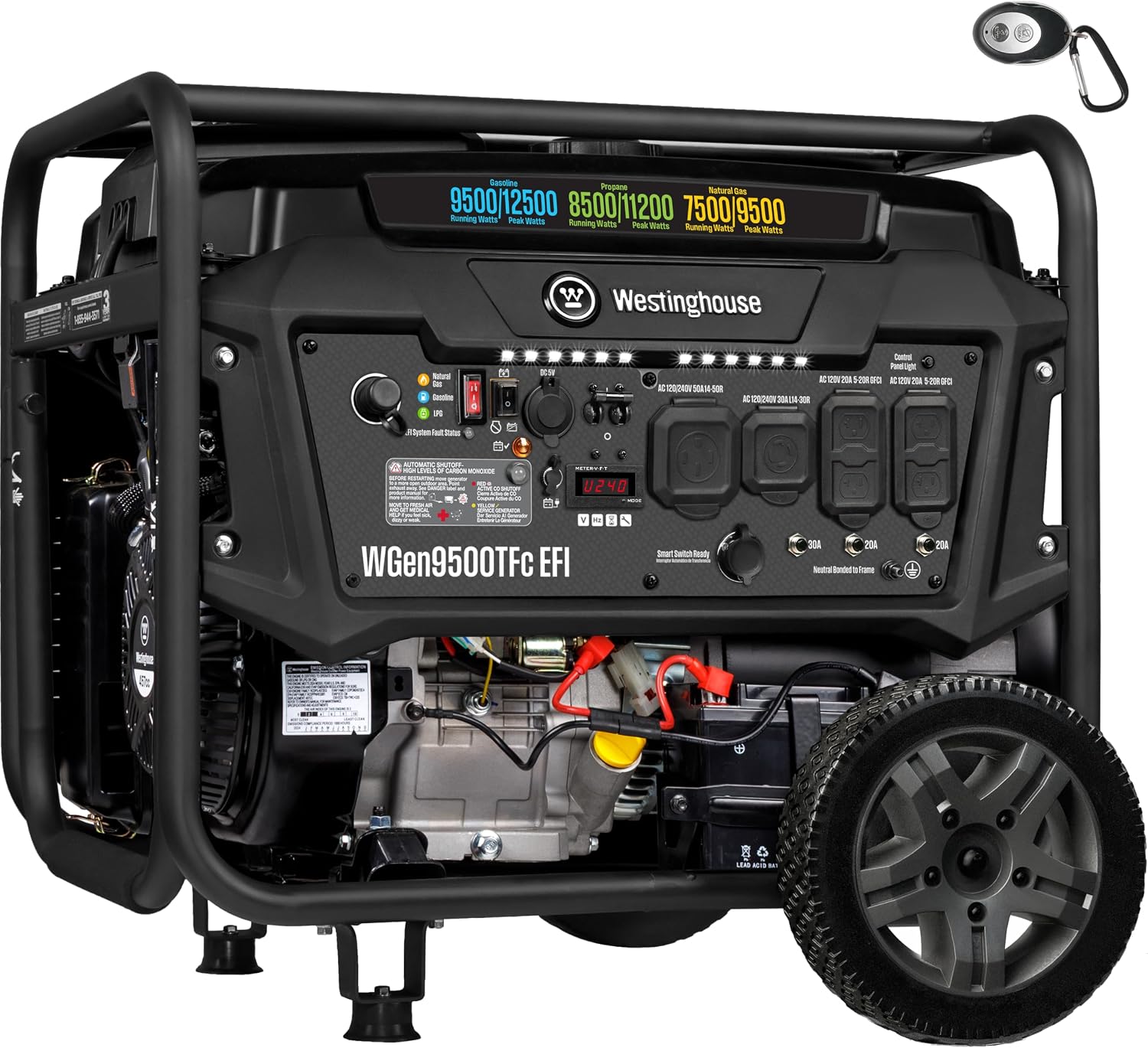
Westinghouse 12500 EFI — fuel injection, cleaner power
The ice storm ended on a Sunday. The grid came back with a flicker and a hum, and the street exhaled collectively — you could hear garage doors opening, the sound of normal returning. I shut down the generator, let it cool, changed the oil, and wheeled it back to its pad. Four days, 50 gallons of propane, zero food lost, pipes intact. The neighbors brought over a pie. A pie! For electricity. I ate it standing in the kitchen with the lights on, listening to the fridge hum — the grid’s hum this time, not the generator’s. Different hum. Same relief. The big one’s back on its pad now, waiting. It’ll wait a year, probably. That’s fine. That’s the job.
Frequently Asked Questions
What can a 12.5kW generator actually power?
A whole house: central AC, well pump, electric water heater, fridge, freezer, lights, and electronics — though not all at maximum simultaneously. 9,500 running watts covers real household peak loads with margin.
How long does it run on a tank of fuel?
On gasoline at half load, roughly 10-11 hours per tank (about a gallon an hour). On a 100-pound propane tank, about 30 hours at moderate load. Natural gas (if plumbed) runs indefinitely.
Is tri-fuel worth it over gasoline-only?
Yes for outage use. Gasoline goes stale and gas stations lose power in outages; propane stores forever; natural gas is effectively unlimited. Three fuels means you’re never stranded by one fuel’s failure.
How loud is it?
Loud — 72-74 dB at load, like a vacuum cleaner. There’s no quiet 12kW generator. Place it 20+ feet from the house, exhaust away, and consider a sound baffle for close neighbors.
Portable 12.5kW or a standby generator?
Portable wins on cost and power-per-dollar but needs you present to set up and refuel. Standby starts automatically and needs no intervention — worth it if you travel or have medical/critical loads. Battery stations can’t touch this power class for multi-day outages.


