A solar inverter looks like the simplest part of an off-grid setup — just a box that turns battery power into the AC your fridge and laptop actually want. Pick the wrong solar inverter, though, and the problems show up fast: a compressor that buzzes, a microwave that trips the unit mid-cycle, a battery that’s flat before dinner. This guide keeps the focus narrow. It compares three 2000W-class options — the Renogy Inverter P2 2000W Pure Sine Wave Inverter, the GIANDEL 2000W Pure Sine Wave Inverter, and the budget-tier Ampeak 2000W Modified Sine Wave Inverter — and asks a ruder question underneath: is 2000W even the right size for your build?
Quick Answer
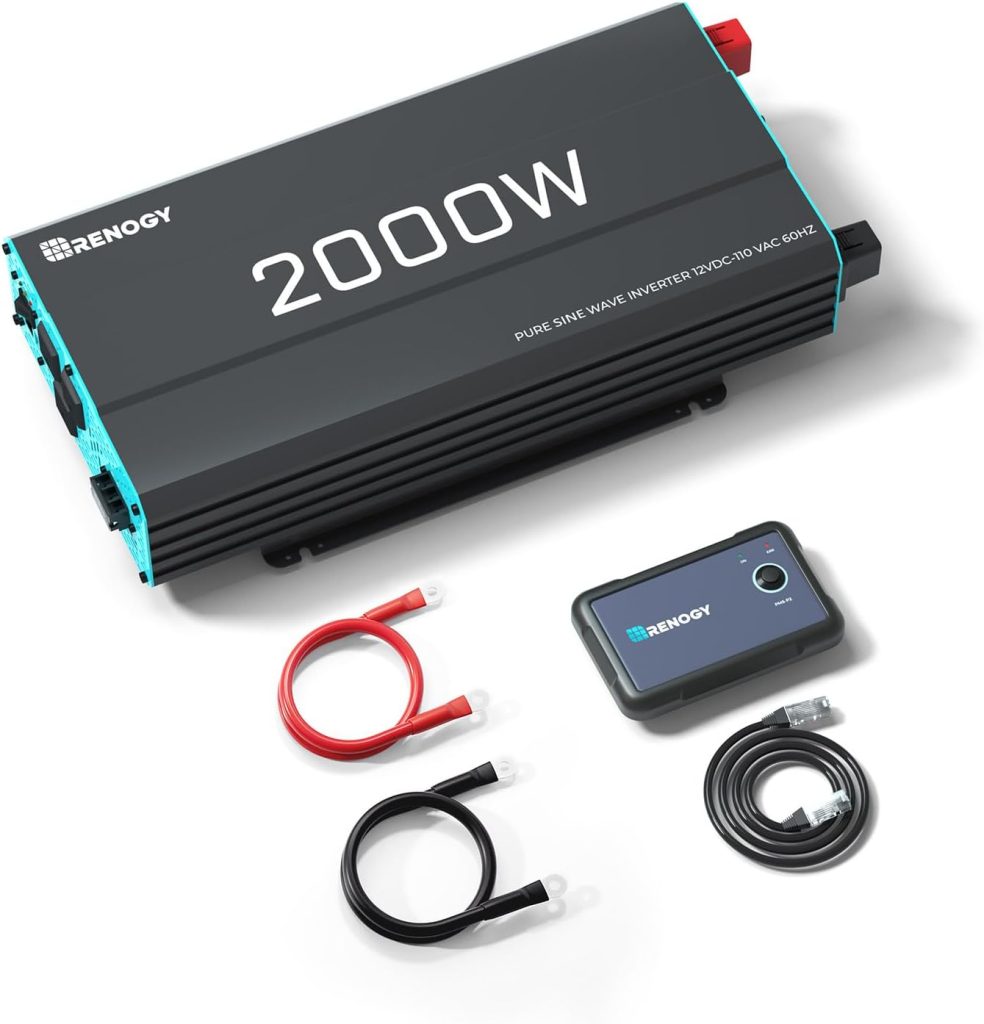
The Renogy P2 is the default buy for a DIY 12V camping or RV build, thanks to its pure sine output, hardwire terminal block, and the wider solar ecosystem sitting behind it. Pick the GIANDEL if a built-in display and fast USB-C charging matter more to you, and pick the Ampeak only if your loads are simple and budget rules everything. Nobody should buy any of them without already owning — or firmly planning — a battery bank, because a standalone inverter on its own does nothing; a portable power station is the honest alternative in that case.
Top 3 Solar Inverters for Camping and RV
Two pure sine picks and one honest budget contrast — waveform is the difference that matters most.
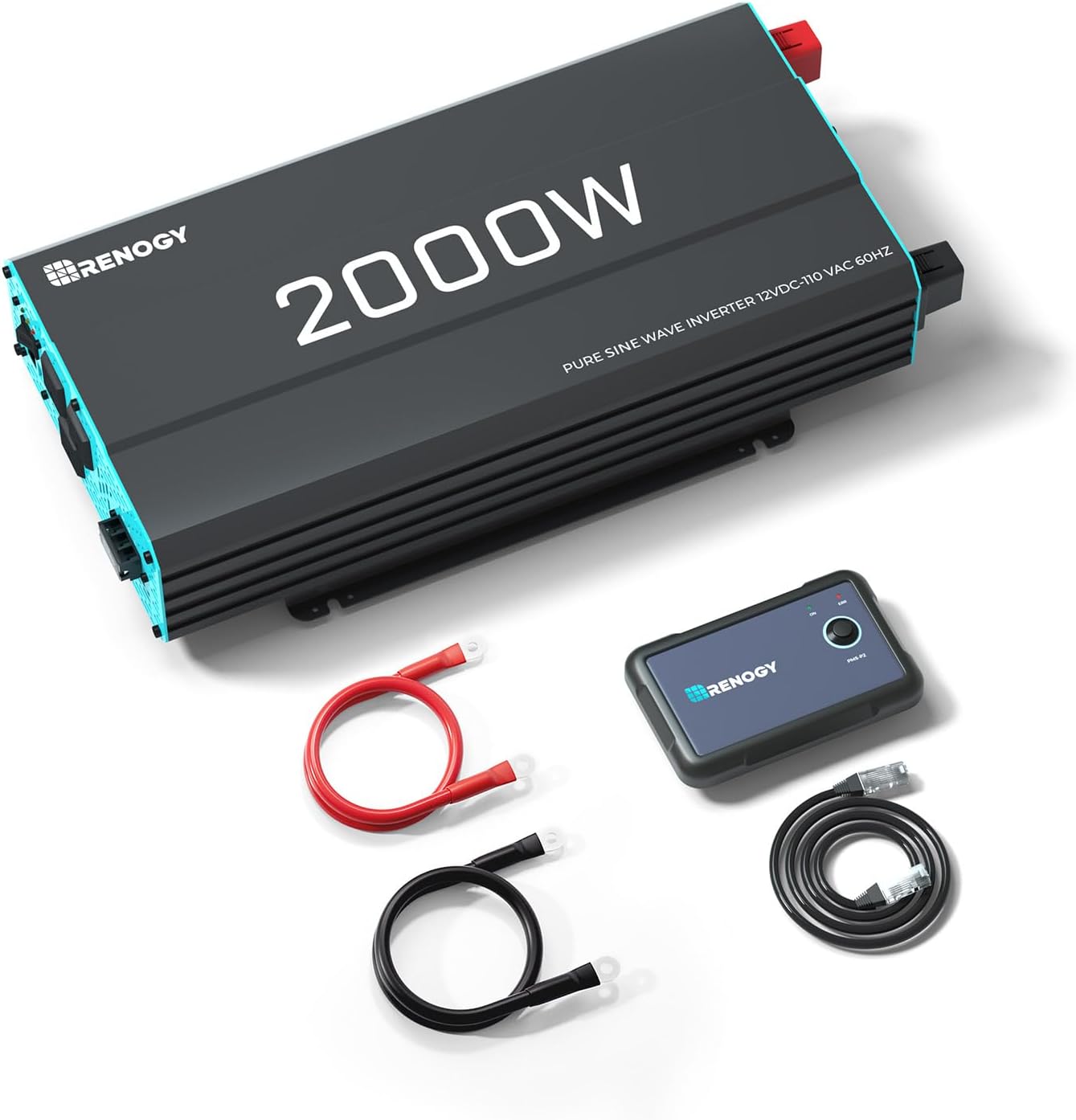
Renogy Inverter P2 2000W Pure Sine Wave
Pure sine, hardwire block and wired remote from a full solar ecosystem brand — the balanced default for DIY 12V builds
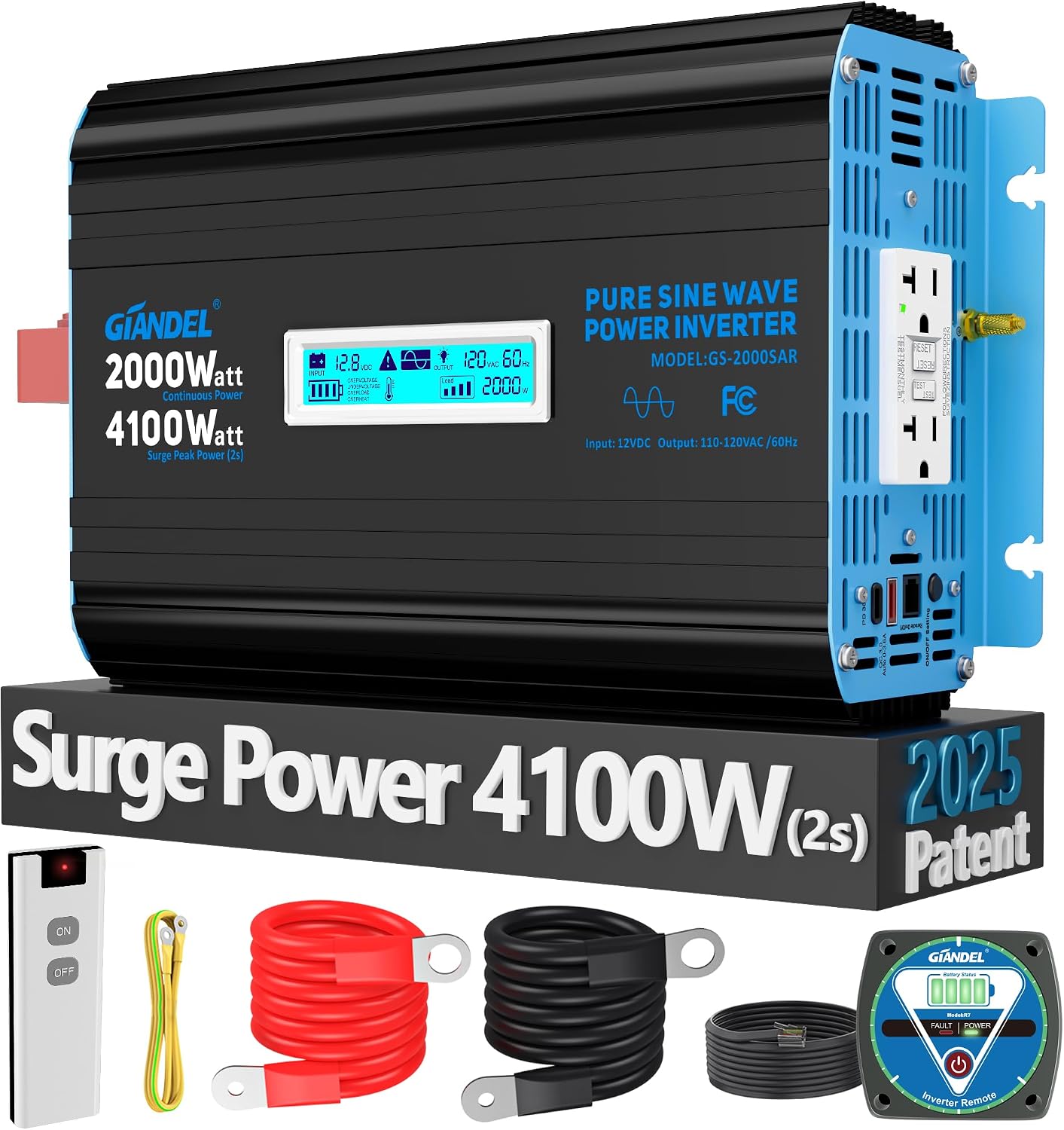
GIANDEL 2000W Pure Sine Wave
Pure sine plus a real LCD, GFCI outlets and USB-C fast charging — for buyers who want to see what the inverter is doing
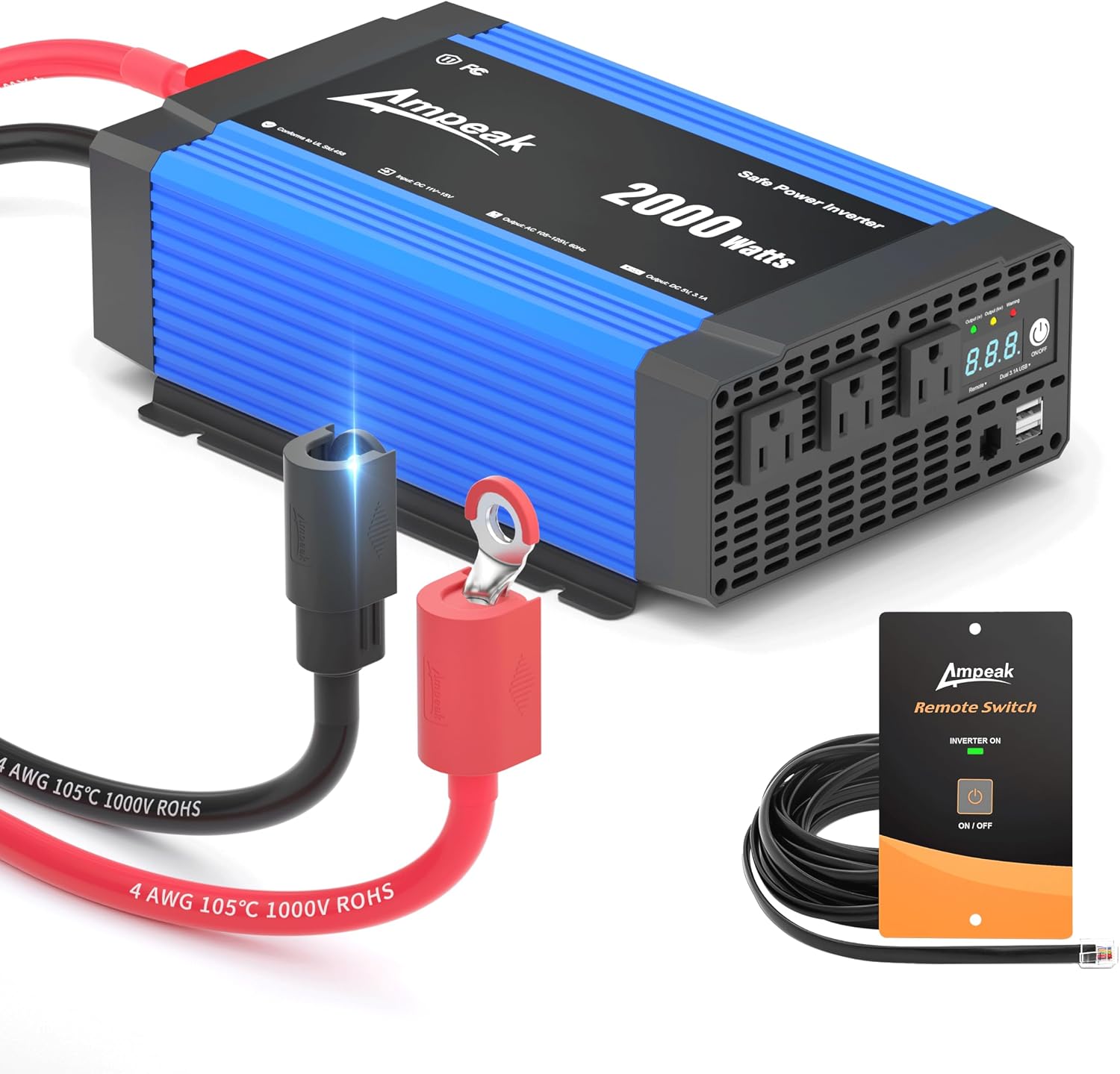
Ampeak 2000W Modified Sine Wave
Budget tier with 3 outlets and anti-spark cables — modified wave, so keep it to simple loads, not sensitive gear
Prices and availability may vary — tap any product to check the current listing.
What to Look For When Buying a Solar Inverter
Most inverter regret isn’t about the headline number. It’s about the second-order stuff — cable thickness, idle draw, a remote you actually use — that only shows up after the box is bolted down. Six factors decide whether a 2000W unit feels like a bargain or a headache.
Waveform: pure sine versus modified sine. This is the decision everything else hangs on. Pure sine output matches the shape of household AC, so fridge compressors start cleanly, microwaves cook at something like their rated power, and variable-speed tools behave. CPAP-type devices and some laptop bricks are pickier still — a few makers flatly specify pure sine, and that’s not marketing fluff. Modified sine is a stepped approximation. Simple resistive loads don’t care: a kettle element, basic lights, a cheap phone charger will usually just get on with it. Motors are where it gets ugly, since they can run hotter and louder, and audio gear may hum through every recording. The Ampeak lives on the forgiving side of that line; the Renogy P2 and the GIANDEL don’t have to apologise for their output at all.
Continuous watts, not surge watts. A 2000W rating should mean 2000W all day, and that’s the number to plan around. Surge capacity exists for one job — the brief spike when a compressor or motor starts — and it lasts seconds, not minutes. Treating surge as extra headroom is how people end up with an inverter that alarms during breakfast. Sensible planning is boring: add up what might plausibly run at once, then leave a cushion of roughly a quarter to a third underneath the continuous rating. Headroom runs cooler. It also runs quieter, because fans on units in this class — the Renogy included — can get properly audible under sustained heavy load.
Battery math, cables, and fusing. Here’s the part brochures skip. A 2000W load on a 12V system pulls somewhere in the region of 165–185 amps once conversion losses are counted, and that is a lot of current to move through copper. A single small 100Ah battery simply isn’t built to sustain that for long — voltage sags, the low-voltage alarm chirps, the inverter shuts down to protect itself. Short, thick cables aren’t an optional upgrade at this power level; they’re part of the purchase price, along with a properly rated fuse close to the battery. Note that the cables supplied in the box with units like the Renogy P2 tend to be short, so budget for thicker aftermarket leads if your battery sits more than a short run away. Anyone sketching a bank from scratch should look at how solar batteries pair up in parallel before falling in love with an inverter.
Idle draw and efficiency. An inverter eats power while doing absolutely nothing. Left switched on, it sips from the bank hour after hour, converting a slice of your stored energy into a little warmth and a spinning fan. On a big bank you won’t notice. On a modest one, overnight idle draw can quietly eat the margin you were counting on for the fridge. Efficiency under load matters too, but idle behaviour is the sneakier cost because it runs 24 hours a day if you let it. Switch the unit off when AC isn’t needed, or use the remote — that’s what it’s for.
Outlets, hardwire blocks, remotes, and displays. Daily life with an inverter is mostly small interactions. The Renogy P2 gives you a wired remote in the box and a hardwire terminal block, which suits a permanent RV install where the AC output feeds the van’s own sockets. Its compromises are plain though: there’s no built-in display on the unit itself, the remote is fairly basic on/off control, and its single low-power USB port feels dated next to modern phones. The GIANDEL 2000W answers those exact gripes with a proper LCD on the unit showing input and output, GFCI outlets, USB-C fast charging alongside USB-A, plus both a wired monitor remote and a small wireless on/off remote. Nicer to live with, day to day. The trade-off is a bulkier, heavier body. The Ampeak keeps things simpler — three AC outlets and a wired remote switch — which is honestly enough if the inverter lives in a truck bed and only comes out occasionally.
Protections and listings. Low-voltage cutoff sounds like a spec-sheet footnote until you price a lithium bank. A cutoff that shuts the inverter down before the battery is dragged too low protects the most expensive component in the whole system. Over-temperature and overload protection matter for the same unglamorous reason. GFCI outlets, fitted to the GIANDEL, earn their keep at damp campsites where faults and wet ground mix badly. Listings deserve a glance too — the Renogy P2 comes from an ETL-listed lineage and from a brand that also sells panels, charge controllers, and batteries under one roof, so support and matching parts tend to be easier. The GIANDEL has less of that single-brand ecosystem behind it, which won’t bother everyone, but it’s a real difference if you like one manual, one app, one support desk.
How to Match a Solar Inverter to Your Situation
The van or RV builder with a house battery. You’ve got a fixed bank, roof panels, a fridge that never really rests, and a laptop that pays for the trip. Cooking happens — a small microwave, maybe an induction hob used carefully and briefly. This is the natural home of the Renogy P2: hardwired in, remote by the bed, pure sine feeding everything without a second thought. A proper solar inverter sizing guide is worth ten minutes before ordering, because this persona is exactly the one who later adds one load too many.
The truck or tent camper. Your needs are occasional. A small 12V fridge for long weekends, tool batteries topped up at camp, maybe a camera charger and a light or two. A 2000W inverter is arguably more than you need, and the Ampeak’s budget modified sine output will handle lights and basic chargers without complaint. Just don’t talk yourself into running delicate gear off it later. Scope creep is real.
The cabin or off-grid shed owner. You’re weighing a proper inverter-plus-battery build against one big all-in-one box. The DIY route wins on repairability and expansion — swap a tired battery, keep the inverter. The all-in-one wins on setup time and tidiness, and loses the day one component fails out of warranty. If the shed will grow, build separates. If it won’t, be honest about that.
Three Ways to Get AC Power Off-Grid
| Type/Tier | Best For | Price Tier | Key Feature | Watch-Out |
|---|---|---|---|---|
| 2000W pure sine standalone inverter (Renogy/GIANDEL class) | Permanent DIY 12V builds in vans, RVs, and cabins | Mid-range | Clean output plus hardwire options, matched to your own battery bank | You still need batteries, cabling, fusing, and a charge source |
| 2000W modified sine budget inverter (Ampeak class) | Occasional simple loads where budget rules | Budget | Three AC outlets and anti-spark battery cable covers | Motors can run hot and buzz; wrong call for sensitive devices |
| All-in-one portable power station | Renters, beginners, and anyone without a battery bank | Mid-range to premium | Battery, inverter, and charging in one carryable box | Less repairable, and capacity is fixed the day you buy it |
A standalone pure sine inverter in this class is the builder’s choice, because the Renogy P2 or the GIANDEL can be wired into a system that grows panel by panel and battery by battery. A modified sine unit like the Ampeak makes sense as a cheap, occasional tool for simple loads, provided you accept its limits with motors and sensitive electronics from the start. A portable power station removes the wiring, fusing, and battery shopping entirely, which is why it’s the honest recommendation for anyone starting from zero.
Running a Fridge and Small Kitchen Loads
Fridge nameplates lie by omission. A camping fridge might sip a modest amount while its compressor runs, then draw several times that for a blink at startup — and that blink is what trips undersized or modified sine inverters. Once it’s cycling normally, the picture calms down. The compressor runs in bursts, rests between them, and the average draw across an hour lands far below the scary startup figure.
Kitchens are where discipline matters. A microwave and a kettle together will push a 2000W inverter past comfortable territory, especially with the fridge deciding that exact moment to start. Run one heavy load at a time. It takes an extra three minutes. Cheaper than a bigger inverter, too.
When 2000W Is the Wrong Size
Plenty of setups never touch 2000W. If your AC loads top out around a laptop, a small fridge, chargers, and lights — call it the 1000W class in practice — a smaller inverter idles more efficiently and costs less, while a 2000W unit just burns extra standby power for capacity you never call on. Bigger isn’t free. It charges rent overnight.
At the other end, some loads simply outgrow this class. Roof air conditioning, big workshop tools with heavy startup surges, or a household-style kitchen running several appliances at once will push past what a single 2000W unit and a 12V bank can sensibly deliver. And whatever the inverter spends, something has to put back — the charging side needs to refill the bank during daylight, which is where a properly sized MPPT solar charge controller stops being an accessory and becomes half the system.
Common Mistakes People Make With a First Inverter
Thin or long DC cables. Voltage drop is the silent killer here. Cable that’s too skinny, or a run that’s longer than it needs to be, starves the inverter under load, so it alarms and shuts down even though the battery is fine. Keep runs short. Go thicker than feels necessary.
No fuse on the positive run. A short circuit on an unfused cable connected to a large lithium bank is not a small event. Fit a correctly rated fuse close to the battery terminal. Non-negotiable, this one.
Mounting it in a sealed box. Inverters make heat, and fans need air to move. Tucked into a sealed compartment under a bed, a unit will throttle or shut down on the warmest afternoon of the trip — which is, of course, when the fridge matters most.
Sizing by surge watts. The surge figure is a couple of seconds of grace for motor startup, and the GIANDEL’s headline peak is a very short 2-second figure in that mould. Plan around continuous watts. Always.
Leaving it switched on overnight. Idle draw doesn’t feel like much at 9 p.m. By morning it’s taken a real bite out of a small bank. Use the remote, or just switch the thing off.
Why, How, and What
Why does waveform matter if the watts match?
Because watts describe quantity, not shape. Two inverters can both deliver 2000W while feeding your gear noticeably different power — one a smooth sine wave like household AC, the other a stepped approximation. Motors, compressors, and some power supplies react to that shape, running hotter, buzzing, or refusing to start. Resistive loads mostly shrug. The loads decide whether waveform matters, not the wattage badge.
How long will a 100Ah battery actually run a 2000W inverter?
Nowhere near as long as the napkin math suggests. At full 2000W load, a single 100Ah 12V battery is being asked for current it can’t comfortably sustain, so voltage sag and the inverter’s low-voltage cutoff will end the experiment early — think minutes of true full load, not an hour of it. At lighter, realistic loads the same battery lasts far longer. Runtime is set by the load, not the inverter’s badge.
What should you check before hardwiring an inverter into an RV?
Confirm the cable gauge and fuse rating suit the full continuous current, and that the run from battery to inverter is as short as you can make it. Check the mounting spot has real airflow, not a sealed void. Make sure the AC side is wired so the inverter and any shore-power inlet can never feed the same circuit at once. Then test with a modest load before trusting it with the fridge overnight.
Questions People Ask Before Buying
Real buyer questions, straight answers
Is a pure sine wave solar inverter worth it over modified sine?
For most camping and RV loads, yes — pure sine is worth paying for because it runs fridge compressors, microwaves, laptop bricks and medical-type devices cleanly without extra heat, buzzing or random shutdowns, while modified sine only really makes sense for cheap, simple, resistive loads. The exception is a genuinely simple setup. If the inverter will only ever feed lights, a basic charger, or a work light on a job site, the Ampeak’s modified output does the job and the saving is real money. Problems start when a budget inverter bought for simple loads quietly inherits a fridge, a CPAP-type device, or audio gear six months later. Buy for the loads you’ll actually own next year.
Can a 2000W inverter run a camping fridge and a microwave?
Yes, a 2000W inverter can usually run a camping fridge and a microwave, but not carelessly — the fridge should already be cycling, the microwave should run alone, and the battery bank and cabling have to be big enough to handle the combined surge and sustained draw. Sequence is everything. Let the fridge settle into its cycle, then run the microwave by itself, then let things calm down again. A small microwave near the top of this class leaves little spare capacity, so a fridge compressor starting at the wrong second can still trip the unit. Pure sine helps here too — microwaves on modified sine often cook slowly and complain audibly while doing it.
How many batteries do I need for a 2000W inverter?
Plan on at least two decent-sized lithium batteries for anything beyond short bursts, because a 2000W inverter at full load pulls current so hard from a 12V bank that a single 100Ah battery will sag, shut down early, or give you far less usable runtime than the label math suggests. Two batteries in parallel halve the strain on each one and give the cables a fairer fight. That said, battery count follows the load, not the inverter. Someone who rarely exceeds a few hundred watts doesn’t need a huge bank just because the inverter could, in theory, ask for more.
Renogy P2 or GIANDEL 2000W — which one should I get?
Choose the Renogy P2 if you want the cleaner long-term solar build and a wider ecosystem behind it, and choose the GIANDEL 2000W if the built-in display, GFCI outlets and proper USB-C fast charging matter more to you than staying inside one brand’s family of panels, controllers and batteries. Put bluntly, the Renogy suits a permanent install — hardwired, tucked away, run from its wired remote, matched with matching kit over time. The GIANDEL suits someone who’ll actually look at the unit, plug things straight into it, and charge modern devices from it daily. Neither answer is wrong. They are aimed at slightly different garages.
Should I buy an inverter and battery, or just get a portable power station instead?
If you don’t already own a battery bank, charge controller and panels, a portable power station is usually the smarter buy, because a standalone inverter only converts power and still leaves you to buy, wire, fuse and maintain every other piece of the system yourself before it does anything useful. The DIY route pulls ahead once a build becomes permanent or expandable — a van conversion, a cabin, a shed you’ll keep adding panels to. Repairs are cheaper, parts are swappable, and capacity grows in steps. Renting, travelling light, or just wanting AC power this weekend? Take the all-in-one and don’t feel bad about it.
Frequently Asked Questions
What size cable and fuse does a 2000W inverter need?
Short answer: thicker than you think, fused close to the battery. At 12V the current is high enough that cable gauge, run length, and fuse rating have to be matched to the inverter maker’s guidance for your exact install. Undersized cable causes voltage drop and shutdowns long before it causes anything more dramatic.
Can a solar inverter charge directly from solar panels?
No. An inverter only converts DC battery power into AC; it has no solar input and no way to manage panel voltage on its own. Panels feed a charge controller, the controller charges the battery, and the inverter draws from the battery. Skip a step and nothing works — or something gets damaged.
Will an inverter drain my battery when it’s just sitting on?
Yes, slowly. Every inverter draws a small amount of power at idle, and left switched on for days it can take a noticeable chunk out of a modest bank. Bigger units tend to sip more. Switch it off, or use the remote, when AC power isn’t actually needed.
Can I run a 2000W inverter from a car battery with the engine off?
Briefly, for small loads, yes — but it’s a poor plan at anything near full power. A starter battery isn’t designed for deep discharge, and a 2000W inverter can drag it down to no-start territory surprisingly fast. A separate leisure or lithium bank exists precisely so the engine still turns over in the morning.
Does a 2000W inverter work with lithium LiFePO4 batteries?
Yes, and the pairing is common, since lithium banks handle high discharge rates better than most lead-acid setups and hold their voltage under load. Check the inverter’s low-voltage cutoff suits lithium rather than assuming the default is ideal. The battery’s own management system is the last line of protection, not the plan.
Can I plug a power strip into an inverter and run several loads at once?
You can, as long as the combined load stays comfortably under the continuous rating and the strip itself is decent quality. The strip doesn’t add capacity; it just makes it easier to overload things without noticing. Add the loads up honestly, including what the fridge draws when its compressor kicks in.
Key Takeaways
Waveform decides compatibility — pure sine for compressors, microwaves, and sensitive gear; modified sine only for simple resistive loads → choose the waveform before the wattage
Plan every load against continuous watts, never the surge figure → surge is seconds of startup grace, nothing more
A 2000W load pulls roughly 165–185A from a 12V bank, so batteries, thick cables, and a fuse are part of the real purchase price → budget for the whole system
The Renogy P2 suits permanent DIY builds that value a hardwire block and a wider solar ecosystem → its slow USB and basic remote are livable trade-offs there
The GIANDEL 2000W suits hands-on daily use, with its display, GFCI outlets, and USB-C fast charging → in exchange for a bulkier body and less ecosystem behind it
No battery bank yet means no standalone inverter yet → an all-in-one power station is the honest starting point
Decision Tree: Which Inverter Fits Your Build?
Permanent van or RV build with a house battery and mixed loads → Renogy Inverter P2 2000W Pure Sine Wave Inverter
Countertop-style daily use, want a display and fast USB-C charging → GIANDEL 2000W Pure Sine Wave Inverter
Occasional lights, basic chargers, and simple tools on a tight budget → Ampeak 2000W Modified Sine Wave Inverter
No battery bank, no panels, and no interest in wiring anything → skip the standalone inverter and buy a portable power station
Loads regularly above 2000W, or roof AC on the wish list → step up a class, or rethink the system voltage entirely
Final Recommendation
For a DIY 12V build that will live in a van, RV, or cabin for years, the Renogy P2 is the one to build around — clean pure sine output, a hardwire block for a tidy install, and a brand ecosystem that makes the next panel or controller purchase painless. Accept its dated USB port, its basic remote, and the cost of proper cables as part of the deal. The GIANDEL 2000W is the better pick if the inverter will sit within arm’s reach and get used like an appliance, display and all.
And the Ampeak? It’s a fair budget tool for simple loads, bought with open eyes — nothing more, and it shouldn’t be asked to be more. Anyone without a battery bank should skip all three for now. Buy the power station, enjoy the trip, and come back to inverters when a permanent build is actually on the table.
Top 3 Solar Inverters for Camping and RV
Two pure sine picks and one honest budget contrast — waveform is the difference that matters most.
Renogy Inverter P2 2000W Pure Sine Wave
Pure sine, hardwire block and wired remote from a full solar ecosystem brand — the balanced default for DIY 12V builds
GIANDEL 2000W Pure Sine Wave
Pure sine plus a real LCD, GFCI outlets and USB-C fast charging — for buyers who want to see what the inverter is doing
Ampeak 2000W Modified Sine Wave
Budget tier with 3 outlets and anti-spark cables — modified wave, so keep it to simple loads, not sensitive gear
Prices and availability may vary — tap any product to check the current listing.
Affiliate Disclosure: This article contains affiliate links. If you buy through one of these links, we may earn a commission at no extra cost to you.