This site contains affiliate links. We may earn a commission on qualifying purchases.
Every June I run the same small ritual. The monitoring app lets you stack one month against the same month from earlier years, so I put this June next to the June from three summers ago and try to decide whether my roof is dying. This year the gap sat a little under 4%. Panels lose output every year; that part is in the paperwork, in the fine print nobody frames. What the paperwork never separates is how much of that 4% is the panels aging, how much is three summers of pollen and road dust baked onto the glass, and how much is me comparing a clear June against one with wildfire smoke in it. I could not split it. Still can’t. But chasing that gap is how I ended up with a clearer answer to how long solar panels last on a roof than any spec sheet ever gave me.
The 25-year figure on the box is a warranty definition wearing a lab coat. Large fleet studies — the national-lab degradation surveys that follow thousands of installed systems year after year — put the median loss for modern monocrystalline panels at roughly half a percent a year. Run that forward and a panel at year 25 is not dead. It is sitting near 88% of what it made on day one. The guarantees printed on residential panels promise 80 to 87% of nameplate output at year 25, which tells you the floor is drawn at the pessimistic edge of the data rather than the middle. Nothing falls off a cliff at year 25. The number is where the manufacturer’s legal obligation stops, and somewhere along the way it got promoted into a lifespan. It matters on the money side too, because those tail years of production are part of how much you can actually save with solar panels, and they arrive whether the warranty department is still answering the phone or not.
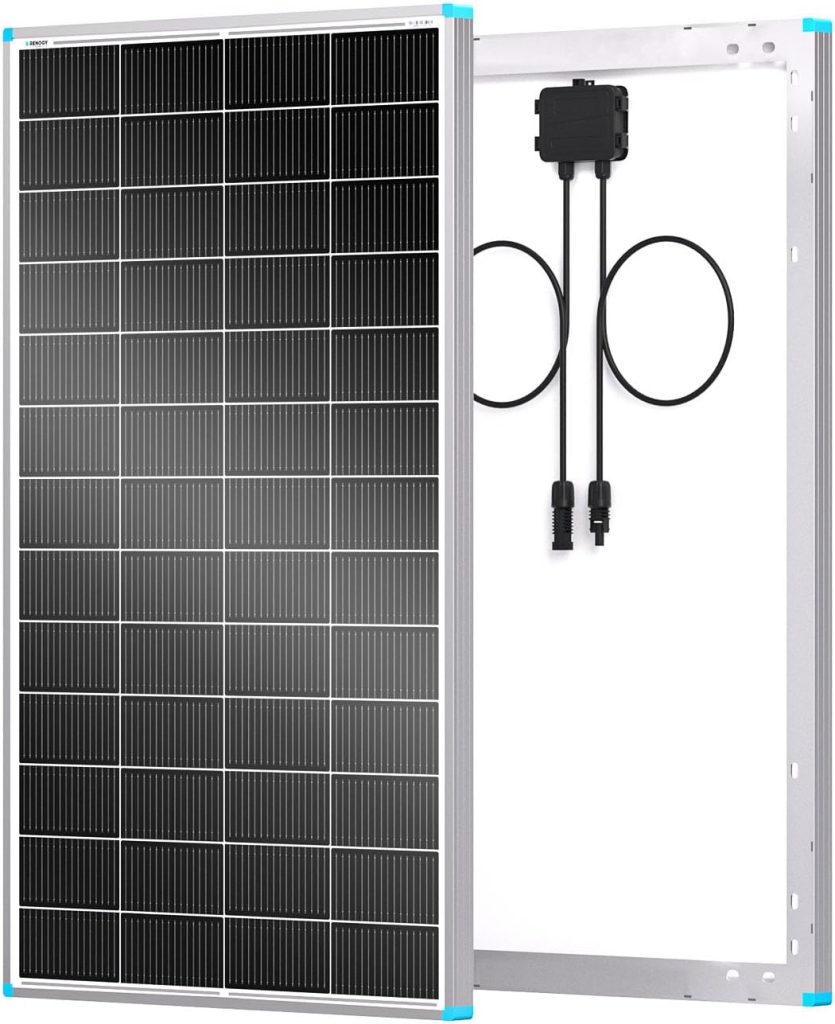
Some of the loss happens before your first electric bill shows a credit. Older P-type cells, the boron-doped kind that filled roofs for two decades, give up 1 to 3% of their output in the first days of sun exposure — light-induced degradation, a chemistry tax collected before the system has produced anything you can point at. N-type cells mostly skip it. The current generation of rigid panels prints the whole curve if you read the listing like a contract: one widely sold 200W N-type panel guarantees no more than 1% lost in year one and 0.4% a year after that, which compounds to roughly 90% still standing at year 25, while the performance guarantee printed in the same breath promises only 80%.
The floor is a legal number. Not a physics number.
What ends a panel’s life is rarely the panel
Ask what physically kills rooftop panels and the answers are embarrassingly unglamorous. Encapsulant browning and letting go, so moisture creeps in and corrodes the cell fingers from the edges inward. Backsheets cracking. A junction box filling with water it was sealed against in a factory test, not on your shingles. Connectors. Hot spots, where one shaded cell group stops generating and starts cooking instead, helped along by the current from the cells around it. The certification gauntlet these things pass — hail stones 25 millimeters across fired at 23 meters per second, a thousand hours at 85 degrees and 85% humidity — screens for exactly those deaths, which is why the industry keeps moving toward glass on both faces of the panel. Two sheets of glass give moisture fewer doors to walk through.
I should be honest about the limits of my own roof here. No panel up there has died on me. Not one. The failures I know firsthand are one inverter that tripped itself offline and a squirrel with opinions about cable insulation, so the death stories I trust come from warranty-claim patterns, and those skew dramatic by construction.
The part with an actual death date sits in the garage
The inverter is the component on a schedule. String inverters typically carry 10 to 12 years of warranty against the panels’ 25, and while plenty of them run past the paper, the honest 25-year budget for a rooftop system includes one inverter replacement that almost no sales quote itemizes. Microinverters close that gap by carrying 25-year warranties of their own, which is a chunk of what their higher price is actually buying. Not efficiency. Years. I used to pencil the swap in at year twelve like it was scheduled maintenance. Actually, no. A warranty expiring is the manufacturer leaving the room; it is not the hardware dying on cue, and treating it as a fixed cost at a fixed date overstates the bill for most houses. The battery question runs on a shorter clock than either — how long solar batteries last is its own curve, and a worse one — but the panels sit at the patient end of every timeline in the system.
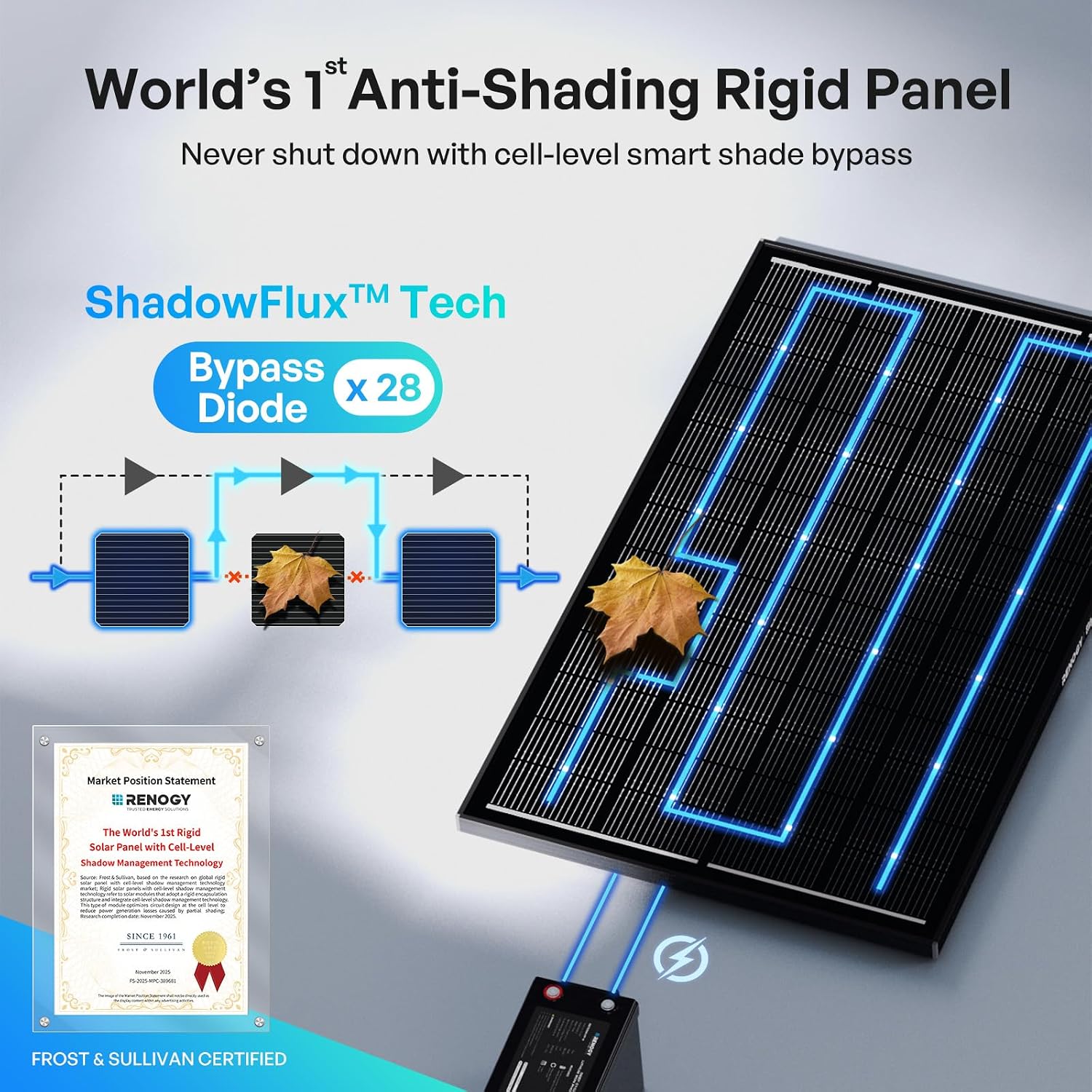
You can watch the longevity question in the ratings buyers leave behind, if you read distributions instead of averages. I pulled the three rigid panels in the box below from their marketplace listings on October 19, 2026 — 7,423 ratings between them. The long-running 200W N-type listing holds 4.6 stars across 7,024 ratings, with 82% five-star and a 4% one-star tail. The anti-shading model, 343 ratings in, shows 81% five-star and an 8% one-star tail. The budget bifacial pair, on just 56 ratings, also lands at 81% five-star with 5% at one star. The five-star share barely moves between the veteran listing and the newcomers. What moves is the angry tail, and it is fattest on the newest design — the panel with 28 bypass diodes built specifically to stop the hot spots that age modules early. Reading only the shape of that data, the risk in a modern panel concentrates in its first seasons rather than its fifteenth year. Early failures and infant production runs live in that tail. Slow decay, apparently, does not generate reviews.
Three Rigid Panels Sold on a 25-Year Promise
Replacement and expansion modules, judged by the degradation curve printed next to the price.
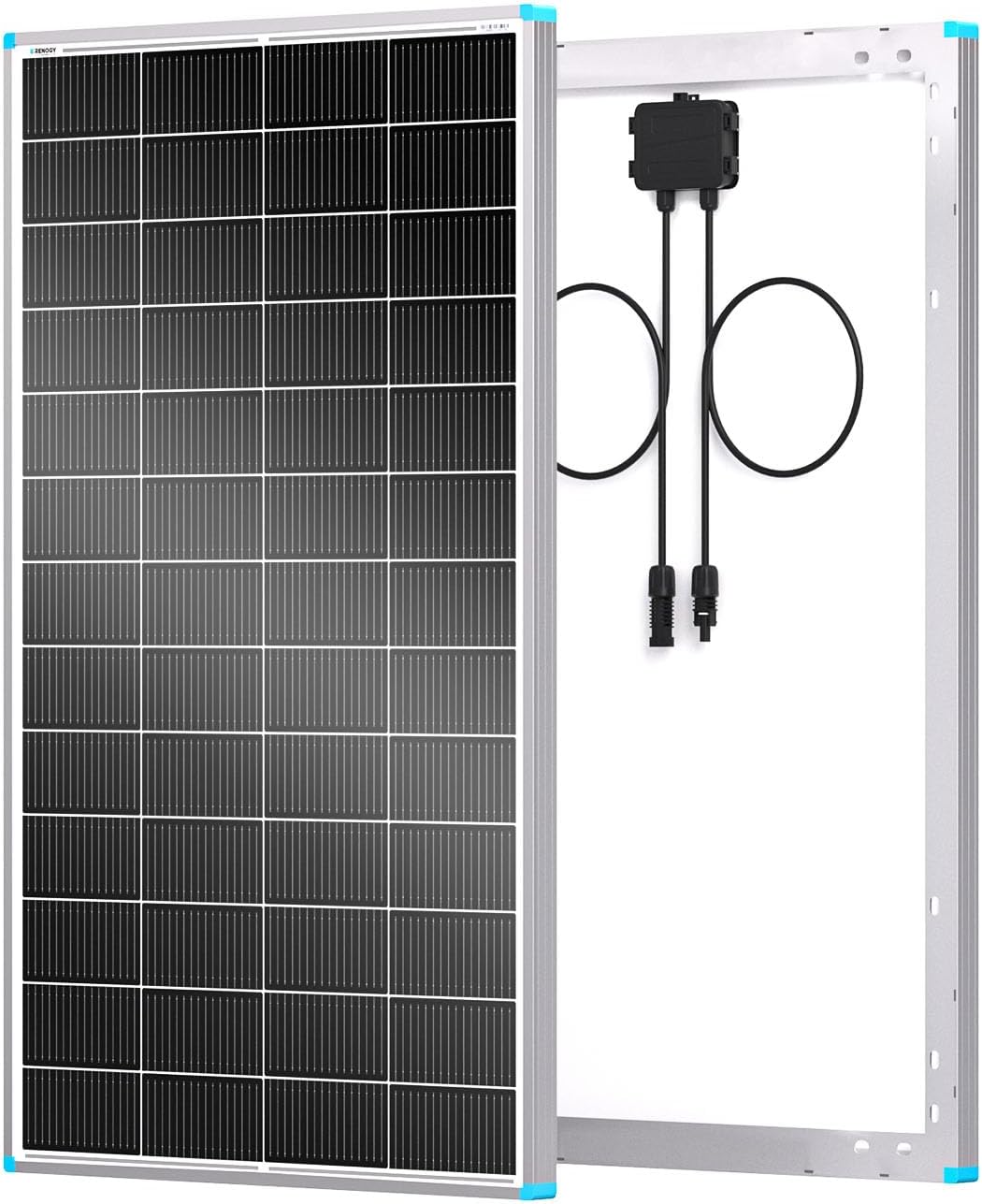
Renogy 200W N-Type
Guaranteed at no more than 1% lost in year one and 0.4% a year after, with a 10-year workmanship warranty and 80% output promised at year 25
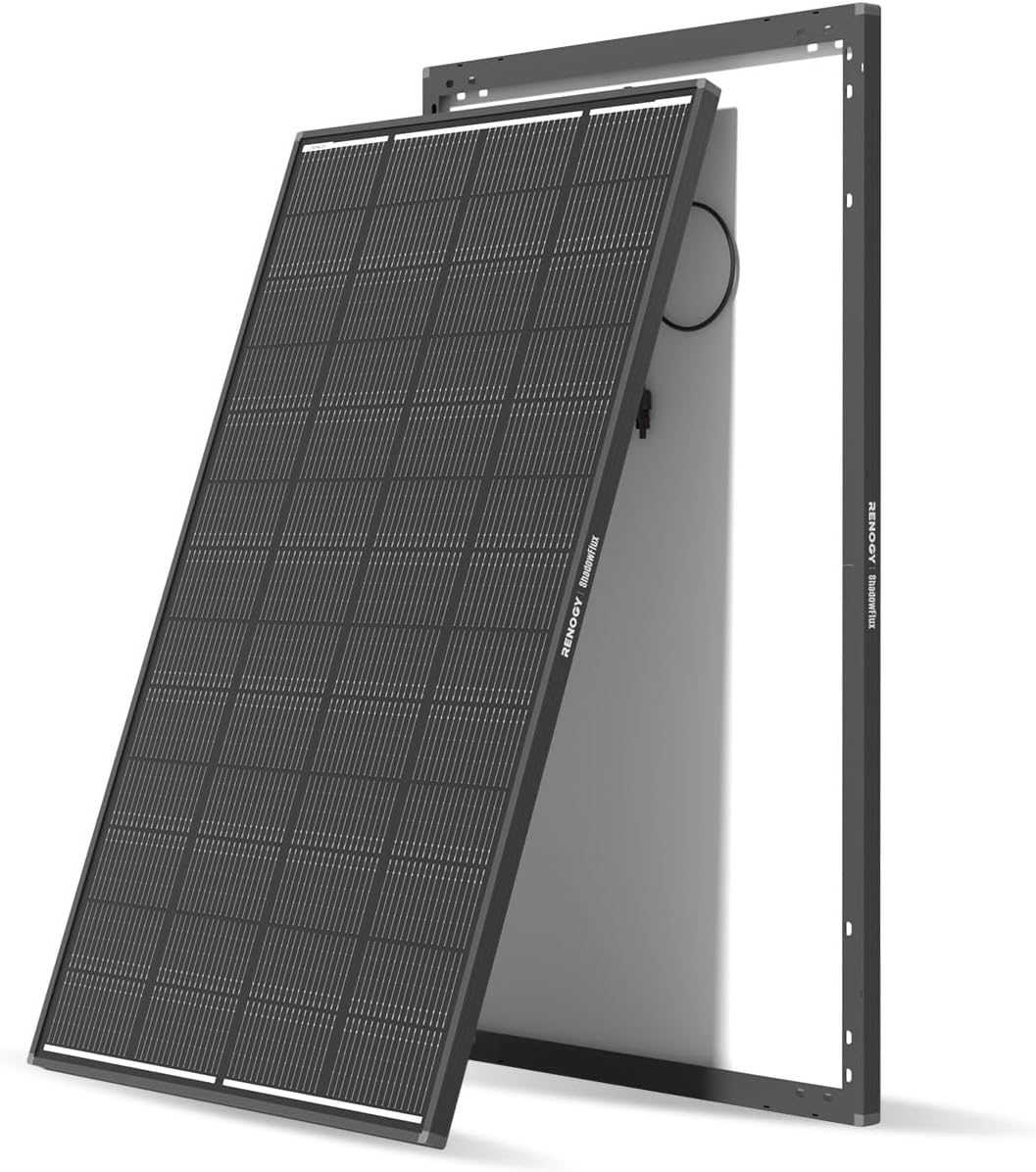
Renogy ShadowFlux 200W
Cell-level bypass diodes aimed at the hot spots that age modules early; 5-year workmanship cover, same 80%-at-25-years output promise
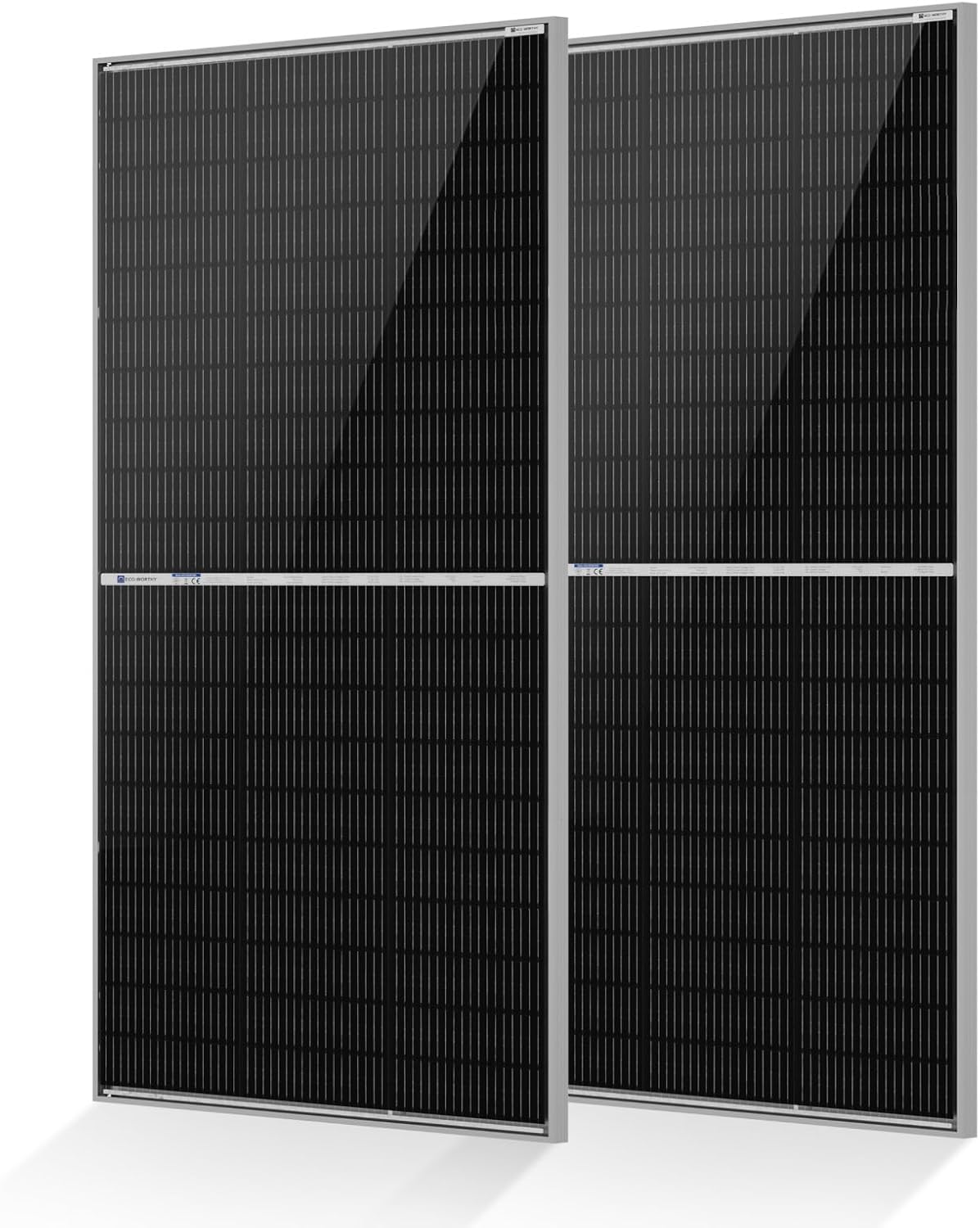
ECO-WORTHY 195W Bifacial (2-Pack)
Two N-type bifacial modules for roughly one brand-name panel’s money; the ratings file is still thin, so its longevity story is unwritten
This site contains affiliate links. We may earn a commission on qualifying purchases.
Questions That Only Show Up After the Panels Are Already Bolted Down
My app says production is down about 4% after three summers. Are the panels wearing out?
Partly, on schedule, and probably less than the number suggests. Three years at the median degradation rate is about 1.5%, so a 4% gap has roughly two and a half points of something else hiding in it, and the usual something else is dirt. Field studies in dry, dusty regions document soiling losses of 3 to 7% a year on panels nobody washes, and one bad smoke week can bend a whole month’s curve. Compare June to June rather than June to January, and look again after a hard rain. Per-panel numbers, if your system reports them, will show whether the loss is spread evenly or concentrated in one string. Even loss is weather and grime. One dark corner is hardware. My own 4% is still unaccounted for, for what that is worth — the app gives me totals, not culprits.
One panel in my string went dark. Are the rest about to follow?
Age is not contagious up there. Panels wired in series share a circuit, so one failed module — or its junction box, or a connector that finally corroded through — can drag a whole section down or take it dark, and from the ground that looks like the roof giving up in unison. It is almost always local. The cells in the neighboring panels did not get older because one box filled with water. This is also where panel architecture earns its keep: designs that route current around a dead or shaded cell group at the cell level keep one failure from taxing the whole string, which is the entire pitch of the anti-shading panel in the box above. Whether that pitch survives twenty summers is a question the ratings cannot answer yet. The design is too new. Ask again in 2031.
When the 25 years run out, am I buying a whole new array?
You are buying a decision, not a replacement. A healthy array at year 25 is still making somewhere around 85 to 90% of its first-year power by the manufacturers’ own degradation curves, and arrays from the 1990s are still on roofs producing at reduced output, which is a strange fate for a product with an expiration date. What does arrive is the rest of the bill: taking panels down costs labor either way, recycling runs about $15 to $30 a panel at commercial volumes, and landfill tipping fees of a dollar to five dollars are the cheap option only where they are still legal. If you replace or expand a section, size it from what size solar panel kit you actually need today instead of cloning nameplates from years ago — the wattage per panel has moved on, and the empty spaces on your roof will not match the old grid anyway.
Next June I will run the ritual again. The gap will be a little wider, some of it panels, some of it the pine leaning further into the southwest corner every year, and the app will decline to separate the two for me. The tree I can get priced. The panels I will just keep watching, one June at a time, which I suspect is what a 25-year lifespan actually looks like from underneath it.