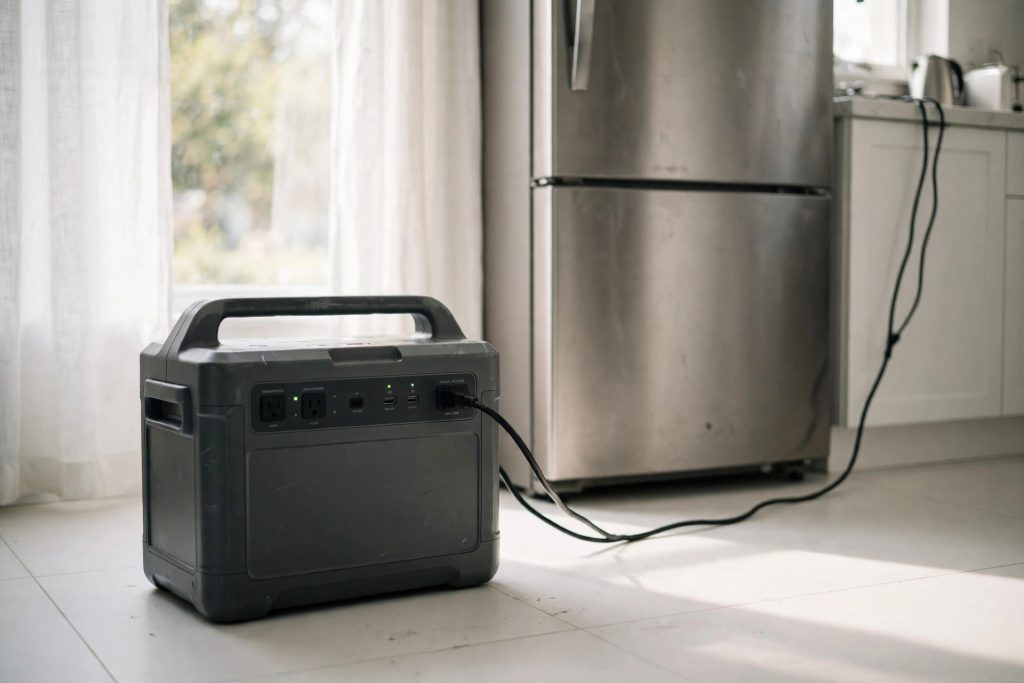
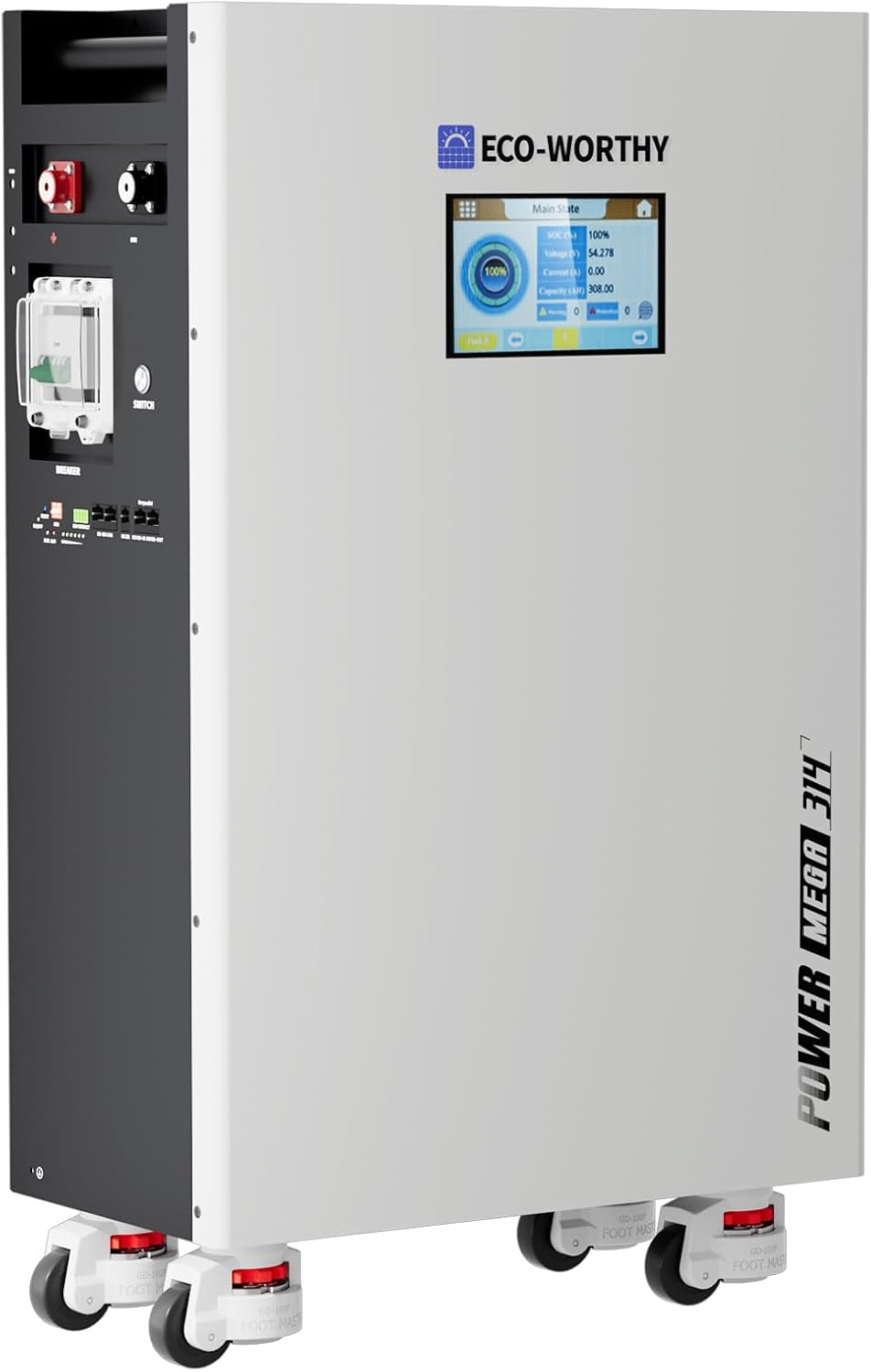
Before I understood what I was looking at, I thought the ECO-WORTHY Powermega was a power station. Big box, battery inside, electricity comes out — same idea as the portable units, just bigger. I even wondered why it cost so much less per kilowatt-hour than the fancy portable brands. What a deal, I thought. What a clever shopper I am.
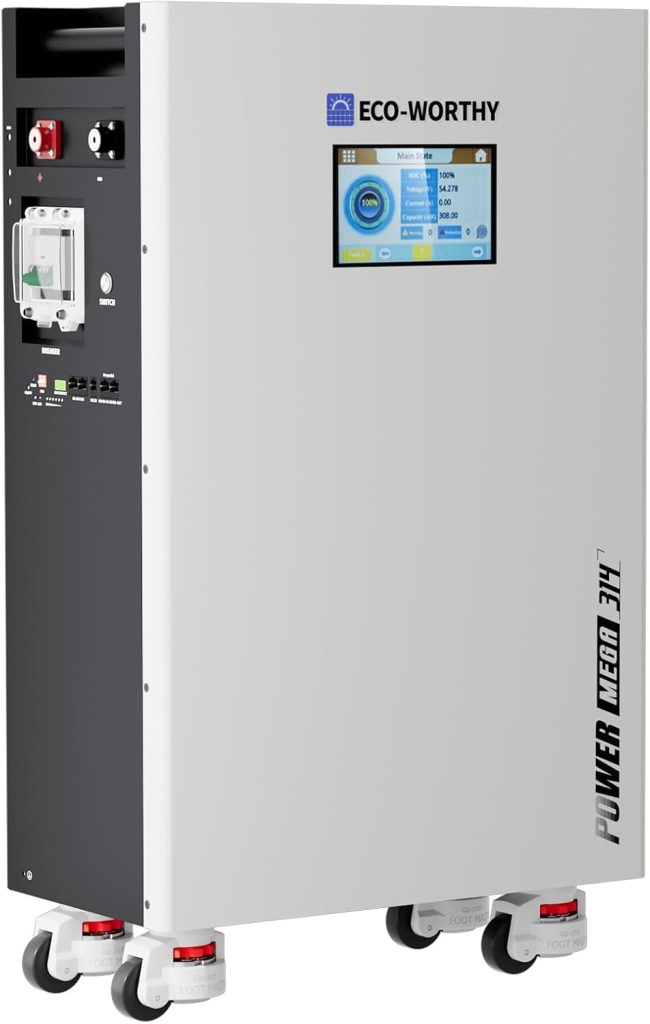
Then I read the manual. And the reversal arrived: this isn’t a power station at all. It’s a battery. Just a battery. Sixteen kilowatt-hours of lithium with terminals on top and absolutely no opinions about how the power gets in or out. No inverter. No outlets. No little screen with cheerful graphics. Buying this expecting a plug-and-play backup system is like buying an engine expecting a car.
The 16kWh number, properly understood
The arithmetic first, because it’s the honest part: 48 volts times 314 amp-hours is 15,072 watt-hours — call it 15 to 16kWh depending on whose nominal voltage you use. That’s enormous. That’s four to five times the portable power stations most people own. At my house’s critical-load draw of 500W, that’s 24+ hours of backup from the battery alone, before the inverter’s efficiency takes its cut. Realistically, paired with a good 48V hybrid inverter running at 93-95% efficiency, you’re looking at 14+ usable kilowatt-hours. Actually, that assumes you discharge to 10% — if your inverter’s cutoff is conservative, it’s 13. I keep quoting the generous version. The conservative version is the one that shows up during outages. That’s two days of careful outage living. That’s the number that made me sit up.
But — and this is the sentence that separates the buyers who are happy from the buyers who leave angry reviews — the battery is a component, not a system. To use it you need a 48V hybrid inverter (another $1,000 to $2,500), a proper battery disconnect and fusing, heavy-gauge cabling, and an electrician who knows what they’re doing with DC at these currents. Three hundred fourteen amp-hours at 48V is not a hobby current; a short circuit here is not a spark, it’s an event. The total system cost is roughly double the battery price by the time it’s installed and working. The per-kWh deal I was so smug about? Still good. Just not the miracle I imagined.
This is where I need to be blunt: if you want plug-and-play, buy a portable power station. This battery is for people building a system — DIY solar folks, off-grid cabins, homeowners adding storage to existing panels. It rewards competence and punishes improvisation. I say this as someone who is competent enough to know exactly where my competence ends, which is why an electrician did my install and I watched and learned and stayed out of the way.
This site contains affiliate links. We may earn a commission on qualifying purchases.
The category’s quiet truth about “server rack” batteries
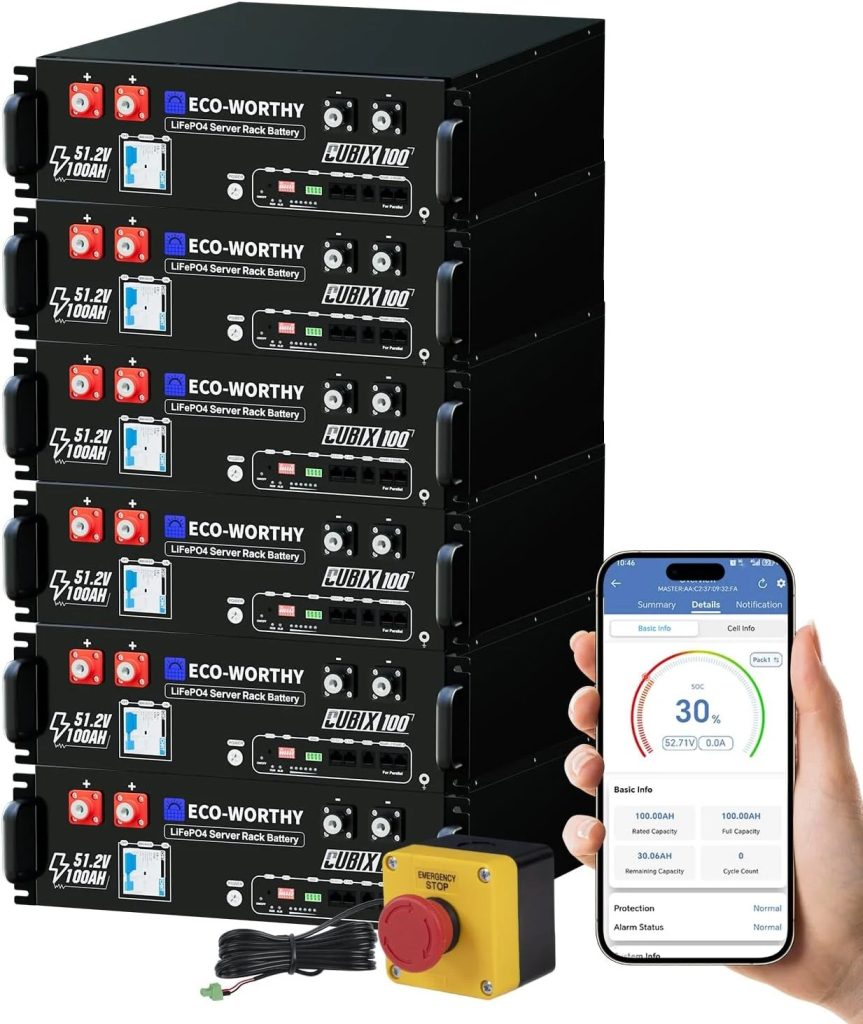
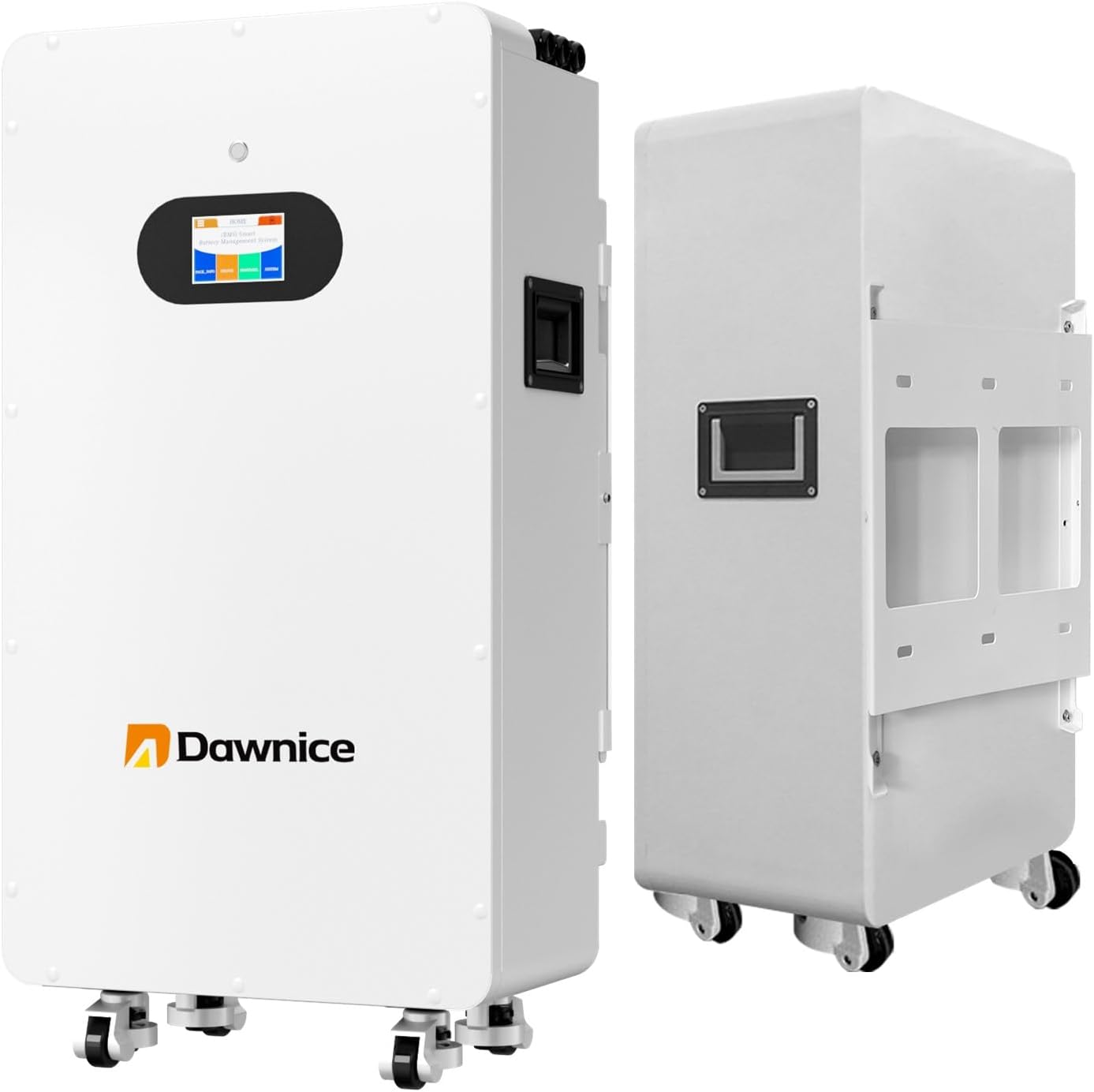
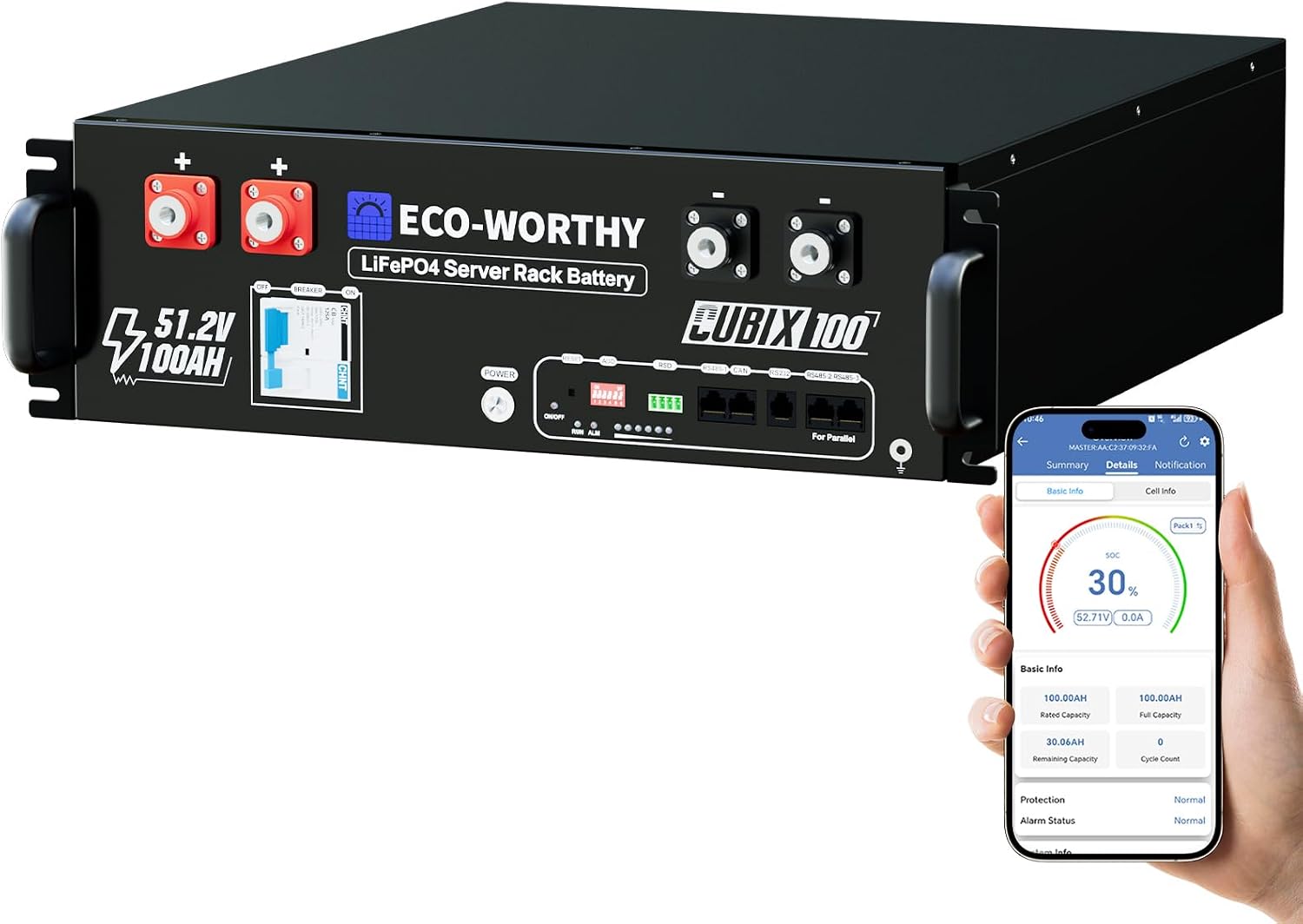
The Powermega belongs to the family everyone calls “server rack batteries” — the 48V LiFePO4 bricks that took over DIY solar in the last few years. The category’s quiet truth is that they’re all remarkably similar inside: Grade A or B LiFePO4 cells, a BMS with the usual protections, a metal case. The differences are in the BMS quality, the cell grading honesty, and whether the company answers emails when something goes wrong. ECO-WORTHY has been around long enough to have a track record, which in this corner of the market — flooded with brands that evaporate between ordering and delivery — counts for a lot.
The BMS deserves a paragraph because it’s the difference between a battery and a hazard. Overcharge protection, over-discharge protection, overcurrent, short circuit, temperature cutoff — the Powermega’s BMS has the standard suite, and the low-temperature charging cutoff matters more than people realize: charging LiFePO4 below freezing plates lithium onto the anode and permanently damages the cells. If your battery lives in an unheated garage in a cold climate, this protection isn’t a feature, it’s the only thing standing between you and a very expensive mistake. I haven’t tested the cutoff threshold myself — I’m not sacrificing a $3,000 battery to verify a spec — but its presence is non-negotiable for cold-climate installs.
Here’s my whole-category complaint: the DIY battery market has a documentation problem. The manuals are translated, the wiring diagrams are optimistic, and the critical details — torque specs for terminals, recommended charge profiles for your specific inverter, what the BMS is actually doing when it disconnects — live in forums and YouTube comments instead of the box. The community knowledge is excellent; the fact that you need it is not. A product this serious should ship with documentation this serious. It doesn’t. Budget a weekend of research alongside the electrician’s invoice.
Off-topic, leaving it here: the electrician who did my install told me he’d done eleven battery systems that year, and nine of the owners had bought the battery first and figured out the rest later — my exact trajectory. He said it the way doctors talk about WebMD diagnoses: fondly, tiredly. There’s something deeply human about buying the big exciting component first and discovering the boring expensive components later. We all do it. The inverter is the vegetables of the solar world. Nobody gets excited about vegetables until they’re hungry.
Expandability is the honest version here, unlike the portable-station theater: these 48V batteries parallel cleanly — same voltage, same chemistry, add another when you can afford it — and the economics actually work because you’re only buying cells, not another inverter and another chassis. Two of these is 30+kWh, which is genuine whole-home-backup territory. That’s the upgrade path that makes sense, and it’s the reason to start with a component system even though the initial learning curve is steeper.
If you’re planning a real system, the home battery storage guide is the strategic overview, and inverter sizing is the part most DIYers get wrong — the inverter determines your actual backup power, not the battery. For how long the cells last: thousands of cycles, but heat and calendar aging matter more than the cycle count for most homes.

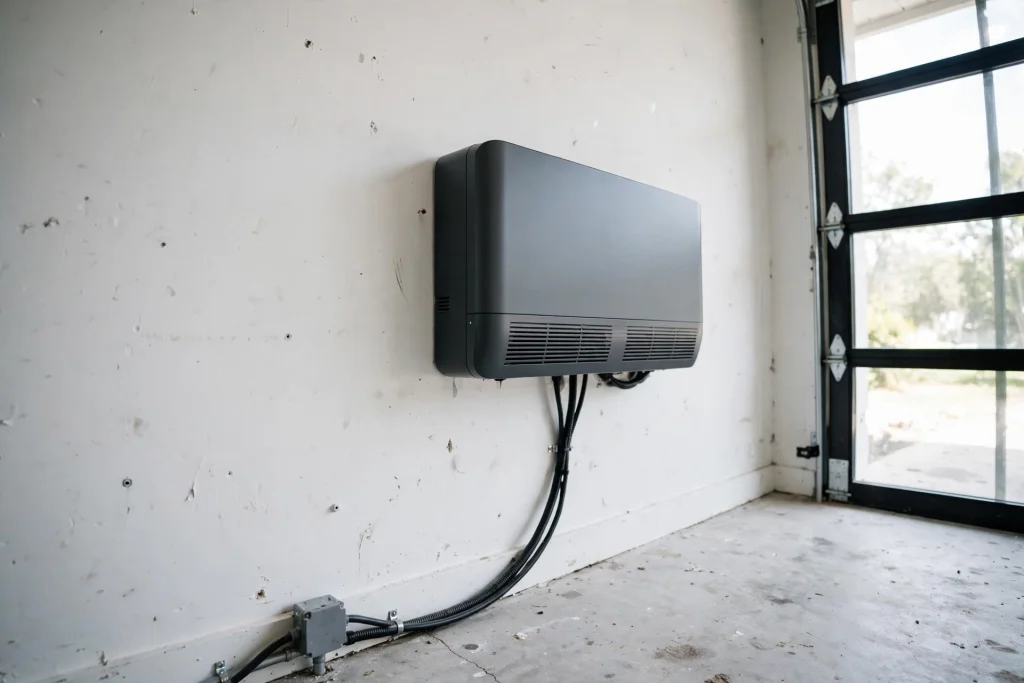
The Powermega is still the heart of my system, humming away in the garage — silently, because batteries are silent, which is the whole point. It took an inverter, an electrician, a weekend of research, and twice the battery’s price to become useful. I don’t regret it. But I think about that first afternoon, when I thought I’d found a miraculous deal on a power station, and I smile at the clever shopper I was. He knew the price of everything and the wiring of nothing. The battery taught him.