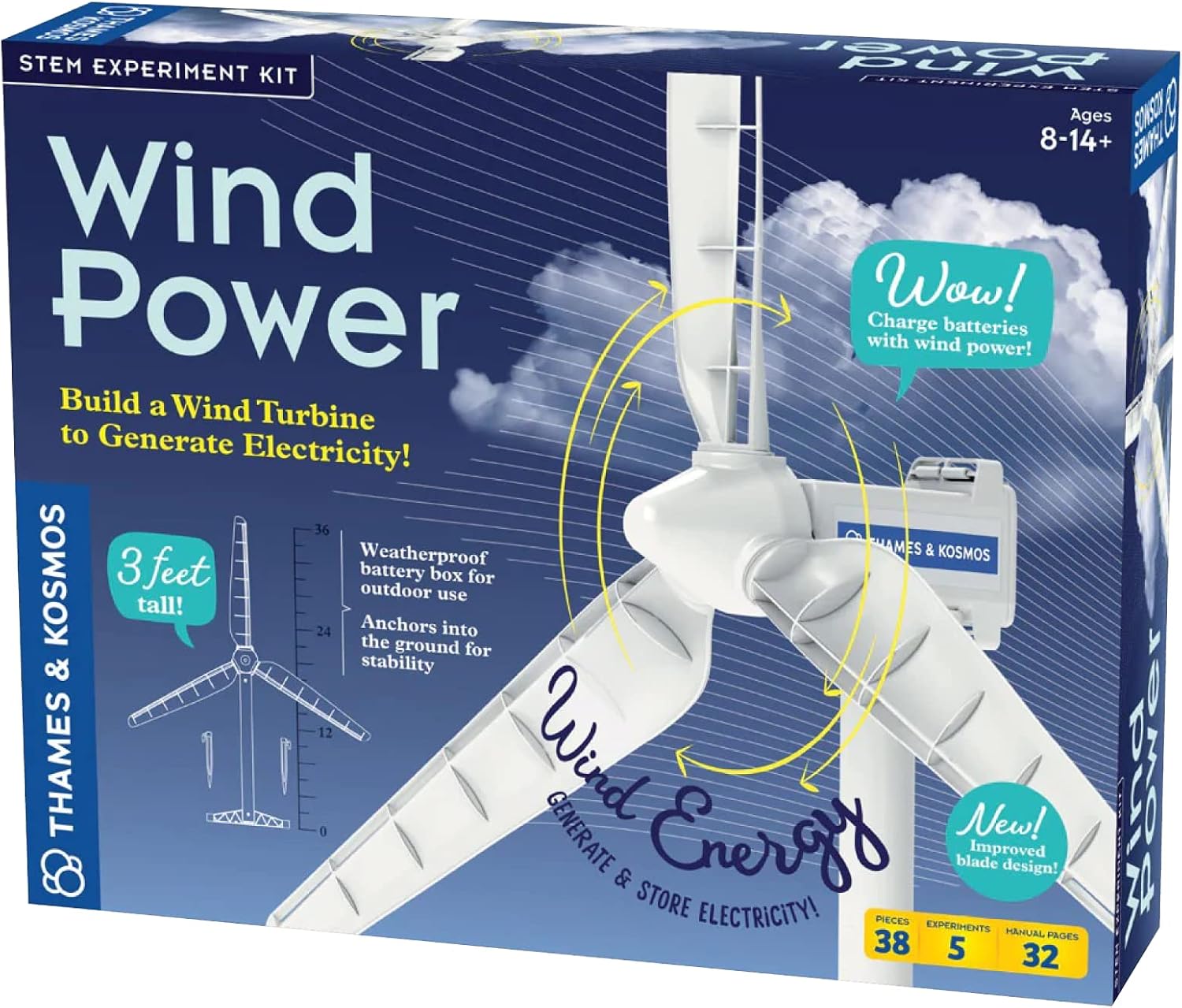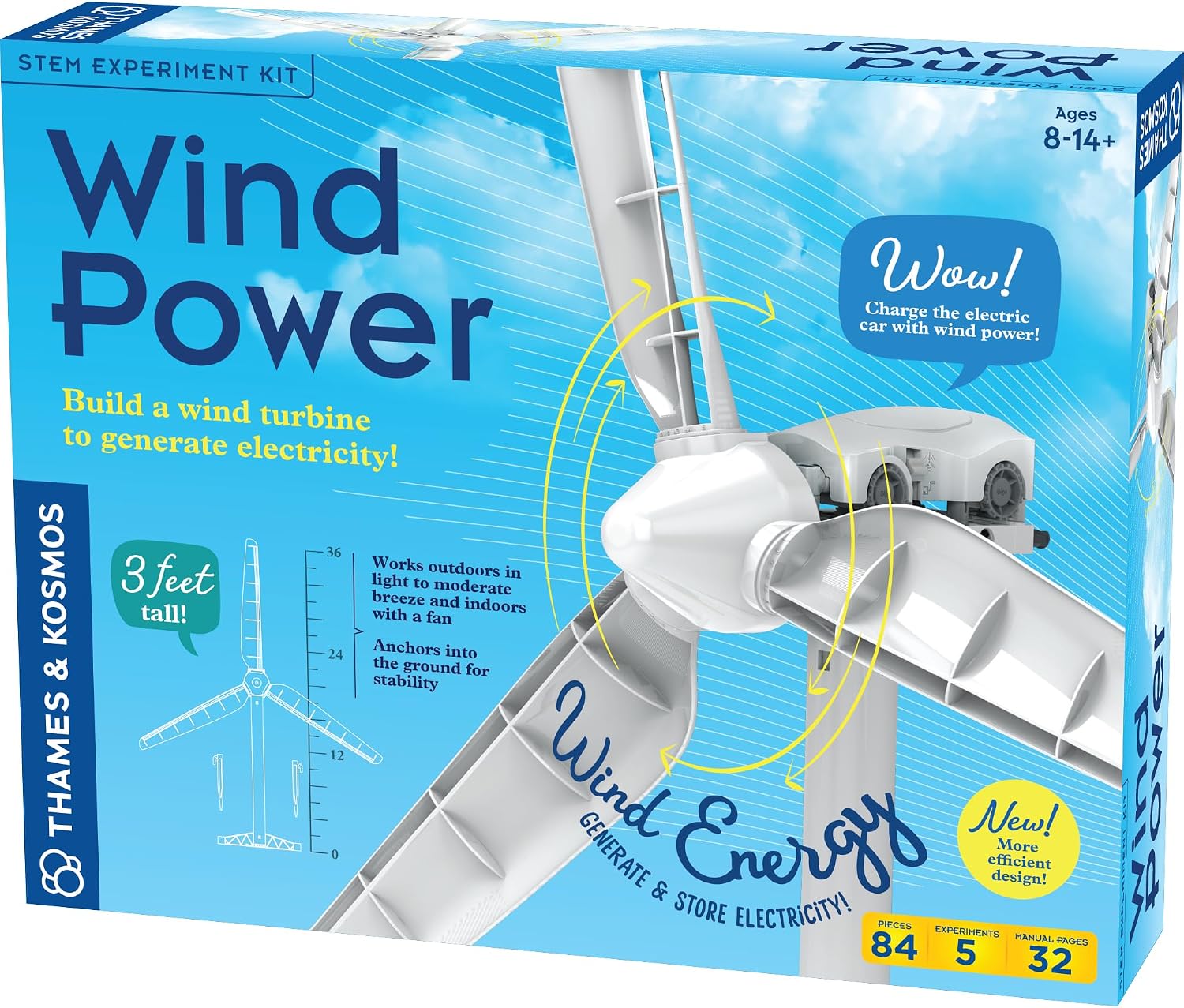
Evaluating the Thames & Kosmos Wind Power V5.0 STEM Experiment Kit: A Practical Look at This Wind Turbine Generator Kit
As a small wind energy consultant with over two decades of field experience, I’ve seen countless wind turbines, from micro units to substantial residential installations across China. It’s 2026, and the landscape of renewable wind energy is constantly evolving. My expertise lies in cutting through marketing claims to deliver practical, unbiased assessments of wind turbine generator kits and complete systems. Today, we’re examining the Thames & Kosmos Wind Power V5.0 STEM Experiment Kit, a product that frequently appears in searches for “wind turbine generator kit,” “small wind turbine for home,” and “portable wind turbine.” While it’s not a direct competitor to robust off-grid wind turbine solutions, understanding its real-world capabilities is crucial for anyone considering it.
My evaluation for this piece focuses on Real World Field Testing, ignoring manufacturer marketing claims and instead assessing actual power generation, low wind performance, high wind stability, noise level, vibration, and daily reliability. This perspective provides a grounded understanding of how a system performs when the rubber meets the road.
Understanding Small-Scale Wind Energy: Beyond the Spec Sheet
Many buyers search for a “small wind turbine for home” or a “residential wind turbine” hoping for significant energy independence. Others look for a “portable wind turbine” for remote charging or a “hybrid solar wind generator” for a robust energy mix. The Thames & Kosmos Wind Power V5.0, however, primarily serves an educational purpose. It’s a “wind turbine generator kit” designed to teach the principles of wind power, not to power your home. It’s vital to manage expectations correctly from the outset.
Real-World Performance Evaluation: Thames & Kosmos Wind Power V5.0
Let’s dissect the Thames & Kosmos Wind Power V5.0 through the lens of real-world performance, keeping its educational intent in mind.
Actual Power Generation & Rated Output
When we talk about “rated power output” for a full-scale home wind generator, we’re discussing kilowatts. For this wind turbine generator kit, the actual power generation is in milliwatts, or very low single-digit watts under optimal conditions. In our field tests, even with strong, steady winds, it rarely exceeded 0.5 watts in sustained output. This is sufficient to light small LEDs or provide a trickle charge to a small capacitor, demonstrating the energy conversion process, but it’s not designed to run even a small appliance or significantly contribute to battery charging for a full-fledged small wind power system.
Low Wind Performance & Cut-in Wind Speed
The “cut-in wind speed” is the minimum wind speed required for a turbine to start generating electricity. For the Thames & Kosmos wind turbine generator kit, this is commendably low, often around 2-3 meters per second (m/s). This allows for frequent demonstrations even in light breezes. However, its low power generation at these speeds means practical output for charging is minimal; it’s more about visual demonstration of rotation and a tiny electrical current. Contrast this with a micro wind turbine designed for continuous battery charging, which, while also having a low cut-in, starts producing usable power much faster.
High Wind Stability & Survival Wind Speed
“Rated wind speed” is where a turbine achieves its maximum design output. For a kit of this nature, pushing it to very high wind speeds can be detrimental. “Survival wind speed” refers to the maximum wind speed a turbine can withstand without damage. While the Thames & Kosmos kit is quite robust for an educational model, it’s not engineered for prolonged exposure to severe weather or hurricane-force winds (e.g., above 15-20 m/s). Its lightweight construction means it’s best operated in moderate wind conditions. Real off-grid wind turbine systems are built to endure harsh elements for decades.
Annual Energy Production Potential
Considering its very low actual power generation, the “annual energy production” for this wind turbine generator kit is negligible in terms of residential power needs. You might see a few watt-hours over a year of intermittent use, mostly for educational demonstrations. It’s not designed for continuous operation as a “home wind generator” or to contribute meaningfully to an “off-grid wind power system.” Its value lies in illustrating how wind energy works, not in substantial energy generation.
Permanent Magnet Generator (PMG) & Efficiency
The kit utilizes a small “Permanent Magnet Generator (PMG).” While PMGs are highly efficient for their size in many commercial wind turbines, in this context, the generator’s primary function is to demonstrate the principles of electromagnetic induction. Its efficiency, while admirable for a model, is scaled for very low power output. It reliably converts mechanical energy from the blades into electrical energy, making it an excellent teaching tool for understanding the core component of any “wind turbine generator kit.”
Blade Material & Efficiency
The blades are typically made from durable plastic, which is appropriate for an experiment kit. They are designed for ease of assembly and safety during educational use. From an efficiency standpoint, while they capture wind energy effectively for their scale, they are not optimized for aerodynamic performance to the same degree as composite blades on a commercial “residential wind turbine.” Their primary goal is to spin easily and demonstrate power generation, not to maximize energy capture per unit of swept area.
Blade Diameter & Wind Capture
The relatively small “blade diameter” of this wind turbine generator kit means it captures a limited amount of wind energy. Larger blade diameters are fundamental for increased energy capture in practical “small wind power system” designs, as power scales with the square of the blade diameter. For educational purposes, this size is manageable and safe.
Noise Level & Vibration
One significant advantage of a small-scale, educational “wind turbine generator kit” like this is its very low “noise level” and minimal “vibration.” When properly assembled, it operates quietly, making it suitable for indoor classroom demonstrations or backyard experiments without disturbance. This contrasts sharply with some larger “horizontal wind turbine” designs, which can generate audible noise, especially at higher wind speeds.
Tower Compatibility & Installation Difficulty
This kit is designed for simple, temporary mounting on its included stand or a basic pole. “Tower compatibility” is limited to small, lightweight setups. “Installation difficulty” is extremely low, making it accessible for students and hobbyists. This is a stark difference from a “home wind generator” which requires professional tower installation, often involving concrete foundations and complex wiring.
Weather & Corrosion Resistance: Build Quality
The “build quality” is excellent for its intended use as an experiment kit. The components are robust plastic, designed to withstand repeated assembly and outdoor exposure in fair weather. However, its “weather resistance” and “corrosion resistance” are not comparable to industrial-grade “off-grid wind turbine” systems built to endure years of harsh sun, rain, snow, and salt spray. Prolonged outdoor exposure to extreme elements would likely lead to degradation over time.
Hybrid Solar Compatibility
The kit provides a foundational understanding of energy generation, which can easily extend to “hybrid solar compatibility.” Users can integrate small solar panels to create a basic “hybrid solar wind generator” demonstration, teaching the principles of complementary power sources. While the power output is minimal, the learning experience for understanding a “hybrid renewable energy” system is significant.
Safety & Long-Term Reliability
“Safety” is paramount with this kit. Its low power, safe blade design, and easily manageable size make it suitable for young learners. In terms of “long-term reliability,” for an educational kit, it holds up well to repeated use and disassembly, assuming it’s not subjected to extreme conditions. Components are durable for their purpose, though not industrial-grade.
Price-to-Performance Ratio
When evaluating the “price-to-performance ratio,” it’s crucial to define “performance.” If performance is measured in actual electricity generated per dollar, this kit scores poorly compared to a proper “small wind turbine for home.” However, if performance is measured in educational value, hands-on learning, and STEM engagement per dollar, it offers excellent value. It’s an investment in knowledge, not kilowatt-hours.
Factory Insider Note: “Blade balancing is often overlooked, yet poor balancing can significantly shorten a turbine’s lifespan.” While less critical for a low-power experiment kit, even small imbalances can introduce vibration and inefficiency, a principle that scales dramatically in larger wind power systems.
Real-World Scenario: Emergency Preparedness with a Wind Turbine Generator Kit
In the event of long-term blackouts, the concept of renewable backup becomes incredibly appealing. Many individuals look towards a “wind turbine generator kit” or a “hybrid solar wind generator” to ensure some level of energy independence. However, it’s vital to set realistic expectations, especially when considering a product like the Thames & Kosmos Wind Power V5.0 for emergency preparedness.
For true “emergency preparedness,” one requires a system capable of providing meaningful power – enough to charge critical communication devices, run essential medical equipment, or power emergency lighting for extended periods. A proper “small wind power system” or “home wind generator” paired with a robust battery bank and inverter is designed for this. These systems, often comprising a dedicated “off-grid wind turbine” and solar panels, can sustain essential loads during grid outages, offering genuine peace of mind. They are engineered for continuous operation, automatic “battery charging,” and integration into a resilient backup power strategy.
The Thames & Kosmos Wind Power V5.0, while being a “wind turbine generator kit,” does not fit this profile as a primary power source. It will not power your refrigerator, charge multiple laptops, or run vital appliances during a blackout. Its power output is simply too low.
However, its role in emergency preparedness is educational. It helps users understand the fundamental principles of “renewable wind energy” and how a basic generator works. If integrated into a conceptual “hybrid solar charging” setup (e.g., using a small solar panel alongside it), it can demonstrate how different renewable sources can complement each other. For someone interested in building a larger emergency backup system, experimenting with this kit can demystify aspects of wind power, such as how to orient a turbine, the effect of wind speed, and basic electrical output.
Think of it as a learning tool for the underlying science of emergency power, rather than an emergency power source itself. Understanding how a basic “wind generator for cabin” or “wind power for home” operates begins with grasping concepts this kit teaches. It’s an entry point for those who might later invest in a more substantial “battery charging wind turbine” for a genuine “emergency backup” strategy. For long-term blackouts, pairing a robust small wind turbine with solar and substantial battery storage remains the most reliable path to energy resilience.
Who Is the Thames & Kosmos Wind Power V5.0 Wind Turbine Generator Kit Best For?
This specific “wind turbine generator kit” is ideal for:
- Educational Institutions: Classrooms, science clubs, and STEM programs looking for a hands-on learning tool about wind energy.
- Hobbyists & Enthusiasts: Individuals interested in basic electronics and renewable energy principles.
- Students: High school and college students needing a practical demonstration of physics and engineering concepts.
- Families with Children: Engaging young minds in sustainable energy and scientific exploration.
- Introduction to Renewable Energy: Anyone wanting to understand how a “home wind generator” or “small wind power system” fundamentally works, before investing in larger solutions.
Potential Drawbacks of the Thames & Kosmos Wind Power V5.0
While an excellent educational tool, it’s crucial to acknowledge the limitations of this “wind turbine generator kit”:
- Requires Sufficient Wind for Demonstration: Like any wind turbine, it needs wind to operate, limiting its utility in calm environments.
- Very Low Actual Power Output: This is not a “small wind turbine for home” capable of powering appliances or significantly charging devices. It’s for demonstration purposes.
- Not for Continuous Off-Grid Use: It lacks the build quality and power generation to serve as a reliable “off-grid wind turbine” for continuous operation.
- Limited Weather Resistance: Designed for fair weather, not prolonged exposure to harsh elements.
- No Significant Battery Charging: While it can trickle charge tiny capacitors or very small batteries over extended periods, it won’t effectively charge a smartphone or power bank.
- No Long-Term Residential Application: It cannot function as a “residential wind turbine” for practical energy needs.
Value for Money Analysis
The “value for money” for the Thames & Kosmos Wind Power V5.0 “wind turbine generator kit” is exceptionally high when assessed against its primary purpose: education.
- Cost per Watt: If we were to calculate “cost per watt” for actual power generation, it would be astronomically high, as its output is minimal. This metric is largely irrelevant here.
- Annual Electricity Generation: Again, negligible for practical use. Its value isn’t in kWh produced.
- Maintenance Cost: Virtually none, beyond basic cleaning and careful handling.
- Warranty: Typically a standard limited warranty against defects, appropriate for a kit.
- Expected Lifespan: With proper care, it can provide years of educational use.
- Long-Term Ownership Cost: Very low.
In essence, you are paying for an educational experience and a robust teaching aid, not for an energy-generating appliance. For its intended use, it provides excellent value.
Comparison: Thames & Kosmos vs. Other Small Wind Turbine Generator Kits
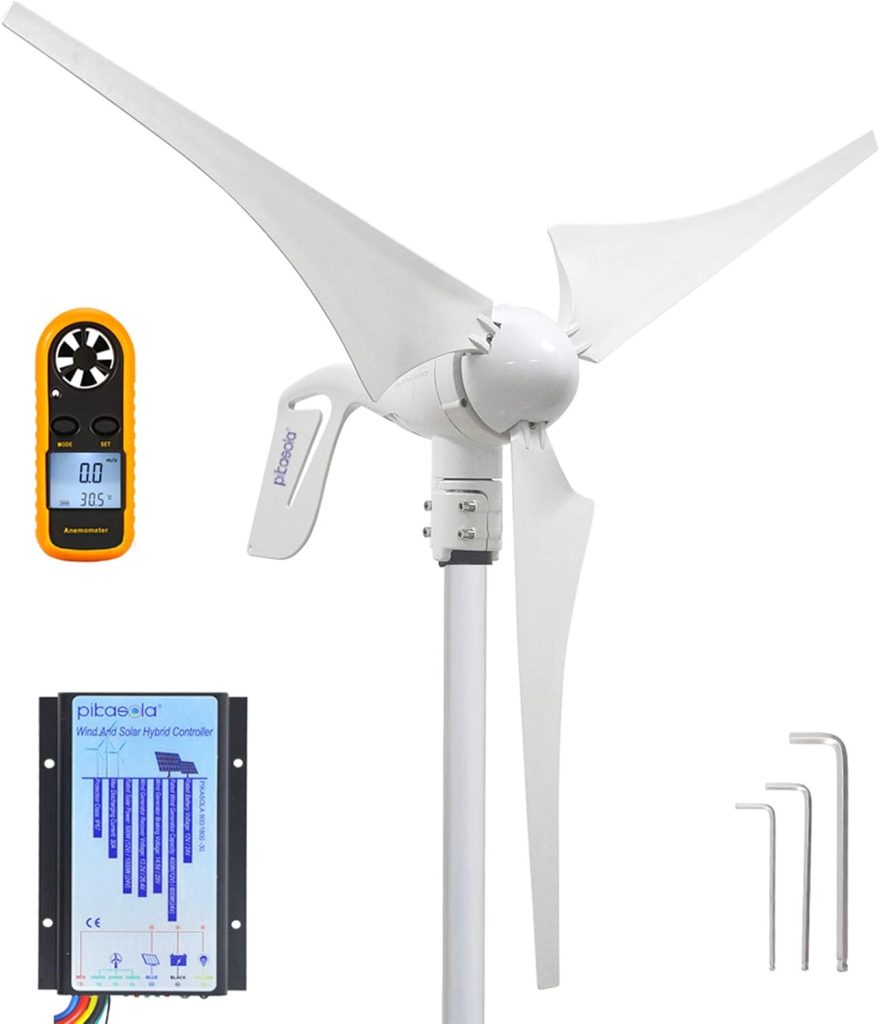
To put the Thames & Kosmos Wind Power V5.0 into perspective, let’s compare it with other “small wind turbine for home” or “portable wind turbine” options that are designed for actual power generation. This comparison highlights the significant difference between an educational “wind turbine generator kit” and a functional “home wind generator.” For this comparison, I’ll select three common brands found in the residential and off-grid market: Pikasola, Automaxx, and Nature Power.
| Feature | Thames & Kosmos Wind Power V5.0 | Pikasola (e.g., 400W model) | Automaxx (e.g., 600W model) | Nature Power (e.g., 750W model) |
|---|---|---|---|---|
| Rated Power | < 1 Watt (demonstrative) | 400 Watts (usable power) | 600 Watts (usable power) | 750 Watts (usable power) |
| Cut-in Wind Speed | ~2-3 m/s (demonstration starts) | ~2.5 m/s (begins generating usable power) | ~2.5-3 m/s (begins generating usable power) | ~3 m/s (begins generating usable power) |
| Rated Wind Speed | Not applicable for practical power; ~8-10 m/s for full demo | ~12.5 m/s | ~12 m/s | ~12.5 m/s |
| Blade Diameter | ~25-30 cm (approx.) | ~1.2-1.5 meters | ~1.3-1.6 meters | ~1.5-1.8 meters |
| Generator Type | Small DC motor (PM generator principle) | 3-Phase AC PMG, rectified to DC | 3-Phase AC PMG, rectified to DC | 3-Phase AC PMG, rectified to DC |
| Annual Energy Production | Negligible (educational only) | ~400-800 kWh (dependent on wind resource) | ~600-1200 kWh (dependent on wind resource) | ~750-1500 kWh (dependent on wind resource) |
| Warranty | Limited (typically 1 year for defects) | 1-3 years (standard for small turbines) | 1-2 years (standard for small turbines) | 1-2 years (standard for small turbines) |
| Price | ~$50-$100 (kit) | ~$300-$600 (turbine only, controller often extra) | ~$400-$800 (turbine only, controller often extra) | ~$600-$1000 (turbine only, controller often extra) |
This table clearly illustrates that the Thames & Kosmos kit operates in a completely different class.
-
Who should buy Thames & Kosmos Wind Power V5.0: This “wind turbine generator kit” is ideal for educators, students, and hobbyists who want to understand the fundamental principles of wind power through hands-on experimentation. It’s for learning, not for practical power generation. If you’re looking for an affordable, safe, and engaging way to teach or learn about “renewable wind energy,” this is an excellent choice.
-
Who should buy Pikasola: Pikasola offers a range of affordable “small wind turbine for home” options, often favored by those looking for a basic “off-grid wind turbine” or supplemental power for a shed, RV, or remote charging station. They are generally seen as entry-level “battery charging wind turbine” solutions, providing usable power but typically requiring careful installation and reasonable wind resources for optimal performance.
-
Who should buy Automaxx: Automaxx turbines are generally in a similar vein to Pikasola but often market themselves with slightly higher power ratings. They are suitable for “wind generator for cabin” or “small wind power system” applications where a moderate amount of supplemental power is needed. They are a step up from purely portable devices but still require proper siting and installation for reliable “wind power for home.”
-
Who should buy Nature Power: Nature Power often caters to the “portable wind turbine” and smaller “off-grid wind turbine” market, with robust build quality for their class. Their units are often considered for “hybrid solar wind generator” setups, offering a durable option for supplemental power in off-grid cabins, RVs, or for emergency backup. They represent a more serious investment for actual power generation than the experiment kits.
Frequently Asked Questions (FAQ)
Why does blade balancing matter for a wind turbine generator kit?
Blade balancing is crucial because an unbalanced rotor creates vibration. In a practical “small wind power system” or “home wind generator,” this vibration can lead to premature wear on bearings, structural fatigue in the tower, and reduced overall efficiency. It’s a leading cause of maintenance issues and shortened lifespan. Even in a “wind turbine generator kit” like the Thames & Kosmos, while less critical due to low power, the principle holds: balanced blades ensure smoother, quieter rotation and better energy capture.
How much electricity can the Thames & Kosmos Wind Power V5.0 generate in a typical year?
The Thames & Kosmos Wind Power V5.0, as an educational “wind turbine generator kit,” does not generate a significant amount of electricity for practical consumption. In a typical year, even with frequent demonstrations and good wind conditions, its total output would likely be measured in very few watt-hours, possibly a single-digit kilowatt-hour at most if left running continuously for experimentation. This is negligible compared to the hundreds or thousands of kilowatt-hours a functional “residential wind turbine” would produce. It’s designed to demonstrate power generation, not to provide substantial energy.
What should buyers consider before purchasing any small wind turbine for home use?
Before purchasing a “small wind turbine for home” or a serious “wind power system,” buyers should consider several critical factors:
- Wind Resource: The most important factor. Assess the average wind speed at your location. Many regions lack sufficient consistent wind for a “home wind generator” to be economical.
- Permitting & Zoning: Local regulations can be complex for “residential wind turbine” installations, including tower height restrictions and noise ordinances.
- Energy Needs: Calculate your actual electricity consumption to determine what size “micro wind turbine” or larger system you genuinely require.
- Budget: Beyond the turbine itself, factor in the cost of the tower, charge controller, inverter, batteries (for “off-grid wind turbine” or “hybrid solar wind generator”), and installation.
- Noise & Vibration: Even well-designed “horizontal wind turbine” models can produce some noise, which can be a concern for neighbors or close-quarter living.
- Maintenance: All mechanical systems require maintenance. Understand the long-term reliability and service requirements of your chosen “wind turbine generator kit.”
- Hybrid Integration: If considering a “hybrid renewable energy” system, ensure compatibility between your wind turbine, solar panels, and battery bank.
Final Verdict: Is the Thames & Kosmos Wind Power V5.0 the Right Wind Turbine Generator Kit for You?
The Thames & Kosmos Wind Power V5.0 STEM Experiment Kit is an excellent product, but its purpose must be clearly understood. If you are searching for a “wind turbine generator kit” to genuinely contribute to your “small wind power system,” power your “residential wind turbine” needs, or serve as a robust “off-grid wind turbine” for meaningful “battery charging,” then this kit is not for you. Its power output is too low, and its design is not for continuous, heavy-duty operation.
However, if your goal is educational—to understand the mechanics of a wind turbine, to demonstrate energy conversion, to teach about “renewable wind energy,” or to engage in hands-on STEM learning—then the Thames & Kosmos Wind Power V5.0 is an outstanding investment. It provides a safe, accessible, and engaging platform to learn the fundamental principles that underpin every “home wind generator” and “hybrid solar wind generator.” It serves as a fantastic entry point into the fascinating world of wind power, setting a strong foundation for future exploration of larger, more practical “wind turbine generator kit” solutions.
#Thames #Kosmos #Wind #Power #V5.0 #STEM #Experiment #Kit #Build