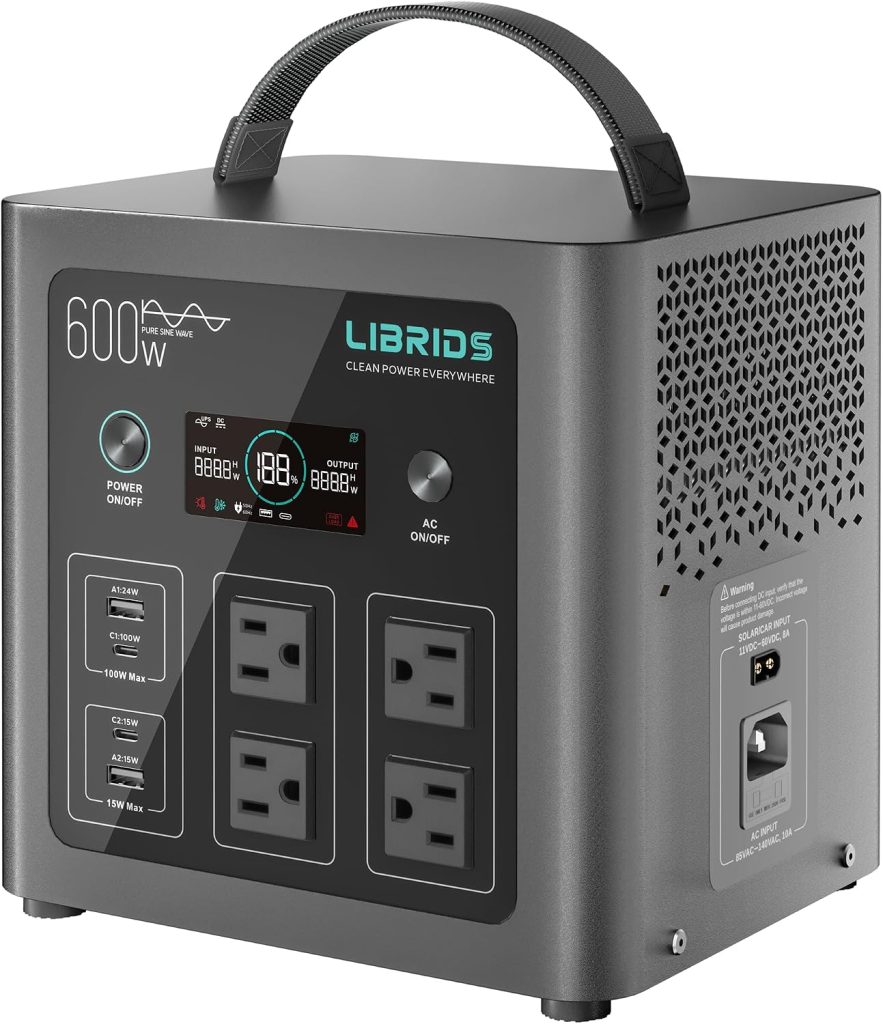
Two stations. Same “600W” on the box. One ran my space heater’s fan mode for four hours. The other shut off after forty minutes and smelled like hot plastic. That was three years ago, and it’s why I now read the small print first and the brand name second. The LIBRIDS C600 is the station I bought after the smelly one — 640Wh, LiFePO4, 600W continuous with 1200W surge — and the first thing I did was run it harder than the listing suggested, because trust is earned in this category and I wasn’t handing it out for free.
The C600’s headline numbers hold up better than most. 640 watt-hours, and with the usual inverter losses you’re looking at roughly 540 usable. That’s the math nobody prints: multiply by 0.85, then do your planning. I ran a 60W mini fridge off it for most of a workday — call it eight, nine hours — which lines up with the derated math almost exactly. When the numbers match the label, I notice, because they so rarely do.
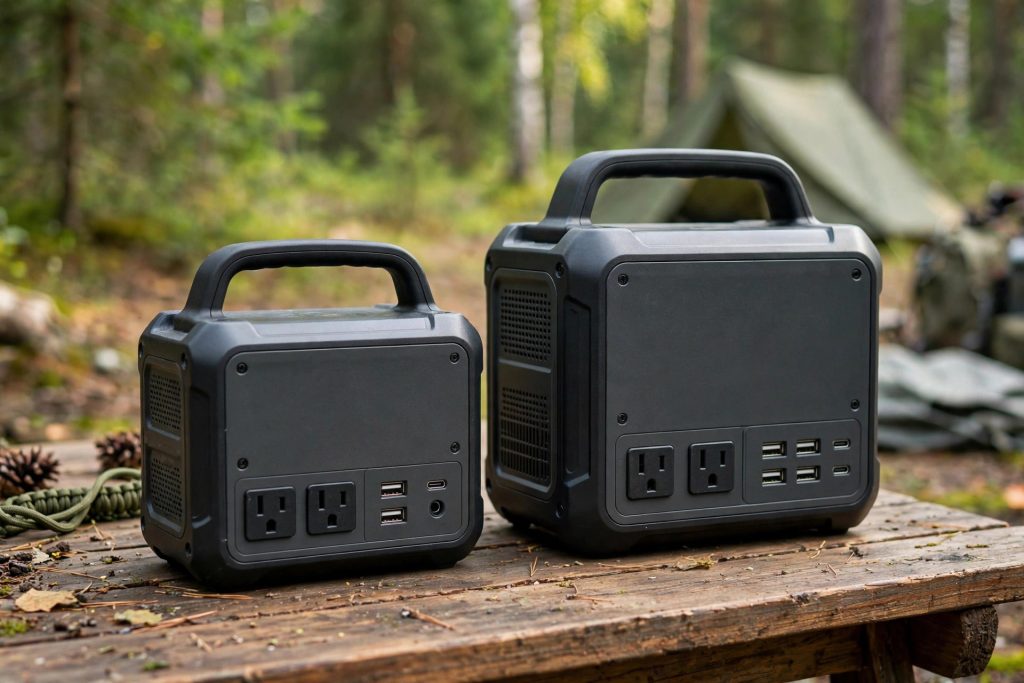
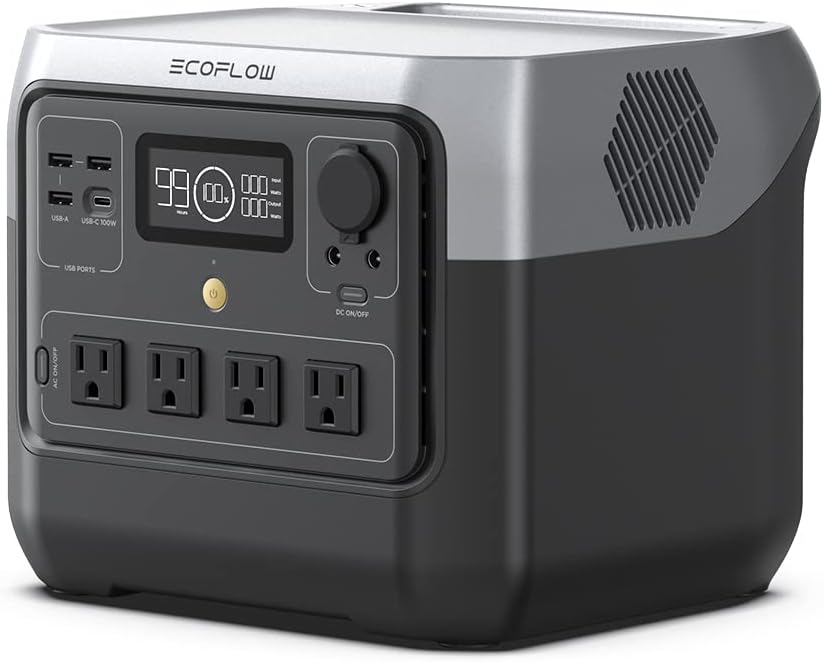
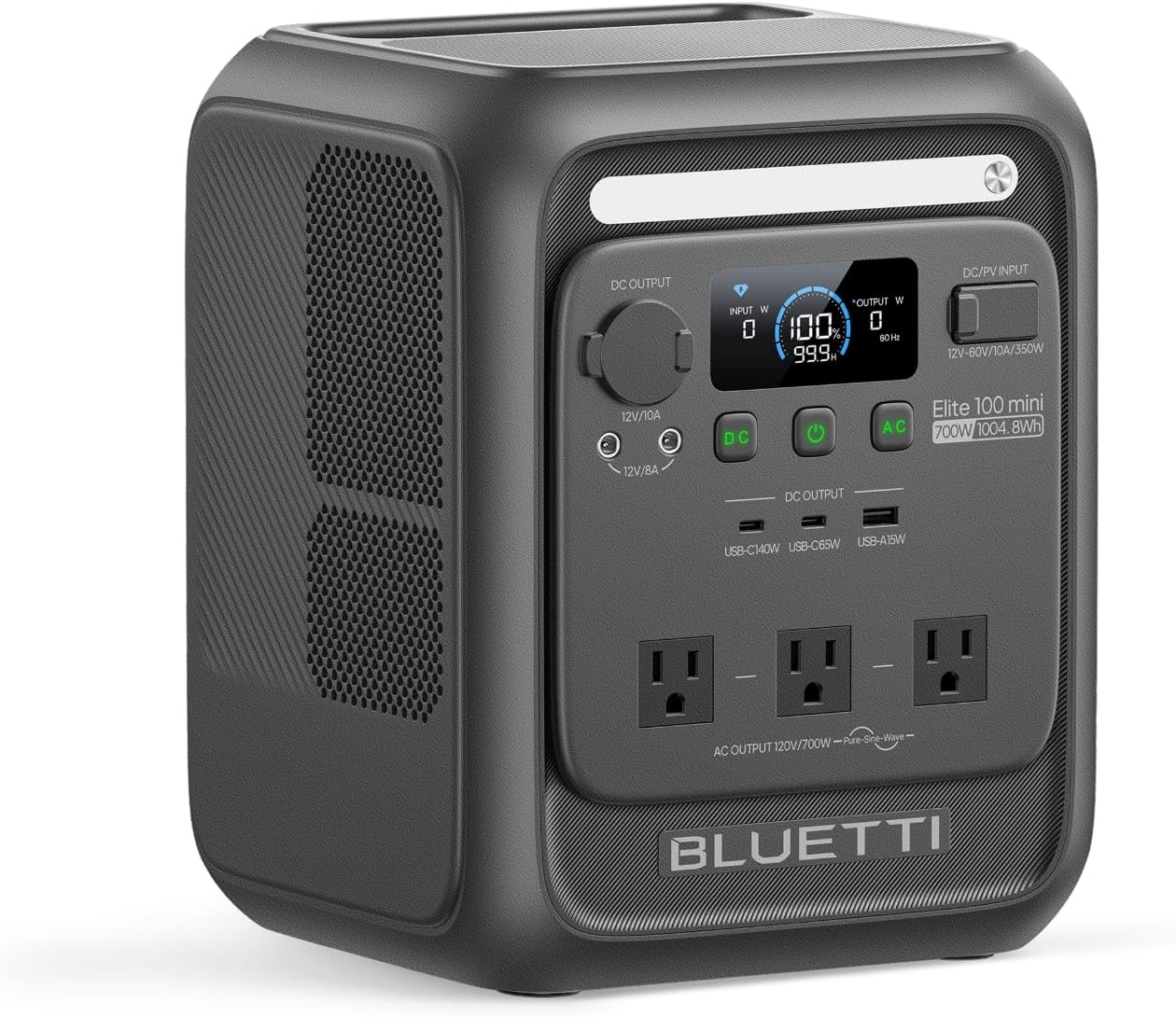
Compare Mid-Size Portable Power Stations
Three mid-size stations for CPAP backup and outages.
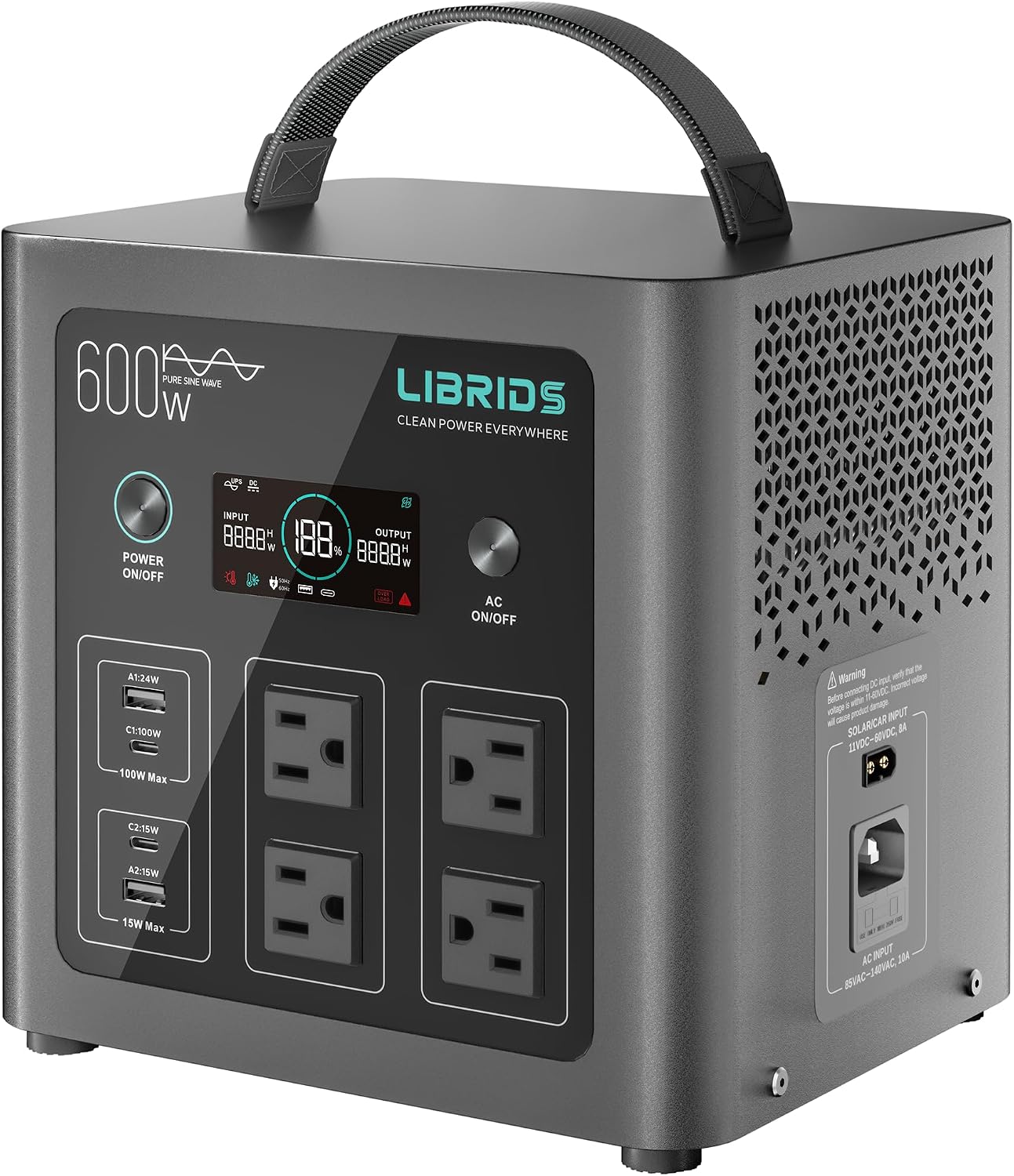
Prices and availability may vary — tap any product to check the current listing.
What I actually bought it for was CPAP backup. My machine draws about 40W without the humidifier, which means a full C600 should run it through the night with room to spare. Twelve hours at 40W is 480Wh, inside the usable envelope. I tested this during a planned outage — slept on it, literally — and woke up with the machine still running and the station showing charge to spare. That number I didn’t have to compute three times. The machine just kept breathing.
Still not the whole story, though.
The 10ms UPS switchover is the feature I didn’t know I needed. When the grid flickers — and mine flickers the way old fluorescent tubes do, brief and annoying — the C600 switches to battery fast enough that my router doesn’t drop. My desktop doesn’t reboot. The aquarium pump doesn’t even hiccup. My old station had a slower switchover and everything with a clock reset twice a month. I hadn’t realized how much low-grade irritation that caused until it stopped.
Here’s the rant I’ve been holding. The portable power station industry has a capacity problem, and I don’t mean the batteries. I mean the honesty. “600W” on the box, 400W in reality. “1000Wh,” measured at the cell level before the inverter eats its share, before heat, before the battery management system holds back its reserve. Every brand does the generous version of the math. Every single one. The C600 is better than most — the 640Wh is closer to real than the competition’s numbers — but I still did my own derating before I trusted it with the CPAP. Fool me once, hot plastic smell, all that.
The metal enclosure is a nice touch. Most stations in this class are plastic shells that flex when you pick them up. The C600 feels like equipment, not a toy. Eighteen pounds, which is heavy enough to notice and light enough to carry one-handed from the garage to the truck. The display shows percentage, input watts, output watts, time remaining — the four things you actually check, none of the app-connected gamification nonsense. No app at all, actually. I didn’t think I’d like that. I like that.
Charging: about an hour and a half from the wall, which is fast enough that I’ve stopped thinking about it. Solar input tops out at 300W, so a single 200W panel in good sun refills it in roughly three hours. Roughly. Panel output is a weather report, not a promise — I’ve seen 200W of panel deliver 40W under heavy cloud, and anyone who’s owned panels through a gray week knows that feeling of watching the input number and doing sad arithmetic.
Sad arithmetic. That’s the hobby.
What it won’t do: run a full-size fridge for a day, power a microwave, or replace a generator. 600W continuous is a firm ceiling. A coffee maker will trip it. A hair dryer will trip it. The 1200W surge handles motor startups — fridge compressors, small pumps — but sustained loads above 600W are a hard no. I mention this because someone will ask, and because the listing’s lifestyle photos show a lot of appliances that this box cannot run simultaneously. Count the watts. Always count the watts.
Two years in, the battery health still reads strong — LiFePO4 does that, thousands of cycles instead of hundreds. My old lithium-ion station faded noticeably by year two. This one hasn’t. That’s the quiet advantage nobody photographs: it just keeps working while the cheaper chemistry quietly gives up.
The smelly station went to electronics recycling last spring. I stood there watching it go into the bin and felt nothing. The C600 sits by the aquarium now, humming along on UPS duty, waiting for the next flicker. The grid flickered twice last week. Nothing reset. Nobody noticed. That’s the whole review, really — nothing happened, twice, and it was wonderful.