
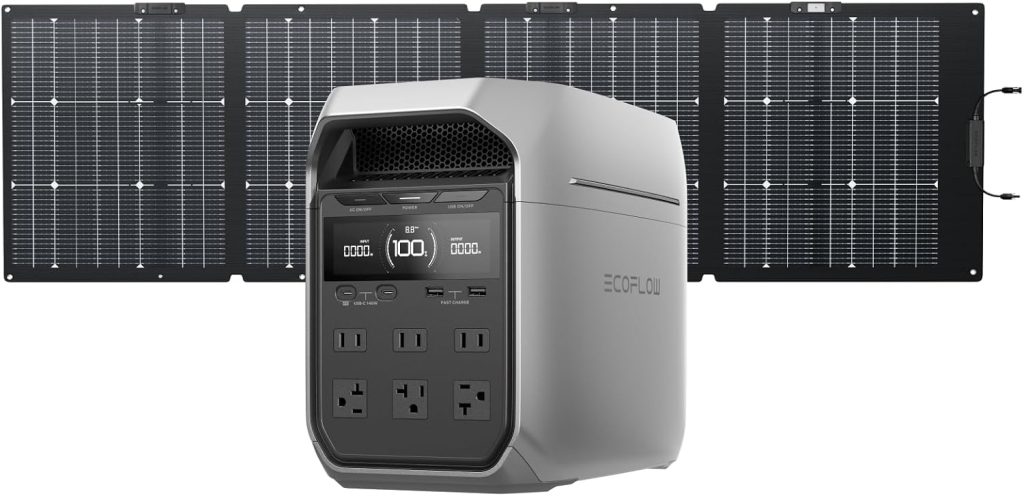
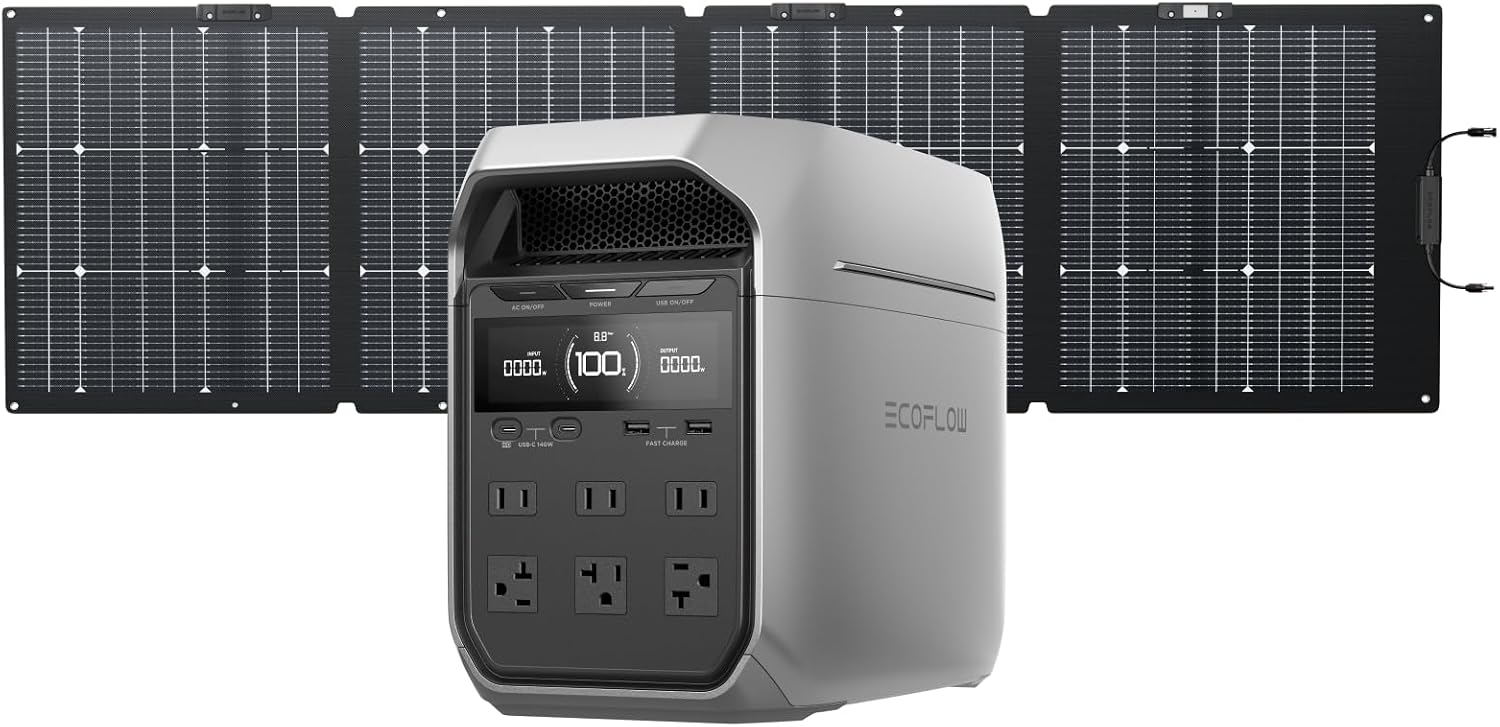
The bundle promised “1024Wh plus 220W bifacial” and my first thought was: the panel will never deliver 220W, so what’s the real number? I bought it anyway — the DELTA 3 Plus with the 220W bifacial panel — because the station itself was the upgrade I wanted, and the panel was the experiment. The experiment taught me what bifacial actually means in practice, which is less than the brochure and more than the skeptics say. As usual, the truth lives in the boring middle.
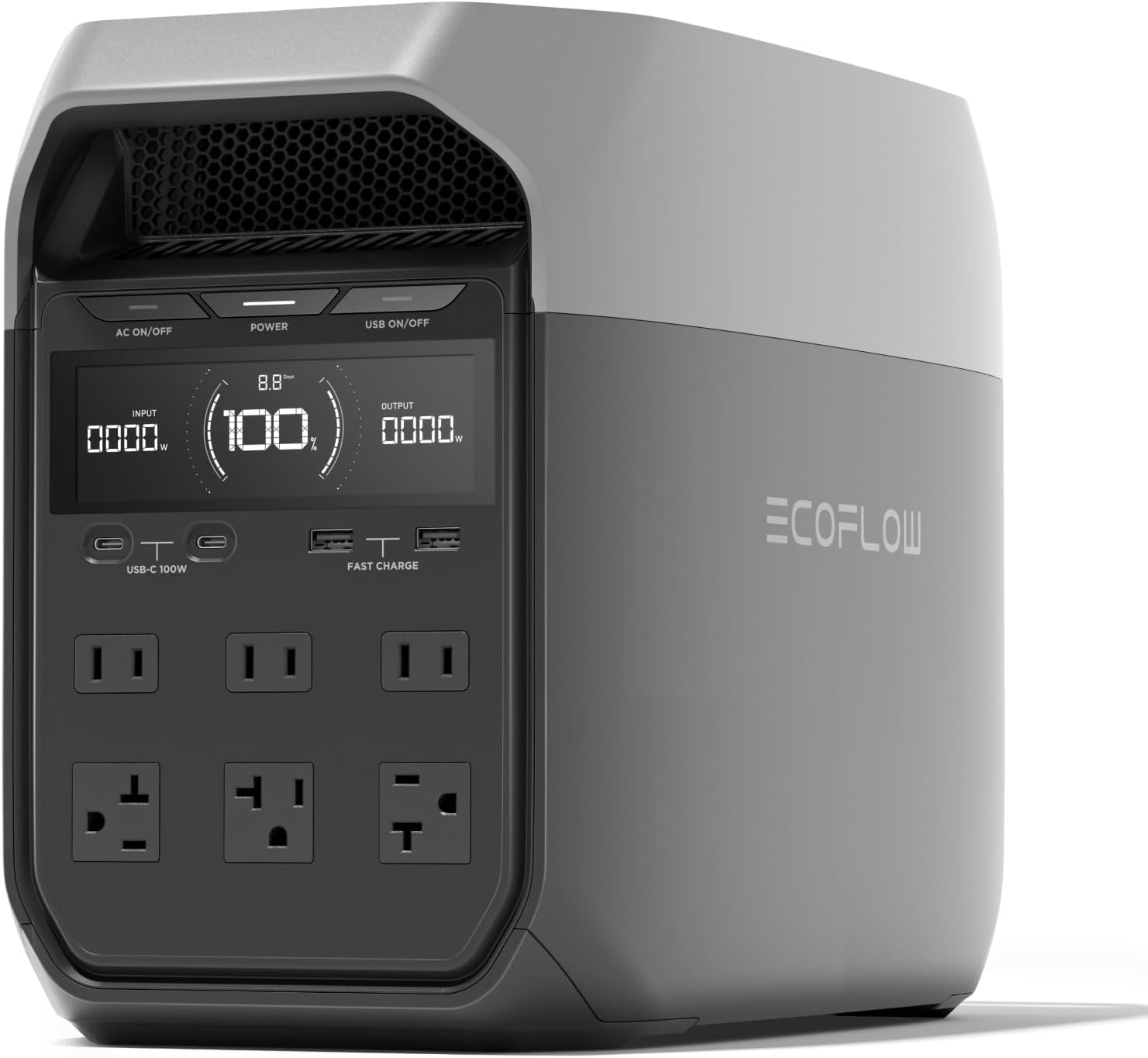
The station: 1024Wh LiFePO4, 1800W continuous, 3600W surge. That’s the 1kWh workhorse class — the size that runs a fridge for most of a day, powers tools, handles a microwave in short bursts. Derated honestly, you’re looking at ~870 usable watt-hours. My fridge at 120W running: seven hours. The surge rating covers the compressor kick — three to five times running draw, the spike that kills undersized setups. I’ve run the fridge, the internet gear, and a laptop simultaneously through two outages. The station didn’t blink. The display showed 900W of draw and kept going, which is the moment you stop worrying about the numbers and start trusting the box.
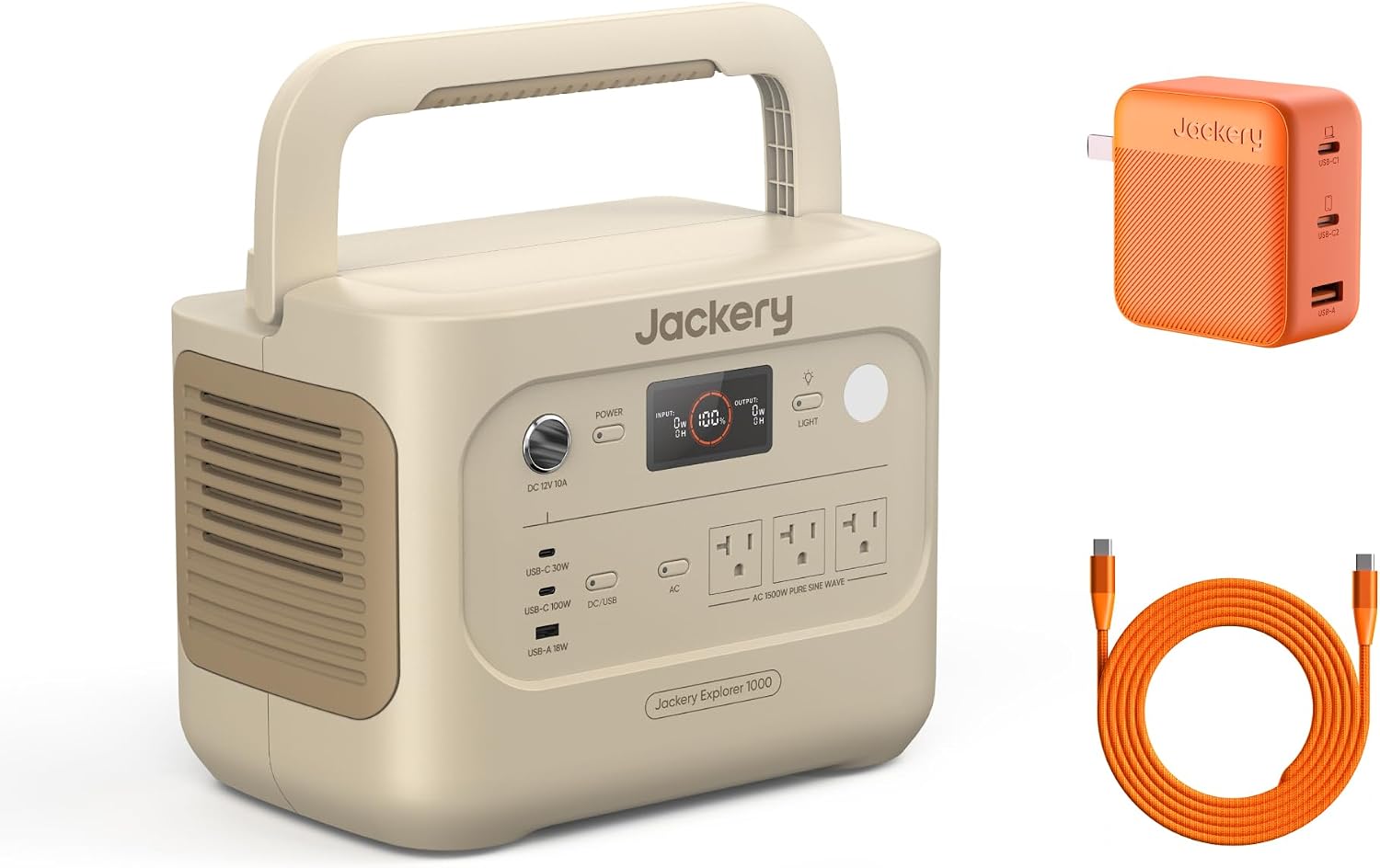
Compare 1kWh Solar Generator Bundles
Three 1kWh bundles with panels included.
Prices and availability may vary — tap any product to check the current listing.
Trust, earned the slow way.
The 56-minute full recharge is the spec that sounds fake and isn’t. AC wall charging, empty to full, under an hour. I timed it — 54 minutes the first time, 57 the second, and the difference is measurement noise, not a lie. That speed changes how you use the thing. When the grid flickers back for an hour mid-outage, you plug in and you’re full. When you’re packing for a trip, you don’t charge overnight — you charge while you load the car. Fast charging turns a power station from furniture into a tool. Furniture sits. Tools work.
Now the panel. 220W bifacial — meaning it collects light from both faces, front and back, with the rear face catching reflected light from the ground. In theory, up to 25% bonus from the back side. In practice, on grass, I measured maybe 8-10% extra. On a white surface — I tried it on a light concrete patio out of curiosity — closer to 15%. On dark soil, barely anything. The bifacial gain is real but situational, and the situations where it shines (ha) are specific: bright ground, high mounting, clear sky. Most of the time it’s a 220W panel performing like a good 220W panel, with the back side contributing a polite bonus.
A polite bonus. Not a revolution.
Real output: in strong sun, tilted right, I’ve seen 170-190W from the panel. That’s 80-85% of rated, honest for portable. The bifacial back added its few percent on top when the ground was bright. Against the 1024Wh station, the math is: 180W of real input fills the battery in about six good hours. Six hours of strong sun. That’s a full day of casual exposure, or a morning if you’re diligent about angling. It’s a workable ratio — the panel can actually keep up with moderate use, which is more than I can say for the undersized panels bundled with most kits.
Most bundles lie about the ratio. This one doesn’t.
The category complaint, since I’m here: the “solar generator” bundle market is built on mismatched pairs. A 100W panel bundled with a 1000Wh station — a trickle with a logo. A 400W panel with a station that only accepts 200W of input — wasted watts you paid for. The bundle makers don’t check the math; they check the price point. This EcoFlow pairing is one of the exceptions: the panel’s real output and the station’s input capacity actually align. 220W of panel into a station that accepts far more — the panel’s the limit, which is the right way around. I checked this before buying. I check it on every bundle now. It’s a habit the industry forced on me.
Forced. Learned. Kept.
What it won’t do: run central air, run an electric water heater, power a house. 1800W continuous is generous for the class but it’s still 1800W. The microwave works — 1000W for three minutes, fine. The hair dryer works — 1500W, the station handles it, the battery drains visibly, you feel guilty. I mention the guilt because it’s real: watching 870 usable watt-hours drop at 1500W teaches you what things cost. Everything has a price in watts. The display makes sure you know it.
Two outages, one camping trip, daily UPS duty for the home office in between. The DELTA 3 Plus has been the most-used piece of power gear I own, and the bifacial panel earned its keep on the trip — set up at camp, feeding the station all afternoon while we hiked. Came back to a full battery. That’s the whole dream, right there: leave, come back, full. It doesn’t happen on cloudy days. It happened that day. I’ll take the days it happens.

