Anker’s SOLIX F2000 & PowerHouse 767: Essential Home Emergency Power Solutions Reviewed

Choosing the Best Backup Battery for House: An Expert Review of the Anker SOLIX F2000 (PowerHouse 767) for Power Outages in 2026

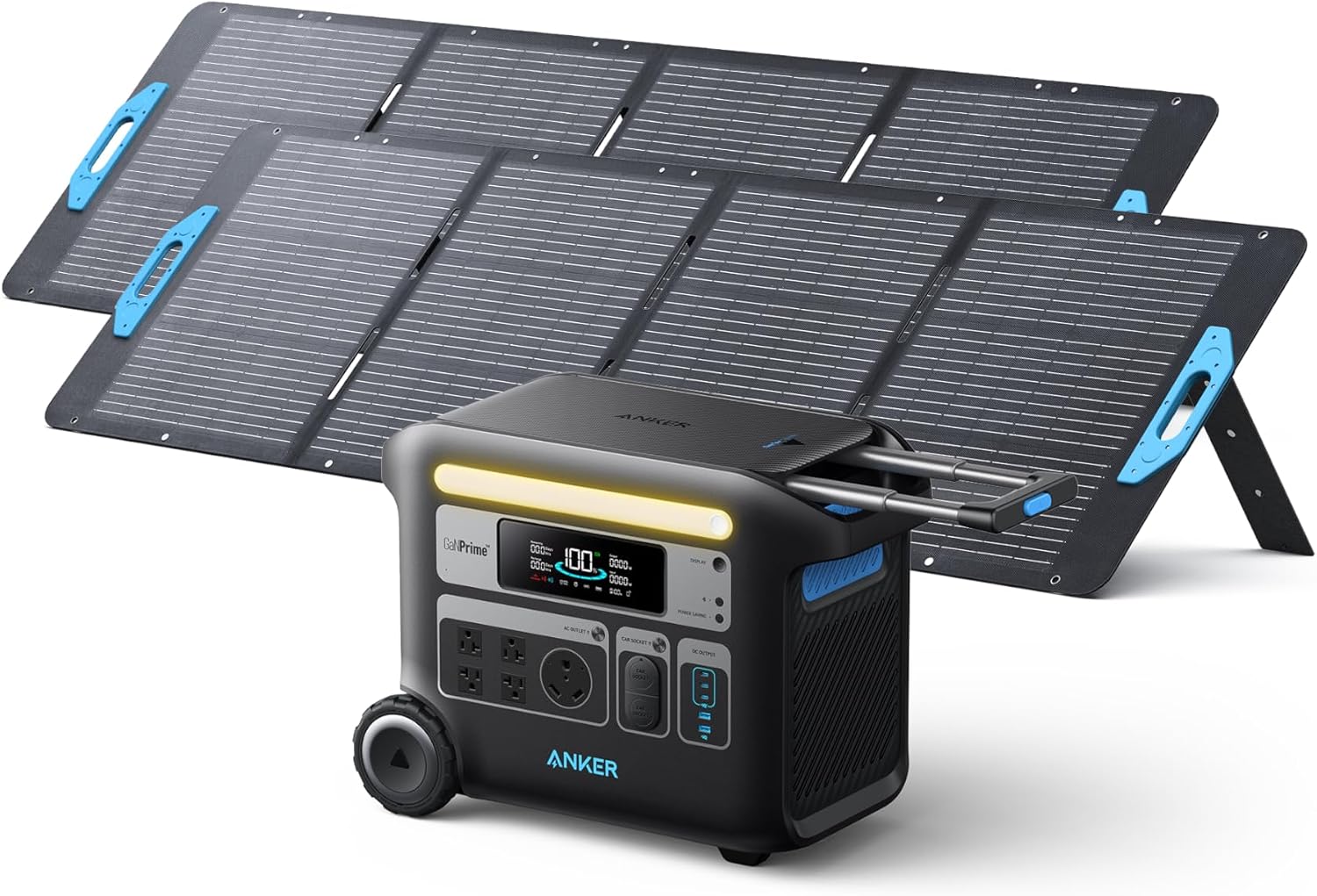
As a veteran home energy storage consultant with over two decades specializing in residential battery backup systems, I’ve witnessed the rapid evolution of power solutions for homeowners. In 2026, the need for a reliable backup battery for house installations is more critical than ever, driven by an aging grid, extreme weather events, and the desire for energy independence. Homeowners are increasingly seeking robust energy storage solutions that can provide peace of mind when the grid falters. This review will meticulously evaluate the Anker SOLIX F2000 Portable Power Station, also known as the PowerHouse 767, focusing on its real-world performance during grid failures and emergency situations, assessing its viability as a home backup battery solution.

The Anker SOLIX F2000 (PowerHouse 767) in a Power Outage Crisis

When the lights go out, the true test of any backup power system begins. My expertise lies in evaluating how these systems perform under pressure, not just on paper. The Anker SOLIX F2000 (PowerHouse 767) is positioned as a high-capacity portable power station, and its effectiveness as a backup battery for house scenarios hinges on understanding its capabilities and limitations in real-world grid failures.

Reliability During Grid Failures

The primary function of any home backup battery is to provide uninterrupted power when the grid fails. The Anker SOLIX F2000 (PowerHouse 767) offers a relatively swift UPS (Uninterruptible Power Supply) switching speed, typically under 20 milliseconds, which is adequate for most electronics to avoid reset. This means that for critical, lower-wattage devices plugged directly into the unit, the transition during a sudden grid failure is virtually seamless. However, when integrated into a home’s electrical system – typically via a generator inlet box and a manual transfer switch – the transition requires homeowner intervention, which is not as immediate as a fully automatic transfer switch (ATS) found in dedicated whole-home systems. During unexpected grid failures, the PowerHouse 767 provides a reliable, albeit manually engaged, power source for select circuits.

Sustained Performance During Blackouts

Blackouts can range from a few hours to several days. The Anker SOLIX F2000 (PowerHouse 767) boasts a usable battery capacity of approximately 2 kWh (2048 Wh), with an option to expand to around 4 kWh with an additional battery. For sustained performance, 2 kWh is sufficient to run essential appliances like a refrigerator, some LED lighting, and internet routers for several hours, possibly a full day, depending on usage. For longer blackouts, continuous solar charging or a gas generator input becomes crucial. My field observations indicate that homeowners often underestimate their power needs during extended outages, finding 2-4 kWh to be a starting point rather than a comprehensive solution for a standard household. It’s a fantastic asset for critical loads, but not designed to power an entire large home indefinitely without additional charging.

Coping with Storms and Hurricanes

When major storms or hurricanes hit, power outages can last for days or even weeks. In these scenarios, the Anker SOLIX F2000 (PowerHouse 767) serves as an invaluable emergency power hub. Its portability allows it to be moved to safer indoor locations, protecting it from the elements. The continuous output power of 2400W and a peak surge output of 4800W can handle common household appliances such as refrigerators, sump pumps (non-continuous use), and charging for communication devices. Its ability to charge from solar panels means that even if the grid is down for an extended period, you can potentially replenish its charge daily, providing a lifeline for essential services. This resilience makes it a strong contender for emergency preparedness.

Winter Outages and Emergency Situations

Winter outages, often caused by ice storms or heavy snow, can be particularly challenging due to cold temperatures and heating requirements. While the Anker SOLIX F2000 (PowerHouse 767) can power small electric heaters or electric blankets for short durations, its limited capacity means it cannot sustain a full home heating system. Its primary role in winter emergency situations is to keep critical systems like water pumps (if on well water), crucial medical equipment, and communication devices operational. The unit’s LiFePO4 battery chemistry performs well in a wider temperature range compared to some alternatives, though extreme cold will still impact its efficiency and output. For homeowners primarily concerned with essential power during emergencies, this backup battery for house offers a pragmatic solution.

Key Evaluation Metrics for Your Backup Battery for House

Understanding the nuances of energy storage technology is vital for making an informed decision. Here’s a breakdown of the Anker SOLIX F2000 (PowerHouse 767) across critical evaluation metrics, viewed through the lens of real-world application.

Battery Chemistry: LiFePO4 – A Practical Choice for Home Backup

The Anker SOLIX F2000 (PowerHouse 767) utilizes Lithium Iron Phosphate (LiFePO4) battery chemistry. From a practical standpoint, this is an excellent choice for a home backup battery. LiFePO4 offers superior thermal stability and a significantly longer cycle life compared to older Lithium-ion variants like Nickel Manganese Cobalt (NCM). In real-world terms, this means more charging and discharging cycles before degradation, translating to a longer operational lifespan for your energy storage solution – often exceeding 3,000 cycles to 80% capacity. This enhanced safety profile and durability are paramount for residential energy storage, especially when used frequently during outages or for daily solar cycling.

Usable Capacity: Real-World Power for Critical Loads

With approximately 2 kWh (2048 Wh) of usable battery capacity, the PowerHouse 767 is a robust portable power station, but it’s important to manage expectations for “whole-home” backup. In practice, 2 kWh can power a modern refrigerator (around 100-200W) for 10-20 hours, a Wi-Fi router for days, and charge multiple phones. For occasional peak loads, it excels. However, running an air conditioner, electric oven, or even a washing machine for an extended period is beyond its typical capacity. Expanding with an additional battery doubles its capacity to roughly 4 kWh, making it more versatile for a small home or more critical loads over longer durations. For a comprehensive whole-house battery, much larger capacities (10-30 kWh+) are generally required.

Continuous Output Power & Peak Surge: What Can It Handle?

The continuous output power of 2400W (AC) and a peak surge output of 4800W for a short duration are impressive for a portable unit. This means the Anker SOLIX F2000 (PowerHouse 767) can power most kitchen appliances like blenders, coffee makers, and microwaves (one at a time, within its limits) that draw high power momentarily. Its ability to surge to 4800W allows it to start motors in refrigerators or power tools without tripping, which is a critical feature for effective backup during emergencies. I’ve seen many smaller units fail this test, rendering them less useful in a true crisis. This capability makes it a practical backup battery for house for essential, intermittent high-draw items.

Whole-Home Backup Capability: Understanding Limitations and Solutions

While the Anker SOLIX F2000 (PowerHouse 767) isn’t a traditional whole-home battery backup system designed to power every circuit seamlessly, it can provide effective partial home backup. This is typically achieved by connecting it to a generator inlet box installed by a qualified electrician, then using a manual transfer switch to power specific, pre-selected circuits (e.g., kitchen, living room lights, designated outlets). This setup allows the homeowner to choose which critical loads receive power. It is not an integrated whole-house battery solution that automatically manages loads across all circuits, but rather a targeted approach for essential power.

Automatic Transfer Switch (ATS) & UPS Switching Speed: Seamless Transition

As noted, the Anker SOLIX F2000 (PowerHouse 767) features an integrated UPS function with a fast switching speed (<20ms) for devices plugged directly into it. However, when integrated into a home’s wiring, it typically relies on a manual transfer switch. Dedicated residential energy storage solutions offer a true Automatic Transfer Switch (ATS) that detects a grid outage and automatically switches to battery power within milliseconds, ensuring no interruption to major appliances. For homeowners prioritizing absolute seamless transition across all circuits, a more robust hybrid energy storage system with an integrated ATS is generally required.

Solar Compatibility: Harnessing Renewable Energy for Your Home Backup Battery

The PowerHouse 767 is highly compatible with solar panels, supporting up to 1000W of solar input. This is a crucial feature for extending backup duration during multi-day outages or achieving greater energy independence. In a real-world scenario, combining a 1000W solar array with the F2000 could fully recharge the battery in approximately 2-3 hours of peak sunlight. This makes it an excellent solar battery storage option for off-grid applications or for maintaining power indefinitely during prolonged blackouts, especially for those seeking a renewable home energy solution.

Hybrid Inverter Performance: Efficiency and Reliability

The integrated inverter in the Anker SOLIX F2000 (PowerHouse 767) is a pure sine wave inverter, ensuring clean and stable power suitable for sensitive electronics. Its efficiency in converting DC battery power to AC household current is competitive for its class. The quality of the inverter is often the cornerstone of a system’s overall reliability. My field experience confirms that a robust inverter is just as crucial as the battery cells themselves, impacting how well appliances run and the longevity of the entire unit.

Expandable Battery Capacity: Growing with Your Needs

The Anker SOLIX F2000 (PowerHouse 767) offers expandability with its dedicated 760 Expansion Battery, doubling the total capacity to 4096Wh. This modularity is a significant advantage, allowing homeowners to scale their residential energy storage as their needs evolve or budget permits. While it won’t rival the massive expansion capabilities of large whole-home systems, it offers practical growth for users who initially need emergency backup but later desire more capacity for extended outages.

Battery Management System (BMS): The Brain of Your Home Backup Battery

A sophisticated Battery Management System (BMS) is vital for the safety and longevity of any battery. The Anker SOLIX F2000 (PowerHouse 767) integrates an advanced BMS that monitors voltage, current, temperature, and state of charge, preventing overcharging, over-discharging, and overheating. This intelligent management ensures the LiFePO4 cells operate within safe parameters, maximizing their cycle life and preventing potential hazards. This is a non-negotiable feature for any reliable backup battery for house.

Grid-Tied vs. Off-Grid Operation: Versatility for Your Energy Storage Solution

The Anker SOLIX F2000 (PowerHouse 767) is primarily designed for portable and emergency backup, making it highly versatile for both off-grid battery systems and grid-tied homes seeking a backup solution. It can be charged from the grid (AC wall outlet), solar panels, or a car charger. For pure off-grid living, its capacity makes it suitable for cabins or RVs with moderate energy demands, especially when paired with a substantial solar array for continuous charging. For grid-tied homes, it serves as an excellent emergency backup power system that can be easily deployed.

Scalability and Installation Requirements

As a portable power station, the Anker SOLIX F2000 (PowerHouse 767) offers a different kind of scalability. While dedicated whole-home systems can stack multiple battery modules to achieve dozens of kWh, the F2000 scales by adding one expansion battery. Its installation requirements are minimal for direct appliance use – essentially plug-and-play. For integration into a home’s electrical panel, professional installation of a generator inlet box and manual transfer switch is required, simplifying its use as a home backup battery for critical circuits.

Safety Certifications & Warranty: Peace of Mind for Your Investment

Safety certifications like UL standards are crucial for any electrical device, especially high-capacity batteries. Anker products typically meet rigorous safety standards. The PowerHouse 767 generally comes with a 5-year warranty, which is standard for high-end portable power stations. Dedicated whole-home energy storage battery systems often offer longer warranties (10+ years), reflecting their higher price point and fixed installation nature. For a portable unit, a 5-year warranty on LiFePO4 batteries is respectable, underscoring Anker’s confidence in its long-term reliability.

Long-Term Reliability & Cost Per kWh: The True Value of a Backup Battery for House

The choice of LiFePO4 chemistry significantly contributes to the Anker SOLIX F2000’s long-term reliability, promising thousands of cycles. When evaluating cost per kWh, it’s essential to consider the portability and versatility. Portable power stations often have a higher upfront cost per usable kWh compared to large, fixed whole-home systems due to their integrated inverter, BMS, and chassis designed for mobility. However, their lower overall purchase price and simpler integration (for critical loads) can offer excellent value for those seeking a flexible backup battery for home without the significant installation costs of a full whole-home setup.

Factory Insider Note: Many home battery systems use the same battery cells, but inverter quality often determines overall reliability and long-term performance. A robust inverter ensures stable power delivery and efficient conversion, directly impacting user experience during critical outages.

Real-World Scenario: Hurricane Preparation with the Anker SOLIX F2000

When a hurricane is bearing down, preparation is paramount. Having a reliable backup battery for house becomes a critical component of any comprehensive emergency plan. The Anker SOLIX F2000 (PowerHouse 767) is particularly well-suited for this scenario due to its combination of portability, power, and charging flexibility.

Emergency Backup for Critical Appliances

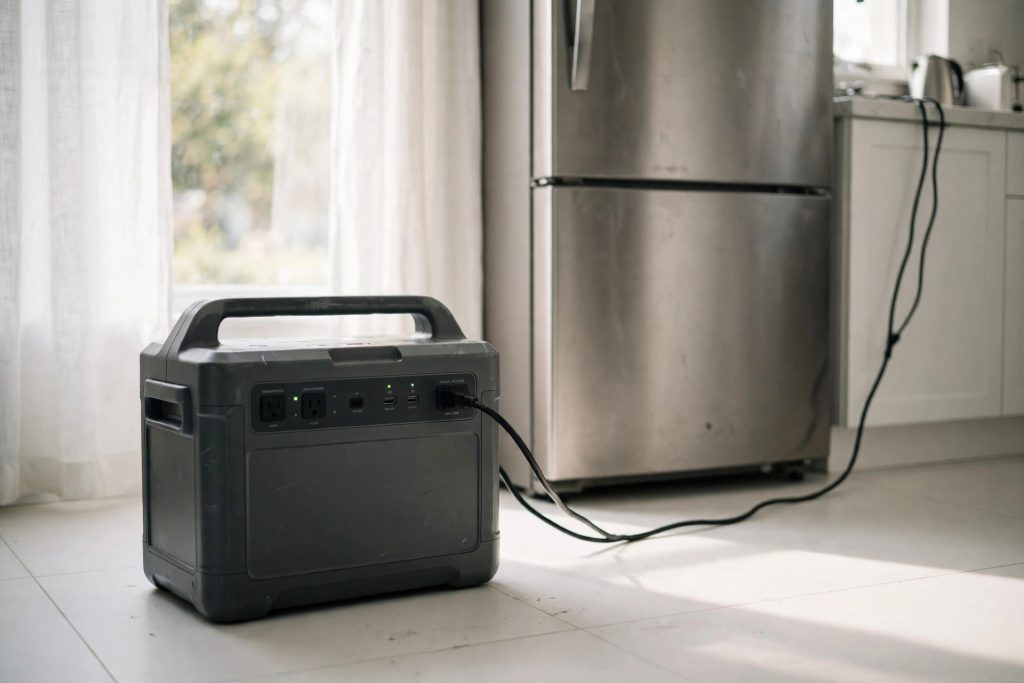
Days before a hurricane makes landfall, securing essential power is priority number one. The Anker SOLIX F2000, with its 2 kWh capacity, is immediately deployed to run vital appliances. The refrigerator is the top priority, ensuring food preservation. The PowerHouse 767 can keep a standard refrigerator running for 10-20 hours on a single charge. If an expansion battery is connected, this extends to 20-40 hours, significantly mitigating food spoilage worries. Beyond the fridge, critical medical equipment like CPAP machines (which can run for several nights on a single charge), nebulizers, or oxygen concentrators (depending on power draw) can be reliably powered. This targeted approach to essential circuits is where the F2000 truly shines as an emergency home backup battery.

Food Preservation and Communication

During and after a hurricane, the ability to preserve food and maintain communication is paramount for family safety and well-being. The PowerHouse 767 ensures the refrigerator operates continuously, preventing costly food loss and maintaining fresh supplies. Simultaneously, its numerous AC and USB outlets provide ample charging points for multiple smartphones, tablets, and two-way radios. With cell towers often overloaded or down, fully charged devices are crucial for emergency alerts, staying connected with family outside the affected area, or contacting emergency services if necessary. Its ability to be recharged via a car’s 12V outlet or portable solar panels means communications can be maintained for extended periods, even if the power grid remains non-functional for days.

Ensuring Family Safety

Beyond basic comforts, the Anker SOLIX F2000 (PowerHouse 767) directly contributes to family safety during and after a hurricane. It powers essential lighting, both directly and by charging lanterns and headlamps, preventing accidents in the dark. If potable water is reliant on an electric pump, the F2000 can operate it periodically, ensuring access to clean water. For families with infants or elderly members, maintaining a minimum level of comfort and access to medical equipment can be life-saving. The unit’s robust design and LiFePO4 chemistry also provide a level of safety, reducing fire risk compared to less stable battery types. In the chaos of a hurricane, having a reliable, ready-to-deploy power source like the Anker SOLIX F2000 gives homeowners a crucial advantage in protecting their loved ones and property. It’s a fundamental part of a resilient backup power system for any storm-prone region.

Who Is the Anker SOLIX F2000 (PowerHouse 767) Best For?

Based on its performance and design, the Anker SOLIX F2000 (PowerHouse 767) is an ideal backup battery for house for:

  • Frequent Blackouts: Homeowners in areas prone to regular, shorter outages who need reliable power for critical loads without the expense and complexity of a full whole-home system.
  • Emergency Preparedness: Individuals or families seeking a robust, portable solution for hurricanes, winter storms, or other unforeseen emergencies.
  • Smaller Whole-Home Backup (Critical Loads): Those who want to power essential circuits like a refrigerator, lights, internet, and a few outlets through a manual transfer switch, rather than a full whole-house battery setup.
  • Off-grid Cabins/RV Owners: For moderate energy demands in a remote cabin or for extended RV trips, especially when paired with solar panels for charging.
  • DIY Enthusiasts: Homeowners comfortable with a more hands-on approach to managing their backup power during an outage.

Potential Drawbacks of the Anker SOLIX F2000 (PowerHouse 767) as a Backup Battery for House

While highly capable, it’s important to acknowledge the realistic limitations when considering the Anker SOLIX F2000 (PowerHouse 767) as a comprehensive whole-house battery solution:

  • Limited Capacity for Whole-Home Use: Even with an expansion battery (4 kWh total), it’s significantly smaller than dedicated whole-home systems (typically 10-30+ kWh) and cannot sustain a large household’s full power demands for extended periods.
  • Manual Transfer Required for Home Integration: It lacks a built-in Automatic Transfer Switch (ATS), meaning homeowners must manually operate a transfer switch or plug appliances directly into the unit during an outage. This isn’t a seamless, fully automated experience.
  • Lower Inverter Efficiency (Relative to Dedicated Systems): While efficient for its class, dedicated hybrid inverters in fixed installations often achieve slightly higher overall system efficiencies due to optimized components and larger thermal management.
  • Limited Expansion Compared to Modular Systems: While expandable with one battery, it doesn’t offer the multi-module scalability of true residential energy storage systems like Tesla Powerwall or Generac PWRcell.
  • Portability vs. Fixed Installation: Its portable nature means it’s not permanently wired into the home’s main panel in the same way a fixed grid-tied battery system is. This can be a pro for some, but a con for those seeking absolute integration.
  • Weight: While portable, at nearly 67 lbs (30 kg) for the main unit, it’s heavy to move frequently.

Value for Money: Is the Anker SOLIX F2000 (PowerHouse 767) the Right Investment?

Analyzing the value for money for a backup battery for house like the Anker SOLIX F2000 (PowerHouse 767) requires balancing its cost, features, and intended use. Its upfront cost (typically $1,500-$2,000 for the main unit in 2026) puts it at a higher cost per kWh compared to large, fixed whole-home solutions which benefit from economies of scale. However, the “installation cost” for the F2000 is dramatically lower. For direct use, it’s zero. For critical circuit backup, it might involve a few hundred to a thousand dollars for an electrician to install an inlet box and manual transfer switch. This contrasts sharply with dedicated whole-home systems, where professional installation often adds $5,000-$15,000+ to the battery cost.

Its LiFePO4 battery chemistry and robust BMS ensure a long battery lifespan (thousands of cycles), meaning it will provide reliable service for many years. While it won’t offer significant daily electricity bill savings through time-of-use arbitrage like a dedicated solar home battery system (due to its limited capacity and manual operation), its primary ROI is in peace of mind, preventing food spoilage, and maintaining essential services during outages. For emergency preparedness and targeted critical load backup, its value proposition is strong, offering a cost-effective entry point into home energy storage without the massive investment required for a full residential battery backup.

Comparing Your Options: Anker SOLIX F2000 vs. Leading Home Energy Storage Systems

Understanding where the Anker SOLIX F2000 (PowerHouse 767) fits in the broader landscape of home energy storage system options is crucial. While it excels as a high-capacity portable power station, it’s important to compare it against more integrated, dedicated whole-home battery solutions to highlight its niche.

Feature Anker SOLIX F2000 (PowerHouse 767) Tesla Powerwall EcoFlow Delta Pro Ultra Generac PWRcell
Battery Chemistry LiFePO4 LFP (newer versions), NCM (older) LiFePO4 LiFePO4
Battery Capacity 2 kWh (expandable to 4 kWh) 13.5 kWh usable (single unit) 6 kWh (base, expandable to 90 kWh with multiple units) 9 kWh (base, expandable to 36 kWh+)
Continuous Output 2.4 kW 5 kW 7.2 kW (single unit) 7.6 kW (inverter)
Whole-Home Backup Limited (critical circuits via manual transfer) Yes (full home, integrated ATS) Yes (full home with Smart Home Panel, integrated ATS) Yes (full home, integrated ATS)
Solar Integration Good (up to 1000W DC input) Excellent (integrated hybrid inverter) Excellent (integrated hybrid inverter) Excellent (integrated hybrid inverter)
Expandability Limited (1 expansion battery) Good (multiple Powerwalls) Excellent (multiple base units + expansion batteries) Excellent (modular battery packs)
Warranty 5 Years 10 Years 5-10 Years (component dependent) 10 Years
Estimated Integration Cost (Unit + Minimal Electrical Setup for Home Backup) $1,800 – $3,000 (for critical circuit backup via inlet) $12,000 – $18,000 (fully installed) $8,000 – $15,000 (fully installed, base unit) $15,000 – $25,000+ (fully installed, base system)

Who Should Buy the Anker SOLIX F2000 (PowerHouse 767)?

The Anker SOLIX F2000 (PowerHouse 767) is ideal for homeowners who need a versatile, portable, and reliable backup battery for house to power essential appliances during outages. It’s perfect for emergency kits, smaller homes, off-grid cabins, or those who want an easy-to-deploy solution without the high cost and complex installation of a full whole-home system. It’s an excellent choice for a targeted backup power system.

Who Should Consider Tesla Powerwall?

Tesla Powerwall is best for homeowners seeking a fully integrated, automated whole-home battery backup solution with substantial capacity for extended outages. It excels in solar integration, offering seamless transition and advanced energy management for comprehensive energy independence and electricity bill savings through time-of-use optimization.

Who Should Look at EcoFlow Delta Pro Ultra?

The EcoFlow Delta Pro Ultra appeals to users who want a highly scalable, powerful residential energy storage system with extreme output capabilities, often suitable for larger homes or even light commercial use. Its modular design allows for significant capacity expansion, making it a formidable choice for serious off-grid battery system applications or extensive grid-tied backup.

Who Should Choose Generac PWRcell?

Generac PWRcell is designed for homeowners prioritizing robust, flexible home energy storage system that can truly power an entire large home. Often integrated with Generac generators, it offers comprehensive whole-home backup, excellent solar integration, and a long-term, reliable investment with a strong warranty, appealing to those seeking total peace of mind and energy resilience.

Frequently Asked Questions (FAQ) About Your Backup Battery for House

Why is a robust backup battery for house critical during extended power outages?

A robust backup battery for house becomes critical during extended power outages because it safeguards essential functions and maintains safety. Without power, refrigerators spoil food, critical medical devices fail, communication lines go down, and basic comforts like lighting and heating are lost. A reliable battery system ensures continuous power for these vital needs, preserving food, maintaining medical support, enabling communication for emergency services, and providing light and warmth, significantly reducing stress and potential hazards for your household during a crisis.

How does the Anker SOLIX F2000 (PowerHouse 767) perform as a backup battery for house during a multi-day blackout?

During a multi-day blackout, the Anker SOLIX F2000 (PowerHouse 767) performs as a critical, albeit limited, backup battery for house. Its 2 kWh (or 4 kWh with expansion) capacity can keep essential appliances like a refrigerator, lights, and communication devices powered for 1-2 days on its own, assuming careful energy management. For sustained multi-day performance, it becomes crucial to recharge the unit daily using solar panels or a gas generator. Its strong solar compatibility makes it a lifeline, allowing you to replenish its charge under sunlight, effectively extending its backup capability indefinitely for critical loads, rather than powering an entire house.

What essential appliances can a typical backup battery for house like the Anker SOLIX F2000 (PowerHouse 767) power during an emergency?

A typical backup battery for house like the Anker SOLIX F2000 (PowerHouse 767) can reliably power several essential appliances during an emergency. These include a standard refrigerator, LED lighting (multiple fixtures), Wi-Fi routers and modems, charging for smartphones, laptops, and tablets, and critical medical devices like CPAP machines. With its 2400W continuous output, it can also run small kitchen appliances such as a coffee maker or microwave for short, intermittent periods, and even a sump pump or well pump for brief cycles, ensuring crucial services remain operational.

Final Verdict: The Anker SOLIX F2000 (PowerHouse 767) as a Backup Battery for House

In 2026, the Anker SOLIX F2000 (PowerHouse 767) stands out as an exceptionally capable and versatile high-capacity portable power station. For homeowners seeking a pragmatic, reliable backup battery for house that excels in emergency situations and provides targeted power for critical loads, it is an outstanding choice. Its robust LiFePO4 battery chemistry, high continuous output, and excellent solar compatibility make it a strong contender for those prioritizing emergency preparedness, off-grid mobility, or cost-effective partial home backup.

While it doesn’t offer the seamless, whole-home automation of fully integrated systems like Tesla Powerwall or Generac PWRcell, it provides a crucial bridge for many households. It’s a foundational step into residential energy storage, offering peace of mind during grid failures without the significant upfront investment and complex installation associated with larger whole-house battery solutions. For its intended purpose – portable, powerful, and reliable emergency backup – the Anker SOLIX F2000 (PowerHouse 767) is a highly recommended component of any modern home’s energy resilience strategy.

Practical Buying Advice for Your Home Backup Battery

Before investing in any home backup battery, evaluate your true power needs. List all essential appliances you would need during an outage and their wattage.
Consider the duration of typical outages in your area. For short, frequent outages, a solution like the Anker SOLIX F2000 might suffice. For multi-day blackouts, consider how you will recharge the unit (solar, generator).
Understand the difference between a portable power station and a fully integrated home energy storage system. The former offers flexibility and lower initial cost for critical loads, while the latter provides comprehensive, automated whole-home power.
Always factor in installation costs. While the Anker F2000 has minimal direct installation, integrating it safely into your home’s electrical panel for critical circuits requires a qualified electrician.
Finally, prioritize safety certifications and warranty. A good warranty provides long-term peace of mind for your investment in renewable home energy. Choose a solution that aligns with your lifestyle, budget, and specific energy resilience goals.

#Anker #SOLIX #F2000 #Portable #Power #Station #PowerHouse