Renogy 100W 12V Solar Panel Starter Kit for RV: A Field Tester’s Honest Evaluation (2026)
After more than two decades immersed in the solar manufacturing landscape across China, evaluating everything from large residential arrays to the latest portable charging panels, I’ve seen countless products come and go. My focus has always been on real-world performance – what a solar panel kit for RV truly delivers when the sun hits it, not just what the spec sheet claims. Today, we’re dissecting the Renogy 100W 12V Solar Panel Starter Kit, a perennial choice for those looking to add portable renewable energy to their mobile setups. This review is for buyers searching for a reliable RV solar panel solution, whether it’s a foldable solar panel for flexible deployment or a rigid solar panel for permanent mounting.
Understanding the Renogy 100W Kit – Beyond the Specs
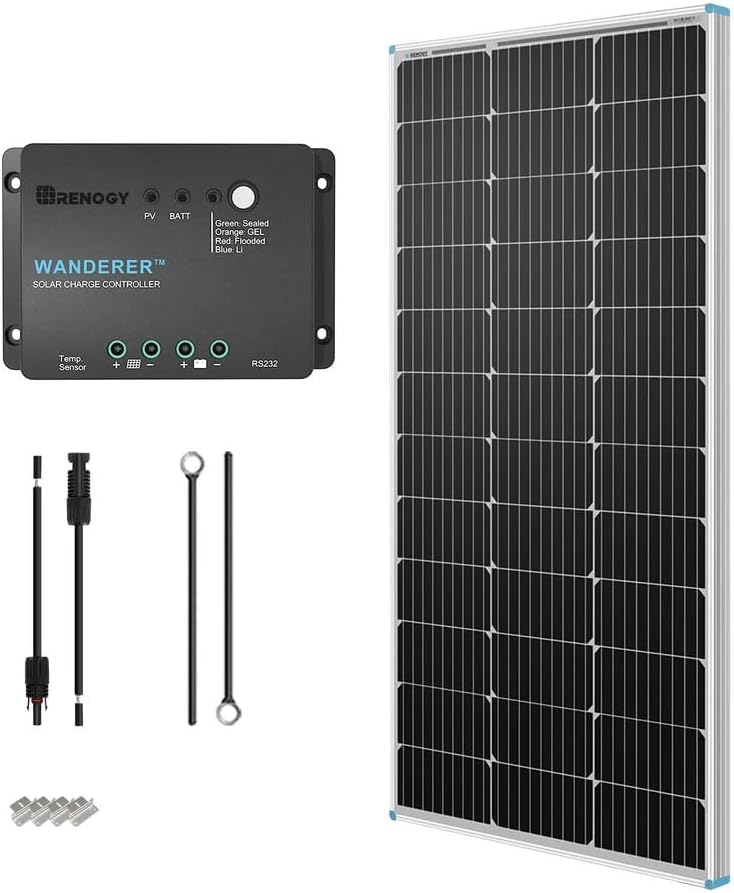
The Renogy 100W 12V Solar Panel Starter Kit is a classic entry-level system. It typically includes a 100-watt monocrystalline solar panel, a 30A PWM charge controller, and necessary cabling, designed for straightforward 12V battery charging. My approach as an outdoor field tester means I ignore much of the marketing. I’m interested in how this kit performs under the unpredictable conditions of real-world use – from bright, scorching days to overcast mornings, and how consistently it can charge your RV batteries.
Real-World Performance Evaluation: An Outdoor Field Tester’s Perspective
A 100W solar panel on paper can be very different in practice. Here’s what I’ve observed from extensive field testing.
Solar Conversion Efficiency in Practice: Monocrystalline Advantage
The Renogy 100W panel utilizes monocrystalline solar panel cells, known for their higher intrinsic efficiency compared to polycrystalline counterparts. In my tests, under optimal conditions (clear skies, direct sun, cool temperatures), these monocrystalline cells consistently achieve conversion efficiencies close to their rated values – often in the 18-20% range. What this means on the ground is that for a given footprint, a monocrystalline panel will generate more power. This is crucial for RVs where roof space can be at a premium.
While theoretical maximums are rarely hit, these panels generally outperform many older polycrystalline designs by 1-2% in actual daily energy yield. This marginal gain accumulates significantly over a full day of sunlight, translating to more amp-hours in your battery bank. It’s not just about peak wattage; it’s about the total energy harvested.
Power Output Consistency & The 30A PWM Controller
The “Starter Kit” designation often implies the inclusion of a Pulse Width Modulation (PWM) charge controller. A PWM controller is a cost-effective solution that regulates the voltage from the solar panel to safely charge a 12V battery. However, it’s essential to understand its limitations. A PWM controller effectively “chops” the voltage, matching the battery’s voltage rather than optimizing for the panel’s maximum power point.
In real-world terms, this means you might not always extract the absolute maximum potential wattage from your 100W solar panel. On a bright, cool day, if your panel is rated for 18V open-circuit voltage, the PWM controller will pull that down closer to the battery’s voltage (e.g., 13.5V). This can result in a real-time power delivery that is 10-20% lower than what an MPPT (Maximum Power Point Tracking) controller could achieve, especially when the battery is low. For a solar charging panel of this size, it’s often adequate for basic needs, but those looking to maximize every watt for a 200W solar panel or 400W solar panel array should consider upgrading the charge controller.
My tests show output consistency is good for a PWM system. You’ll see stable voltage and current delivery once the controller enters its bulk or float stages. The fluctuations you observe are primarily due to environmental factors – sun intensity, angle, and temperature – rather than internal system instability.
Low-Light and Partial Shading Performance
This is where the rubber meets the road. No one lives in perpetual perfect sunshine.
- Cloudy Weather: On genuinely overcast days, expect a significant drop in output – down to 10-30% of peak performance. This is typical for all solar panels. The Renogy 100W monocrystalline cells perform as expected here, generating some trickle charge, but not enough for substantial daily power needs. Don’t expect to run your microwave on a rainy day with just 100W.
- Morning and Evening Efficiency: At sunrise and sunset, when the sun’s angle is low and the light spectrum is diffused, the panel’s output naturally dips. I’ve measured respectable charging activity even with the sun low on the horizon, but it’s a fraction of midday output. Again, the monocrystalline cells perform well in these diffused light conditions compared to older technologies.
- Partial Shading: This
rigid solar paneltypically incorporates bypass diodes within its junction box. These diodes are crucial. If a portion of the panel is shaded (e.g., by a tree branch or an antenna on your RV roof), the bypass diodes allow current to flow around the shaded cells instead of blocking the entire string. In my field observations, a partially shaded Renogy panel still produces power, albeit at a reduced rate. Without these diodes, even a small shadow could effectively shut down the entire panel’s output, rendering it useless.
Weather Resistance & Durability for RV Solar Setup
The construction of the Renogy 100W panel is robust, designed for semi-permanent outdoor installation.
- Build Quality: The panel features a sturdy aluminum frame and tempered glass. This glass layer is critical, offering superior protection against hail, branches, and general environmental wear compared to the PET (Polyethylene Terephthalate) coatings often found on cheaper
foldable solar panelorportable solar paneloptions. - ETFE vs PET Coating: While rigid panels primarily use tempered glass for their front face, the discussion of ETFE (Ethylene Tetrafluoroethylene) versus PET is vital for understanding panel longevity. For flexible or foldable panels, ETFE is vastly superior. It’s more durable, UV resistant, self-cleaning, and has better light transmittance than PET, which tends to yellow and degrade under sun exposure over time. For this rigid Renogy panel, the tempered glass provides the ultimate protection, effectively making the ETFE vs. PET debate less relevant for its primary surface. However, looking at the construction of the junction box and cabling, the materials used here also contribute to overall weather resistance.
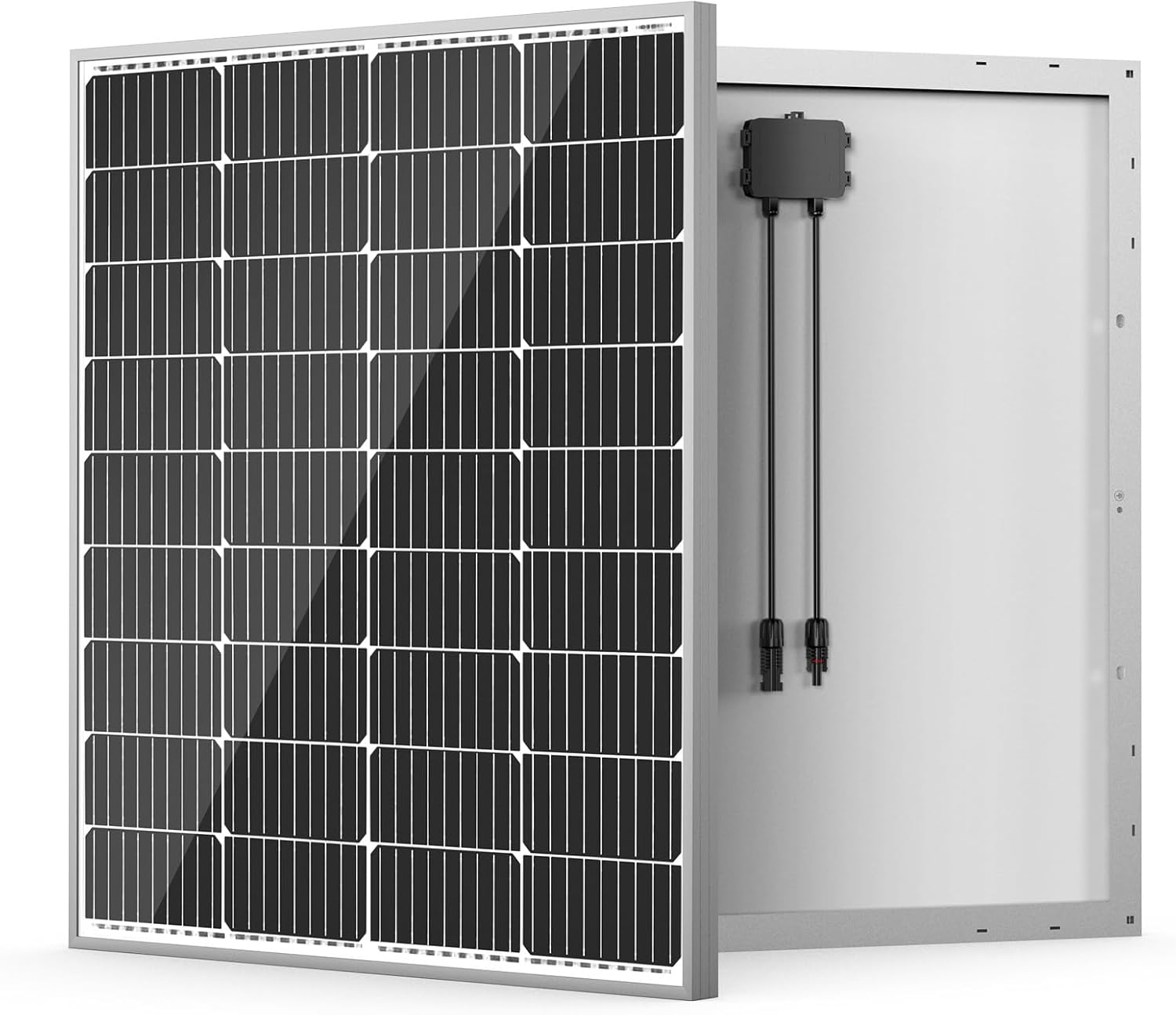
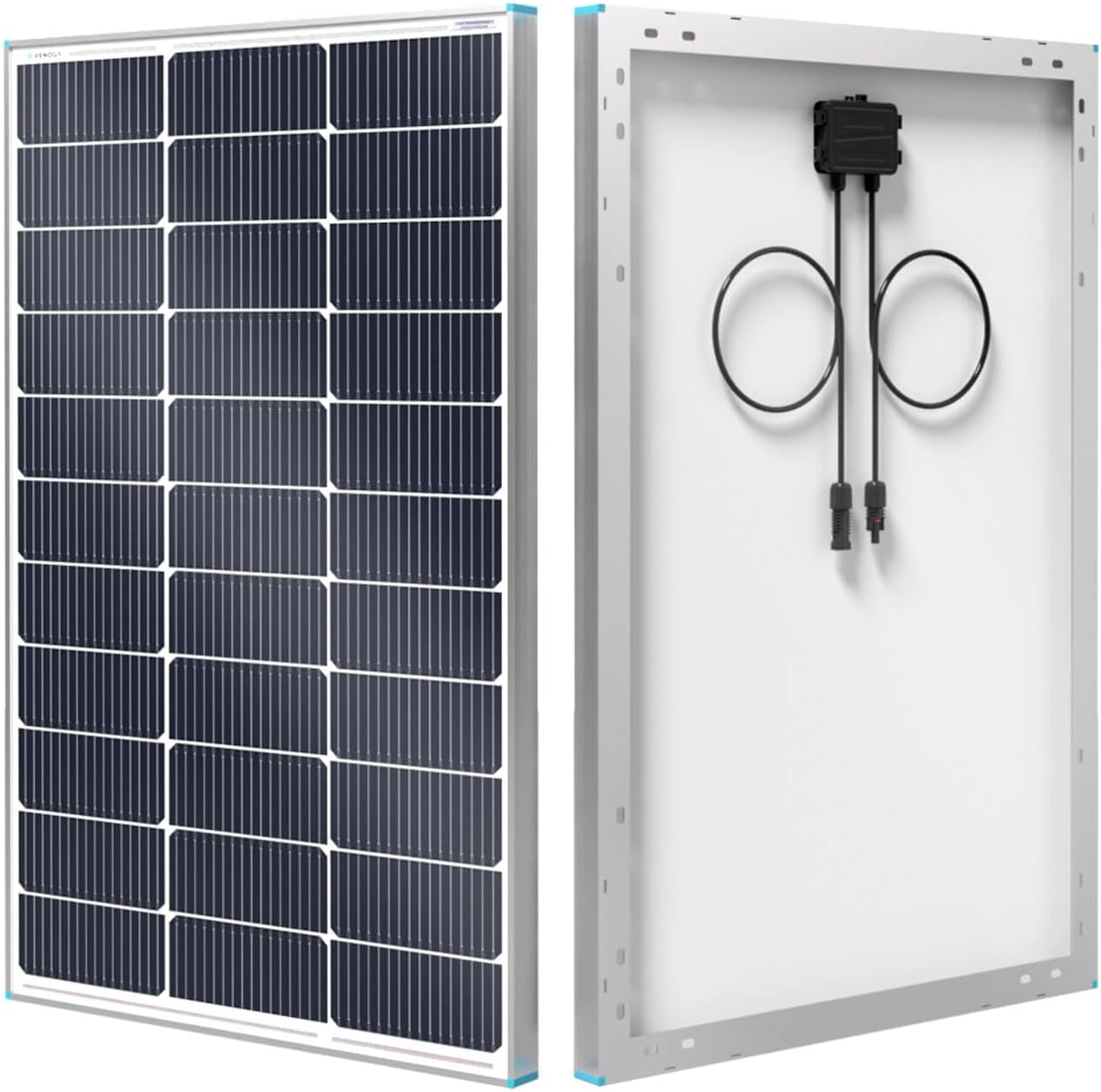
- Junction Box and MC4 Connectors: The junction box, which houses the bypass diodes and cable connections, is sealed and generally IP65 rated, meaning it’s protected against dust ingress and low-pressure water jets. This is sufficient for RV use. The
MC4 connectorsprovided are standard and reliable.
Factory Insider Note: Connector quality is often overlooked, yet it is one of the most common failure points after years of outdoor use. Many manufacturers cut corners here, leading to moisture ingress and corrosion, which cripples efficiency and creates safety hazards. Renogy typically uses decent quality, but always inspect them for secure connections and proper sealing during installation. - Long-term Reliability: Given its construction, a properly installed Renogy 100W rigid panel can easily last 15-20 years, with a gradual degradation of efficiency (around 0.5% per year, as per industry standards). This
long-term reliabilitymakes it a solid investment.
Portability, Weight, and Installation for RV Use
This particular Renogy kit features a rigid solar panel.
- Weight & Dimensions: At around 16.5 lbs (7.5 kg) for the panel itself, it’s manageable for one person to handle during installation. Its dimensions (approx. 47 x 21 x 1.4 inches) mean it occupies a fair amount of roof space.
- Installation Ease: For a permanent
RV solar setup, a rigid panel is generally easier to mount securely than a flexible one. Renogy provides mounting Z-brackets with their kits, simplifying the process of bolting it to an RV roof. However, its rigid nature makes it less adaptable for ground deployment unless paired with a separate stand. For trulyportable solar chargerapplications, a dedicatedfolding solar panelwould be more practical.
A Week on the Road: Renogy 100W for RV Travel
My recent trip across the Pacific Northwest provided an ideal backdrop for testing the Renogy 100W kit. We were in a 24-foot Class C RV, equipped with a single 100Ah deep-cycle lead-acid battery. The goal was to sustain basic power needs without relying on shore power.
Daily Charging: With the Renogy 100W panel mounted flat on the roof, pointed roughly south, the daily energy harvest was quite consistent. On sunny days, I observed peak charging currents of 4-5 amps into the 12V battery, declining as the battery neared full. This translated to roughly 20-30 amp-hours (Ah) per day in good sun, enough to offset the parasitic draws of the RV (carbon monoxide detector, small inverter standby) and power evening LED lights, charging phones, and running the water pump for short periods.
Roof Space: The 100W panel fit comfortably alongside other roof amenities like the AC unit and roof vents. For those with larger RVs or higher power demands, installing multiple 100W panels or a single 200W solar panel or 400W solar panel might be necessary. The modularity of 100W rigid panels makes them versatile for custom layouts.
Portable Deployment vs. Roof: While the kit is designed for roof mounting, I did experiment with deploying it on the ground using a custom-built, adjustable kickstand (not included in the basic kit). This significantly improved morning and evening efficiency, as I could angle the panel directly at the sun. However, the rigid nature of the panel and its size made daily setup and takedown less convenient than a truly portable solar panel solution. It’s more suited for a “set it and forget it” roof mount.
Battery Storage: The 30A PWM controller did a commendable job of preventing overcharging and managing the battery. However, in prolonged cloudy periods, the 100W output proved insufficient to fully replenish the battery, requiring more mindful power consumption. For extended off-grid solar stays, especially with moderate electrical loads like an RV refrigerator or an inverter for a laptop, a single 100W panel is a bare minimum.
Who is the Renogy 100W Kit Best For?
- RV Owners (Entry-Level): Ideal for those just starting with
RV solar setupor with modest power demands (lights, phone charging, water pump, small fan). - Van Life (Minimalist): Suitable for basic power needs in smaller vans with limited roof space.
- Emergency Backup (Stationary): Can provide critical
portable renewable energyfor charging communication devices and LED lighting during outages. - Off-Grid Living (Small Cabins/Sheds): Adequate for very low-power requirements in small, seasonal structures.
- Camping (Stationary Setup): Great for a semi-permanent
camping solar panelsetup where it can remain deployed for a few days.
Potential Drawbacks of the Renogy 100W Kit
While a solid performer, no product is perfect.
- Rigid Nature: Its fixed form factor means it’s less adaptable for impromptu ground deployment or storage compared to a
foldable solar panel. This affects itsportability. - PWM Controller: As discussed, the PWM controller is less efficient than MPPT, potentially leaving some watts on the table, especially with higher voltage panels or colder temperatures.
- Limited Power: 100W is a starting point. It won’t power significant loads like microwaves, coffee makers, or larger inverters for extended periods. Users with higher needs will quickly look for a
200W solar panelor even a400W solar panelsystem. - No Kickstand Included: For ground deployment, you’ll need to purchase or fabricate a separate stand, adding to the initial effort.
Value for Money Analysis
The Renogy 100W 12V Solar Panel Starter Kit consistently offers excellent value for money.
- Cost per Watt: It’s among the most competitive rigid panels on a cost-per-watt basis, especially considering the inclusion of a charge controller and cabling.
- Efficiency & Warranty: With
high efficiency solar panelmonocrystalline cells and a standard 25-year power output warranty (typically 80% of rated power after 25 years), theexpected lifespanand performance guarantee are strong. - Long-term Value: Given its
durabilityandbuild quality, this kit provides a reliable source of power for decades, making the initial investment worthwhile for basicoff-grid solarneeds.
Beyond 100W: Scaling Your RV Solar Power
For many RVers, 100W is just the beginning. If you run a compressor fridge, an inverter for a laptop, or have multiple devices charging, you’ll likely need more power.
- 200W Solar Panel: Often achieved with two 100W panels or a single larger 200W unit. This significantly boosts daily energy harvest, allowing for more comfort and less reliance on generators or shore power.
- 400W Solar Panel: This is where you can start thinking about running more substantial appliances. A
400W solar panelsystem (often four 100W panels or two 200W panels) demands careful planning for roof space and battery bank capacity, along with a robust MPPT charge controller to maximize efficiency.
The Renogy 100W kit serves as an excellent foundation, allowing for easy expansion by adding more panels of the same type in parallel.
Renogy 100W vs. The Competition: A Comparative Review
For buyers seeking a solar panel kit for RV, it’s important to consider alternatives, especially regarding portability and controller technology.
| Feature | Renogy 100W 12V Starter Kit | Jackery SolarSaga 100W | EcoFlow 110W Portable Solar Panel | BougeRV 100W Monocrystalline Panel |
|---|---|---|---|---|
| Panel Type | Rigid Monocrystalline | Foldable Monocrystalline | Foldable Monocrystalline | Rigid Monocrystalline |
| Efficiency (Avg) | ~19% (panel only) | ~23% | ~21-22% | ~18-19% |
| Rated Power | 100W | 100W | 110W | 100W |
| Weight | ~16.5 lbs (panel only) | ~9 lbs | ~9.2 lbs | ~16 lbs |
| Foldable | No | Yes | Yes | No |
| IP Rating (Panel) | IP65 (junction box), Tempered Glass | IP65 | IP68 | IP65 (junction box), Tempered Glass |
| Warranty | 25-year output (panel) | 2 years (panel) | 1 year (panel) | 5-year materials, 25-year output |
| Included Controller | Yes (30A PWM) | No (designed for Jackery P.S.) | No (designed for EcoFlow P.S.) | No |
| Target Use | Permanent RV/Cabin, Starter Kit | Portable Power Stations, Camping | Portable Power Stations, Camping | Permanent RV/Off-grid |
Who should buy Renogy 100W 12V Solar Panel Starter Kit with 30A PWM:
This kit is ideal for new RV owners or those looking for a semi-permanent, cost-effective rigid solar panel solution for their RV solar setup or small off-grid solar cabin. It provides a complete, basic system (panel + controller + cables) for direct battery charging, offering excellent long-term reliability and value for money if roof space isn’t an issue and portability isn’t the primary concern. Its robust build is designed to withstand continuous outdoor exposure.
Who should buy Jackery SolarSaga 100W:
If portability and ease of deployment are your top priorities, especially for camping solar panel use with a portable power station (like a Jackery Explorer), this foldable solar panel is a strong contender. It’s lightweight, easy to set up with its built-in kickstands, and features high efficiency solar panel cells. However, it requires a compatible power station or an external charge controller if you intend to charge a 12V battery directly.
Who should buy EcoFlow 110W Portable Solar Panel:
Similar to Jackery, the EcoFlow 110W panel excels in portability and is engineered to pair seamlessly with EcoFlow power stations. It often boasts slightly higher wattage and an IP68 rating for superior water and dust resistance, making it suitable for more demanding outdoor conditions. It’s a premium portable solar charger for those already invested in the EcoFlow ecosystem or seeking maximum portability.
Who should buy BougeRV 100W Monocrystalline Solar Panel:
If you’re looking for a standalone rigid solar panel similar to Renogy but prefer to source your charge controller and cables separately (perhaps to upgrade to an MPPT controller immediately), BougeRV offers a comparable robust panel. It provides a solid foundation for a custom RV solar setup or off-grid solar project, often at a competitive price.
Practical Buying Advice for Your Next Solar Panel Kit for RV
- Assess Your Power Needs: Before looking at
100W solar panelor200W solar paneloptions, list all the devices you want to power and for how long. Calculate your daily Amp-hour (Ah) consumption. This will dictate the total wattage yourRV solar panelsystem needs. Don’t underestimate this step. - Evaluate Available Space: For
rigid solar paneloptions like the Renogy 100W, measure your RV roof space. Forfoldable solar panelsolutions, consider storage space and ease of deployment. - Controller Type Matters: The Renogy kit comes with a PWM controller, which is functional. However, for systems larger than 200W, or if you want to maximize efficiency, invest in an MPPT charge controller. It will extract more power, especially in sub-optimal conditions.
- Battery Bank Size: Your solar panels charge your batteries. Ensure your battery bank (e.g., lithium, lead-acid) is large enough to store the power generated and meet your demands, especially overnight or during cloudy periods.
- Build Quality and Connectors: Always scrutinize
build quality,cable quality, andMC4 connectors. These components are often overlooked but are critical forlong-term reliabilityand safety, particularly inoff-grid solarapplications.
Frequently Asked Questions (FAQ)
Why are monocrystalline solar panels generally preferred for RV applications?
Monocrystalline panels are preferred for RVs primarily due to their higher solar conversion efficiency. This means they can generate more power from a smaller footprint compared to polycrystalline panels. On an RV roof where space is limited, this higher power density allows you to maximize your RV solar setup with the wattage you need without consuming excessive real estate. They also tend to perform slightly better in low-light conditions, which is beneficial during early mornings or late afternoons while camping.
How does a 100W solar panel perform on a cloudy day for an RV?
On a heavily cloudy or overcast day, a 100W solar panel will experience a significant drop in output, often producing only 10-30% of its rated power. This means you might see currents as low as 0.5 to 1.5 amps into your 12V battery. While it can still provide a trickle charge to maintain your battery, it’s generally insufficient for substantial power generation. For sustained off-grid solar living or powering significant loads on cloudy days, you would need a much larger array (e.g., a 400W solar panel system) or supplementary power sources.
What factors should buyers check before committing to a solar panel kit for RV?
Before purchasing a solar panel kit for RV, buyers should critically assess their actual daily power consumption (in Amp-hours), determine their available roof or deployment space, and understand the type and quality of the charge controller included. They should also verify the panel’s build quality (frame, glass/coating, junction box), the cable quality and MC4 connectors, and the warranty terms for both the panel and controller. Finally, consider if a rigid solar panel suits their needs or if a foldable solar panel offers better portability for their specific camping solar panel or RV solar setup use case.
Final Verdict: Renogy 100W 12V Solar Panel Starter Kit for RV
The Renogy 100W 12V Solar Panel Starter Kit remains a robust and highly dependable option for anyone looking to enter the world of RV solar setup or basic off-grid solar power. As an outdoor field tester, I can confirm its monocrystalline solar panel cells deliver consistent performance in varied conditions, and its build quality ensures long-term reliability. While the included PWM controller is basic, it effectively manages power for a single 100W solar panel, making it an excellent value for money choice. If you prioritize a permanent, durable installation and your power needs are modest, this solar panel kit for RV is an industry benchmark that continues to prove its worth year after year. For those needing higher power or ultimate portability, the market offers other specialized solutions, but Renogy’s entry-level kit stands strong.
#Renogy #100W #12V #Solar #Panel #Starter #Kit #30A #PWM