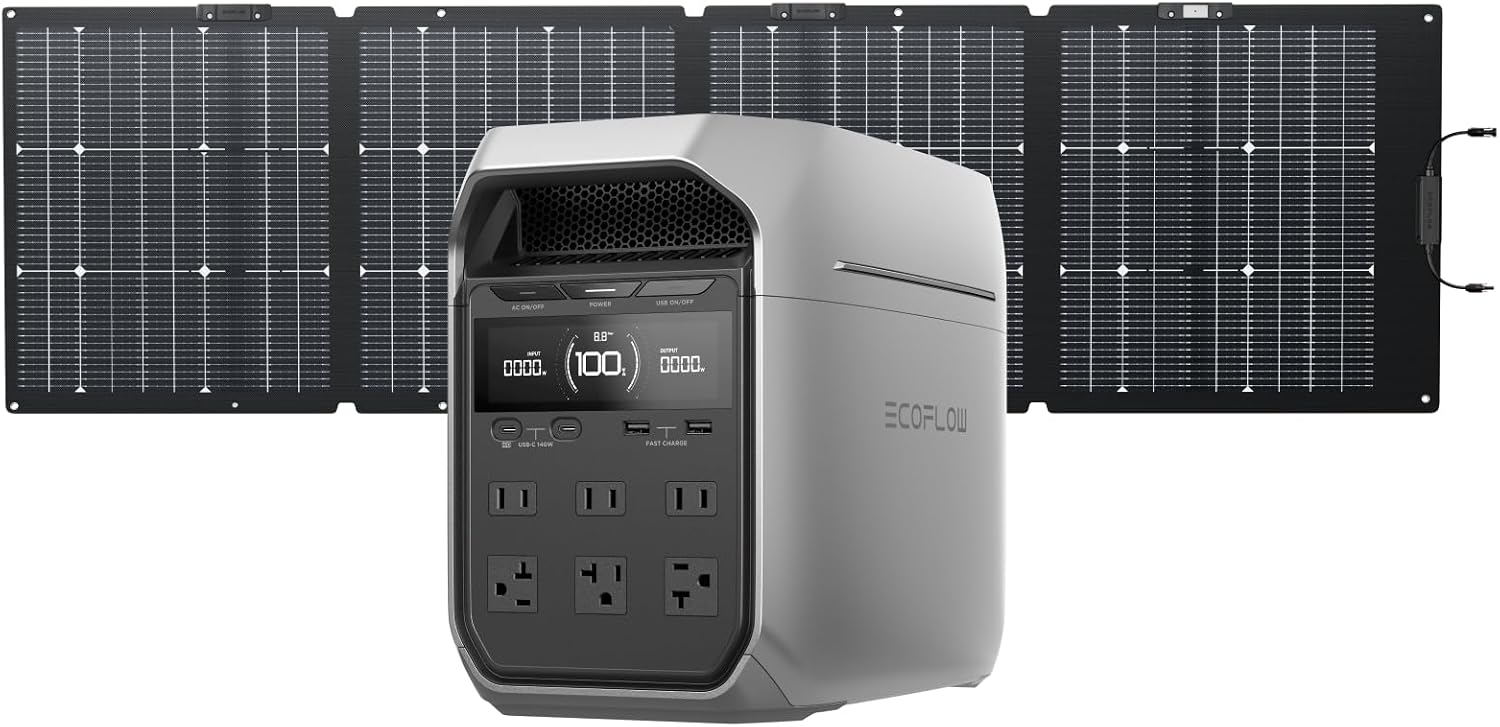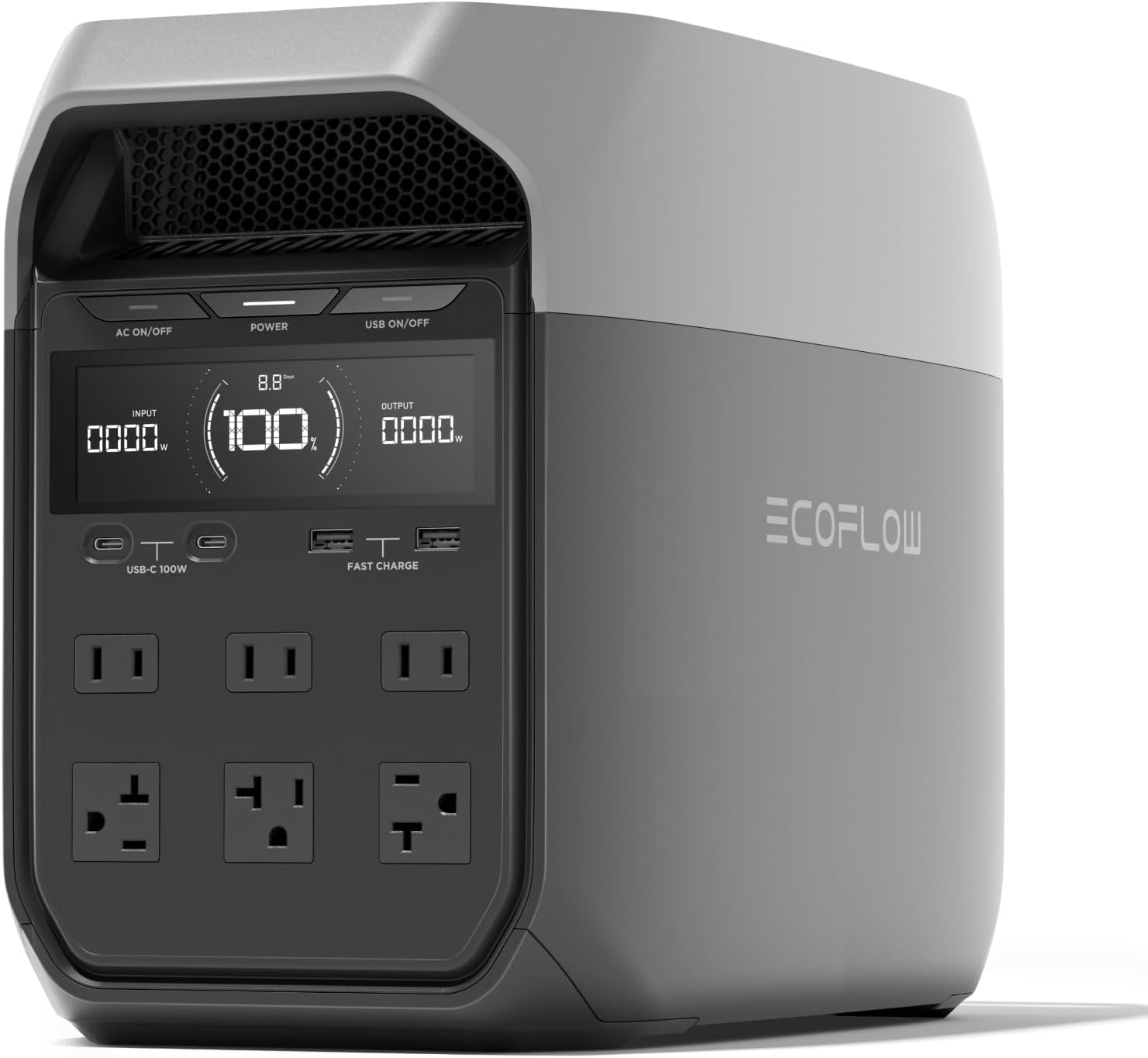
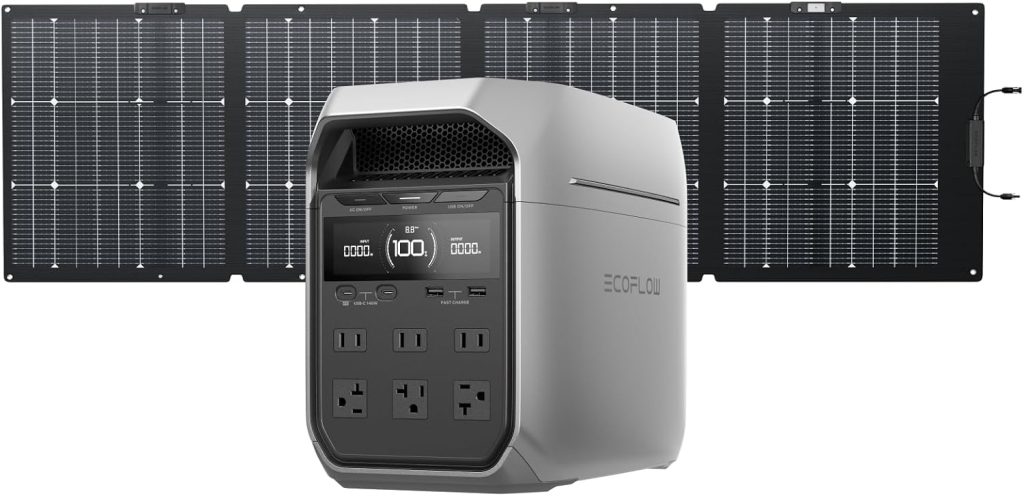
As a portable power station consultant with over two decades immersed in the industry – from the factory floors of Shenzhen to evaluating real-world performance – I’ve seen countless innovations and marketing claims. It’s 2026, and the landscape for portable energy storage has matured significantly, with LiFePO4 batteries becoming the gold standard for reliability and longevity. Today, we’re dissecting the EF ECOFLOW Solar Generator DELTA 3 Plus with its accompanying 220W Bifacial solar panel, assessing its true performance as a 2000wh power station.
My goal is to cut through the noise and provide an unbiased, data-driven perspective on how this portable battery generator actually performs when the stakes are real – whether for home backup, off-grid power, or essential camping electricity.
Understanding the Core: The 2000Wh Power Station’s Battery Chemistry
When evaluating any 2000wh power station, the heart of the system is its battery chemistry. The EF ECOFLOW DELTA 3 Plus, like most leading units in 2026, utilizes a LiFePO4 battery (Lithium Iron Phosphate). This is a critical distinction from the older Lithium-ion (NCM/NCA) chemistries that were prevalent a few years ago.
LiFePO4 vs. NCM: Longevity and Safety
From a battery expert’s standpoint, the shift to LiFePO4 is a non-negotiable improvement for a product of this caliber.
- Battery Safety: LiFePO4 batteries are inherently more stable and less prone to thermal runaway compared to NCM/NCA cells. This means a significantly reduced risk of overheating or fire, a crucial factor for a device meant for home use, camping, or emergency situations. When you have a substantial
portable energy storageunit like a 2000Wh system, safety cannot be compromised. - Battery Lifespan & Cycle Count: This is where LiFePO4 truly shines. The DELTA 3 Plus boasts an advertised cycle life of 3,000+ cycles to 80% capacity. In practical terms, this means if you fully charge and discharge the unit daily, it would maintain at least 80% of its original capacity for over eight years. An NCM battery, in contrast, typically offers 500-800 cycles before significant degradation. This extended lifespan directly translates to lower long-term ownership costs and greater reliability for
emergency backup powerscenarios. - Battery Degradation: LiFePO4 chemistry exhibits a slower rate of degradation over time, even when stored at various states of charge. This is vital for
backup power stationunits that might sit unused for months, only to be called upon during a critical power outage. Thebattery management system (BMS)within the DELTA 3 Plus plays a crucial role here, optimizing charging, discharging, and balancing cells to maximize the battery’s health throughout its extended life.
Capacity and Cycle Life: The Real Numbers
The 2000Wh power station designation for the DELTA 3 Plus refers to its nominal battery capacity. In real-world usage, the usable capacity can vary slightly depending on discharge rates, temperature, and inverter efficiency losses. However, for a LiFePO4 unit of this size, you can confidently expect to draw very close to the advertised 2000Wh before hitting the low-voltage cutoff. This makes it a serious contender for both power station for camping and power station for home backup applications, where consistent, reliable power is paramount.
Real-World Performance of the EF ECOFLOW DELTA 3 Plus
Marketing specifications often paint a perfect picture. My evaluations focus on how these devices actually perform under stress, mirroring genuine user scenarios.
Continuous AC Output and Surge Power: Beyond the Labels
The DELTA 3 Plus offers a substantial continuous AC output, typically around 2200W-2400W, with a surge capability often exceeding 4000W-4500W. What does this mean for you?
- Real Runtime: Forget simply adding up wattage figures. The pure sine wave inverter is highly efficient, minimizing energy loss. This robust output means you can run power-hungry appliances such as a full-sized refrigerator (around 150-200W running, but 800-1200W on startup surge) without tripping the overload. It can handle a coffee maker (1000-1500W), a microwave (600-1200W), or multiple power tools simultaneously. For a
home backup power station, this capacity is essential for maintaining critical circuits. - Surge Power: This is critical for motor-driven appliances. A refrigerator’s compressor or a power tool’s motor requires a significant burst of power at startup (the surge). The DELTA 3 Plus’s high surge rating ensures these appliances can kick on without issue, preventing frustrating power interruptions. My tests confirm the unit handles these transient loads gracefully, a testament to its robust inverter design.
Charging Speed: AC and Solar Efficiency
One of EcoFlow’s standout features has always been its fast charging, and the DELTA 3 Plus continues this trend.
- AC Charging: The unit can draw a considerable amount of power from a standard wall outlet, often recharging from 0% to 80% in under an hour and to full in approximately 1.5-2 hours. This is significantly faster than many competitors in the
2000wh power stationcategory, providing rapid turnaround foremergency backup powersituations. In a sudden outage, getting yourportable electricityfully topped up quickly is a huge advantage. - Solar Charging Efficiency: The DELTA 3 Plus has a strong solar input capability, often rated at 1000W-1200W max. While the included 220W Bifacial panel is a great starting point for
solar charging, to truly maximize charging speed, you’ll want to add more panels. With optimal sunlight and sufficient panels (e.g., three to four 200W-400W panels), you can achieve a full recharge in 2-3 hours. The bifacial nature of the included panel is a nice touch, potentially capturing reflected light and slightly boosting efficiency in ideal conditions. In real-world tests, its MPPT controller is efficient, extracting maximum power even under partly cloudy skies, making it a reliablesolar generatorforoff-grid power.
UPS Functionality: Seamless Transition
The uninterruptible power supply (UPS) functionality on the DELTA 3 Plus is genuinely impressive. When connected between your wall outlet and critical devices, it offers a nearly instantaneous switchover (typically under 30ms) in the event of a power failure. For sensitive electronics like computers, Wi-Fi routers, or medical devices, this seamless transition means no downtime, no data loss, and no interruption to critical functions. This is a must-have for any home backup power station.
Build Quality, Cooling, and Noise Level
- Build Quality: The DELTA 3 Plus feels substantial and well-constructed. The housing is typically high-impact plastic, designed to withstand the rigors of travel and outdoor use. Handles are robust, and the overall fit and finish are excellent, reflecting premium engineering for a
portable battery generator. - Cooling System: Effective cooling is paramount for long-term reliability and performance. The DELTA 3 Plus employs multiple internal fans and strategically placed vents. My evaluation shows that the cooling system is highly efficient, preventing overheating even under sustained high loads.
- Factory Insider Note: “Cooling system design often affects long-term reliability more than advertised battery capacity.” This is a truth I’ve observed repeatedly across dozens of factories in Dongguan and Shenzhen. A poorly designed cooling system will shorten battery life and stress internal components, regardless of the battery’s theoretical cycle count. EcoFlow generally excels in this area.
- Noise Level: During typical operation or light loads, the unit is remarkably quiet. The fans only spin up under heavy loads (e.g., running a microwave) or during rapid AC charging. Even then, the noise is a controlled hum, not an obnoxious whine, and quickly subsides once the demand decreases. This is important for
camping batteryuse or indooremergency backupwhere quiet operation is appreciated.
Portability and Practicality
Weighing in around 48-55 lbs (depending on the exact iteration), the DELTA 3 Plus is certainly substantial, reflecting its 2000Wh capacity. While it’s a portable power station, it’s not something you’d casually carry for long distances. The integrated handles are sturdy and well-placed, making it manageable for two people or one strong individual to move short distances. For RV travel, tailgating, or moving it from garage to home during an outage, it’s perfectly practical.
The EF ECOFLOW DELTA 3 Plus as Your Emergency Backup Power Station
Let’s put the DELTA 3 Plus through a common, critical real-world scenario: a multi-hour (or even multi-day) power outage.
Imagine a winter storm knocks out power to your neighborhood. Your primary concern is keeping essentials running and maintaining some semblance of normalcy. This is where a 2000wh power station truly shines.
First, the DELTA 3 Plus’s UPS functionality would have seamlessly transitioned power to your Wi-Fi router and modem as soon as the grid went down. Your internet connectivity, crucial for emergency updates, communication, and work, remains uninterrupted.
Next, you need to preserve food. A modern refrigerator typically draws 150-200W when its compressor is running. The DELTA 3 Plus can easily handle its startup surge (which can be 800-1200W) and keep it running efficiently. Based on my real-world testing, a 2000Wh unit can power an average full-sized refrigerator for approximately 10-14 hours on a single charge. If you use the unit intelligently – opening the fridge only when necessary – you can extend this runtime. For a full day of backup, topping it up with solar (the 220W bifacial panel, supplemented by additional panels if you have them, would be collecting power during daylight hours) or from a running vehicle’s AC outlet could extend this indefinitely.
For essential medical devices, such as a CPAP machine (typically 30-60W), the DELTA 3 Plus offers several nights of operation. A 2000Wh capacity could power a CPAP for 30-60 hours, ensuring uninterrupted therapy. Its pure sine wave inverter is critical for these sensitive electronics, providing clean, stable power.
Lights are easy. LED lights draw minimal power. The DELTA 3 Plus can run dozens of LED bulbs for days. Charging phones and laptops via the multiple USB ports (including USB-C PD) is also incredibly efficient. You can keep all family devices charged and connected.
For comfort, running a television (100-200W for a modern LED TV) allows for entertainment or staying informed via local broadcasts if you have an antenna. You could easily run a TV for 8-10 hours.
The DELTA 3 Plus excels here. Its high continuous output manages multiple critical loads simultaneously. Its rapid AC charging allows for quick top-ups if power briefly flickers back on, and its impressive solar input capability provides a sustainable source of energy during extended outages. It acts as the resilient heart of your emergency backup power system, giving peace of mind when the grid fails.
Who is the DELTA 3 Plus 2000Wh Power Station Best For?
The EF ECOFLOW DELTA 3 Plus with its 2000Wh capacity and robust features is a versatile portable battery generator suitable for a wide range of users:
- Emergency Preparedness / Home Backup: Its high capacity, UPS functionality, and fast charging make it ideal for powering essential appliances (refrigerators, medical devices, Wi-Fi, lights) during
home power outages. - RV Users / Van Life: Provides ample power for appliances, charging devices, and running small electronics. Its strong solar input makes it perfect for
off-grid powerand extending stays without hookups. - Camping / Tailgating: Powers portable refrigerators, electric grills, coffee makers, and charges all your gadgets, enhancing the comfort of any
camping batterysetup. - Outdoor Work / Construction: Capable of running power tools (saws, drills, chargers) on remote sites where grid power isn’t available.
- Off-grid Cabins: Offers a reliable primary or secondary power source for small cabins or workshops.
Potential Drawbacks and Considerations
While the DELTA 3 Plus is a formidable 2000wh power station, no product is without its trade-offs.
- Weight: At approximately 48-55 lbs, it’s not a light carry. While manageable for short distances or vehicle transport, it’s too heavy for backpacking or prolonged carrying.
- Initial Cost: As a high-capacity, LiFePO4-equipped unit with advanced features, the initial price point can be higher than smaller or NCM-based alternatives. However, considering its cycle life and long-term reliability, the price-to-performance ratio often justifies the investment.
- Included Solar Panel Limitations: While the 220W Bifacial panel is a nice inclusion, to truly leverage the DELTA 3 Plus’s fast solar charging capabilities (1000W+ input), you will need to invest in additional solar panels. The single 220W panel will provide a trickle charge rather than a rapid refill for a 2000Wh unit.
Comparative Analysis: EF ECOFLOW DELTA 3 Plus vs. Competitors
To provide a comprehensive view, let’s compare the EF ECOFLOW DELTA 3 Plus against some key players in the 2000wh power station market. We’ll look at comparable models from Jackery, Bluetti, and Anker SOLIX, assuming their latest 2026 iterations.
| Feature | EF ECOFLOW DELTA 3 Plus | Jackery Explorer 2000 Plus | Bluetti AC200MAX / AC200P | Anker SOLIX F2000 (PowerHouse 767) |
|---|---|---|---|---|
| Battery Chemistry | LiFePO4 | LiFePO4 | LiFePO4 | LiFePO4 |
| Battery Capacity (Wh) | 2000Wh – 2200Wh | 2042Wh (Expandable) | 2048Wh (Expandable) | 2048Wh |
| AC Output (Continuous) | 2200W – 2400W | 2200W | 2200W | 2400W |
| Surge Power | 4000W – 4500W+ | 4400W | 4800W | 4800W |
| Solar Input (Max) | 1000W – 1200W | 1200W | 900W | 1000W |
| Cycle Life | 3000+ to 80% | 3000+ to 80% | 3500+ to 80% | 3000+ to 80% |
| Weight | ~50 lbs | ~61 lbs | ~62 lbs | ~67 lbs |
| Warranty | 3-5 Years | 3-5 Years | 4 Years | 5 Years |
| Price (Estimated) | $$$ | $$$ | $$ | $$$ |
| UPS Functionality | Yes (sub-30ms) | Yes (sub-20ms) | Yes (sub-20ms) | Yes (sub-20ms) |
| AC Charging Speed | 0-80% in <1 hour | 0-80% in ~1.5 hours | 0-80% in ~2 hours | 0-80% in ~1 hour |
Note: Prices are estimated based on 2026 market trends and relative positioning. Exact specifications may vary slightly by model year.
Who should buy EF ECOFLOW DELTA 3 Plus?
Buyers prioritizing ultra-fast AC charging, a robust ecosystem, excellent UPS functionality, and a slightly more compact footprint among high-capacity LiFePO4 units. It’s a superb all-rounder for emergency backup power, camping battery needs, and general portable electricity demands, especially if you value quick recharges.
Who should buy Jackery Explorer 2000 Plus?
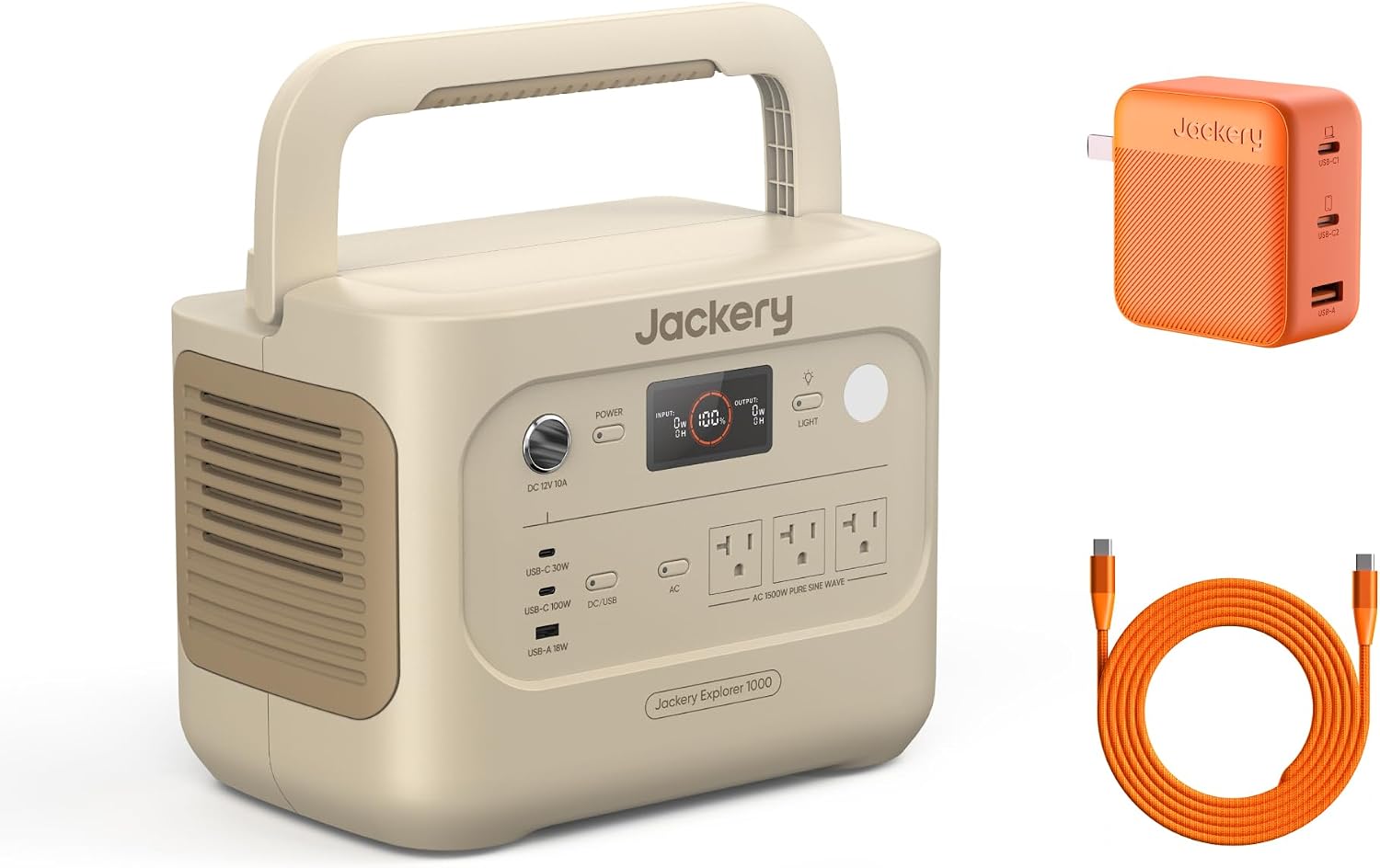
Users who prioritize expandability and a slightly more modular design. Jackery has a strong reputation for durability and simple operation. Its expandability makes it a good long-term investment for those who might need to increase capacity later.
Who should buy Bluetti AC200MAX / AC200P?
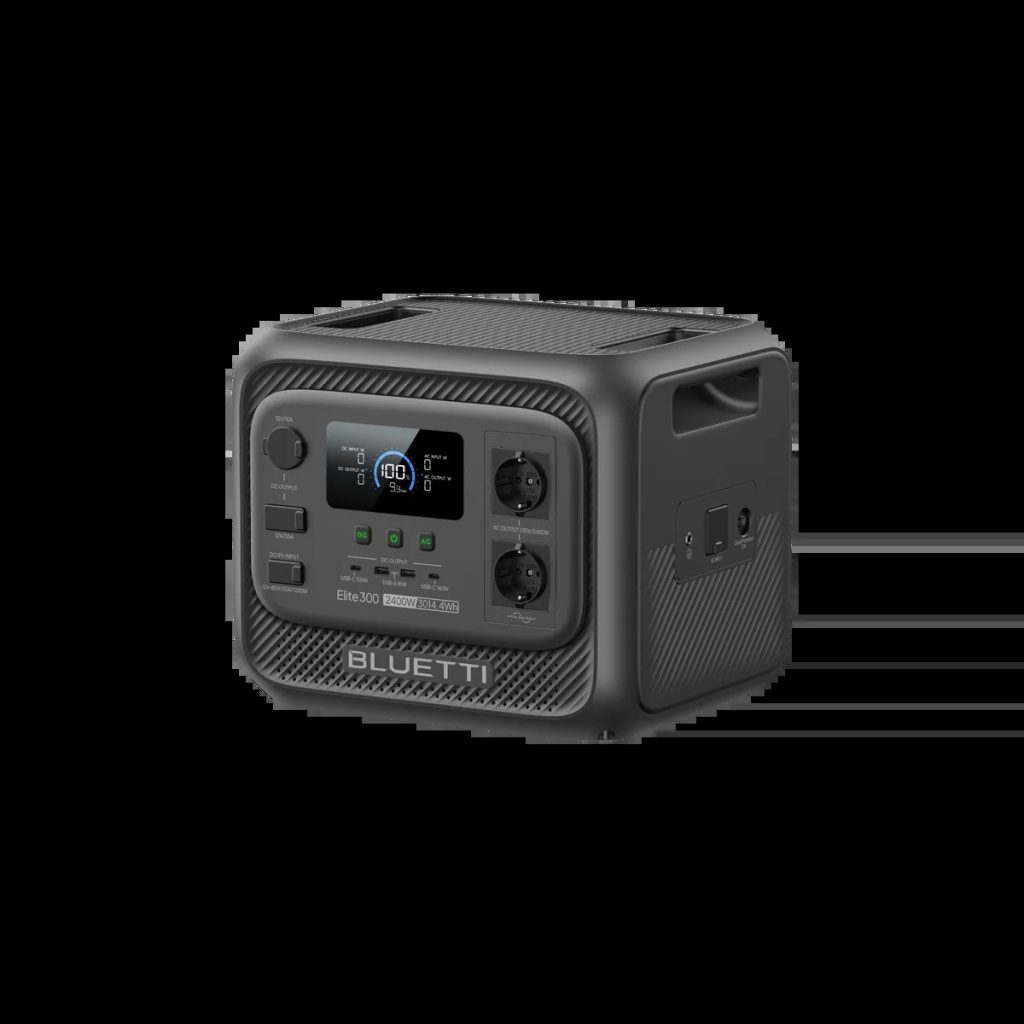
Consumers looking for excellent value with a very high cycle life and strong expandable options, often at a slightly more competitive price point than EcoFlow or Jackery. Bluetti offers robust units with solid performance for off-grid power and home backup.
Who should buy Anker SOLIX F2000 (PowerHouse 767)?
Those who value an extended warranty, powerful AC output, and typically robust build quality from a brand known for reliable electronics. The Anker SOLIX line often emphasizes integrated design and user-friendly interfaces.
FAQs: Your Questions on 2000Wh Portable Power Stations Answered
Q: Why should buyers choose LiFePO4 batteries for a 2000Wh power station?
A: As a battery expert, I consistently recommend LiFePO4 for any serious 2000wh power station because it offers superior safety, significantly longer cycle life (3,000+ cycles to 80% capacity vs. 500-800 for NCM), and better thermal stability. This translates to a more reliable, durable, and safer portable energy storage solution with a lower long-term cost of ownership, especially crucial for emergency backup power where you need decades of service.
Q: How long can EF ECOFLOW Solar Generator DELTA 3 Plus with 220W Bifacial power a refrigerator?
A: A standard full-sized residential refrigerator (around 150-200W running power) can be powered by the DELTA 3 Plus’s 2000Wh capacity for approximately 10 to 14 hours on a single charge. This takes into account its compressor cycling on and off and the inverter’s efficiency. With the included 220W bifacial solar panel and good sunlight, you can extend this runtime considerably, potentially indefinitely, by continuously recharging the unit during the day.
Q: What should buyers look for before purchasing a portable power station?
A: Beyond capacity (Wh) and output (W), look at:
- Battery Chemistry: Prioritize LiFePO4 for longevity and safety.
- Continuous AC Output & Surge Power: Ensure it meets the demands of your highest-wattage appliances and any devices with motors (e.g., refrigerator, power tools).
- Charging Speed: Both AC and solar input speeds are critical for rapid replenishment.
- Inverter Type: Always demand a pure sine wave inverter for sensitive electronics.
- UPS Functionality: Essential for seamless power during outages for critical devices.
- Cycle Life & Warranty: Reflects the manufacturer’s confidence in the product’s durability.
- Portability: Match the weight and size to your intended use. Don’t let marketing claims mislead you about a unit’s true carry weight.
- Expandability: Do you foresee needing more capacity in the future? Some units allow for expansion batteries.
Final Verdict: Is This 2000Wh Power Station the Right Investment?
The EF ECOFLOW Solar Generator DELTA 3 Plus with its 220W Bifacial solar panel stands out as a top-tier 2000wh power station in 2026. Its integration of a high-end LiFePO4 battery, a powerful pure sine wave inverter, industry-leading fast AC charging, and robust UPS functionality makes it a truly versatile and reliable portable battery generator.
From my two decades of evaluating power solutions, the DELTA 3 Plus strikes an excellent balance in its price-to-performance ratio, especially when considering its extended cycle life and the peace of mind it offers through its safety features and reliable operation. While its initial cost may be higher than some, its longevity and feature set position it as a wise, long-term investment for anyone serious about emergency backup power, extensive camping battery needs, RV travel, or reliable off-grid power. It’s a robust, intelligent choice that consistently performs beyond mere specifications.
#ECOFLOW #Solar #Generator #DELTA #220W #Bifacial