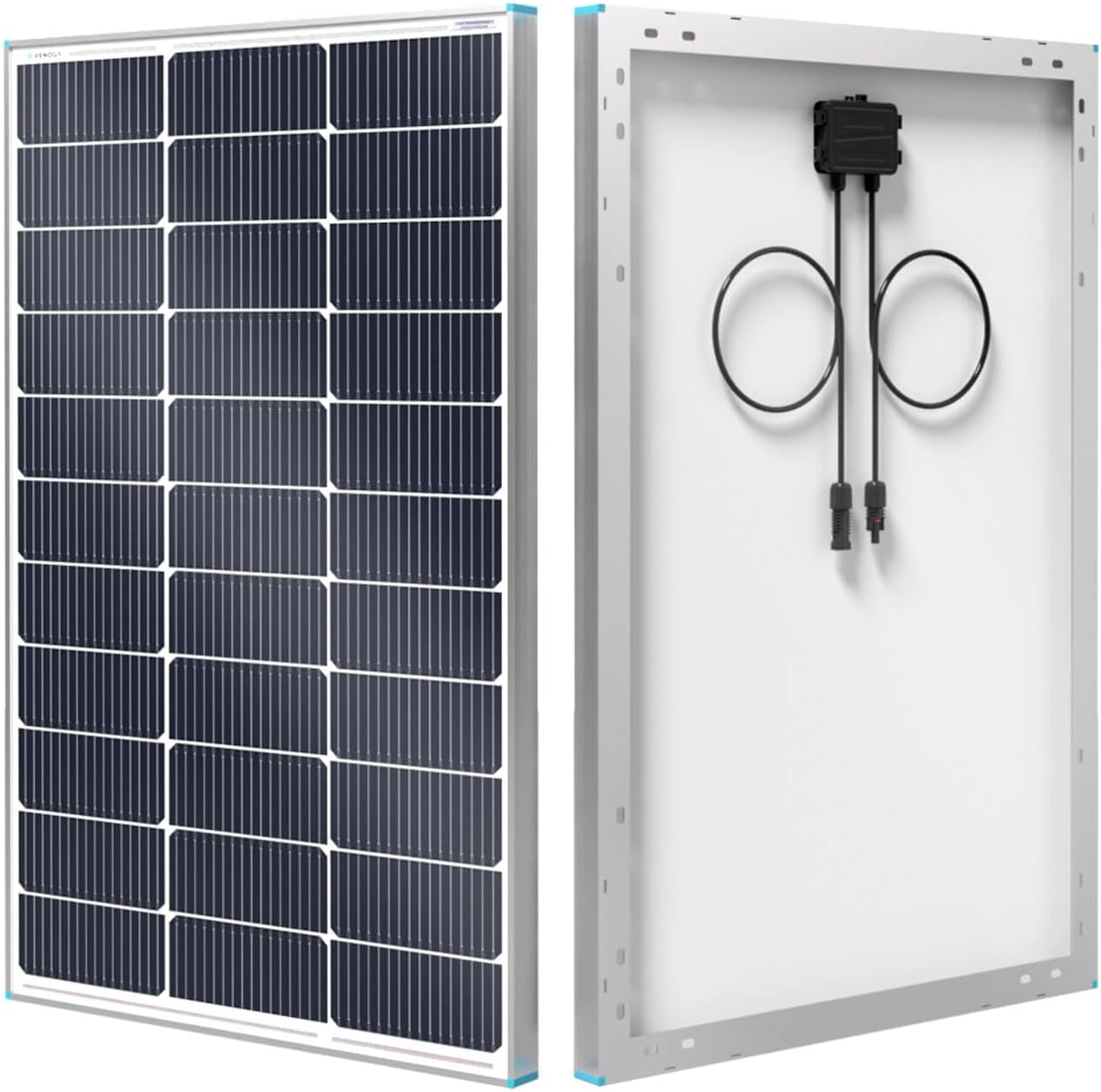
Third morning of a week-long trip, and it rained the whole night before. Gray sky, thin light, the kind of morning where you can see the sun's position only as a slightly brighter patch of cloud. My battery monitor read 12.1 volts. The 100W panel on the roof — a Renogy, the same one everybody starts with — was putting in 18 watts.
Eighteen. On a 100W panel.
I sat there with coffee and watched that number for longer than I care to admit, because it was the first time the marketing math had ever felt personally insulting. A 100W panel does not make 100 watts. It makes 100 watts under lab conditions: perfect angle, cold air, noon sun at sea level. In real life, on a cloudy morning on a camper roof that you parked for shade, you get a fifth of the label. Maybe less. I knew this already, technically. Knowing it and watching your fridge eat the battery while the panel dribbles 18 watts are two different kinds of knowledge.
The panel is the good part. The controller is the compromise
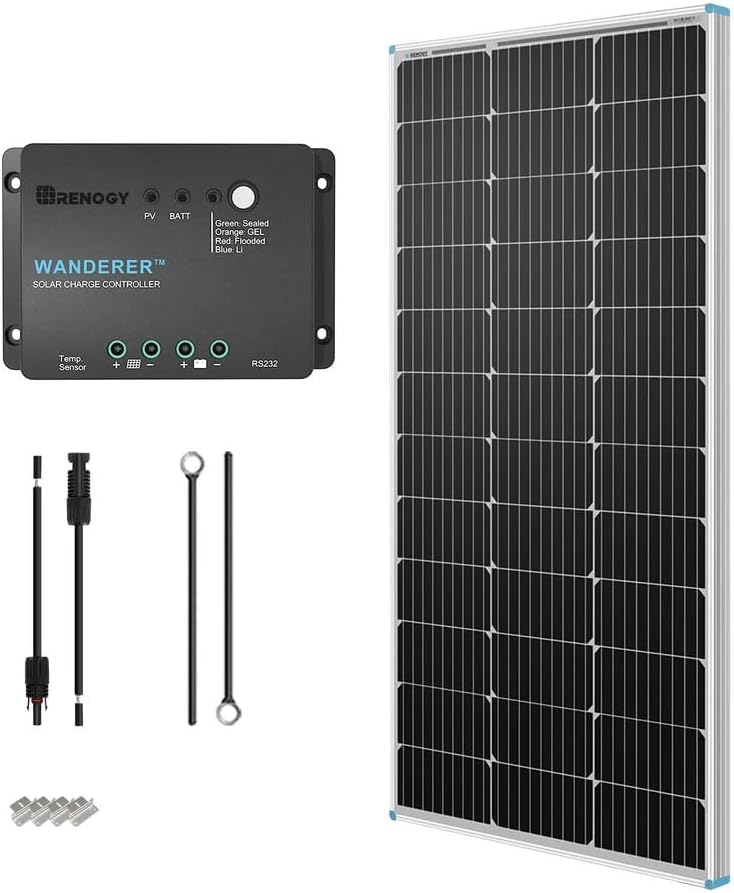
The Renogy 100W 12V starter kit is the default answer for RV solar, and I understand why. Rigid panel, aluminum frame, a 30A PWM charge controller in the box, cables, mounting brackets. Everything you need to bolt power to your roof and stop thinking about it. I've now run through three of these kits across two rigs, and here's what I actually think after all that time: the panel is the good part. The controller is the compromise.
PWM versus MPPT. This is the fight the internet never stops having, and most of the heat is wasted because the answer depends on the panel voltage matching the battery. With a 12V panel and a 12V battery, PWM is fine. It wastes less than people claim. The real-world gap between a PWM and an MPPT controller on a single 100W panel is maybe 10 to 15 percent on a good day — that's the difference between 70 watts and 80 watts at noon. Meaningful over a week. Not meaningful enough to triple the controller budget on day one. I ran PWM for two years before switching, and the switch was about expansion, not regret. This scene I can say with confidence because I watched the numbers daily: MPPT earns its keep when you add a second or third panel and start running higher voltages.
What the kit won't tell you, in any of the paperwork: 100W keeps up with your loads on a sunny travel day, and loses ground every cloudy day, and over a week of mixed weather you end up slightly negative unless you're careful about the fridge. My old absorption fridge, running on 12V, was the silent killer — 10 amps whenever it felt like it. The math: a 100W panel in decent sun gives you maybe 400 to 500 watt-hours a day after controller losses and bad angles. A fridge on DC can eat that whole harvest by itself. Which is why everyone eventually learns the same lesson in the same order: first the panel, then the controller upgrade, then the lithium battery, then the second panel. Nobody buys the full system the first time. We all buy the starter kit and learn.
So why is Renogy's the kit and not the twenty cheaper lookalikes? Honestly? Consistency. The panel frames don't warp, the junction boxes stay sealed, and the bypass diodes actually do their job when half the panel is shaded by your roof vent. I've watched a cheap panel I bought in 2023 lose a third of its output because one shaded cell dragged the whole string down and the diodes were decorative. Renogy's aren't magic — they're just built the way the spec sheet says they are, which in this category is rarer than it should be. The 25-year output warranty language is industry-standard fine print, this I haven't tested, and nobody buying a $150 kit should pretend they're going to file a claim in 2049.
Parking beats hardware
A quick digression, because this is the part that lives in my head rent-free: the best solar upgrade I ever made wasn't electrical at all. It was parking. Angling the whole rig toward the afternoon sun, moving out from under the tree I'd picked for the hammock, accepting that shade and solar are enemies and the hammock lost. I gained more watt-hours from three feet of repositioning than from the MPPT upgrade. Nobody sells you that. There's no affiliate link for parking better. But it was the biggest jump in my daily harvest that year, and I think about it every time someone asks me which panel to buy, like the panel is the whole story. It's not. The panel is maybe half the story. The other half is where you put the thing.
Now for the part where I criticize myself, because the template in my head demands fairness: I bought the kit before I measured a single load. No meter, no monitoring, just vibes. That's the standard beginner error and I made it with full confidence. A $25 shunt meter would have told me in one afternoon that my fridge was the problem and the panel was fine. Buyers — me included — love buying hardware and hate buying measurement. Wrong order. Measure first.
The Renogy 100W starter kit, after three units and thousands of miles: it does exactly what a 100W kit can do, which is less than the box implies and more than the cynics say. It will not make you energy-independent. It will keep your battery from dying while you're parked, on sunny days, if your loads are modest. Pair it with realistic expectations and a second panel fund, and it's the right first step. Just don't expect 100 watts. Expect 70 on a good day, 18 on a gray one, and plan your fridge accordingly.
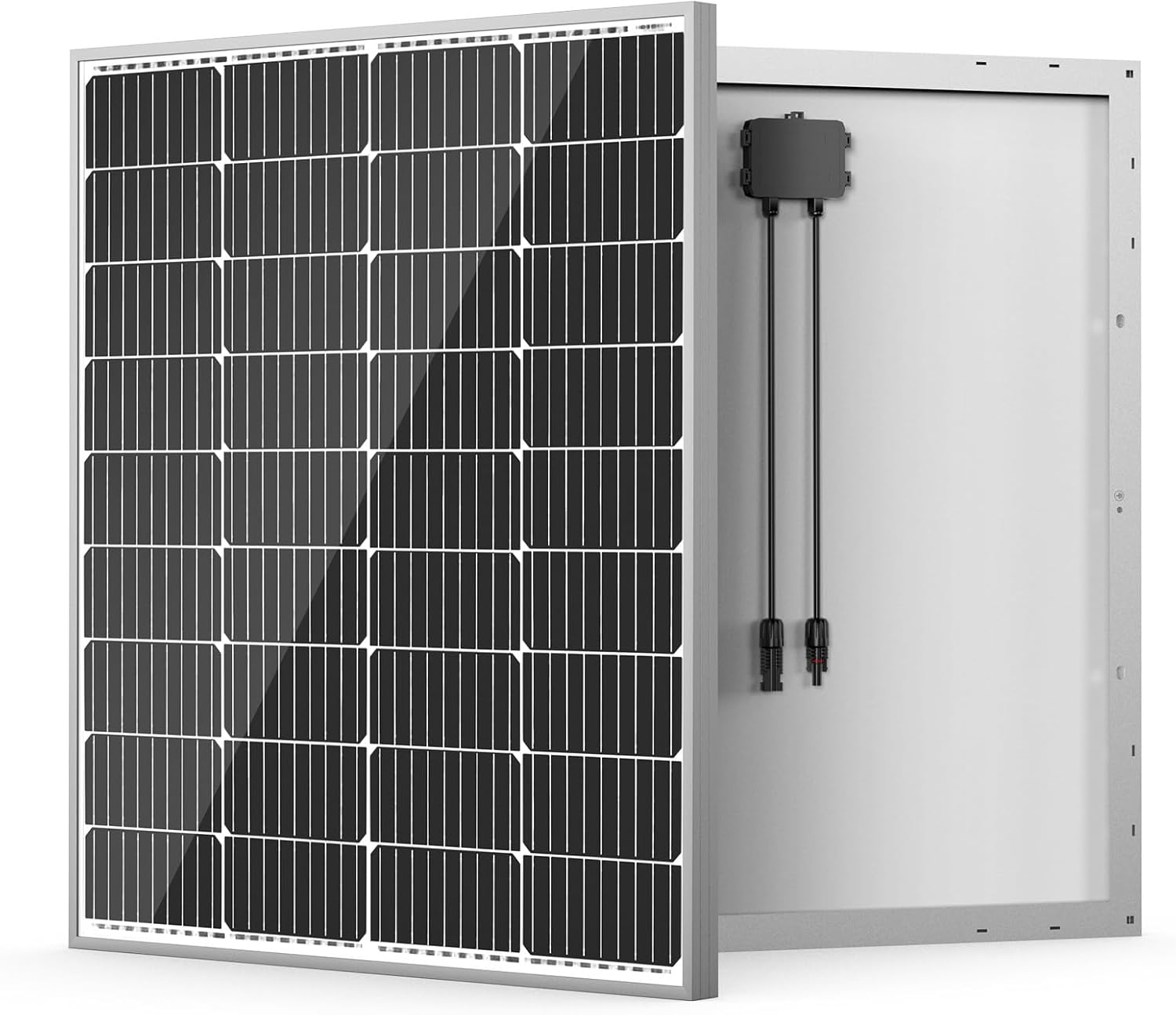
Related reading: Renogy's 400W RV kit with an MPPT controller the folding 100W solar suitcase version how many panels a home setup really needs
Last month I added the second panel. The monitor reads a lot calmer now.
Three worth comparing