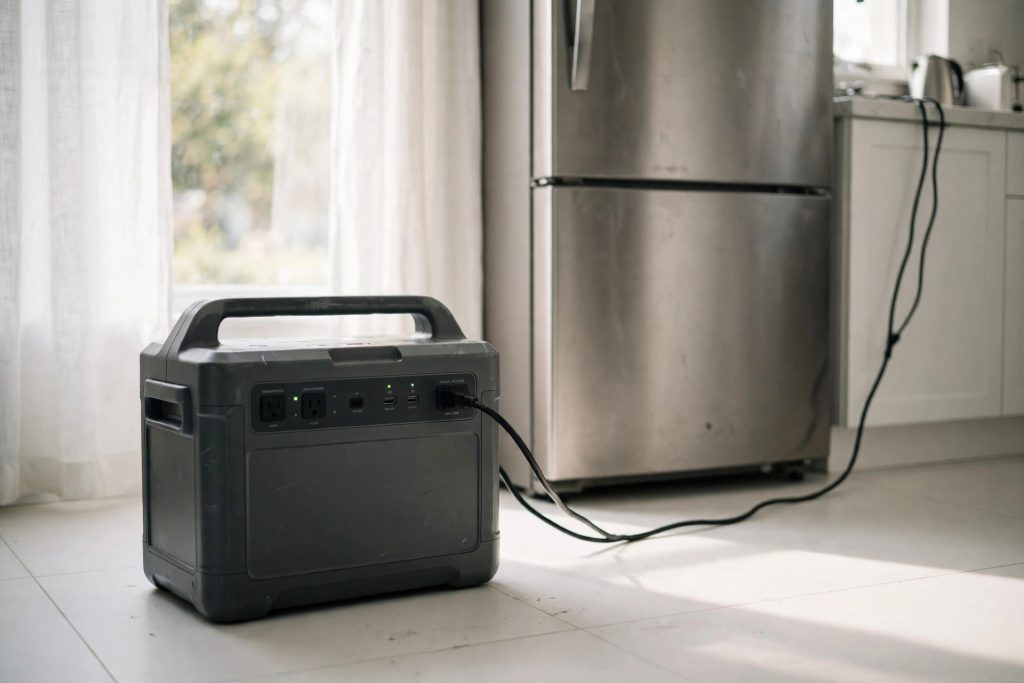
The outage that taught me about UPS units wasn’t a storm. It was a Tuesday afternoon, the grid flickered — off, on, off again in the space of two seconds — and my desktop computer rebooted. Just rebooted, mid-spreadsheet, no warning. The power station sitting in the garage, the big expensive one, did nothing, because it wasn’t plugged in between the wall and the computer. That’s the thing about portable power stations: they’re backup you have to deploy. A UPS is backup that’s already there, already wired, already watching. Different job. I didn’t understand the difference until the flicker cost me an afternoon’s work.
A UPS — uninterruptible power supply — sits between your outlet and your gear, and when the power cuts, it switches to battery in milliseconds. Not seconds. Milliseconds. Your computer never notices. Your router never drops. The distinction that matters: a UPS is not a generator and it’s not a power station. It’s a bridge. It holds your critical gear up for minutes — long enough to ride through flickers and brownouts, long enough to save your work and shut down cleanly if the outage is real. Anyone selling you a UPS as “home backup power” for hours is selling you a misunderstanding.
The GOLDENMATE 1000VA/800W is interesting for one reason that actually matters: it’s lithium. Traditional UPS units use sealed lead-acid batteries — heavy, short-lived, the reason every office UPS you’ve ever owned died after three years and weighed as much as a car battery. A lithium UPS sidesteps the worst of that. Lighter. Longer-lived. The lead-acid UPS lifecycle is a quiet scandal in this industry: the unit itself lasts a decade, but the battery needs replacing every 2-3 years, and most people discover this at the worst possible moment, when the “backup” that’s been beeping in the corner turns out to have been decorative for a year.
1000VA, 800W. Those two numbers confuse everyone, so let’s settle it. VA is volt-amps — apparent power. Watts are real power. The ratio between them is the power factor, and for computer gear it’s around 0.8, which is why 1000VA becomes 800W. What it means practically: this UPS handles a desktop computer, two monitors, a router, and some peripherals simultaneously without breaking a sweat. A gaming PC with a power-hungry GPU under full load can push past 800W alone, and that’s where you size up. I measured my own desk once — computer, two monitors, speakers, router, a lamp — and it idled around 200W, spiked to 450W when everything woke up. Comfortably inside 800W. But I’d measured, which is the whole point. Most people guess, and most people guess low.
Runtime is where UPS marketing gets slippery. The battery in a UPS this size holds enough for maybe 10-20 minutes at half load, less at full load. That’s by design — it’s a bridge, not a destination. But listings love to quote the runtime at tiny loads, where the numbers look generous, and buyers do the extrapolation wrong. “Up to 2 hours!” at 50W of router-and-modem is technically true and practically useless for the person who bought it to keep their workstation alive. Know your load. Time your load. The math is load divided into capacity, minus inverter losses, and there’s no marketing department that can change division.
Pure sine wave output is the spec that separates the UPS units worth buying from the ones that eat your equipment slowly. Cheap UPS units output a stepped approximation — a chunky staircase pretending to be a smooth wave — and most modern power supplies tolerate it, but some don’t. Active PFC power supplies, the kind in good desktop computers and servers, can shut down or buzz angrily on simulated sine wave. It’s a cruel joke: the UPS meant to protect your computer is the thing your computer’s power supply refuses to accept power from. CyberPower’s CP1500PFCLCD built its whole reputation on getting this right — pure sine wave, PFC-compatible, the unit IT people actually buy. It’s the reference design. Everything else in this class gets measured against it, including the GOLDENMATE.
Actually, that’s overstating it — most modern power supplies handle simulated sine wave fine. It’s the picky ones, the active PFC units, that object. Most. Not all.
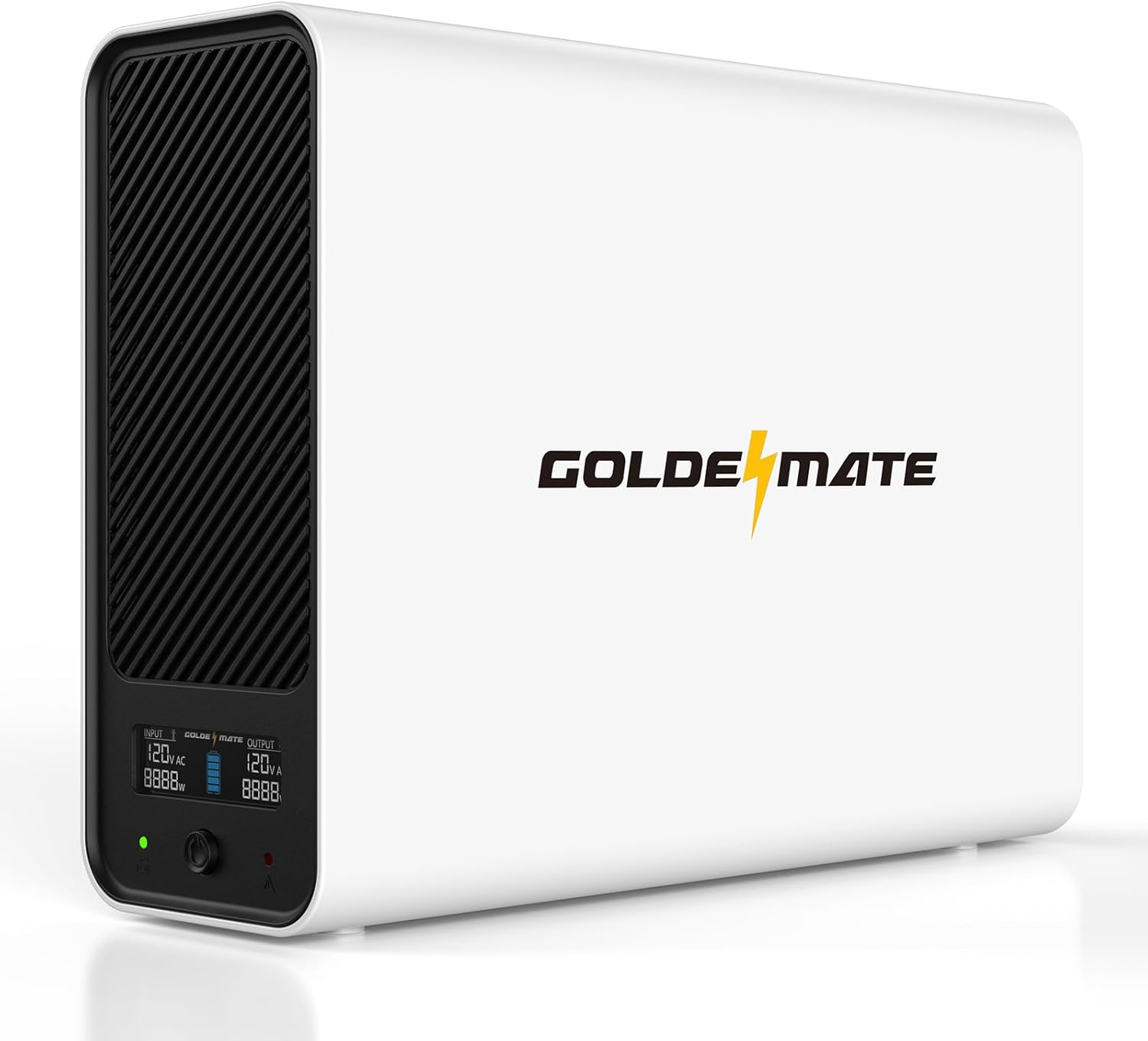
The lithium angle deserves scrutiny, because “lithium” in a UPS is still new enough that the track record is short. Lead-acid UPS batteries die on a schedule — batteries die on a schedule, all of them — and the schedule is 2-4 years whether you use them or not, because lead-acid degrades sitting on a shelf. Lithium degrades slower and cycles deeper, so a lithium UPS should hold its runtime for many more years. Should. The oldest lithium UPS units in the field are only a few years old, so the ten-year claims are projections, not history. I believe the chemistry. I’m just old enough to want the history too.
The ten-year lithium claims I haven’t tested — nobody has, the products aren’t that old. It’s chemistry plus hope at this point, and I say that as someone rooting for the chemistry.
UPS units for the desk and the closet
Pure sine wave, all three. The bridge holds or it doesn’t — these hold.
GOLDENMATE 1000VA/800W Lithium UPS
Lithium (not lead-acid) UPS: 1000VA/800W pure sine wave with surge protection for desks and network gear.
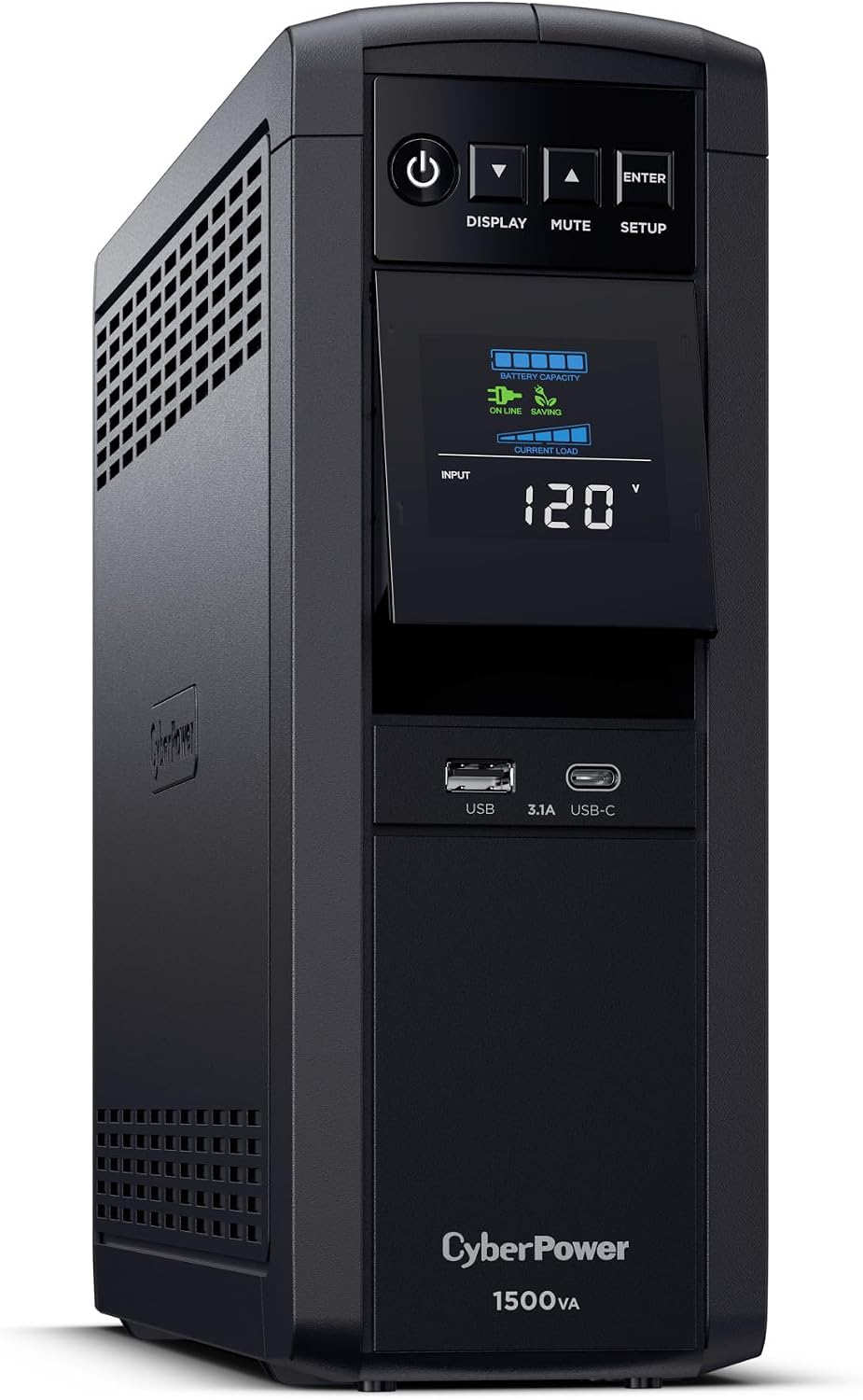
CyberPower CP1500PFCLCD PFC Sinewave UPS
1500VA/1000W pure sine wave, PFC-compatible; the unit IT people actually buy.
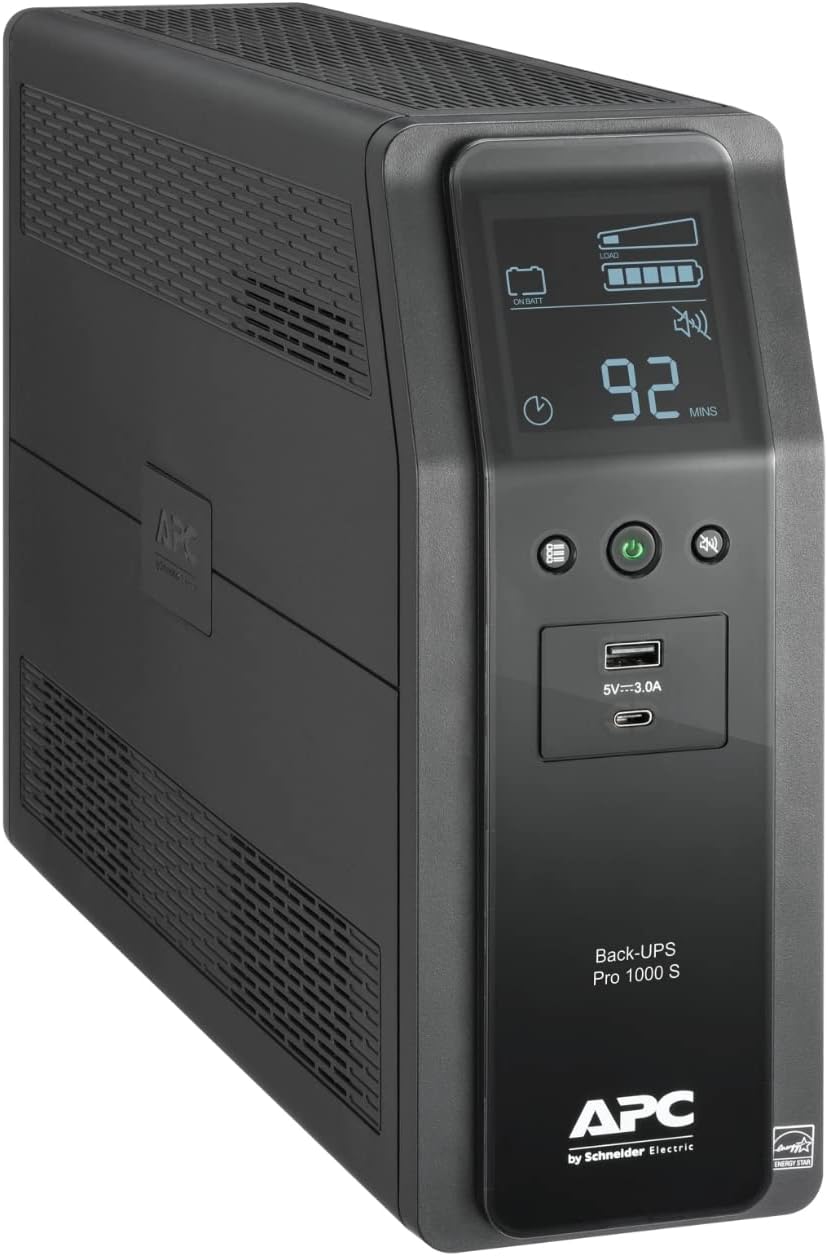
APC Back-UPS Pro BR1000MS 1000VA UPS
1000VA/600W pure sine wave UPS from the most established name in the category.
The category’s original sin is the name itself: “uninterruptible power supply” promises continuity, and buyers hear “backup power.” Then the outage lasts four hours, the UPS dies in fifteen minutes, and the buyer feels cheated by a product that did exactly what it was designed to do. The industry could fix this with one sentence on every box — “provides 10-20 minutes for safe shutdown, not hours of backup” — and it won’t, because the fantasy sells. I was that buyer once. The flicker taught me the difference between a bridge and a destination, and now I own both: the UPS at the desk for the flickers, the big station in the garage for the long nights. Different jobs. Both necessary. Neither a substitute for the other.
My desk setup now: the computer, monitors, and router on the UPS; the printer — the power-hungry, spiky, unreasonable printer — on a plain surge strip, because printers and UPS units are a bad marriage and everyone in IT knows it. Laser printers pull enormous startup surges that can overload a UPS by themselves. This is the kind of detail that lives in forums, not manuals. The manual says “do not connect laser printers.” The manual is right. The manual is also the only place that says it, in eight-point type, on page forty.
Last month the grid flickered three times in one evening — storm passing through, the lights doing their nervous blink. The computer didn’t notice. The monitors didn’t notice. I noticed, because I was watching for it, and I felt the particular smugness of a person whose bridge held. The spreadsheet survived. That’s the review. The spreadsheet survived, and somewhere in the closet the lithium battery is aging slower than its lead-acid ancestors did, and I’ll check on it in a few years to see if the chemistry kept its promise. I think it will. The math says it will. The math has been right about everything else.