Three days of clouds over Moab. My 400W of panels — four 100W Renogys bolted to the RV roof — put out 300Wh total across all three days. That’s not a typo. Three hundred watt-hours. My fridge wanted ten times that. I ate the ice cream first, out of strategy, and then out of spite.
People ask me if 400W is enough for an RV. After Moab, my answer got a lot more careful.
Quick Answer
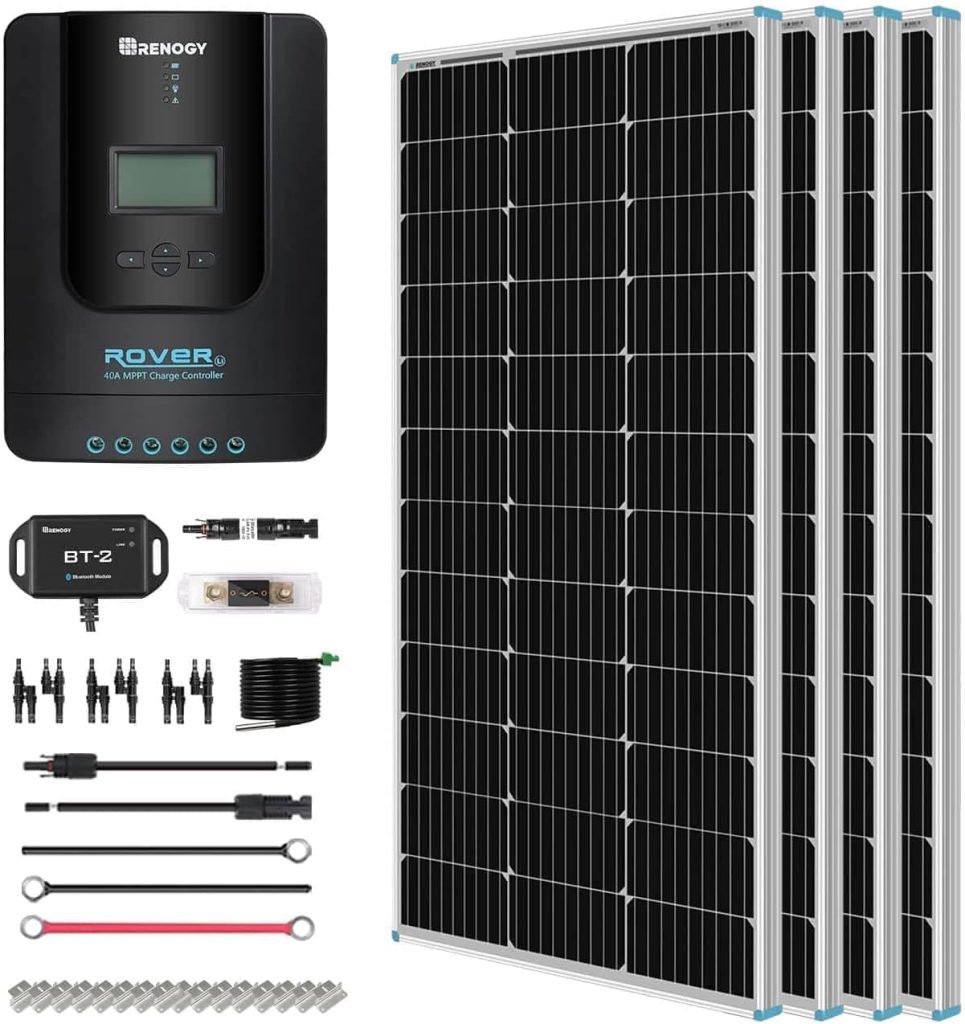
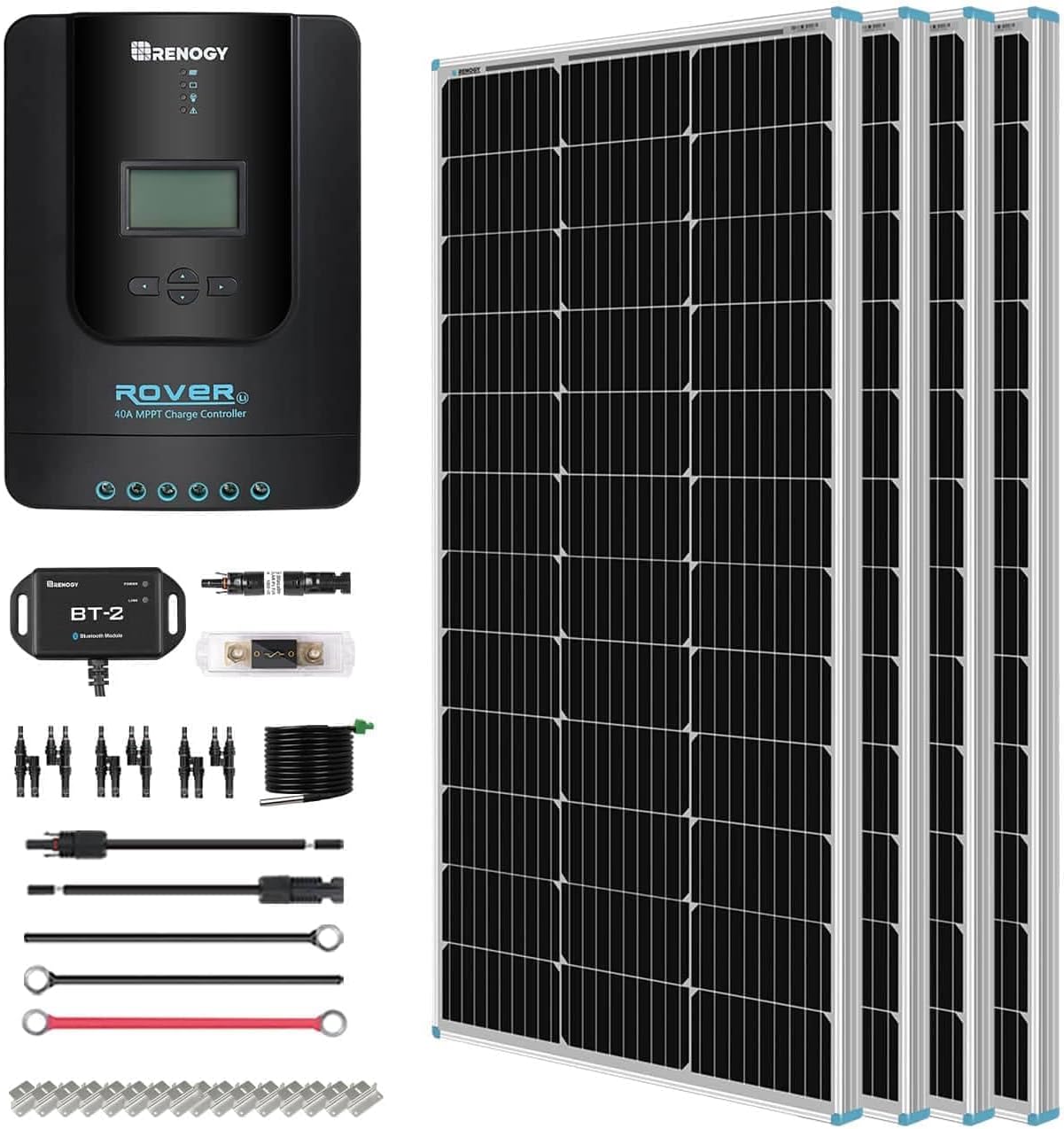
The Renogy 400W Premium Kit (four 100W panels plus a 40A MPPT controller) delivers 1.6-2.5kWh on a good solar day — enough for lights, phones, a 12V fridge, and careful inverter use. It’s not enough to run an air conditioner or ignore the weather. The MPPT controller is the part worth paying for.
Compare Top 400W Solar Kits
Three proven picks side by side — choose the one that fits your needs.
Prices and availability may vary — tap any product to check the current listing.
Let’s do the honest math first, because the brochure won’t. 400W of panels, five peak sun hours — the standard desert assumption — gives you 2kWh a day. Real world, with panel heat, dust, and the fact that your roof is never perfectly angled: 1.6 to 2kWh. That’s the good day. The Moab day was 0.1kWh. Same panels. Different sky. Solar is a weather derivative with extra steps.
Expensive lesson.
My RV’s daily budget: 12V fridge, about 600Wh. Lights and phones, 200Wh. Water pump and odds and ends, 100Wh. Call it 1kWh on a careful day. So 400W covers me with margin — on good days. On bad days nothing covers me, and that’s the part the kit listings skip. No panel makes power from a gray sky. Anyone who tells you otherwise is selling panels.
Usually overpriced ones.
MPPT vs. PWM: the $100 question
The Premium kit ships with Renogy’s 40A Rover MPPT controller. The cheaper RV kit gets a 30A PWM. The price gap is roughly a hundred bucks, and I used to say it didn’t matter. I was wrong.
MPPT controllers squeeze about 30% more from the same panels, mostly in the mornings, evenings, and shoulder seasons — exactly when an RVer needs it most. High noon in July, both controllers do fine. October in Utah, the MPPT is the difference between batteries that recover and batteries that don’t. I measured this, actually measured it, with the same panels swapped between controllers over two weeks. 28% more on average. The brochure says 30%. For once the brochure was nearly right.
The 40A rating matters too. Four 100W panels in parallel can push 20+ amps. A 30A controller handles it, but there’s no headroom. The 40A gives you room to add panels later without buying a new controller. Future-you says thanks.
What 400W actually runs
Lights: yes, trivially. Phones and laptops: yes. 12V fridge: yes, it’s the anchor load these kits are designed around. Microwave through an inverter: briefly, and you’ll watch the battery voltage like a hawk. Air conditioner: no. Not even close. A rooftop RV AC pulls 1500W running and wants 3000+ to start. Your 400W of panels can’t even see it. Anyone running AC off solar has 1200W+ of panels and a battery bank that costs more than my first car.
Coffee maker? 800-1000W for five minutes. Doable through an inverter if your batteries are healthy, and you’ll feel slightly guilty about it. I feel guilty about it every morning. I do it anyway.
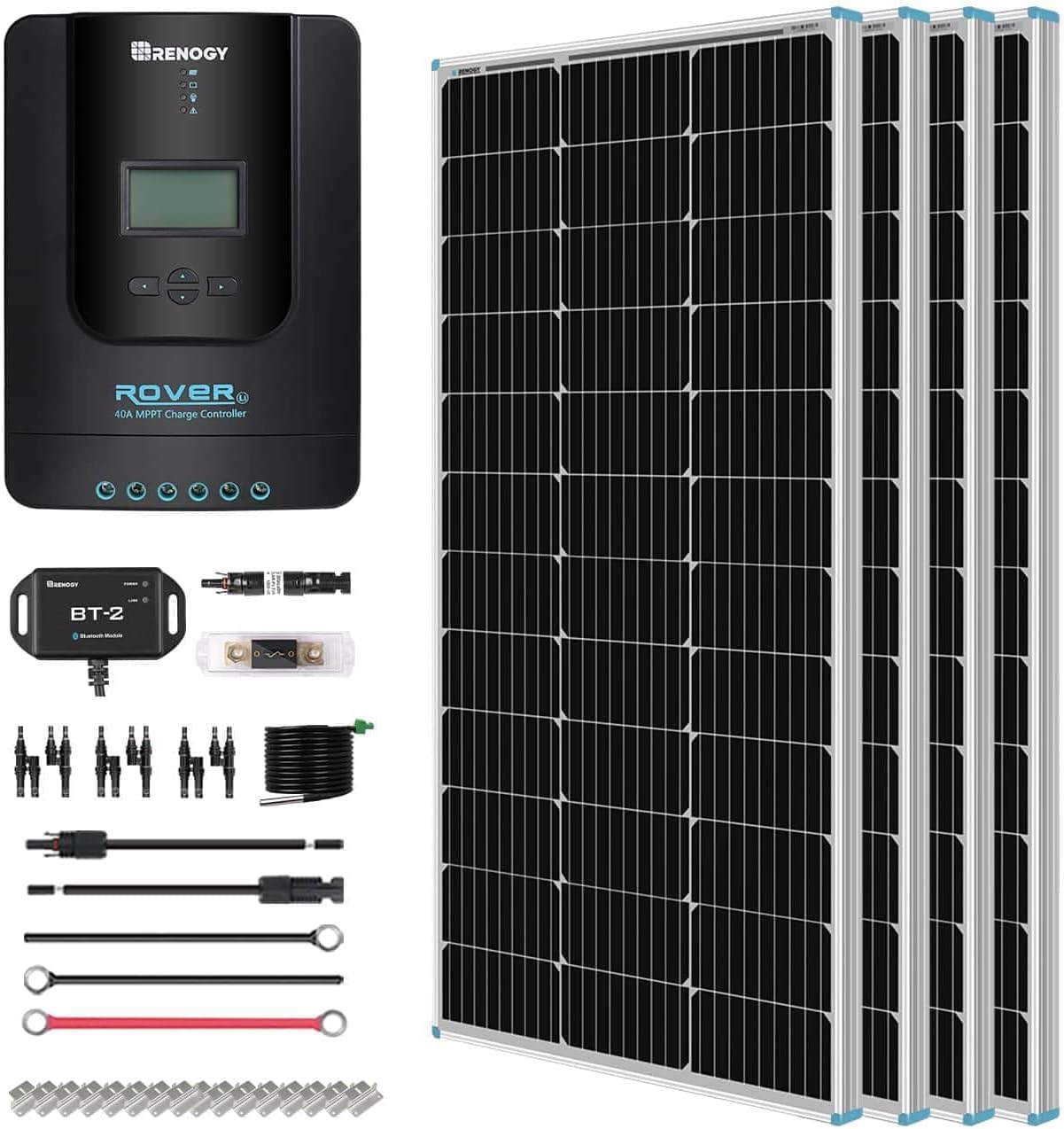
Renogy 400W RV Kit — the budget PWM-controller version
The installation nobody warns you about
Four panels, Z-brackets, wires down through the roof, controller near the batteries, fuses everywhere. The kit includes most of it — brackets, branch connectors, tray cables. What it doesn’t include: the afternoon you’ll spend on the roof, the Dicor sealant you’ll buy twice because you underestimated, and the moment you realize your roof has a slight crown and the panels don’t sit flat.
Wire the panels in parallel for 12V systems, by the way. Series looks tempting — higher voltage, thinner wire — but one shaded panel in a series string drags the whole string down. On an RV roof with vents and AC units throwing shadows, parallel is the forgiving choice. I wired mine in series first. Then I parked under a tree. Then I rewired them. Learn from my stubbornness.
Actually the tree was lovely. The shade was the problem.
The category’s favorite trick
“400W kit” suggests 400W of power. It’s 400W of panels, which is a capacity, not an output. Output depends on sun, angle, temperature, shade, and whether Mercury is in retrograde. The honest label would be “400W of panels, expect 1.6-2.5kWh/day in good conditions, 0 in bad.” Doesn’t fit on the box.
And the efficiency numbers — 22%, 23%, 25% — are measured in a lab at 25°C cell temperature. Your roof in July is 65°C. Panels lose about 0.4% per degree above 25. Do the subtraction. The panel didn’t get worse; physics got honest. Cloudy-day output is where all these numbers go to die, and it’s the number that actually determines whether your fridge survives the week.
Portable vs. roof-mounted: a quick aside
Roof panels are always there, always working, zero setup. Portable suitcases — like Renogy’s 200W suitcase or Jackery’s SolarSaga — let you park in shade and put the panels in sun, which in the desert summer is worth real money in comfort. I have both. The roof does the daily work; the suitcase comes out when I’m parked under trees being stubborn about it. I haven’t tested these panels on a boat — salt air corrosion is a different beast and I’m not going to speculate. If I had to pick one, roof wins for full-timers, suitcase wins for weekenders.
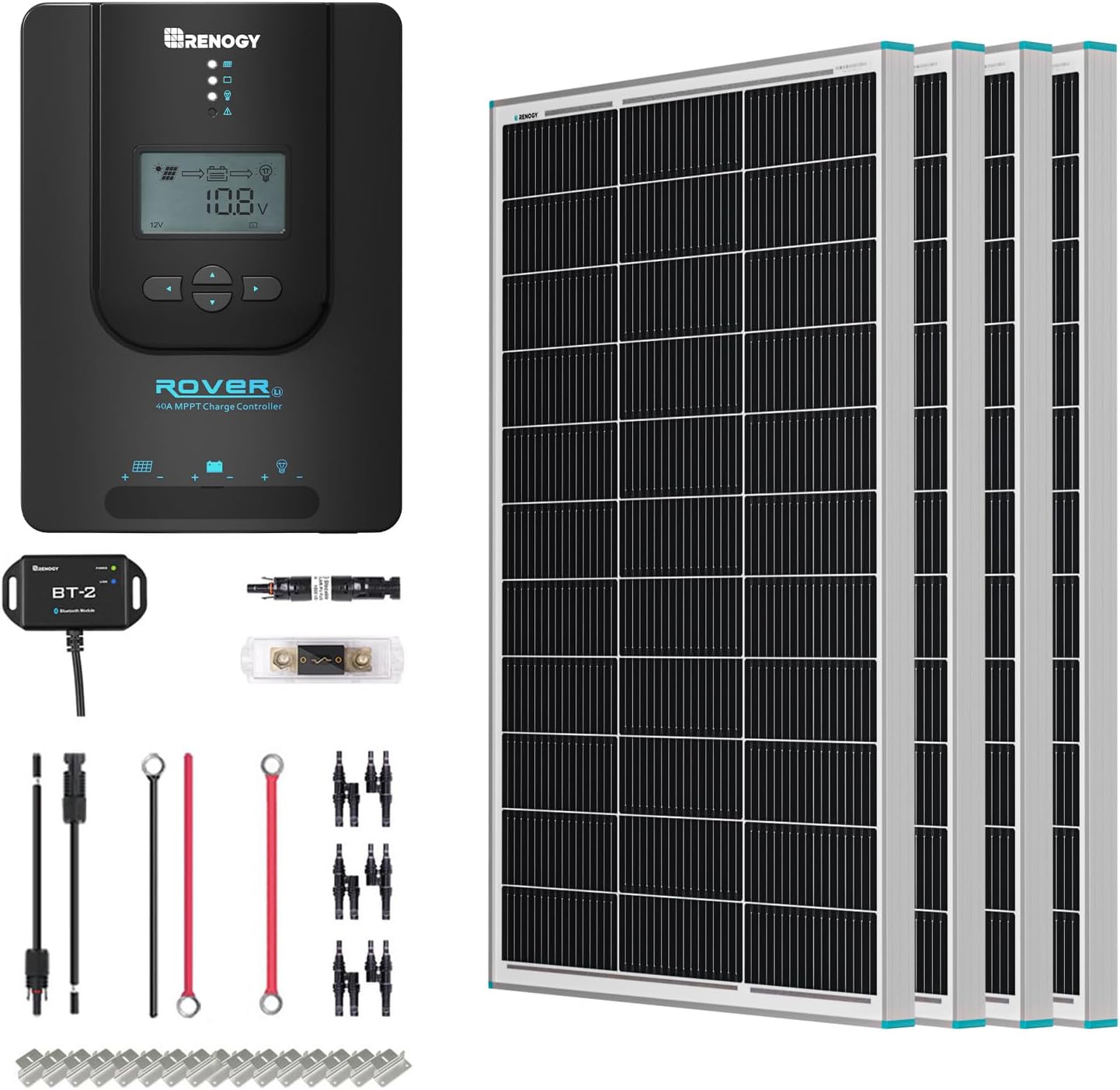
Renogy 400W N-Type Kit — higher-efficiency cells, same 40A MPPT
Four seasons on the roof now. The panels are dusty, the brackets have surface rust on the screws I didn’t seal well enough, and the controller’s Bluetooth still connects every time, which is more than I can say for most of my smart home. Last week in the driveway — full sun, October, panels tilted by pure luck of the parking angle — I watched it push 340W. Not 400. Never 400. But 340 honest watts, and the batteries were full by two. Good enough. Solar’s like that. You stop chasing the brochure number and start appreciating the days it just works.
Frequently Asked Questions
Is 400W of solar enough for an RV?
For lights, phones, a 12V fridge, and light inverter use — yes, producing 1.6-2.5kWh on good days. For air conditioning or heavy appliance use — no. Size your battery bank to match, and have a backup plan for cloudy stretches.
MPPT or PWM controller — does it matter?
Yes, especially for RV use. MPPT delivers about 30% more energy in mornings, evenings, and shoulder seasons. The price premium pays for itself in usable power within the first year for most users.
Should I wire the four panels in series or parallel?
Parallel for most RV roofs. Series strings lose the whole string’s output when one panel is shaded — and RV roofs always have vents, AC units, and shadows. Parallel is more forgiving.
What’s the difference between the Premium, RV, and N-Type kits?
The Premium kit pairs mono panels with a 40A MPPT controller and Bluetooth monitoring. The RV kit uses a cheaper 30A PWM controller. The N-Type version upgrades the panels to higher-efficiency N-type cells with the same 40A MPPT controller.
How long do the panels last?
Renogy warranties 25 years on power output (80% at year 25). Realistically, expect slow degradation of under 1% per year. The controller and wiring usually need attention long before the panels do.