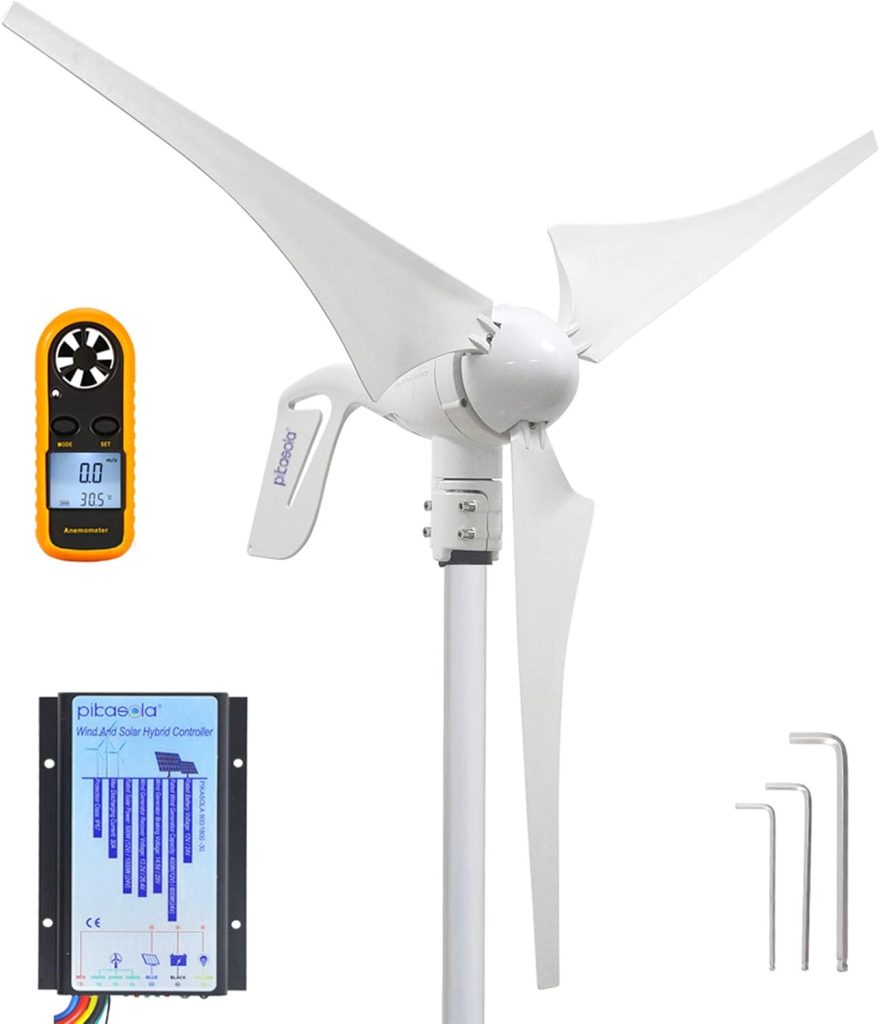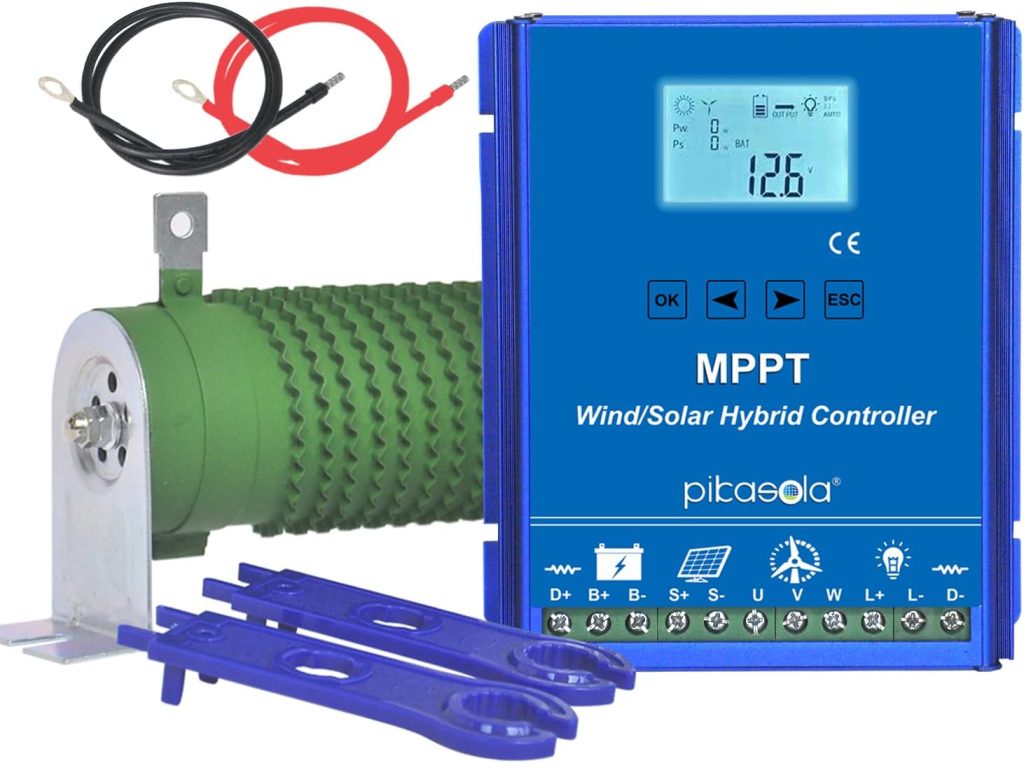
“1400W hybrid controller.” Sounds formidable. Then you read the breakdown: 800W wind input, 600W solar input. And then you learn what every small-wind person learns, usually expensively: a “400W” wind turbine makes 400W in a gale that would also remove your shingles. On a normal breezy day, it makes 40.
So the 1400W controller is really a 600W solar controller with an 800W wind input that spends most of its life waiting. The number is true. The implication is doing a lot of heavy lifting.
Quick Answer
A 1400W hybrid wind-solar controller (800W wind + 600W solar, 12/24V auto) manages both a small wind turbine and solar panels into one battery bank, with a dump load to brake the turbine when batteries are full. It works — but size your expectations around the solar side, because small wind underdelivers in most locations. Required safety gear for any wind setup, not a power upgrade by itself.
Compare Top Hybrid Charge Controllers
Three proven picks side by side — choose the one that fits your needs.
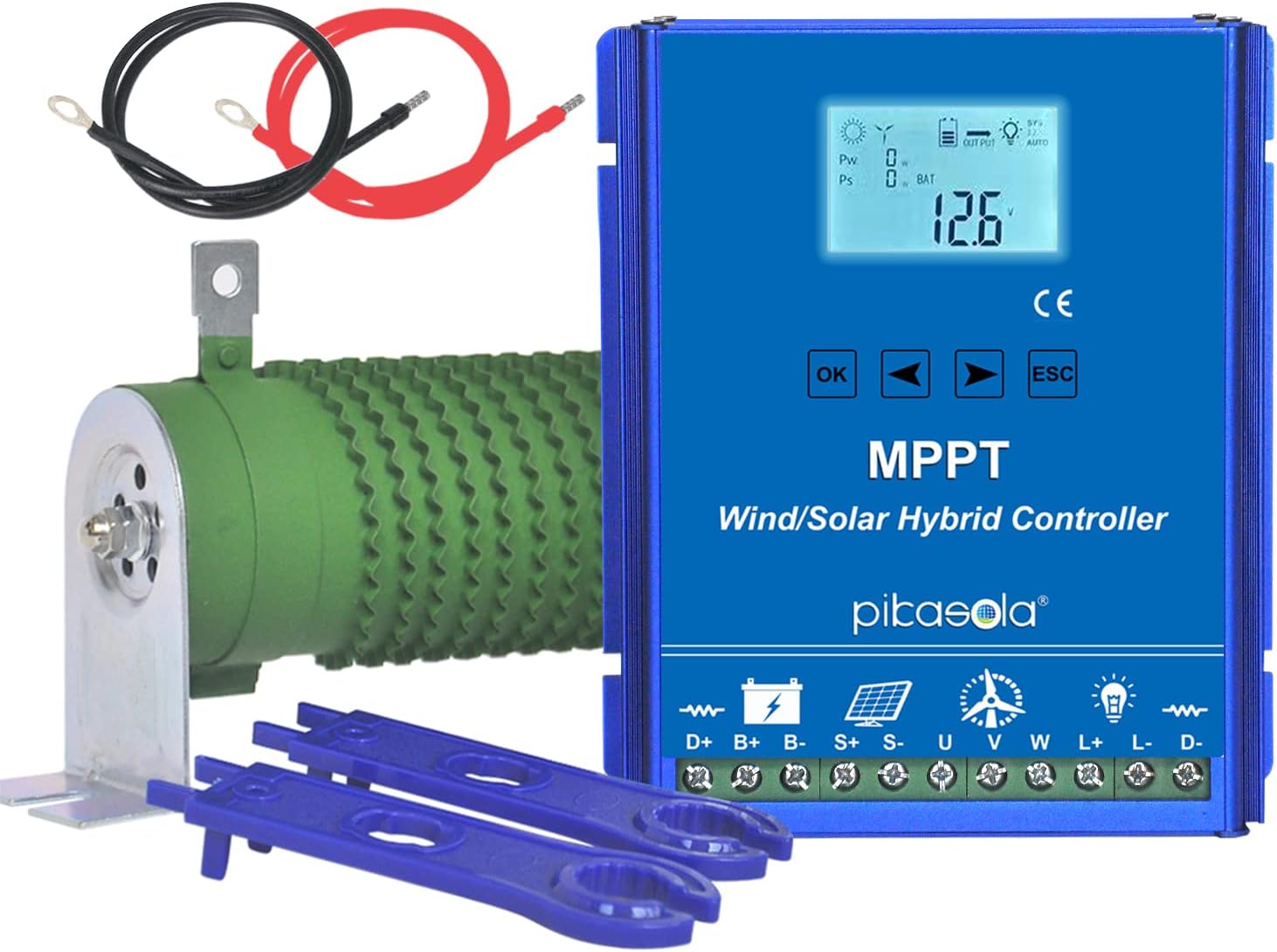
Prices and availability may vary — tap any product to check the current listing.
Let me explain what this box actually does, because “hybrid controller” sounds like magic and it’s really just traffic management. Your wind turbine makes wild AC — voltage swinging with every gust. Your solar panels make polite DC. Your batteries want a calm, specific DC. The controller’s job: tame both streams, charge the batteries correctly, and — critically — do something with the wind turbine’s power when the batteries are full. Because a wind turbine with nowhere to send its power speeds up. And up. Until something breaks.
That “something” is why the dump load matters. When the batteries hit full, the controller diverts the turbine’s output into a resistor bank — the “unloader” — which burns it off as heat and electrically brakes the turbine. Without this, an unloaded turbine in a storm can overspeed and throw a blade. I’ve seen the photos. You don’t want to see the photos. The dump load is not a feature. It’s the difference between a power system and a lawn dart.
Trust me.
MPPT wind, PWM solar: the split personality
The PIKASOLA unit runs MPPT on the wind side and PWM on the solar side, which tells you exactly where the engineering money went. Wind MPPT matters — a turbine’s power curve is peaky, and tracking the maximum power point as gusts come and go genuinely harvests more. Solar PWM is the budget choice: simpler, cheaper, and about 20-30% less efficient than MPPT solar. On a 600W solar input, that’s 120-180W left on the table in good sun.
The Marsrock flips it — MPPT on wind too, with a similar PWM solar stage. The iSunergy is the budget play: 1000W total, basic control, LCD display. All three do the core job. The differences are in how much of your panels’ output actually reaches the battery, and how the controller behaves at 2 AM in a storm when you’re asleep and it’s making decisions for you.
Small wind: the conversation we need to have
I’ve installed small wind turbines. Plural. Here’s what the turbine brochures don’t say: the power in wind goes with the cube of wind speed. Double the wind, eight times the power. Which means half the rated wind speed gives you one-eighth the rated power. A 400W turbine rated at 28 mph makes 50W at 14 mph. Fourteen mph is a genuinely windy day — the kind where your hat’s in danger. Fifty watts. That’s the reality.
And turbulence kills it. Turbines need clean, laminar wind, which means 30+ feet above anything within 500 feet. Your rooftop? Turbulent. Behind the barn? Turbulent. The only small turbines I’ve seen earn their keep are on hilltops, coastlines, and open plains — places where the wind has somewhere to be. A 1200W home unit on a proper tower in a good site is a different animal from a 400W turbine bolted to a shed. Site first, turbine second, controller third. Everyone buys in reverse order.
Where hybrid actually shines
Here’s the honest use case: solar does the day, wind does the night and the storms. When a weather system rolls in and your panels go dark, that’s often exactly when the wind picks up. The hybrid controller means one battery bank, one system, no switching. For off-grid cabins in windy regions, this complementarity is real — I’ve logged weeks where wind carried the nights and solar carried the days, and the batteries never dropped below 70%.
But — and this is the part that stings — you could also just buy more panels. 600W of solar costs less than a turbine plus tower plus controller, makes power more predictably, and never throws a blade. Wind makes sense when you’ve maxed your solar, or your site is genuinely windy, or you need night generation. Otherwise it’s a hobby with a power cord. I say this as someone with a turbine on a tower. It’s a great hobby.
An expensive one.
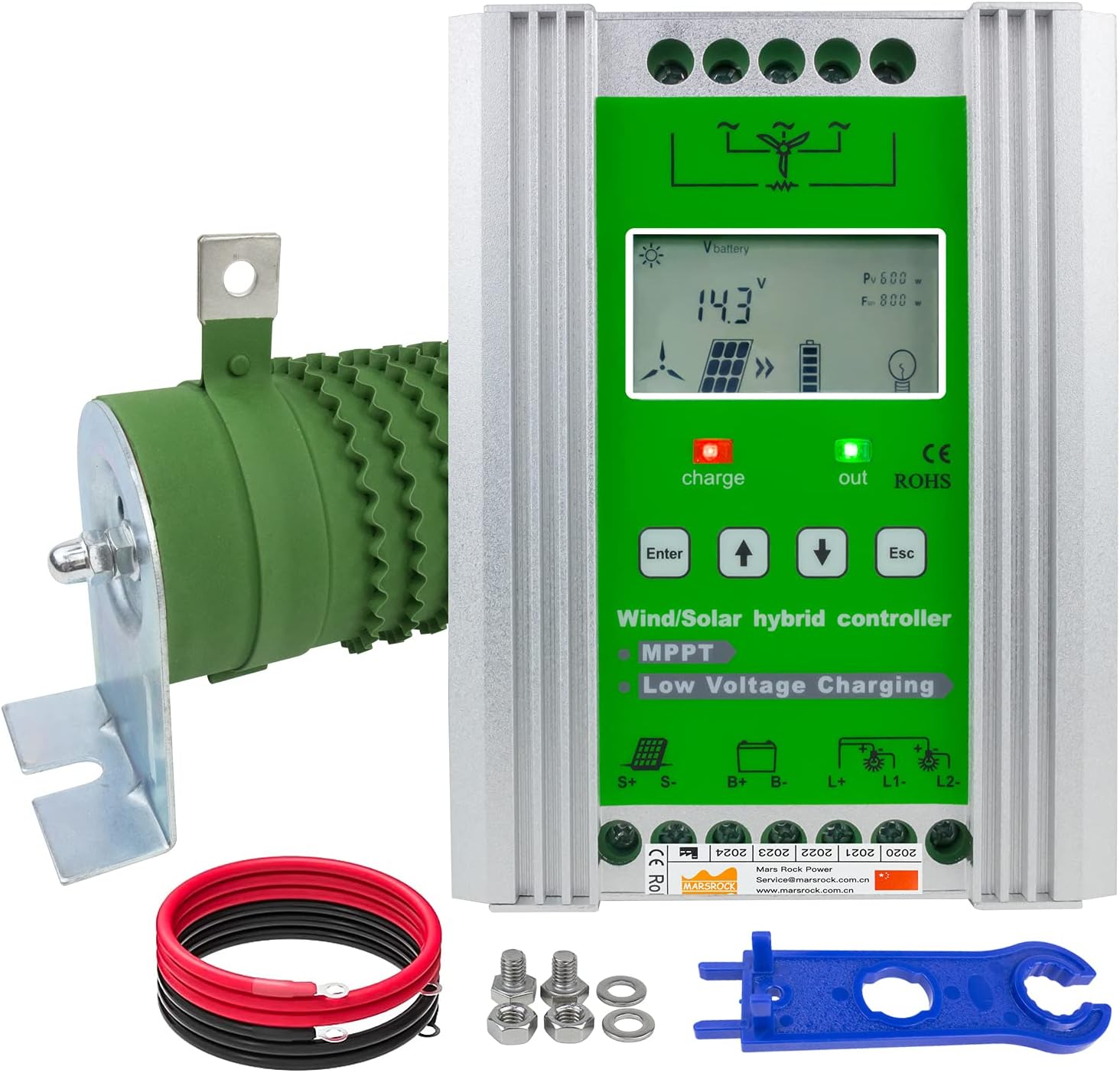
Marsrock 1400W — the close alternative
Wiring order: the thing that kills controllers
Connect the battery first. Always. The controller boots from battery power and needs to sense the system voltage (12 vs 24) before anything else connects. Battery, then solar, then wind — and the dump load wired before the turbine spins up. Connect the turbine first and the controller wakes up confused, in the wrong voltage, with a spinning turbine feeding it chaos. I’ve replaced a controller that died this way. It wasn’t mine. A friend’s. We don’t talk about whose advice he followed.
Fuses on everything. Breakers you can reach. A manual brake switch for the turbine — when the storm forecast says 60 mph, you brake the turbine and let the solar sit it out. The controller’s automatic protections are the backup, not the plan. Redundancy in safety systems isn’t paranoia. It’s engineering.
12/24V auto: convenient until it isn’t
Auto-sensing 12/24V is convenient — one SKU, no jumpers. It’s also a failure mode: if the controller ever loses battery connection and reconnects, it re-senses, and if your batteries are deeply discharged, it can sense wrong. 24V bank reading 18V looks like a 12V system to a confused controller. Then it charges your 24V bank with a 12V profile, which is how you learn about the smell of boiling batteries. Wire it right, fuse it right, and check the sensed voltage on the display after any disconnect. Thirty seconds of verification.
The category’s open secret
Most of these hybrid controllers — PIKASOLA, Marsrock, the alphabet brands — come from the same few factories in Zhejiang. The differences are firmware, the display, and the quality of the manual’s English. I’m not saying they’re identical. I’m saying the $40 price spread buys you less differentiation than the listings suggest. Buy the one with the best-reviewed manual and the most answered questions. In this category, documentation is the product.
That sounds like faint praise. It’s not — here, it’s the highest compliment.
And the “1400W” in the title? It’s 800 + 600, wind plus solar, and you’ll rarely see both maxed simultaneously because the weather doesn’t work that way. Size your wires for it anyway. The one time the storm hits at solar noon — rare, real — you’ll be glad.
I haven’t run the PIKASOLA past 600W of wind — my turbine’s smaller. The 800W rating is the manufacturer’s number, not mine.
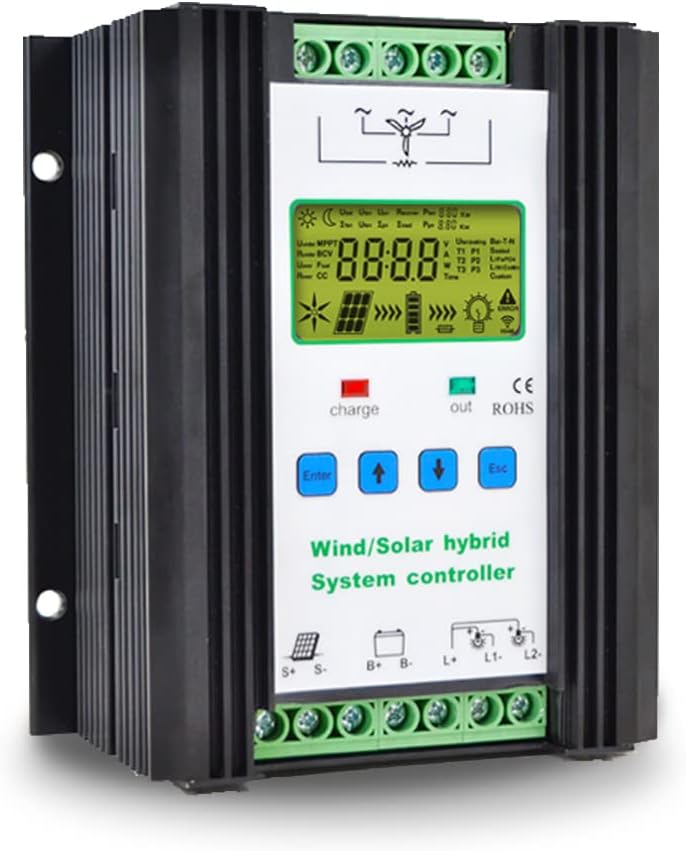
iSunergy 1000W — the budget LCD option
My turbine’s still up there, spinning when the wind’s right, braked when it’s not. The controller’s LCD shows me wind watts, solar watts, battery volts — the little dashboard of my off-grid ambitions. Last Tuesday: 38W wind, 412W solar, batteries at 27.1V. A normal day. The turbine contributed about as much as a nightlight. The panels did the work. And that’s fine. That’s the deal. The wind is the bonus, the solar is the salary, and the controller is the accountant making sure nobody gets hurt. I check the LCD the way some people check the weather — not because I’ll do anything about it, but because it’s mine, and it’s working, and that’s enough.
Frequently Asked Questions
What does a hybrid wind-solar controller do?
It manages charging one battery bank from both a wind turbine and solar panels, with a dump load that safely brakes the turbine when batteries are full. Without it, an unloaded turbine can overspeed dangerously.
Is small wind worth it, or should I just buy more solar?
For most people, more solar. Wind only earns its keep in consistently windy sites (hilltops, coasts, plains) with a proper tower. Solar is cheaper, more predictable, and maintenance-free. Wind’s real value is night and storm generation when panels go dark.
What size turbine works with a 1400W (800W wind) controller?
Turbines up to 800W rated — typically 300-600W units. Remember that a turbine’s rated wattage assumes gale conditions; expect a fraction of that in normal wind.
In what order do I wire it up?
Battery first (so the controller senses voltage correctly), then solar, then the dump load, then the wind turbine last. Fuse everything, and add a manual brake switch for storms.
PIKASOLA vs. Marsrock vs. iSunergy — which one?
Similar hardware from similar factories. The PIKASOLA and Marsrock both offer wind MPPT with 1400W total; the iSunergy is a budget 1000W PWM unit. Buy on documentation quality and answered questions, not the wattage headline.