
EcoFlow 160W NextGen Portable Solar Panel Review: A High-Efficiency Foldable Panel for Camping
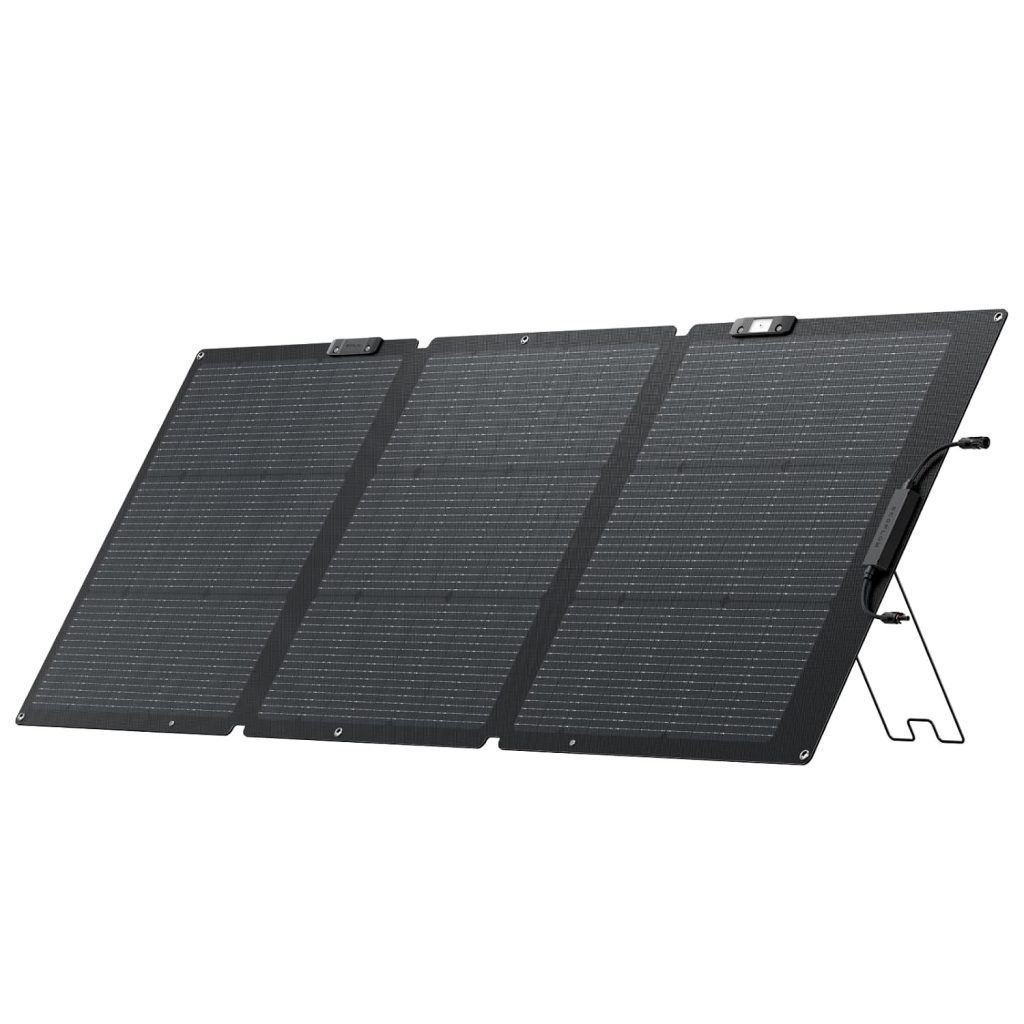
The EcoFlow 160W NextGen portable solar panel looks simple until you actually need it to work — and picking the wrong panel for your power station gets expensive fast. This guide covers what the 160W NextGen offers: advertised N-type high-efficiency cells, an IP68-rated weatherproof build, and an adjustable kickstand with a sunlight-angle guide.
Quick Answer
For most campers pairing a panel with a mid-size portable power station, the EcoFlow 160W NextGen is a solid pick — balancing charging speed, packability, and weather resistance better than the cheaper 100W crowd. Its higher-efficiency N-type cells and angle-guided kickstand squeeze more usable charge from the same few hours of daylight.
Compare Top Portable Solar Panels
Three proven picks side by side — choose the one that fits your needs.
EcoFlow 160W NextGen Portable Solar Panel
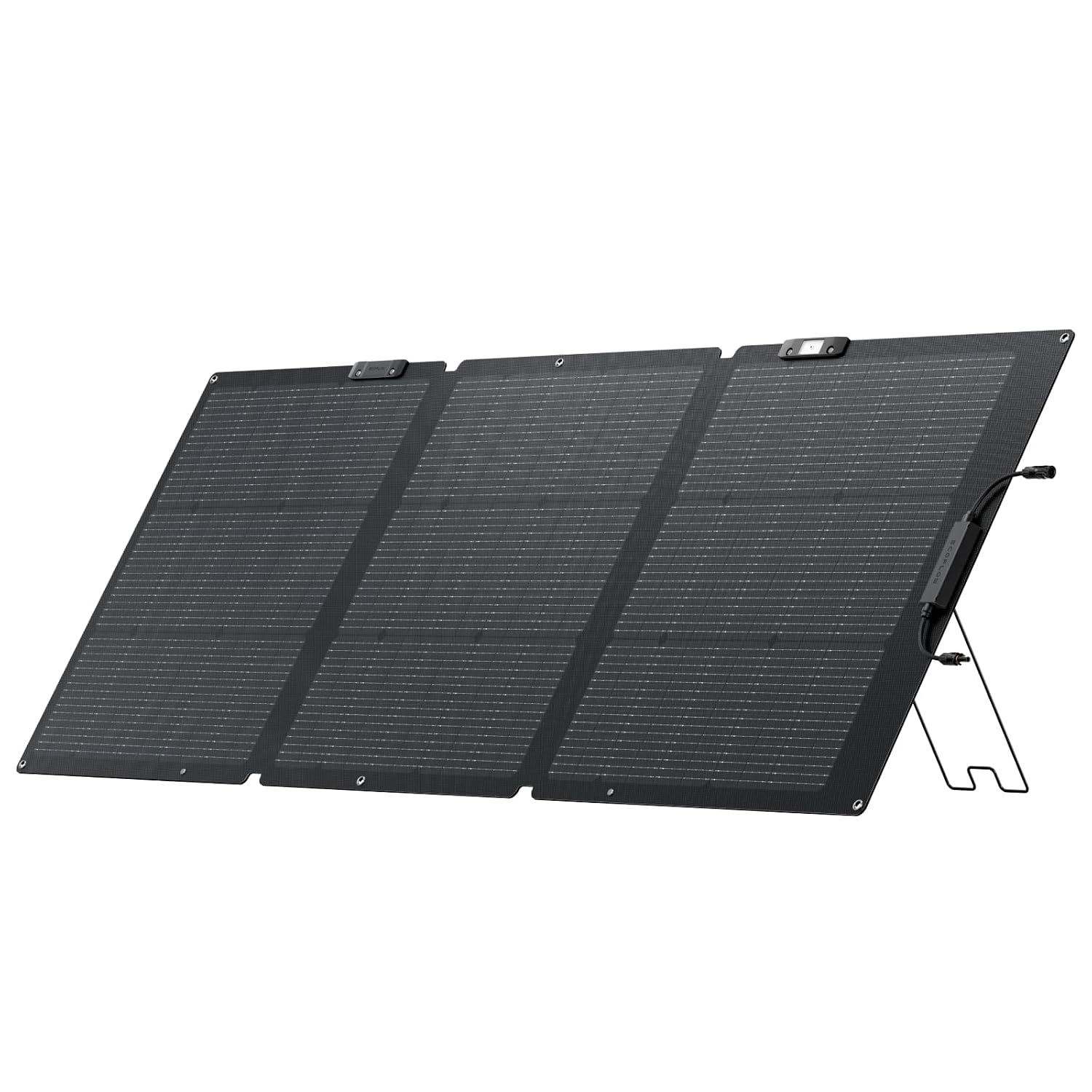
Advertised N-type high-efficiency cells, IP68 weatherproofing, and an adjustable kickstand with a sunlight-angle guide — the balanced mid-size pick.
BLUETTI 200W Portable Solar Panel
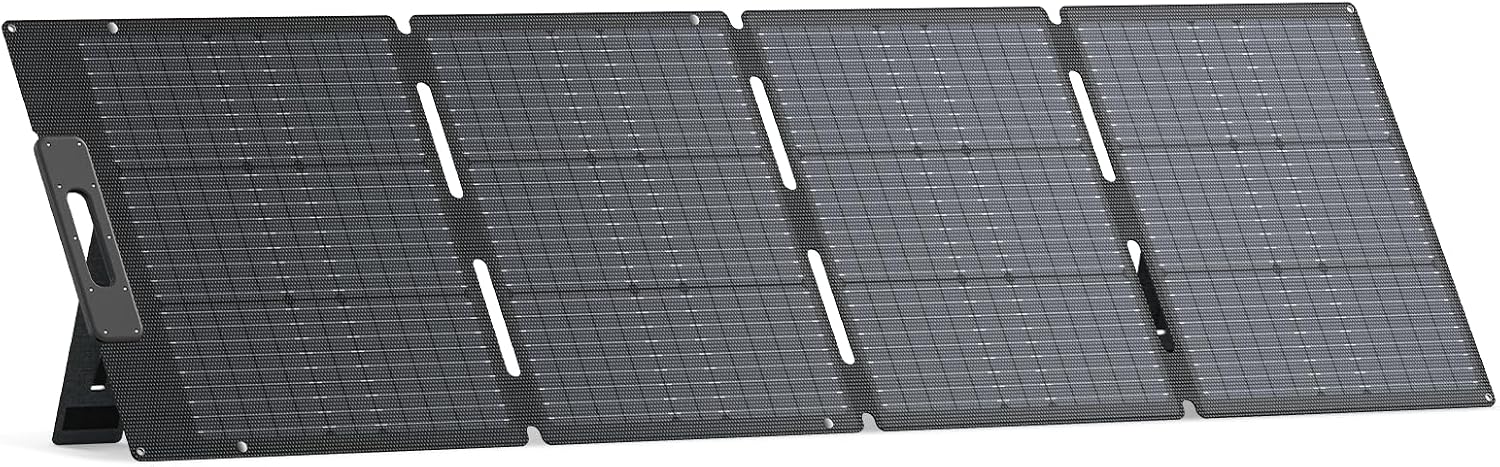
A larger 200W-class panel with an adjustable kickstand — more rated output, though its advertised conversion efficiency sits a notch below the NextGen’s.
Jackery SolarSaga 100W Bifacial Portable Solar Panel
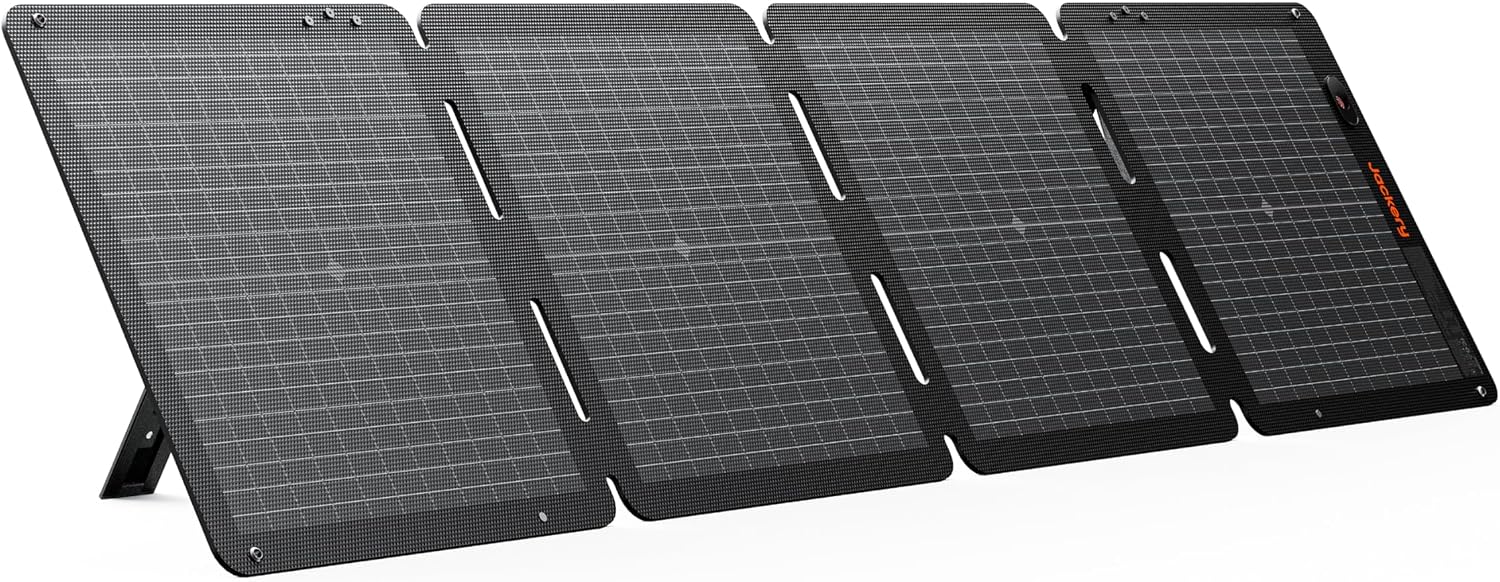
Bifacial cells with built-in USB-A/C for charging phones directly — lighter and easier on the wallet, but 100W takes noticeably longer to refill a big power station.
Prices and availability may vary — tap any product to check the current listing.
Shopping around? We have also tested the Jackery SolarSaga 100W and the EcoFlow 220W bifacial panel — both worth a look before you decide.
What to Look For in a Foldable Camping Solar Panel
Two panels can look identical — same wattage class, same fold — and behave completely differently at a shaded campsite.
Cell efficiency: what that percentage actually buys you
Efficiency is the headline stat on every panel now, and the NextGen leans on it with advertised N-type cells. Plainly put: more of the sunlight hitting its surface becomes electricity — same footprint, more charge.
Real-world output vs. the number on the box
Rated wattage is a ceiling, not a forecast. In the field, foldable panels deliver noticeably less than their nameplate number most of the day, peaking only when the sun is high, the sky is clear, and the aim is dead-on. What separates good panels from frustrating ones is the usable hours — mid-morning, late afternoon, hazy skies.
Build quality and weather protection
Camping gear lives rough. The NextGen carries an advertised IP68 rating — about as tough as foldable panels get — built to shrug off dust and survive a proper downpour. Look past the rating at the parts that fail first: fraying fold edges, flimsy kickstand legs.
Compatibility with your power station
A panel only helps if it talks to your battery. Most foldables, including this one, use industry-standard solar connectors, so they work with a wide range of stations — not just same-brand pairings. Check two things: your station’s solar input voltage range, and cable length. The sunniest spot is rarely next to your tent.
Folded size, weight, and the carry question
The most powerful panel is the one you actually bring. A 160W-class panel folds to roughly briefcase dimensions and carries one-handed — a real step up from a 100W panel without a dramatic jump in bulk. I’ve watched campers buy the biggest panel they could find, then leave it in the garage. The panel that stays home charges nothing.
Small details: angle guides, stands, cable management
Details decide whether a panel is pleasant or quietly annoying. An adjustable kickstand with a sunlight-angle guide — like the NextGen’s — sounds gimmicky until you’ve spent twenty minutes nudging a panel and guessing. The guide gives you a visual reference. Thirty seconds, done.
Matching the EcoFlow 160W Panel to Your Situation
Three camper profiles keep showing up:
The weekend car camper
You roll in Friday, camp through Sunday, and run a mid-size station for lights, phones, a fan, maybe a small fridge. The enemy is shade — and for this camper the panel is nearly ideal: big enough to recharge a 1kWh-class station over a sunny weekend, small enough to toss in the trunk.
The van-lifer and overlander
Life on the road for weeks means running a larger station for a fridge that never rests, a laptop, and lights. One 160W panel is a building block, not the whole answer: it charges steadily and chains with a second when needed. Start with one, learn your real consumption first.
The storm-prep household
You barely camp — you want backup power that doesn’t need the grid. The panel lives on a balcony or in the backyard, keeping a station topped up between outages. That weatherproofing earns its keep here. Fold it away when storms turn violent, though: weatherproof is not stormproof.
Foldable Panel Tiers: How the Options Stack Up
| Tier | Best For | Price Tier | Key Feature | Watch Out |
|---|---|---|---|---|
| 100W entry foldables | Phones, tablets, small battery banks, light use | Budget-friendly | Ultra-portable, easy one-hand carry | Slow for large power stations; frustrating as a primary charger |
| 160W mid-size foldables | Mid-size power stations, weekend camping, fridges | Mid-range | Balanced output and packability; N-type cells on newer models | Still needs good sun and aiming to hit its stride |
| 200W+ high-output foldables | Large stations, faster recharges, multi-panel setups | Premium | Maximum rated output per panel | Bigger fold, heavier carry, clumsier to aim |
| Rigid panels (rooftop/permanent) | Vans, RVs, cabins, home backup | Mid-range to premium | Highest real-world yield, zero setup | Not portable; installation required |
A 100W entry panel is a fine companion charger for phones and small banks — but as a main charger for a serious power station, expect frustration past a weekend.
The 160W mid-size tier, where the NextGen sits: enough output to matter, still genuinely portable.
At 200W and up you’re buying speed and headroom for large stations — but you pay in bulk and handling.
Rigid panels are the endgame when you don’t move camp: mounted on a van or cabin they work every sunny day, but they can’t follow you to a tent site.
Three Camping Scenarios, Three Honest Verdicts
Topping up a 1kWh-class station over a long weekend
The classic use case: you arrive Friday with a full station, and the panel’s job is to slow the drain — ideally erase it. In good sun with proper aim, a 160W panel puts a serious dent in daily consumption. Plan like it gives you half its rating.
Keeping a 12V car fridge cold through a hot afternoon
A portable fridge is the hungriest common campsite appliance, and heat makes it hungrier — but output and demand peak together, the fridge working hardest exactly when the sun is strongest. Panel in full sun, long cable to the shaded station, re-aim once or twice. Campers who do this rarely have warm drinks. Those who lay the panel flat behind the tent… learn the hard way.
Chaining panels for a bigger station on long trips
Past a few days, one panel starts feeling like bailing a boat with a teacup. The answer is usually a second panel chained in series or parallel — the NextGen’s standard connectors are made for it. One warning: check your station’s solar input limits first, or risk damaging the charge controller.
Common Mistakes Campers Make with Solar Panels
Expecting rated wattage from dawn to dusk. The box number is a peak under ideal conditions. Budget around half of it, aim well, and be pleasantly surprised.
Ignoring connector and voltage compatibility. Most panels and stations pair fine through standard connectors, but “most” isn’t “all.” Check your station’s solar input voltage range before buying.
Laying the panel flat and walking away. Flat at noon does okay; flat at 9 a.m. or 4 p.m. underperforms badly. The sun moves; the panel should too. An angle guide makes re-aiming a thirty-second job. Use it.
Letting one shaded corner kill the whole panel. Partial shade is disproportionately damaging — a small shadow can drag down the entire string. Scout the sun’s path and treat shade like the output thief it is.
Why, How, What: The Quick Explainers
Why do foldable camping panels charge slower than rooftop panels? Three reasons, none mysterious. Rooftop panels sit at a decent angle all day and never get packed away. They’re bigger — more surface area, more harvest, full stop. And they don’t get re-aimed by tired campers who’d rather be fishing.
How do I know if 160W is enough for my trips? Add up what you run in a day — lights, phones, fan, fridge — in rough watt-hours. A 160W-class panel in good sun delivers a few hundred watt-hours across a full charging day. If your consumption sits comfortably below that, you’re golden.
What does N-type actually mean, and should I care? N-type is a newer cell architecture that resists degradation better and converts light more efficiently than older P-type cells. Should you care? Mildly — it’s a genuine step, not pure marketing. But a well-aimed older panel still beats a poorly aimed N-type one. Buy the tech, then aim the thing.
Questions People Ask Before Buying
Straight Answers Before You Spend
Is the EcoFlow 160W NextGen solar panel really worth buying for weekend camping trips?
Yes — for most campers who already own or plan to buy a mid-size portable power station, this panel hits a practical balance of output, portability, and durability that’s hard to beat, and while cheaper panels exist, they tend to cost you time and sun-angle fiddling that adds up fast over a long weekend outdoors.
The 160W size class is the reason: large enough to dent a 1kWh-class station’s daily drain, yet still folding to a carryable size. One exception: heavily shaded campsites defeat any panel in this class.
How does this 160W panel compare with cheaper 100W foldable panels?
The honest answer is speed and surface area: a 160W-class panel can harvest meaningfully more energy per hour of good sun than a 100W one, which matters a lot when your campsite only gets a few hours of unshaded light between trees, tents, and the moving sun.
A 100W panel is a pleasant companion charger for phones, tablets, and small banks — light, quiet, cheap. But ask it to refill a large power station and you’re measuring in days, not hours.
Will the EcoFlow 160W panel charge my portable power station fast enough on a multi-day trip?
For a mid-size station in the 1kWh range, a full day of good sun with this panel angled properly usually restores a solid chunk of capacity — often enough to cover nightly lights, phones, and a small fridge if you’re disciplined about shade and timing — but don’t expect a dead-to-full refill on a single cloudy day.
Multi-day trips run on averages, not peaks: one sunny day can bank enough to carry you through a gray one, as long as your station can store the surplus.
EcoFlow 160W vs BLUETTI 200W — which foldable panel should I pick?
Pick the BLUETTI 200W if you want maximum rated output per panel and don’t mind the extra bulk; pick the EcoFlow 160W NextGen if you value a lighter fold, higher advertised cell efficiency, and IP68-rated weather protection — for most car campers, the EcoFlow’s easier handling wins out.
The BLUETTI’s 200W rating means faster recharges for a large station — but it’s a bigger, heavier fold. Big station and long trips favor the 200W; mid-size station and easy carrying favor the 160W.
Can this panel handle rain and rough weather at a campsite?
Its advertised IP68 rating means the panel is built to shrug off dust and survive being left out in heavy rain, so an unexpected downpour at camp shouldn’t faze it — just wipe the cells dry afterward and keep the connectors and any exposed cables as dry as you reasonably can.
Practical notes: IP68 covers water and dust ingress — not wind, so fold the panel in gusty conditions. Keep connectors off wet ground, and wipe the cells clean after rain.
Frequently Asked Questions
Can the EcoFlow 160W panel charge my phone or tablet directly?
This panel is built to feed a power station rather than charge small devices directly — it isn’t designed around built-in USB ports. You charge the station from the panel, then your phone or tablet from the station.
Will it work with power stations from other brands?
Generally, yes — it uses industry-standard solar connectors, so it pairs with most stations that accept solar input. Just check your station’s solar input voltage range first.
How big and heavy is it when folded up?
Roughly briefcase proportions, carried one-handed by its handle — noticeably more compact than 200W-class panels. For car camping the size is a non-issue.
Can I connect two of these panels together for faster charging?
Yes — the standard connectors are made for chaining panels in series or parallel. Just match the combined output to your station’s solar input limits first.
Does the panel still charge on cloudy days?
It charges, but at a small fraction of clear-sky output — heavy overcast cuts harvest dramatically. Light haze is kinder. Treat cloudy days as bonus charging, not planned charging.
Do I need to re-angle the panel during the day, or can I set it and forget it?
Re-aiming once or twice a day makes a real difference — the sun moves, and a panel left at its morning angle underperforms all afternoon. The angle guide makes each adjustment a thirty-second job.
Not sure what fits your setup? Our Jackery SolarSaga 200W review walks through the real-world math.
Final Recommendation
The EcoFlow 160W NextGen is the panel I’d point most campers toward: a mid-size foldable that charges fast enough to matter, carries easily enough to come along, and survives the weather that ruins cheaper gear. It won’t refill a large station in a day, and it asks for a little aiming care.
Choose it for a mid-size station on weekend or week-long car-camping trips. Step up to the 200W-class alternative where speed beats packability; drop to the 100W bifacial option for small loads and a tight budget. Match the panel to the trip — then actually aim the thing.
OUR TOP PICK
EcoFlow 160W NextGen Portable Solar Panel
Advertised N-type high-efficiency cells, IP68 weatherproofing, and an adjustable kickstand with a sunlight-angle guide — the balanced mid-size pick.


