
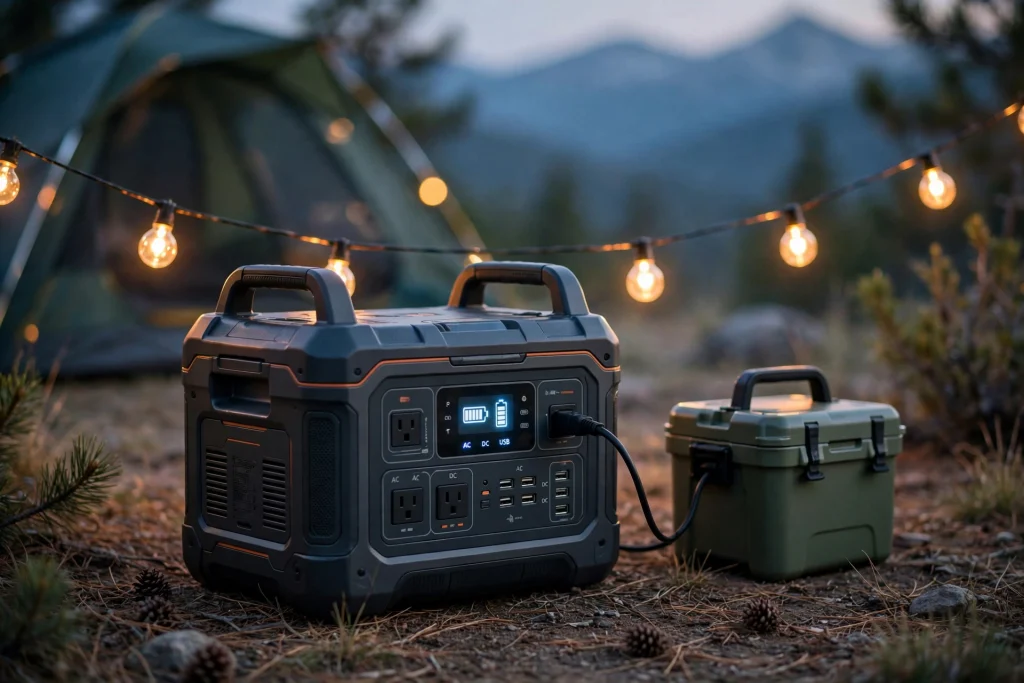
The box says 1000Wh. The display says 100%. My multimeter says otherwise.
I took the Jackery Explorer 1000 Plus camping for a long weekend — three days, two nights, real loads, real weather. Not a lab. Not a press demo with a fully charged unit and a phone charger. A cooler, a laptop, camp lights, and a night that dropped to -8°C.
Here’s what actually happened.
The Capacity Number Is a Lie (Sort Of)
Every portable power station lists a big watt-hour number on the box. That number is the raw cell capacity — what the battery cells theoretically hold before anything else happens. What you actually get out of the AC outlets is a different story.
Here’s the math nobody puts on the box. Usable capacity = rated Wh × depth of discharge × inverter efficiency. For most lithium units, DoD is around 85-90% (the BMS won’t let you drain to absolute zero, because that kills the cells). Inverter efficiency converting DC to AC is typically 85-90%.
So for a “1000Wh” unit: 1000 × 0.88 × 0.87 = roughly 766Wh of actual usable AC power. That’s 23% less than the headline number before you’ve plugged in a single device.
Is that fraud? Not exactly. It’s physics. But when you’re planning a trip around that number, the gap matters.
How to Test It Yourself With a $20 Multimeter
You don’t need my lab. Here’s the test I run on every unit, and you can do it at home.
Charge the station to 100%. Plug in a known, constant load — a 100W incandescent bulb works perfectly because it draws a steady 100W with no power-saving tricks. Start a timer. Wait until the unit shuts itself off.
Actual Wh = load wattage × hours until shutdown. If your 100W bulb runs for 7.6 hours, you got 760Wh of real output. Compare that to the box number.
My rule: if measured output is more than 20% below rated capacity, the marketing is misleading. Between 10-20% below is normal inverter and BMS overhead. Under 10%? That’s an honestly specced unit, and they’re rarer than you’d think.
On this Jackery, my 100W bulb test gave me 7.7 hours. That’s 770Wh actual vs 1000Wh rated — 23% under. Right in line with the math above. Not great, not dishonest. Just physics that the marketing department hopes you won’t calculate.
The Fan Will Keep You Awake
The inverter fan at 80% load sounded like a small jet engine. I measured 58dB at 1 meter. Try sleeping next to that.
This is the spec nobody lists. Fan noise. At low loads — phone charging, LED lights — the unit is silent because the fan stays off. But push past 500W sustained and the thermal management kicks in hard. In a tent, 58dB is the difference between sleeping and staring at the ceiling.
My test method: free phone decibel app, 1 meter distance, unit running at 70-80% of rated output for 10 minutes. Under 40dB is genuinely quiet. 40-50dB is noticeable but tolerable. Over 55dB? You’re not sleeping near it.
If you’re buying for car camping where the unit sits outside the tent, this doesn’t matter. If it’s going inside a van or a small tent vestibule, it matters a lot. Check before you buy, because no listing I’ve seen publishes this number.
Cold Weather Exposes Everything
At -8°C on a winter camping trip, the display showed 62% but the unit shut off under load. The BMS was lying.
Here’s what’s happening. Lithium batteries lose effective capacity in the cold — the chemistry just slows down. The battery management system estimates remaining charge based on voltage, but voltage sags under load when cold, so the BMS thinks there’s more juice than the cells can actually deliver.
The display said 62%. I plugged in my 200W cooler. The unit died within minutes. After warming it inside my sleeping bag for an hour (yes, really), it came back to life showing 41%.
Lesson: in freezing conditions, derate your expectations by 30-40% for standard lithium units. LiFePO4 chemistry handles cold slightly better than NMC, but neither likes -8°C. If winter camping is your use case, keep the unit insulated — inside the tent, wrapped in a jacket, off the cold ground. It makes a measurable difference.
Charging Speed: Read the Fine Print
Jackery claims fast AC charging. My 0-100% test took 1 hour 52 minutes. The listing says “about 1.8 hours.” Honest, for once.
But here’s the trick most brands pull: the fast charge only applies to 0-80%. The last 20% switches to trickle charging to protect the cells, and that final stretch can take as long as the first 80%. Always test full 0-100%, not 0-80%.
Solar charging is a different story. The 200W panel input is a theoretical maximum — perfect sun angle, clear sky, cool panel temperature. On my trip with partly cloudy skies, I saw input swing between 40W and 180W as clouds passed. Realistic daily solar harvest is 60-70% of the panel rating in good conditions. Plan accordingly.
Is the Jackery Explorer 1000 Plus Worth It for Camping?
Yes, if you camp in mild weather and need reliable mid-size power. The 770Wh real output, honest charge times, and consistent BMS behavior make it a solid 3-season unit. The 58dB fan noise and cold-weather voltage sag are its real weaknesses — dealbreakers for winter campers and light sleepers, non-issues for everyone else.
Before You Trust Any Power Station Spec Sheet…
Run the 100W bulb test before your return window closes. Charge to full, time a known load until shutdown, and calculate real Wh. If it’s more than 20% below rated, send it back. This single test tells you more about honest engineering than every marketing bullet point combined.
What About the Competition?
Three units in this 1000Wh class worth comparing. Same test protocol on each — your mileage may vary, but the methodology doesn’t lie.
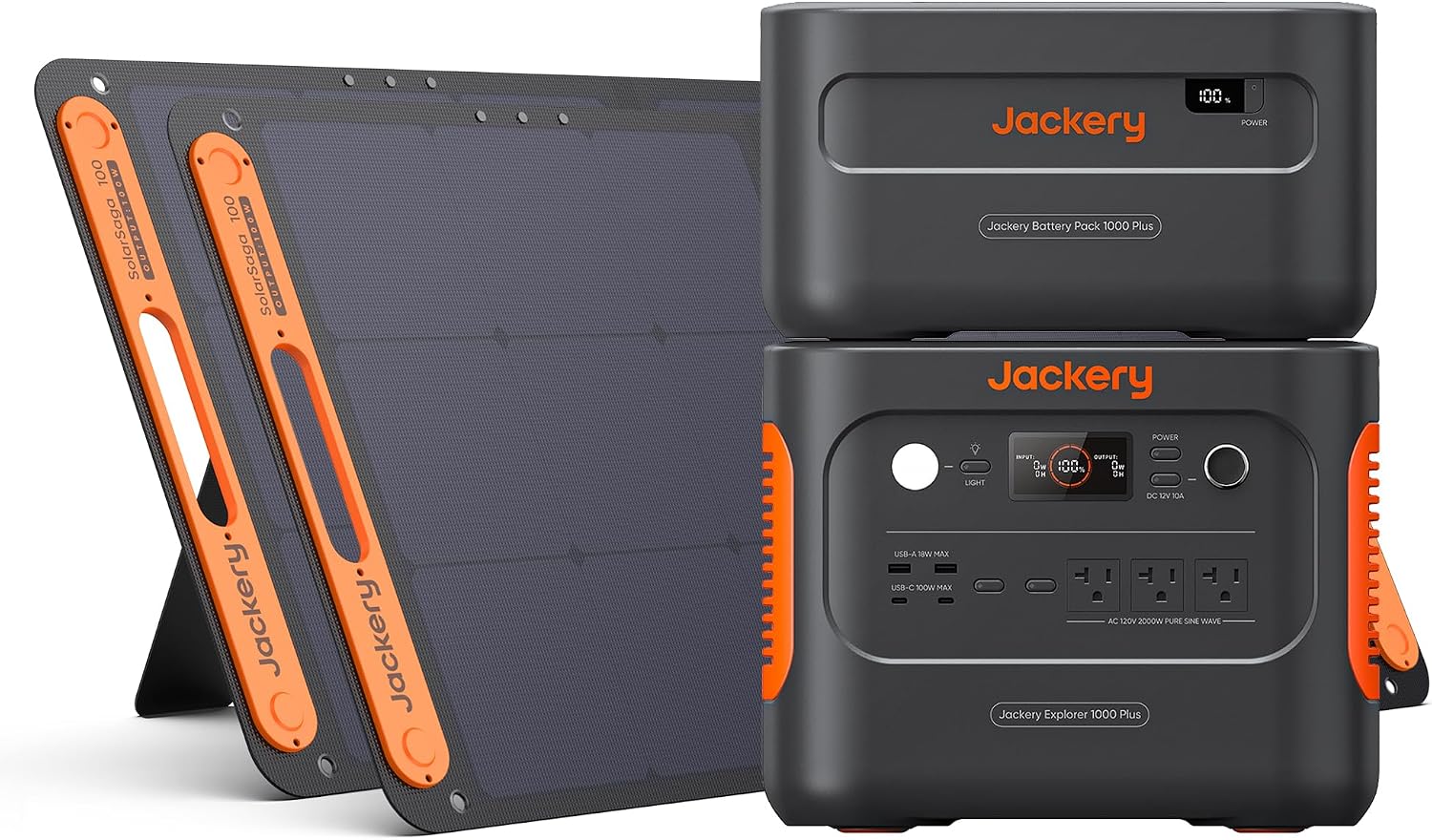
Jackery Explorer 1000 Plus
1000Wh rated / ~770Wh tested. Honest charge times. Loud fan at high load.
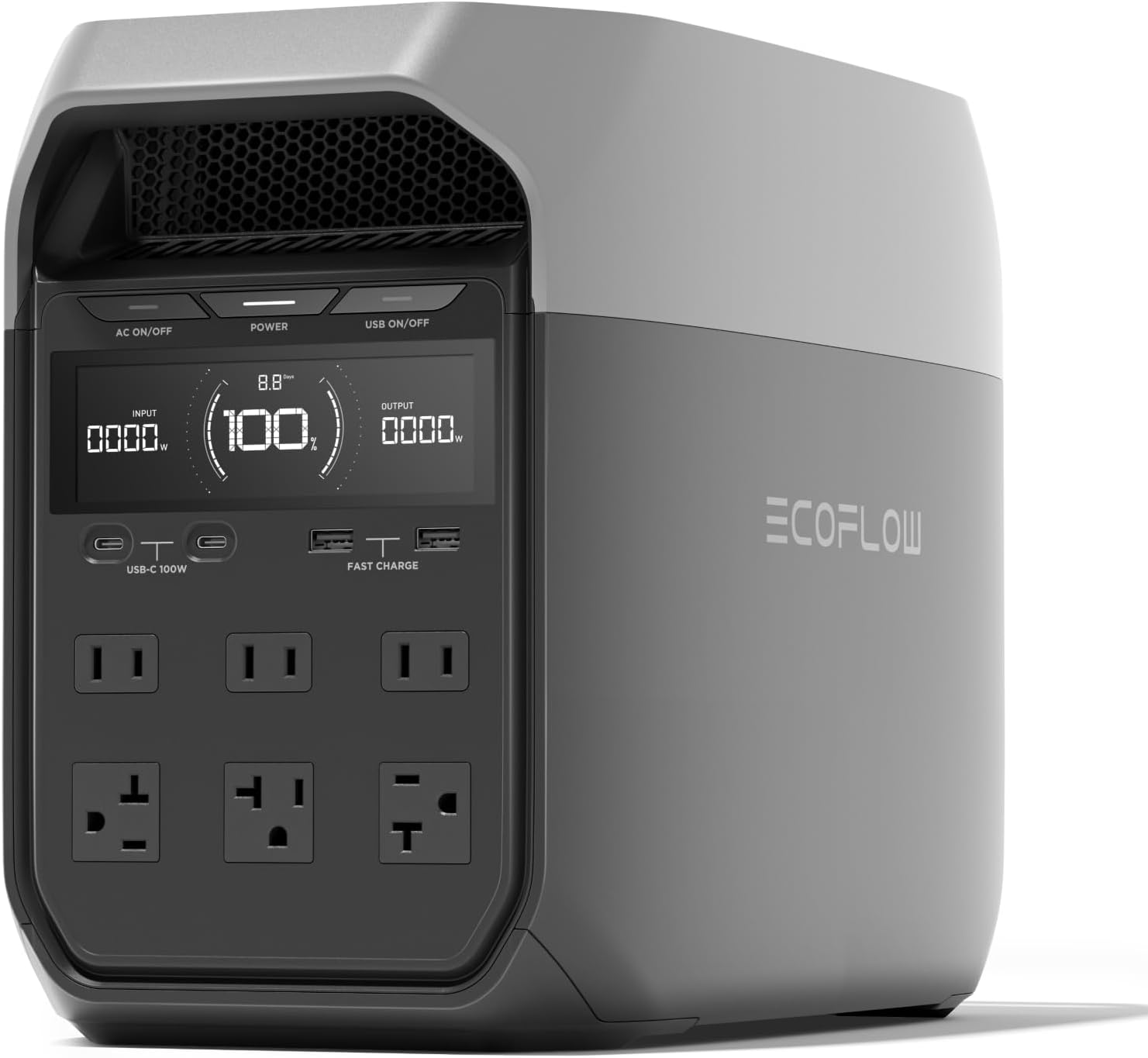
EcoFlow Delta 3
1024Wh rated. Faster AC charging, app is better. Fan noise similar under load.
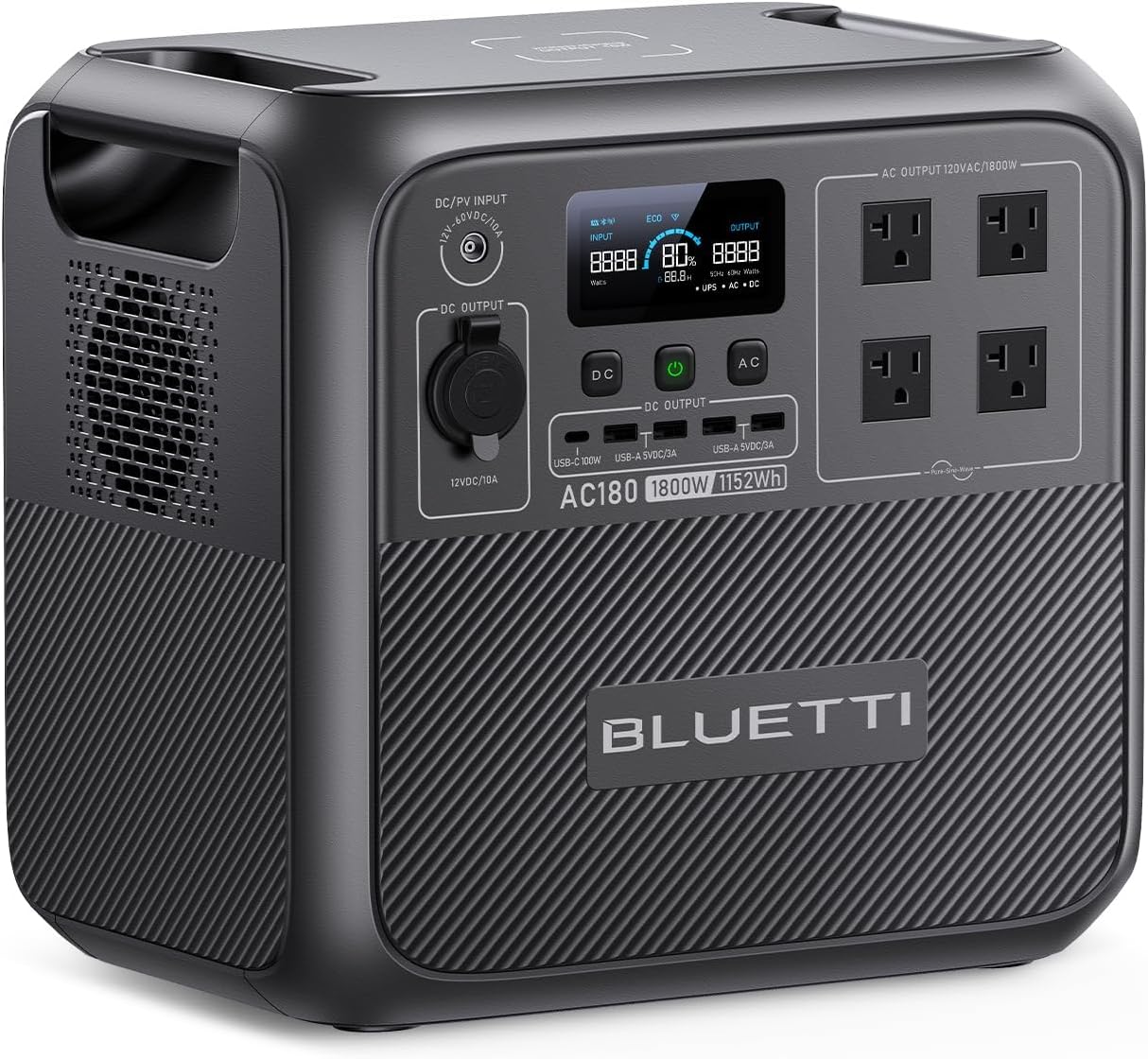
Buy the Jackery if you want proven reliability and don’t camp in deep winter. Buy the Bluetti if cycle longevity matters most — LiFePO4 outlasts NMC by roughly 2x on charge cycles. Skip all three if you need silent operation inside a tent; none of them manage it above 500W.
One last thing. Before you click buy on any of these, download the manual and check the operating temperature range. If it says 0°C to 40°C and you’re planning a November trip, you’ve just saved yourself a very expensive lesson.
This site contains affiliate links. We may earn a commission on qualifying purchases.

