An emergency weather radio is one of those tools you buy hoping you’ll never need, then bless yourself for owning the one time you do. This guide covers three well-known models in the category, with the RunningSnail MD-090P as the centerpiece, and it’s written for campers and storm-preppers who want an honest read — not a spec-sheet recitation. You’ll get clear tiers, real trade-offs, and answers to the questions shoppers actually type before buying.
Quick Answer
The RunningSnail MD-090P covers the core job — NOAA alerts, AM/FM, hand-crank backup power, a flashlight, and a reading lamp — in one compact, budget-friendly box, which makes it the sensible pick for most campers. Just don’t buy it for the solar charging. The tiny panel barely trickle-charges, so treat the crank and the battery as the real power plan. Midland’s ER310 suits people who want AA backup and a more polished alert system, while Kaito’s KA500 is for shortwave tinkerers who want every power option under the sun.
Top 3 Emergency Radios for Camping
Same job — off-grid weather info — three approaches, one honest solar caveat.
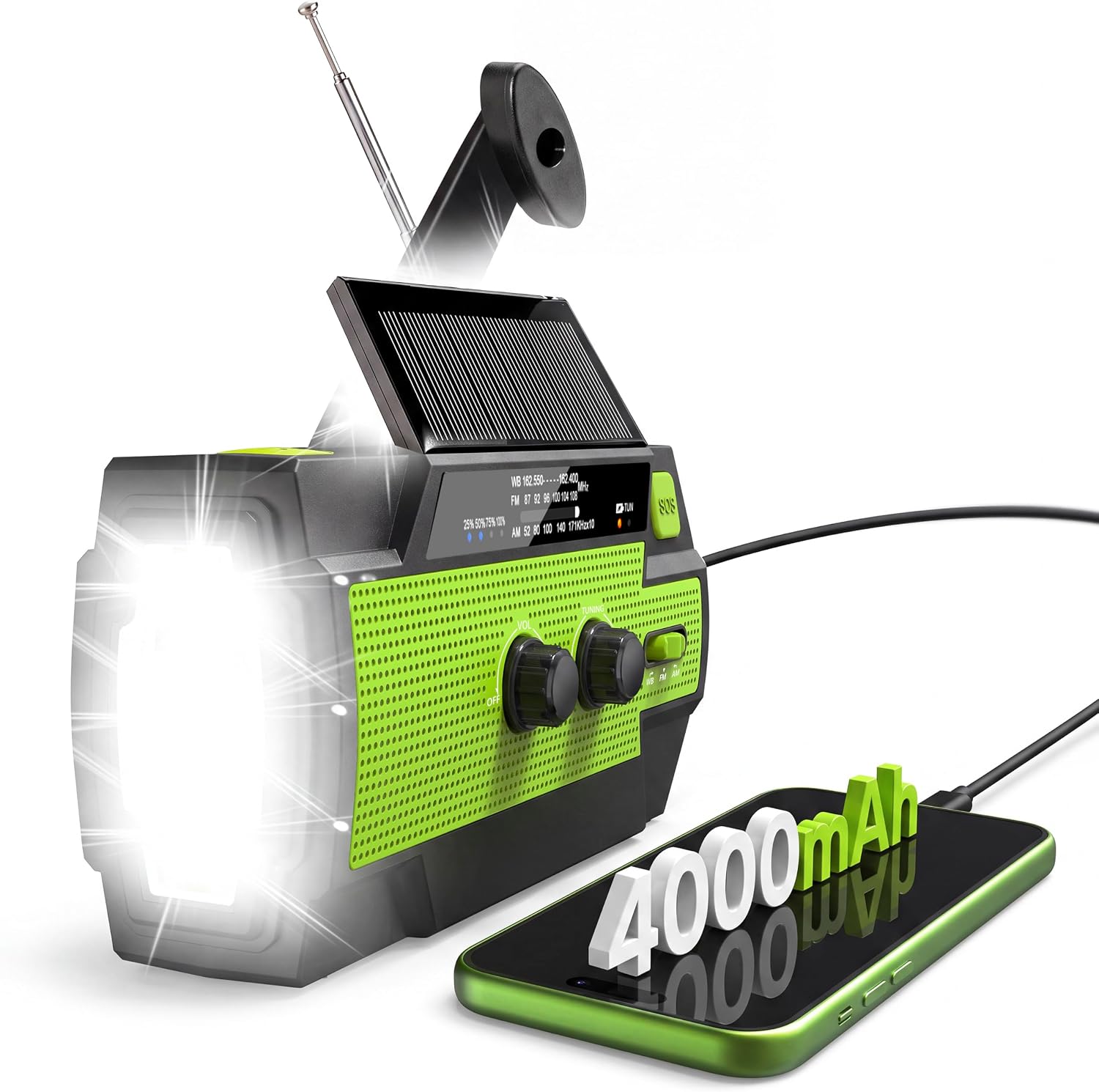
RunningSnail MD-090P
Biggest battery of the three + motion-sensor reading lamp — the camper’s value pick
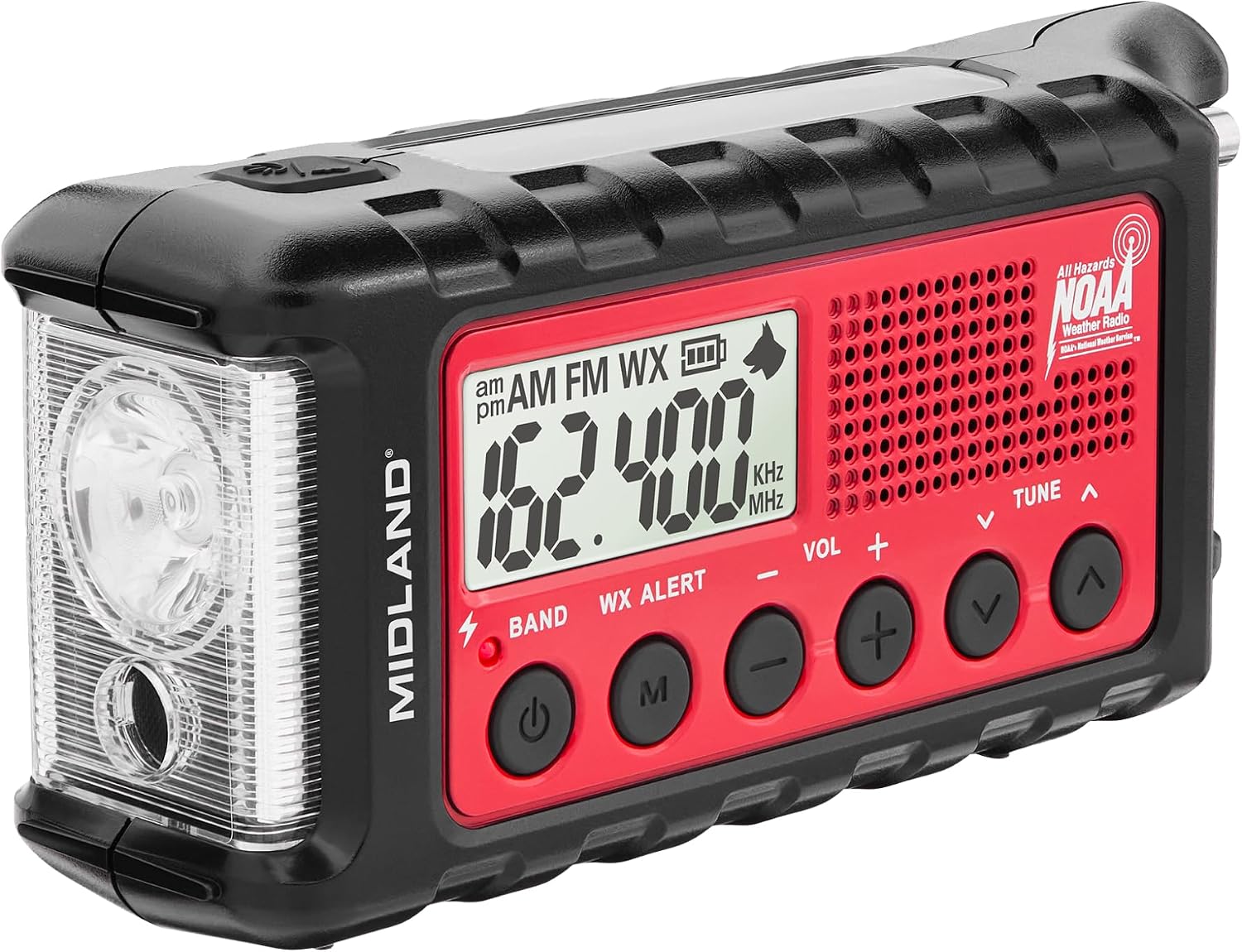
Midland ER310
Replaceable battery + 6×AA backup — still works when everything else is dead
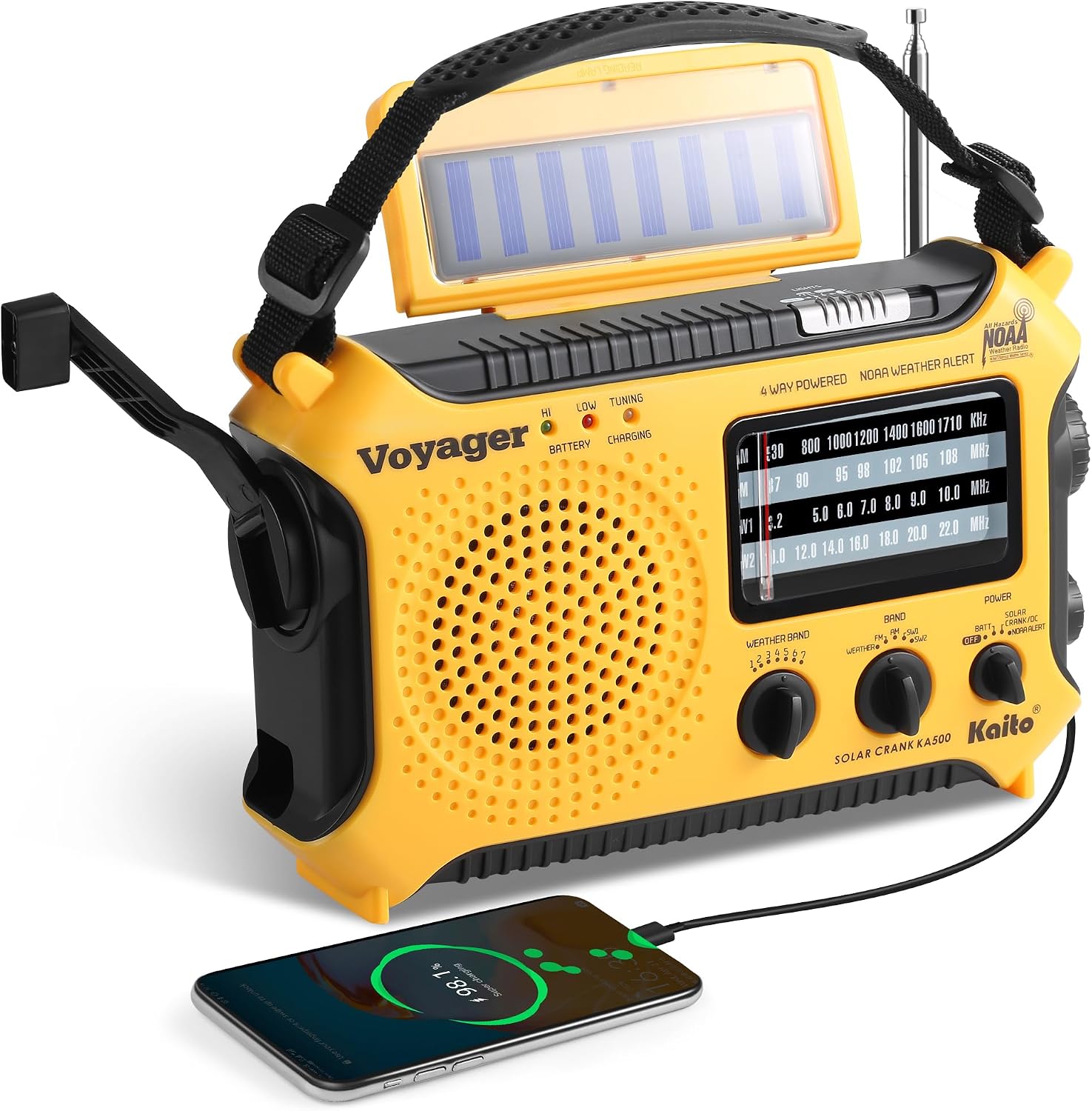
Kaito KA500
6-way power + real shortwave — the feature-rich pick for serious preppers
Prices and availability may vary — tap any product to check the current listing.
What to Look For
Tuning bands and alert behavior. The NOAA weather radio part of the equation is non-negotiable for U.S. buyers: you want all seven NOAA stations (162.400–162.550 MHz), not a radio that merely “receives FM.” AM/FM comes free on nearly every model. The difference is alert behavior — some radios scan silently and beep when an alert tone arrives; others just sit there passively. A passive radio during a tornado warning is a paperweight. Independent testers keep landing on the same point: a radio that wakes itself for a warning is worth paying extra for over one that doesn’t.
Power inputs — and being honest about solar. Almost every solar emergency radio ships with a small panel bolted to the top. Here’s the uncomfortable truth: on most budget models, that panel is a trickle source. It’ll slowly nurse the internal battery over hours of direct sun. It will not meaningfully charge your phone. One phrase from independent testers nails it: “trickle, not a charger.” If a listing leans hard on solar charging while burying battery capacity, be skeptical. The hand crank side of these devices is the genuinely useful backup — a minute of cranking typically yields several minutes to roughly half an hour of listening, depending on volume and the unit. Crank-to-phone charging, though, is universally weak across brands. A last-ditch trickle, not a power bank.
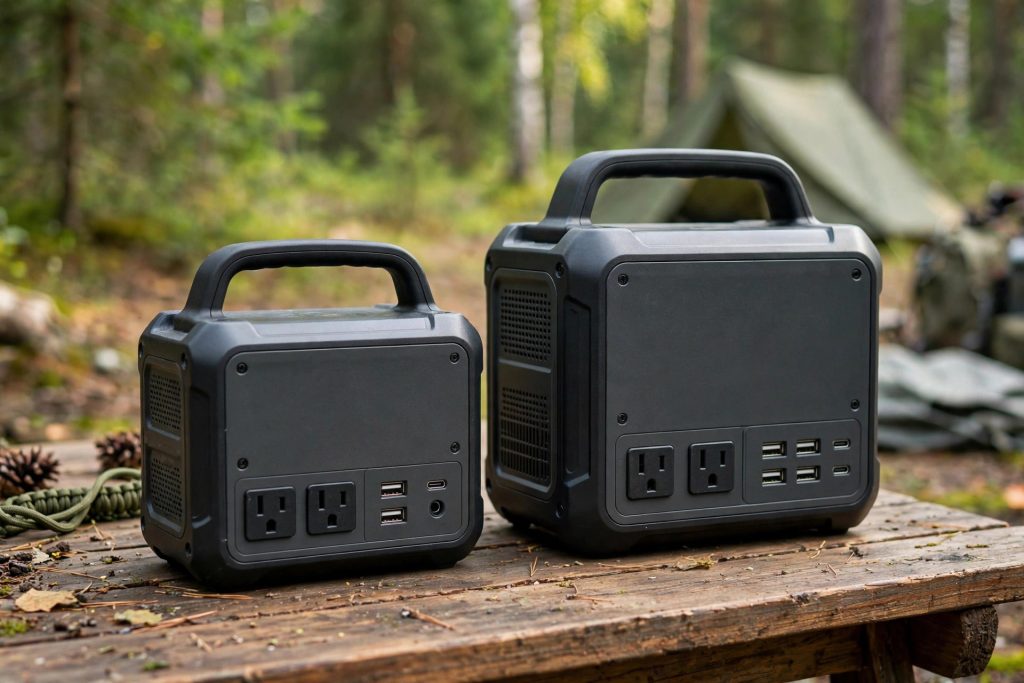
Battery capacity and backup chemistry. Battery size decides how long the radio stays alive between charges — and whether you can swap in something when the internal cell dies. Five years on a go-bag shelf can leave a dead pack. Models that accept AA batteries give you a second lifeline. A portable power station covers your bigger electronics at base camp; the radio’s job is to stay alive on its own when everything else is dead. Check the battery situation before the flashlight lumens.
Hand crank durability. Cranks are mechanical. Mechanical things break. Some cranks feel solid and geared; others wobble like a toy. You won’t find torque specs on a listing page — look for long-term use notes in independent reviews instead. A hand crank radio with a fragile crank is just a regular radio with a false promise.
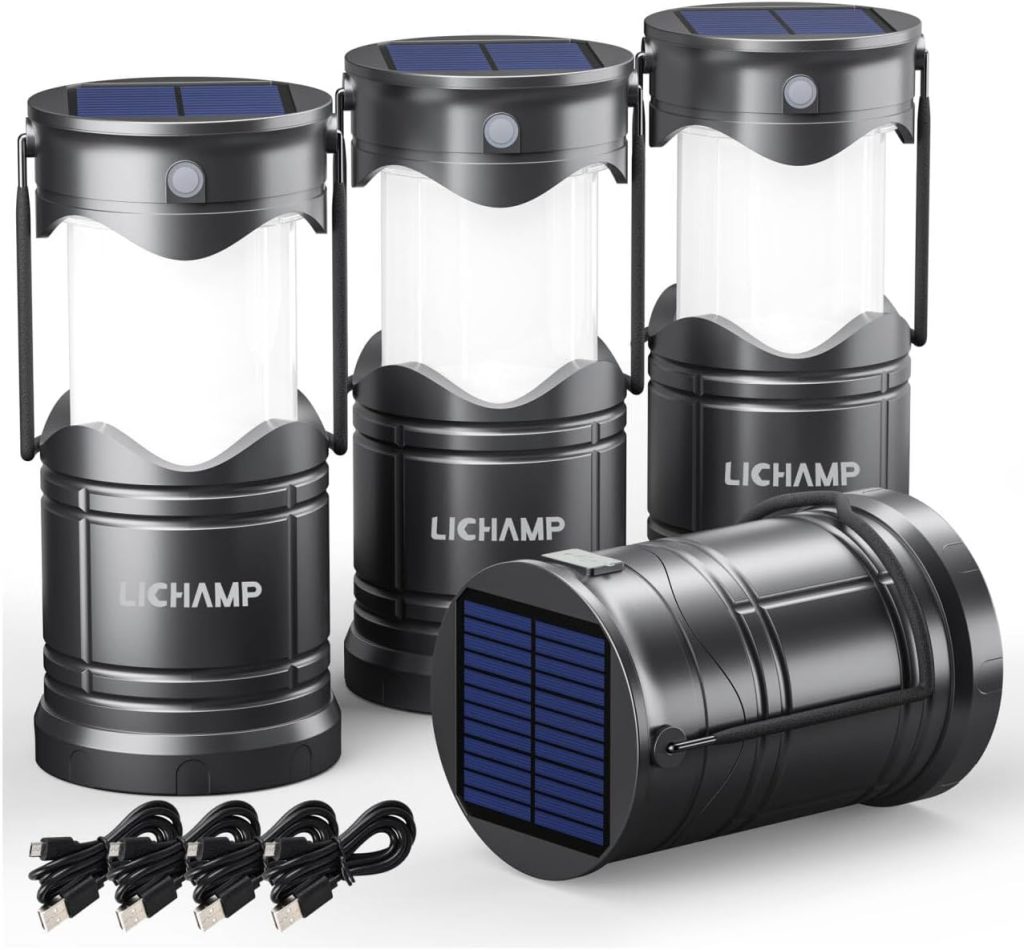
Flashlight and reading light. Nearly every model bundles a flashlight and a lamp, and they’re handy — until you expect them to replace your real camp lighting. They’re decent in a tent; they’re not trail lights. A rechargeable camping lantern remains the right tool for lighting a whole campsite; the radio’s lamp is a bonus, not a substitute. Judge the light as backup lighting and you’ll rarely be disappointed.
SOS features. Sirens and SOS blink patterns sound dramatic on a box. They’re rarely used — but the one time you’re signaling for help in the backcountry, you’ll be glad the feature exists. Don’t pick a radio because of SOS. Pick one that happens to have it.
How to Match the Product to Your Situation
The weekend car camper. You drive to a site, pitch a tent, sleep within sight of the parking area. For you, an emergency weather radio mostly matters during stormy nights: a NOAA alert at 2 a.m. beats waking up to a flooded tent. You don’t need six power inputs or shortwave. You need something compact, easy to charge by USB before the trip, with a hand crank as the “oh right, I forgot to charge it” fallback. The MD-090P was built for exactly this camper.
The hurricane-season homeowner. You keep a go-bag or a storm closet, and the radio might sit untouched for months, then run for days during an outage. Reliability beats features here. You want honest alert behavior, AA backup power (internal cells sulk on the shelf), and a unit tough enough to survive a drop on a concrete floor. The Midland-style tier — pricier, more polished, with swappable batteries — earns its keep here. Your crank sessions are measured in days, not minutes, so crank quality matters more to you than to anyone.
The backcountry minimalist. Every gram counts. A hand crank radio still deserves a spot, but weight and durability in a stuffed, jostling pack drive the decision. Crank handles snag. Big telescopic antennas snap. You want small, sealed, and honest.
Three Tiers, Side by Side
| Type/Tier | Best For | Price Tier | Key Feature | Watch-Out |
|---|---|---|---|---|
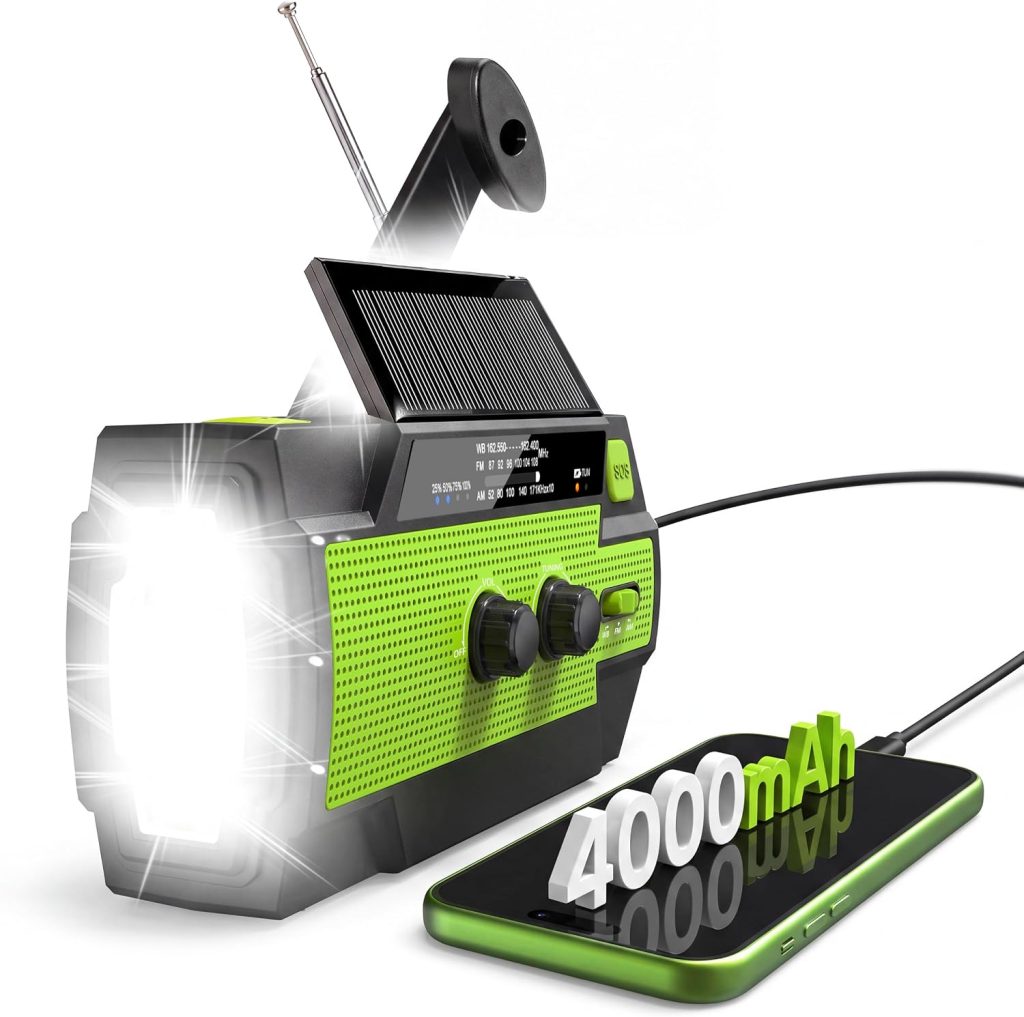
| Compact all-rounder (RunningSnail MD-090P) | Campers wanting one box that does everything | Budget-friendly | Roughly 4,000mAh-class battery, solar + crank + USB, AM/FM + 7 NOAA stations, flashlight, motion-sensor reading lamp, SOS, phone trickle-charge | Solar panel is a slow trickle, not a charger; phone charging is token-level |
| Sturdy classic (Midland ER310) | Storm kits and long outages | Mid-range | Solar + crank + rechargeable pack plus 6 AA backup, AM/FM + NOAA alert scan, bright flashlight with SOS Morse pattern, ultrasonic dog whistle | Costs more; whistle is a novelty, not a reason to buy |
| Feature-loaded (Kaito KA500) | Tinkerers and shortwave listeners | Top-tier price | Six power sources with a fold-out solar panel, AM/FM + dual shortwave + 7 NOAA, long telescopic antenna, reading lamp + flashlight + SOS beacon | Bulkier and heavier; shortwave adds little for most campers |
The MD-090P earns its spot as the default pick because it packs every core emergency function into a small, easy-to-live-with package at a price that doesn’t sting if it lives in your pack for years. The ER310 justifies its mid-range position with honest alert behavior and AA backup — the two things that matter most when a storm knocks out power for days. The KA500 is the enthusiast’s radio: the fold-out panel and shortwave bands are genuinely fun, but you’re paying for capability most campers will never touch.
Overnight Backcountry Camping
Storms don’t check your itinerary. A NOAA weather radio at a remote campsite is the only forecast source that doesn’t depend on cell signal — and plenty of “popular” trail corridors have zero bars past the parking lot. Leave the radio on the NOAA band overnight at low volume; the alert tone will wake you for a flash-flood warning in a way no app can.
Hurricane Season: Home Emergency Kit
Here’s where most people buy wrong. They grab the cheapest solar emergency radio, toss it in a closet, and assume they’re covered. Then the power dies, the internal battery’s been slowly self-discharging for eight months, and the little solar panel needs six hours of sun they’ll get… eventually. For storm kits, prioritize radios with AA backup slots and alert systems that wake on a warning tone. Rotate the batteries once a year when you check your smoke detectors — that’s the whole maintenance plan, and nobody does it, which is exactly why AA backup exists.
Common Mistakes
Mistake 1: Buying it for the solar panel. The panel on a typical hand crank radio is marketing-forward and engineering-backward. It trickle-charges. It does not “power your devices.” If solar is your real priority, buy foldable solar panels that were actually designed to harvest sunlight, and let the radio be a radio.
Mistake 2: Ignoring alert behavior. Two radios can both say “NOAA” on the box and behave completely differently when a warning airs. One beeps and flashes; the other just sits there. A passive radio is a false sense of security with a crank on it.
Mistake 3: Skipping the battery question. How does it store power, and what happens when that storage dies? Internal-only cells are fine for campers who charge before every trip. They’re a liability in a storm kit that sits idle. AA backup is the difference between “works in year five” and “dead brick.”
Mistake 4: Expecting phone charging. Every hand crank radio advertises phone charging. Every independent tester finds it feeble. It works in the sense that electrons move — a nearly dead phone can sometimes claw back enough for one emergency text. It is not a charger. Bring a real power bank.
Why, How, What: Quick Answers
Why do I even need an emergency weather radio when I have a phone? Because the cell network is the first thing to fail in exactly the situations where you need a forecast most — dead zones on the trail, towers down after a hurricane, overloaded networks during an evacuation. NOAA’s alert network broadcasts on its own infrastructure, which is engineered to stay up. A phone is a better screen; a radio is a better survivor. Use the phone daily, keep the radio for the day the phone goes dark.
How does the hand crank actually perform? Crank for a minute and you’ll get listening time measured in minutes, not hours — independent testers report anywhere from a few minutes to roughly half an hour depending on volume and model. That’s plenty for an alert bulletin, and it never runs out of “fuel” the way a battery does. The trade-off is mechanical wear: it’s a moving part, and moving parts fail, so don’t treat the crank as your only plan. USB plus a decent battery is the primary system; the crank is the backup that makes the whole thing trustworthy.
What bands do I actually need? For North American campers: AM/FM plus the seven NOAA weather channels. That’s the whole answer for the vast majority of buyers. Shortwave is a hobbyist band — fun if you’re into distant stations, irrelevant for storm alerts. Match the bands to your actual use case and stop there.
Questions People Ask Before Buying
Real buyer questions, straight answers
Is the RunningSnail MD-090P actually worth buying, or is it just another cheap gadget?
Yes — with clear eyes about what it is. The MD-090P delivers the core emergency package (NOAA alerts, AM/FM, crank, USB charging, flashlight, reading lamp) at a price that makes it an easy pack addition, and independent hands-on notes consistently describe it as functional rather than fancy. What it is not: a solar powerhouse, a phone charger, or a top-tier radio. The listed battery is in the 4,000mAh class — generous for the size and enough for extended listening — but the solar panel trickles and the phone-charging port is a bonus at most. Buy it for alerts and backup light; don’t buy it to replace your power bank.
Can the solar panel keep it running indefinitely off-grid?
No. This is the biggest misconception in the category. The small panels on these radios harvest a trickle — fine for slowly topping up an already-charged battery in good sun, nowhere near enough to run the radio continuously or charge anything meaningful. Independent testers keep landing on the same verdict: the panel is maintenance-level, not a primary source. If you’re planning multi-day off-grid use, charge by USB before you leave and use the crank to extend. The panel just slows the drain.
How long does a minute of cranking really give you?
Expect several minutes to roughly half an hour of radio time, varying by model and volume. Low volume stretches it; a bright flashlight drains it. This lines up with what independent testers have measured across the category. It’s not a lot in absolute terms — but remember what it’s for: catching a weather bulletin, checking that an alert cleared, or running the siren briefly. Nobody cranks for an hour to listen to music. If you need hours of sound, your primary battery should be doing that job.
Do I need the Midland ER310’s AA backup, or is an internal battery fine?
It depends on how you store the radio. Charge-before-every-trip campers do fine with an internal cell; it’s one less thing to pack. Storm-kit buyers who shelve the radio for months should want AA backup — cells on a shelf outlast an aging internal pack, and you can swap in fresh AAs the moment you need them. There’s a reason this category keeps showing up in emergency-preparedness conversations: the radios that fail in real outages usually fail on power, not reception. Plan for the power.
What’s the honest difference between the MD-090P, ER310, and KA500 for a camper?
Size of the feature list and price tier. The MD-090P is the compact all-rounder: everything essential, nothing exotic, easiest to pack. The ER310 adds alert polish and AA backup for people who want their radio to double as storm-kit infrastructure. The KA500 is the maximalist option — fold-out solar, shortwave, bigger antenna — suited to the camper who genuinely enjoys fiddling with bands at camp. For pure camping, the extra features rarely justify the jump; for emergency readiness at home, the ER310’s backup options are the ones that matter.
Frequently Asked Questions
Will it pick up NOAA weather alerts where I camp?
Any of these three covers the seven NOAA channels — but “covers” and “receives clearly” differ by terrain. NOAA transmitters blanket most populated areas; deep canyons and distant backcountry get spotty. Check the NOAA coverage map for your region before a trip. On the fringe, the model with the longest antenna (the KA500 class) has a reception edge — not a guarantee.
Can I charge it by USB, or am I stuck with the crank?
USB charging is standard on all three — cable type varies by generation, so check the listing. Use USB as your primary charge before every trip. The crank exists for when you forgot (everyone does eventually) or when the power’s been out for days. Insurance, not the plan.
Is the phone-charging port actually useful?
Marginally. Crank-to-phone output is weak across the whole category, and the small solar panel won’t move the needle on a modern phone battery. In a true emergency you might coax enough for a call or a text — that’s the honest use case. Don’t pack this radio as your phone’s backup power. Pack a real charger and let the port be a last resort.
How durable are these for real camping?
Mixed. The electronics are simple and hard to kill, but the mechanical bits — crank handles, telescopic antennas — are the failure points. Rough handling in a stuffed pack is what breaks them, not rain (most are at least splash-resistant). Pack the crank taped flat and the antenna retracted, and they’ll last. Treat the radio like a lantern, not a hammer.
What’s the catch with the budget models?
The compromises hide in three places: alert behavior (passive vs. waking alerts), crank feel, and battery honesty. Budget models like the MD-090P cut costs on refinement, not on the core radio — which is exactly why it works as a camper’s pick. You notice the difference in storm-kit duty, where alert quality and battery redundancy matter more. Match the tier to the job.
Do I need shortwave on a camping radio?
Almost certainly not. Shortwave is for hobbyists chasing distant broadcasts; it adds nothing to storm alerts or camp practicality. The KA500 includes it as part of its everything-included pitch — enjoy it if shortwave listening sounds fun to you — but don’t pay the top-tier price for a band you’ll never tune. Most campers should decide between the compact and sturdy-classic tiers.
Key Takeaways
The solar panel on most emergency weather radios is a trickle source — buy for the crank and the battery, not the panel.
A minute of cranking buys minutes to roughly half an hour of listening: enough for alerts, not entertainment.
Alert behavior (waking for warnings vs. passive) matters more than most buyers realize.
AA backup slots are the difference between a storm-kit radio that works in year five and a dead brick.
Phone charging on these radios is a last-ditch trickle, never a charger replacement.
Match the tier to the job: compact all-rounder for campers, sturdy classic for storm kits, feature-loaded for tinkerers.
Decision Tree: Which Emergency Radio Fits Your Camp Kit?
Weekend car camper, storms are the worry → Compact all-rounder (MD-090P class): small, covers NOAA + crank + light, easy to toss in the pack.
Storm-kit homeowner, multi-day outages → Sturdy classic (ER310 class): honest alert behavior and AA backup earn the price step-up.
Backcountry minimalist, weight is everything → Smallest unit with a real crank; skip shortwave and fold-out panels.
Radio hobbyist who camps → Feature-loaded (KA500 class): shortwave and fold-out solar are genuinely fun if you’ll use them.
Forgotten-to-charge-before-every-trip person → Whichever you pick, favor a bigger listed battery and treat USB as the primary system.
Final Recommendation
For most campers searching for an emergency weather radio, the RunningSnail MD-090P is the rational default: it covers NOAA alerts, AM/FM, hand-crank backup, a flashlight, and a reading lamp in a compact, budget-friendly package, and its listed battery capacity is generous for the size. Just walk in with honest expectations — the solar panel trickles, the phone charging is token-level, and the crank is backup rather than a primary power plan. If your radio is storm-kit infrastructure that must work after months on a shelf, step up to the Midland ER310 class for AA backup and more polished alert behavior. And if you’re the kind of camper who’d genuinely enjoy shortwave at the fire, the Kaito KA500’s maximalist feature set is your playground — for everyone else, it’s weight and money better spent elsewhere.
Top 3 Emergency Radios for Camping
Same job — off-grid weather info — three approaches, one honest solar caveat.
RunningSnail MD-090P
Biggest battery of the three + motion-sensor reading lamp — the camper’s value pick
Midland ER310
Replaceable battery + 6×AA backup — still works when everything else is dead
Kaito KA500
6-way power + real shortwave — the feature-rich pick for serious preppers
Prices and availability may vary — tap any product to check the current listing.