Doubling the runtime of a station you already own sounds simple, and for a lot of campers that is the appeal of the EcoFlow DELTA 2 Smart Extra Battery. This guide looks at what that 1024Wh expansion battery actually changes, what it leaves untouched, and how it stacks up against packs from Anker SOLIX and BLUETTI. It is written for DELTA 2 owners who run out of power overnight, and for anyone comparing solar batteries before spending on the wrong box.
Quick Answer
If you own a DELTA 2 and your problem is runtime — a 12V fridge or CPAP dying before morning — the EcoFlow extra battery is worth it, because it doubles stored energy to 2048Wh without replacing a station you like. If your problem is output, skip it entirely, because an expansion battery adds no watts at all.
Compare Expansion Batteries for Portable Power Stations
Three extra battery packs side by side — each one only fits its own brand of host station, so the right choice starts with the station you already own, not with the biggest number.
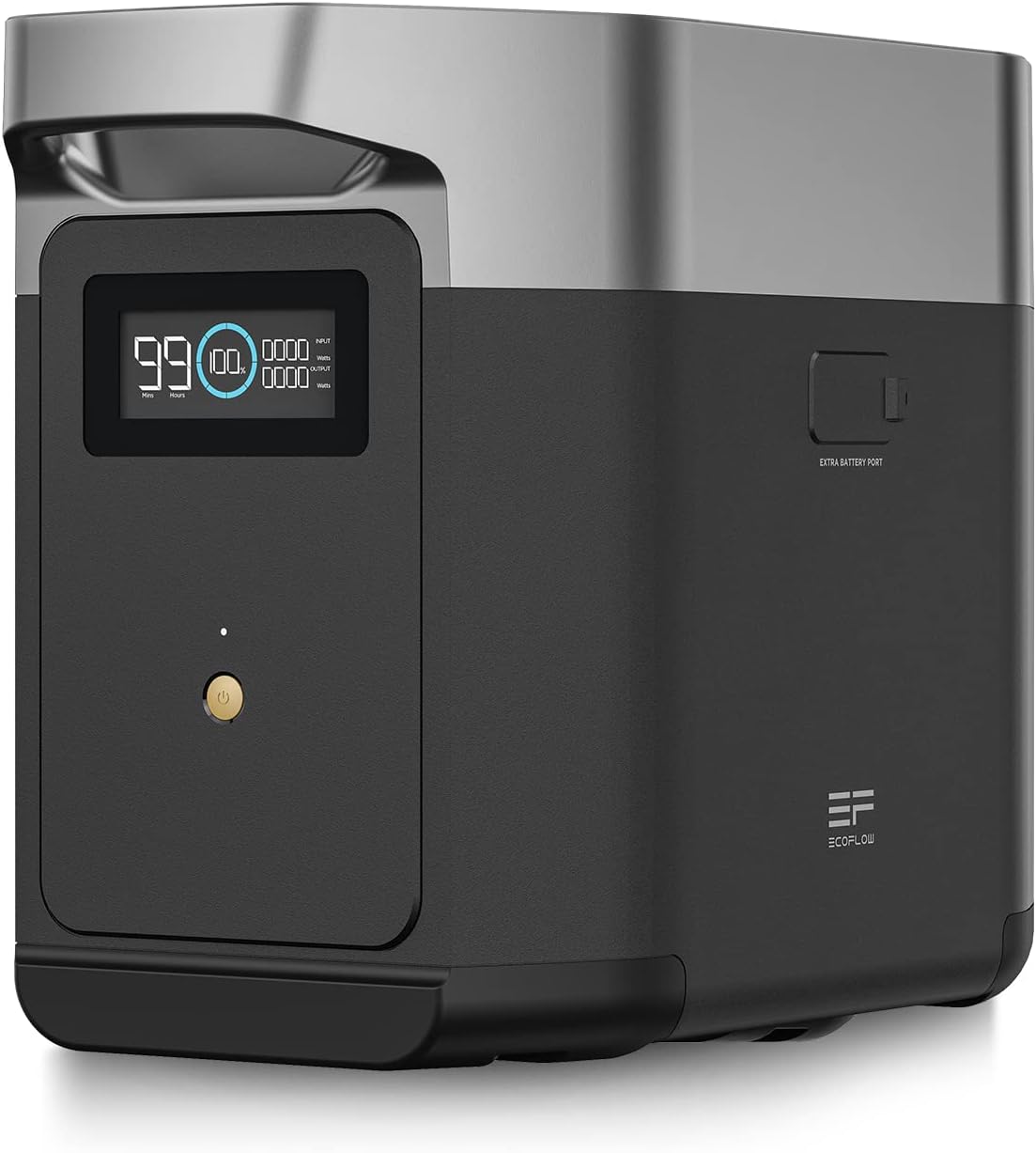
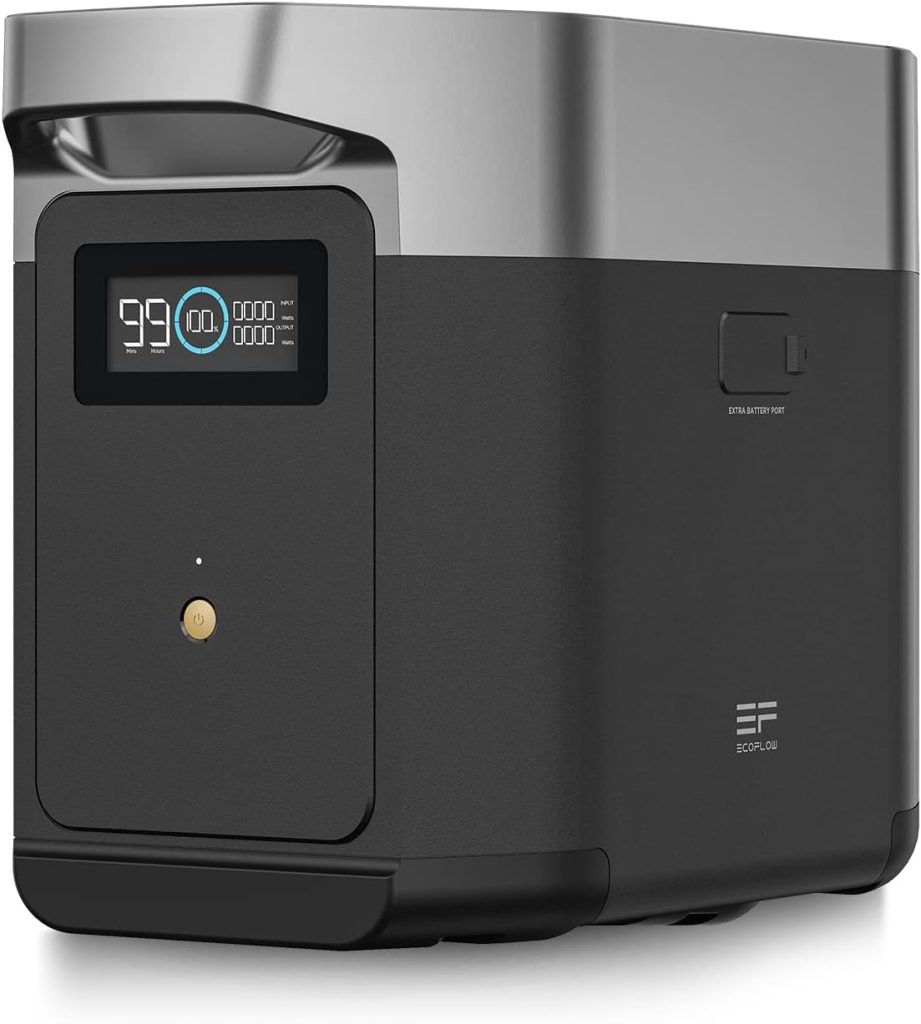
EcoFlow DELTA 2 Smart Extra Battery
1024Wh of LiFePO4 that doubles a DELTA 2 to 2048Wh, at about 21 lb — the balanced camping pick, but it only works with the DELTA 2 and has no outlets of its own
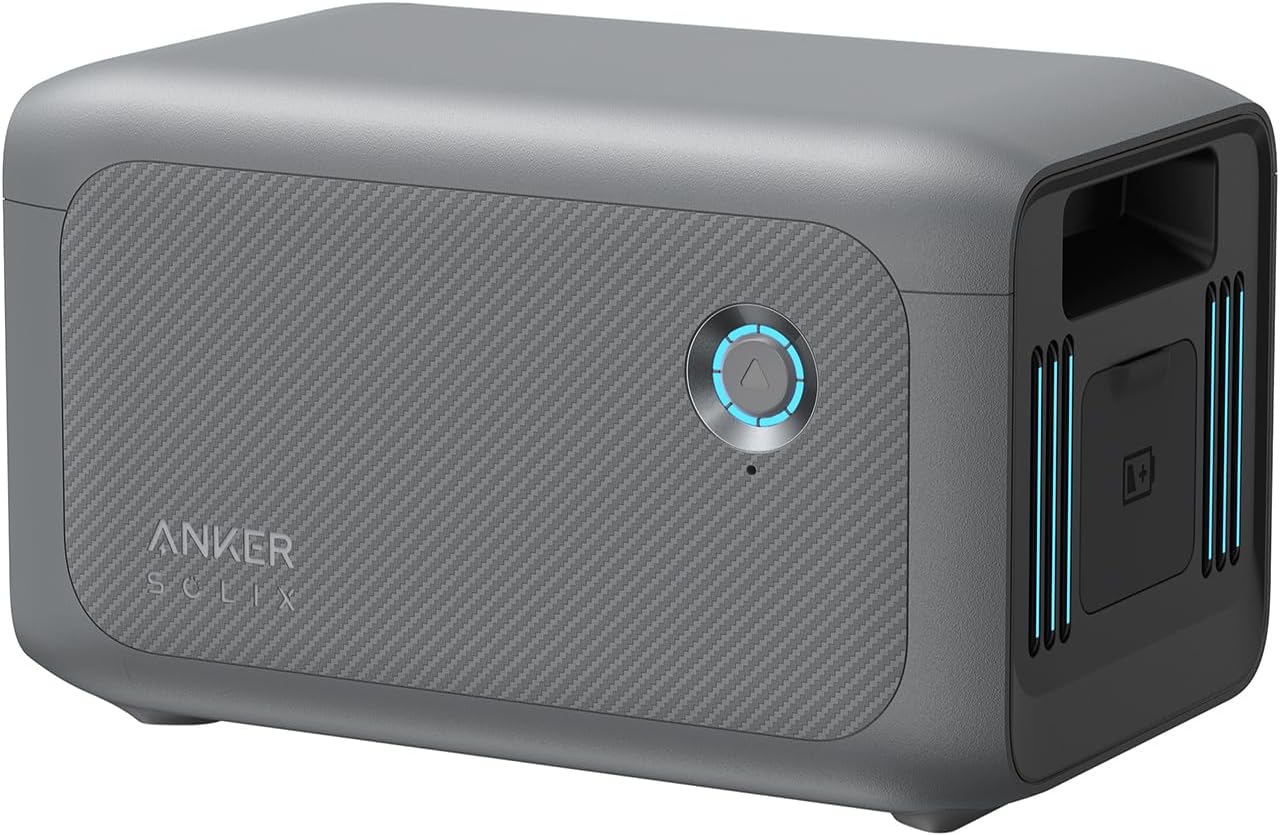
Anker SOLIX BP1000 Expansion Battery
1056Wh that doubles a first-generation SOLIX C1000 to 2112Wh — a strong pack, but it does not fit the newer C1000 Gen 2 at all
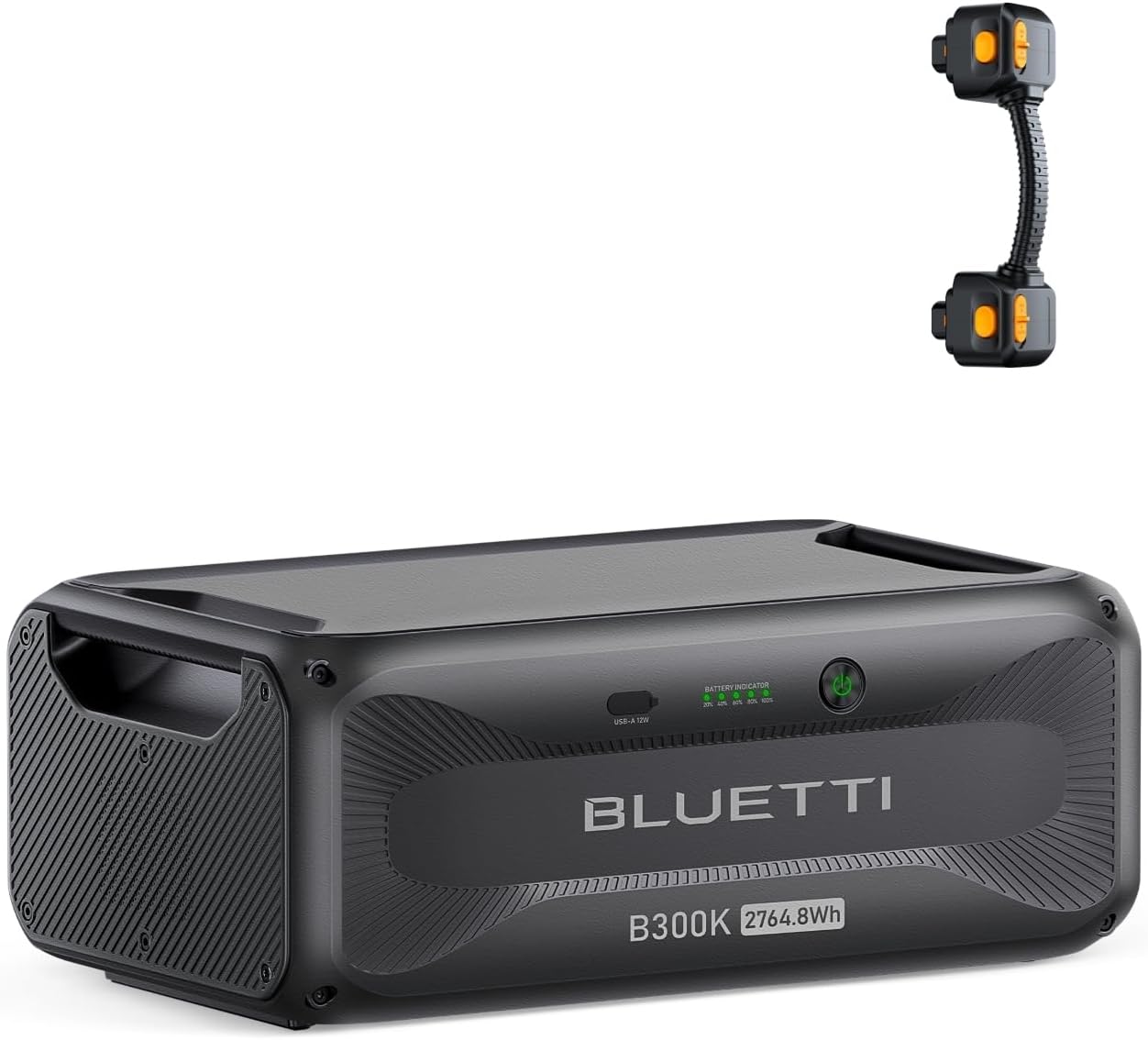
BLUETTI B300K Expansion Battery
A big 2764.8Wh pack for the Apex 300 host family, with a small USB-A output of its own — serious home-backup capacity, far too heavy for casual car camping
Prices and availability may vary — tap any product to check the current listing.
What to Look For in an Expansion Battery
Most people shop capacity first. That is backwards here.
Compatibility comes before everything else — it is a hard gate, not a soft preference. An expansion battery is not a generic LiFePO4 battery pack you can wire to anything with a cable and good intentions. Each pack talks to one family of host stations, uses a proprietary connector, and charges only through that host. The EcoFlow pack works with the DELTA 2. The Anker SOLIX BP1000 works with the first-generation SOLIX C1000, and — this catches people out — it does not fit the newer C1000 Gen 2 at all. The BLUETTI B300K in its current listing is built for the Apex 300, with the wider family pairing to several larger BLUETTI stations when the correct cable is used. Different brand, different host, no workaround. Check your exact model name before any capacity number. If the host is wrong, nothing else matters.
Capacity is the second check, read with a discount already applied. Nameplate watt-hours describe what is stored in the cells, not what reaches your appliances after the host converts DC power to AC. Conversion loses energy as heat. Plan on roughly 80 to 85 percent for AC loads, so a combined 2048Wh setup delivers closer to 1650 to 1740 usable watt-hours. DC loads, like a 12V fridge, waste less, so the same setup stretches further overnight. Run the maths on your actual loads — fridge, CPAP, phones, lights — and include the loss. You will know quickly whether doubling is enough.
Output is the third check, and it is the one marketing glosses over. Read this twice if you need to.
An expansion battery adds capacity. It does not add output.
The host sets the wattage ceiling, and bolting on an extra battery does not raise it by a single watt. If a kettle or small heater already tripped your DELTA 2, it will still trip it with the pack attached — just with a fuller battery connected. People conflate a bigger fuel tank with a bigger engine here. They are separate problems. Runtime gets solved by expansion. Output gets solved only by a larger station with a higher-rated inverter.
Weight deserves more respect than spec sheets give it. The EcoFlow pack sits at about 21 lb, roughly a carry-on case, and the Anker pack lives in a similar class. That is manageable — station in one hand, battery in the other. The BLUETTI B300K is a different animal, far heavier, a two-hand lift leaning toward home backup rather than a weekend toss-in. Weight also compounds, and if you move camp daily, every pound gets packed repeatedly.
Cycle life is where LiFePO4 quietly earns its keep. EcoFlow rates these cells for roughly 3000 cycles to 80 percent of original capacity — years of weekend use before decline becomes noticeable. That cuts both ways. A rarely used pack still ages and locks money into one ecosystem. Frequent campers extract real value here. Occasional campers should pause longer.
Charging behaviour rounds out the picture. None of these packs charge on their own — charging happens through the host, using the included extra-battery cable, and your solar input limit stays the host’s limit. Adding capacity means more energy to refill, so a full recharge from foldable solar panels takes longer on the same panel setup, and a doubled system can sit chronically half-full. Size charging to storage, or the extra capacity becomes dead weight on weak-sun trips.
Cost per watt-hour is the uncomfortable last check. Expanding later usually costs more per watt-hour than buying bigger up front. That premium is real. What you get for it is flexibility — the spend spreads across two purchases, and on short trips the pack stays home while the host travels light. For buyers who already know they need the larger capacity every trip, buying right-sized first is smarter money.
How the Three Packs Compare
Three packs, three ecosystems, three different buyers in mind. Lining them up clarifies the choice fast — though cross-brand comparison here is partly academic, since you can only buy the pack that fits your host.
| Type/Tier | Best For | Price Tier | Key Feature | Watch-Out |
|---|---|---|---|---|
| EcoFlow DELTA 2 Smart Extra Battery — 1024Wh | DELTA 2 owners needing overnight runtime | Mid-range | Doubles the host to 2048Wh at about 21 lb | Host-locked, no outlets of its own |
| Anker SOLIX BP1000 Expansion Battery — 1056Wh | First-generation SOLIX C1000 owners | Mid-range | Doubles that host to 2112Wh | Does not fit the C1000 Gen 2 |
| BLUETTI B300K Expansion Battery — 2764.8Wh | Apex 300 and larger-station owners, home-leaning use | Premium | Far larger capacity, small USB-A output included | Far heavier, two-hand carry |
The EcoFlow row is the balanced camper option, doubling capacity while keeping the kit portable for car camping. The Anker row offers near-identical logic in a different ecosystem, with a generational trap attached. The BLUETTI row is not a camping accessory in the same sense — generous capacity, but its weight reclassifies it.
Start with EcoFlow and Anker, the closest pair. Similar capacity, similar weight class, similar LiFePO4 chemistry, same proposition — double your host, keep your host. Neither works standalone. Neither gives you extra outlets. Neither raises output. And the decision between them is not really a decision, because your existing station already made it. Own a DELTA 2, and the Anker pack is irrelevant to you. Brand ecosystems here behave like railway gauges. The trains only run on their own track.
Gen 2 owners, pay attention. The BP1000 does not fit the newer C1000 Gen 2. Not with an adapter, not with a different cable, not at all. Buy on brand name alone and you end up with a heavy box that connects to nothing you own.
BLUETTI plays a longer game. The B300K stores 2764.8Wh — more alone than the DELTA 2 and its extra battery combined — and the family pairs with several larger stations beyond the Apex 300 when the correct cable is used. It even carries a small USB-A output, so a phone can charge without the host. Small thing. Still nice in a blackout. The trade is weight, and it is not subtle. This is gear you position once and leave alone.
One more comparison rarely gets made. Compare expanding against replacing. Every dollar spent on an extra battery for solar batteries style setups is a dollar not spent toward a larger, higher-output station. Expansion preserves a host you like and fixes overnight runtime. Replacement fixes output ceilings — at the cost of retiring gear that still works. Neither path wins in the abstract. Your load list decides.
Matching the Pack to Your Kind of Trip
Specs stop helping at some point. Trips help more. Picture the moment the station display usually starts making you nervous — when it happens, and what causes it, tells you whether an extra battery belongs in your kit at all.
The Overnight Fridge and CPAP Camper
This is the strongest case for the EcoFlow pack, and it is not close. A 12V fridge cycling overnight plus a CPAP running steadily can chew through a meaningful share of a 1024Wh station before dawn, especially after evening lights and phone charging. Doubling to 2048Wh nameplate — roughly 1650Wh or better usable on AC, more on DC — turns a borderline night into a comfortable one with margin for a grey morning. Margin matters with medical-adjacent gear. Nobody wants to do capacity arithmetic at 2 a.m. in a tent. If this is your nightly pattern, the pack solves your exact problem.
The Weekend Camper Who Moves Every Day
Short hops change the calculation. If trips run one or two nights, you relocate often, and loads are lights, phones, and a small fan, a single station often suffices — particularly with decent sun topping it up. Carrying an extra 21 lb to solve a problem you do not have is just… carrying an extra 21 lb. Save the money. A portable power station that already covers your weekends does not become inadequate because an accessory exists. Buy the pack the season your trips get longer, not before.
The Camper Who Keeps Tripping the Station
Your problem is not runtime. Say that plainly before spending anything. If the station shuts down when the kettle starts, you are hitting an output ceiling, and an expansion battery — any brand, any size — will not move it at all. You will own twice the stored energy and the same frustration. Skip expansion. Put the money toward a larger station, or change the appliances. Plenty of campers run a hybrid setup for this reason — electricity for steady loads, gas for heat-hungry ones.
Common Mistakes People Make With Expansion Batteries
Mistake one dwarfs the rest. People buy for capacity and forget compatibility, or check the brand and skip the model generation. The BP1000 and C1000 Gen 2 mismatch is the textbook example, but it happens whenever a line gains a second generation. Read the full model name off your station, then read the pack’s compatibility list. Word for word. Ninety seconds, and the cheapest insurance in this purchase.
Assuming more stored energy means more power is mistake two. Watt-hours and watts sit side by side on listings as if they were siblings. They are not. One is the size of the tank, the other the width of the pipe. List loads in watts and nightly consumption in watt-hours, separately. If the watts column breaks your station, expansion is the wrong purchase.
Forgetting the conversion loss is mistake three. Shoppers do tidy arithmetic — 2048Wh divided by a modest load equals a lovely long runtime — and feel cheated when reality lands shorter. Reality is not cheating anyone. Inverters waste a slice of everything, and cold nights take their own cut. Build the 80 to 85 percent assumption in from the start. If your plan only works at 100 percent efficiency, it does not work.
Mistake four is subtler. People expand storage and never expand charging, then wonder why a multi-day trip ends in rationing. A doubled system drained over two cloudy days needs serious input, and a modest panel that kept a single station afloat may leave the pair behind. Storage and charging are a matched set — do you have the sun hours to refill this, where you actually camp, in the season you actually camp? Shaded pitches in late autumn answer that harshly.
Why, How, and What: The Basics Worth Getting Straight
Why does an expansion battery not increase output?
Output lives in the host’s inverter, which converts stored DC energy into AC power and has a fixed factory rating. The extra battery sits behind it as a reservoir. A bigger reservoir cannot push more through the same inverter than it was built to handle, any more than a larger water tank raises pressure from the same pump. The ceiling you had on day one is the ceiling you keep.
How does the extra battery actually connect and charge?
A dedicated extra-battery cable links the pack to the host, and the pair then behave as one system with combined capacity. The pack has no charging routine of its own and no outlets — apart from the small BLUETTI USB-A exception noted earlier, a phone-in-a-pinch feature rather than a camp power source. You charge the host from wall, vehicle, or panels, and the host distributes that charge into both units. Unplug the host and the EcoFlow and Anker packs are inert boxes.
What should you check on your own station before ordering?
Start with the exact model and generation printed on your station, then confirm that name appears on the pack’s compatibility list. Next, total your overnight loads in watt-hours and apply the conversion-loss discount to see whether doubling covers you. After that, confirm your biggest appliance sits under the host’s output rating, because expansion will not rescue an overload. Finally, check your panels can refill the larger system. Four checks. Ten minutes. Most returns trace back to skipping one.
Questions People Ask Before Buying
Real buyer questions, straight answers
Will the EcoFlow extra battery work on its own without a DELTA 2?
No, the EcoFlow pack cannot run anything on its own. It carries no outlets of its own and no inverter, so it only feeds stored energy into a DELTA 2 host through the included cable. Treat it as half of a system, not a small station in disguise. Anyone wanting a standalone unit for a phone and a light should buy a small station instead.
Does adding an extra battery let my station run bigger appliances?
No, adding capacity does not raise your station’s output limit in any way. The host’s inverter rating stays exactly where it was, so an appliance that overloaded the station before will overload it again with the pack attached. What changes is duration — appliances the station already handles run for roughly twice as long. Shoppers whose frustration is tripping and shutdowns need a higher-output station, full stop.
How much usable power do I actually get from a doubled setup?
You should plan on roughly 80 to 85 percent of the combined nameplate figure for AC loads. Doubling a DELTA 2 gives 2048Wh on paper, translating to roughly 1650 to 1740 usable watt-hours once inverter losses take their share. DC loads such as a 12V fridge waste less, so overnight fridge runtime stretches further than the AC maths suggests. Budgeting with the discount built in keeps the fridge cold.
Can I use the Anker BP1000 with a C1000 Gen 2 station?
No, the BP1000 is not compatible with the C1000 Gen 2 at all. It was built for the first-generation SOLIX C1000, doubling that host from 1056Wh to 2112Wh, and the newer generation uses a different pairing. This is the category’s sharpest compatibility trap, because the brand and family names look nearly identical on a listing page. Gen 2 owners need options made for their specific station.
Is it cheaper to expand later or buy a bigger station first?
Buying the bigger station up front usually works out cheaper per watt-hour than expanding later. Expansion charges a premium for flexibility — you spread the spending over time and keep a lighter host for short trips where the pack stays home. That has genuine value when your needs grew after the original purchase. But a first-time buyer who already knows every trip needs the larger capacity should buy right-sized once.
Frequently Asked Questions
How long does the EcoFlow extra battery take to charge?
Charging time depends entirely on the host and input source, because the pack charges through the DELTA 2. Doubling capacity means roughly double the energy to replace, so the same outlet, vehicle, or panel setup takes noticeably longer to fill the pair. Solar users should expect a full refill to need strong sun and patience. Partial top-ups during the day beat one recharge at dusk.
Can I charge the extra battery with solar panels directly?
No, you cannot feed panels straight into the EcoFlow or Anker packs. Panels plug into the host, the host manages incoming solar power within its own input limits, and energy flows from there into both units. Your array is capped by what the host accepts, regardless of the storage behind it. Sizing panels to the host’s input matters more than headline panel wattage.
How heavy is the combined DELTA 2 and extra battery setup?
The extra battery alone weighs about 21 lb, so the combined kit is a two-piece carry with meaningful weight in each hand. Most car campers will find that manageable between vehicle and pitch. Long carries, steep ground, and daily camp moves are a different story. Picture your least convenient arrival — rain, slope, fading light — and judge the weight against that moment.
How many years will a LiFePO4 expansion battery last?
EcoFlow rates these cells for roughly 3000 cycles before capacity falls to about 80 percent of the original figure. Spread across regular weekend camping, that points to many years of service before decline becomes noticeable. Calendar ageing still applies, so a twice-a-year pack will not deliver three thousand weekends before time takes its share. Frequent campers extract the most here.
Does the BLUETTI B300K work without a host station?
Almost entirely no, with one small exception. The B300K is built around host stations such as the Apex 300, and its main capacity is only accessible through a paired host with the correct cable. It does carry a small USB-A output, so a phone can be topped up in a pinch, which neither rival pack offers. That trickle of independence does not make it a standalone station. Its weight marks it out as home-backup-leaning gear.
Will an expansion battery help during a home power outage?
Yes, provided your loads fit inside the host’s output rating and expectations stay modest. Doubling capacity doubles how long the host runs the essentials — lights, phones, a router, a fridge cycling overnight — and that margin often separates a comfortable outage from a stressful one. It will not turn a mid-size station into whole-home backup. Think essentials, extended — not everything, indefinitely.
Key Takeaways
Compatibility is the first check, always — every pack here is locked to specific host models, and the BP1000 does not fit the C1000 Gen 2.
An expansion battery adds runtime, not output, so appliances that overloaded your station before will still overload it afterwards.
Usable AC energy runs at roughly 80 to 85 percent of the nameplate figure once inverter losses are counted.
The EcoFlow pack suits DELTA 2 owners running a fridge or CPAP overnight; the far heavier B300K leans toward home backup.
Expanding later costs more per watt-hour than buying bigger up front, but it spreads the spend and keeps short trips light.
Decision Tree: Which Expansion Battery Should You Buy?
You own a DELTA 2 and lose power overnight to a fridge or CPAP — buy the EcoFlow Smart Extra Battery; runtime is your problem and doubling to 2048Wh fixes it.
Your station trips when bigger appliances start — buy no expansion battery at all, and put the money toward a higher-output station instead.
You own a first-generation SOLIX C1000 — the BP1000 is your pack; you own a C1000 Gen 2 — the BP1000 is not an option for you at all.
You need serious capacity for a cabin or home essentials backup and rarely carry gear far — the B300K class makes sense, at the price of serious weight.
Final Recommendation
For the DELTA 2 owner this guide was written for — the camper whose fridge warms up or whose CPAP gives out in the small hours — the EcoFlow DELTA 2 Smart Extra Battery is a sound, honest purchase. It does one job, doubling stored energy to 2048Wh in a pack light enough to actually bring along, built on LiFePO4 cells rated for roughly 3000 cycles. Buy it for runtime. Respect its limits.
Everyone else should pause. If your station’s output ceiling is the wall you keep hitting, expansion money is wasted money, and a larger station deserves your budget instead. If you have not bought a station yet and already know you need the capacity daily, buying right-sized once beats expanding later. And whatever brand you run, check the exact model twice before ordering — that ninety-second check is worth more than any discount.
Compare Expansion Batteries for Portable Power Stations
Three extra battery packs side by side — each one only fits its own brand of host station, so the right choice starts with the station you already own, not with the biggest number.
EcoFlow DELTA 2 Smart Extra Battery
1024Wh of LiFePO4 that doubles a DELTA 2 to 2048Wh, at about 21 lb — the balanced camping pick, but it only works with the DELTA 2 and has no outlets of its own
Anker SOLIX BP1000 Expansion Battery
1056Wh that doubles a first-generation SOLIX C1000 to 2112Wh — a strong pack, but it does not fit the newer C1000 Gen 2 at all
BLUETTI B300K Expansion Battery
A big 2764.8Wh pack for the Apex 300 host family, with a small USB-A output of its own — serious home-backup capacity, far too heavy for casual car camping
Prices and availability may vary — tap any product to check the current listing.
Affiliate Disclosure: This article contains affiliate links. If you buy through one of these links, we may earn a commission at no extra cost to you.