This guide looks at the Anker SOLIX C200 DC, a small portable power station built for people who charge devices rather than run appliances. If your camping kit is phones, cameras, a laptop, and some LED lights, the DC-only formula here makes a lot of sense. If you were hoping to plug in a cooler or a coffee maker, you’re in the wrong aisle. Below we break down what matters in this category, who the C200 DC suits, how it stacks up against two close rivals, and the questions buyers keep asking.
Quick Answer
The Anker SOLIX C200 DC is the portable power station to buy when every load you own charges over USB — 192Wh of LiFePO4 in a roughly 4.2 lb box with a 140W USB-C port, and no inverter weight you will never use. Read the catch first: there is no AC outlet and no 12V car socket, so nothing with a wall plug and no 12V fridge will ever run from it. If a car socket or a built-in light matters, both 288Wh rivals below add one or both — at the cost of more weight.
Compare DC-Only Portable Power Stations
Three USB-first picks side by side — the difference is capacity, a car socket, and a light.
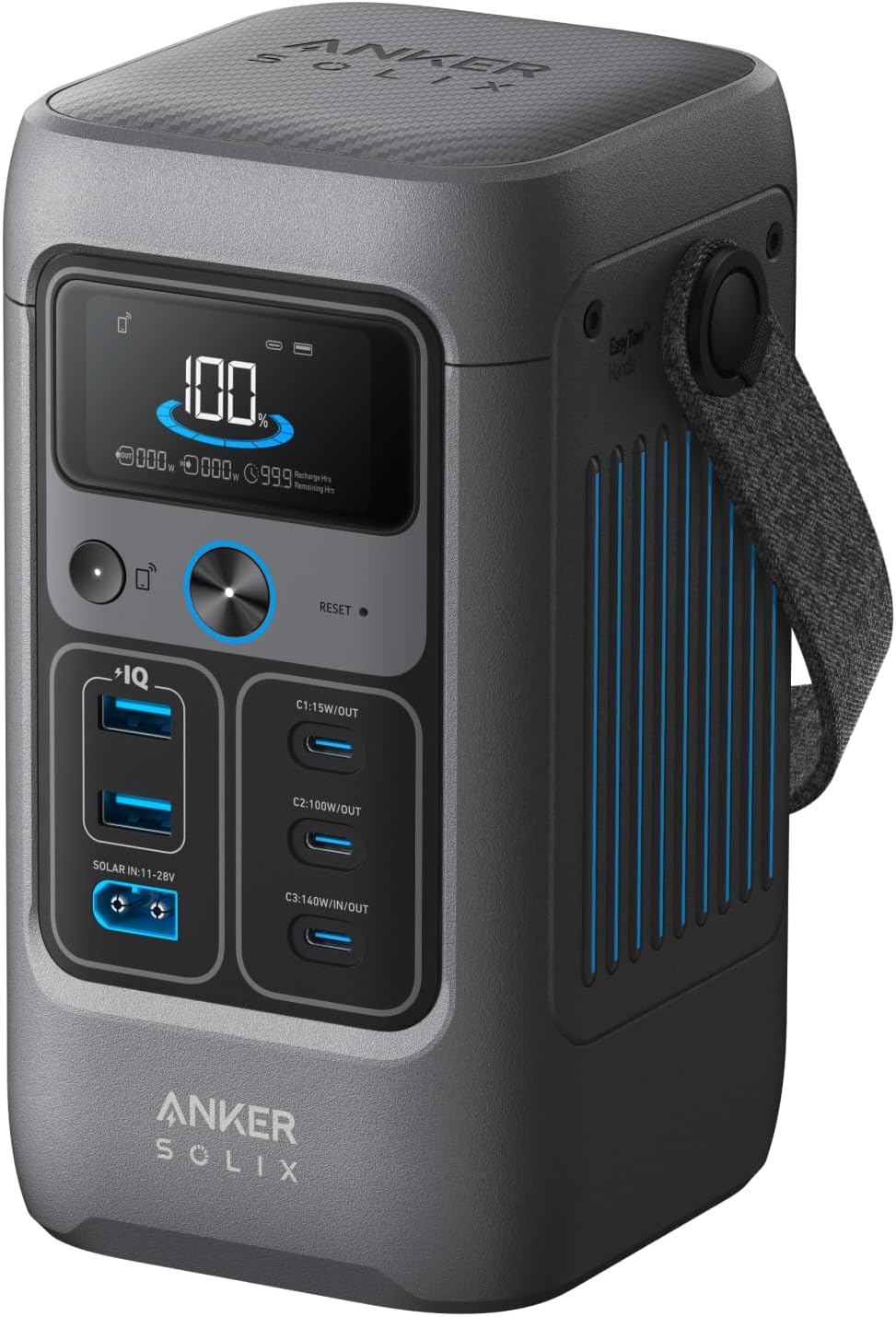
Anker SOLIX C200 DC
Smallest and lightest here at about 4.2 lb — 192Wh of pure USB power, but no car socket and no light
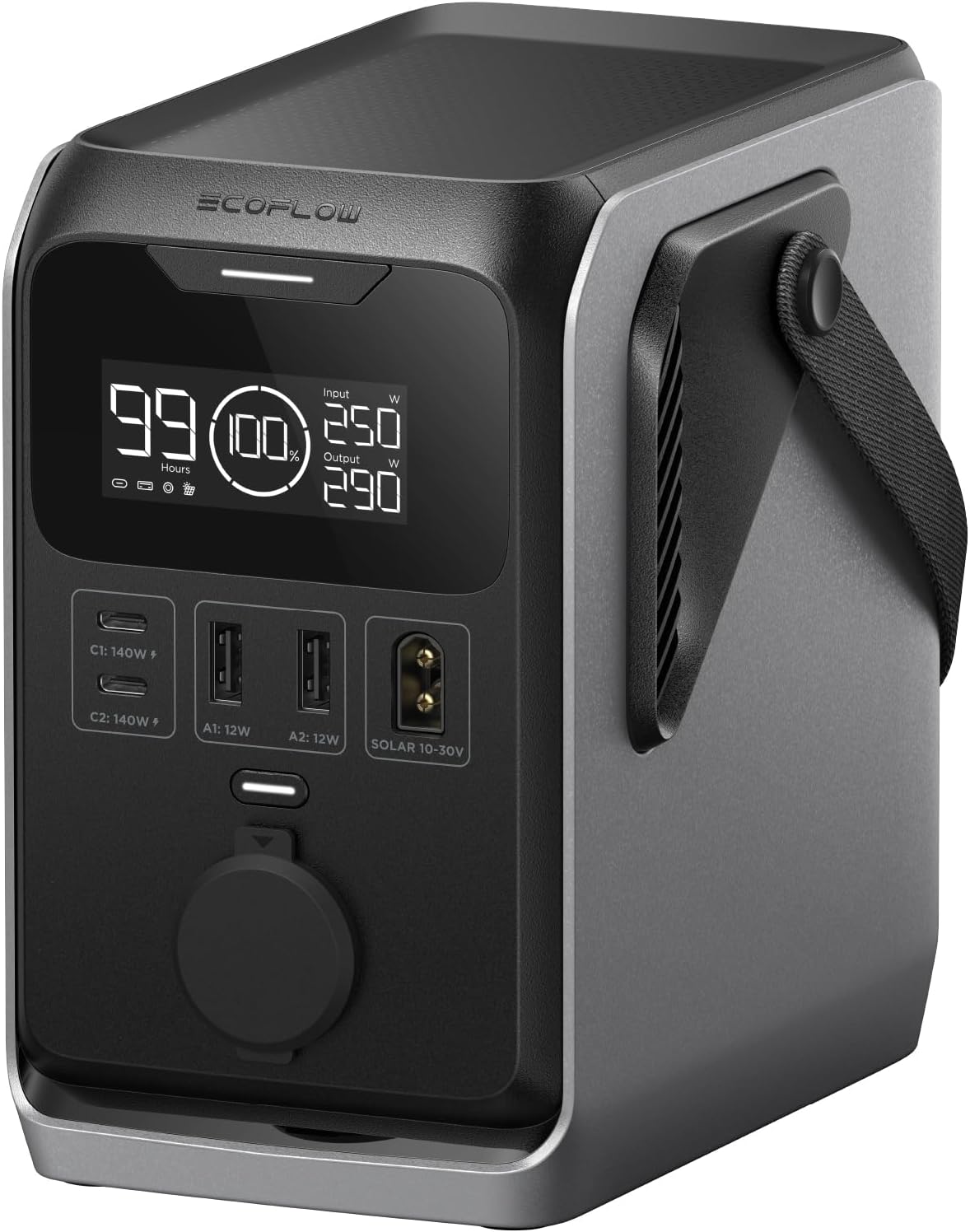
EcoFlow TRAIL 300 DC
288Wh with dual 140W USB-C ports and a 12V car socket — the step up when 12V gear joins the trip
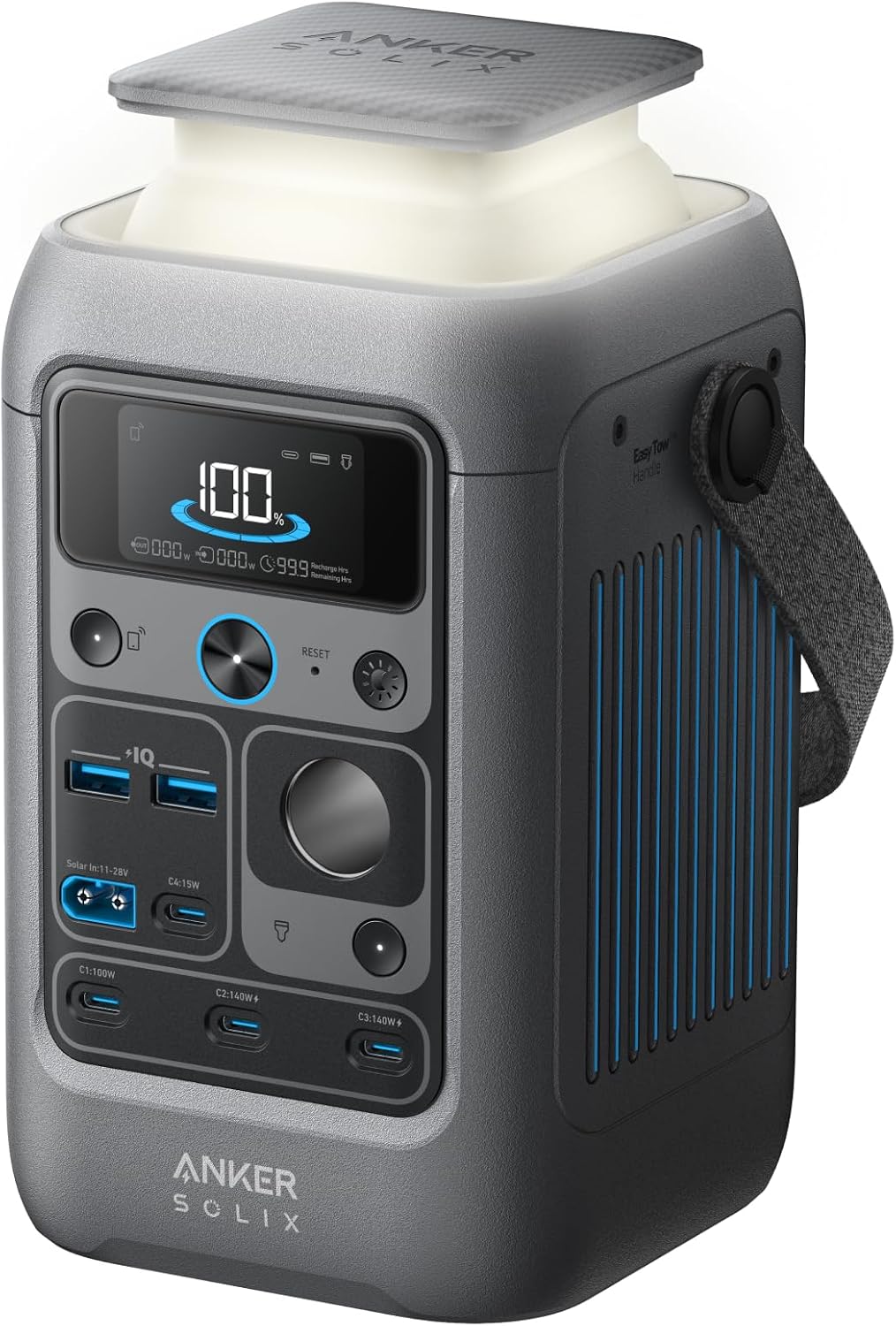
Anker SOLIX C300 DC
288Wh with a car socket and a pop-up lantern light — the most features here, and the bulkiest carry
Prices and availability may vary — tap any product to check the current listing.
What to Look For in a DC-Only Portable Power Station
DC-only stations skip the AC inverter entirely. That single design choice explains most of what follows: less weight, less waste when you’re charging USB gear, and no way to run anything with a mains plug. Here are the factors that actually separate one unit from another.
Capacity honesty at 192Wh. A 192Wh battery is not a small generator, and you shouldn’t shop for it like one. Think in charge cycles, not appliances. That’s enough to top a phone many times over, run a laptop a few times, and keep camera batteries and LED lights going through a weekend. It is not a fridge battery. Anyone planning around a 12V cooler should read up on sizing a portable power station around USB loads instead of appliances before committing, because the math changes fast once a compressor is involved. The trade-off with 192Wh is real: light and packable, but every device you add to the trip shortens the runway.
The missing car socket. This is the C200 DC’s biggest compromise. There’s no 12V car socket anywhere on the unit, which rules out the usual camping accessories that expect one — a 12V fridge, a tire inflator, certain lanterns and fans. Rivals in the same size class include one. If your kit list has anything with a cigarette-lighter plug, this station simply can’t feed it, and no adapter fixes that cleanly.
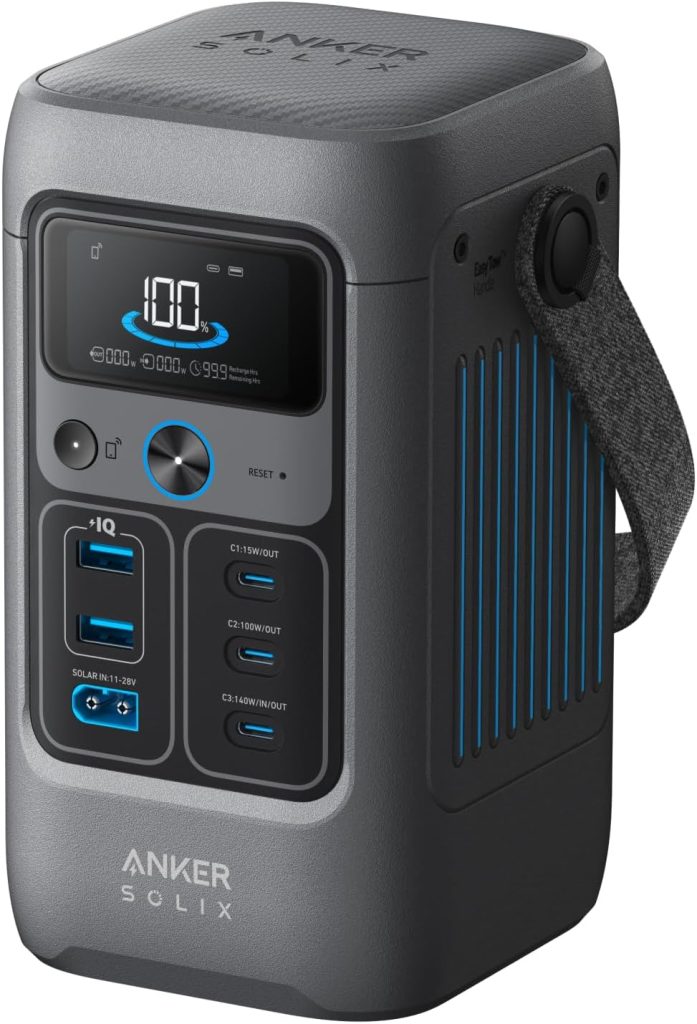
USB-C wattage split. The C200 DC carries three USB-C ports: one 140W two-way port that charges the station as well as devices, one 100W output, and one 15W output, plus two USB-A ports. That spread matters more than the total port count. The 140W port can fast-charge a power-hungry laptop; the 15W port is for phones and small accessories. The catch is that the headline wattage belongs to one port, not all of them — plug three laptops in and you’re sharing 200W of total DC output, not multiplying it.
Recharge speed and the missing wall charger. Through the 140W USB-C port, the C200 DC refills most of a charge in a little over an hour. That’s quick for this class and genuinely useful on a road trip. But there’s no wall charger in the box. You supply your own USB-C power adapter, recharge from a car, or go solar. For some buyers that’s a hidden extra cost; for others it’s fine, since a capable laptop charger often does the job. Factor it in either way.
Solar input window. Solar input runs 11–28V at up to about 100W. The wide voltage window is friendly to small folding panels, and 100W is a sensible ceiling for a battery this size — a bigger panel would be wasted. The trade-off is that panel output in real conditions rarely hits the rated number, so treat solar as a top-up strategy rather than a guarantee, especially on short winter days.
Weight. At about 4.2 lb with a carry strap handle, this is a one-hand grab-and-go unit. Compare that to the 5.7 lb EcoFlow TRAIL 300 DC or the chunkier Anker SOLIX C300 DC and the difference shows up on the walk from the car to the tent. The front display showing percentage and watts is a small touch that helps you plan without guessing. The trade-off: low weight here comes directly from the small battery and the absent inverter, so you’re trading runtime for portability.
Who the C200 DC Actually Fits
The tent camper with phones, cameras, and lights. This is the sweet spot. Two phones, a mirrorless camera, a couple of headlamps, and a small LED lantern will run for a weekend without drama, and 4.2 lb won’t wreck your pack. The missing car socket only bites if you were counting on a 12V fan or fridge.
The laptop-first remote worker outdoors. The 140W two-way USB-C port can fast-charge a laptop and refill the station from the same brick, which keeps your bag light. A full workday of laptop use will eat a serious chunk of 192Wh, though, so plan a midday top-up from a car or panel.
The backpack-leaning traveler. If you’re counting ounces and only need phone and camera top-ups, the C200 DC is about as light as this category gets. Just accept that “backpack-leaning” is the honest phrase — 4.2 lb is still a deliberate carry, not something you forget in your bag.
Who should skip it. Anyone with a 12V fridge, a CPAP setup that needs AC, or a camping routine built around mains appliances. Those buyers need an inverter or at least a car socket — the EcoFlow TRAIL 300 DC we reviewed adds the 12V socket at a higher weight, and the C300 DC adds both a car socket and a pop-up light.
| Type/Tier | Best For | Price Tier | Key Feature | Watch-Out |
|---|---|---|---|---|
| 192Wh USB-only mini (C200 DC) | Ultralight campers charging phones, cameras, laptops | Entry | 140W two-way USB-C, ~4.2 lb | No car socket, no wall charger in box |
| 288Wh DC with car socket (TRAIL 300 DC) | Campers running a 12V accessory | Mid | 12V car socket, two 140W USB-C | Heavier at ~5.7 lb, still no AC |
| 288Wh DC with light (C300 DC) | Tent campers who want a lantern built in | Mid | 120W car socket plus pop-up light | Bigger and heavier than the C200 DC |
The 192Wh USB-only tier is the lightest and cheapest way into LiFePO4, but you give up the car socket and any appliance ambitions. The 288Wh car-socket tier buys you 12V accessories for roughly a pound and a half more weight. The 288Wh light tier adds a lantern on top and asks you to carry the most of the three.
Questions People Ask Before Buying
Real buyer questions, straight answers
Is the C200 DC worth it compared with a big power bank?
For device charging on the move, yes — the LiFePO4 battery and 140W USB-C port put it well ahead of a typical power bank. A large power bank usually tops out at lower USB-C wattage and won’t survive as many charge cycles over the years. The C200 DC also gives you solar input and a live watts readout, which most power banks lack. The catch is price and bulk versus a pocket battery — if you only ever charge a phone, a power bank is the smarter spend.
Can it run a fridge or a CPAP machine?
No — there’s no AC outlet and no 12V car socket, so neither a mains fridge nor a 12V cooler will work. A CPAP that runs on mains AC is equally out of reach, and most 12V CPAP adapters need the car socket this unit doesn’t have. If either device is on your list, look at stations with an inverter or at minimum a 12V output. This is the clearest reason to skip the C200 DC.
Should I get the C200 DC or the C300 DC?
Choose the C200 DC if weight and simplicity matter most; choose the C300 DC if you want a car socket and a built-in light. The C300 DC offers 288Wh, a 120W car socket, a pop-up lantern, and four USB-C ports, but it’s bigger and heavier and still ships without a wall charger. The C200 DC stays lighter and cheaper for pure USB duty. Neither has AC, so the decision comes down to 12V accessories and lighting versus carry weight.
Is 192Wh enough for a weekend?
For phones, cameras, lights, and a laptop or two, yes — 192Wh covers a typical two-night trip with careful use. Heavy laptop sessions or cold weather will eat into that margin quickly, so bring a solar panel or plan a car top-up. It is not enough for anything with a compressor or heating element. Think of it as a weekend device battery, not a camp power supply.
Does the missing wall charger matter?
Only if you don’t already own a capable USB-C power adapter — most laptop owners do. The 140W USB-C port refills the station in a little over an hour from a suitable brick, so the charger you already carry may be all you need. Buyers without one should budget for a high-wattage adapter or lean on solar and car charging. It’s an inconvenience, not a dealbreaker.
Camping With a USB-Only Station: Where It Works and Where It Breaks
A two-night tent weekend
This is the C200 DC’s home turf. Two phones, a headlamp or two, a Bluetooth speaker, maybe a smartwatch and a tablet for the kids. Over a weekend that adds up to somewhere in the range of 30–60Wh of actual draw, which leaves most of the 192Wh capacity untouched. The 140W two-way USB-C port means you can top up a laptop fast during the day, and the front display tells you what’s left without opening an app. At about 4.2 lb with a strap handle, it’s the kind of thing you carry to the tent without thinking about it. No fan noise to speak of, no fumes, nothing to spill.
A camera-and-drone day kit
Photographers are a natural fit here. Two camera batteries, three drone batteries, a phone, and a tablet for reviewing shots — that’s a realistic day’s charging for a lot of shooters, and the C200 DC handles it through the USB-C and USB-A ports without breaking a sweat. The catch is charging speed on the devices themselves. The 15W USB-A ports are fine overnight but slow in the field, so plan on using the 140W and 100W USB-C ports for anything that supports them. If your drone charger uses a proprietary brick with a wall plug, this station can’t help you — that brick needs AC.
The night someone asks it to run a fridge or a kettle
Here’s the honest failure case. A 12V camping fridge pulls far more than 200W at startup, and a kettle or coffee maker needs 1,000W+ through a wall plug. The C200 DC has no AC outlet and no 12V car socket, so neither device can even be connected, let alone run. This isn’t a limitation you can work around with an adapter — the output simply doesn’t exist. If your trip involves any appliance with a mains plug, this is the wrong class of product, full stop. Same story for a CPAP machine with an AC adapter, an electric blanket, or a blender. USB-only means USB-only.
Common Mistakes Buyers Make With Small DC Stations
Buying it for something with a wall plug. The single most common error. People see “200W” and assume it means 200W of AC power. It doesn’t — it’s 200W of total DC output across USB ports. If the device’s power cable ends in a two- or three-prong plug, this station cannot run it. Check the plug before you check the wattage.
Assuming a car socket is included. The C200 DC doesn’t have one. That surprises people, because a 12V socket is standard on most portable power stations. If you want to run a 12V cooler, an inflator, or a car-style charger, you need the EcoFlow TRAIL 300 DC or the Anker SOLIX C300 DC instead — both include one.
Forgetting there’s no wall charger in the box. Anker ships the C200 DC without an AC adapter. You can charge it over USB-C, which is genuinely convenient, but if you planned to plug it into a wall outlet on day one, you’ll need to supply your own charger. Budget for that or plan around USB-C charging from the start.
Expecting solar to refill it fast on a small panel. Solar input tops out around 100W at 11–28V, and that’s under ideal sun with a matched panel. A small folding panel rated well below that will trickle power in over a long day rather than refill the battery by lunch. Solar works here as a top-up, not a fast turnaround.
Why, How, What
Why would anyone buy a DC-only station instead of one with AC outlets?
Because dropping the inverter saves weight, size, and cost, and most camping loads are USB anyway. Phones, headlamps, speakers, drones, cameras, tablets, and laptops all charge over USB-C or USB-A, so an inverter would sit unused while adding bulk. The C200 DC leans into that: 192Wh of LiFePO4 in a 4.2 lb package with a strap handle. For backpackers, bikepackers, and car campers who pack light, that trade makes sense. You give up versatility and get portability in return.
How do you actually charge the C200 DC in the field?
Three ways: USB-C from a wall charger or car charger, solar through the DC input, or a 12V source if you have the right cable. The 140W two-way USB-C port is the fastest practical route when you have access to mains power, and solar input accepts 11–28V up to roughly 100W. In practice, most owners charge it from a USB-C charger at home before a trip and top it up with solar on longer outings. There’s no included wall adapter, so the charger you already own for a laptop may do the job.
What can 192Wh realistically power on a camping trip?
Think in terms of device charges rather than appliances. A modern phone is roughly 15–20Wh per full charge, a tablet 25–30Wh, a laptop 50–70Wh. So the C200 DC covers several phone charges, a couple of tablet top-ups, and one or two laptop charges with capacity to spare — depending on efficiency losses and how full you keep things. It won’t run anything with a heating element or a compressor. Treat it as a device-charging hub, not a mini generator.
Frequently Asked Questions
Can I charge the C200 DC from my car?
Yes, over USB-C if your car has a USB-C outlet or a 12V-to-USB-C adapter. What you can’t do is plug it into a 12V car socket directly, because the C200 DC doesn’t have one. Charging from a car’s USB-C port will be slower than a wall charger, so expect a long drive to make a meaningful dent rather than a full refill.
What size solar panel should I pair with it?
Match the panel to the 100W input ceiling and the 11–28V range. A folding panel rated around 100W with compatible voltage is the sensible pairing; anything larger gets clipped by the input limit, and anything much smaller will take most of a sunny day to refill the battery. Check the panel’s voltage output against that range before buying.
How long will it run my laptop?
Depends on the laptop. A power-sipping ultraportable drawing 30–45W might see two to three hours of runtime from a full battery, while a gaming laptop pulling 100W+ will drain it in well under two hours. The 140W USB-C port can deliver the power, but the 192Wh capacity is the real constraint. Charge in bursts rather than expecting all-day runtime.
Can I take it on a plane?
Lithium batteries under 100Wh are generally fine in carry-on, and this one is 192Wh — above that common threshold. That means many airlines will require special approval or refuse it outright, and rules vary by carrier and country. Check your airline’s lithium battery policy before you fly, and never put it in checked baggage.
Can it charge devices while it’s being charged?
Generally yes for USB loads — pass-through charging works on most modern USB-C power stations, including this class of product. The behavior can vary with the charger and the load, and charging speeds may drop while both are happening. It’s handy for topping up a phone from a solar panel while the station itself refills.
How long does it hold a charge in storage?
LiFePO4 cells self-discharge slowly, so a fully charged C200 DC will typically hold most of its capacity for months in cool, dry storage. For long-term storage, many owners leave it around half charge and top it up every few months. Heat is the enemy here — a hot garage will drain and degrade it faster than a closet.
Decision Tree: Which DC-Only Station Fits Your Kit?
Loads are all USB and weight matters → Anker SOLIX C200 DC.
You need a 12V car socket → EcoFlow TRAIL 300 DC or Anker SOLIX C300 DC.
You want a built-in light → Anker SOLIX C300 DC.
Anything you’re powering has a wall plug → none of these; buy an AC station instead.
Key Takeaways
The C200 DC is a 192Wh USB charging hub, not a small generator — no AC, no 12V socket, no light.
At 4.2 lb it’s the lightest of the three, which is the whole point of going DC-only.
The 288Wh rivals cost you weight but add a car socket, and the C300 DC adds a lantern.
No wall charger in the box — plan your charging route before the trip.
If any appliance has a mains plug, this entire category is wrong for you.
Final Recommendation
Buy the Anker SOLIX C200 DC if your camping power needs are phones, cameras, drones, tablets, and a laptop, and you’d rather carry 4.2 lb than 5.7 lb. It’s a focused tool that does one job well, and the LiFePO4 cells and 140W two-way USB-C port make it a sensible long-term pick for light packers.
Step up to the EcoFlow TRAIL 300 DC or Anker SOLIX C300 DC if you want a 12V car socket, more capacity, or a built-in light — the extra weight buys real flexibility. And if anything in your kit ends in a wall plug, skip DC-only entirely and put the money toward a station with an AC inverter. No adapter fixes a missing outlet.
Compare DC-Only Portable Power Stations
Three USB-first picks side by side — the difference is capacity, a car socket, and a light.
Anker SOLIX C200 DC
Smallest and lightest here at about 4.2 lb — 192Wh of pure USB power, but no car socket and no light
EcoFlow TRAIL 300 DC
288Wh with dual 140W USB-C ports and a 12V car socket — the step up when 12V gear joins the trip
Anker SOLIX C300 DC
288Wh with a car socket and a pop-up lantern light — the most features here, and the bulkiest carry
Prices and availability may vary — tap any product to check the current listing.
Affiliate Disclosure: This article contains affiliate links. If you buy through one of these links, we may earn a commission at no extra cost to you.