LIBRIDS C600 Review: Top 640Wh LiFePO4 Portable Camping Power Station

As a veteran emergency preparedness and off-grid energy consultant with over two decades in the field, I’ve seen firsthand how critical reliable power becomes when the grid fails or when you’re venturing beyond its reach. The year is 2026, and the landscape of emergency and recreational power solutions has evolved dramatically, offering more efficient, cleaner, and quieter options than ever before. Whether you’re searching for the best power station for camping, a robust emergency power supply for home, or comprehensive disaster preparedness strategies, understanding the right tools for the job is paramount. My goal here is not to just review gadgets but to guide you toward complete, practical solutions that actually work when it matters most.

The Unpredictable Future: Why Reliable Backup Power is Non-Negotiable

In an era of increasing climate volatility and aging infrastructure, blackouts are no longer rare inconveniences but a growing reality. From devastating hurricanes and winter storms to wildfires and floods, communities face prolonged grid failures more frequently. This isn’t just about comfort; it’s about safety, food preservation, communication, and maintaining essential medical equipment. Having a portable emergency power solution or a robust whole-home backup system is no longer a luxury; it’s a fundamental component of modern emergency preparedness.

My experience working with families, RV owners, and even remote cabin dwellers has shown that foresight and proper planning can make all the difference between hardship and resilience. This guide will cut through the marketing noise to focus on what genuinely delivers reliable backup electricity for various scenarios.

Why / How / What: Core Questions for Emergency Power

Before diving into specific solutions, let’s address some fundamental questions that often arise.

Why is a portable power station a cornerstone of modern disaster preparedness?
In my two decades of consulting, I’ve seen the shift away from reliance on noisy, fuel-dependent generators for many critical emergency needs. A portable power station, unlike a traditional gas generator, offers silent, emission-free power, making it safe for indoor use. It’s an instant source of backup electricity for essential devices like communication equipment, medical devices, lighting, and even small refrigerators during an outage. Its portability means it can serve as your camping power station one weekend and your primary communication hub during a disaster survival scenario the next. It’s a versatile, accessible, and increasingly affordable piece of power outage essentials for any household.

How do you accurately calculate the battery capacity you need for various emergency scenarios?
Calculating battery capacity correctly is perhaps the most critical step in choosing an emergency power solution. It starts with identifying your essential loads:

  1. List Appliances: Make a list of every device you absolutely need to power during an emergency (e.g., refrigerator, medical device, phone charger, LED lights, internet router).
  2. Determine Wattage: Find the running wattage for each device (usually on a label or in the manual). For appliances with motors (like a fridge), note the higher “surge” wattage needed to start them.
  3. Estimate Run Time: Decide how many hours you need each device to run per day.
  4. Calculate Daily Watt-Hours (Wh): Multiply the wattage by the run time for each device, then sum them up. For example, a 60W portable fridge running for 12 hours needs 720Wh (60W * 12h).
  5. Factor in Inverter Efficiency: Portable power stations lose some energy during conversion. Add a 15-20% buffer to your total Wh requirement.
  6. Consider Days of Autonomy: How many days do you want to power these essentials without recharging? Multiply your daily Wh by this number.

This calculation gives you a solid baseline for the battery capacity you’ll need. Don’t forget to consider solar input capabilities for extended outages.

What emergency power equipment should every family own as a minimum?
Every family should build a layered approach to emergency power. As a minimum, I recommend:

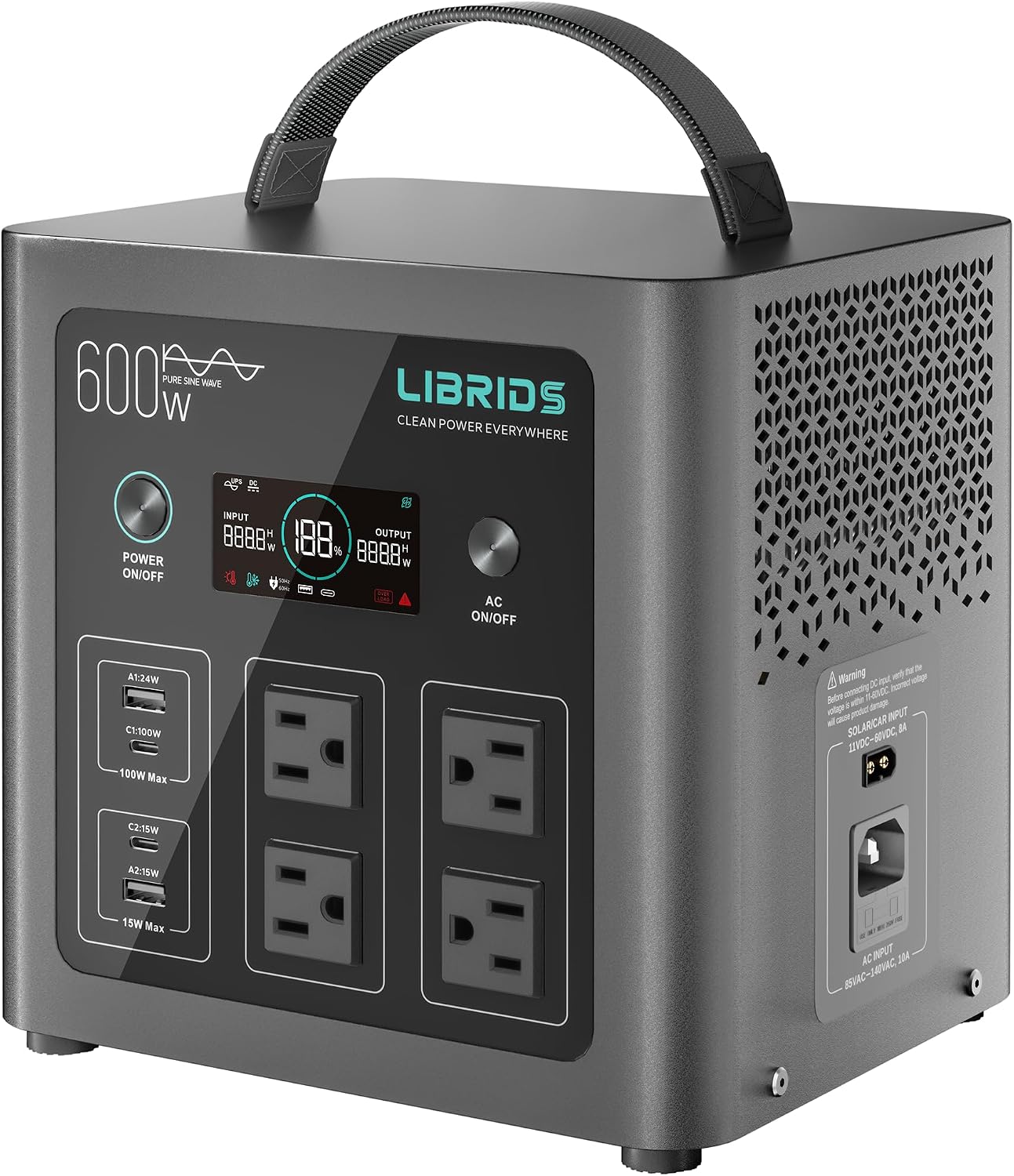
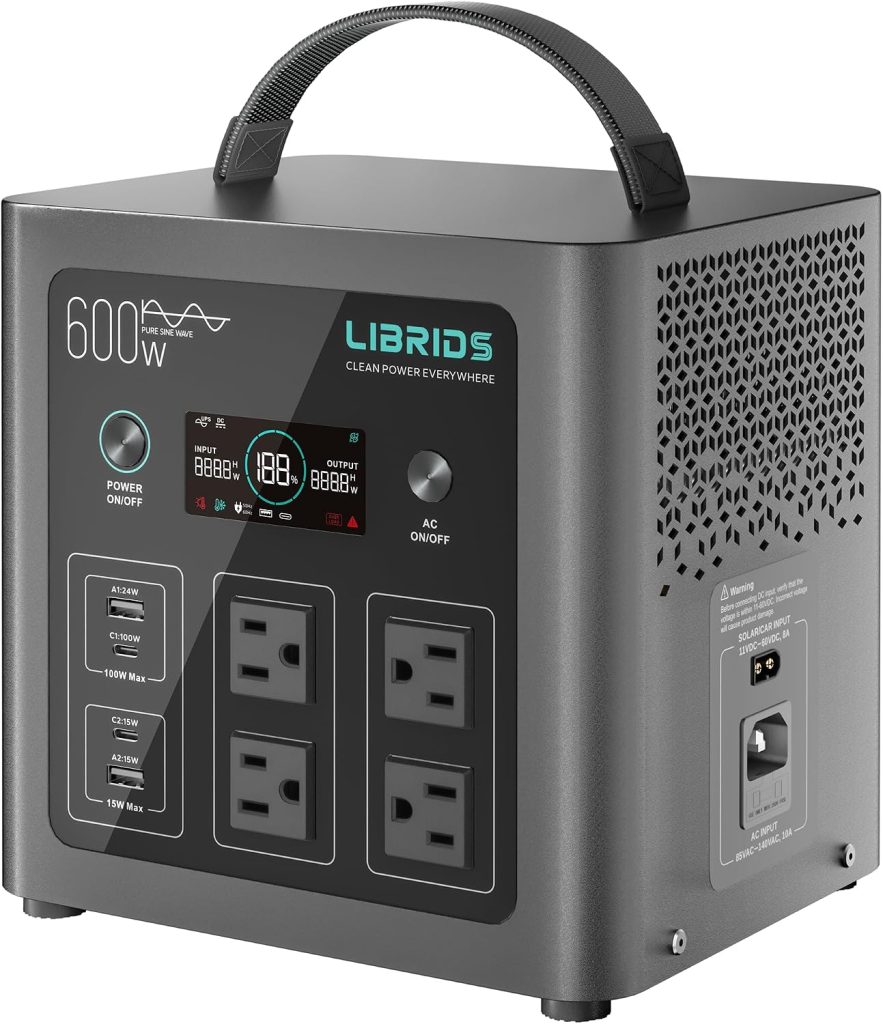
  1. A Reliable Portable Power Station: At least 500Wh to 1500Wh capacity, like the LIBRIDS Portable Power Station C600 (640Wh LiFePO4 Battery) for basic needs, or larger units for more extensive demands. This is your primary silent, indoor power source.
  2. Portable Solar Panels: Sized appropriately for your power station (e.g., 100W-200W) to enable solar backup power and recharge your battery indefinitely during extended outages.
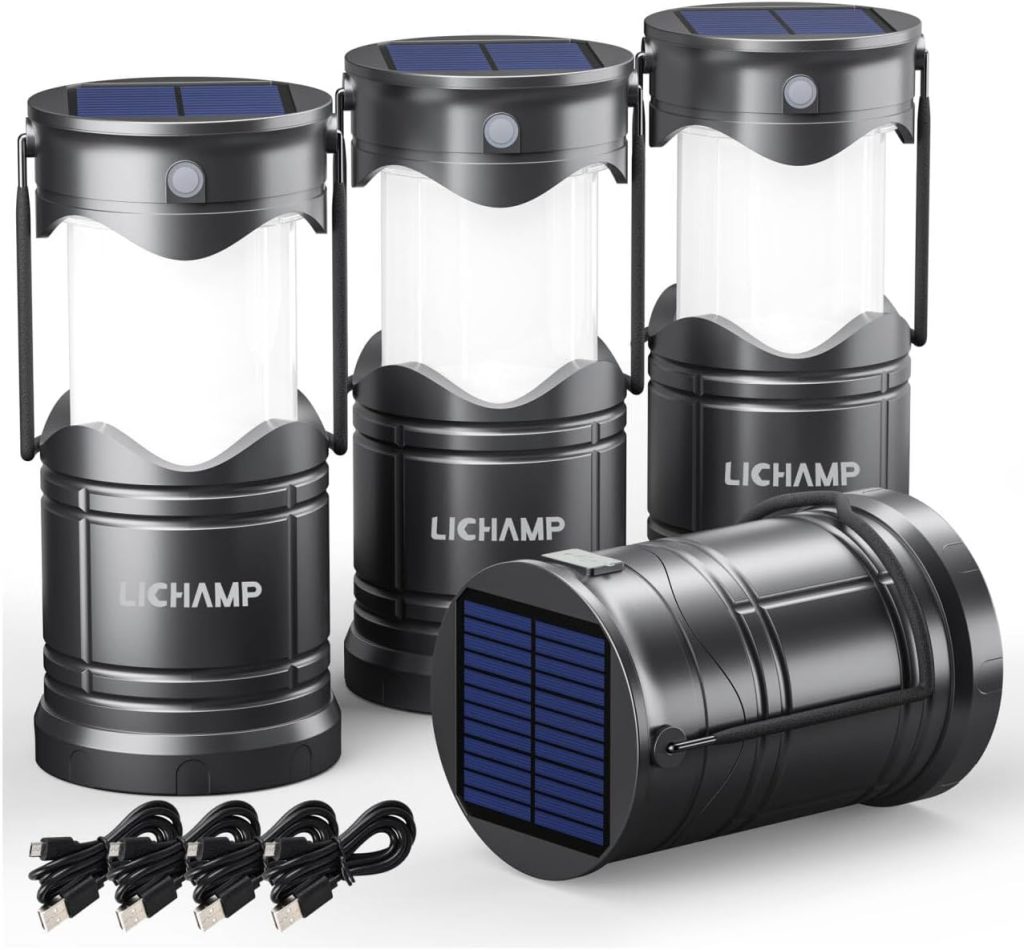
  3. LED Lighting: USB-chargeable lanterns and headlamps with long run times.
  4. Hand-Crank/Solar Emergency Radio: With NOAA weather alerts and a USB charging port for small devices.
  5. Small, High-Efficiency Power Bank: For individual device charging away from the main power station.
    These items form a solid foundation for power outage essentials and ensure you can maintain communication, light, and some basic comforts for several days.

Understanding Your Emergency Power Needs: It’s Not One-Size-Fits-All

Before recommending specific solutions, let’s clarify the common scenarios and the types of power each demands.

1. Camping & Outdoor Adventures:
Whether tent camping, overlanding, or enjoying a van life adventure, your camping electricity needs are typically moderate. You’ll likely power portable fridges, LED lights, phones, tablets, and perhaps a drone or camera. Portability and durability are key. This is where the best power station for camping truly shines, providing silent, emission-free power that won’t disturb nature or fellow campers.

2. Home Power Outages & Disaster Preparedness:
For blackouts due to hurricanes, winter storms, or wildfires, the demands are more significant. You need to keep refrigerators running, medical equipment operational, and communication lines open (internet router, phone charging). Depending on the duration and severity, you might also want to power sump pumps, fans, or even a small window AC unit. This often requires larger portable power stations, solar generators, or even whole-home backup solutions.

3. RV & Mobile Living:
An RV solar setup or comprehensive RV battery system is essential for extended trips or boondocking. You’ll power everything from lights and water pumps to microwaves and air conditioners. This usually involves a dedicated battery bank, solar panels, and possibly an inverter or even a portable battery generator for supplemental power.

4. Off-Grid Living & Remote Cabins:
True off-grid living requires a robust renewable energy system designed for energy independence. This means a substantial solar charging array, significant battery storage, and often a backup generator. Remote cabins benefit immensely from professionally designed systems to ensure continuous power.

Field Experience Note: Capacity vs. Reality

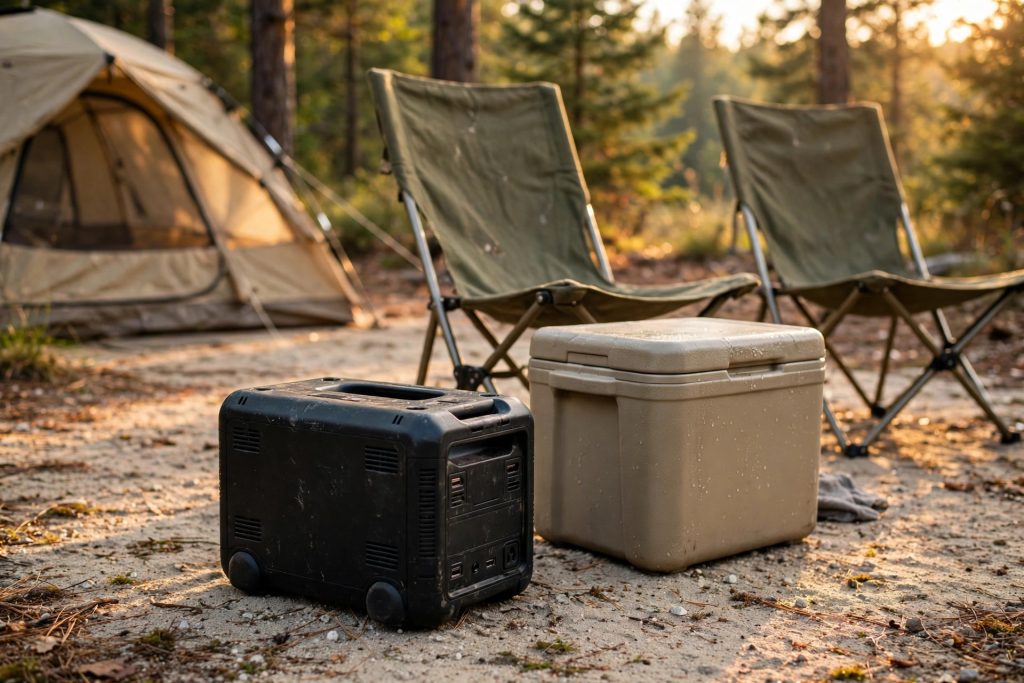
I’ve seen campers bring oversized power stations that weighed more than their coolers. In reality, most weekend trips only require enough capacity to run a portable fridge, lights, and device chargers for 2-3 days. Over-specifying can lead to unnecessary cost and cumbersome equipment. Focus on your actual needs, not just maximum possible power. A LIBRIDS Portable Power Station C600, with its 640Wh LiFePO4 battery, is often perfectly adequate for a weekend of serious off-grid camping, especially when paired with a compact solar panel.

Understanding Your Options: From Portable to Permanent

Choosing the right solution means understanding the different categories of backup power.

1. Portable Power Stations (PPS)

These are essentially large, rechargeable batteries with AC outlets, DC ports, and USB chargers. They are compact, silent, and emit no fumes, making them safe for indoor use. They represent the best power station for camping and excellent immediate emergency energy storage.

  • Pros: Highly portable, silent, no fumes, multiple output options, easy to use, LiFePO4 batteries offer long cycle life.
  • Cons: Limited capacity compared to whole-home systems, AC output might be insufficient for very large appliances.
  • Examples: The LIBRIDS Portable Power Station C600 (640Wh LiFePO4 Battery) is a solid example for mid-range needs. Brands like Jackery (e.g., Explorer series), EcoFlow (e.g., RIVER series), Bluetti (e.g., EB series), and Anker SOLIX (e.g., F1200) offer a range of capacities.

2. Solar Generators (PPS + Solar Panels)

A solar generator isn’t a “generator” in the traditional sense, but rather a portable power station bundled with or compatible with portable solar panels. This combination allows for solar backup power and indefinite recharging during extended outages or off-grid camping. This is a powerful step up for disaster preparedness.

  • Pros: Renewable charging, extended runtimes, environmentally friendly, silent operation.
  • Cons: Solar charging speed depends on sunlight, initial investment can be higher than a standalone PPS.
  • Examples: Any portable power station from the brands listed above, paired with compatible portable solar panels like Renogy, Jackery SolarSaga, EcoFlow, or ALLPOWERS.

3. Home Battery Backup Systems

These are larger, more permanent installations designed to integrate with your home’s electrical panel. They often store energy from solar panels or the grid and automatically kick in during a power outage. They provide significant whole-home backup capability.

  • Pros: Seamless, automatic power transfer, large capacity, can power essential circuits for days, ideal for emergency power supply for home.
  • Cons: Significant upfront cost, professional installation required, not portable.
  • Examples: Tesla Powerwall, EcoFlow PowerStream, Bluetti EP series, Generac PWRcell.

4. Traditional Fuel Generators (Gas, Propane, Diesel)

While not my primary recommendation for daily use due to noise and emissions, they still have a place, particularly for very heavy loads or long-term disaster survival in areas without consistent sunlight.

  • Pros: High power output for large appliances, relatively low upfront cost per watt.
  • Cons: Noisy, produce carbon monoxide (cannot be used indoors), require fuel storage and maintenance, contribute to air pollution.
  • Examples: Brands like Honda, Generac, Champion.

Scenario Guide: Home Power Outage Preparedness

Let’s walk through a critical scenario: preparing for and managing a multi-day home power outage due to a severe winter storm or a hurricane. My focus as an emergency preparedness expert is on resilience and maintaining essential functions.

Before the Storm Hits (Pre-Outage Preparation):

  1. Assess Your Needs: Calculate your critical loads as discussed above. Prioritize food preservation (refrigerator), communication (phones, internet router), lighting, and any medical equipment.
  2. Invest in Layered Power:
    • Primary Backup: A large solar generator (e.g., 2000Wh+ capacity) or a mid-size home battery backup solution (e.g., EcoFlow Delta Pro or Bluetti AC200MAX with expansion batteries). This will handle the refrigerator, router, and crucial electronics.
    • Secondary/Personal Backup: Several smaller portable power stations (like the LIBRIDS C600, 640Wh) for individual rooms or specific devices, providing distributed portable emergency power. These are your personal power outage essentials.
    • Solar Panels: A set of 200W-400W portable solar panels to keep your solar generators recharged.
  3. Communication Equipment: Ensure you have fully charged phones, power banks, and a hand-crank/solar emergency radio.
  4. Lighting: Stock up on battery-powered LED lanterns, flashlights, and headlamps.
  5. Food & Water: Have at least 3-7 days of non-perishable food and 1 gallon of water per person per day.
  6. Medical: Ensure all essential medical equipment has battery backup or a dedicated power source.
  7. Fuel (if applicable): If you have a traditional generator, ensure fuel is stored safely and correctly.

During the Outage:

  1. Conserve Power: Unplug non-essential appliances. Only power what you absolutely need.
  2. Refrigerator Management: Keep the refrigerator and freezer doors closed as much as possible. Power your main fridge with your largest battery backup. A smaller electric cooler, powered by a smaller portable power station (like the LIBRIDS C600), can hold frequently accessed items to minimize main fridge opening.
  3. Communication Hub: Set up a central charging station for phones and radios using your portable power stations. Designate one portable power station specifically for your internet router to maintain connectivity as long as your service provider is operational.
  4. Solar Charging: Deploy your portable solar panels during daylight hours to recharge your power stations, ensuring continuous solar backup power. This is where the “solar generator” concept truly comes into its own for extended outages.
  5. Lighting: Distribute LED lanterns strategically. Use headlamps for hands-free tasks.
  6. Safety First: Never use fuel generators indoors. Keep carbon monoxide detectors functional.

This layered approach ensures that even if one component fails or runs out of charge, you have redundancies. After several major storm seasons, homeowners consistently found that keeping refrigerators, internet equipment, and essential medical devices running mattered far more than powering every appliance in the house.

The Complete Buying Guide: Choosing Your Power Solution

When selecting any emergency or off-grid energy system, several factors dictate the best fit for your needs.

1. Battery Capacity (Watt-hours – Wh)

This is the total energy the battery can store.

  • Recommendation: Match this to your calculated daily Wh needs. For light camping essentials or basic phone/light charging, 300-600Wh is fine (e.g., LIBRIDS C600 with 640Wh). For powering a portable fridge for a few days or critical home appliances, aim for 1000-2000Wh+. Whole-home backup systems typically start at 10,000Wh and go much higher.
  • LiFePO4 Advantage: Look for LiFePO4 (Lithium Iron Phosphate) batteries. They offer significantly more charge cycles (2,500-3,500+) and are safer than older Li-ion chemistries, leading to a longer lifespan for your emergency energy storage.

2. Power Output (Watts – W)

This refers to the maximum power the inverter can deliver at any given moment.

  • Recommendation: Ensure the continuous output (rated Watts) can handle the running wattage of your most demanding appliance. The surge wattage should accommodate startup spikes. A 600W continuous output (like the LIBRIDS C600) can handle most small appliances, laptops, and a portable fridge. For microwaves, coffee makers, or power tools, you’ll need 1500W-2500W+.
  • Pure Sine Wave: Always opt for pure sine wave inverters to safely power sensitive electronics without damage.

3. Solar Input (Watts – W)

This indicates how quickly the unit can recharge using solar panels.

  • Recommendation: The higher the solar input, the faster it recharges. Aim for a solar input that can fully recharge your power station within a day of good sunlight (e.g., 200W-400W for a 1000Wh unit). Consider the maximum open-circuit voltage (VOC) of your panels to ensure compatibility.
  • MPPT Charge Controller: Ensure the power station or RV solar setup includes an MPPT (Maximum Power Point Tracking) charge controller for optimal solar harvesting efficiency.

4. Charging Speed (AC Wall vs. Solar vs. Car)

How quickly the unit recharges from various sources.

  • Recommendation: Fast AC wall charging (e.g., 1-2 hours) is ideal for quick turnarounds before an expected outage. Efficient solar charging is crucial for off-grid camping or extended blackouts. Car charging is a useful fallback.

5. Weight & Portability

Crucial for camping power station and portable emergency power units.

  • Recommendation: For hiking or very light tent camping, consider units under 10-15 lbs. For car camping or home use, 20-40 lbs is manageable. Larger solar generators can weigh 50-80 lbs, but are often on wheels. The LIBRIDS C600 at its 640Wh capacity should be highly portable.

6. Weather Resistance & Durability

Especially important for outdoor use or during severe weather events.

  • Recommendation: Look for rugged construction, dust, and water resistance ratings (IP ratings). While few are fully waterproof, some are splash-proof. Protect all units from direct precipitation.

7. Warranty & Support

A good warranty provides peace of mind.

  • Recommendation: A minimum of 2-5 years warranty is standard for quality LiFePO4 power stations. Research brand reputation for customer service.

8. Expandability

Can you add more battery capacity later?

  • Recommendation: For evolving needs or whole-home backup aspirations, choose systems that allow you to connect additional battery modules. This is common in larger solar generators and home battery systems.

Solution Comparison Table: Finding Your Fit

Let’s compare the most common types of power solutions to help you decide.

Feature Portable Power Station (PPS) Solar Generator (PPS + Solar Panels) Home Battery Backup System Gas/Propane Generator
Best For Camping electricity, small home needs, portable emergency power Off-grid camping, extended outages, solar backup power Whole-home backup, frequent outages, seamless power Very high power loads, long-term outages without sun
Capacity Range 300Wh – 2500Wh 500Wh – 6000Wh (expandable) 10,000Wh – 30,000Wh+ Unlimited (fuel dependent)
Power Output 300W – 2500W 500W – 4000W 5000W – 15000W+ 3000W – 20000W+
Noise Level Silent (fan noise only) Silent (fan noise only) Silent Very loud
Emissions None None None High (Carbon Monoxide, NOx)
Fuel Required No No No Yes (Gas, Propane)
Indoor Use Safe Yes Yes Yes No (Carbon Monoxide Risk)
Recharge Method AC, Car, Solar AC, Car, Solar Grid, Solar Fuel refills
Installation Plug & Play Plug & Play Professional Electrical Setup & ventilation required
Typical Cost $300 – $2500 $800 – $6000 $10,000 – $30,000+ $500 – $5000
Pros Highly portable, clean, easy to use Sustainable, long runtimes, eco-friendly Automatic, high capacity, seamless High power, immediate large load
Cons Limited capacity for large loads Sunlight dependent, higher initial cost High upfront cost, non-portable Noisy, fuel needed, dangerous indoors, maintenance

Recommended Brands (Beyond the LIBRIDS C600, which is a good mid-range option)

While the LIBRIDS Portable Power Station C600 with its 640Wh LiFePO4 battery offers a compelling balance for many users seeking the best power station for camping or simple home backup, a wider look at the market reveals many excellent choices tailored to different needs.

Portable Power Stations (PPS)

  • Jackery: Known for user-friendly designs and portability. Their Explorer series offers a wide range of capacities suitable for camping essentials and light home use.
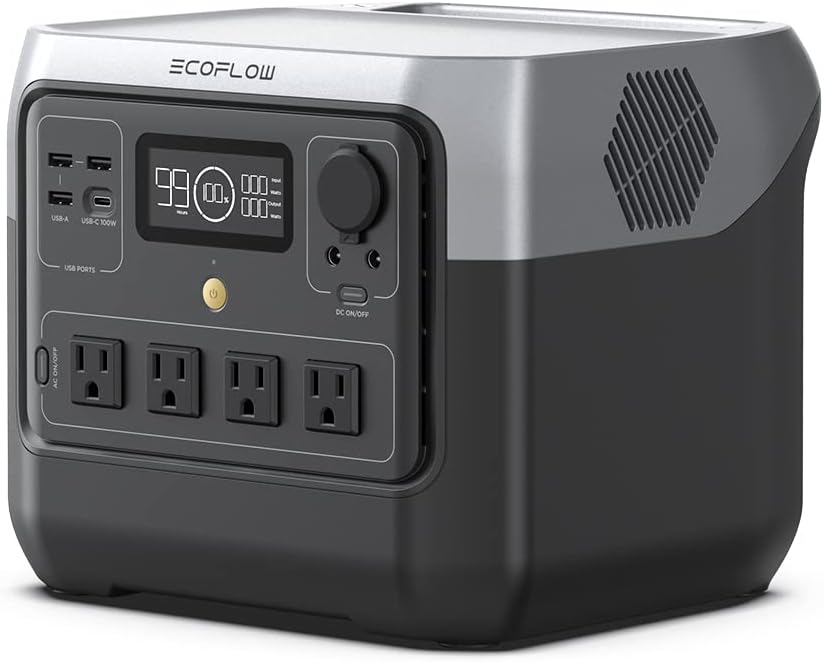
  • EcoFlow: Leads with fast charging technology and modular expandability. Their RIVER series is excellent for portable needs, while the DELTA series provides serious power for homes.
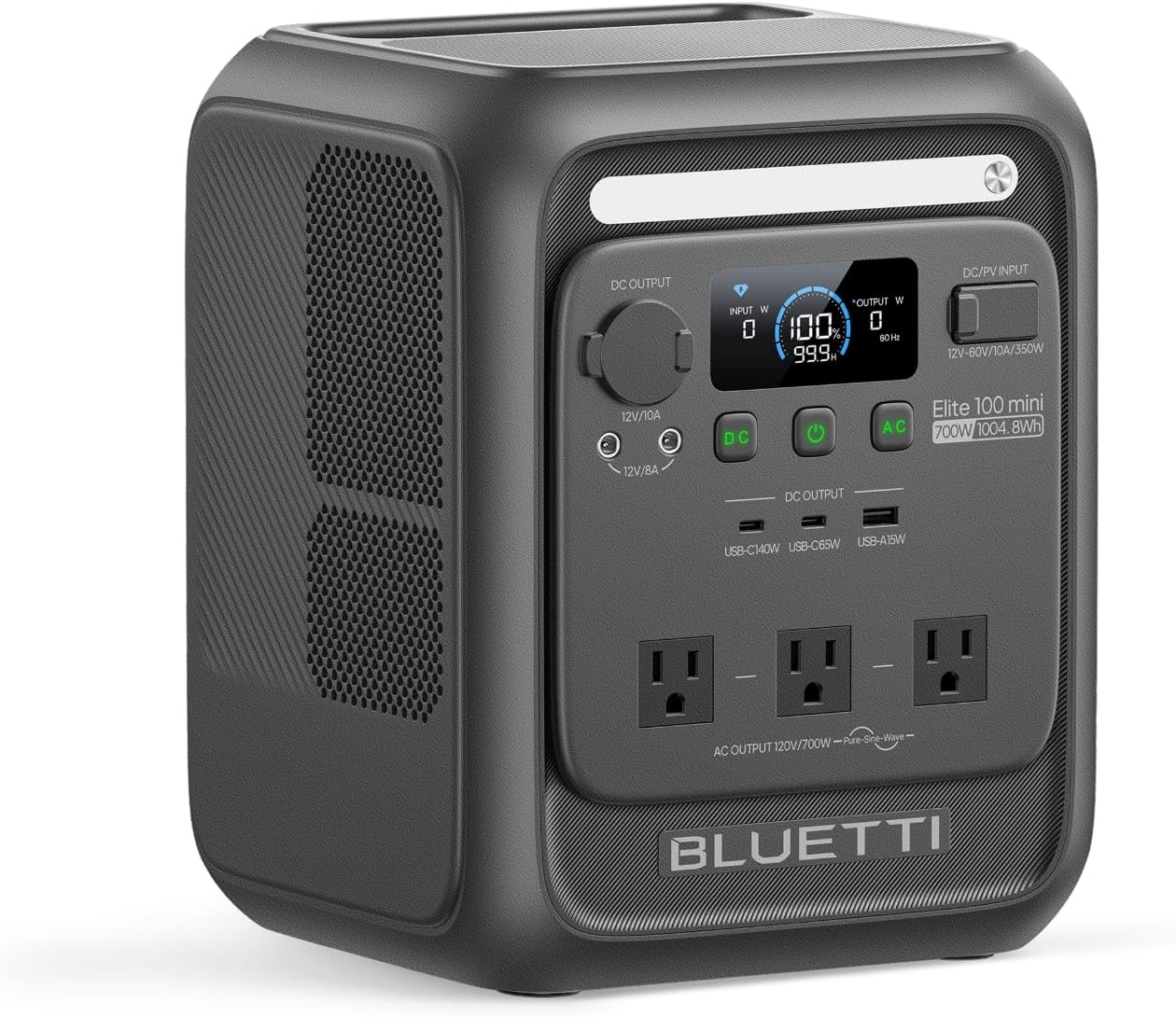
  • Bluetti: Offers robust builds and extensive features, often with LiFePO4 batteries across their product lines. The EB series are great for a blend of portability and power, and the AC series for larger demands.
  • Anker SOLIX: A strong contender with reliable products, good warranties, and competitive features, offering options from compact units to larger home-backup solutions.

Portable Solar Panels (for Solar Generators)

  • Renogy: A go-to for durable, efficient portable and rigid solar panels for RV solar setup and off-grid energy.
  • Jackery SolarSaga: Designed to seamlessly integrate with Jackery power stations, offering good efficiency and portability.
  • EcoFlow Portable Solar Panels: Excellent efficiency and often come with convenient carrying cases, ideal for solar camping system.
  • ALLPOWERS: Offers a good balance of performance and affordability for portable solar needs.

Home Battery Backup Systems

  • Tesla Powerwall: A benchmark for integrated home solar and battery storage, offering seamless automatic backup.
  • EcoFlow Smart Home Panel + DELTA Pro/Max: A modular and expandable solution for whole-home backup or essential circuit backup.
  • Bluetti EP Series: Powerful, expandable systems designed for substantial home energy independence and emergency energy storage.
  • Generac PWRcell: Integrates well with Generac’s traditional generator offerings, providing a hybrid backup solution.

Wind Turbines (for advanced Off-Grid Living)

  • Pikasola: Often provides small, reliable residential wind turbines for supplemental renewable emergency power.
  • Automaxx: Known for compact, efficient wind generators suitable for remote cabins or small off-grid living setups.
  • Ista Breeze: Offers a range of vertical and horizontal axis wind turbines for various off-grid energy applications.

FAQ: Your Top Questions Answered

Q: Is the LIBRIDS Portable Power Station C600 with its 640Wh LiFePO4 battery truly enough for a weekend camping trip?
A: Absolutely. For typical camping electricity needs—running a portable fridge (approx. 40-60W) for 12 hours a day, charging phones/tablets, and powering LED lights—a 640Wh unit like the LIBRIDS C600 is very well-suited for a 2-3 day trip. If you add a 100W portable solar panel, you can extend your power indefinitely with good sunlight. It’s a prime candidate for the best power station for camping in its class.

Q: How long can a portable power station keep my refrigerator running during a power outage essentials scenario?
A: This depends heavily on your refrigerator’s wattage and the power station’s capacity. A typical ENERGY STAR refrigerator uses around 50-150W when running, but it cycles on and off. If your fridge uses an average of 100Wh per hour, a 1000Wh power station could run it for about 10 hours. For extended outages, a 2000Wh+ solar generator paired with solar panels becomes crucial for continuous operation of your food preservation.

Q: Can I use solar panels with any portable power station for solar backup power?
A: Not all, but most modern portable power stations are designed to accept solar input. It’s vital to check the power station’s specifications for compatible voltage (VOC) and wattage input. Using panels that exceed the input voltage can damage the unit. Always match the solar panel’s output to the power station’s input requirements.

Q: What’s the main difference between a portable battery generator and a traditional gas generator?
A: A portable battery generator (or portable power station) stores electricity in a battery and converts it to usable AC/DC power silently and without emissions. A gas generator creates electricity by burning fossil fuels, producing noise and toxic exhaust, making it unsuitable for indoor use. The battery option is cleaner, safer, and ideal for emergency preparedness indoors.

Q: What is the most critical item to prioritize for disaster preparedness if I can only afford one significant power solution?
A: If budget is limited, a high-quality portable power station in the 1000-1500Wh range (e.g., an EcoFlow DELTA or Bluetti EB150/EB200P) would be my top recommendation. This gives you enough capacity to power crucial communication devices, lighting, and keep a refrigerator running intermittently for a day or two, bridging the gap until help arrives or the grid recovers. Pair it with an inexpensive hand-crank radio and good LED lanterns, and you have solid power outage essentials.

Final Recommendation: Empowering Your Preparedness

The decision for the best power station for camping or a robust emergency power supply for home isn’t about buying the most expensive gadget; it’s about investing in the right tools for your specific needs and scenarios. The LIBRIDS Portable Power Station C600, with its 640Wh LiFePO4 battery, stands out as a strong contender for those needing reliable, portable power for weekend off-grid camping, light RV battery system demands, or essential small appliance backup during short home outages. Its LiFePO4 chemistry ensures longevity and safety, which are paramount in any emergency energy storage solution.

For comprehensive disaster preparedness against hurricanes, winter storms, or prolonged blackouts, I consistently recommend a layered approach. Start with a solid solar generator foundation (a large portable power station paired with portable solar panels) to handle your primary needs, then supplement with smaller portable power stations for distributed power and dedicated power banks for personal devices. This strategy ensures you have redundant renewable emergency power sources, keeping you safe, connected, and resilient when the unexpected happens.

In 2026, there’s no excuse to be caught without power. Plan smart, invest wisely, and ensure your family is prepared for anything.

#LIBRIDS #Portable #Power #Station #C600 #640Wh #LiFePO4 #Battery