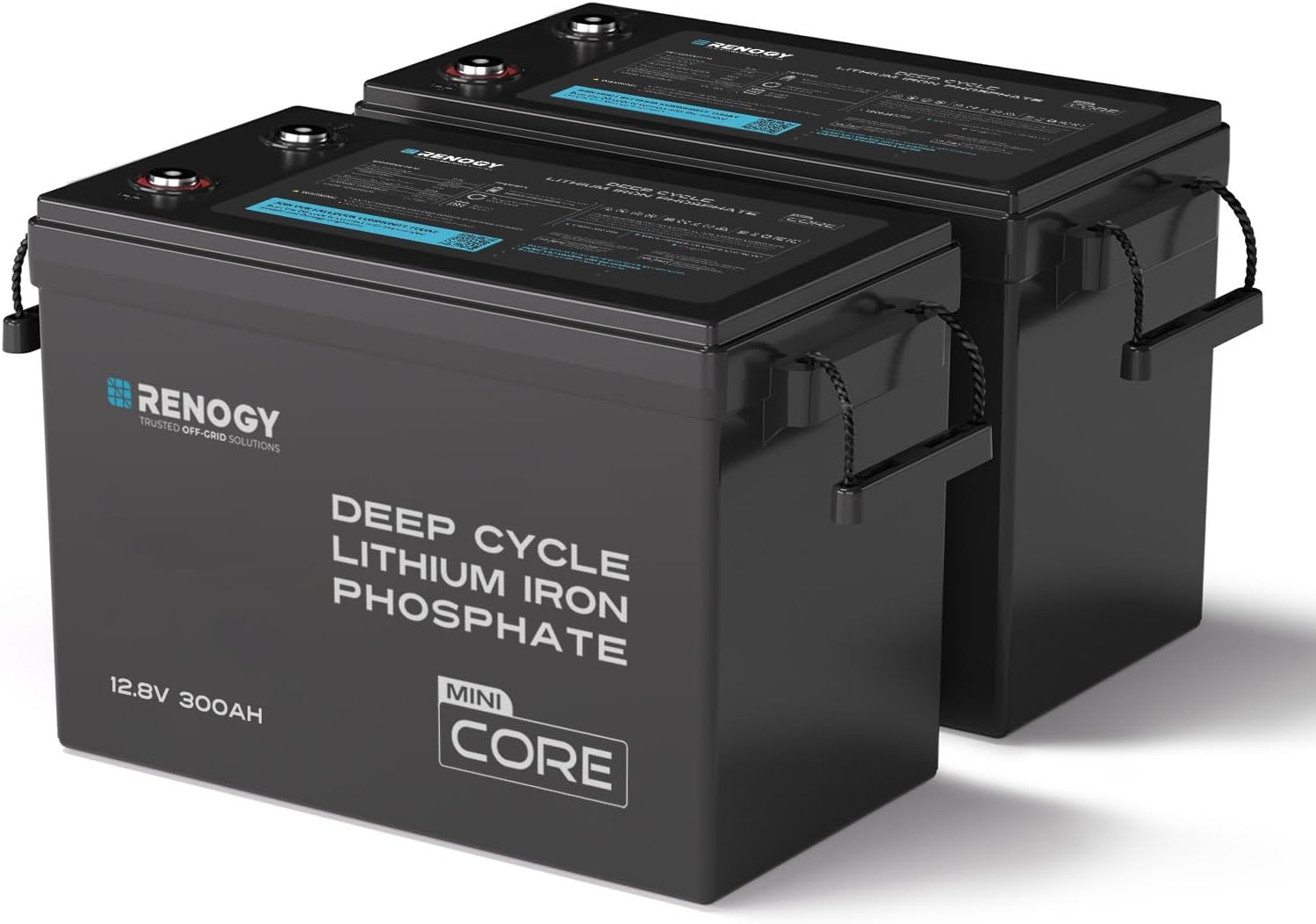
Renogy’s 12V Mini 300Ah LiFePO4 Off-Grid Battery Review

Renogy 300Ah LiFePO4: A Practical Review for Your Off-Grid Battery System and Residential Energy Needs (2026 Evaluation)

As a veteran home energy storage consultant with over two decades specializing in residential battery backup systems, whole-home energy storage solutions, and off-grid power systems, I’ve seen the industry evolve dramatically. It’s 2026, and homeowners are increasingly seeking robust, reliable energy independence. Today, we’re evaluating the Renogy 300Ah LiFePO4 Lithium Battery, 12V Mini Size Deep – not as a standalone whole-home solution, but as a crucial building block within a comprehensive off-grid battery system or a modular home energy storage system.

When considering any residential battery backup or solar battery storage solution, it’s vital to look beyond basic specifications. My focus is always on real-world performance, longevity, and how a product truly integrates into a functional backup battery for house scenarios, especially for those pursuing true energy independence.


Understanding the Renogy 300Ah LiFePO4: A Foundation for Your Off-Grid Battery System

The Renogy 300Ah LiFePO4 battery, while often marketed as a standalone unit for smaller applications, serves as an excellent component for building a larger, custom off-grid battery system. Its 12V nominal voltage means that for most residential applications requiring 24V or 48V, multiple units will be wired in series. This modularity is a core strength for off-grid specialists designing tailored energy storage solutions.

Battery Chemistry: LiFePO4 – The Off-Grid Advantage

The choice of Lithium Iron Phosphate (LiFePO4 or LFP) chemistry for this Renogy battery is a significant factor. Unlike Lithium Nickel Manganese Cobalt (NCM) batteries, which are common in some higher-power grid-tied systems, LiFePO4 offers superior safety, a longer cycle life, and greater thermal stability. For an off-grid battery system where reliability and resilience are paramount, LiFePO4 is often the preferred choice. It handles deeper discharges more consistently and has a lower risk of thermal runaway, which translates to peace of mind when you’re relying solely on your stored power.

Usable Battery Capacity and Real-World Power: The 12V Reality

A single Renogy 300Ah 12V battery provides approximately 3.84 kWh of usable energy (300Ah x 12.8V nominal). While impressive for a single unit, it’s crucial to understand this capacity in the context of a typical home. To power a residence, even an energy-efficient one, for an extended period, you’ll need a bank of these batteries. For instance, a 48V off-grid battery system would require four of these batteries wired in series, providing roughly 15.36 kWh of total usable energy. This capacity is generally sufficient for essential loads in many small to medium-sized off-grid cabins, or as substantial supplemental storage for larger homes when combined with other energy sources.

Continuous and Peak Output: Beyond the Battery Itself

The continuous and peak output power of your home battery backup isn’t solely determined by the battery. It’s dictated primarily by the inverter you pair it with. The Renogy 300Ah battery can deliver high current, but its ultimate contribution to your system’s power output depends on how many batteries are in your bank (to achieve higher voltage, e.g., 48V) and the capabilities of your chosen hybrid inverter. For a single 12V battery, an appropriate inverter might support 2000-3000W continuous output. A 48V bank, however, when properly configured with a robust hybrid inverter system, can easily support 8kW to 12kW of continuous output, with peak surge capabilities much higher, crucial for starting pumps, well motors, or large appliances in an off-grid battery system.


Building a Comprehensive Off-Grid Battery System with Renogy Batteries

Designing an effective off-grid battery system requires careful consideration of several interconnected components, where the Renogy 300Ah battery can play a central role.

Scalability and Expandable Battery Banks for Energy Independence

One of the Renogy 300Ah battery’s greatest strengths for off-grid applications is its inherent scalability. You can start with a smaller solar battery bank and expand it as your energy needs grow or your budget allows. This expandability is critical for achieving true energy independence. You can parallel multiple 12V batteries to increase overall capacity, or series-connect them to achieve higher system voltages (24V or 48V), which are more efficient for powering residential loads over longer distances with less current. This modularity allows for a truly custom home energy storage system.

Solar Compatibility and Hybrid Inverter Performance

The Renogy 300Ah battery is inherently compatible with virtually any solar charge controller designed for LiFePO4 batteries (MPPT controllers are highly recommended for efficiency). The performance of your solar battery storage largely hinges on the hybrid inverter system. A high-quality hybrid inverter will efficiently convert DC power from your Renogy battery bank and solar array into AC power for your home. It will also manage charging from solar, prioritize loads, and potentially integrate with a generator. For off-grid scenarios, robust inverter performance is non-negotiable for stable power delivery.

Automatic Transfer Switch (ATS) and UPS Speed for Seamless Power

While a single 12V Renogy battery isn’t typically hooked up to an ATS for a whole-home solution, a properly designed 48V off-grid battery system built with multiple Renogy units can incorporate an external ATS. This switch, managed by your inverter, seamlessly transitions your home’s power source between the battery bank and a backup generator if the battery voltage drops too low. The UPS switching speed is critical here. For sensitive electronics, a fast transfer (typically under 20ms) ensures no interruption, maintaining uninterrupted operation of internet, computers, and medical equipment. While Renogy batteries don’t have an integrated ATS, their stability supports rapid switching when paired with a quality external solution.

Grid-Tied vs. Off-Grid Operation: The Renogy Advantage for Remote Sites

These batteries are fundamentally designed for deep-cycle applications, making them ideal for truly off-grid battery systems where there is no grid connection whatsoever. They excel in scenarios where your home relies entirely on stored renewable home energy and a backup generator. While they can be incorporated into grid-tied battery systems (hybrid systems that use the grid as a backup or for charging), their primary value for this product lies in enabling complete energy independence away from the utility grid.

Generator Compatibility: The Ultimate Off-Grid Safety Net

For any off-grid battery system, a backup generator is an essential component. During extended periods of low solar production (e.g., cloudy winter weeks), the generator can automatically kick in to recharge your Renogy battery bank. This synergy ensures your backup power system remains robust, preventing critical outages. Your hybrid inverter will typically manage the generator start/stop signals based on battery state-of-charge, making this a highly automated and reliable safety net.


Real-World Scenario: Off-Grid Living with the Renogy 300Ah Battery Bank

Imagine a remote cabin, powered entirely by a 48V off-grid battery system composed of multiple Renogy 300Ah LiFePO4 batteries. This setup, integrated with a substantial solar array and a propane generator, provides true energy independence.

During sunny days, the solar panels are constantly charging the Renogy battery bank, replenishing the stored energy used overnight. The intelligent hybrid inverter prioritizes solar input, directly powering the cabin’s loads – from refrigeration to LED lighting and water pumps – while simultaneously topping off the batteries. Excess solar energy is meticulously stored, ensuring a full bank by sunset.

As evening approaches and solar production wanes, the cabin seamlessly transitions to drawing power directly from the Renogy battery bank. Lights remain on, the refrigerator hums, and occupants can enjoy their entertainment systems without interruption. The robust LiFePO4 chemistry and an efficient Battery Management System (BMS) within each Renogy unit ensure a steady power supply, even during continuous discharge throughout the night.

Should a prolonged period of cloudy weather arrive, threatening to deplete the battery bank, the system’s intelligence comes into play. As the battery’s state-of-charge drops to a pre-set threshold (e.g., 50%), the hybrid inverter automatically sends a signal to the backup generator. The generator starts, efficiently recharging the Renogy batteries while simultaneously powering the cabin’s current loads. Once the batteries are sufficiently charged, the generator shuts down, preserving fuel and minimizing noise, returning the cabin to silent, solar-powered operation.

This scenario highlights the vital role of battery expansion. As the cabin’s energy needs grow – perhaps with the addition of more energy-intensive appliances or a workshop – simply adding more Renogy 300Ah batteries to the existing 48V bank can incrementally increase storage capacity, further enhancing energy independence and extending the duration the cabin can operate without generator assistance. This modular approach makes the Renogy batteries an excellent choice for dynamic off-grid lifestyles.


Installation Considerations and Safety Certifications

Integrating multiple 12V Renogy batteries into a higher-voltage off-grid battery system requires careful planning and professional installation. Proper wiring for series and parallel connections, fusing, and ventilation are paramount. The “mini size deep” aspect means they are relatively compact for their capacity, offering flexibility in enclosure design.

Each Renogy LiFePO4 battery holds essential safety certifications, indicating it has met stringent performance and safety standards. For homeowners, this means reassurance that the battery itself is a safe component. However, the overall safety of your residential energy storage solution also depends on the quality of the installation, proper component matching (inverter, charge controller, wiring), and adherence to local electrical codes.


Battery Management System (BMS) and Long-Term Reliability

Each Renogy 300Ah LiFePO4 battery includes an integrated Battery Management System (BMS). This is a critical component for long-term reliability. The BMS protects the battery from common issues like overcharge, over-discharge, over-current, and extreme temperatures. It also balances cell voltage, ensuring that all cells within the battery pack are charged and discharged uniformly, which directly extends the overall lifespan of the battery.

Many home battery systems use the same battery cells, but inverter quality often determines overall reliability. While the Renogy battery’s internal BMS is robust, its interaction with the external charge controller and inverter is key for optimal system performance and longevity. A well-integrated system ensures the battery operates within its safe parameters, maximizing its cycle life.

Warranty and Value Proposition: Cost per kWh for Your Off-Grid Battery System

Renogy typically offers a 5-year warranty on these LiFePO4 batteries. When evaluating cost per kWh for an off-grid battery system, it’s not just the upfront purchase price of the battery itself. You must factor in its expected cycle life (LiFePO4 typically offers 4,000 to 7,000 cycles to 80% Depth of Discharge), the cost of the necessary peripherals (inverter, charge controller, wiring, enclosure), and installation cost. For DIY-savvy individuals or those with access to skilled labor, assembling a Renogy-based system can offer a very competitive cost per kWh over its lifespan compared to some integrated whole-home solutions, particularly for dedicated off-grid scenarios. This directly impacts the ROI through avoided utility costs (since there aren’t any off-grid) and the long-term asset value of your energy independence.


Who Is It Best For? Off-Grid Cabins and Modular Applications

The Renogy 300Ah LiFePO4 Lithium Battery is an excellent choice for:

  • Off-grid Cabins: Provides reliable, scalable power for remote living.
  • DIY Enthusiasts: Those comfortable designing and assembling their own off-grid battery system with specific voltage and capacity needs.
  • Small Residential Backup: For specific critical loads in a grid-tied home, used with an appropriate inverter.
  • Modular Expansion: Homeowners who want to start small and gradually increase their solar battery storage capacity over time.

Potential Drawbacks to Consider

While excellent for its intended purpose, the Renogy 300Ah battery, when considered for a complete whole-home battery backup, has specific limitations:

  • Requires System Integration: It’s a component, not a plug-and-play whole-home battery solution. Requires separate inverter, charge controller, wiring, and enclosure. This increases installation cost complexity.
  • Professional Installation Required (for whole-home): While a single battery might be DIY-friendly for smaller uses, creating a high-voltage, multi-battery bank for a house demands professional expertise to ensure safety and efficiency.
  • Heavy Equipment (collectively): While a single unit is manageable, a full battery bank for a home becomes quite heavy, requiring structural considerations for mounting.
  • No Integrated ATS/UPS: Lacks the seamless, built-in transfer capabilities of all-in-one residential systems. Relies on external components.
  • No Integrated Monitoring App (for system): Each battery has its BMS, but comprehensive system-level monitoring (solar input, inverter output, grid status) requires a separate inverter/charge controller monitoring platform.

Comparison: Renogy 300Ah LiFePO4 vs. Integrated Home Energy Storage Solutions

To properly contextualize the Renogy 300Ah battery, it’s essential to compare it against prominent, integrated home energy storage system offerings. This highlights its modular nature versus the all-in-one approach.

Feature Renogy 300Ah LiFePO4 (x4 for 48V) Tesla Powerwall (3) EcoFlow PowerOcean (3) Generac PWRcell (3)
Battery Chemistry LiFePO4 Li-ion (NMC) LiFePO4 LiFePO4
Battery Capacity ~15.36 kWh (4x 3.84kWh) 13.5 kWh usable (single unit) 9.9 kWh – 29.7 kWh (modular) 9.0 kWh – 36.0 kWh (modular)
Continuous Output Dependent on external inverter 5.8 kW 10 kW (AC coupled) / 10 kW (hybrid) 7.6 kW – 11.4 kW (varies by inverter)
Whole-Home Backup Achievable with proper system design Yes Yes Yes
Solar Integration Via external charge controller Integrated AC inverter Integrated hybrid inverter Integrated hybrid inverter
Expandability Highly modular (add more 12V units) Up to 10 Powerwalls Highly expandable Highly expandable
Warranty 5 Years (battery) 10 Years 10 Years 10 Years
Estimated Installed Cost $8,000 – $15,000 (system dependent) $12,000 – $18,000 (per Powerwall) $15,000 – $40,000+ $18,000 – $50,000+
Target Keyword Presence off-grid battery system Home battery storage system whole home battery backup backup battery for house

(Note: “Estimated Installed Cost” is a general range and can vary widely based on location, installer, incentives, and system complexity in 2026.)

Who should buy Renogy 300Ah LiFePO4 Lithium Battery:

Homeowners or cabin dwellers deeply committed to building a custom off-grid battery system for energy independence. This is for the individual who values modularity, a lower initial battery cost per kWh, and is either technically proficient to integrate components or has access to specialized off-grid installers. It’s an excellent foundation for a durable solar battery bank where you assemble your own solution.

Who should buy Tesla Powerwall:

Homeowners seeking a sleek, integrated whole home battery backup solution with established smart energy management and robust software. Ideal for grid-tied homes wanting seamless backup during outages and potentially time-of-use (TOU) optimization. Its compact design and strong brand recognition are key selling points for a modern home energy storage system.

Who should buy EcoFlow (e.g., PowerOcean):

Those looking for highly modular, powerful, and user-friendly integrated residential energy storage solutions that bridge the gap between DIY and full integration. EcoFlow systems offer flexibility in sizing with a strong emphasis on user experience and robust app-based control, suitable for both backup power and solar battery storage.

Who should buy Generac PWRcell:

Homeowners who prioritize robust backup power system reliability, often pairing it with a Generac standby generator for ultimate resilience. It’s a comprehensive, professionally installed whole-house battery backup solution designed for serious grid failures and long-term outages, particularly appealing to those in hurricane-prone regions or areas with frequent blackouts.


FAQ Section

Why does battery chemistry matter for an off-grid battery system?

Battery chemistry is paramount for an off-grid battery system because it dictates safety, cycle life, efficiency, and performance across temperature ranges. LiFePO4 (like the Renogy 300Ah) is highly favored for off-grid use due to its exceptional thermal stability (lower fire risk), longer lifespan (more charge/discharge cycles), and consistent performance, even when regularly deep-cycled. NCM batteries, while having higher energy density, can be less forgiving in rugged, deep-cycling off-grid environments and may require more complex thermal management. Choosing the right chemistry ensures your backup power system is both reliable and safe when you’re completely reliant on it.

How can the Renogy 300Ah LiFePO4 battery contribute to an off-grid home’s energy independence?

The Renogy 300Ah LiFePO4 battery contributes significantly to an off-grid home’s energy independence by serving as a durable, scalable energy reservoir. By acquiring multiple units and configuring them into a 24V or 48V bank, it becomes the backbone of your solar battery storage. This bank stores the clean energy harvested from your solar panels, making it available 24/7. This allows your home to operate autonomously, powering critical loads like refrigeration, lighting, and communication devices without needing a grid connection. The ability to expand the bank by adding more batteries over time means your off-grid battery system can grow with your energy needs, solidifying your freedom from utility companies.

What essential components are needed alongside the Renogy 300Ah battery for a functional off-grid battery system?

For a functional off-grid battery system using the Renogy 300Ah batteries, you’ll need several key components:

  1. Multiple Renogy 300Ah Batteries: To achieve sufficient voltage (e.g., four for a 48V system) and capacity.
  2. Solar Panels: To generate electricity.
  3. MPPT Solar Charge Controller: To efficiently charge the battery bank from the solar panels.
  4. Hybrid Inverter: To convert the battery’s DC power to AC for your home and manage overall system flow, including potential generator integration.
  5. Appropriate Wiring, Fuses, and Breakers: To safely connect all components and protect the system.
  6. Battery Enclosure/Rack: To house and protect the batteries, ensuring proper ventilation.
  7. Backup Generator (Optional but Recommended): For extended low-solar periods.
    These components collectively form a robust residential energy storage solution that ensures continuous power.

Final Verdict: Powering Your Vision for an Off-Grid Battery System

The Renogy 300Ah LiFePO4 Lithium Battery, 12V Mini Size Deep, is not a whole home battery backup in a box, nor is it designed to be. However, for those seeking true energy independence and the flexibility to build a customized off-grid battery system, it stands out as an exceptional, high-quality component. Its LiFePO4 chemistry provides a foundation of safety and longevity, crucial for remote applications. The modularity allows for precise sizing and future expansion of your solar battery storage, offering a compelling cost per kWh over its extended lifespan.

While it demands a more hands-on approach to system design and installation requirements compared to integrated solutions, for the discerning homeowner, cabin owner, or builder focused on off-grid living, the Renogy 300Ah battery provides a robust and reliable pathway to a self-sufficient future. Its practicality and performance in real-world off-grid scenarios make it a formidable choice for your next off-grid battery system.


Practical Buying Advice

When considering the Renogy 300Ah LiFePO4 for your home energy storage system, particularly for an off-grid battery system:

  1. Assess Your Energy Needs: Conduct a detailed energy audit to determine your daily kWh consumption and peak wattage requirements. This will dictate how many Renogy 300Ah batteries you need and the size of your inverter.
  2. Plan for System Voltage: Most residential off-grid battery systems operate at 48V for efficiency. Factor in buying enough 12V Renogy batteries to achieve this voltage (e.g., four in series).
  3. Invest in a Quality Inverter/Charge Controller: The performance of your Renogy battery bank is only as good as the brains of the operation. Choose a reputable hybrid inverter and MPPT charge controller that can handle your solar input and house loads.
  4. Professional Design/Installation: Unless you have extensive electrical experience, consult or hire a certified off-grid specialist to design and install your system. Proper wiring, fusing, and grounding are critical for safety and optimal long-term reliability.
  5. Consider Your Budget Holistically: Remember that the battery is just one part of the total installation cost. Factor in solar panels, inverter, charge controller, wiring, safety equipment, and labor. While the Renogy battery offers excellent cost per kWh for the battery itself, the overall system cost can still be substantial.
  6. Don’t Skimp on Safety: Ensure all components are rated correctly and that your system includes appropriate overcurrent protection, surge protection, and disconnects.
  7. Future-Proofing: Leverage the Renogy battery’s expandability. Design your initial system with enough space and wiring capacity to add more batteries later if your energy needs grow.

#Renogy #300Ah #LiFePO4 #Lithium #Battery #12V #Mini #Size #Deep