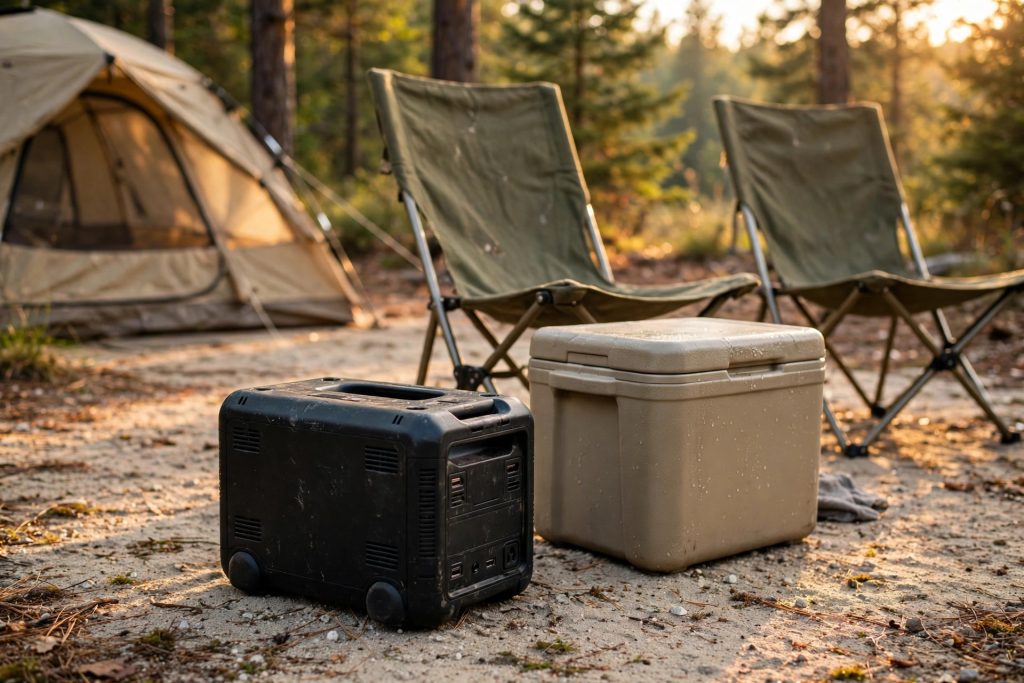
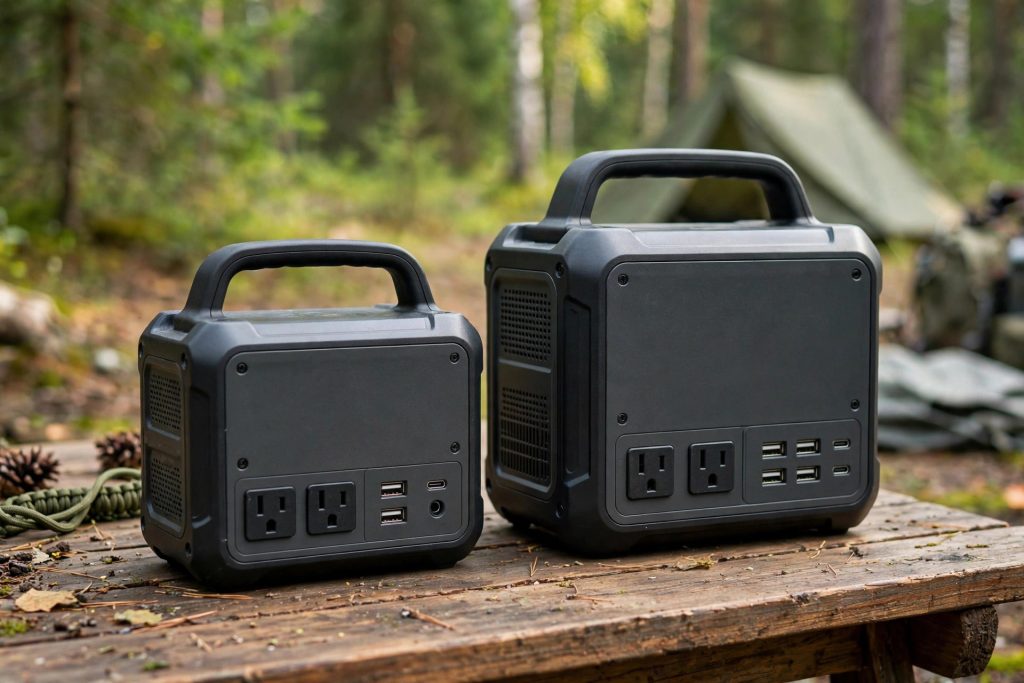
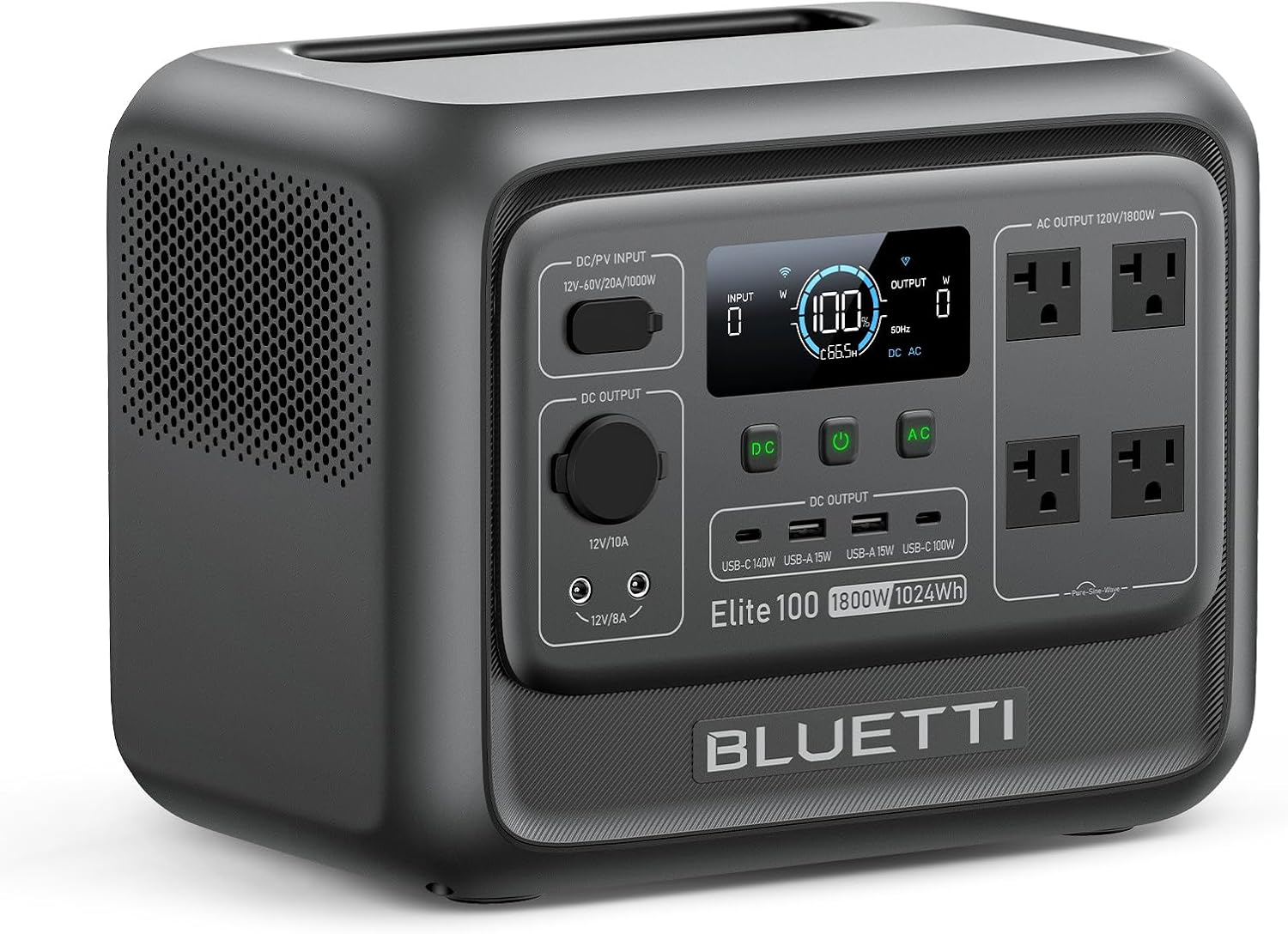
Before I bought the BLUETTI Elite 100 V2, I thought 1024 watt-hours meant I could run my entire campsite for a weekend. Lights, fridge, laptop, the little fan, maybe even the electric kettle in the morning. I had done the math on a napkin and the napkin said yes. The napkin was wrong, and the way it was wrong taught me more about power stations than any review ever did.
Here’s what actually happened on the first trip. The Elite 100 V2 is a 1024Wh box, which sounds like a lot until you learn the first rule of battery math: you don’t get all of it. The inverter loses 15 to 20% turning DC into AC, so usable is more like 820 watt-hours. I didn’t know that. The napkin didn’t know that. The napkin has since been retired.
My 12V car fridge draws about 45 watts when the compressor runs. Over a day, with the lid opening and closing and the afternoon sun beating on the car, it eats roughly 500 watt-hours. That’s more than half the usable battery, gone, on the fridge alone. Add the laptop (65 watts while charging, call it two full charges at 130Wh), phones, camp lights, and suddenly my “whole weekend” was more like a day and a day and a half. The kettle? The kettle draws 1200 watts and would have drained a quarter of the battery making four cups of tea. The kettle stayed home on trip two.
So is it useless? No. It’s just honest-sized.
Once I stopped being mad at the napkin, I started to appreciate what 1024Wh actually is: the sweet spot for a specific kind of trip. This thing weighs 25 pounds. I can carry it from the car to the picnic table with one hand and a coffee in the other. Try that with a 2kWh unit. The Elite 100 V2 fits behind the driver’s seat, charges from the wall in about an hour, and runs everything I actually need for a two-night trip if I’m not being stupid about the kettle.
The 1800 watts of output is the sneaky good part. Most stations this size top out at 1000 or 1200 watts, which means they choke on anything with a heating element or a motor. 1800 watts means the fridge compressor’s startup surge, which is three or four times its running draw, doesn’t trip the thing. It means I can run a 1500-watt space heater on low for an hour in the morning to take the edge off the tent. It means the induction plate works. I didn’t expect to care about output wattage this much. I was wrong about that too.
The thing I keep thinking about
There’s a couple that camps two sites over from us most summers, retired, big fifth wheel, and they run a gas generator all weekend. Not a quiet inverter one. The old loud kind. Last July they had it going during the quiet hours and the camp host finally came over, and there was a whole scene, voices raised, the works. I sat there with my silent battery box feeling unreasonably smug, which is not a good look, but there it is.
That’s the real reason I own this instead of a generator, and it has nothing to do with specs. It’s the silence. The Elite 100 V2 makes no noise. None. At 2am when the fridge cycles on, there’s no engine coughing to life, no fumes, no neighbor giving you the death stare over their morning coffee. Just cold food and quiet. I didn’t put a dollar value on that when I bought it, but it’s the thing I’d miss most if it broke.
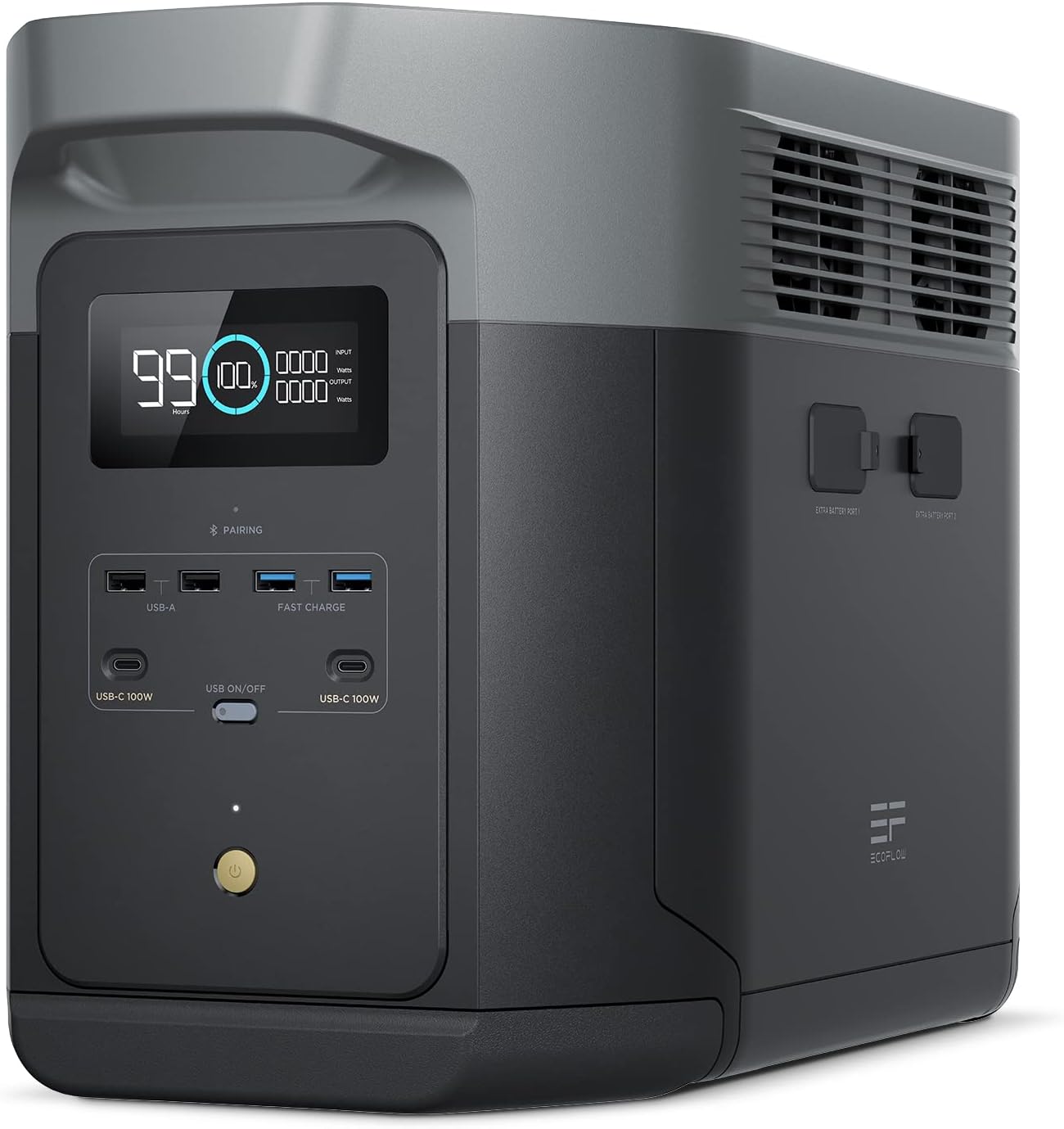
This site contains affiliate links. We may earn a commission on qualifying purchases.
Back to the numbers, because I promised myself I’d be the person who actually does the math now. For a weekend trip, my realistic budget: fridge 500Wh per day, laptop charge 130Wh, phones and lights maybe 100Wh, fan overnight 80Wh. That’s about 810Wh per day, which means the Elite 100 V2 covers one full day and part of the next. Two nights, one full day of driving in between to recharge from the car? Totally workable. Three nights stationary with no charging? You’re rationing by day three, and you should plan for that instead of discovering it at midnight.
Solar charging exists, 1000 watts max input, and I have a 200W panel I sometimes bring. On a good day it puts back maybe 700Wh, which almost covers the daily budget. Almost. On a cloudy day it’s 200Wh and you’re back to rationing. The panel helps; it doesn’t save you. Same story as every solar setup I’ve ever touched.
What I’d tell a friend
If your trips are two nights, car-accessible, and your biggest loads are a fridge and some electronics, this is the right size. Don’t buy bigger “just in case.” Bigger means 40 pounds, means it lives in the garage, means you stop bringing it. The best power station is the one light enough that you actually load it into the car.
Charging speed is the other thing nobody talks about enough. Wall charging takes about an hour to full, which I initially thought was marketing fluff. It isn’t, mostly. The last 20% slows down, that’s just how lithium works, the battery management system tapering off to protect the cells, but 0 to 80% genuinely happens in about 40 minutes. I timed it twice. 41 minutes and 39 minutes. Close enough that I stopped timing it.
Could it run a CPAP machine all night? Probably. That’s the classic question and I get asked it at campgrounds. I haven’t tested that scenario, my camping crew doesn’t include a CPAP user, so I’m not going to invent an answer. The math says yes, easily, but the math also said the kettle was fine, and look how that turned out.
Not enough.
If you’re trying to run a camper with air conditioning, or you need three days off-grid with no charging, this isn’t your box, and no amount of clever math will make it one. That’s not a flaw. That’s just physics, and physics doesn’t care about your napkin.