
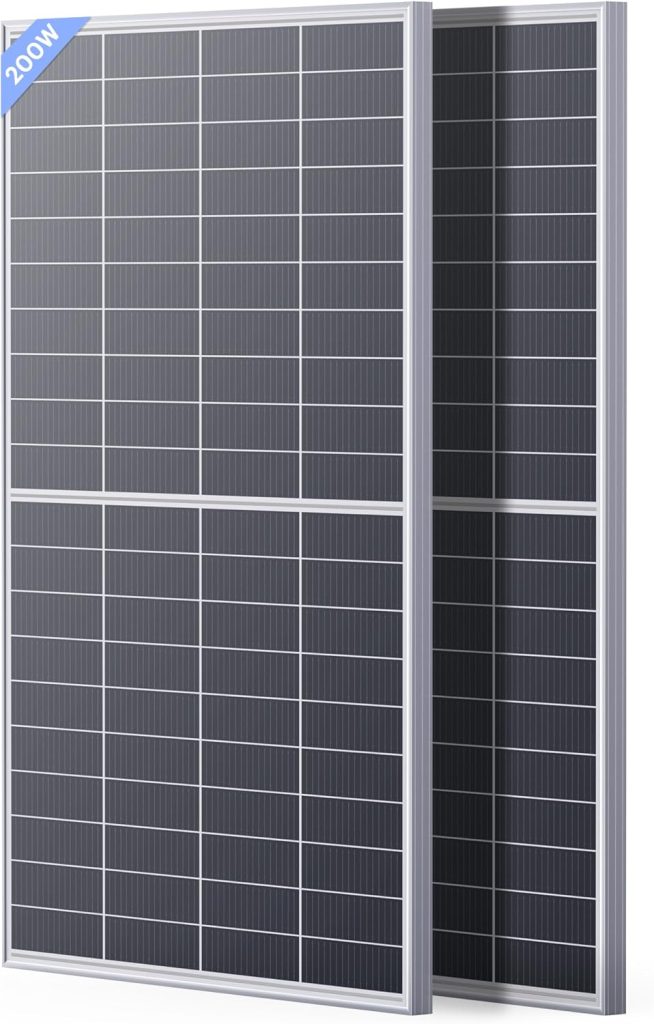
I bought bifacial panels expecting 30% more power. That’s what the brochure implied — “up to 30% backside gain!” in big friendly letters. What I got was 8%. Eight percent. On a good day, with white gravel underneath, panels tilted just so, the sun cooperating.
Here’s what I got wrong: “up to 30%” is doing the same work as “up to” in internet speed ads. Technically true. Practically a fairy tale. The real number — 5 to 15% depending on your ground surface — is still free electricity. I just wish they’d led with it.
They won’t.
Quick Answer
This 400W bifacial kit (two 200W N-type panels) delivers the expected 1.6-2kWh daily in good sun, plus a real 5-15% bonus from the backside when mounted over reflective ground. The N-type cells’ 25% efficiency is legit. Buy it for the solid 400W of front-side power; treat the bifacial gain as a tip, not the salary.
Compare Top 400W Solar Panel Kits
Three proven picks side by side — choose the one that fits your needs.
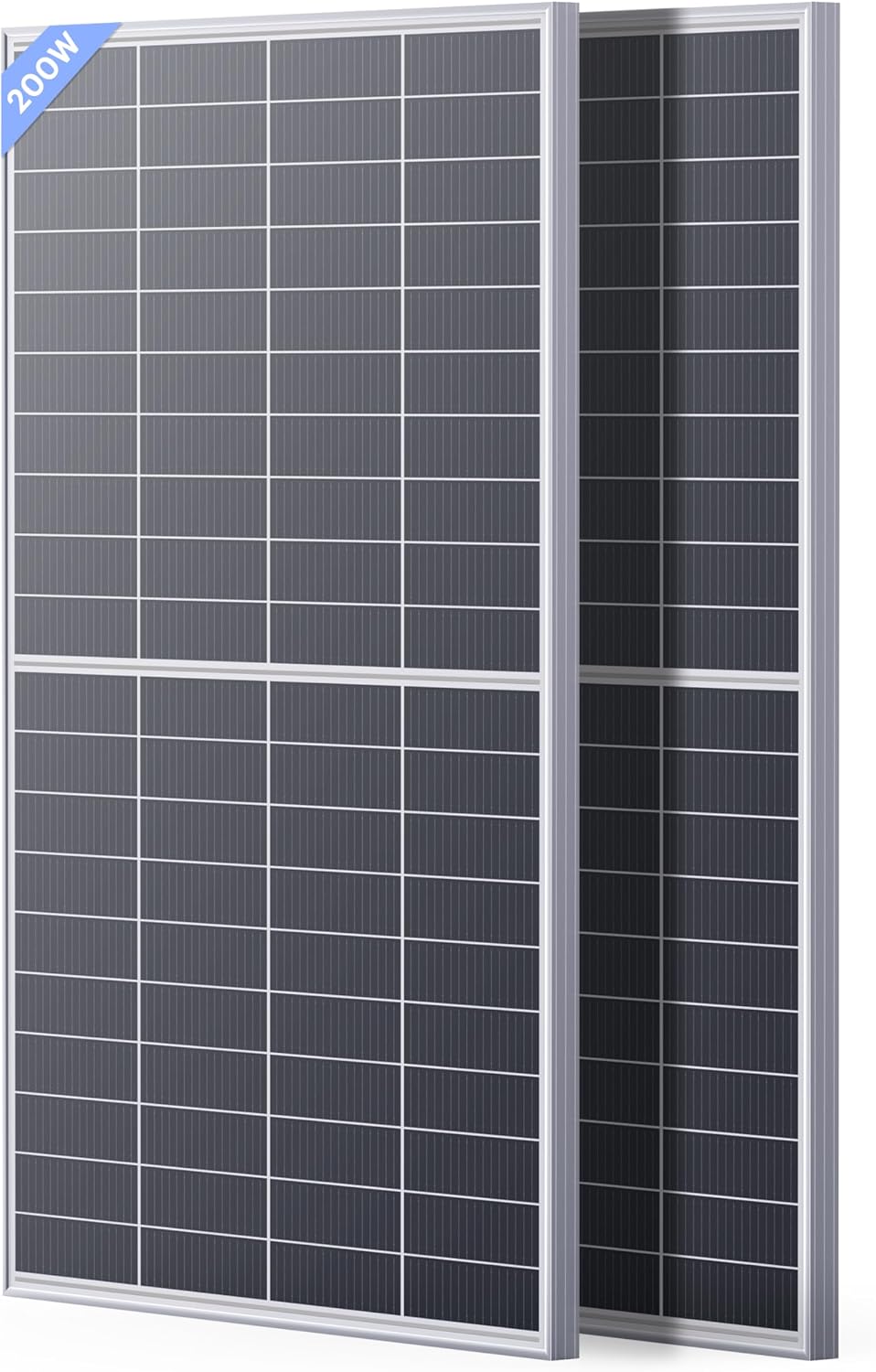
Prices and availability may vary — tap any product to check the current listing.
Two 200W panels. That’s the honest core of this kit — 400W of N-type mono, 25% efficient, well-built. Everything else is context. The bifacial part means the back of each panel also generates, catching light reflected off the ground. Over grass: 5%. Over white gravel or sand: 10-12%. Over snow: up to 20%, and you’ll be too cold to care. My setup is over light-colored decking, and I see about 8% consistently. Free watts. I’ll take them.
But let’s be clear about what bifacial is not: it’s not a 520W kit. It’s a 400W kit that sometimes makes 430. The listings that add the backside gain into the headline wattage are — I’m choosing my words carefully — optimistic. The panels are rated 200W each from the front. That’s the number. The back is a bonus round.
N-type: the part that’s actually new
Forget bifacial for a second. The N-type cell technology is the real story here. N-type cells degrade slower than the old P-type — we’re talking 1% first-year degradation instead of 2-3%, and better temperature coefficients. On a 400W array, the heat performance alone is worth real money: panels lose ~0.4% per degree above 25°C, and N-type loses less. My roof hits 65°C in July. Do that math across 400W and it’s the difference between 340W and 320W at solar noon. Twenty watts, every sunny afternoon, for 25 years.
Well — declining slowly, half a percent a year. You know what I mean.
Renogy’s N-type 320W panels play the same game at higher wattage. The technology’s legit across brands — this isn’t a marketing invention, it’s a genuine cell improvement. Just don’t pay double for it. The premium should be 10-20%, not 50%.
Mounting: where the bifacial gain lives or dies
Here’s the thing nobody tells you: bifacial panels need to see the ground. Mount them flat on a dark roof and the backside makes nothing — zero, zip, the most expensive 0% in solar. They need elevation (a foot or more), a reflective surface underneath, and spacing between panels. Ground mounts over gravel: ideal. Flat on dark shingles: pointless.
I mounted mine on a pergola — elevated, light wood underneath, air flowing. The backside gain is real and measurable. My neighbor put his flat on his dark roof because “bifacial is better, right?” His backside gain is a rounding error. Same panels. Different installation. The installer matters more than the panel, which is the eternal truth of solar that nobody puts in the brochure.
Height also helps cooling, which helps everything. A panel with airflow underneath runs 10-15°C cooler than one flat on a roof, and every degree is 0.4% output. The bifacial mounting requirements accidentally help with temperature too. Nice when physics cooperates.
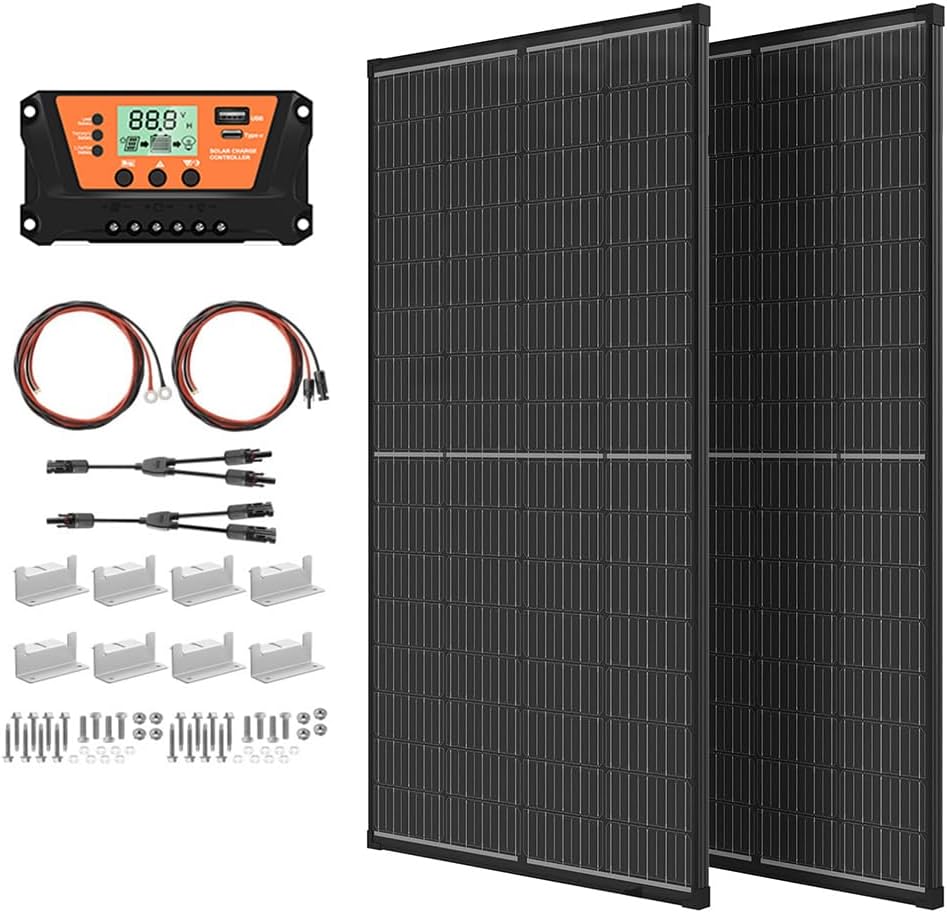
WERCHTAY 400W kit — panels plus 30A PWM controller in the box
The kit’s controller: check before you celebrate
The WERCHTAY kit includes a 30A PWM controller. Thirty amps is adequate for 400W at 12V (400W ÷ 12V = 33A — actually slightly undersized, which tells you something). PWM on a 400W array leaves real money on the table — 20-30% versus MPPT, which on 400W is 80-120W. That’s a whole extra panel’s worth of power, lost to a $30 savings on the controller.
My advice: buy the kit for the panels, budget for an MPPT controller separately. A 40A MPPT is $100-150 and it pays for itself in the first year. I know, I know — “the kit should just include it.” It should. It doesn’t. The solar industry kits are priced to a number, and the controller is where they save it. Dokio’s 400W has the same story — decent panels, controller you’ll want to upgrade.
What 400W does in my actual life
The daily math: 400W × 5 sun hours × 0.8 reality × 1.08 bifacial bonus = ~1,730Wh. That’s my number, measured over a summer. It runs the shed (lights, tools on weekends), keeps the backup batteries topped, and in a grid outage it stretches the power station by a full day. It’s not “power my house” — it’s “power the important corner of my life.” Which, honestly, is what most 400W kits are for.
Winter: halve it. Clouds: quarter it. Snow on the panels: zero until you brush them off, and then the bifacial backside loves the snow’s reflectivity — the one time winter gives you a gift. I brush the snow off with a soft broom and feel like I’m collecting free money. Because I am. Eight percent free money.
The category’s honesty problem
“25% efficiency!” — measured at 25°C cell temperature in a lab. Your panels will never be 25°C in the sun. Ever. Real operating efficiency is 21-22%, and that’s fine, it’s still excellent, but the headline is a lab number wearing a field costume.
“400W kit!” — plus “up to 30% bifacial gain” in the next breath, implying 520W. The FTC would like a word, but the FTC is busy. Just remember: the wattage on the label is the front side, STC, lab conditions. Everything after that is weather.
I’m not angry about it. The panels are good — genuinely good, N-type, well-made, and the 8% bonus is real free power. I just want the industry to lead with the real numbers. “400W panels, expect 1.7kWh/day, plus ~8% if you mount them right.” That’s a great product! Why does it need the fairy tale?
It doesn’t.
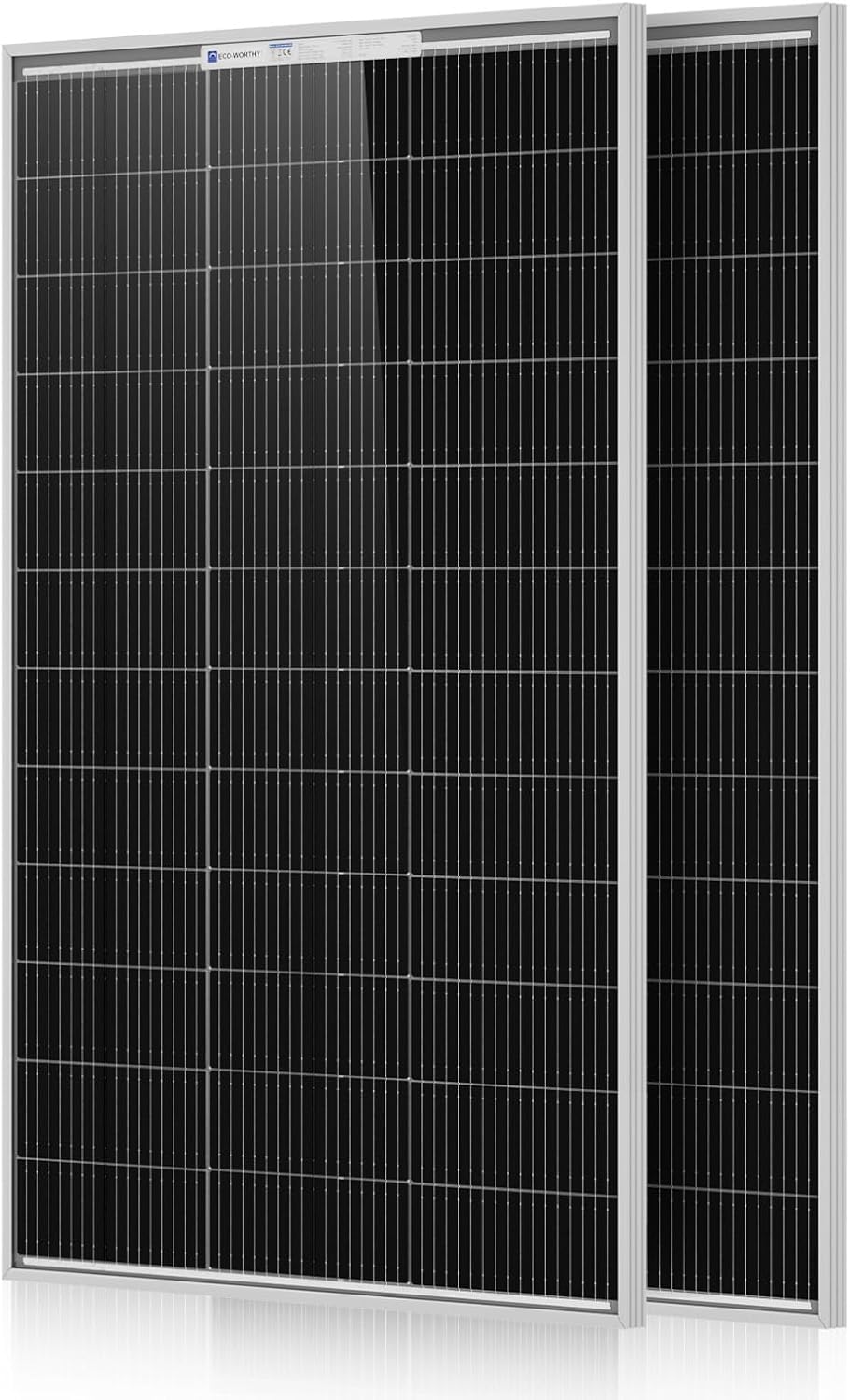
ECO-WORTHY 200W bifacial — the smaller conventional pair
They’re on the pergola now, tilted at 35°, white gravel underneath that I put there specifically for the albedo — yes, I landscaped for my solar panels, and yes, my wife has opinions about it. Yesterday: full sun, 386W front, and the monitoring showed 417W total. The backside doing its quiet 8%. I stood there with my coffee feeling disproportionately pleased about 31 watts. That’s solar ownership — you start celebrating numbers that would have meant nothing to you two years ago. Thirty-one free watts. From gravel. I’ll take it.
I haven’t measured backside gain with a dedicated meter — my 8% is total output versus a front-only estimate. Rough, but honest.
Frequently Asked Questions
How much extra power do bifacial panels really make?
5-15% in real installations, depending on ground reflectivity and mounting height. Over grass expect ~5%; over white gravel or sand, 10-12%; over snow, up to 20%. The “up to 30%” in marketing is a lab maximum, not a field number.
Do bifacial panels work mounted flat on a roof?
Poorly — the backside needs to see reflective ground. Flat on dark shingles, backside gain is near zero. They need elevation (12″+), reflective surface below, and airflow. Ground mounts and pergolas are ideal.
What’s the advantage of N-type cells?
Slower degradation (about 1% first year vs 2-3% for P-type), better high-temperature performance, and higher efficiency (25% vs ~22%). Over 25 years, the difference is substantial.
Is the included PWM controller good enough?
It works, but MPPT harvests 20-30% more from the same panels — 80-120W on a 400W array. A 40A MPPT upgrade ($100-150) pays for itself within a year for most users.
Callsun vs. WERCHTAY vs. ECO-WORTHY — which 400W kit?
The Callsun is the N-type bifacial flagship here. The WERCHTAY kit adds a 30A PWM controller in the box. The ECO-WORTHY is a conventional (non-bifacial) 200W pair — simpler, often cheaper. EcoFlow’s 220W bifacial is the portable alternative.


