
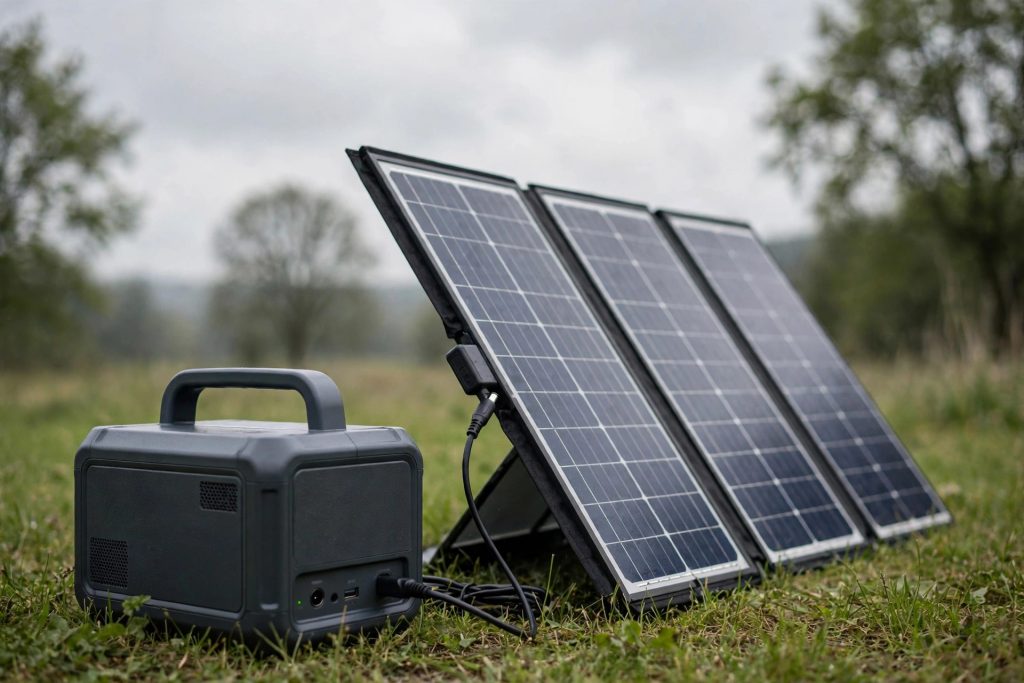
Yes — solar generators work on cloudy days, just at a fraction of their sunny-day output. Expect roughly 10–25% of a panel’s rated power under typical overcast skies, depending on how thick the clouds are. A 200-watt panel that feeds ~160–180W into your generator on a clear afternoon may only deliver 20–50W when the sky is gray — but that trickle still charges the battery, and paired with a few smart habits it can keep your essentials running through a string of gloomy days.
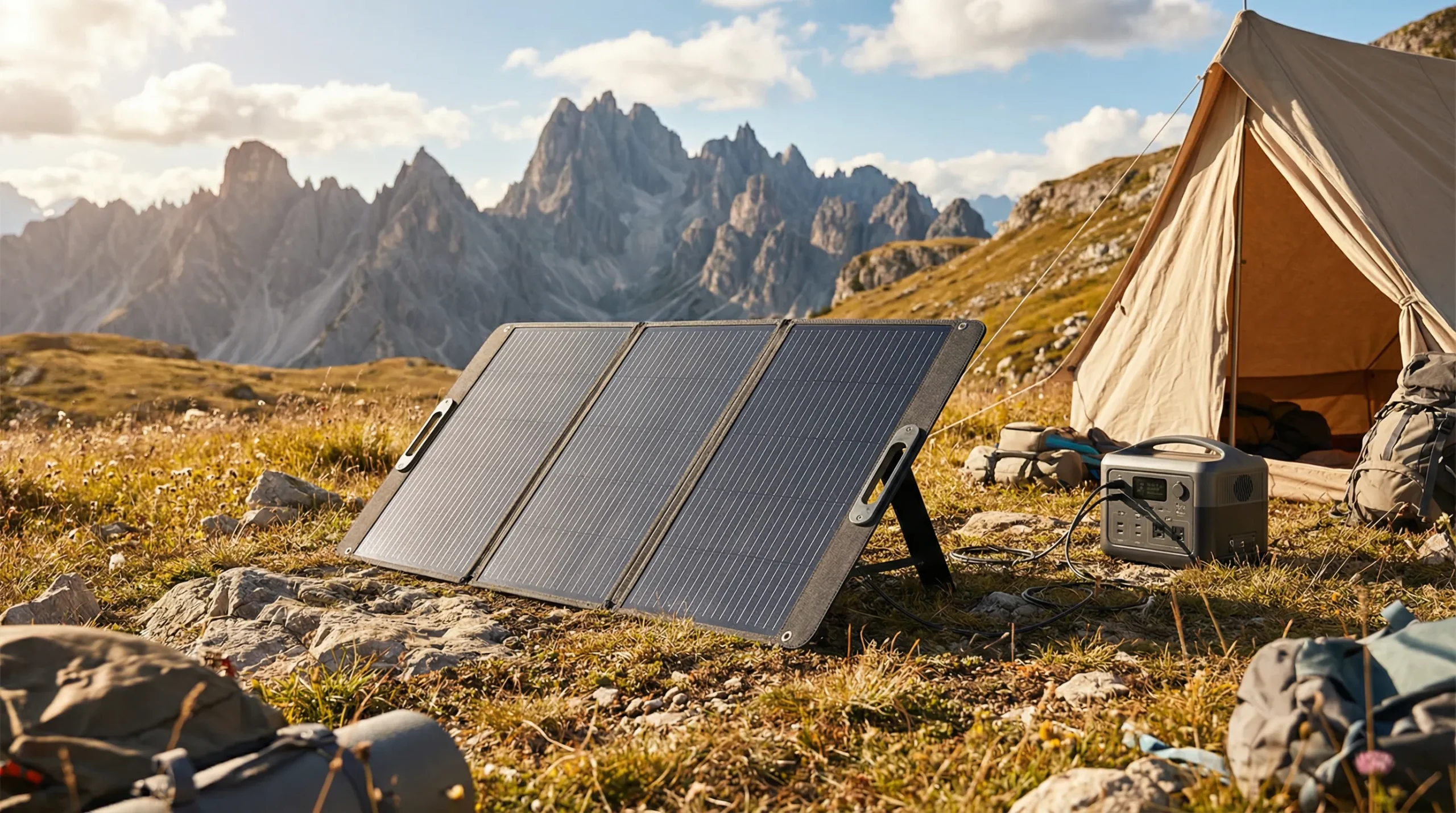
This guide breaks down exactly how much power to expect, why panels still work without direct sun, what slower charging means in real hours, and 7 practical ways to squeeze more energy out of cloudy weather.
The Short Answer
Solar panels convert light — not heat, and not direct sun specifically — into electricity. On cloudy days the light is diffused (scattered by clouds) instead of direct, so output drops to about 10–25% of rated capacity in typical overcast conditions. Multiple industry sources cite the same range: around 25% under light cloud cover and as low as 10% under very thick clouds. Night is the only time output truly stops, because moonlight is far too weak to matter.
How Much Power Do Solar Panels Actually Make on Cloudy Days?
As a rule of thumb, plan on 10–25% of rated output on a cloudy day. Cloud thickness is the main variable:
| Sky condition | Typical panel output (vs. rated) |
|---|---|
| Bright, thin clouds | 20–25% |
| Medium overcast | 10–20% |
| Dark, thick storm clouds | 5–10% |
There’s also a bonus phenomenon worth knowing: the “edge-of-cloud effect.” When sunlight slips past the edges of broken clouds, it can momentarily concentrate on your panels and push output well above the cloudy-day average for a few seconds or minutes. These bursts help, but don’t count on them in your planning.
Why Panels Still Work When the Sun Is Hidden
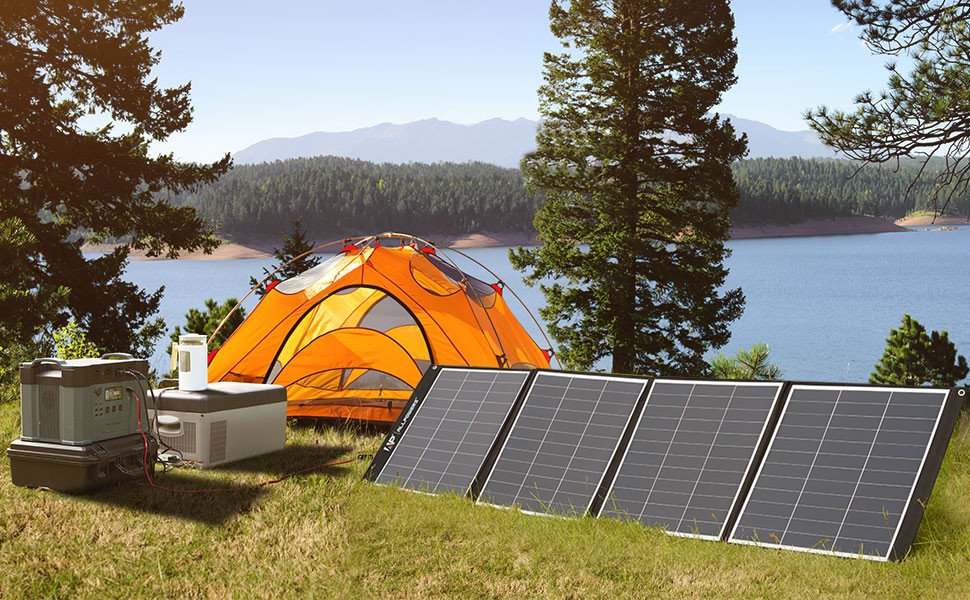
Panels respond to light, not to clear blue skies — and overcast skies still contain plenty of light. Photovoltaic cells convert photons into electricity through the photovoltaic effect, and even heavy clouds let a portion of sunlight through as diffused light. Think of it like reading a book on a cloudy day: you don’t need direct sun to see the page.
Cloudy weather even brings a small silver lining: cooler air. Panel output starts degrading once the cell surface rises above about 77°F (25°C) — manufacturers rate panels at that temperature, and extreme heat can cut output by 10–25%. A cool, gray afternoon avoids that heat penalty, which partially offsets the loss from reduced light.
What Slower Charging Means in Real Hours
Cloudy days turn your solar array from a fast charger into a slow trickle — so plan battery-first, not panel-first. Here are example charge times for a 1,000Wh solar generator fed by 200W of panels (rounded estimates, actual results vary with conditions):
| Conditions | Panel input (est.) | 0–100% charge (est.) |
|---|---|---|
| Full sun | ~160–180W | ~6 hours |
| Light overcast (25%) | ~40–50W | ~20–25 hours of daylight |
| Heavy overcast (10%) | ~20W | ~50 hours of daylight |
The practical takeaway: in a cloudy stretch, your panels alone won’t refill a big battery in a single day. That’s why the battery itself is the hero of a cloudy-day setup — charge it fully on sunny days and let it carry you through the gray ones.
For more on estimating your own charge times, see our solar generator charging-time guide.
7 Ways to Get More Power From Solar on Cloudy Days
You can’t move the clouds, but you can recover a meaningful share of the lost output with smart setup choices.
- Oversize your panel array. The single most effective strategy: if you regularly see gray skies, buy more panel capacity than you’d need for sunny weather. A 400W array in overcast conditions can deliver what a 200W array delivers in sun — no new technology required, just more surface area.
- Adjust the tilt for diffuse light. On sunny days you angle panels toward the sun; on cloudy days the light comes from the whole sky at once. Laying panels flatter than the “sunny-day” angle often captures more of that scattered light.
- Use an MPPT charge controller. Maximum Power Point Tracking controllers continuously find the optimal voltage for your panels and are noticeably more efficient than older PWM controllers in variable, low-light conditions. If your generator supports MPPT input, use it.
- Keep panels clean — and let rain help. Rain actually benefits solar setups long-term: it washes off dust, pollen, and bird droppings that block light. After a storm passes, wipe panels dry and they’ll run cleaner than before.
- Shift to battery-first thinking. Treat your solar generator as a storage bank: fill it from the wall outlet before bad weather arrives (AC charging is unaffected by clouds), then sip from it during the gray days. Most modern generators support pass-through charging, so you can charge from the grid while the panels add whatever trickle they can.
- Cut your loads, starting with the hogs. On cloudy days, postpone energy-hungry devices and run only essentials. A fridge draws 100–250W running — see our refrigerator runtime guide to plan how long your battery lasts at each load level. Phones, laptops, and LED lights sip just a few watts and can run for days on a charged battery.
- Make sure you’re sized for your climate. If you live somewhere with long gray winters, size the system for winter reality, not summer fantasy. Our power station sizing guide and solar panel sizing guide walk through the math.
Are Solar Generators Worth It If You Live Somewhere Cloudy?
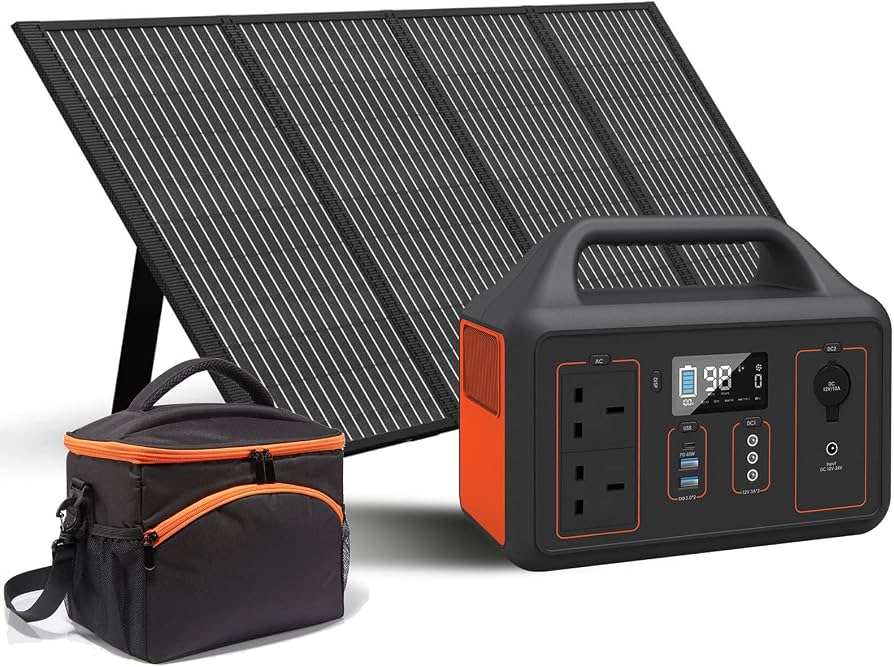
Yes — as long as you size the system for your actual climate. Solar thrives in famously overcast places: Seattle has more cloudy days than almost any major U.S. city, and Portland, Oregon ranks among the top U.S. cities for installed solar. Long summer days with mild temperatures produce enough surplus to balance out the gray winter months, and battery storage banks that surplus for daily use.
The economics still work because the fuel is free — a cloudy day of 25% output is 25% more than a gas generator produces for free (it produces nothing without fuel). Curious about the broader math? Read our guide on whether solar generators are worth the money.
FAQ
Do solar panels work in the rain?
Yes. Rain blocks direct sun so output drops, but panels still produce from diffused light — and rain cleans the panel surface, which improves output in the days afterward.
Do solar generators work at night?
No — panels produce essentially zero power at night, since moonlight and streetlights are far too dim. This is exactly what the battery is for: it stores daytime energy for nighttime use.
Do I need special solar panels for cloudy weather?
No. Standard monocrystalline panels work fine in overcast conditions; higher-quality panels tend to perform slightly better in low light, but the bigger lever is simply having more panel capacity (see tip #1 above).
How many solar panels do I need for cloudy days?
As a planning guideline, size your array 2–4× larger than what your sunny-day math suggests if gray weather is common where you live. More panels means a usable trickle even at 10% output.
Can I charge my solar generator while using it on a cloudy day?
Yes. Most modern solar generators support pass-through charging — panels (and/or the wall outlet) feed the battery while you draw power. On cloudy days the net charge rate is just slower, so prioritize essential loads.
Should I leave my panels out in a storm?
Light rain is fine and even helpful. But in severe weather — hail, high winds, lightning — disconnect portable panels and bring them inside. Permanent rooftop systems are built to code for local weather, but portable panels are not.
Affiliate disclosure: This article contains affiliate links. If you purchase through them, we may earn a commission at no extra cost to you — it helps us keep our guides free and independent.
Common Questions About Solar Generators
Quick Answers
Straight answers to the questions people ask most about this topic.
Do Solar Generators Work on Cloudy Days?
The short answer is yes — with the right expectations. What Slower Charging Means in Real Hours Cloudy days turn your solar array from a fast charger into a slow trickle — so plan battery-first, not panel-first.
What Slower Charging Means in Real Hours Cloudy days turn your solar array from a fast charger into a slow trickle — so plan battery-first, not panel-first.
How much should I expect to spend on solar generators?
Costs vary widely by capacity and brand, but the sweet spot for most buyers is a mid-range option that covers essential needs without overpaying for capacity you'll never use.
On cloudy days the light is diffused (scattered by clouds) instead of direct, so output drops to about 10–25% of rated capacity in typical overcast conditions.
What should I look for when choosing solar generators?
Focus on capacity, charging speed, and build quality first — those determine everyday satisfaction far more than bonus features.
Read the specifications carefully and compare at least two or three options before deciding. Real user reviews reveal issues spec sheets hide.
What mistakes do people make with solar generators?
The most common mistake is buying too much or too little capacity — either wasting money or ending up short when it matters.
Measure your actual needs first. A little research up front prevents the two biggest regrets: overpaying and underpowering.
How do I get the most out of solar generators?
Follow the manufacturer's charging guidelines and store it properly between uses — that alone extends useful life significantly.
A fridge draws 100–250W running — see our refrigerator runtime guide to plan how long your battery lasts at each load level.
Common Questions About Solar Generators
Quick Answers
Straight answers to the questions people ask most about this topic.
Do Solar Generators Work on Cloudy Days?
The short answer is yes — with the right expectations. What Slower Charging Means in Real Hours Cloudy days turn your solar array from a fast charger into a slow trickle — so plan battery-first, not panel-first.
What Slower Charging Means in Real Hours Cloudy days turn your solar array from a fast charger into a slow trickle — so plan battery-first, not panel-first.
How much should I expect to spend on solar generators?
Costs vary widely by capacity and brand, but the sweet spot for most buyers is a mid-range option that covers essential needs without overpaying for capacity you'll never use.
On cloudy days the light is diffused (scattered by clouds) instead of direct, so output drops to about 10–25% of rated capacity in typical overcast conditions.
What should I look for when choosing solar generators?
Focus on capacity, charging speed, and build quality first — those determine everyday satisfaction far more than bonus features.
Read the specifications carefully and compare at least two or three options before deciding. Real user reviews reveal issues spec sheets hide.
What mistakes do people make with solar generators?
The most common mistake is buying too much or too little capacity — either wasting money or ending up short when it matters.
Measure your actual needs first. A little research up front prevents the two biggest regrets: overpaying and underpowering.
How do I get the most out of solar generators?
Follow the manufacturer's charging guidelines and store it properly between uses — that alone extends useful life significantly.
A fridge draws 100–250W running — see our refrigerator runtime guide to plan how long your battery lasts at each load level.


