
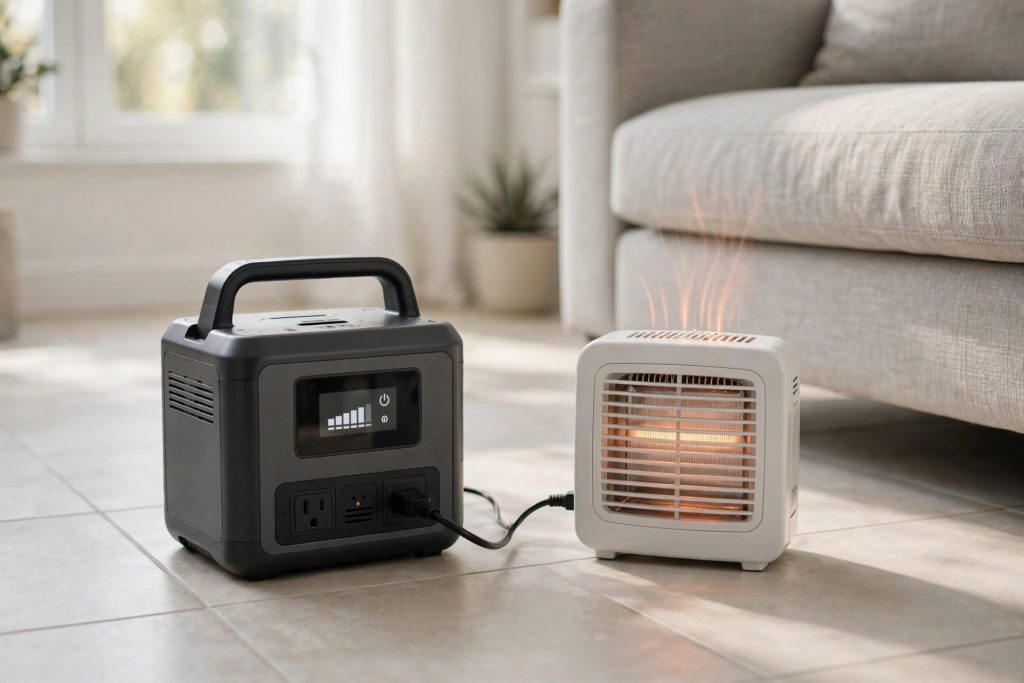
Can a solar generator run a space heater? It’s one of the most common winter questions we hear — and the answer matters, because getting it wrong means your backup power dies halfway through a cold night. Here’s the straight answer, the runtime math, and the low-watt alternatives that stretch your battery 10x further.
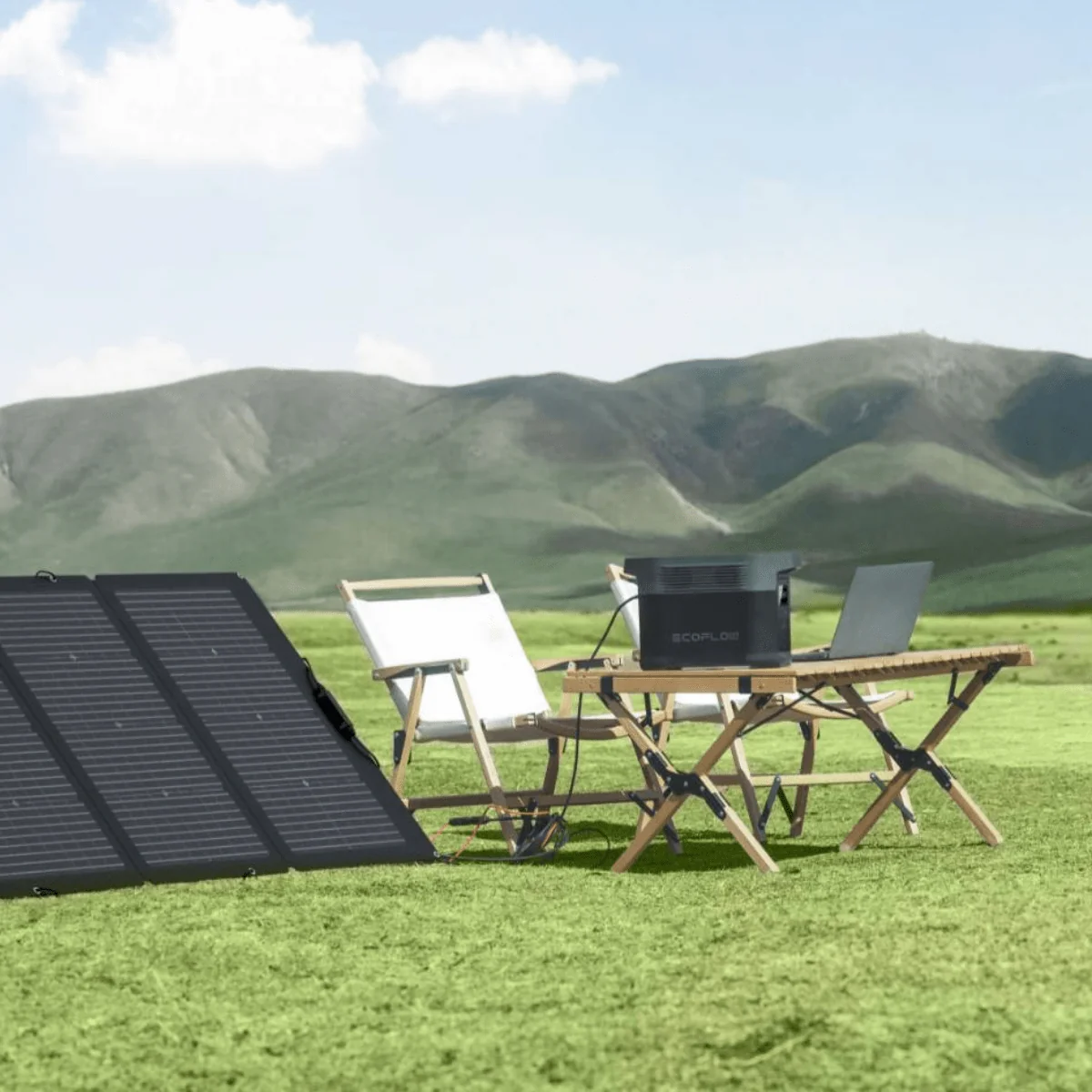
The Short Answer: Yes — But Only With the Right Size
A solar generator can run a space heater, but only if its continuous AC output is higher than the heater’s wattage — and even then, runtime is short. A standard 1,500W space heater drains a 1,000Wh power station in under 40 minutes. Most people are surprised: it works technically, but it’s the least efficient way to use stored battery power.
How Many Watts Does a Space Heater Actually Use?
Most portable electric space heaters draw between 750W (low setting) and 1,500W (high setting), running continuously on resistive heating elements. That makes them one of the hungriest loads in any home — far above the things backup batteries are best at, like lights, phones, laptops, CPAP machines, or short fridge cycles.
| Heater Setting | Typical Draw | Per Hour of Runtime |
|---|---|---|
| Low / eco mode | 750W | ~0.75 kWh |
| Medium | 1,000W | ~1.0 kWh |
| High (typical full-size heater) | 1,500W | ~1.5 kWh |
Check the wattage on your heater’s label or manual — it’s the single most important number for sizing. Some heaters cycle on and off with a thermostat, which reduces average draw, but for outage planning always size for the full rated wattage.
The Runtime Math: How Long Will a Solar Generator Last?
Estimated runtime = (battery capacity in Wh × 0.85) ÷ heater wattage. The 0.85 factor accounts for real-world inverter losses — you don’t get 100% of the rated capacity as usable AC output. Here’s what that means in practice:
| Station Capacity | 750W (low) | 1,000W (medium) | 1,500W (high) |
|---|---|---|---|
| 1,000Wh | ~1.1 hours | ~51 minutes | ~34 minutes |
| 1,500Wh | ~1.7 hours | ~1.3 hours | ~51 minutes |
| 2,000Wh | ~2.3 hours | ~1.7 hours | ~1.1 hours |
| 3,000Wh | ~3.4 hours | ~2.6 hours | ~1.7 hours |
Estimates based on the (Wh × 0.85) ÷ W planning formula. Actual runtime varies with battery age, temperature, and thermostat cycling.
Even a large 3,000Wh station — heavy and expensive — gives you less than two hours on a typical heater’s high setting. That’s the core reality of this pairing: technically possible, practically limiting.
What Size Solar Generator Do You Need for a Space Heater?
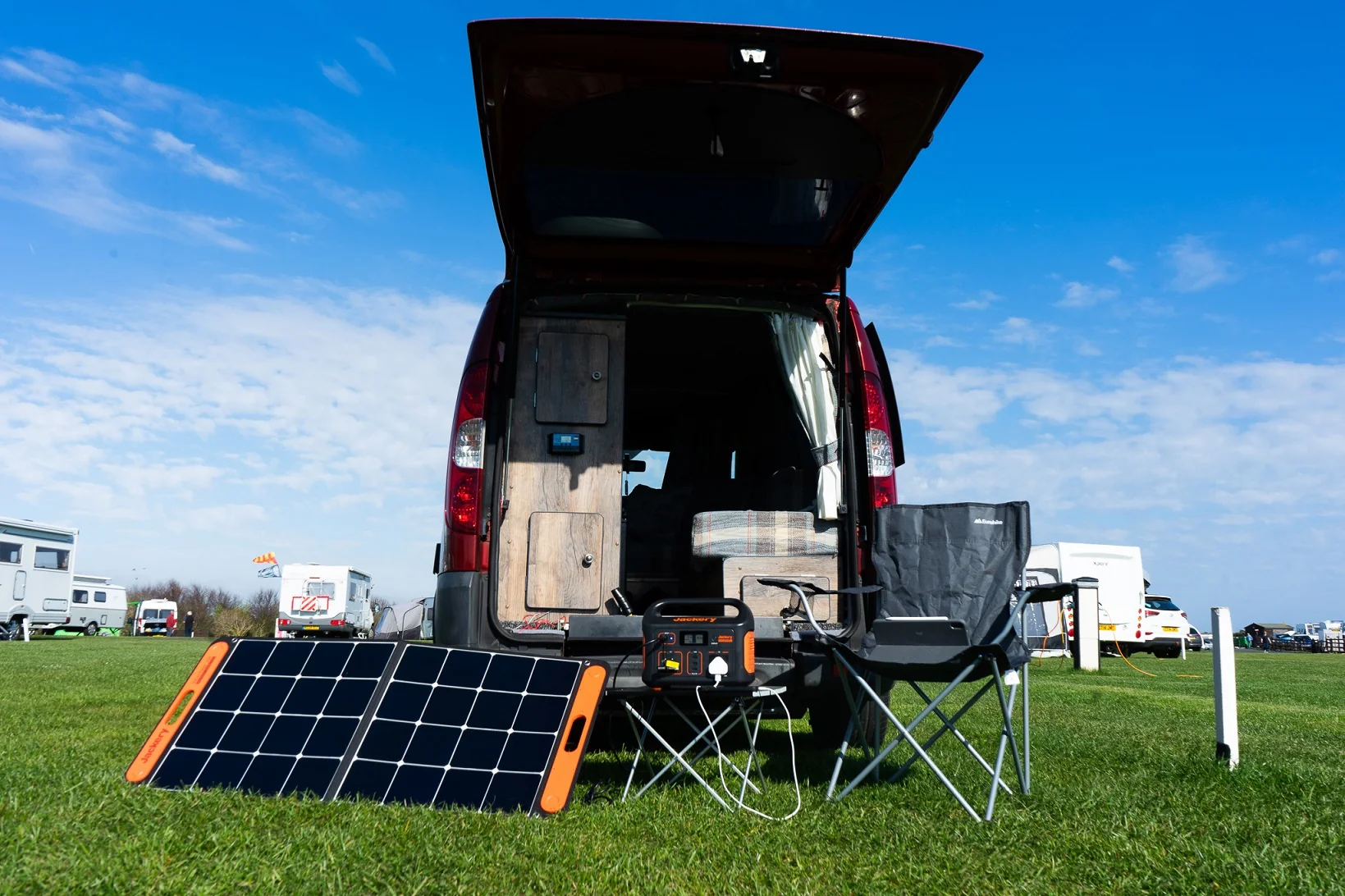
You need a station rated for at least 1,500W of continuous AC output to run a 1,500W heater — and 2,000W or more is the comfortable minimum. The inverter’s continuous rating is the hard ceiling: plug a 1,500W heater into a 1,200W station and it will overload and shut down immediately.
Practical sizing checklist:
- Match the continuous rating first. Your heater’s wattage must be below the station’s continuous AC output (not the surge/peak rating).
- Leave headroom. Running an inverter at 100% of its rated output continuously creates heat and stress; ~70–80% of rated output is a healthier long-term load.
- Don’t forget everything else. If the heater eats 1,500W and your station outputs 1,800W, you have almost nothing left for lights or phone charging.
- Capacity follows output. The station also needs enough Wh (see the table above) — output without capacity just means it shuts down fast instead of never starting.
5 Things That Can Go Wrong
Running a high-wattage heater on a portable battery creates real failure modes — most of them preventable if you know them in advance.
- Overload shutdown. The most common mistake: plugging a 1,500W heater into a station rated under 1,500W continuous. The inverter trips, everything goes dark. Check labels first.
- Dead battery in an hour. People expect “1,000Wh” to mean “1,000 watts for 10 hours.” It doesn’t — 1,000Wh at a 1,500W load is gone in about 34 minutes.
- Cold-weather capacity loss. Lithium batteries perform worse in the cold, and a winter outage is exactly when you need heat. Expect reduced usable capacity below freezing unless the battery has a self-heating feature.
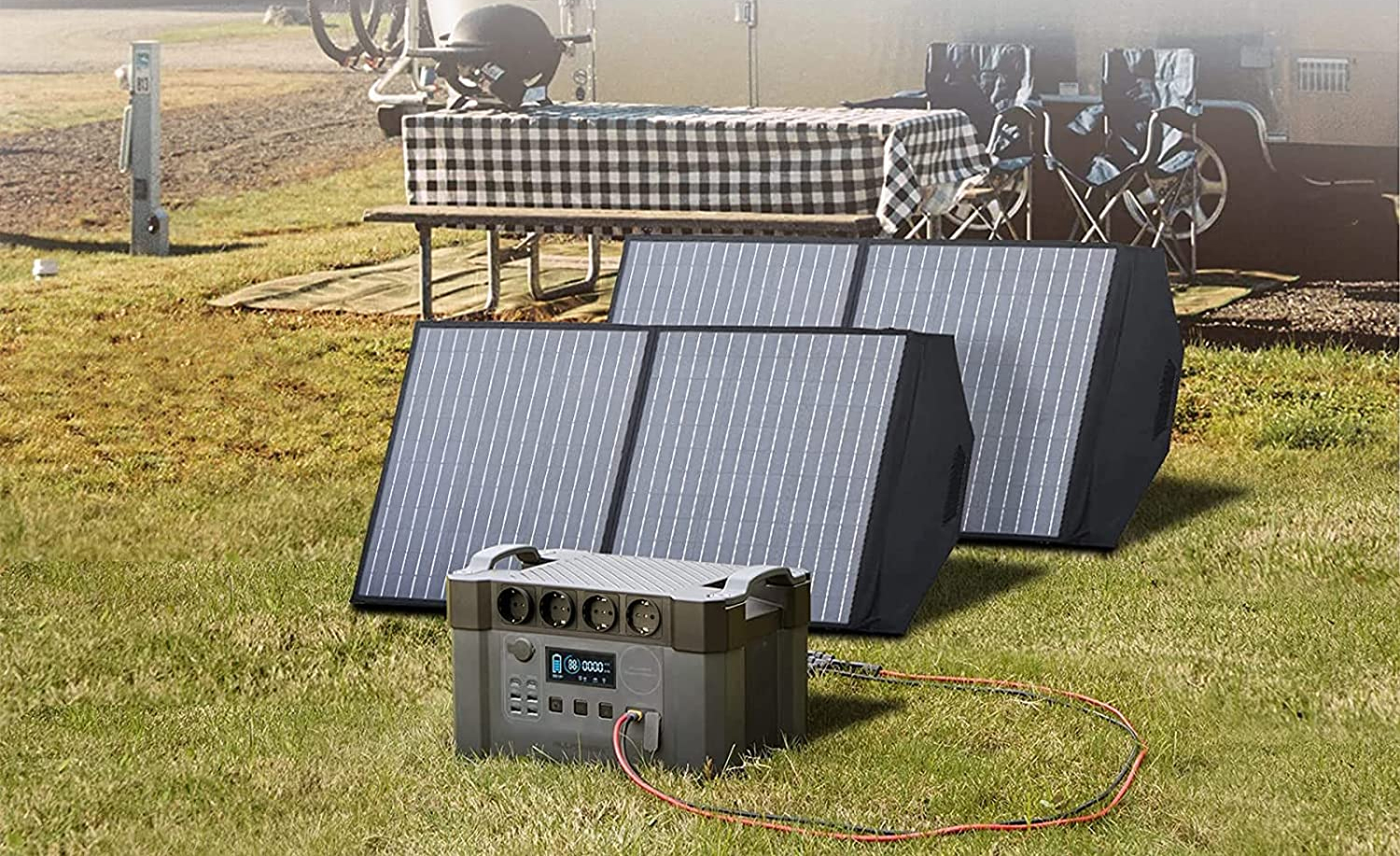
- Charging too slowly to keep up. A 200W solar panel in winter sun might deliver 100–150W — nowhere near a 1,500W heater’s draw. You cannot run the heater “off the panel” during an outage; the battery is the fuel tank, and panels refill it slowly.
- Safety shortcuts. A space heater pulling 1,500W through a cheap extension cord or power strip is a fire risk regardless of the power source. Plug the heater directly into the station, keep 3 feet of clearance on all sides, and never leave it running unattended.
Better Strategy: Low-Watt Warmth That Lasts 10x Longer
An electric blanket (typically 50–200W) can run all night on the same battery that a space heater kills in under an hour. Heating the person instead of the room is the single smartest move when watts are scarce.
The math is decisive: a 100W electric blanket uses about 0.8 kWh over 8 hours — roughly 15 cents of electricity at average U.S. residential rates — versus about $2.18 per night for a 1,500W heater over the same period. On a 1,000Wh station, that’s roughly 8.5 hours of blanket warmth versus 34 minutes of room heat.
- Electric blankets / heated throws (50–200W): the best battery-friendly option for winter outages, camping, and RV nights.
- Heated clothing and mattress pads: even lower draw for targeted personal warmth.
- Layer + zone heating: pre-warm the bed, then maintain it with a blanket — this beats trying to heat air, which just rises and escapes.
Learn more about sizing backup power for essentials in our guide on what size portable power station you need, and how heating loads compare to running a refrigerator on a solar generator.
Safety Tips for Running a Heater on Backup Power
Space heaters are one of the leading causes of home heating fires — battery power doesn’t change that. Follow these basics:
- Plug the heater directly into the power station — never into an extension cord or power strip rated below the heater’s wattage.
- Keep at least 3 feet (1 meter) of clearance from bedding, curtains, and furniture.
- Use models with tip-over shutoff and overheat protection; never leave a heater running unattended or while sleeping.
- Make sure your smoke and carbon monoxide alarms are working — critical during any outage heating setup.
Frequently Asked Questions
Can a Jackery / EcoFlow / Bluetti power station run a space heater?
It depends on the model, not the brand. Any station with continuous AC output above your heater’s wattage can do it — a 2,000W-output model handles a 1,500W heater, while a 500W model cannot. Check your station’s spec sheet first.
How many solar panels do I need to run a space heater?
The panel doesn’t run the heater — the battery does. Panels only recharge the battery, and even a 400W panel array in weak winter sun won’t keep up with a 1,500W draw. Plan on recharging between short heating sessions, not continuous operation. See our guide to sizing solar panels for recharge-time math.
Is it safe to run a space heater all night on a solar generator?
No — even if the battery could last, unattended heater operation is unsafe. For overnight warmth, switch to an electric blanket and use the heater for short pre-warm bursts.
Does the heater’s eco or low mode help?
Yes. Dropping from 1,500W to 750W roughly doubles your runtime and lets smaller stations (1,000W+ output) handle the load. Thermostat cycling helps too — but size for full wattage anyway.
Can you charge a solar generator while running a space heater?
Technically yes on most modern stations (pass-through charging), but the math doesn’t work: a heater at 1,500W draws far more than any portable panel array can replenish in real time. Net drain is still rapid. Read our full breakdown of solar generator charge times.
Will cloudy weather affect my backup heating plan?
Yes. Solar panels on cloudy days produce roughly 10–25% of their rated output, so recharging during an overcast winter outage is slow. Details in our cloudy-day output guide.
Bottom line: a properly sized solar generator can run a space heater for short windows, but it’s an expensive way to stay warm. For outages, keep the heater for quick bursts and lean on low-watt personal heating — your battery will thank you.
Common Questions About Solar Generator
Quick Answers
Straight answers to the questions people ask most about this topic.
Can a Solar Generator Run a Space Heater?
The short answer is yes — with the right expectations. Better Strategy: Low-Watt Warmth That Lasts 10x Longer An electric blanket (typically 50–200W) can run all night on the same battery that a space heater kills in under an hour.
Better Strategy: Low-Watt Warmth That Lasts 10x Longer An electric blanket (typically 50–200W) can run all night on the same battery that a space heater kills in under an hour.
How much should I expect to spend on solar generator?
Costs vary widely by capacity and brand, but the sweet spot for most buyers is a mid-range option that covers essential needs without overpaying for capacity you'll never use.
The math is decisive: a 100W electric blanket uses about 0.8 kWh over 8 hours — roughly 15 cents of electricity at average U.S.
What should I look for when choosing solar generator?
Focus on capacity, charging speed, and build quality first — those determine everyday satisfaction far more than bonus features.
Read the specifications carefully and compare at least two or three options before deciding. Real user reviews reveal issues spec sheets hide.
What mistakes do people make with solar generator?
The most common mistake is buying too much or too little capacity — either wasting money or ending up short when it matters.
Measure your actual needs first. A little research up front prevents the two biggest regrets: overpaying and underpowering.
How do I get the most out of solar generator?
Follow the manufacturer's charging guidelines and store it properly between uses — that alone extends useful life significantly.
The 0.85 factor accounts for real-world inverter losses — you don’t get 100% of the rated capacity as usable AC output.
Common Questions About Solar Generator
Quick Answers
Straight answers to the questions people ask most about this topic.
Can a Solar Generator Run a Space Heater?
The short answer is yes — with the right expectations. Better Strategy: Low-Watt Warmth That Lasts 10x Longer An electric blanket (typically 50–200W) can run all night on the same battery that a space heater kills in under an hour.
Better Strategy: Low-Watt Warmth That Lasts 10x Longer An electric blanket (typically 50–200W) can run all night on the same battery that a space heater kills in under an hour.
How much should I expect to spend on solar generator?
Costs vary widely by capacity and brand, but the sweet spot for most buyers is a mid-range option that covers essential needs without overpaying for capacity you'll never use.
The math is decisive: a 100W electric blanket uses about 0.8 kWh over 8 hours — roughly 15 cents of electricity at average U.S.
What should I look for when choosing solar generator?
Focus on capacity, charging speed, and build quality first — those determine everyday satisfaction far more than bonus features.
Read the specifications carefully and compare at least two or three options before deciding. Real user reviews reveal issues spec sheets hide.
What mistakes do people make with solar generator?
The most common mistake is buying too much or too little capacity — either wasting money or ending up short when it matters.
Measure your actual needs first. A little research up front prevents the two biggest regrets: overpaying and underpowering.
How do I get the most out of solar generator?
Follow the manufacturer's charging guidelines and store it properly between uses — that alone extends useful life significantly.
The 0.85 factor accounts for real-world inverter losses — you don’t get 100% of the rated capacity as usable AC output.


