
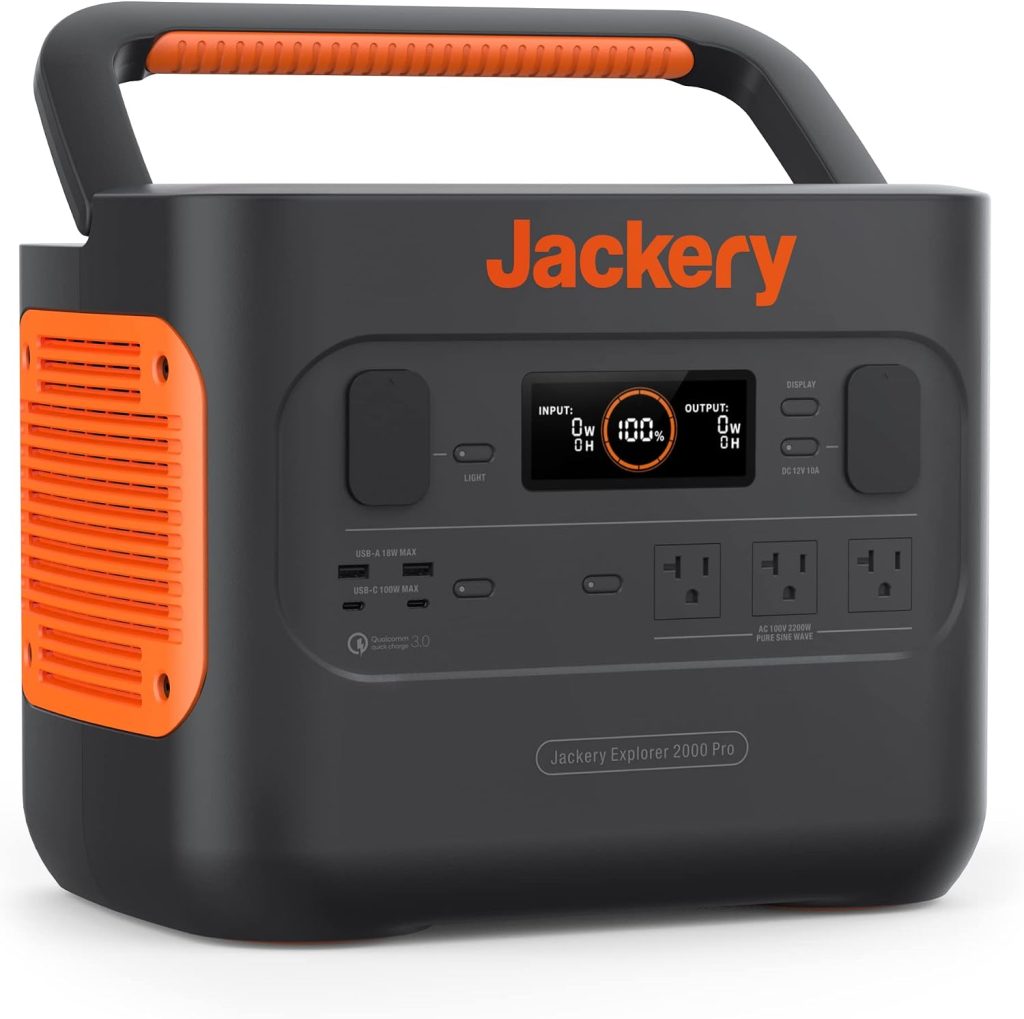
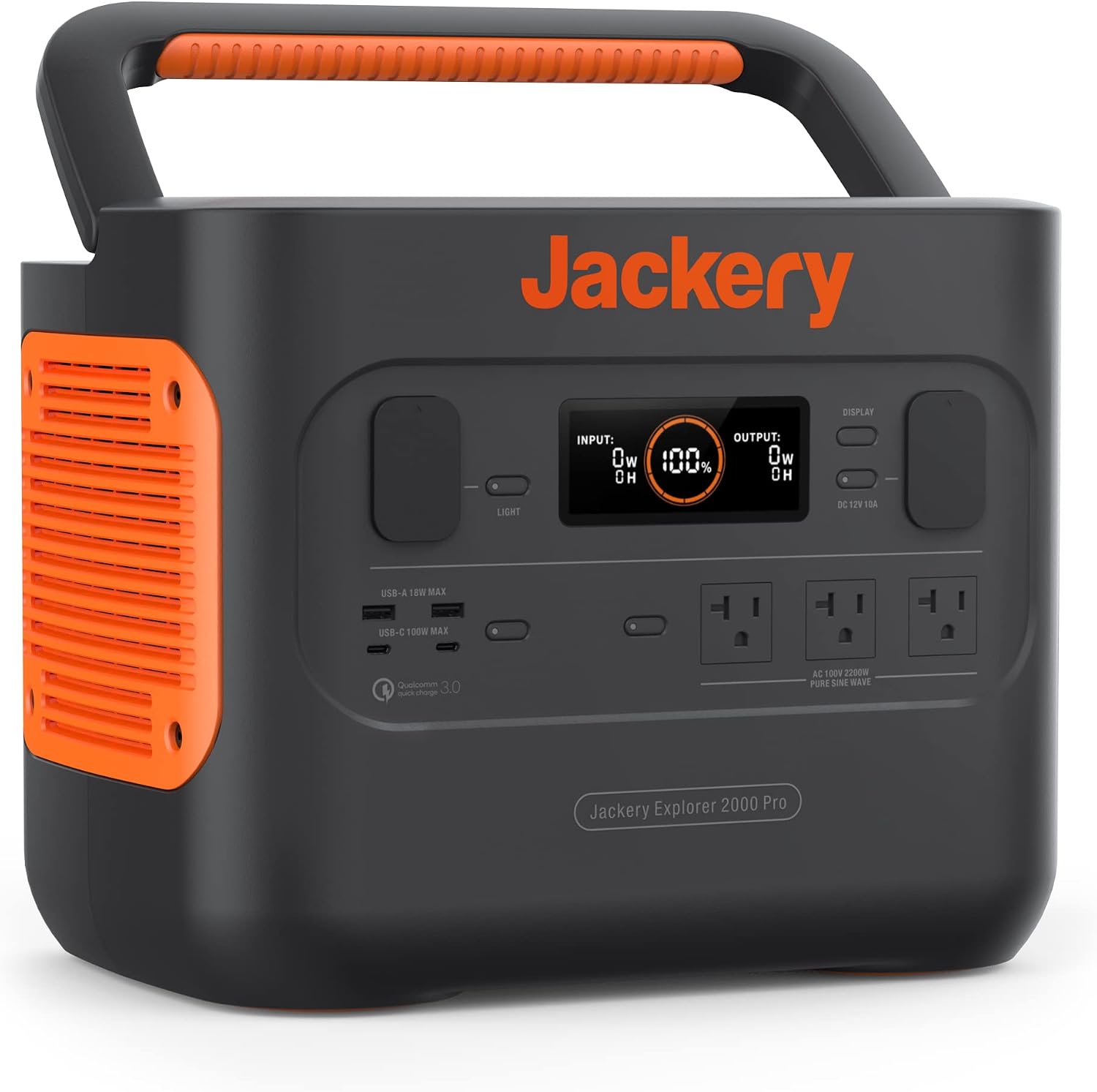
A 2000Wh-class solar generator is the point where portable power stops being a gadget and starts being infrastructure. The Jackery Explorer 2000 Pro sits right at that threshold — big enough to keep a fridge cold through an outage or anchor a week-long off-grid camp, small enough to still fit in the trunk. This guide covers what it does well, where it falls short, and how it stacks up against the EcoFlow DELTA 2 Max and the Anker SOLIX F2000.
Quick Answer
The Jackery Explorer 2000 Pro is the quietest, simplest, longest-warrantied portable power station in the 2000Wh solar generator class — genuinely capable for RV camping, long off-grid stays, and home backup. Not the fastest to recharge, not the most expandable. Worth it if you value simplicity and reliability over raw speed; overkill for small loads.
Top 3 2000Wh-Class Solar Generators for Camping & Backup
Flagship capacity, three different philosophies — pick by what matters to you.
Jackery Explorer 2000 Pro
Quietest, simplest flagship — 2160Wh storage with a 5-year warranty
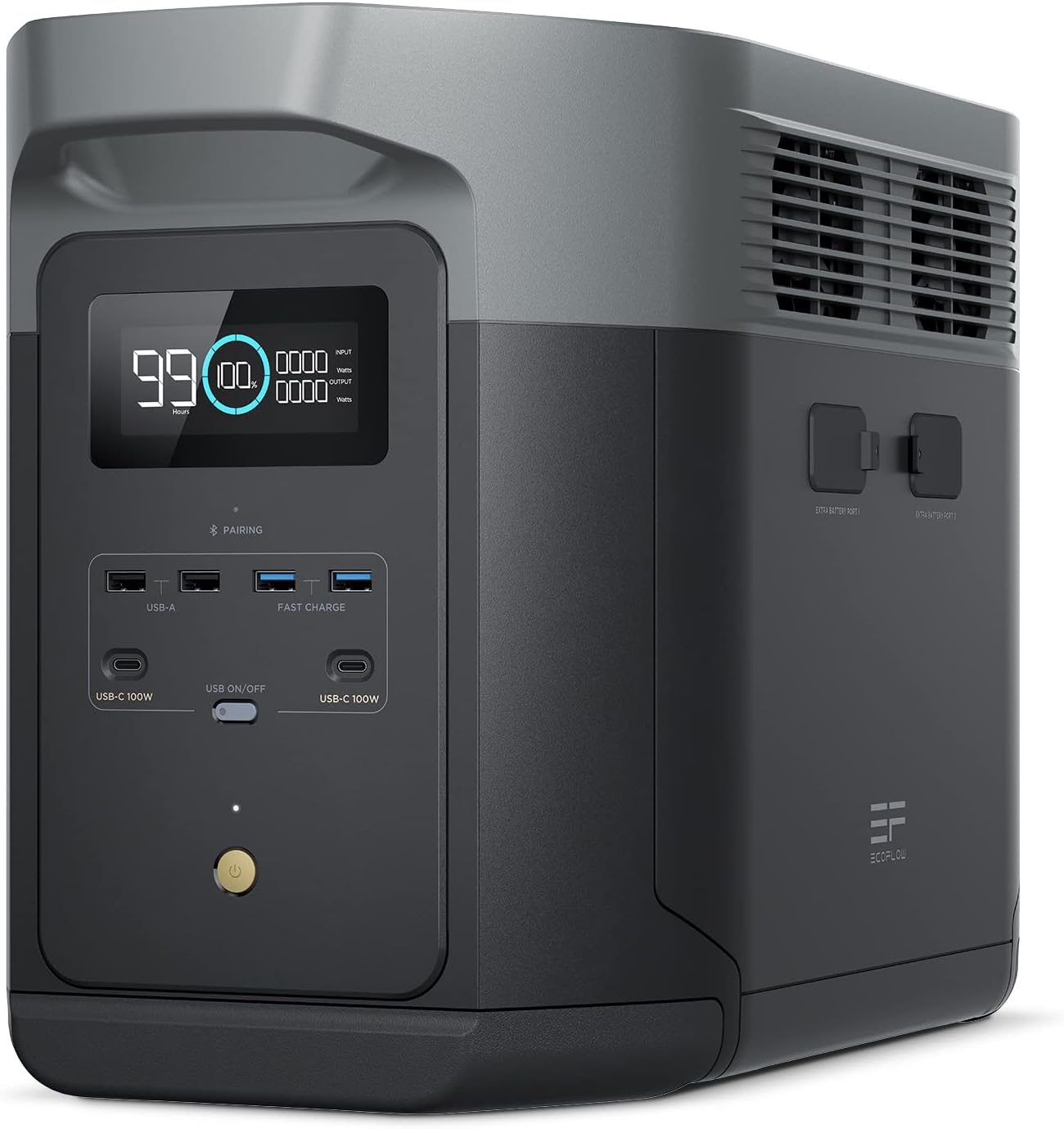
EcoFlow DELTA 2 Max
Fastest wall recharge in the class with an expandable battery ecosystem
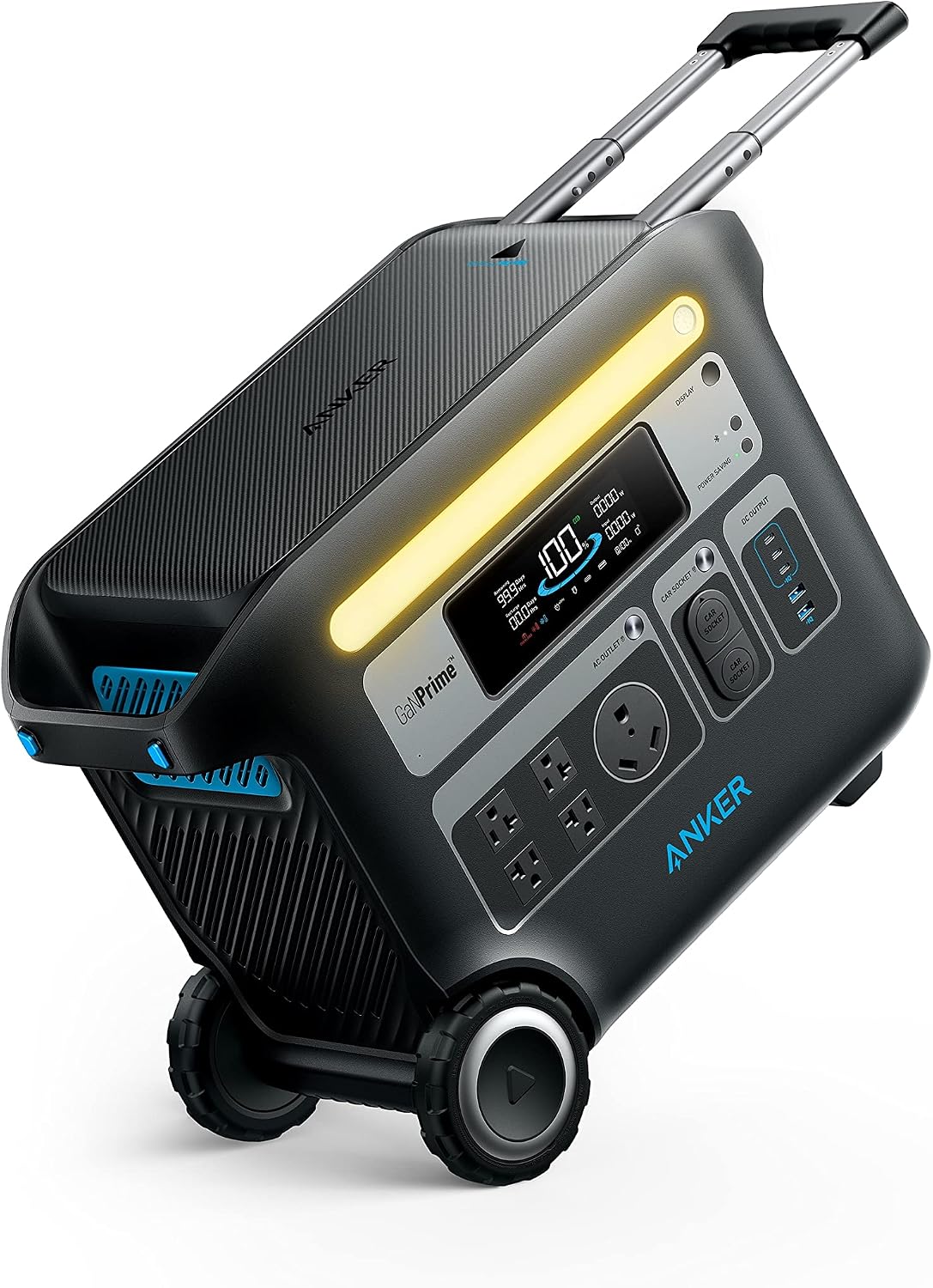
Anker SOLIX F2000
Wheeled suitcase design with HyperFlash fast charging and RV outlet
Prices and availability may vary — tap any product to check the current listing.
Still comparing? Our reviews of the BLUETTI AC180 and the Anker SOLIX C1000 Gen 2 cover the two closest rivals in this class.
What to Look For in a 2000Wh Solar Generator: The Buying Criteria
Capacity on the label isn’t capacity in your hands. Inverter losses shave roughly 15–20% off the rated 2.2 kWh, and the electronics sip a little just staying awake — so the honest math is something like 1.8 usable kilowatt-hours — still plenty. That’s why seasoned buyers size up: a full day of fridge runtime plus phones and lights needs headroom. There’s a reason this category keeps showing up in conversation — it solves the real annoyance of watching a smaller station die at 2 a.m.
Continuous output matters more than most shoppers realize — it decides whether your station runs a full-size fridge, a coffee maker, or a circular saw without tripping into overload. The 2000 Pro lands in the low-2000s of continuous AC watts, with headroom for brief motor surges. Anything under about 1,500 watts forces compromises: fridge OR microwave, never both. So is the premium justified? It depends what you’re buying it for — and generous output is the main thing the money buys.
Battery chemistry is the quiet spec that decides how long your money lasts. The 2000 Pro uses lithium iron phosphate (LiFePO4), which shrugs off thousands of charge cycles while older lithium blends fade after a few hundred. For a weekend camper, that’s a station still behaving in year eight instead of feeling tired in year three. The trade-off: LiFePO4 is heavier and bulkier per watt-hour — part of why this thing weighs a bit over 40 pounds. Longevity isn’t free; you carry it.
Recharge speed is two stories. Wall outlet: about two hours — respectable, though one rival does it in roughly half the time. Solar accepts a large array — six 200-watt panels in good light refills it in about two and a half hours of strong sun. In practice, most people own two panels, not six, and partly cloudy skies don’t read spec sheets. Solar is the patient fuel; plan panel count for actual weather, not the brochure’s.
Weight deserves honesty. Forty-something pounds sounds fine until you’re lifting it over a tailgate lip, solo, at dusk, with mosquitoes. For RV and car camping, it’s a non-issue. Anyone imagining backpacking-adjacent adventures, though — forget it; this is a basecamp machine. The flip side of the heft is stability: once parked, it stays parked, and the handle makes two-person carries easy. Skip it for staircases. Ever.
Ecosystem and expandability are where philosophies diverge. Jackery keeps it simple: what you buy is what you get — no add-on battery bricks, no modular tower later. Some find that refreshingly honest; others see a ceiling — the EcoFlow DELTA 2 Max accepts expansion batteries toward 6 kWh, while the Anker SOLIX F2000 answers with a wheeled suitcase you roll rather than a tower you build. Upgrade gear every few years and the closed system could sting; buy once, run it into the ground, and it won’t matter.
Which Shopper Are You? Three Personas, Three Answers
The overland RVer. You live out of a rig for weeks, panels bolted to the roof, fridge never off. The 2000 Pro is close to the sweet spot: storage for two cloudy days, output for the induction plate, a Bluetooth app for checking charge from the driver’s seat. Weight is irrelevant; it lives in the rig. The only question is expansion batteries — this is a one-box system. If the answer is “probably not,” stop shopping.
The suburban outage-prepper. Camping isn’t your thing — you want the fridge cold, the router alive, phones charged when the grid blinks, without the noise, fumes, and gas-station runs of a combustion generator. Arguably its strongest use case: silent enough for indoors, strong enough for the fridge plus essentials, simple enough for anyone mid-emergency. Limitation: you’re covering hours, not days, of whole-home loads — a bridge through an outage, not a grid replacement.
The “buy it once” researcher. Fourteen reviews read, spreadsheet built, and now you’re paralyzed. The honest read: the 2000 Pro suits people who rank reliability and low hassle above spec-sheet wins — five-year warranty, dead-simple operation, quiet fans, years of support history. EcoFlow fans will say you’re leaving charging speed on the table. They’re not wrong. But speed only matters if you’re recharging daily.
Three Flagships, Three Philosophies
| Type/Tier | Best For | Price Tier | Key Feature | Watch-Out |
|---|---|---|---|---|
| Jackery Explorer 2000 Pro | Campers and homeowners who want the simplest, quietest setup | Premium | Around 2.2 kWh storage with ~2,200W continuous output and a 5-year warranty | Slowest wall recharge of the three; no battery expansion |
| EcoFlow DELTA 2 Max | Users who recharge daily and want a growable system | Premium | Roughly 1-hour wall recharge and an expandable battery ecosystem | Louder under heavy load; app and firmware updates add complexity |
| Anker SOLIX F2000 (PowerHouse 767) | People who move their station between garage, campsite, and RV | Premium | Wheeled suitcase design, HyperFlash fast recharge, 5-year warranty, dedicated RV outlet | Heaviest of the three — wheels solve flat ground, not stairs |
| Value-tier 2 kWh stations | Budget-first buyers with modest loads | Mid-range | Similar capacity on paper, often with older battery chemistry | Shorter cycle life and thinner warranty support |
The Jackery is the “appliance” of the group — plug in, stop thinking, which is what a lot of buyers want. Over at EcoFlow, the DELTA 2 Max is the enthusiast’s pick — fastest recharge in the class and a genuine upgrade path, at the cost of some simplicity. And the Anker SOLIX F2000 is the one you roll instead of carry — wheeled suitcase design, HyperFlash fast recharging, and a 5-year warranty for people whose station actually travels. The value tier is fine for light, occasional use — but shorter-lived chemistry makes it a false economy for weekly cyclers.
Where a Big Solar Generator Actually Earns Its Keep
RV and overland travel
This is the native habitat. Paired with roof or portable solar panels, it turns a camper into a self-sufficient little grid: fridge humming 24/7, laptops charged, lights on, even a small induction cooktop for morning coffee. Low-noise mode (around 53 dB — conversation level) won’t ruin the silence you drove five hours to find. One caveat: a rig with a built-in lithium house battery means duplicating systems. For renters, weekend warriors, and anyone without a wired setup, it’s transformative.
Home outage backup
Forget running the whole house — that’s a five-figure installed system, not a portable box. What it genuinely covers is the critical-loads scenario: fridge (spoiled food is the real outage cost), internet gear, phones, a few LED lights, maybe a CPAP overnight. Prioritize ruthlessly and one charge stretches far; run everything at once and you’ll recharge by dinner. For apartment dwellers, the killer feature is no exhaust, no fuel storage, no angry neighbors. A gas generator can’t do that. Ever.
Long basecamp stays
Think multi-day group camps, fieldwork sites, an unwired cabin. Here it becomes shared infrastructure: everyone’s phones, camp lighting, a portable fridge, camera batteries, a projector if you’re feeling decadent. With a group drawing power, the eight output ports matter as much as the watt-hours. Panels refill by day while you hike. The limitation is weather, full stop: three rainy days in a row and you’re rationing. Bring a backup plan for the backup plan.
Common Mistakes People Make When Buying a Solar Generator
Mistake one: confusing surge watts with continuous watts. Marketing loves the big surge number. Your fridge’s compressor cares about the continuous rating. Always shop by the smaller number — it decides what actually runs.
Mistake two: assuming solar recharges fast. Panels only deliver rated watts in lab conditions: direct sun, good tilt, cool cells. Real-world output runs 60–75% of the sticker, less under clouds. If your recharge math assumes ideal skies, it’s wrong. Oversize the array or accept slower refills — the only two honest options.
Mistake three: buying capacity for the person you wish you were. I’ve seen people overspend on storage they’ll never touch — a 2 kWh flagship for two phones and a lantern. Audit actual loads first; a cheap watt-meter pays for itself in a week. Bigger isn’t better if bigger just sits there depreciating.
Mistake four: neglecting basic battery care. LiFePO4 is forgiving, not immortal. Months at 100% in a hot garage, or sitting at zero after a trip, shortens its life for no reason. The boring habits — store around half charge, top up every few months, avoid extreme heat — turn a five-year warranty into ten years of reality.
Why, How, What — Answered Straight
Why would anyone pay the premium for the Jackery Explorer 2000 Pro instead of a cheaper 2 kWh station? Because the premium buys three things cheaper portable power stations skimp on: thousands-of-cycles battery chemistry, an inverter genuinely sized for real appliances, and a five-year warranty from an established brand. Whether that’s worth it comes down to duty cycle. Weekly cycling favors the premium easily; twice-a-year use pays for longevity you’ll never collect.
How do you actually recharge it with solar panels? Set panels in unshaded sun, connect to the solar input (the plug only fits one way), and watch input wattage climb. Angle matters — tilt toward the sun and you’ll harvest noticeably more than laying panels flat. Two to four 200-watt panels hits the sweet spot: enough to refill in a day of decent sun.
What can it realistically power, and what should you not bother trying? Realistic: full-size fridge, laptop, phones, LED lighting, Wi-Fi gear, CPAP, TV, power tools, electric cooler, coffee maker (brief, high draw — fine). Don’t bother: space heaters, air conditioners, electric stoves, anything with a heating element running continuously. Rule of thumb: motors and electronics, yes; sustained heat, no.
Not sure what fits your setup? Our what size power station fits your needs walks through the real-world math.
Final Recommendation
Buy the Jackery Explorer 2000 Pro for the set-it-and-forget-it flagship: quiet, simple, long-warrantied, strong enough for real appliances in an RV, at basecamp, or through an outage. Its premium buys peace of mind over spec-sheet victories — the right trade for a lot of buyers.
Prefer the EcoFlow DELTA 2 Max if you recharge daily and hate waiting, or your power needs may grow — fast charging and an expandable ecosystem, genuinely useful rather than marketing. Consider the Anker SOLIX F2000 if your station needs to travel — wheeled suitcase design, dedicated RV outlet, and fast HyperFlash recharging for people who roll their power between garage, campsite, and RV. Loads truly light? Save your money and drop a tier. The most expensive solar generator is the one you never fully use.
Decision Tree: Which 2000Wh Solar Generator Fits You?
Your loads are light (phones, lights, laptop, small cooler)? → Drop to a smaller capacity tier. Don’t pay flagship money for phone-charging duty.
You want the simplest, quietest option with the longest warranty? → Jackery Explorer 2000 Pro. The appliance pick — plug in, stop thinking.
You recharge every day and hate waiting, or want to expand later? → EcoFlow DELTA 2 Max. Fastest wall recharge in the class, plus a real upgrade path.
You move your station around a lot — garage to campsite to RV? → Anker SOLIX F2000. Wheels and a telescoping handle instead of a deadlift, plus HyperFlash fast recharging and a 5-year full warranty.
Still torn between the three flagships? → Ask which annoyance you’d rather live with: slower recharging (Jackery), more complexity (EcoFlow), or serious bulk (Anker). Pick the annoyance, pick the station.
Key Takeaways
A 2000Wh-class solar generator is the first tier that handles real appliances — fridge, power tools, CPAP — not just phones and lights.
The 2000 Pro’s case rests on simplicity, quiet operation, LiFePO4 longevity, and a 5-year warranty — not on winning spec races.
Honest weaknesses: slower wall recharging than key rivals, no battery expansion, 40+ pounds of “portable.”
Size by continuous watts and your actual loads, not by the surge number on the box.
Solar recharging runs slower than brochures imply — budget panels and sun hours for real weather, not lab conditions.
Questions People Ask Before Buying
Real buyer questions, straight answers
Is the Jackery Explorer 2000 Pro worth the money?
For heavy, regular use — RV living, frequent off-grid trips, serious outage prep — yes. Occasional light use is another story — two camping trips a year of phone charging doesn’t need this much station; a smaller model serves you better. Match the machine to the mission, not the marketing.
Can a solar generator run a fridge during a power outage?
Yes — a modern efficient fridge draws modest power once running, and a 2000Wh-class station covers it for many hours alongside phones and lights. The catch is the compressor’s startup surge; this class handles it without breaking a sweat. Just don’t expect it to also run your air conditioner.
What’s the difference between the Jackery Explorer 2000 Pro and the EcoFlow DELTA 2 Max?
The EcoFlow recharges from a wall outlet dramatically faster (about an hour) and accepts expansion batteries; the Jackery is quieter, simpler, longer-warrantied. Speed and upgradability versus simplicity and serenity. Neither is objectively better — they optimize for different temperaments.
How long does it take to recharge with solar panels?
A large array in strong sun can do roughly two and a half hours from empty — but that’s six 200-watt panels and clear skies. Two panels means a full day of good sun for a complete refill. Clouds stretch that considerably, so treat solar as a slow trickle and size panels generously.
Do I need LiFePO4, or is an older battery chemistry fine?
For regular use over years, LiFePO4 is the smart money — cycle life in the thousands versus hundreds for older chemistries, translating directly to years of extra service. A unit that sits in a closet and comes out twice a year doesn’t care much about chemistry; a cheaper station is defensible there. Frequency of use is the whole decision.
Frequently Asked Questions
Can I recharge it from my car while driving?
Yes, through the 12V car socket — slow versus wall or solar, but meaningful on a long driving day. Treat it as a top-up, not a strategy; campground outlets and proper panels do the real heavy lifting on the road.
How much does the Explorer 2000 Pro weigh — is it actually portable?
A bit over 40 pounds — genuinely portable for RV and car camping, but not a backpacking machine. Once parked at basecamp it stays put, and the handle makes two-person carries easy. Skip it for staircases.
Can I add extra battery packs to the 2000 Pro later?
No. Unlike the EcoFlow DELTA 2 Max, which accepts expansion batteries toward 6 kWh, the Jackery 2000 Pro is a closed system — what you buy is the full capacity. If your power needs may grow, that ceiling matters.
Is it safe to use indoors during a power outage?
Yes. Battery power stations produce no carbon monoxide or fumes, so indoor use is safe — no venting, no fuel storage, no noise. Common sense still applies: don’t block the cooling vents and keep it dry.
How many solar panels do I need for a full day recharge?
Two to four 200-watt panels hits the sweet spot for refilling in a day of decent sun. Six 200-watt panels can do it in about two and a half hours of strong sun. Panels only deliver rated watts in ideal conditions, so size the array for real weather.
What appliances can’t it realistically run?
Sustained heating appliances — space heaters, electric stoves, air conditioners — either exceed its output or drain 2160Wh in minutes. Rule of thumb: motors and electronics, yes; continuous heat, no.

