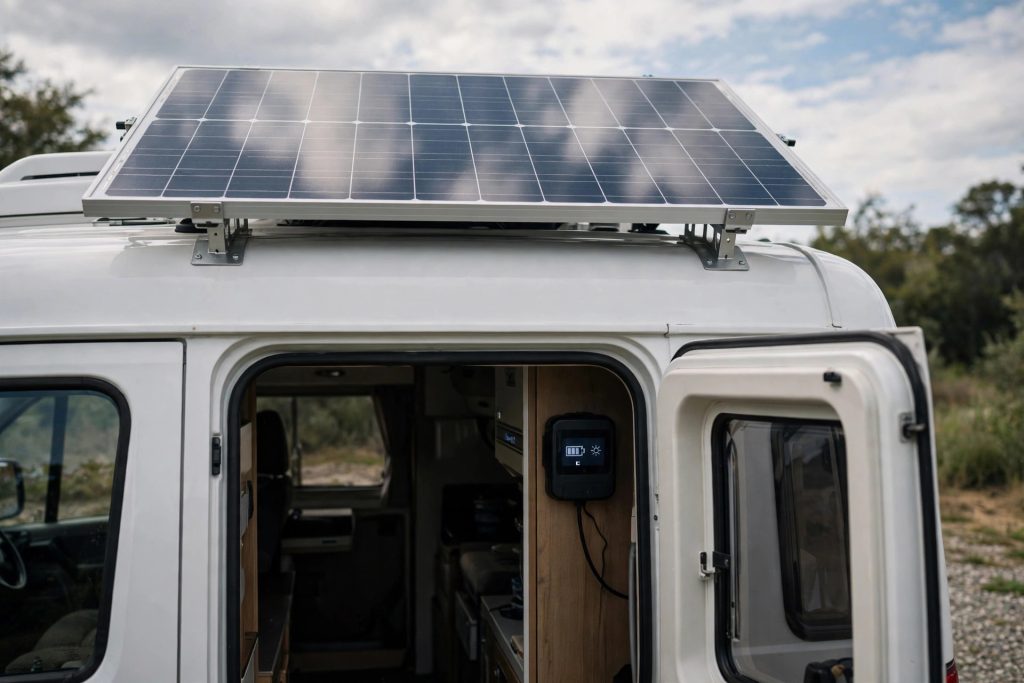
A solar panel kit sounds like a complete power system in a box, and that misunderstanding causes more returns than any faulty panel ever will. What a solar panel kit actually gives you is panels, a charge controller, cables, and mounting hardware — the parts that harvest sun and feed a battery you supply yourself. This guide puts the Renogy 400W Premium under a hard light, compares it with a value MPPT alternative and a smaller PWM starter kit, and helps you decide if 400 watts fits how you camp. No hype. Just trade-offs.
Quick Answer
Buy the Renogy 400W Premium if you run a 12V fridge, lights, and devices daily from a campervan, RV, or cabin and want MPPT harvesting that holds up on dull mornings. Save money with the Renogy 200W RV kit if your loads are light, trips are short summer weekends, and your battery mostly refills while you drive.
Compare Solar Panel Kits for Camping and RV
Three complete kits side by side — the right choice starts with the charge controller and your daily watt-hours, not with the biggest watt number on the box.
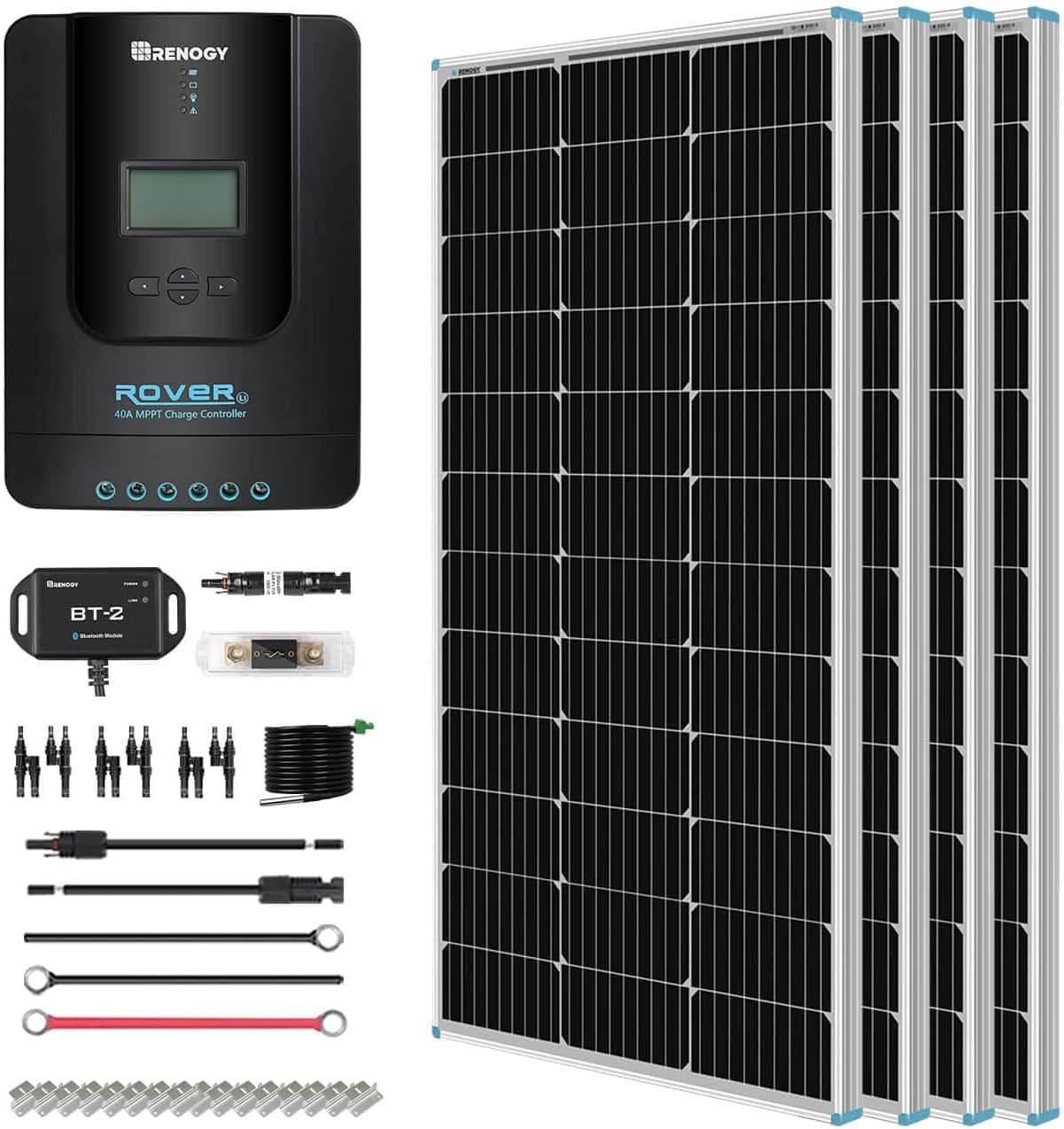
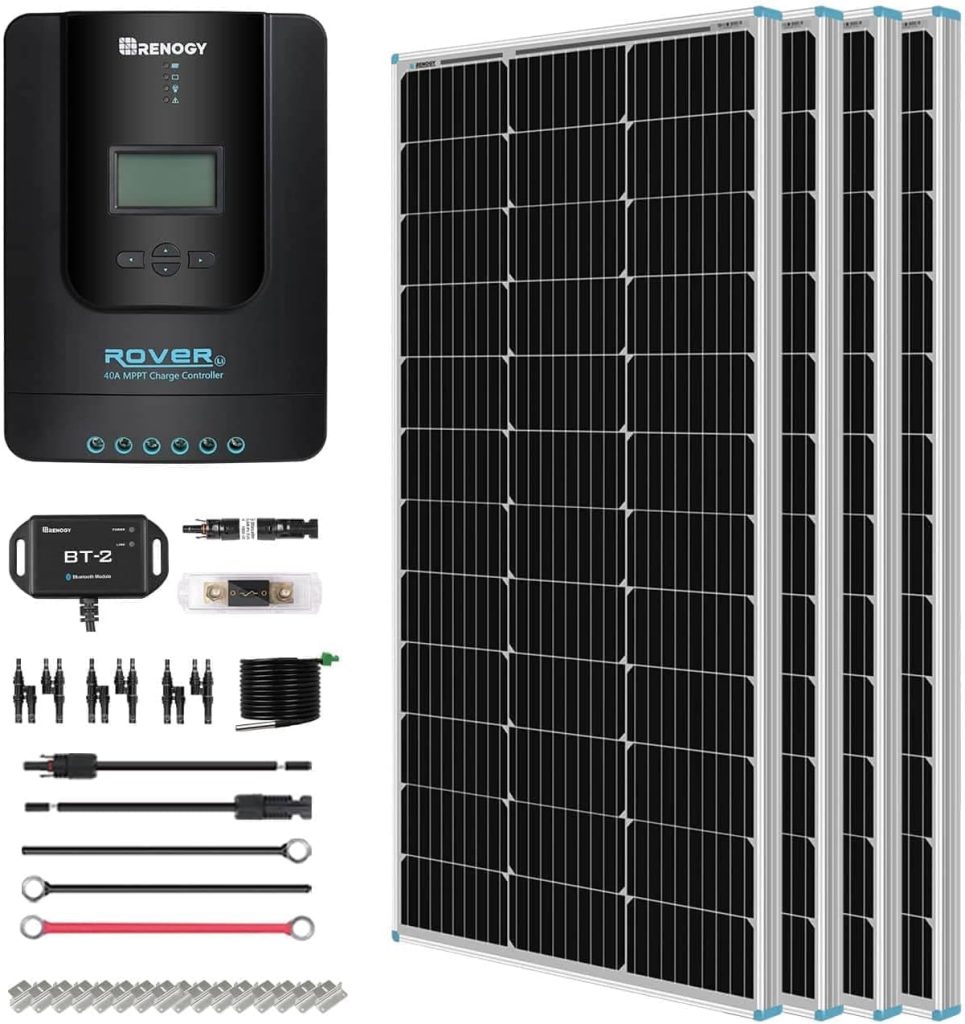
Renogy 400W Premium Kit
Four 100W panels with a Rover 40A MPPT controller and Bluetooth module — the most complete harvest in this group, but you still need your own battery and inverter
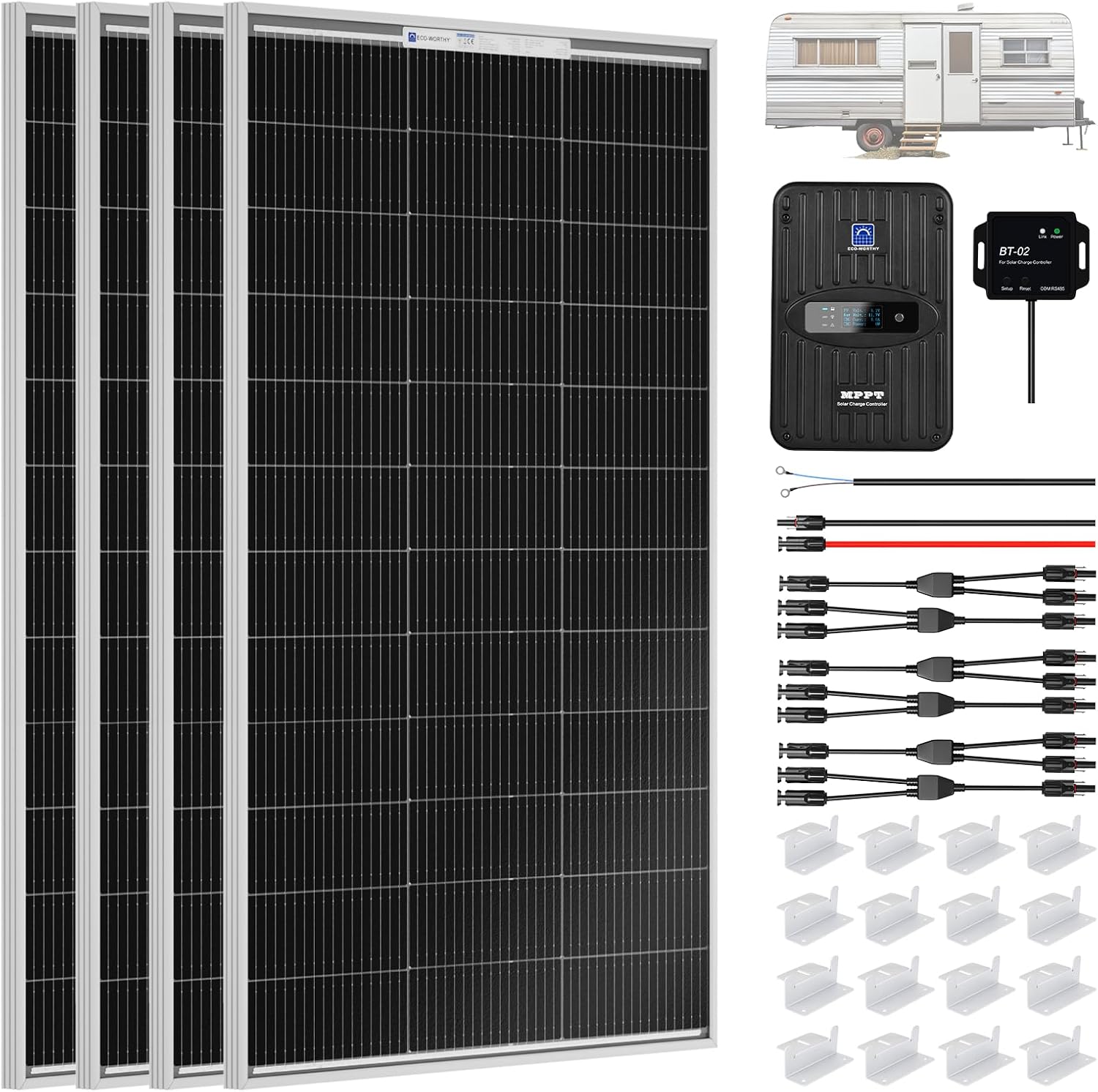
ECO-WORTHY 400W Kit
Same 400W class and a 40A MPPT controller for typically less money — the value route, with a smaller support network behind it
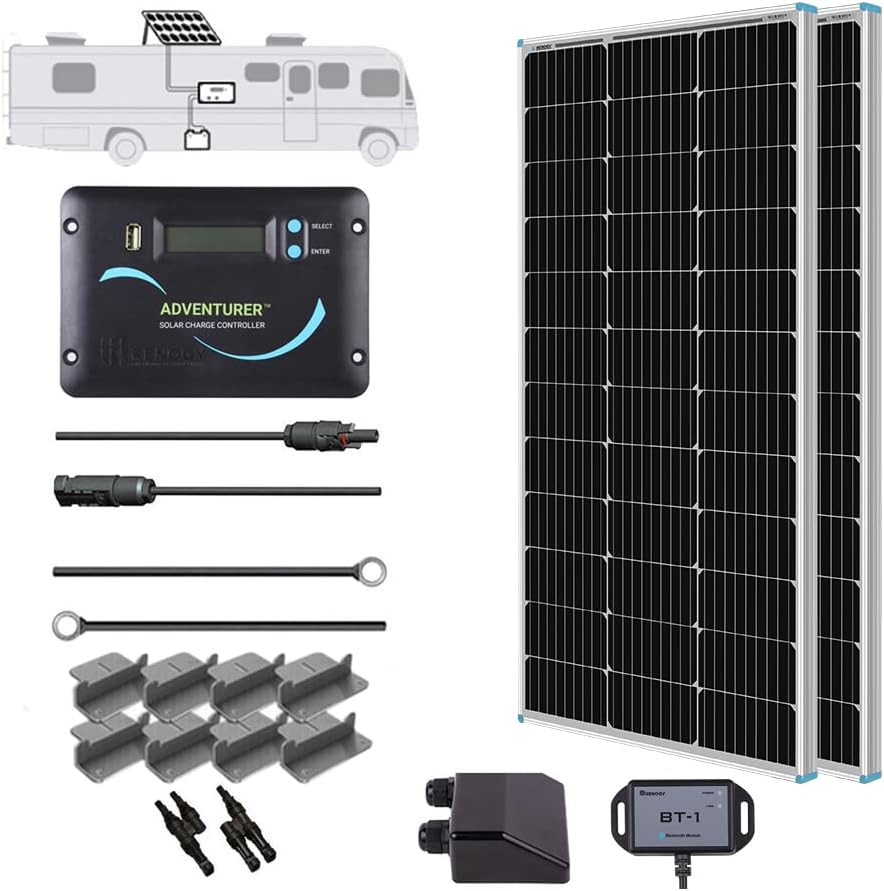
Renogy 200W RV Kit
Two 100W panels and a flush-mount Adventurer 30A PWM controller — half the harvest at a starter price, and PWM gives back less in poor light
Prices and availability may vary — tap any product to check the current listing.
What to Look For in a Solar Panel Kit
Most buyers fixate on the watt number in big type. Four hundred watts. It feels like a score. But that rating comes from laboratory conditions — strong sun, cool cells, perfect angle — and your roof in November will not cooperate. Six factors decide whether a kit works in real life, and wattage is not at the top of the list. The controller is.
Controller type: MPPT versus PWM. A charge controller sits between panels and battery, deciding how much harvested energy becomes stored energy. MPPT units track the array’s sweet spot as light and temperature shift, converting excess voltage into charging current. PWM units clamp panels toward battery voltage, and the difference is lost. On a clear July noon the gap narrows; on a cold bright morning, under thin cloud, or with one panel shaded by a vent, it widens — and those imperfect hours dominate real camping. The Renogy 400W Premium ships with the Rover 40A MPPT controller, and the standalone MPPT solar charge controller review breaks down that Rover hardware on its own. The ECO-WORTHY 400W kit also uses a 40A MPPT unit, earning the value spot here. The Renogy 200W RV kit runs the Adventurer 30A PWM controller instead, a flush-mount design with LCD screen and USB port. Neat packaging. Lower harvest in poor light. For shoulder-season camping, MPPT stops looking like an upgrade. It starts looking like the product itself.
Panel wattage versus daily watt-hour use. Watts are a rate. Watt-hours are the bill. A 12V fridge might use several hundred watt-hours over 24 hours, lights add a modest slice, phones are cheap, laptops are not, and a fan sits in the middle. On a good sun day a 400W array realistically yields roughly 1.6 to 2 kilowatt-hours before losses. Tilt helps. Dirt hurts. A tree line at 4 p.m. hurts more than most people expect. That harvest covers lights, phones, a 12V fridge, and a fan — not RV air conditioning, and not a daily electric kettle habit. If you are still sketching loads, this guide on what size solar panel kit do I need walks through the sizing math. The 200W kit roughly halves the harvest. Fine for a weekend rig that drives home Sunday. Risky for a cabin where a slow deficit builds across grey days.
What is not in the box. Read this twice if you are new here. A kit like the Premium does not store energy and does not give you household outlets. Panels make DC power in daylight, the controller conditions it, and a separate 12V battery bank stores it. Night arrives, the array goes quiet, and the battery does all the work. No battery, no lights after sunset. Budget storage in the same purchase: lead-acid is cheaper up front but heavier and shorter-lived under daily cycling, while lithium iron phosphate costs more and behaves better in most camping setups. For a concrete example, see the guide to solar batteries. An inverter is a separate, optional purchase for AC appliances. A kit is not a solar generator, which bundles battery and inverter behind ready-made outlets. Different tool. Different job.
What the kit charges matters just as much: a fixed bank built around the Renogy 12V 200Ah deep cycle AGM battery we reviewed is the classic pairing for a 400W roof array, sized on usable capacity rather than the nameplate number.
Wiring and voltage limits. Four 100W panels can run in series, parallel, or a series-parallel mix. Series raises voltage, which MPPT likes, and loses less over long runs. Parallel keeps voltage low and tolerates shade on one panel better. Neither is universally right. What is not optional is the ceiling check: every controller has a maximum PV input voltage, and cold weather pushes panel voltage up, so a string that looks safe on a warm afternoon can exceed the limit on a frosty morning. The Premium includes an adaptor kit, tray cables, and a fuse, but the installer still confirms the string plan against the manual before drilling.
Mounting and roof space. The Premium ships with Z-brackets and four rigid monocrystalline panels. Rigid panels are durable and efficient for their footprint, but they need real space — on a roof crowded with vents and an air conditioner shroud, fitting four rectangles with airflow underneath can become a geometry puzzle. Measure first. Flat mounting is simple yet costly: low winter sun hits it weakly, dust sits instead of shedding, and heat builds underneath. A slight tilt or at least an air gap pays back more than people expect.
Expandability. A 40A MPPT controller on a 12V bank leaves headroom to add panels later. That matters because loads creep. Lights and phones first, then a fridge, then someone brings a projector and your budget has a hole in it. A small PWM controller near its limit on day one is a dead end. The Premium suits a system that will grow. The 200W kit suits a finished, defined setup.
How to Match the Kit to Your Situation
Specs do not camp. People do, and the same kit can be generous for one owner and marginal for the next.
The weekend campervan with a 12V fridge. Your fridge runs Friday to Sunday, lights go on after dark, and you park in a mix of open and tree-lined pitches. Driving helps, but it does not carry the whole load. The Renogy 400W Premium fits comfortably, because its MPPT controller earns its keep on the grey Saturday morning when the fridge still needs feeding. The ECO-WORTHY 400W serves the same persona if the Premium tier stretches the budget. Could the 200W kit cope? In high summer, probably. In October on a shaded pitch, it gets tight fast.
The cabin or shed beginner. Nothing moves. Solar carries everything every day, and loads tend to grow — a pump here, a bigger fridge there. This buyer gets the most from the Premium kit’s MPPT harvest and headroom, plus easy tilt on a ground frame. The honest caution is storage: a fridge running through two sunless days needs a bank sized for that reality, not the brochure day.
The RV owner who mostly drives. You tour rather than park, and alternator charging already refills the battery on the move. Solar is a top-up for rest days, which changes the math. The Renogy 200W RV kit fits well — tidy flush-mount controller, lower tier — and the 400W Premium buys capacity you will rarely use. Unless your habits are shifting toward week-long off-grid parking.
Solar Panel Kit Comparison: The Four Ways People Actually Buy
| Type/Tier | Best For | Price Tier | Key Feature | Watch-Out |
|---|---|---|---|---|
| 400W MPPT premium kit | Daily off-grid campervans, cabins, boats | Premium | 40A MPPT controller with Bluetooth monitoring | No battery or inverter included |
| 400W value MPPT kit | Same loads on a tighter build budget | Mid-range | MPPT harvest in the same 400W class | Accessory bundle is a bit leaner |
| 200W PWM starter kit | Light loads, driving-heavy RV touring | Budget-friendly | Flush-mount PWM controller with LCD and USB | PWM wastes more in cloud and shade |
| Foldable panel + power station combo | Renters, occasional campers, no-install users | Mid-range to premium | Battery and outlets bundled in one box | Hard to expand, awkward for permanent roofs |
The 400W MPPT premium kit, the Renogy 400W Premium here, is the pick when harvest in imperfect light decides whether the fridge stays cold through a grey spell.
The 400W value MPPT kit, the ECO-WORTHY 400, keeps the same controller class and wattage tier for buyers who need money left over for batteries.
The 200W PWM starter kit, the Renogy 200W RV kit, suits light, driving-supported loads where a tidy install beats squeezing dull days.
The foldable panel plus power station combo skips installation and bundles storage, but it cannot grow like a roof-mounted kit system.
Winter and Shoulder-Season Light Changes Everything
Summer flatters every kit. Long days and high sun forgive weak controllers and flat mounting alike. Then October arrives, the sun drops, and a pitch that delivered abundance in July starts rationing. Cold air raises panel voltage, and MPPT converts that extra voltage into charging current. PWM largely cannot. Short version? Winter rewards MPPT and punishes optimism. Tilt matters more now too — a flat panel under low sun collects a fraction of what an angled panel gathers, so cabin owners gain real energy from a few minutes with a wrench each month.
Parked in Shade at Campgrounds: The Partial-Shading Problem
Nobody books a pitch for solar exposure. You book the lake view, the quiet corner, the tree that keeps the van cool at noon — and that tree drags a shadow across your roof for three hours. In a series string one shaded panel can drag its partners down sharply. Parallel wiring softens the hit and bypass diodes help, but neither erases it. An MPPT unit adapts as shadows move, recovering output a PWM unit leaves behind, and the Premium kit’s BT-2 module lets you watch charging change on your phone. Oddly satisfying the first few times. Instructive, too.
Adding Panels Later Without Starting Over
Expansion goes smoothly only if the first purchase left room. The controller is the ceiling, and a 40A MPPT unit supports a larger array than a small PWM controller near its limit, so both 400W kits here offer a growth path if string voltage stays under the maximum on the coldest morning you will meet. Panels added later should match the originals electrically, or they belong on their own string. Grabbing whatever is cheapest two years later creates an array that underperforms every panel in it.
Common Mistakes
Buying the kit and expecting a battery inside. The big one. The kit charges a battery bank; it is not one. Orders built on that assumption end with panels on a roof, a controller blinking, and nothing stored for the night. Read the contents list literally.
Mixing up versions that share the same wattage label. Several kits wear a “400W” badge while shipping different controllers, bundles, and expansion limits. A 400W kit with PWM is a fundamentally different product from one with a 40A MPPT unit, even if the panels look identical in photos. Compare the controller model line by line. The watt number alone tells you almost nothing.
Wiring four panels without checking maximum PV voltage. All four in series looks tidy, until a bright frosty morning pushes voltage past the controller ceiling and it shuts down or takes damage. Cold-weather voltage rise is a known effect, not bad luck. Do the addition, leave margin, and use series-parallel if numbers get close.
Mounting flat with no airflow and expecting rated output. Panels tight to a hot roof run hot, and hot panels produce less. Flat glass also holds puddles and dust. Rated wattage assumes conditions your roof will not provide, so keep an air gap and judge the kit by realistic daily watt-hours.
Why, How and What
Why does the charge controller matter more than an extra panel for many campers?
Because the controller decides how much of your harvest reaches the battery during the hours that dominate real trips. Cloudy mornings and moving shade shift the array’s ideal operating point, and MPPT follows it while PWM cannot. An extra panel cannot recover energy wasted in weak sun. Outside peak summer, the controller often delivers more usable energy across a week.
How do you size a battery bank to pair with a 400W kit?
Start with daily use in watt-hours, then decide how many sunless days you want to survive without driving or a hookup. A bank storing roughly one and a half to two times daily use is a common target, since grey days arrive in pairs. Match it to the kit’s 12V design and battery chemistry. Oversizing hurts only the budget. Undersizing hurts every trip.
What should you check on the day the kit arrives?
Lay everything out against the contents list first — panels, controller, Bluetooth module, brackets, cables, fuse. Inspect glass and frames for shipping damage, and confirm the controller model matches your order, since version mix-ups happen. Read the wiring diagram once, fully. Ten quiet minutes save loud weekends.
Questions People Ask Before Buying
Real buyer questions, straight answers
Is 400 watts enough for camping and RV life?
For lights, phones, a 12V fridge, and a fan, yes — 400 watts is enough for most campervan and small RV setups. A good sun day yields around 1.6 to 2 kilowatt-hours before losses, covering that set with room for a laptop. It is not enough for air conditioning or heavy kettle use, and winter shrinks the harvest a lot.
Does the Renogy 400W Premium kit include a battery?
No, the kit includes no battery and no inverter — storage is a separate purchase. The box holds four 100W monocrystalline panels, the Rover 40A MPPT controller, a BT-2 Bluetooth module, a fuse, Z-brackets, an adaptor kit, and tray cables. A separate 12V bank stores the power.
Is MPPT really worth it over PWM in a solar kit?
Yes, MPPT is worth it if you camp in cold, cloudy, or partly shaded conditions — which is most real camping. The Rover 40A and the ECO-WORTHY’s 40A MPPT unit convert shifting panel voltage into charging current that PWM discards. On perfect summer noons the gap shrinks, and the PWM Adventurer in the 200W RV kit stays reasonable for tiny, driving-supported setups.
Can a 400W kit run a fridge?
Yes, a 400W kit can run a typical 12V compressor fridge continuously through camping season. Fridges cycle rather than draw constantly, so daily use sits inside a decent day’s harvest if the bank can carry the night hours. Hot climates thin the margin, so desert campers should size storage generously.
How hard is it to install a solar panel kit like this?
Installation is a moderate DIY job that most owners finish in a day with basic tools. One side is measuring and mounting; the other is following the wiring diagram and respecting voltage limits. If drilling into an RV roof makes you nervous, paying an installer just for the mounting is a sensible split.
Frequently Asked Questions
How many panels come in the Renogy 400W Premium kit?
Four. Each is a 100W monocrystalline rigid panel. The kit adds the Rover 40A MPPT controller, BT-2 Bluetooth module, Z-brackets, cables, and a fuse.
Can I expand the Renogy 400W Premium kit later?
Yes, within the Rover’s current and voltage limits. Its 40A rating leaves headroom above the stock array. Keep added panels electrically similar and recheck string voltage first.
What is the difference between the Renogy 400W Premium and the ECO-WORTHY 400W kit?
Both pair four 100W panels with a 40A MPPT controller and Bluetooth monitoring. The Premium leans on the Rover and a fuller bundle, while the ECO-WORTHY usually sits in a friendlier price tier. Budget and controller preference decide it, not wattage.
Will a 200W solar kit be enough for weekend trips?
For light loads, often yes. Lights, phones, and a small fridge across a summer weekend fit what the Renogy 200W RV kit can replace, especially with driving between stops. Longer stays or grey weather push past it quickly.
Do rigid solar panels work on a boat or cabin as well as an RV?
They do. The Premium kit uses a 12V off-grid design that suits RVs, cabins, sheds, and boats. Mounting differs by setting, but panels and controller work the same.
Can I monitor a solar panel kit from my phone?
Yes. The Premium includes a BT-2 module, the ECO-WORTHY a BT-02, and the 200W RV kit a BT-1. Each pairs with its controller for phone checks of charging and battery state.
Key Takeaways
A solar panel kit holds panels, a controller, cables, and brackets — never a battery or inverter, so budget storage in the same system.
The controller divides kits more than wattage does, with MPPT units like the Rover 40A harvesting noticeably more in cold, cloud, and shade than PWM.
A 400W array realistically yields about 1.6 to 2 kilowatt-hours on a good sun day, covering a fridge, lights, phones, and a fan — not air conditioning.
Kits sharing a “400W” label can ship with very different controllers and bundles, so compare contents lists, not headline watts.
Check string voltage against the controller’s maximum PV input before wiring, because cold mornings push panel voltage up.
Decision Tree: Which Solar Panel Kit Fits You?
You live from a campervan for days, run a 12V fridge daily, and camp into autumn — pick the Renogy 400W Premium for its Rover MPPT harvest.
You carry the same loads but the budget is tight once batteries are counted — pick the ECO-WORTHY 400W Kit for the same 40A MPPT class at a friendlier tier.
You tour by RV and drive most days — pick the Renogy 200W RV Kit and its flush-mount Adventurer PWM controller for top-up duty.
You are setting up a cabin or shed and expect loads to grow — pick the Renogy 400W Premium for headroom and an expansion path.
You cannot install anything permanent — skip the roof kits and choose a foldable panel with a power station combo.
Final Recommendation
For the campervan owner feeding a fridge through shoulder-season weekends and the cabin beginner building a system that will grow, the Renogy 400W Premium is the kit to buy. Its Rover 40A MPPT controller and expansion headroom make it the most forgiving choice when weather and shade refuse to cooperate — and forgiveness is what off-grid life runs on. The ECO-WORTHY 400W kit stands beside it for the same MPPT harvest at a friendlier tier.
For the touring RV owner whose engine does the heavy lifting, save the difference and take the Renogy 200W RV kit. Simpler is not lesser when it matches your trips. Either way, spend where it quietly matters most: a battery bank sized for your worst grey stretch, not your sunniest afternoon.
Compare Solar Panel Kits for Camping and RV
Three complete kits side by side — the right choice starts with the charge controller and your daily watt-hours, not with the biggest watt number on the box.
Renogy 400W Premium Kit
Four 100W panels with a Rover 40A MPPT controller and Bluetooth module — the most complete harvest in this group, but you still need your own battery and inverter
ECO-WORTHY 400W Kit
Same 400W class and a 40A MPPT controller for typically less money — the value route, with a smaller support network behind it
Renogy 200W RV Kit
Two 100W panels and a flush-mount Adventurer 30A PWM controller — half the harvest at a starter price, and PWM gives back less in poor light
Prices and availability may vary — tap any product to check the current listing.
Affiliate Disclosure: This article contains affiliate links. If you buy through one of these links, we may earn a commission at no extra cost to you.