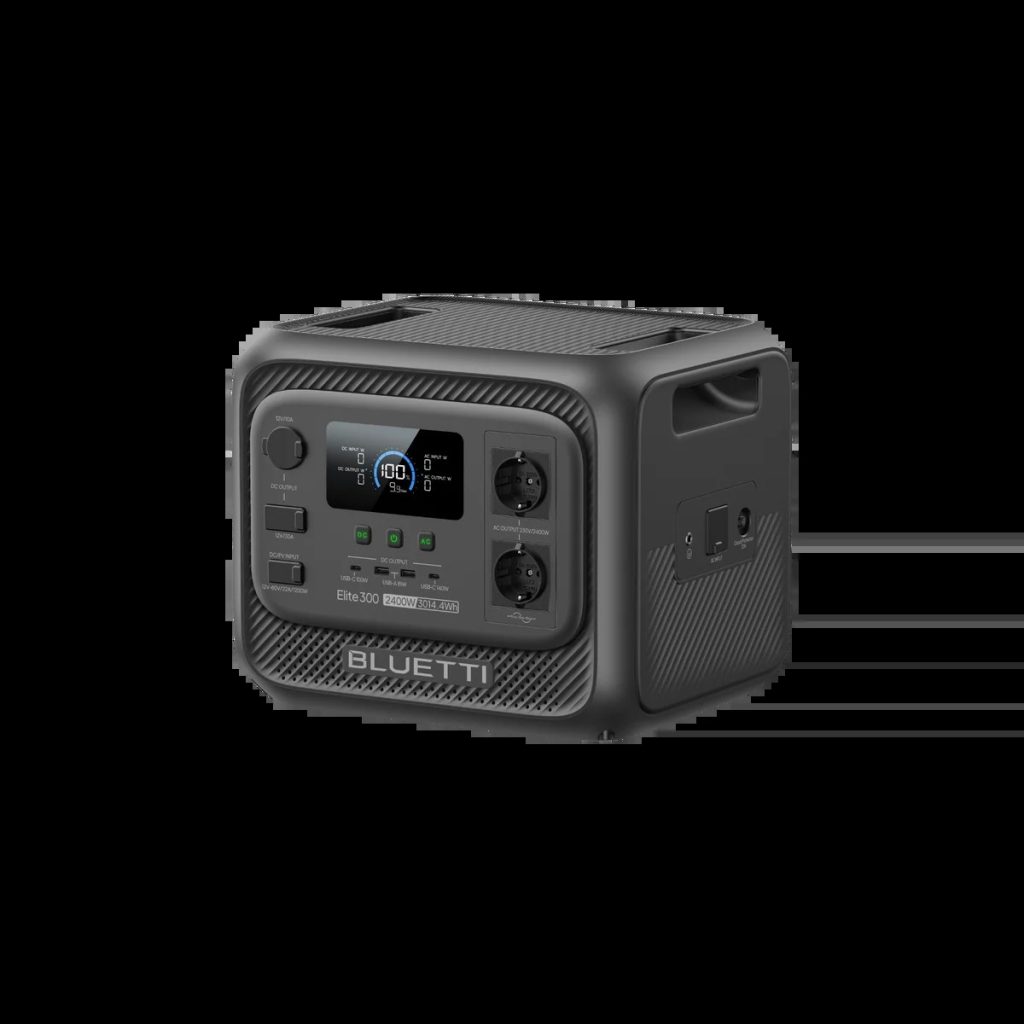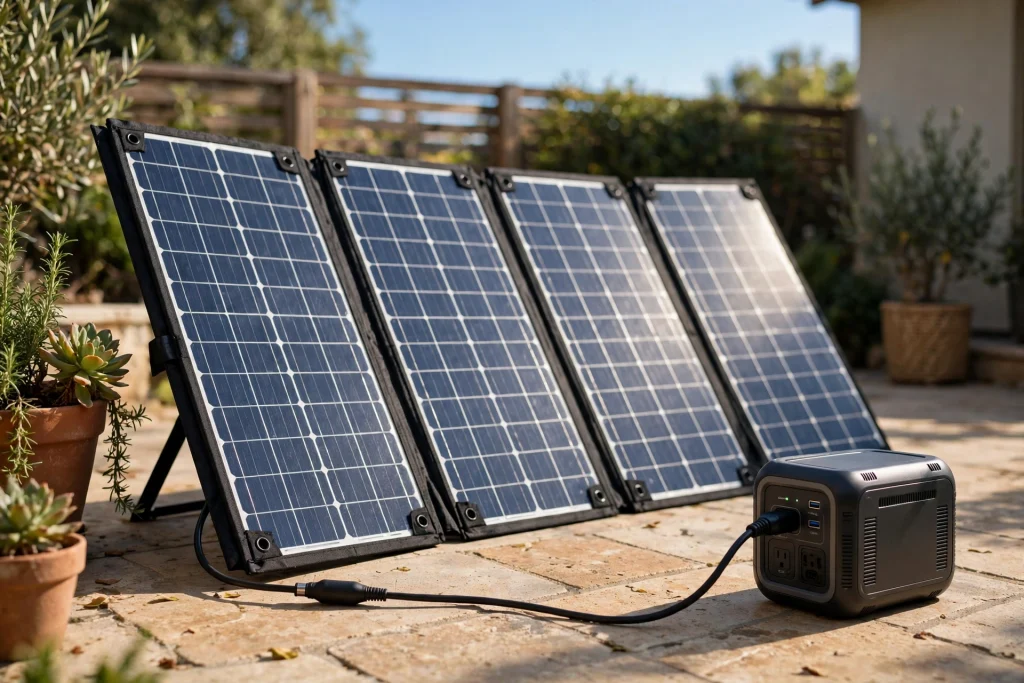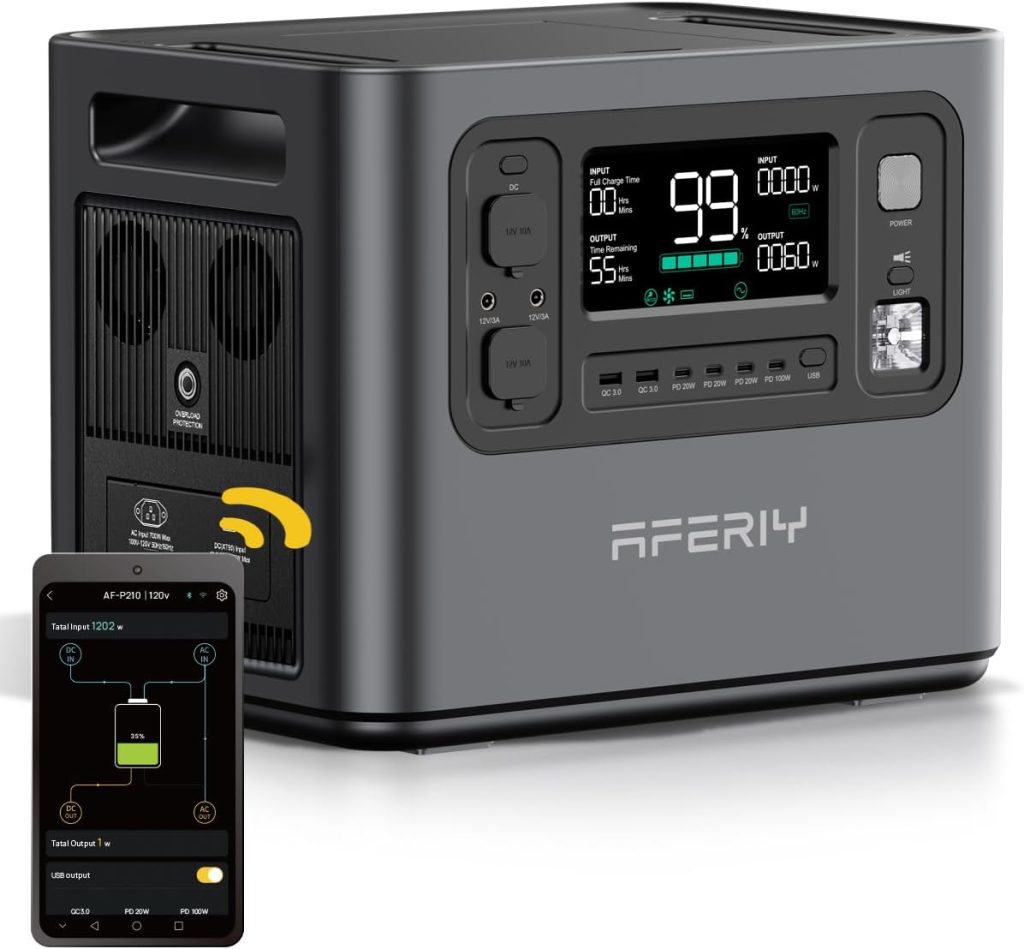
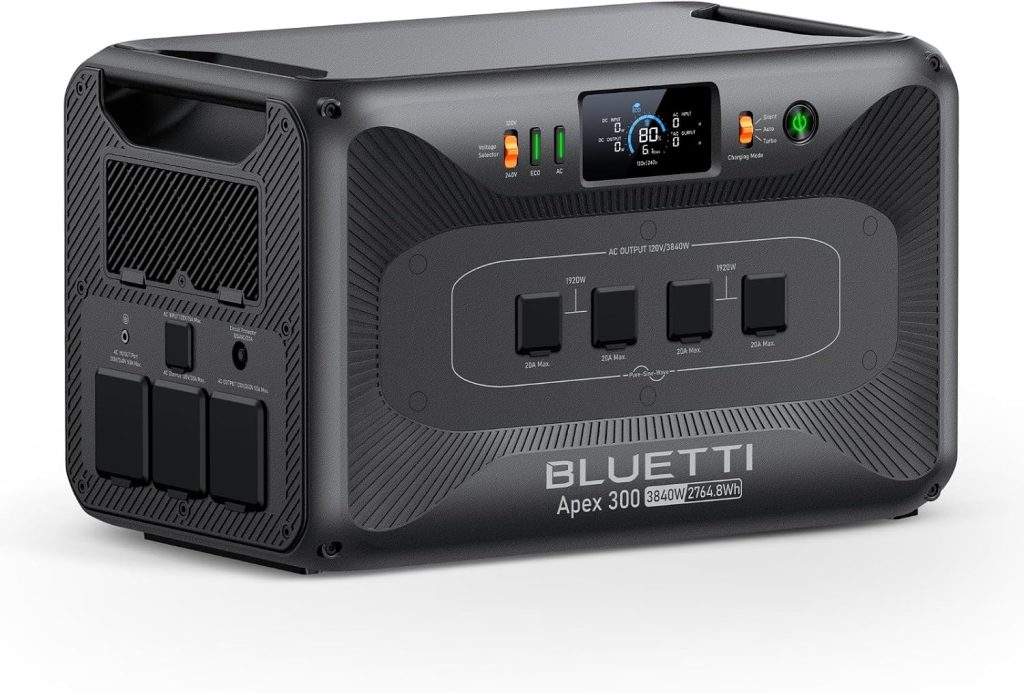
A solar generator used to mean a modest box for charging phones beside a tent, and the BLUETTI Apex 300 sits at the opposite end of that idea. This solar generator pairs 2,764.8Wh of LiFePO4 storage with 3,840W of continuous AC output and something rivals rarely offer from one unit: simultaneous 120V and 240V output. That combination makes it part camping power, part home backup system, and entirely too much machine for a fair number of buyers. The honest question is not whether the spec sheet impresses — it does — but whether your loads and your lower back actually need it. One rung down the same range sits the Elite 200 V2, a 2,073Wh LFP station pitched at camping, for buyers who do not need the Apex’s output.
Quick Answer
Buy the Apex 300 only if you genuinely need 240V output, unusually high continuous power from a single box, or a realistic plan to expand storage over time. For ordinary tent camping and most car-based trips, a lighter 2kWh station such as the EcoFlow DELTA 2 Max or the Jackery Explorer 2000 v2 handles the same daily jobs with far less weight to shift. Paying a premium for capability you never plug into is the easiest mistake in this category.
Compare Solar Generators for Home Backup and Camping
Three big stations side by side — the right choice starts with whether you truly need 240V output, not with the biggest watt-hour number.
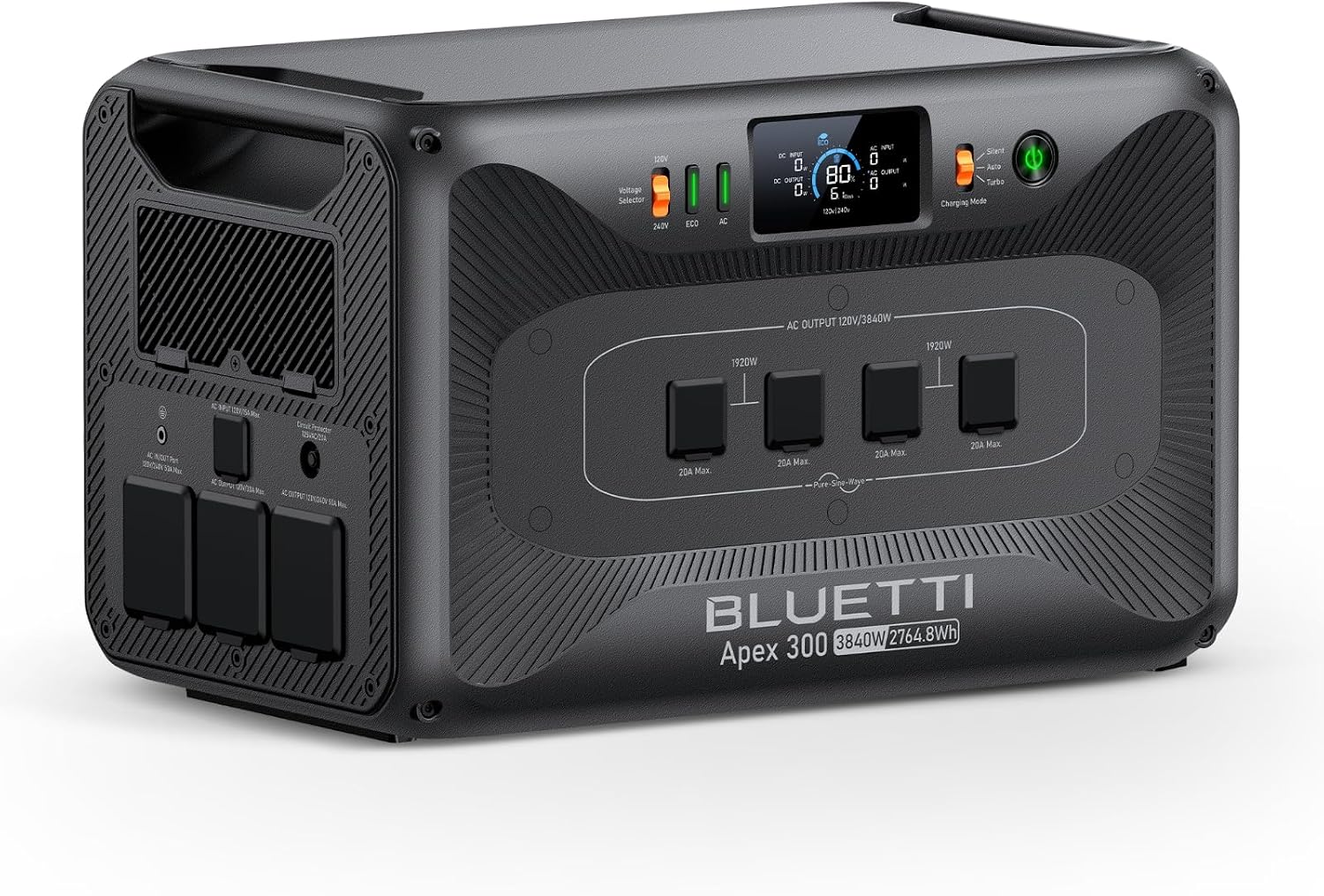
BLUETTI Apex 300
2764.8Wh with 3840W output and simultaneous 120V/240V from a single box — the heavy-output pick, but at about 84 lb it stays where you park it
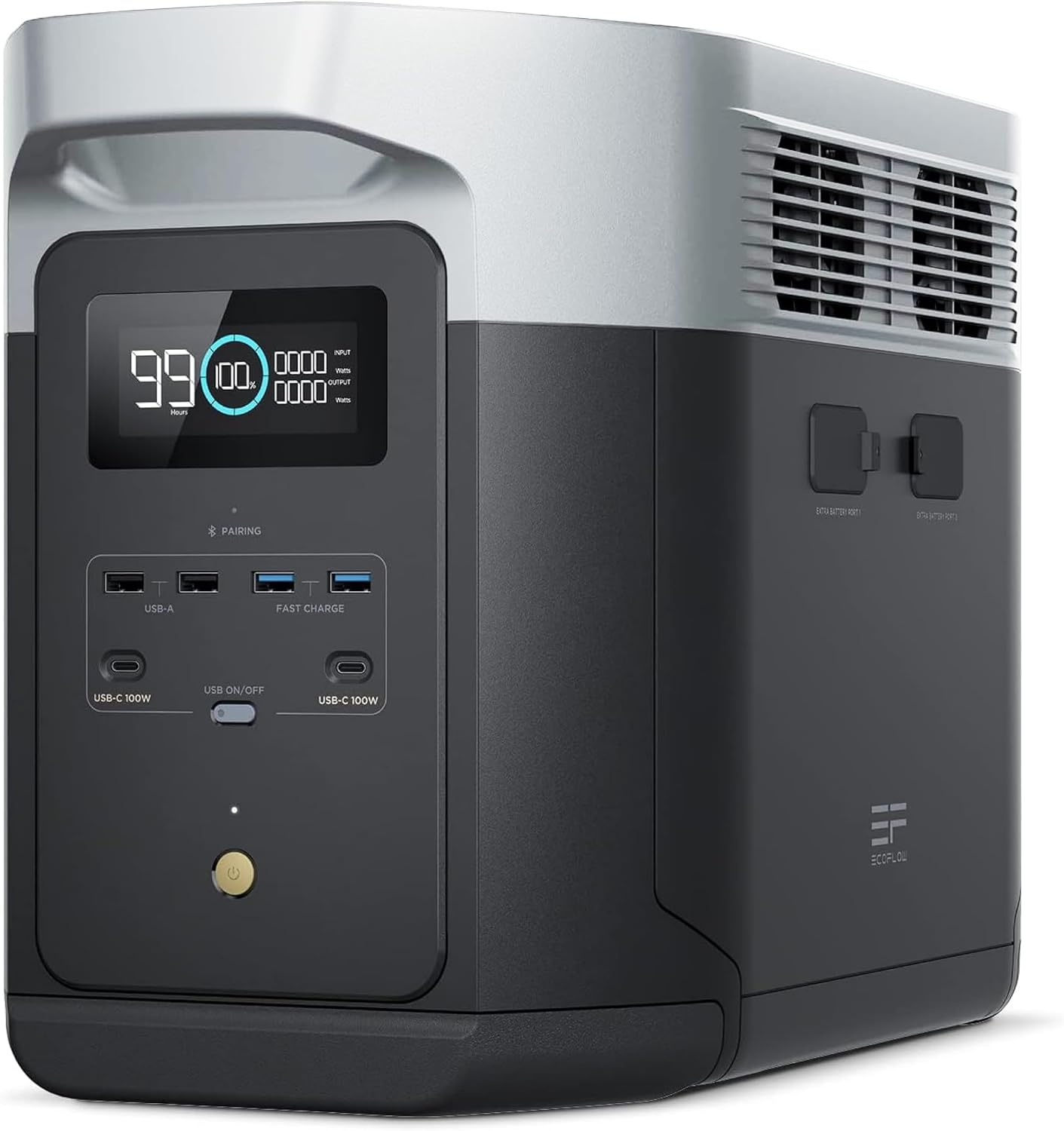
EcoFlow DELTA 2 Max
2048Wh and 2400W at about 50 lb, expandable toward 6kWh — the movable one in this class, but 120V only with no native 240V
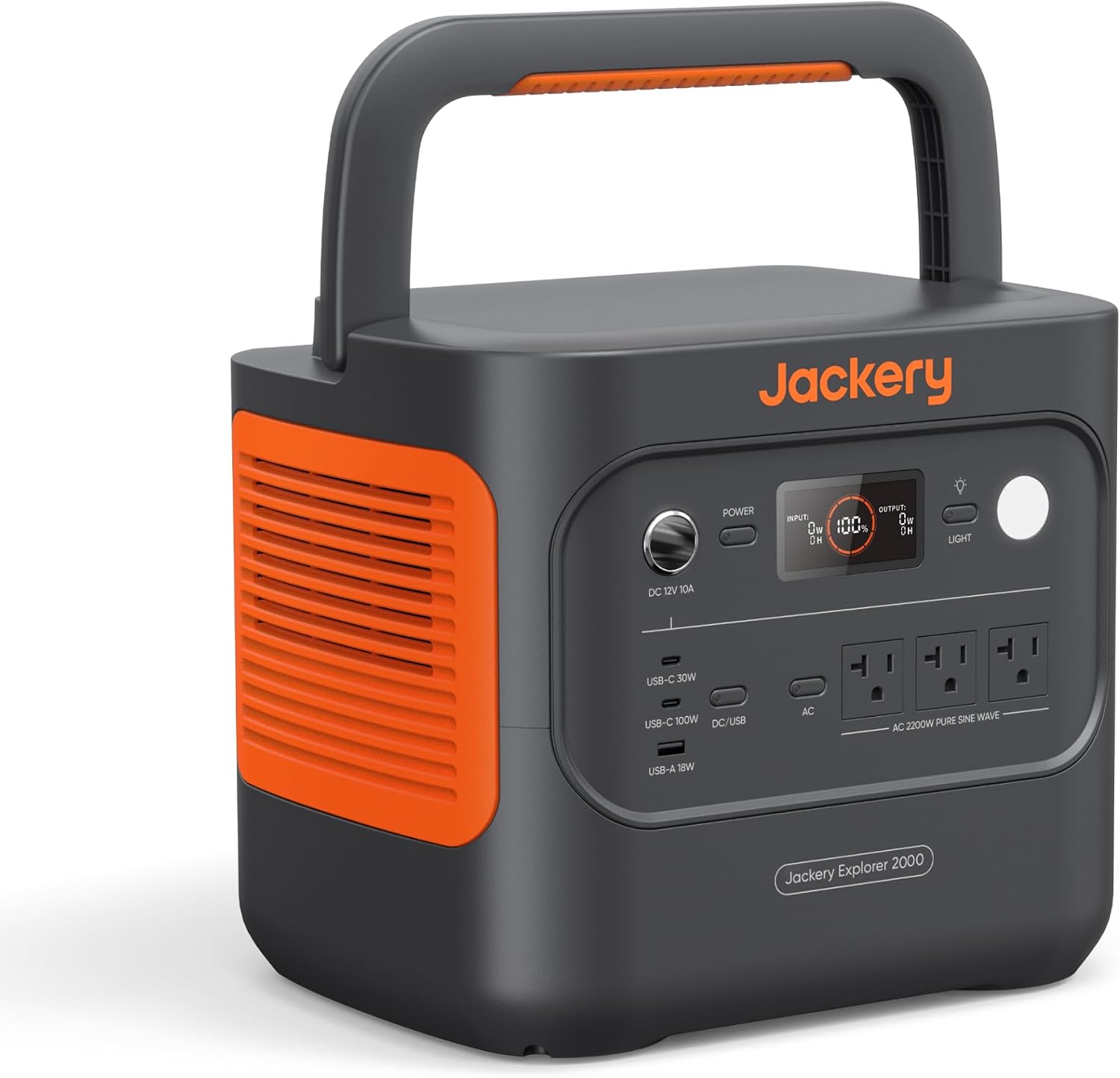
Jackery Explorer 2000 v2
2042Wh and 2200W with a fold-down handle and the simplest controls here — easy to live with, but capacity is sealed with no expansion path
Prices and availability may vary — tap any product to check the current listing.
What to Look For in a Solar Generator
Spec sheets in this category are designed to make every box sound enormous. Big wattage figures sit at the top in bold type, while the numbers that decide whether a station suits your life get pushed further down the page. The common spending mistake is paying for output that never gets used while skimping on the capacity needed every night. Shoppers comparing a portable power station for the first time should slow down here: six trade-offs explain nearly every good and bad purchase in this class.
Output and capacity are different problems. Watts describe how hard a station can push at one moment, while watt-hours describe how long it can keep pushing. A station can start a demanding appliance and still empty itself by midnight. Neither figure substitutes for the other. Do the maths in usable terms instead: after inverter losses, roughly 80–85% of nameplate capacity reaches your appliances as AC power. So an Apex 300 rated at 2,764.8Wh delivers something closer to 2,210–2,350Wh of real working energy. That smaller figure feels pessimistic on paper — and very different at 2 a.m. when the fridge is still cold.
240V output matters only for specific loads. Most household and camping gear — fridges, lights, routers, laptops, CPAP machines — runs on 120V and does not care whether a station can produce 240V. A smaller group cares completely: many well pumps, some electric dryers, certain workshop tools, and a few larger appliances wired for 240V simply will not run from a 120V-only box, no matter how large its battery is. Six AC outlets, a TT-30 RV outlet, and simultaneous 120V/240V delivery from one unit put loads on the table that rivals here cannot touch without linking two units together. But if nothing you own needs 240V, that headline feature earns you nothing at all. Not a thing. It becomes expensive insurance against a load you do not have.
Weight decides where the station actually lives. At about 84 lb, the Apex 300 outweighs the EcoFlow DELTA 2 Max by roughly 34 lb and sits in a different physical category altogether. Nobody sensible carries it across a campsite, down a trail, or up two flights of stairs every weekend. Think of it as a position-it-once box: it goes in the vehicle, beside the RV hookup, or in a corner of the house near the loads it backs up, and it stays there. A lighter station that travels to where the problem is often delivers more useful power than a heavier one stranded in the wrong room.
Expansion claims need honest reading. Apex 300 systems can grow with B300K and B500K extra batteries, and that flexibility has real value for households whose outages run long or whose solar array keeps growing. Brand diagrams showing total system capacity in the tens of kilowatt-hours assume multiple expansion batteries and hub hardware stacked together, not the single box in the listing photo — plus the weight, floor space, and substantial extra cost those batteries bring. Expansion is a genuine advantage only if expansion is genuinely in your plan; bought as a vague someday-maybe, it is just a heavier, pricier station today. Shoppers weighing separate solar batteries against an expandable all-in-one should compare total system weight and cost, not just the headline box.
Charging speed shapes winter usefulness. Capacity means little during a multi-day outage if the station cannot refill between stretches of bad weather. Dual solar input up to roughly 2,400W gives the Apex 300 a serious refill rate when a large array is available — exactly what matters when the grid is down and the sky finally clears. Smaller stations refill more slowly from the sun — fine for weekend camping, limiting during a three-day storm outage. Panel choice matters as much as panel wattage here: roof arrays, vehicle-mounted panels, and portable foldable solar panels all feed a station at different real-world rates once clouds and angle enter the picture. Nameplate panel wattage is a fair-weather figure. Expect less in November. Expect much less in December.
Cycle life separates a decade of service from a short romance. A 6,000-plus cycle rating on LiFePO4 cells means the Apex 300’s battery is built for years of regular use rather than occasional emergency duty alone, and both rivals here use the same chemistry for the same reason. LiFePO4 tolerates deep, frequent cycling far better than older lithium chemistries in cheaper boxes. Daily cycling wears a station very differently from six camping weekends a year, so heavy users should weight cycle life heavily. Chemistry has one cold-weather sting, covered below: charging below freezing is generally restricted, so where the box sleeps in January matters.
How the Three Stations Compare
Three stations, three different answers to the same basic question. Each stores roughly 2–2.8kWh in LiFePO4 cells, yet they diverge sharply on output, voltage, weight, and whether capacity can grow after purchase. Price tiers below are relative, since pricing shifts with sales cycles — the ranking stays consistent.
| Type/Tier | Best For | Price Tier | Key Feature | Watch-Out |
|---|---|---|---|---|
| BLUETTI Apex 300 | Home backup with heavy loads, RV and basecamp duty | Premium | Simultaneous 120V/240V from one unit, 3,840W continuous (7,680W surge) | About 84 lb — heaviest here by a wide margin |
| EcoFlow DELTA 2 Max | Car campers and households wanting expandable 2kWh-class power | Mid-to-premium | About 50 lb, expandable to roughly 6kWh | 120V only — no native 240V output |
| Jackery Explorer 2000 v2 | Straightforward trips where simplicity beats flexibility | Mid-to-premium | Fold-down carry handle and uncomplicated controls | No expansion option; lowest output here |
The Apex 300 wins on raw capability and loses on portability, and no amount of spec-sheet enthusiasm changes either fact. Its 3,840W continuous output, dual-voltage delivery, TT-30 RV outlet, and fast UPS switchover of around 10ms or less make it the only one of the three that can anchor a serious home backup plan involving a well pump. Anyone whose outage plan includes 240V loads can stop comparing here.
EcoFlow’s DELTA 2 Max is the smarter middle path for most buyers. Capacity lands in the same class at 2,048Wh, output reaches 2,400W (higher still with X-Boost on resistive loads), and the whole unit weighs about 50 lb — genuinely carryable to a vehicle by one person. Expansion to roughly 6kWh keeps a growth path open, combined wall-plus-solar charging refills it quickly, app control is well regarded, and it runs quietly at light loads. Its ceiling is real, though: 120V only, and a lower output limit that demanding motor loads will find sooner than Apex owners will.
Jackery’s Explorer 2000 v2 strips the formula back. You get 2,042Wh, 2,200W of output, a fold-down handle, controls a first-time owner can understand in minutes, and a 100W USB-C port that covers modern laptops without adapters. Sealed capacity is the trade: no expansion batteries exist for it, output is the lowest here, and the outlet count is the slimmest. For buyers whose loads will not grow, that simplicity is a feature; for anyone else, the sealed box becomes the reason for a second purchase later.
Matching the Station to Your Kind of Trip
The winter-outage household with a well pump
November roundups keep circling the same scenario, for good reason: winter storm prep is when these boxes sell. Picture a home on well water, where an outage kills the pump, the fridge warms up, and the router dies just as the weather warnings get interesting. A station in this size class runs a refrigerator, lights, a router, and phones through a long outage day without drama. Add a 240V well pump and the shortlist collapses to one name here — the Apex 300 — because voltage, not capacity, decides whether the pump runs at all. Runtime still ends, though: heavy pump use plus a fridge drains even 2.7kWh within a day or so, which is where expansion batteries or a solar refill stop being luxuries. And the station belongs indoors through winter, since LiFePO4 batteries in this class generally should not charge below freezing; check the manual for your model’s limits before parking one in an unheated garage.
The car camper and RV owner who plans around the vehicle
Vehicle-based travel forgives weight that tent camping never will. An Apex 300 riding in a truck bed or RV storage bay brings its 240V output and TT-30 outlet along, and for RV owners running heavier onboard loads, that headroom earns its floor space. Still, most car campers run lights, a small fridge, phones, a laptop — a load list the DELTA 2 Max covers at about 34 lb less, with expansion available if longer trips expose a shortfall. Ask yourself where the station sleeps at night. If the answer involves lifting it in and out of the vehicle daily, the lighter box wins that argument every morning of the trip.
The tent camper who should buy smaller
Some readers should close this comparison entirely. Backpackers, walk-in tent campers, festival-goers carrying gear across fields, and anyone whose power needs stop at phones, lights, a camera battery, and maybe a small fan do not need 2kWh of anything. A compact station a quarter of this weight covers those loads for a weekend, for far less. Even the Explorer 2000 v2 — the simplest option here — is overkill for that kit list. Buying big “just in case” sounds prudent in the store. It feels less prudent at the third field crossing, station banging against your leg, while your phone sits at 80% charge anyway. Go too small, though, and a fridge or medical device outruns the battery by suppertime. Match the box to the loads you actually own, not the loads in the advertisement.
Common Mistakes People Make With Big Power Stations
Buying wattage when the problem was capacity. Shoppers fixate on the biggest output number, then discover their station starts everything beautifully and runs it all for about four hours. List your loads with rough watt draws and hours of use first.
Planning around nameplate capacity. Budgeting 100% of a 2,764.8Wh rating as usable AC energy overstates runtime by a wide margin. Work with 80–85% and let any surplus be a pleasant surprise.
Charging the station in a freezing garage. LiFePO4 stations in this class generally restrict charging below freezing to protect the cells, and many owners learn this during the coldest outage of the year, when a station refuses a charge. Store the box indoors, charge it indoors, and check the manual for your model’s temperature limits before winter rather than during it.
Final Recommendation
The Apex 300 is the right purchase for a narrower buyer than its marketing suggests: the household whose outage plan includes a 240V well pump, the RV owner who will park its 84 lb in one bay and leave it there, and the buyer with a genuine, scheduled intention to expand storage. For those readers, dual-voltage output, 3,840W continuous power, a high solar input ceiling, and long cycle life justify the premium tier, because no lighter box here does the same job at all.
Everyone else should take the hint the weight is giving. A solar generator earns its money on the loads it actually runs — buy for that list, not for the biggest number on the box. The comparison, decision steps, and buyer questions in this section work through which of the three stations fits which load list.
Compare Solar Generators for Home Backup and Camping
Three big stations side by side — the right choice starts with whether you truly need 240V output, not with the biggest watt-hour number.
BLUETTI Apex 300
2764.8Wh with 3840W output and simultaneous 120V/240V from a single box — the heavy-output pick, but at about 84 lb it stays where you park it
EcoFlow DELTA 2 Max
2048Wh and 2400W at about 50 lb, expandable toward 6kWh — the movable one in this class, but 120V only with no native 240V
Jackery Explorer 2000 v2
2042Wh and 2200W with a fold-down handle and the simplest controls here — easy to live with, but capacity is sealed with no expansion path
Prices and availability may vary — tap any product to check the current listing.
Decision Tree: Which Solar Generator Should You Buy?
If you need to run a 240V load such as a well pump from a single unit, buy the Apex 300 — nothing else in this comparison qualifies.
If your outage plan covers a fridge, lights, router, and phones for a day-plus from one spot, buy the Apex 300 or pair a 2kWh station with an expansion battery.
If you camp from a car and lift the station in and out daily, buy the DELTA 2 Max and keep the roughly 34 lb saving.
If your loads are fixed, modest, and unlikely to grow, buy the Explorer 2000 v2 and skip paying for expansion you will not use.
If your kit stops at phones, lights, and a camera, buy none of these — a compact station at a fraction of the weight and tier does that job properly.
Key Takeaways
The Apex 300’s real distinction is simultaneous 120V/240V output from one unit — valuable for well pumps, worthless if nothing you own needs 240V.
At about 84 lb, the Apex 300 is a position-it-once station for vehicles, RVs, and home backup corners, not a carry-to-the-tent box.
Usable AC energy runs near 80–85% of nameplate capacity after inverter losses, so plan runtimes from that smaller figure.
The DELTA 2 Max covers most camping and outage needs at roughly 50 lb, with expansion to about 6kWh, but it cannot produce 240V.
The Explorer 2000 v2 trades expansion and output for simplicity — sensible only when your loads are known and stable.
Expansion headlines showing tens of kilowatt-hours assume multiple extra batteries and hubs, plus their weight and cost.
All three stations use LiFePO4 cells and belong indoors, not in a freezing garage, when winter charging matters.
Questions People Ask Before Buying
Real buyer questions, straight answers
Is the BLUETTI Apex 300 worth it over a smaller 2kWh station?
Only if 240V output, very high continuous power, or planned expansion is part of your setup. The DELTA 2 Max and Explorer 2000 v2 store nearly as much energy, weigh far less, and cost less in tier terms. Without a 240V load, the Apex premium buys capability that sits idle.
Can the Apex 300 run a well pump or a clothes dryer?
Yes on paper for many such loads, because simultaneous 240V output and a 7,680W surge ceiling put it in a class the other two stations cannot enter. Pump size, motor starting draw, and dryer type vary widely, so confirm your appliance’s requirements against the output limits. Runtime on 240V loads will be short regardless — these are thirsty appliances.
How long will the Apex 300 run a refrigerator?
Expect roughly a day or more from the Apex 300 running a typical fridge alone. Usable AC energy lands near 2,210–2,350Wh after inverter losses, and a fridge averaging about 75W across a day consumes around 1,800Wh. Add lights, a router, and phone charging, and that comfortable margin shrinks toward a single long day.
Is the Apex 300 too heavy for camping?
For tent camping where gear gets carried any real distance, yes — at about 84 lb it is a vehicle accessory, not a portable companion. Car campers who move it once from vehicle to pitch will manage fine. Everyone between those poles should think hard about the daily lift.
Apex 300 vs DELTA 2 Max: which one should I buy?
Choose the Apex 300 if 240V loads, maximum output, or the widest expansion path drive the purchase. Choose the DELTA 2 Max if your loads are all 120V and you value carrying the station without dreading it — it gives up output ceiling and voltage, not everyday usefulness. Camping-first buyers land on the EcoFlow; outage-first buyers with a well pump land on the BLUETTI.
Why, How, and What: The Basics Worth Getting Straight
Why does 240V output matter on a solar generator?
Certain loads are wired for 240V and simply cannot run on anything less, with many well pumps the classic household example. A 120V-only station, however large, is useless for those loads. Dual-voltage output from a single unit removes the need to link two stations together — how most rival systems reach 240V. Buyers without a single 240V load gain nothing from the feature.
How do you size a station for an outage without guessing?
Start with the loads that must run — fridge, lights, router, phones, any medical device — and estimate each one’s average draw and daily hours. Multiply, add the results, then divide by 0.8 to allow for inverter losses. A fridge averaging around 75W across a day, once compressor cycling is accounted for, uses roughly 1,800Wh — most of a 2kWh station’s usable energy. Skipping this arithmetic costs people entire purchases.
What makes LiFePO4 worth choosing in a station this size?
LiFePO4 cells tolerate thousands of charge cycles, run cooler under load, and hold up well to the deep discharges that backup and camping duty impose. The 6,000-plus cycle rating on the Apex 300 — and the same chemistry in both rivals here — reflects that durability. For a box expected to work for a decade, chemistry is not a footnote.
Frequently Asked Questions
How long does the Apex 300 take to recharge from solar panels?
Charge time depends entirely on array size and weather, since the station accepts dual solar input up to roughly 2,400W. A large array in strong sun can refill it within a few hours; a small portable setup may take most of a day. Winter sun pushes times longer.
Can I use the Apex 300 while it is charging?
Stations in this class generally support pass-through use, so running loads while plugged into solar or wall power is normal practice. The Apex 300 also offers UPS-style switchover around 10ms or less, suiting routers and computers during grid flickers.
How many years will a battery rated for 6,000 cycles actually last?
Cycle ratings describe full charge-and-discharge rounds, so even daily cycling stretches a 6,000-cycle rating across many years before capacity fade dominates. Occasional camping use ages the calendar faster than the cells. Either way, LiFePO4 is the long-life chemistry in this category, and storage habits — moderate temperatures, partial charge for long idle periods — influence lifespan more than brand choice does.
Can one of these stations run a fridge, lights, and a router together?
Yes, comfortably, for many hours rather than minutes. A fridge cycling at an average near 75W, LED lights drawing very little, and a router sipping power add up to a modest combined load. A 2kWh-class station covers an evening and night, while the Apex 300’s larger reserve stretches the same setup past a full day.
Do big power stations need special solar panels?
No special category of panel is required, but voltage and current limits on the station’s solar inputs must be respected, and connectors need to match or adapt correctly. Oversizing the array slightly helps in weak winter light, since panels rarely deliver nameplate output in real conditions. Undersizing is the more common disappointment: a small panel on a 2.7kWh station makes for very long recharge days.
Should I store a power station in the garage during winter?
An insulated, above-freezing space is the safer choice, because LiFePO4 batteries in this class generally should not be charged below freezing. Discharging in cold conditions is usually less restricted than charging, but the manual for your specific model sets the actual limits. Indoors also means the station starts an outage charged and accessible, not buried behind summer equipment.
Affiliate Disclosure: This article contains affiliate links. If you buy through one of these links, we may earn a commission at no extra cost to you.