A portable air conditioner for camping sounds like a contradiction until you have tried to sleep through a humid night in a tent with the air barely moving. This guide looks at the battery powered portable air conditioner for camping category through one blunt question: is the premium bundle worth it, or does a lighter or cheaper unit do the job just as well? Three units get compared here — the WAVE 3 bundle, the Mark 3, and the PC35 — with trade-offs spelled out.
Quick Answer
The EcoFlow WAVE 3 bundle is the portable air conditioner for camping to buy if you sleep off-grid in a van, an RV, or a hot tent and want real cordless cooling plus heating — its included battery, fast recharge, and stronger cooling output are unmatched here. If you always camp with hookups, the BougeRV PC35 cools a small tent for far less. If carry weight rules, the Zero Breeze Mark 3 chassis is the lightest of the three, though its battery is sold separately.
Compare Portable Air Conditioners for Camping
Three real compressor units side by side — the real choice is where the power comes from: a battery in the bundle, a battery you buy separately, or a plug.
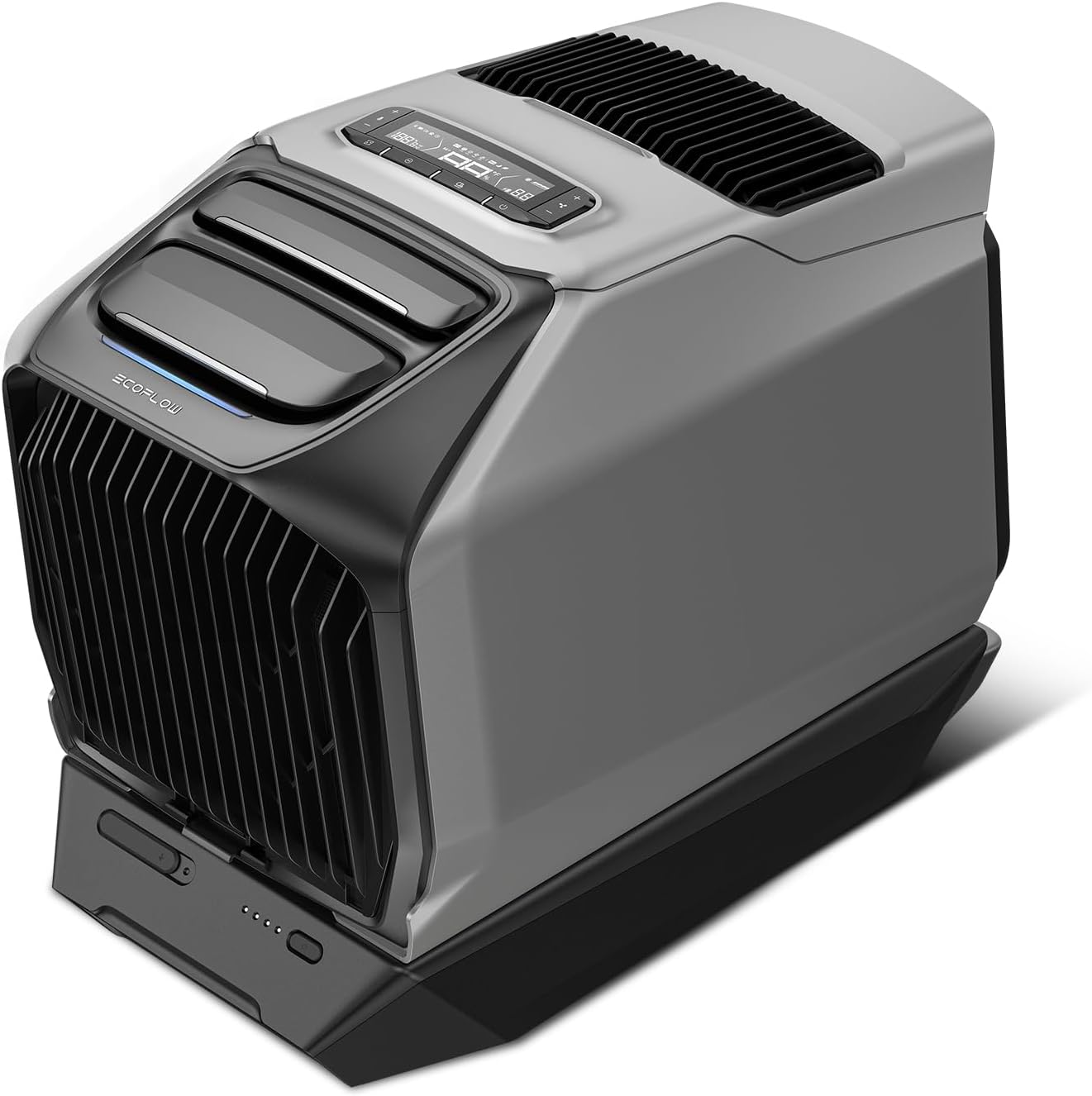
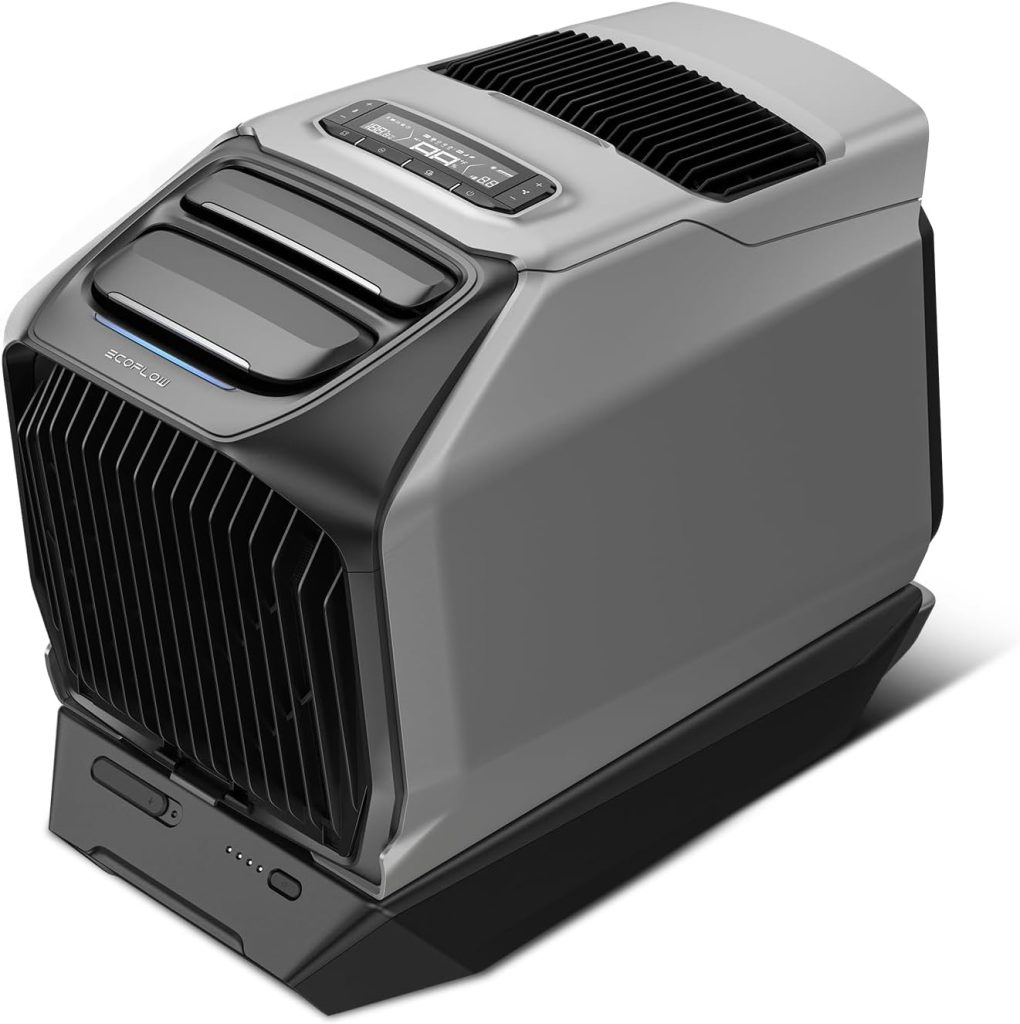
EcoFlow WAVE 3 with Add-on Battery
Strongest cooling here plus heating, with its own 1,024Wh battery in the box — genuinely cordless for a night in eco mode, but the combined bundle is heavy
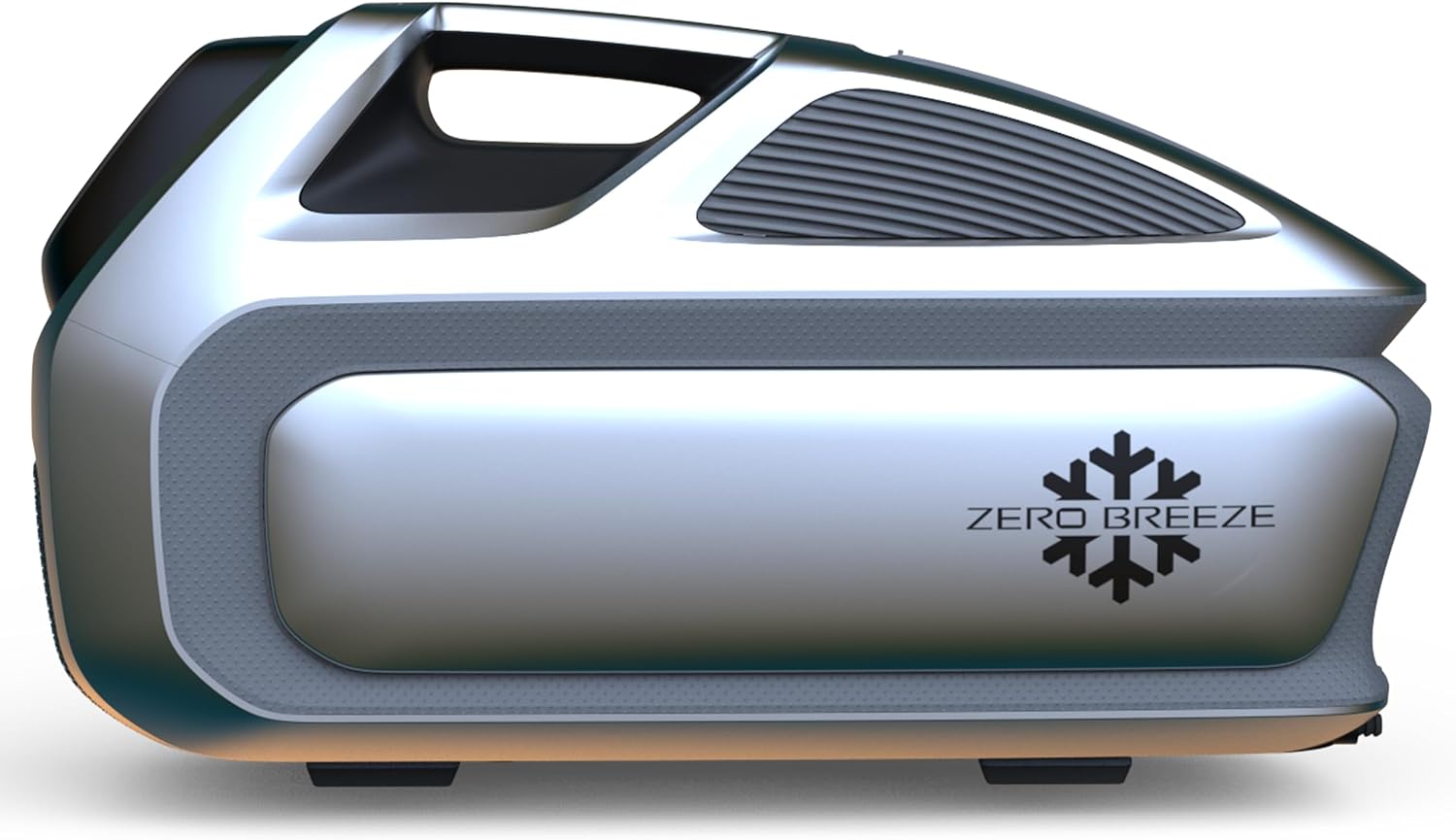
Zero Breeze Mark 3
Serious cooling in the lightest chassis here at about 22 lb — but the dedicated battery is sold separately, so the full cordless kit costs more than the headline
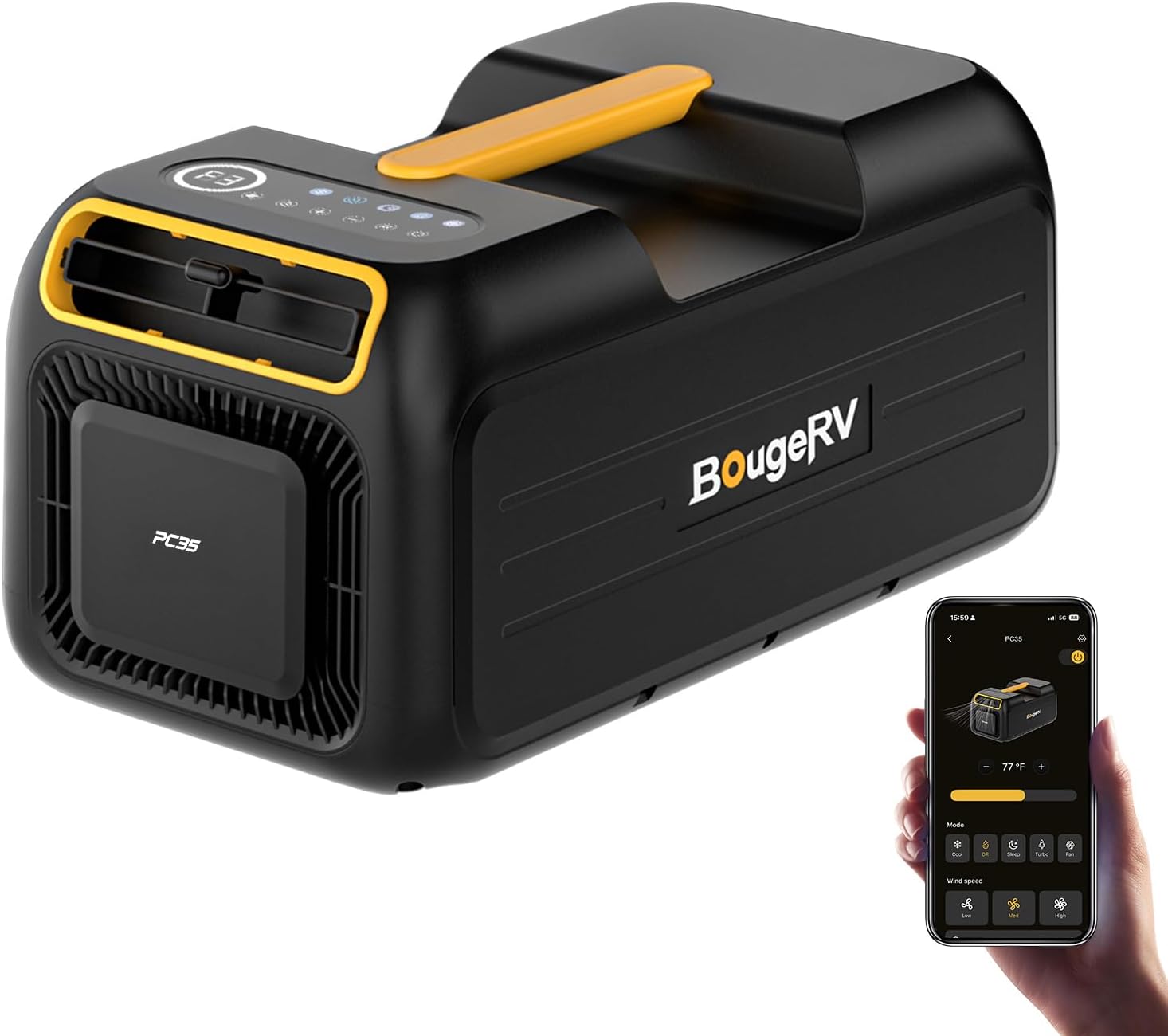
BougeRV PC35
Real compressor cooling for a small tent at a budget tier — plug-in only with no battery inside, so it needs hookups or a power station
Prices and availability may vary — tap any product to check the current listing.
Key Takeaways
The WAVE 3 bundle earns its place for van and RV sleepers who camp off-grid and want cordless cooling plus heating in one unit. That same bundle is a poor buy for anyone who always sleeps near hookups, because a plug-in unit cools a small tent for far less money. Carry weight decides more purchases than cooling numbers do, and the Mark 3 wins that argument on the chassis alone, even though its battery comes separately and pushes the full kit cost up. Match the power source to your nights, then worry about cooling capacity.
What to Look for in a Portable Air Conditioner for Camping
Cooling capacity sets the ceiling on what a unit can do, and it is easy to overbuy here. A listing figure around 6,100 BTU cools a larger space than a figure around 3,500 BTU, and the gap shows up fast in a van baking in afternoon sun. But a small tent holds a small volume of air, so a modest unit can still drop the temperature enough to sleep, while an oversized unit cycles on and off and wastes energy. Shade and timing change the load as much as size does.
Cordless runtime is where most buyers get surprised. The WAVE 3 bundle lists up to around eight hours cordless in eco and sleep modes, which sounds like a full night until you remember that eco mode is not max mode. On a sticky night when the unit runs hard, runtime shrinks, and that holds for every battery-powered unit in this category. Heat changes everything. Count the hours you actually need, not the hours in the gentlest mode.
Recharge speed matters just as much, because a dead battery on day two ruins the trip. The WAVE 3 bundle lists fast charging at around 1,000W, refilling its battery in about 75 minutes from mains power, with solar, car, and alternator charging listed as options too. A long drive can then put real charge back in before the next night. Slow charging ties you to a hookup for hours and quietly turns a portable unit into a campsite-bound one.
Weight and carry shape are easy to underestimate until you lift the thing into a car boot again and again. The WAVE 3 unit sits around 34 lb on its own, and its add-on battery adds around 21 lb, so the combined bundle needs two hands. The Mark 3 chassis, at around 22 lb, feels like a different category, though its separate battery pushes the combined weight into the mid-30s. At around 34 lb, the PC35 still needs the station it depends on added on top. Trips get cancelled over weight. Honestly, I have seen campers spend a small fortune on gear they use twice a summer, and bulk is often why it stays home.
Noise decides whether you sleep or just lie there listening to a fan. A low mode around 44 dB, as listed for the WAVE 3, sits near the level of a quiet room, while a figure around 55 dB, as listed for the PC35, is noticeably present in a small tent. Sleep mode figures always look kinder than strong mode, so treat any noise number as a low-mode claim, not a promise for the whole night.
Venting and drainage are the unglamorous parts nobody wants to think about, and skipping them is the fastest way to a damp tent. A unit that uses dual hoses needs somewhere for hot air to go — a vent flap, a window gap, or a fitted panel — plus a plan for the water it pulls from humid air. The WAVE 3 needs that venting and drainage handled properly, and the other two units ship with ducts and a drain hose. Tent campers without a vent opening face a fiddly setup night after night.
Heating sounds like a bonus until you camp in shoulder season and it becomes the reason you use the unit at all. The WAVE 3 is the only one of the three with heating listed, at 6,800 BTU, which stretches its season into cool spring and autumn nights. That dual-season use is easy to miss when you shop in July. A cooling-only unit still earns its keep in summer, yet it sits idle for half the year.
Power source is the decision underneath every other decision, and it splits this category in two. Battery bundles free you from hookups, while a plug-in unit like the PC35 ties you to mains power or a separate station. A station can run one, and a portable power station sized for an overnight AC load changes the maths, but a mid-size station only runs a compressor unit for a short stretch. Knowing how to size a power station for a compressor load before you buy saves an expensive mismatch later.
How to Match a Battery Powered Portable Air Conditioner for Camping to Your Setup
The van lifer who moves most days. You sleep in the same small space most nights, you drive most days, and you hate paying for hookups you do not need. The WAVE 3 bundle fits this life because its included battery covers a night in eco mode and its fast charging refills from the road, especially with an alternator charger that refills the battery between campsites. Heating earns its keep on cool mountain nights, and app control starts cooling before bed. Trade-off: you carry a heavy bundle in a van that already holds everything you own.
The hot-climate tent camper with a car full of kit. You drive to a site, pitch a tent, and sleep through nights that stay warm long after sunset. Cordless cooling matters because your tent sits far from any outlet. The WAVE 3 bundle fits here too, though you carry it from car to tent, so that combined weight stings more. Trade-off: you pay a premium and haul heavy kit for a handful of hot weekends a year.
The powered-site weekender. You book sites with hookups, bring a fridge and lights, and never sleep far from a power post. The PC35 fits this life neatly, cooling a small tent from mains power at a budget-friendly tier, with app control and sleep, strong, and dehumidify modes. Trade-off: take away the hookup and the setup falls apart, since a mid-size station only buys a short stretch of cooling. This persona should not buy a battery bundle they will never unplug.
Cold nights flip the same problem around: instead of cooling the air, you want heat that follows the person, which is why a battery powered heated blanket sips so little of a station’s capacity compared with any powered heater or cooler.
Portable Air Conditioner for Camping: Three Tiers Compared
| Type/Tier | Best For | Price Tier | Key Feature | Watch-Out |
|---|---|---|---|---|
| EcoFlow WAVE 3 with Add-on Battery | Van, RV, and hot-climate tent campers who sleep off-grid | Premium | 6,100 BTU cooling and 6,800 BTU heating, with 1,024Wh LiFePO4 battery included | Heavy combined carry around 55 lb; dual-hose venting and drainage needed |
| Zero Breeze Mark 3 | Campers who carry their unit by hand and want the lightest chassis | Mid-range unit, premium once the battery is added | 5,280 BTU cooling in a chassis around 22 lb, running on 48V DC | Battery sold separately; combined weight climbs once you add it |
| BougeRV PC35 | Powered campsites and RV hookups on a budget | Budget-friendly | 3,500 BTU cooling-only unit with app control and sleep, strong, and dehumidify modes | No battery at all; needs mains power or a power station |
The WAVE 3 row pairs strong cooling with heating and an included battery, which is why it leads for off-grid sleepers who use both seasons.
The Mark 3 row trades raw cooling for carry weight, a trade that suits anyone who lifts their unit alone over rough ground.
For the PC35 row, cordless freedom is traded for a low entry cost, a trade that works only when hookups are a given rather than a hope.
Three Nights, Three Very Different Campsites
A humid night in a small tent
Humidity does more damage to sleep than dry heat, and a small tent traps both. A unit that also dehumidifies pulls moisture from the air, which is why the PC35 lists a dehumidify mode. Venting still matters, because hot exhaust dumped inside the tent fights the cooling you just paid for. Trade-off: the plug-in unit is often the lightest setup here, yet it tethers you to a power post that may sit far from your pitch.
A week on the road in a van
Daily driving changes the maths completely, because every mile becomes charging time. The WAVE 3 bundle shines on this pattern, with its battery refilling from AC, solar, car, or alternator charging, and fast charging turning a long drive into a meaningful top-up. Heating stretches the same unit into cool evenings. Trade-off: venting in a van needs a proper setup, and a loose hose in a window gap wastes cooling you drove all day to recharge.
A powered campsite with the family
Hookups remove the hardest problem in this category, which is where the power comes from. The PC35 cools a small tent from mains power, and nobody worries about runtime. Sleep mode keeps noise down after dark, while strong mode handles afternoon heat before bedtime. Trade-off: a single night without hookups turns the same unit into dead weight. So why pay for a battery bundle if every trip you book has power waiting? You should not.
Common Mistakes
Buying cooling capacity and ignoring runtime. Shoppers fixate on the BTU figure and forget that a compressor running hard drains a battery far faster than the gentle eco-mode figure suggests. Match the runtime figure to the mode you will actually use, not the kindest mode on the listing.
Assuming any tent vents cleanly. Portable air conditioners need somewhere to send hot air, and a tent without a vent flap forces an awkward workaround every night. Check your shelter for a vent opening before you order, and budget for an adapter if it lacks one.
Pairing a plug-in unit with an undersized station. A mid-size station sounds like plenty until a compressor load meets a hot night, and then the hours melt away. Size the station for the compressor, not for phones and lights.
Forgetting drainage on humid nights. Cooling pulls water from the air, and that water has to go somewhere. Campers who skip the drain hose wake to a puddle or a unit that stops cooling to protect itself, so route the drain outside from the start.
Why, How, and What to Know Before You Buy
Why does cordless runtime collapse on the hottest nights?
A compressor works harder as the gap between inside and outside temperatures grows, so a hot night demands far more energy than a mild one. Eco and sleep modes stretch runtime by backing off that demand, which is why their figures look generous next to max-mode reality. Battery capacity stays fixed while the load climbs, and the hours shrink accordingly, so plan around a hot night and treat mild nights as a bonus.
How do you recharge between campsites without hookups?
Driving is the most reliable route, with car and alternator charging topping the battery up between stops. Solar helps on sunny days, though its output swings with cloud, shade, and panel angle, so it should support the plan rather than carry it alone. Mains charging at a powered stop gives the fastest refill, with the WAVE 3 bundle listing around 75 minutes for a full charge at around 1,000W, so mix the routes instead of betting on one.
What should you check before assuming a unit will fit your tent?
Measure the floor space the unit will occupy plus the hose run to the vent, because a unit that fits on paper can still block the door or crowd the sleeping area. Check the vent opening against the hose diameter, and check the ground outside for a drainage path running away from the tent. A heavy bundle also needs a flat, stable spot, and a driveway trial with hoses attached reveals more than an evening of listings.
Decision Tree
If you sleep off-grid in a van or RV and face real heat -> WAVE 3 bundle, for its included battery, heating, and fast recharge.
If you carry your unit by hand over rough ground -> Mark 3 chassis, accepting that the battery comes separately.
If every trip you book has hookups -> PC35, for mains-powered cooling at a budget-friendly tier.
If your climate stays mild and you camp a few summer weekends -> PC35 or nothing, since a premium bundle would sit idle.
If you camp in shoulder season as well as summer -> WAVE 3 bundle, since heating stretches its useful months.
If your tent has no vent opening and you will not fit one -> pause, because venting decides the outcome.
Questions People Ask Before Buying
Real buyer questions, straight answers
Is the EcoFlow WAVE 3 worth it for camping?
Yes, for van, RV, and hot-climate tent campers who will actually use its cordless runtime and heating, and no for everyone else. That split follows from what the bundle costs in money and weight. The included 1,024Wh battery, fast recharge, and dual-season heating earn their keep only when nights are hot, hookups are absent, and the unit gets used often. Backpackers, mild-climate campers, and anyone who always sleeps near power get the same cool tent from a cheaper plug-in unit.
How long does a battery powered portable air conditioner for camping last cordless?
Plan for a full night in eco or sleep mode from a full battery, and far less on max in real heat. The WAVE 3 bundle lists up to around eight hours cordless in eco and sleep modes, which covers a typical night when the unit backs off. Max mode on a scorching night drains any battery faster, so the honest planning figure is shorter than the listing figure. Pre-cooling before bed stretches runtime further than any mode setting.
Can a portable air conditioner for camping run off a power station?
Yes, a plug-in unit can run from a station, though only for a short stretch from a mid-size one. The PC35 plugs into mains power or a portable power station, which makes it flexible at powered sites and workable off-grid for brief cooling. A compressor draws steady power, so a station sized for phones and lights empties quickly under that load. Going a full cordless night this way needs a much larger reserve than the unit alone suggests.
Is the Zero Breeze Mark 3 better than the EcoFlow WAVE 3 for carrying?
Yes, for carrying the unit itself, since its chassis is far lighter, though the gap narrows once its separate battery joins the load. The Mark 3 chassis sits around 22 lb against the WAVE 3 unit at around 34 lb, and that difference is obvious the moment you lift each one. Add the Mark 3 battery and the combined weight climbs into the mid-30s, while the WAVE 3 bundle lands heavier still. Walk far from the car, and that battery weight belongs in the decision.
Do you need to vent a portable air conditioner for camping in a tent?
Yes, hot exhaust air must leave the tent or the unit fights itself and cooling stalls. Dual-hose units like the WAVE 3 move hot air out through a hose. A tent without a vent flap forces a workaround with a window gap or a fitted panel, and a loose seal leaks hot air back inside. Drainage belongs in the same step, since humid nights produce water that needs a path outside.
Frequently Asked Questions
Can I run a portable air conditioner for camping all night on battery?
You can, in eco or sleep mode from a full battery, though a hot night shortens that stretch. Pre-cooling the tent or van before bed helps, since holding a temperature beats fighting peak heat. Carry a recharge plan for the next day, because another hot night needs a refilled battery.
How much cooling do I need for a tent or a van?
A small tent needs far less cooling than a sun-baked van, so match the figure to the space and the sun it faces. The PC35 at 3,500 BTU suits a small tent, while the Mark 3 at 5,280 BTU and the WAVE 3 at 6,100 BTU cover larger spaces and hotter conditions. Shade and pre-cooling matter as much as the headline figure.
Is a portable air conditioner for camping loud at night?
It depends on the mode, with sleep-mode figures far kinder than strong-mode reality. The WAVE 3 lists around 44 dB at its quietest, the Mark 3 around 46 dB in sleep mode, and the PC35 around 55 dB, which is noticeably present in a small tent. Light sleepers should treat noise as a deciding factor and favour the quieter low modes.
Can I use a portable air conditioner for camping in a car?
A car is a small, sealed space that heats fast, so cooling it needs venting and a power source the car alone cannot sustain overnight. Van and RV setups work far better because they offer room for hoses, drainage, and a battery or hookup. Car campers should look at a small tent setup with a proper vent.
What happens to condensation and drainage?
Cooling humid air produces water, and every unit here needs a drain route for it. The WAVE 3 needs drainage handled alongside its dual-hose venting, while the Mark 3 and PC35 ship with a drain hose for the same job. Route the hose outside from the start, because humidity often rises after midnight.
Do I need a separate battery for the Zero Breeze Mark 3?
Yes, the battery comes separately for the listing covered here, and the unit runs on 48V DC from that dedicated detachable battery or a standard 48V DC source. That modular setup keeps the chassis light, though the full kit costs more than the unit alone suggests. Check the current listing carefully, since the headline unit cost does not include the battery.
Final Recommendation
Buy the WAVE 3 bundle if you sleep off-grid in a van, an RV, or a hot-climate tent and you will use cordless cooling and heating often enough to justify its premium tier and heavy combined carry. Its included battery, fast recharge, and dual-season use make it the most capable unit here for that life, and the trade-off is honest: you pay more and carry more for freedom from hookups.
Skip it if you always sleep near power, camp in a mild climate, or carry kit far from the car, and take the PC35 for powered sites or the Mark 3 chassis when carry weight rules. A cheaper unit that fits your nights beats a premium bundle that stays home, and that is the whole point of this comparison.
Compare Portable Air Conditioners for Camping
Three real compressor units side by side — the real choice is where the power comes from: a battery in the bundle, a battery you buy separately, or a plug.
EcoFlow WAVE 3 with Add-on Battery
Strongest cooling here plus heating, with its own 1,024Wh battery in the box — genuinely cordless for a night in eco mode, but the combined bundle is heavy
Zero Breeze Mark 3
Serious cooling in the lightest chassis here at about 22 lb — but the dedicated battery is sold separately, so the full cordless kit costs more than the headline
BougeRV PC35
Real compressor cooling for a small tent at a budget tier — plug-in only with no battery inside, so it needs hookups or a power station
Prices and availability may vary — tap any product to check the current listing.
Affiliate Disclosure: This article contains affiliate links. If you buy through one of these links, we may earn a commission at no extra cost to you.