A portable power station with 768Wh sits in a middle class that many buyers skip right past. Small 300Wh boxes look cheaper, big 1kWh-plus units look more serious, and a portable power station in between can feel like neither. That impression misses the point. For car camping, a fridge running overnight, and a home that loses power for an evening, this middle size often fits without punishing you on price or weight.
The EcoFlow RIVER 2 Pro is the older, budget-friendlier option in that class. You get 768Wh of LiFePO4 capacity, 800W of AC output, and a fast wall recharge. You do not get expansion, the highest output, or the newest screen and app.
So is cheaper enough, or is more headroom worth paying for?
Quick Answer
The RIVER 2 Pro is still a sensible buy if your real loads are a 12V fridge, CPAP, laptops, lights, and phones, and you want fast recharging in a 17 to 18 lb box. Pay more for the Anker SOLIX C800 Plus if you need stronger AC output, or look at the BLUETTI Elite 100 mini if extra capacity for small loads matters more than appliance power.
Compare Mid-Size Portable Power Stations for Camping
Three stations around the 768Wh to 1kWh class side by side — one is the lightest and fastest to refill, one pushes the most AC output and brings its own camping lights, one stores the most energy but feeds it out the slowest.
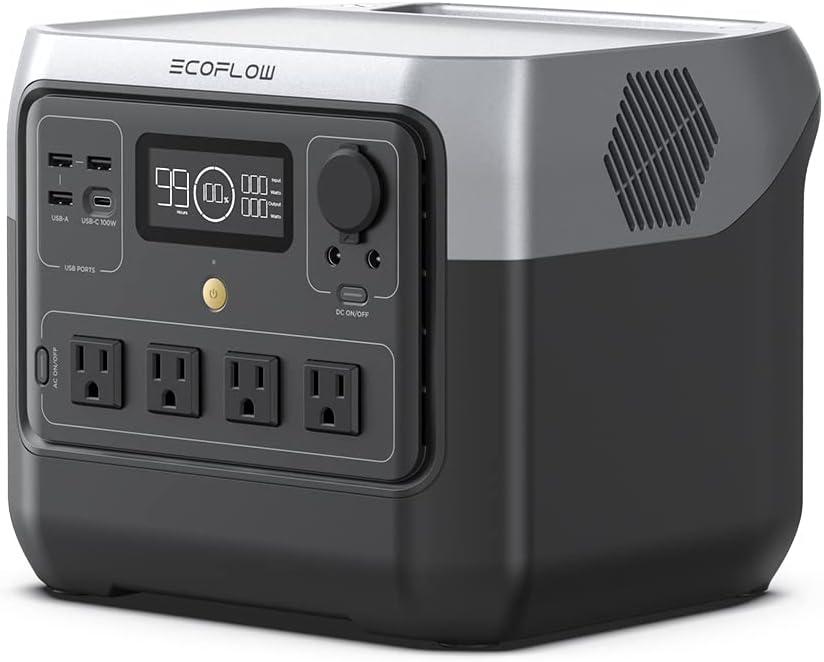
EcoFlow RIVER 2 Pro
768Wh and 800W in the lightest body here, with a roughly 70-minute full recharge and four AC outlets — the balanced pick, with no expansion option
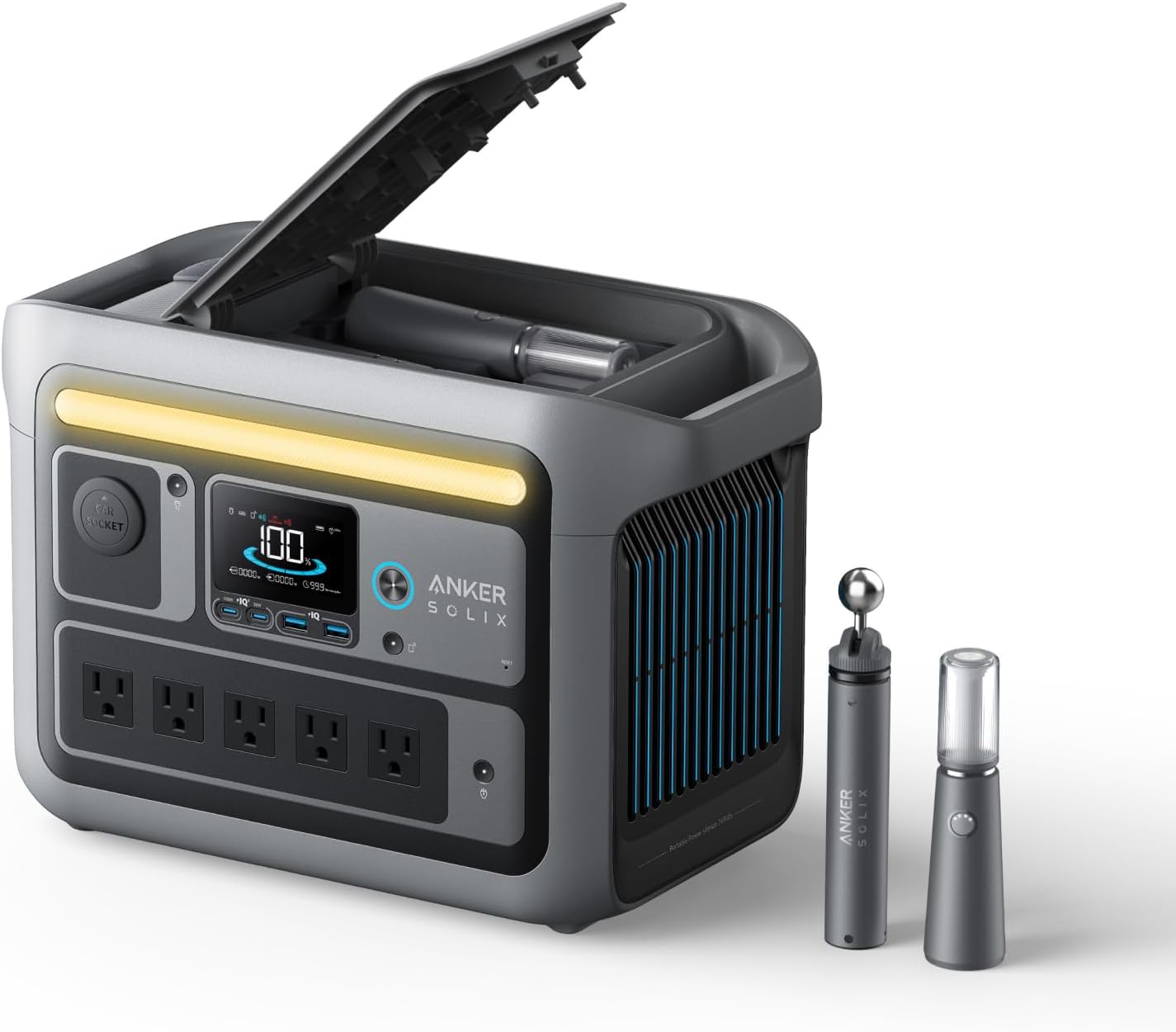
Anker SOLIX C800 Plus
The same 768Wh class but 1200W of AC output, five outlets and two detachable camping lights in the lid — the pick when appliance headroom matters
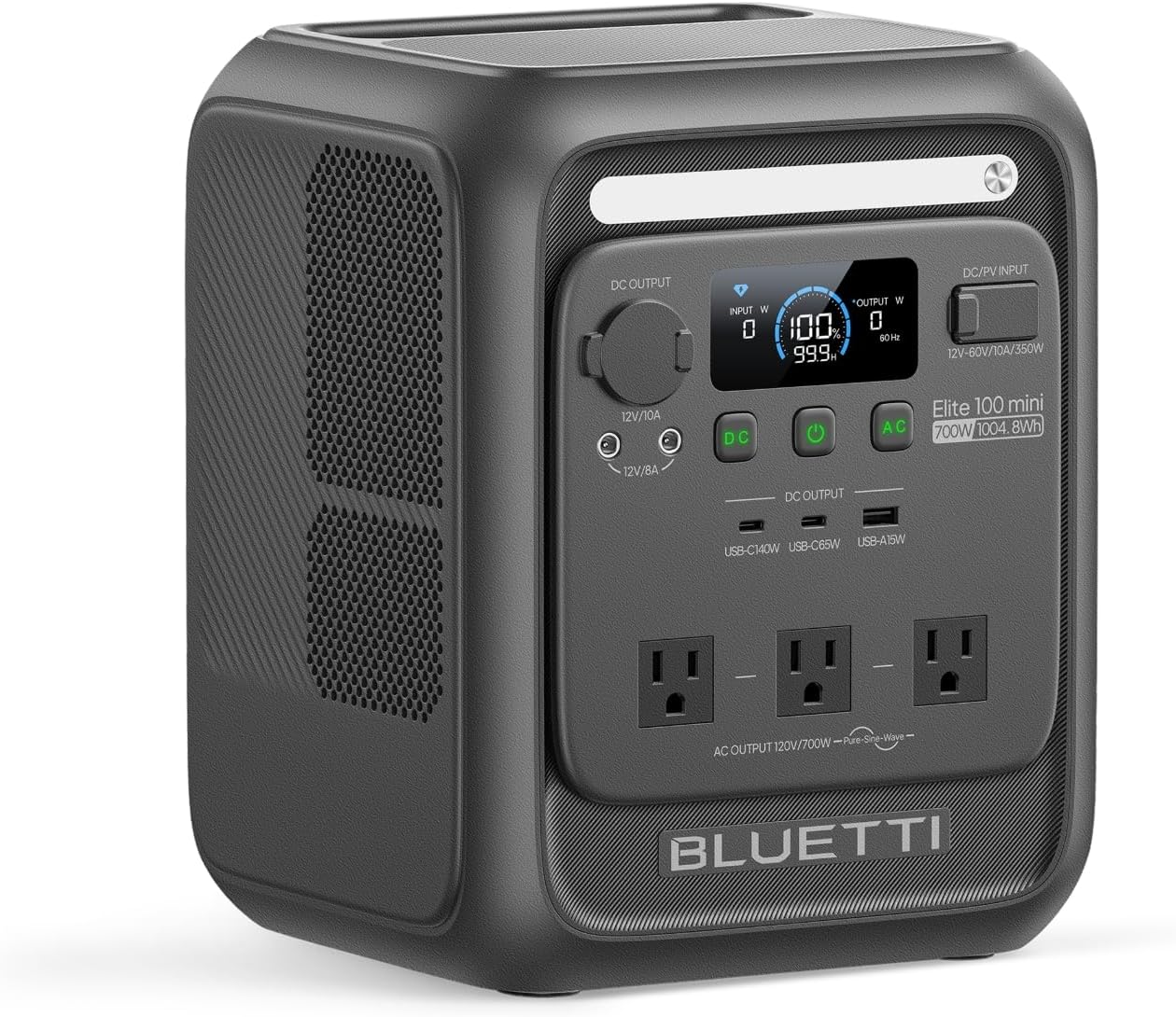
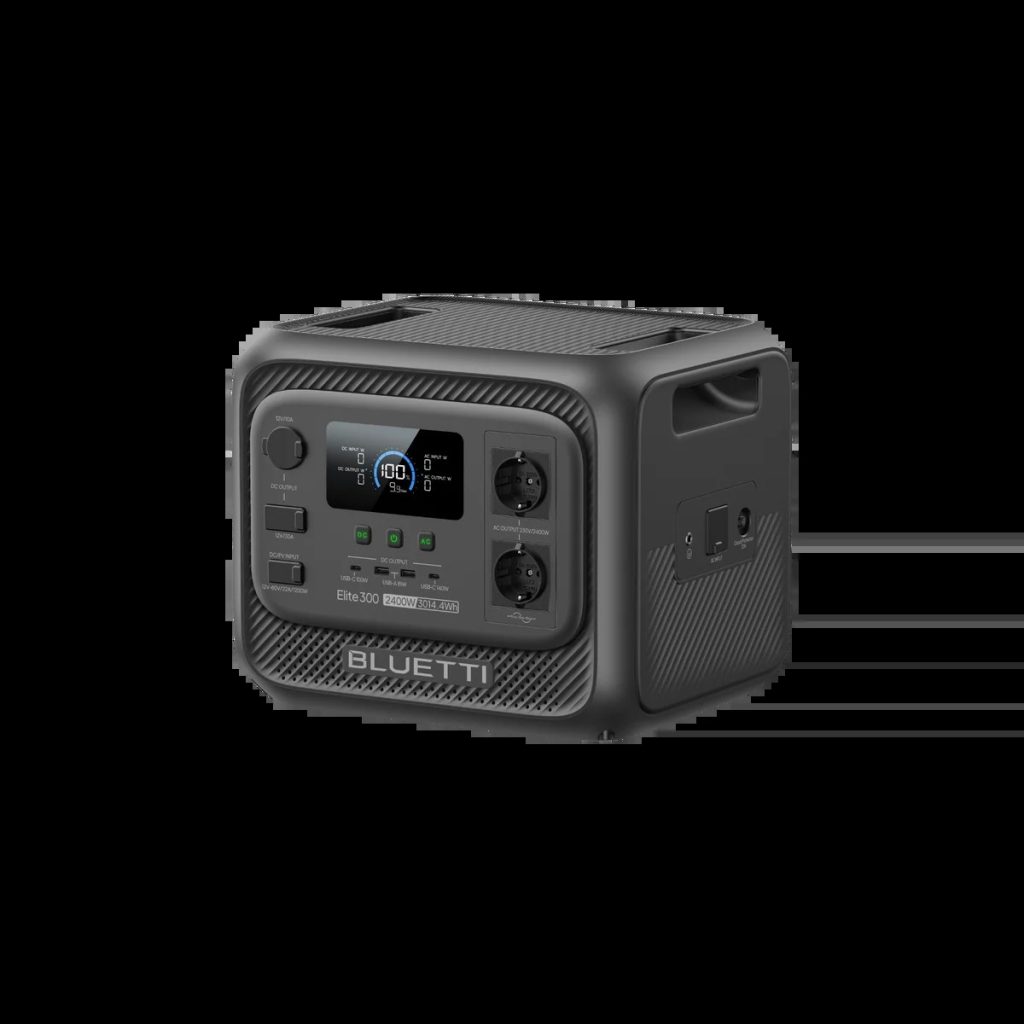
BLUETTI Elite 100 mini
About 1005Wh, the most stored energy here, but only 700W of AC output and a slower refill — built for long runtimes on small loads, not hungry appliances
Prices and availability may vary — tap any product to check the current listing.
What to Look For in a Portable Power Station
Capacity gets all the attention in listings. Output decides whether the thing you plug in actually runs. Those two numbers pull in opposite directions here, and grasping that tension prevents the most common bad purchase in this class.
Start with usable capacity, not the headline figure. A 768Wh battery does not deliver 768Wh to your gear. Inverter losses take a cut, so a realistic planning figure is lower, often around 80 to 85 percent for AC loads and a bit better on DC. People do the napkin math — 768 divided by a 50W fridge equals 15 hours — then act surprised at hour eleven. Plan with a buffer. Always.
AC output is the second gate, and it is a hard gate. Watts are not a suggestion. The RIVER 2 Pro offers 800W across four AC outlets, which covers laptop chargers, lights, a small fan, and a CPAP with heated humidity turned down or off. It does not cover an electric kettle. It does not cover an induction cooktop. EcoFlow includes an X-Boost mode rated up to 1600W for some heating devices, which lowers voltage so certain simple elements draw less, but that is not true 1600W output. Treat X-Boost as a narrow workaround, not a doubling of the inverter.
Weight sounds boring until you are loading a car in the rain. At roughly 17 to 18 lb, the RIVER 2 Pro is a one-hand carry for most adults. That beats larger boxes that feel like luggage you plan around. The trade-off is plain, though. You cannot add an expansion battery later, so if your loads grow, you will be shopping again rather than adding a pack.
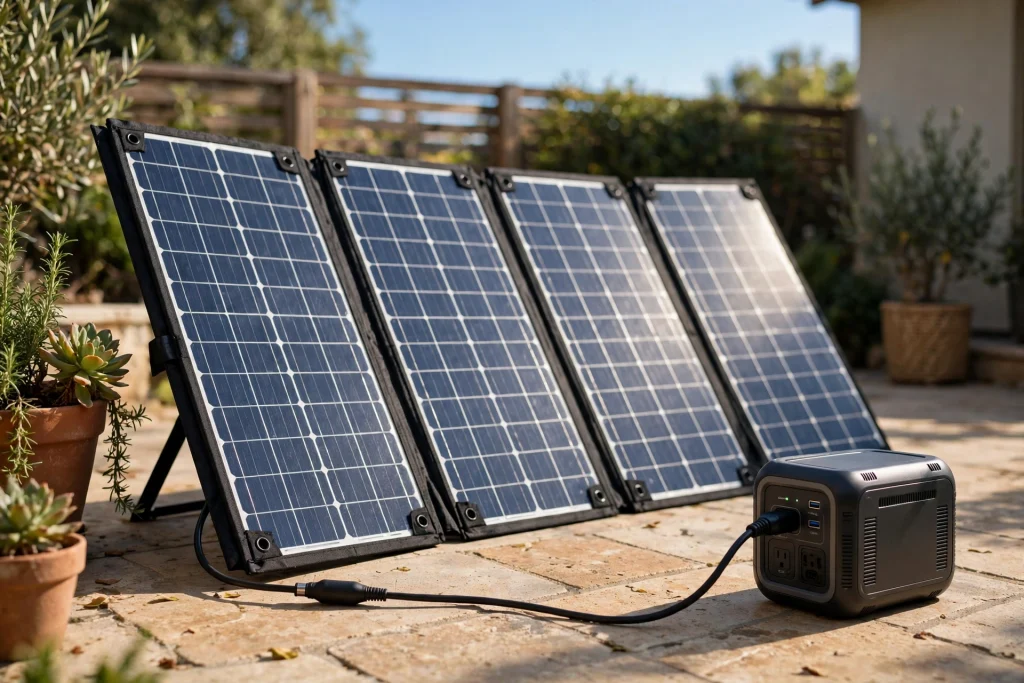
Recharge speed is where this older model still earns respect. A full AC recharge in about 70 minutes lets you top up during a lunch stop or recover during a short window when grid power returns. Solar charging is supported too, which pairs well with foldable solar panels, but solar still takes hours, not minutes. Solar is a range extender. Wall power is the reset button.
LiFePO4 is the right chemistry in this class now, with longer cycle life than older lithium types, and all three models here use it. For ports, look past the raw count. Four AC outlets plus a 100W USB-C port handles a modern laptop without its brick, and fewer conversions means less wasted energy. Display and app polish matter least. As an older design, the RIVER 2 Pro is simpler here than newer rivals — input, output, and time remaining, just plainer. Some buyers love that. Others will notice on day one.
How to Match the RIVER 2 Pro to Your Situation
Specs do not camp. People do, and the same 768Wh can feel generous or tight depending on the loads that dominate the budget.
Take the weekend car camper with a 12V fridge. This is the strongest fit. Your fridge cycles on and off, your lights sip power, and your phones need trivial top-ups. Driven that way, 768Wh covers a Friday-to-Sunday pattern for many setups, especially if you can add charge while driving or lay out a panel at camp. A smaller portable power station in the 300Wh class can do one night, but it leaves you watching the percentage.
Consider next the CPAP user who also wants outage insurance. Sleep comes first. A CPAP without heated humidity is a modest load, and 768Wh typically handles one night with room for phones and a light. Turn the heated tube and humidifier up on AC power, though, and consumption climbs fast — that single setting can mean a 4 a.m. wake-up to a dead battery. If CPAP use is non-negotiable for two nights with no recharge, look hard at the higher-capacity option in this guide.
A third persona gets less attention: the remote worker at a campsite or cabin. Laptop, hotspot, lights, steady small draws for six to eight hours. Here the RIVER 2 Pro feels almost oversized on capacity and perfectly sized on convenience. Could a smaller unit do it cheaper? Sometimes. One call-heavy day is all it takes to wish you had the headroom.
Three Size Classes Compared
| Type/Tier | Best For | Price Tier | Key Feature | Watch-Out |
|---|---|---|---|---|
| Compact 300Wh class | One night of phones, lights, and a laptop | Budget-friendly | Lightest and cheapest to carry | Runs out fast with a fridge or CPAP |
| Mid-size 768Wh class | Fridge weekends, CPAP nights, car camping | Mid-range | Balance of capacity, weight, and output | AC ceiling rules out kettles and hot plates |
| Large 1kWh-plus class | Longer outages and hungrier loads | Premium | Most runtime and often higher output | Heavier, pricier, and overkill for light kits |
The compact tier wins on price and portability, and it loses the moment a continuous load like a fridge enters the picture.
That middle tier, where the RIVER 2 Pro sits, is the sweet spot for most car-based trips because it covers an overnight continuous load plus the small stuff without a weight penalty.
Larger units earn their premium only when you have measured a need they solve.
Running a 12V Fridge and CPAP Off 768Wh
This pairing is the real test for the class. Plenty of buyers plan to run both on the same night, and product pages do a poor job of helping them picture how that plays out.
A 12V fridge is the friendlier load. Efficient models cycle their compressor, so average draw over a night can be far below the peak label figure. A compressor air conditioner is the extreme version of that maths, and our EcoFlow WAVE 3 review works through what a battery AC actually needs overnight. Pre-chill at home, keep the lid shut, and park in shade, and consumption drops again. Run that fridge on its AC adapter instead of the 12V DC lead and you pay a conversion penalty for no benefit. Small choice. Real cost. For fridge-only weekends, 768Wh is comfortable, and a daytime solar top-up stretches a two-day trip nicely.
CPAP changes the equation because there is no cycling trick. The machine draws steadily for as long as you sleep, and heated humidity sets much of the total. Run it on DC if you can and turn heated humidity off or down for battery nights. Plenty of campers sleep fine that way. Others do not, and comfort is not a rounding error. Test your settings at home for one night before a trip — guessing in a tent is a miserable way to learn your number.
Running both together is doable for one night in many setups, tight in others. Fridge plus a low-humidity CPAP setup can share 768Wh and wake up with something left. Fridge plus a high-humidity AC-powered CPAP is where the math turns against you. If that sounds like you, plan a reliable midday recharge or step up to the model here with about 1005Wh on board. Keep a simple log for your first two trips, too. Your own numbers beat any review.
Car Camping Weekends vs Home Backup Nights
Same battery, different job. Buyers blur these two uses together and end up optimizing for the wrong one.
Car camping rewards weight, speed, and DC efficiency. Your loads are predictable: fridge, lights, phones, a laptop, maybe a small fan. Here the RIVER 2 Pro makes sense — its fast AC refill lets you leave full even on a Friday-afternoon decision, and its weight does not eat into a packed car.
Home backup on a single night rewards restraint. When the grid drops, the temptation is to plug in everything that fits. Resist it. On 768Wh, backup means essentials only — CPAP, phones, a router, a few lights. You are bridging a night, not running a house. Longer outages point to a larger system, possibly built around separate solar batteries.
Weather decides a lot here. Hot nights make fridges work harder, so if most of your camping happens in serious heat, build in extra margin.
Common Mistakes Buyers Make in This Size Class
The first mistake is shopping by capacity alone and ignoring the inverter ceiling. A buyer sees 768Wh, pictures cooking breakfast, and orders — then discovers an 800W limit will not run the kettle they planned the kitchen kit around. Capacity tells you for how long. Output tells you whether at all. Check your hungriest appliance first, in watts, and let that answer veto models early.
Plenty of people make the opposite error and buy output they will never use. A higher-watt inverter does not create energy. If your loads are a fridge, CPAP, and screens, a stronger AC rating adds cost without adding an hour of sleep. Match the inverter to your actual plug list, not a fantasy load.
A third mistake is treating a marketing mode as a full spec. X-Boost and rival lifting modes sound like free power. They are not. These modes help certain simple loads run at reduced performance, and they do nothing for appliances that need full rated power. Plan around the continuous number.
Forgetting the recharge plan is the quiet fourth mistake. A fast wall recharge only helps if wall power is in the plan, and solar only helps if you have sun, space, and hours. Pick the station and the refill method together, or you have bought half a solution.
A fifth is storage. A station that spends summer afternoons inside a sun-baked parked vehicle ages in fast-forward, whatever the chemistry, and the cables and connectors around it live a harder life than the cells do. Keep it somewhere the air moves. In practice the habit layer — leads, plugs, routines — wears out before an LFP battery does.
Why, How, and What
Why does the 768Wh size keep getting recommended for car camping?
Because it covers the one continuous load most car campers actually have — a 12V fridge — plus lights, phones, and a laptop, without the weight and cost of 1kWh-plus units. Smaller stations force constant percentage-watching on fridge trips. Bigger stations solve a problem many weekend campers do not have. The middle size matches the most common workload.
That same 12V socket earns its keep on cold nights too — it will feed a 12V heated blanket long after the fridge has cycled down, which is exactly the set-up compared in our Diweez cordless heated blanket review against a blanket that carries its own battery.
How should you figure out whether 768Wh is enough for you?
Add up one honest night, not a best-case night. Estimate your fridge over eight to ten hours, add your CPAP at the settings you truly sleep with, then add lights and phones. Compare that total against a conservative usable figure, not the full 768Wh headline. If you land under roughly three-quarters of the battery, you have margin. If you land at the edge, you need a recharge plan or a bigger battery.
What separates the three models in this guide if capacity looks similar?
Output, extras, and where the capacity sits. The RIVER 2 Pro pairs 768Wh with 800W output and a fast refill. The Anker SOLIX C800 Plus keeps 768Wh but raises output to 1200W with five outlets and detachable camping lights. The BLUETTI Elite 100 mini flips the trade, offering about 1005Wh with a lower 700W output and a 140W USB-C port. Same shelf, three priorities.
Questions People Ask Before Buying
Real buyer questions, straight answers
Can the RIVER 2 Pro run an electric kettle or induction cooktop?
No, the RIVER 2 Pro cannot reliably run an electric kettle or induction cooktop. Those appliances draw well above its 800W continuous output, and X-Boost does not turn it into a true high-watt inverter. Boil water with a gas stove instead. Buyers who need electric cooking should shop for a much higher output class entirely.
How long will 768Wh run a 12V fridge?
A 768Wh station will typically run an efficient 12V fridge overnight and often well beyond one night, depending on temperature and settings. Fridges cycle, so average draw matters more than the peak figure, and pre-chilling stretches runtime further. Hot weather shortens it noticeably. For a two-day weekend, many fridge-only setups fit, but a solar top-up makes the plan far more relaxed.
Is the Anker SOLIX C800 Plus worth paying more for over the RIVER 2 Pro?
Yes, the C800 Plus is worth more if you need the extra AC headroom, and not worth it if you do not. It matches the RIVER 2 Pro on 768Wh LiFePO4 capacity but raises output to 1200W across five outlets. Its two detachable rechargeable camping lights and light bar are genuinely useful, not decoration. If your plug list tops out at a fridge, CPAP, and laptops, that premium buys capability you will rarely touch.
Why would anyone pick the BLUETTI Elite 100 mini with lower AC output?
Because runtime for small loads is the whole point of that model. With about 1005Wh on board, it holds the most energy of the three, so small loads run longer between charges. The 140W USB-C port also feeds hungry laptops faster than the RIVER 2 Pro’s 100W port. The catch is the 700W ceiling and a slower refill, with 0 to 80 percent in roughly an hour and a half class of time.
Can you expand the RIVER 2 Pro later with an extra battery?
No, the RIVER 2 Pro has no capacity expansion option. The 768Wh you buy is fixed, which keeps it simple, light, and budget-friendly but removes any growth path. Stable, known loads suit it well. A kit that keeps growing will outgrow it.
Frequently Asked Questions
Is LiFePO4 better than older lithium batteries for camping?
Yes, LiFePO4 is the better choice for most buyers in this class. It offers longer cycle life and stronger thermal stability than older lithium chemistries. All three models here use it. For a battery you cycle on weekends for years, that longevity matters.
How fast does the RIVER 2 Pro recharge from a wall outlet?
The RIVER 2 Pro refills fully from AC power in about 70 minutes. That speed is one of its strongest arguments against newer rivals. It lets you top up shortly before a trip or recover during a brief outage window. Solar charging is supported too, though it takes longer and depends on sun and panel size. Solar input tops out at 220W: the listing quotes about three and a half hours from a 220W panel in clear-sky conditions, and in real vehicle use it works out to a half to two-thirds refill across a good day.
Will the RIVER 2 Pro run a CPAP all night?
In most low-humidity setups, yes, it will run a CPAP through the night with capacity to spare. Heated humidifiers raise consumption sharply and can change that answer. Running on DC and easing heat settings extends runtime most. Test your exact settings at home for one night first.
What does X-Boost actually do?
X-Boost lets some compatible heating devices run by reducing the voltage they receive, up to a 1600W device rating under that mode. It is not true 1600W continuous output. Simple resistive loads are the target, and many appliances still will not run well. Plan around the 800W rating and treat any X-Boost success as a bonus.
RIVER 2 Pro or C800 Plus for a small travel trailer?
For most small trailers, the C800 Plus is safer if you regularly use higher-draw AC gear, thanks to its 1200W output and five outlets. If trailer life means a 12V fridge, lights, and screens, the RIVER 2 Pro covers it for less money. List everything you plug in on a normal night — that list, not the trailer size, decides.
Should you buy a bigger station instead of this whole class?
Yes, if your loads include electric cooking, a full-size home fridge through a long outage, or two demanding overnight loads with no recharge. Those jobs need more output, more capacity, or both. Buyers with light, well-understood loads gain nothing from oversizing except cost and weight. Knowing which group you are in is the entire purchase, really.
Is the RIVER 2 Pro 716Wh or 768Wh?
768Wh — trust the current listing, which also rates the unit at 800W output. The 716Wh figure belongs to the older RIVER Pro generation, and the 700 shorthand from that era has followed the product name around the internet ever since, including into older review titles. The difference is worth roughly an hour of fridge runtime, so it is worth the thirty seconds it takes to read the capacity line on the current listing before ordering.
Can the RIVER 2 Pro back up a home fridge during an outage?
For a while, and the while is shorter than most people hope. A full-size home fridge is a bigger, hungrier load than a 12V travel fridge, and 768Wh through the inverter buys roughly five to eight hours depending on the fridge and the room temperature — enough to bridge a short outage, not to carry a household through a day. The honest home role for this class is the small loads that make an outage livable — CPAP, phones, lights, the router — while the fridge coasts on its own insulation with the door kept shut. If fridge-first backup is the main job, step up to the 2kWh class.
Key Takeaways
The 768Wh class is the sweet spot for fridge weekends and single-night backup, between cramped 300Wh units and heavy 1kWh-plus boxes.
The RIVER 2 Pro trades on value and speed: 768Wh LiFePO4, 800W output, 100W USB-C, and a roughly 70-minute wall recharge at about 17 to 18 lb.
Its limits are fixed — no kettles or induction cooking, X-Boost is not true 1600W power, and there is no expansion path.
The Anker SOLIX C800 Plus is the headroom pick, with 1200W output, five outlets, and detachable camping lights at the same 768Wh.
The BLUETTI Elite 100 mini is the runtime pick, with about 1005Wh and 140W USB-C, against a lower 700W ceiling and slower refills.
Your overnight loads, measured honestly, should make this decision — not headline numbers.
Decision Tree: Which One Fits You?
Your main loads are a 12V fridge, lights, phones, and a laptop, and you want the best value with the fastest wall refill → EcoFlow RIVER 2 Pro
You run a CPAP with low or no heated humidity and need one dependable night plus small extras → EcoFlow RIVER 2 Pro
You regularly plug in loads that need more than 800W, or you want five AC outlets and built-in detachable camp lights → Anker SOLIX C800 Plus
You care most about the longest runtime for small loads and want faster USB-C charging for a hungry laptop → BLUETTI Elite 100 mini
You need electric cooking, long multi-day outages with no recharge, or room to grow capacity later → Skip this class and shop larger
Your power needs are just phones and lights for a single night and every pound counts → Drop down to a compact 300Wh unit instead
Final Recommendation
Buy the RIVER 2 Pro if your camping and backup life looks like a 12V fridge, a CPAP on sensible settings, laptops, lights, and phones. In that world it remains a smart, budget-friendly buy: fast to refill, easy to carry, built on LiFePO4, and powerful enough for everything on the list. Its age shows in a simpler display and app, but that flaw does not touch the core job most weekend buyers have.
Choose the Anker SOLIX C800 Plus instead if AC headroom decides it, since its 1200W output and five outlets handle loads the EcoFlow cannot. Choose the BLUETTI Elite 100 mini instead if your loads are small but your nights are long, because its roughly 1005Wh capacity outlasts the other two. Skip this entire class if electric cooking, expansion plans, or multi-night no-recharge backup sit at the center of your needs.
Compare Mid-Size Portable Power Stations for Camping
Three stations around the 768Wh to 1kWh class side by side — one is the lightest and fastest to refill, one pushes the most AC output and brings its own camping lights, one stores the most energy but feeds it out the slowest.
EcoFlow RIVER 2 Pro
768Wh and 800W in the lightest body here, with a roughly 70-minute full recharge and four AC outlets — the balanced pick, with no expansion option
Anker SOLIX C800 Plus
The same 768Wh class but 1200W of AC output, five outlets and two detachable camping lights in the lid — the pick when appliance headroom matters
BLUETTI Elite 100 mini
About 1005Wh, the most stored energy here, but only 700W of AC output and a slower refill — built for long runtimes on small loads, not hungry appliances
Prices and availability may vary — tap any product to check the current listing.
Affiliate Disclosure: This article contains affiliate links. If you buy through one of these links, we may earn a commission at no extra cost to you.